
The University of North Carolina School of Medicine MD program
What you actually study, and where you will be
University of North Carolina School of Medicine's MD is a 4-year program taught through case-based learning in an integrated curriculum, with patient contact from Year 1 and clinical rotations in Chapel Hill, Raleigh, Greensboro, Charlotte, Wilmington and Asheville (2027 entry). UNC's MD curriculum is Translational Education at Carolina 2.0 (TEC 2.0). It opens with 18 months of mostly organ-system courses taught through case-based small groups, with clinical skills from the first semester and three clinical weeks with practicing doctors. After Step 1, the first of the national licensing exams, you do your core clinical rotations at one of six North Carolina sites, from Asheville to Wilmington. The final phase is shaped around your specialty, and a rural health pathway offers an accelerated three-year MD.
- Degree
- MD
- Length
- 4 years
- Teaching
- Integrated + Case-based learning
- Clinical contact
- Year 1

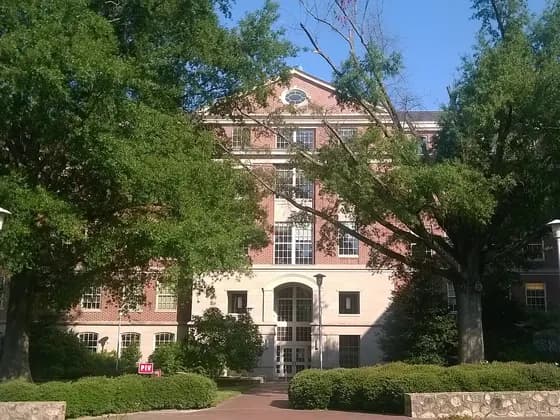


Photo: CramBetter.com · CC BY 4.0 · cropped
Photo: Bbfd · CC0 · Photo: Jack a lanier · CC BY-SA 4.0 · Photo: Mx. Granger · CC0
The University of North Carolina School of Medicine MD program at a glance (2027 entry)
The University of North Carolina School of Medicine (UNC School of Medicine) in Chapel Hill awards the MD, or Doctor of Medicine, after a four-year program. Its curriculum, TEC 2.0, launched in August 2023 and has three phases: Foundation, Application and Individualization. The Liaison Committee on Medical Education (LCME), which accredits MD programs in the United States, lists it as fully accredited, with its next survey in 2027-28.
The 18-month Foundation Phase is the pre-clerkship, or pre-clinical, stage: the classroom part of medical school before full-time patient care. You take nine Medical Science courses in turn, most built around organ systems, such as Circulation for the blood and heart. Weekly courses in clinical skills (Patient Centered Care) and the social side of medicine (Social and Health Systems) run alongside, and every course is graded pass/fail.
You read an online textbook before class, then spend class time on cases in small groups and in interactive large-group sessions. You practice on standardized patients, people trained to act as patients, from the first semester, and meet real patients in three clinical weeks.
After the Foundation Phase you get eight weeks to study for Step 1 of the United States Medical Licensing Examination (USMLE). The Application Phase then starts at the end of February or in early March of year 2. This is the year of clerkships, the core clinical rotations, at one of six sites: Central (around Chapel Hill), Raleigh, Greensboro, Charlotte, Wilmington or Asheville. Asheville runs a longitudinal integrated clerkship (LIC), where you follow patients across specialties for months instead of taking one specialty at a time.
The final Individualization Phase is built around your career plans. It includes two acting internships, also called sub-internships, where you take on much of a first-year resident's work under supervision, plus critical care, neurology and electives (rotations you choose). Optional programs include 12 scholarly concentrations (mentored, in-depth study of one field), dual degrees and a rural Community Health Training Program with a three-year track.
| Degree | MD (Doctor of Medicine) |
|---|---|
| Curriculum | TEC 2.0: Foundation, Application and Individualization Phases |
| Program length | 4 years, or 3 on the accelerated Community Health Training track |
| Class size | 230 a year planned from 2025, in a 2023 school announcement |
| Teaching style | Integrated organ-system courses with case-based small groups |
| Anatomy | Cadaver dissection and prosection (study of specimens already dissected) in first-year courses |
| First patient contact | Year 1: standardized patients, then a clinical week in October |
| Clinical sites | Central (Chapel Hill), Raleigh, Greensboro, Charlotte, Wilmington or Asheville |
| Step 1 timing | After the Foundation Phase, before clerkships begin in March of year 2 |
| Grading | Pass/fail in the Foundation Phase; Honors to Fail in clerkships |
What makes the University of North Carolina School of Medicine MD program different
Your clinical year at one of six North Carolina sites
Each of the six sites uses the same objectives and assessments but has its own hospitals and extras, such as ultrasound sessions in Greensboro or a leadership certificate in Wilmington.
A longitudinal integrated clerkship in Asheville
The Asheville campus, run with Mission Health and the Mountain Area Health Education Center (MAHEC), builds the clerkship year from four longitudinal outpatient blocks and two inpatient blocks. You follow your own panel of patients in outpatient practices for eight months, working with the same preceptors, the doctors who supervise you.
A three-year MD for future North Carolina doctors
The Community Health Training Program, formed in 2024, takes first-year students who want to practice in rural North Carolina. Scholars spend a half-day a week in clinic from the spring of year 1 and about eight weeks in community practice that summer. An accelerated track finishes the MD in three years, with a directed pathway into an affiliated North Carolina residency.
Medical Spanish through CAMPOS
The Comprehensive Advanced Medical Program of Spanish (CAMPOS), running since 2004, is for students with intermediate or advanced Spanish. You take a Medical Spanish elective taught in Spanish, with Spanish-speaking standardized patients, and give 20 hours of service, mostly with the North Carolina Farmworker Program. A Latino Health Clinical Elective is required in the final phase.
Three clinical weeks inside the classroom phase
The first of these weeks with a practicing doctor comes in October of year 1, straight after the Molecules to Cells course. For many students they bring their first hands-on contact with real patients.
How University of North Carolina School of Medicine teaches medicine
TEC 2.0 brings the basic, clinical and social sciences together. You take three Medical Science courses per semester, one at a time, and prepare for each day by reading assigned sections of Scholar Rx Bricks, an online textbook. Faculty can then use class time for problem-solving and clinical reasoning through cases and advanced lectures.
Ten threads, which the school calls coils, carry basic sciences and specialty areas through the curriculum. They are anatomy and embryology, biochemistry, clinical epidemiology, genetics, histology, microbiology, nutrition, pathology, pharmacology and physiology. Each has its own director and builds on the year before. In Circulation, for example, you study the structure, function, disease and drug treatment of the blood and heart together.
Patient Centered Care (PCC) meets once a week for three hours, mostly in small groups learning history-taking, examination, communication and clinical reasoning. Social and Health Systems (SHS) is a weekly seminar on how social and cultural forces shape health, on bioethics and on health policy, with readings, oral presentations and analytical papers. In 2023 the school described each seminar as a group of 14 people. SHS continues as SHS 4 in the clinical year and SHS 5 in the final phase.
The ways you will learn
| Peer Accelerated Learning Sessions (PALS) | Interactive large-group sessions that dig into key concepts from the Bricks reading, with quizzes. When TEC 2.0 launched in 2023 they ran on Mondays, Wednesdays and Fridays. |
|---|---|
| Case-based learning (CBL) | Small groups work through common clinical scenarios, such as blood sugar control in Molecules to Cells, tying basic, clinical and social science together. At launch, CBL ran on Tuesdays and Thursdays. |
| Anatomy and microbiology labs | Cadaver work uses dissection, where you cut and expose structures yourself, and prosection. Microbiology labs run through Molecules to Cells. |
| Point-of-care ultrasound (POCUS) | Ultrasound at the bedside is introduced in Circulation to link physiology, pathology and anatomy to clinical medicine. The Raleigh and Greensboro sites build on it in the clinical year. |
A typical week on the University of North Carolina School of Medicine program
When TEC 2.0 launched in 2023, the school cut instructional hours but made every session required. Scheduled teaching is now capped at 25 hours a week. Required time, which adds simulations, prosections, ultrasound practice, online modules and group work, is capped at 30 hours. Reading and exam preparation come on top.
The 2023 weekly plan put Medical Science sessions every morning. The 2027-28 first-year calendar puts SHS 1 on Monday afternoons, PCC 1 on one afternoon a week and required class meetings at 12:30. It also schedules Thursday lunches for the advisory colleges, the small advising communities every student is assigned to. Each course has an exam every two to four weeks and, near its end, a Clinical Reasoning Exam: a written exam of free-response questions.
The school says several afternoons a week are free. You get four absence days a semester, with no doctor's note needed, but you cannot use them for exams, labs or patient sessions.
How anatomy is taught at University of North Carolina School of Medicine
Anatomy is taught on real human bodies. In The Patient, your first course, you are introduced to your cadaver and learn the musculoskeletal system through dissection and prosection, plus the surface anatomy behind your first heart, lung and abdominal examinations. The course ends with an anatomy practical exam.
You return to the lab through year 1. Circulation picks up where The Patient left off, and the first week of Homeostasis is spent viewing the whole respiratory system in your cadaver. In Body Regulation you dissect the abdominal cavity, and in Reproductive and Genitourinary Health you finish the year's anatomy by dissecting the pelvis. Neuroanatomy follows in year 2, in Neurons to Networks.
The labs are in Roper Hall, the medical education building. Bodies come through the school's Anatomical Gifts Program, which relies on whole-body donation and does not accept unclaimed bodies.
When you first meet patients at University of North Carolina School of Medicine
Clinical skills start in the first semester. After learning history-taking and examination in PCC small groups, you try them in Clinical Skills Encounters with standardized patients, who are members of the community. These run in the Simulation, Experiential Learning, and Training (SET) Center in Roper Hall, and each encounter is recorded so you and your teachers can review it.
Real patients come in the clinical weeks. Three times in the Foundation Phase, classes pause for a week while you work with a community preceptor, interviewing, examining and presenting patients under supervision. The first two fall in October and February of year 1, and the third in year 2, between Neurons to Networks and Life Stages.
Community Health Training Program scholars start sooner, with weekly clinic time from the spring of year 1. The Student Health Action Coalition (SHAC), a student-run free clinic begun in 1967, is another place to build skills.
The University of North Carolina School of Medicine curriculum, year by year
- Foundation Phase, semester 1 (year 1 fall)
The Patient, Molecules to Cells and Circulation
After orientation in late July come three Medical Science courses and your first clinical week. On the 2027-28 first-year calendar the semester runs to December 17, 2027, with Thanksgiving week off (November 22 to 26) and winter break from December 20 to 31.
- The Patient (August 2 to September 3): the patient as person, body, family member and community member, with musculoskeletal anatomy, histology, physiology, clinical epidemiology and health systems science.
- Molecules to Cells (September 7 to October 15): biochemistry, cell biology, genetics, microbiology, immunology and physiology, plus basic pathology and pharmacology, with microbiology labs.
- Clinical Week 1 (October 18 to 22), then Circulation (October 25 to December 17): the blood, heart and vessels, more anatomy lab and an introduction to point-of-care ultrasound.
- PCC 1 and SHS 1 run all semester, and an ungraded end-of-semester exam in December shows you where your gaps are.
- Foundation Phase, semester 2 (year 1 spring)
Lungs, kidneys, hormones, gut and reproduction
The spring brings Homeostasis, Body Regulation, and Reproductive and Genitourinary Health, with your second clinical week in February. On the 2027-28 calendar the year ends on May 26, 2028, with another ungraded exam in its final week.
- Homeostasis (January 3 to February 18, 2028): the respiratory and renal systems, including asthma, pneumonia and kidney failure.
- Clinical Week 2 (February 21 to 25), then Body Regulation (February 28 to April 28, with spring break April 10 to 14): the endocrine and gastrointestinal systems and nutrition, with abdominal dissection.
- Reproductive and Genitourinary Health (May 1 to 26): the reproductive and urinary systems, pregnancy, embryology and dissection of the pelvis.
- Summer: time for funded research projects or special programs. Foundation Phase electives are offered only in this summer and do not count toward graduation.
- Foundation Phase, semester 3 (year 2 fall)
The nervous system, life stages and integrated systems
Year 2 opens in August with Neurons to Networks, then your third clinical week, Life Stages and Integrated Systems. The Foundation Phase ends in mid-December.
- Neurons to Networks: neuroanatomy and physiology, meningitis, encephalitis and neurodegenerative disease, the eye, and ear, nose and throat.
- Life Stages: normal development, psychiatric illness such as depression, substance use disorders and schizophrenia, and dementia, depression and delirium in older patients.
- Integrated Systems: autoimmune disease, cancer, dermatology and musculoskeletal medicine, preceded on the 2027-28 second-year calendar by a four-day Step Review Intensive.
- The Comprehensive Basic Science Exam, nicknamed Baby Step, in early December.
- Step 1 study and transition week (year 2, January to early March)
Dedicated study and the move to clinical work
After winter break, Basic Science Review gives you eight weeks to study for Step 1, which you must take before the one-week Transition to Application Phase (TAP) course. TAP, graded pass/fail and designed with rising fourth-year students, prepares you for clinical rotations through lectures, small groups and hands-on sessions.
- On the 2027-28 second-year calendar, Basic Science Review runs January 3 to February 25, 2028, and TAP February 28 to March 3.
- Central students take TAP in Chapel Hill; Wilmington, Charlotte and Asheville students take it on their own campus, and Charlotte and Asheville students must first complete Basic Life Support training.
- Application Phase (March of year 2 to March of year 3)
Core clerkships at your assigned site
Your core clinical year: six required clinical courses, SHS 4 and a closing capstone course, Conclusion of Application Phase (CAP). The 2027-28 Application Phase calendar for Central, Charlotte, Greensboro, Raleigh and Wilmington sets six blocks of about eight weeks between TAP and CAP, each ending on a shelf exam day. Asheville runs its longitudinal integrated clerkship instead. A shelf exam is a standardized subject exam from the National Board of Medical Examiners (NBME).
- Community Based Primary Care: eight weeks of adult outpatient medicine, about three to four days a week in a family or internal medicine clinic, plus weekend emergency medicine shifts.
- Pediatrics: eight weeks, about half inpatient and half outpatient. Medicine (inpatient adult medicine), Surgery, Psychiatry, and Obstetrics and Gynecology complete the six.
- Each clerkship uses a shelf exam and an OSCE (Objective Structured Clinical Examination), a set of timed stations with standardized patients.
- SHS 4 meets one day a month: caring for patients facing poverty or low literacy, breaking bad news, motivational interviewing and reflection with a faculty mentor.
- CAP, March 6 to 31, 2028 on that calendar: OSCEs, skills stations, the Family Medicine shelf exam, Advanced Cardiovascular Life Support (ACLS) certification and residency application planning.
- Duty hours are capped at 80 a week, with one day in seven free, averaged over four weeks.
- Individualization Phase (year 3 spring to graduation)
Acting internships, electives and Step 2 CK
The draft 2027-28 Individualization Phase calendar runs twelve four-week blocks from April 5, 2027, then Transition to Residency and a final two-week block ending April 21, 2028. Courses are offered at all six sites, and four weeks are set aside for Step 2 CK, the USMLE exam on clinical knowledge.
- Two four-week acting internships, inpatient or outpatient, in the specialty and at the site you choose.
- Two selectives, required rotations where you pick the setting: four weeks of critical care and two weeks of neurology, which Wilmington and Charlotte students do on their own campus.
- Twelve weeks of electives (18 credit hours), at least eight of them clinical.
- Science of Medicine, on how advances move from research to patient care, and SHS 5, on health systems science, run across the year.
- Transition to Residency: two weeks in Chapel Hill, including a week of specialty boot camps attended in person.
How you are assessed at University of North Carolina School of Medicine
The Foundation Phase is pass/fail: to pass a Medical Science course you need an overall score of 70, or no more than two standard deviations below the class mean if that is lower. You also need 70 on each NBME exam; a lower score gives you an Incomplete and one retake. A Clinical Reasoning Exam score under 70 means a review with your case-based learning facilitator. It is not recorded on your transcript or your Medical Student Performance Evaluation (MSPE), the school's summary letter for residency applications.
Clerkships are graded Honors (90 and above), High Pass (85 to 89.9), Pass (72 to 84.9) or Fail. Each grade combines the shelf exam (20 percent, 60 percent minimum) and the OSCE (40 percent, with 70 percent needed on each case). A Competency Assessment Form from supervisors adds 30 percent and professionalism 10 percent. Every campus uses the same standards, and if you fail a clerkship you retake the whole course.
Faculty write narrative comments in every required clinical course, and you get formative feedback by each course's midpoint. In the Individualization Phase, acting internships, the critical care selective and four-week electives are graded Honors to Fail; the neurology selective, two-week and research electives and Transition to Residency are pass/fail.
Step 1 has been reported only as pass or fail since January 2022. School policy says you take it after the Foundation Phase and before TAP, with a passing score posted by June 30 of your cohort's Step 1 year. The Combined and Additional Degree Program Policy sets December 31 for students in those programs. If you fail after clerkships start, you finish your current course, then pause to retake it. Asheville's longitudinal students must restart the year later or move to a block campus if there is space.
In August 2026 the USMLE program announced a move to designated testing dates from January 2029, with Step exams offered less often each year. A June 2026 announcement had set the change for 2028. On the current schedule, a 2027 entrant would finish the Foundation Phase in December 2028 and study for Step 1 in January and February 2029. You would sit it at the end of that study block, before TAP, in late February or early March 2029: shortly after the switch.
Step 2 CK is encouraged after the Application Phase, usually in April or possibly May: for a 2027 entrant on the current schedule, around April or May 2030. A pass must be posted by November 1 of the Individualization Phase, or you can be withdrawn from the residency Match run by the National Resident Matching Program (NRMP). These dates are projected from the 2026-27 and 2027-28 calendars. The school's Academic Calendars page, updated in September 2026, says its 2028 CAP dates are likely to change with the new USMLE testing schedule.
- Other Foundation Phase formats: quizzes, anatomy practicals, PCC final exams, ungraded end-of-semester exams in year 1 and the Comprehensive Basic Science Exam in year 2.
- With Student Progress Committee approval you can remediate up to two failed courses in June or July after year 1, and up to two in January or February of year 2.
- OSCEs count toward completing courses, clerkships, the third year and graduation.
University of North Carolina School of Medicine clinical rotations: where you will actually train
Everyone does the Application Phase at one of six sites with the same objectives and assessments. Asheville, Charlotte and Wilmington are regional campuses, while Greensboro and Raleigh are sites, a difference in their level of LCME approval. Central, which the school calls Central Cross-Regional, covers Chapel Hill and surrounding areas. For the 2027-28 Application Phase, capacity is 114 at Central, 35 in Asheville, 30 each in Raleigh and Wilmington, and 12 each in Charlotte and Greensboro.
In early February of year 1 you rank all six sites, alone or as a pod of up to three students who share one list and are placed at the same site. MD-PhD students are placed at Central, Community Health Training and Kenan Urban scholars at their program sites, and students with approved caregiving or health exemptions are also placed directly. A computer program places everyone else, aiming to give as many students as possible a top-three choice, and results come in early March.
Requests to change site, for new health or caregiving needs, are heard in September of year 2. At a regional campus or site, you can stay on for the Individualization Phase and avoid a second move.
You need a car at every site, as bus service to clinics can be limited. Central students rotate across the Triangle and Triad, from east of Raleigh to Greensboro, some up to an hour from Chapel Hill. Regional students find their own housing for the year. Central students sent on short assignments to Greensboro or Wilmington can apply for housing from the Area Health Education Centers (AHEC), the state's network of nine regional centers for community-based training.
Home base is UNC Hospitals: the N.C. Memorial, Children's, Women's, Cancer and Neurosciences hospitals in Chapel Hill plus the Hillsborough campus, with more than 1,000 beds in all. Rotations can also be at UNC Health Rex, WakeMed and Cone Health.
- UNC Hospitals, Chapel Hill
- UNC Hospitals Hillsborough Campus
- Central Regional Hospital, Butner
- Piedmont Health
- Regional UNC Physicians Network and independent practices
A focus on local health inequities and an ultrasound curriculum. WakeMed's flagship campus has a Level I trauma center and a children's hospital. Five Kenan Urban Primary Care Scholars a year train here after a six-week summer program on urban underserved care.
- WakeMed Raleigh Campus
- UNC Health Rex
Primary care here adds outpatient pediatrics and a hospice experience. Ultrasound sessions run at Union Square on three Friday afternoons a month, and Humanities in Medicine dinners bring students together with a faculty mentor.
- Moses Cone Memorial Hospital
- Cone Health Women's and Children's Center
- Cone Health Behavioral Health Hospital
- Cone Health Annie Penn Hospital
- Union Square Campus
Opened with Novant Health in 2021 for both clinical phases. Its page describes inpatient and outpatient work with preceptors, self-directed time for study and shadowing, a quality improvement project and monthly SHS 4 with the campus cohort.
- Novant Health Presbyterian Medical Center
- Novant Health Huntersville Medical Center
- Novant Health Matthews Medical Center
- Novant Health Hemby Children's Hospital
Opened in 2016; its 30 Application Phase students follow the Central curriculum, and 60 to 75 percent typically stay for the final phase. Extras include a leadership certificate with UNC Wilmington, Pregnancy Centering Care Teams and a quality improvement project.
- Novant Health New Hanover Regional Medical Center
- South East Area Health Education Center (SEAHEC)
Run since 2009 with Mission Health and MAHEC, now with more than 30 students a year and weekly didactics. UNC's Asheville page describes Mission Hospital as licensed for 815 beds. Fourth-year options reach rural towns such as Boone and Burnsville.
- Mission Hospital
- MAHEC
- Practices and regional hospitals across western North Carolina
Electives, selectives and away rotations at University of North Carolina School of Medicine
The Individualization Phase requires 12 weeks of electives (18 credit hours), in two-week, four-week or longitudinal formats, with at least eight weeks clinical; pathology and radiology count.
The 2027-28 course catalog lists 157 four-week and 51 two-week electives, plus 99 acting internships, 22 critical care and 12 neurology selectives, across all six sites. Examples include Immersive Wilderness Medicine in Asheville, Migrant Farmworker Health in Dunn, refugee and immigrant health in Charlotte and Greensboro, and correctional psychiatry in Raleigh.
Elective blocks can also go on away rotations at other institutions, through Visiting Student Learning Opportunities (VSLO), run by the Association of American Medical Colleges (AAMC). An acting internship done elsewhere counts as elective credit. A Larry D. Keith Scholarship gives recipients $1,000 toward a visiting elective.
Global health electives need approval from the Office of Global Health Education (OGHE) at least eight weeks before departure, after a travel clinic visit and safety training. OGHE generally supports only trips of four weeks or more. CAMPOS students can take immersion electives, including an exchange rotation with the University of Cayetano in Peru.
Dual degrees and research years at University of North Carolina School of Medicine
The 12 Scholarly Concentration Programs run from the Foundation Phase to the Individualization Phase, where their electives are offered. Six are Care of the Older Patient, Clinical Research, Clinician Leadership in Quality and Safety, Global Health, Humanities and Social Sciences, and Medical Education. The other six are MESSAGE (Medical Education Supporting Sexuality and Gender Expressions), Medical Innovation, Nutrition, Planetary Health, Ultrasound and Women's Health.
You apply in November of year 1 and hear in February; eligibility includes an NBME average above 80 percent and no course failures. You can join only one, and not alongside the Community Health Training Program. It can be listed as one of three noteworthy characteristics in your MSPE.
The Carolina Medical Student Research Program funds about 40 students a year for eight-week projects, mostly in the summer after year 1. You find your own mentor and apply through a process modeled on National Institutes of Health grants. About 22 percent of the Class of 2027 took a leave of absence, usually after the Application Phase. They used it for research or a degree such as a Master of Public Health (MPH) or Master of Business Administration (MBA).
The MD-PhD program, which school policy calls the Medical Sciences Training Program (MSTP), trains physician-scientists and takes 10 to 12 students a year. It follows a timeline similar to the 2-4-2 pattern: medical school, the PhD, then the final two years in clinical medicine. Students can start Application Phase rotations in the spring after Step 1, before graduate school begins in the fall. The program's statistics, updated in January 2025, give an average of 8.16 years to both degrees; the school's September 2026 MSPE appendix gives 8.5 years.
An MPH from the UNC Gillings School of Global Public Health comes after the Foundation and Application Phases. Its Population Health for Clinicians concentration is a full-time, 42-credit, 12-month program that most students apply for in the fall of year 3. The MD/MBA with UNC Kenan-Flagler Business School takes five years, with the fourth spent on MBA courses. Both the MPH and the MBA need their own applications, and neither can be combined with the accelerated three-year track. Other relevant degrees, such as a law degree (MD/JD), need advance approval.
Facilities and support at University of North Carolina School of Medicine
Where you will learn
Roper Hall opened in 2023 on the site of the former Berryhill Hall. Its six floors and 176,000 square feet hold a 400-seat Active Learning Theater, seminar and study rooms, and labs for anatomy, microbiology and simulation, plus a student-only fitness center and a Tranquility Room. The building allows for a larger class: in 2023 the school announced first-year growth from 190 to 205 that fall, 215 in 2024 and 230 in 2025.
The SET Center fills Roper Hall's fourth and fifth floors. It has 24 exam rooms laid out like doctors' offices for standardized patient work, and six simulation labs with high-fidelity mannequins, including a fully working operating room and a three-bed trauma bay.
In Asheville, UNC Health Sciences at MAHEC has study space, a 56-seat teaching and testing room and the MAHEC Simulation Center. In Greensboro, the Union Square Campus simulation center hosts ultrasound sessions, and Cone Health hospitals give students study space and lockers.
Support while you study
You are placed in one of seven Larry Keith Advisory Colleges: Cefalo, Cross, Dent, Dimock, Simkins, Smithies and Williamson. Set up in 2008, each is a small group led by faculty College Advisors and peer-selected student advocates, giving specialty-neutral advice across all four years.
The Office of Academic Excellence offers coaching in study skills and test-taking, exam error analysis, Step 1 study schedules and readiness checks, and tutoring by trained senior students. In the clinical years it coaches you for shelf exams and Step 2 CK. Career Development at Carolina follows the AAMC's Careers in Medicine model, with specialty Career Goal Advisors and Campus Advisors at clinical sites.
The Taking Care of Our Own program gives UNC physicians in training free, confidential therapy and medication management, alongside the university's Counseling and Psychological Services. Regional Campus Health Centers provide medical care away from Chapel Hill.
Is the University of North Carolina School of Medicine program right for you?
This program may suit you if
- You want pass/fail grading and case-based small groups for the whole 18-month Foundation Phase.
- You would welcome a clinical year in Charlotte, Wilmington, Asheville, Raleigh or Greensboro, and perhaps staying on there for your final phase.
- You value continuity: Asheville's longitudinal integrated clerkship has you follow your own patient panel for eight months.
- You hope to practice in rural North Carolina and might take the Community Health Training Program's three-year track.
- You speak intermediate or advanced Spanish and want structured training to care for Latino patients through CAMPOS.
Things to think about
- You need a car for the clinical year, and Central students may drive up to an hour to clinics.
- Sites come from a ranked lottery that aims for one of your top three choices, so a lower choice is possible.
- At a regional site you find your own housing, and the school advises budgeting for the move and the return to Chapel Hill.
- On the current schedule, your Step 1 sitting, after eight weeks of study in early 2029, falls under the USMLE's new designated testing dates. The school has already said its 2028 CAP dates are likely to change with the new schedule.
- The three-year track cannot be combined with an MD/MPH or MD/MBA during medical school.
University of North Carolina School of Medicine MD program — frequently asked questions
Applying to University of North Carolina School of Medicine?
How to get into University of North Carolina School of Medicine
Prerequisites, MCAT, AMCAS personal statement, secondaries and interview, step by step.
Open the guide →University of North Carolina School of Medicine admissions profile
MCAT and GPA profile, acceptance rate, interview format and key dates.
See the profile →Compare University of North Carolina School of Medicine with other schools
Put the teaching style, anatomy teaching and clinical sites next to another school.
Open the comparison →Prepare for the University of North Carolina School of Medicine interview
Format breakdown, school-specific sample questions and prep tips from tutors who interviewed here.
Read the guide →Where this University of North Carolina School of Medicine program guide came from
This guide was written from 89 official sources — University of North Carolina School of Medicine's own program pages and curriculum documents, plus the accreditor and the hospitals and health systems the school trains students in where they publish detail — read on 2026-10-31, then checked claim by claim against those sources.
- UNC School of Medicine: Curriculum Overview (TEC 2.0)
- Introducing TEC 2.0: dated launch posts, April 2023 to May 2024
- Foundation Phase: Medical Science, Patient Centered Care and Social and Health Systems
- Medical Science course descriptions
- Coils (basic science threads)
- Academic Calendars (updated September 2026)
- 2027-2028 MS1 Foundation Phase calendar (PDF, updated August 11, 2026)
- 2027-2028 MS2 Foundation Phase calendar (PDF, updated August 4, 2026)
- 2026-2027 MS2 Foundation Phase calendar (PDF, updated August 31, 2026)
- 2027-2028 Application Phase MS3 calendar, Version 2 (PDF, September 2026)
- 2027-28 Individualization Phase calendar, draft (PDF, July 2026)
- Application Phase requirements, cars and housing
- Application Phase course structures and assessments
- Transition to Application Phase (TAP) course
- Campus Profiles: six sites and 2027-28 capacities
- Campus Assignment Process and FAQs
- Asheville Campus
- Asheville Curriculum (longitudinal integrated clerkship)
- Why Choose Asheville?
- Asheville Facilities: MAHEC and Mission Hospital
- Charlotte Curriculum (Novant Health Charlotte Campus)
- Charlotte Facilities: Novant Health hospitals
- Greensboro Curriculum
- Greensboro Facilities: Cone Health student spaces
- Raleigh Site
- Raleigh Facilities: WakeMed Raleigh Campus
- Chapel Hill Site (Central Cross-Regional)
- Wilmington Curriculum
- Individualization Phase requirements and grading
- Individualization Phase course descriptions
- Electives: credits, away rotations and grading
- Fourth Year Online Course Catalog, 2027-28
- Policy on Doctor of Medicine Degree Requirements (PDF)
- Completion of USMLE Step Examinations policy (PDF)
- TEC 2.0 Individualization Phase Course Requirements Policy (PDF)
- Electives and Scholarly Concentration Policy (PDF)
- Combined and Additional Degree Program Policy (PDF)
- Student Assessment Policy, May 2026 (PDF)
- Application Phase Summative Assessment and Grading Standards Procedure (PDF)
- Grading policy for TEC 2.0 Medical Science courses, Class of 2030 and beyond (PDF)
- Grading policy for Patient Centered Care and Social and Health Systems (PDF)
- TEC 2.0 Foundation Phase Exam and Quiz Policy (PDF)
- TEC 2.0 Monitoring Student Time in the Foundation Phase (PDF)
- TEC 2.0 Foundation Phase Attendance Policy (PDF)
- Application Phase Campus Assignment, Exemption, and Reassignment Policy (PDF)
- Student Duty Hours Policy (PDF)
- Global Health Electives Policy (PDF)
- Anatomical Gifts Program: exclusion of unclaimed bodies (PDF)
- MD/PhD Program Policy Regarding USMLE Step 1 (PDF)
- MSPE Appendix D: Class of 2027, dated September 9, 2026 (PDF)
- Curricular Pathways
- Community Health Training Program
- Community Health Training Program: curriculum, sites and specialties
- Community Health Training Program: 3-Year Program
- Community Health Training Program: 4-Year Program
- Community Health Training Program: application process
- Kenan Urban Primary Care Scholars Program
- Kenan Urban Primary Care Scholars Program: curriculum
- Comprehensive Advanced Medical Program of Spanish (CAMPOS)
- CAMPOS curriculum by phase
- Scholarly Concentration Programs
- Apply to a Scholarly Concentration
- Become a Preceptor: clinical weeks, primary care and pediatrics
- Carolina Medical Student Research Program overview
- UNC MD-PhD Program overview
- MPH Degree: Population Health for Clinicians concentration
- MBA Degree (MD/MBA)
- Larry Keith Advisory Colleges
- Advising: colleges, academic excellence and career development
- Office of Academic Excellence
- Student Support
- Wellness
- Roper Hall
- Simulation, Experiential Learning, and Training Center (SET Center)
- SET Center facilities
- Body Donation at UNC: Anatomical Gifts Program
- Office of Global Health Education
- Office of Admissions: student experiences (SHAC, CAMPOS, scholarly concentrations)
- LCME directory of accredited programs (updated October 14, 2026)
- USMLE Designated Testing Dates information hub
- USMLE: Updated timeline, transition to designated testing dates in January 2029 (August 6, 2026)
- USMLE Step 1 transition to pass/fail only score reporting
- UNC Hospitals: About Us
- UNC Health Rex: About Us
- WakeMed Raleigh Campus
- UNC Health Sciences at MAHEC
- NC AHEC: About Us
- NC AHEC: Student Housing
- South East Area Health Education Center (SEAHEC)
Curricula are restructured between cycles. Anything here that decides your application — how anatomy is taught, a clinical campus assignment, a required research year — should be confirmed against the official page for your entry year.
Applying to University of North Carolina School of Medicine?
We help US applicants with MCAT strategy, the AMCAS personal statement, secondary essays and interview prep — everything you need for a competitive University of North Carolina School of Medicine application.