
The Nova Southeastern University Dr. Kiran C. Patel College of Allopathic Medicine MD program
What you actually study, and where you will be
Nova Southeastern University Dr. Kiran C. Patel College of Allopathic Medicine's M.D. is a 4-year program taught through problem-based learning and case-based learning, with patient contact from Year 1 and clinical rotations in Southeast Florida and Orlando (2027 entry). From the class that entered in 2026, NSU MD's first three semesters are three Foundations of System Science & Practice courses, which blend basic science and clinical skills. The first two are built around a weekly theme, with problem-based and case-based learning in small groups. Step 1 study starts in January of year 2, and clerkships begin that April, mostly in HCA East Florida hospitals, with pediatrics at Nemours Children's Hospital in Orlando.
- Degree
- M.D.
- Length
- 4 years
- Teaching
- Problem-based learning + Case-based learning
- Clinical contact
- Year 1

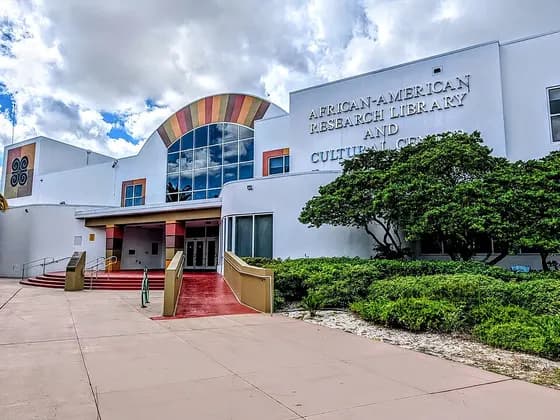


Photo: Dgreco · CC BY-SA 3.0 · cropped
Photo: Cpusf · CC0 · Photo: Tamanoeconomico · CC BY-SA 4.0 · Photo: formulanone from Huntsville, United States · CC BY-SA 2.0
The Nova Southeastern University Dr. Kiran C. Patel College of Allopathic Medicine MD program at a glance (2027 entry)
Nova Southeastern University Dr. Kiran C. Patel College of Allopathic Medicine (NSU MD) runs a four-year Doctor of Medicine (M.D.) program on NSU's 314-acre Fort Lauderdale/Davie campus in Broward County, Florida. Allopathic means it awards the M.D.; NSU's osteopathic medical college is a separate school. The class that entered in 2026 had 68 students.
The pre-clerkship (pre-clinical) phase is the classroom-based stretch before full-time clinical work, and here it runs until December of year 2. In 2026 NSU reorganized it into three Foundations of System Science & Practice courses, replacing separate science blocks and Practice of Medicine courses. The class entering that year was the first to take them. Each course blends basic science with clinical skills. In the first two, small groups work through problem-based learning (PBL) and Inquiry (IQ) cases, and each week is built around a theme.
Clerkships, the core clinical rotations, begin in April of year 2. Before them come eight weeks of study for Step 1, the first exam of the United States Medical Licensing Examination (USMLE), and a four-week course that prepares you for the wards. Over three blocks you rotate through surgery, internal medicine, obstetrics and gynecology, pediatrics, psychiatry, primary care medicine and radiology, plus one selective, a rotation you pick from a set list. Most clinical training is at hospitals of HCA East Florida, NSU's preferred hospital partner.
After year 3's core clerkships, April brings Year 4 Planning and a final required Objective Structured Clinical Examination (OSCE), a practical test of clinical skills. The rest of year 3 and year 4 are mostly four-week blocks of electives (rotations you choose), research and sub-internships, in which you act as an intern, a first-year resident doctor. A two-week Transition to Residency course prepares you for residency, the specialty training after medical school. Assessment, Integration and Reflection (AIR) weeks after each major block leave time for exams, mentoring and reflection.
The Liaison Committee on Medical Education (LCME) accredits MD programs in the United States. Its directory, last updated October 14, 2026, lists Nova Southeastern University Dr. Kiran C. Patel College of Allopathic Medicine, Fort Lauderdale, Florida, with accreditation status Full, initial year of accreditation 2017 and next survey date 2027-28. NSU dates its full accreditation to February 16, 2023. To graduate you must pass Step 1 and Step 2 CK (Clinical Knowledge) of the USMLE.
| Degree | Doctor of Medicine (M.D.) |
|---|---|
| Program length | 4 years; the degree must be completed within six years (2025-26 handbook) |
| Curriculum | Foundations of System Science & Practice I to III, new in 2026 |
| Class size | 68 in the 2026 class profile; admissions FAQ average about 50 |
| Main campus | Fort Lauderdale/Davie campus, Broward County, Florida |
| Teaching style | Problem-based and case-based learning in groups of seven or eight |
| First patient contact | Clinical skills from day one; clinical immersion in year 1 |
| Clinical sites | HCA East Florida hospitals; pediatrics at Nemours Children's Hospital, Orlando |
| Step 1 timing | January 1 to March 3, 2029 for 2027 entrants, on current schedule |
| Grading | Pass/fail before clerkships; Honors to Fail in clerkships; no GPA |
What makes the Nova Southeastern University Dr. Kiran C. Patel College of Allopathic Medicine MD program different
A required research project with a poster
Every student completes MDR 9000 Research: four weeks on a project supervised by a researcher, ending with an abstract and a poster presentation. On the calendar for 2027 entrants it fills June 2028, at the end of year 1, unless you take the Self-Directed Study Elective then and do the research in a later block.
Radiology is a required clerkship
Alongside surgery, internal medicine, obstetrics and gynecology, pediatrics, psychiatry and primary care medicine, every student completes a four-week radiology clerkship. You work in a teaching hospital under radiology attendings, the senior doctors who supervise you. You follow imaging from acquisition to interpretation in areas that may include chest, breast, neuro, interventional and nuclear medicine. You also attend conferences such as tumor board, where specialists plan cancer treatment together.
A teaching hospital on the campus itself
HCA East Florida has opened a teaching and research hospital of more than 200 beds on NSU's Fort Lauderdale/Davie campus, integrated with NSU's research centers and clinical trial programs. NSU lists this onsite hospital among the clinical locations where you rotate.
Built-in weeks for reflection and mentoring
On the calendar for 2027 entrants, six AIR blocks add up to 11 weeks across years 1 to 3. The 2025-26 catalog describes AIR as assessments, longitudinal mentoring, leadership training, reflective exercises and interprofessional activities. Personal and Professional Development, a course in all four years, sets weekly touch points: in-person contact with assigned mentors plus assignments, done in your own time, on well-being and career planning.
How Nova Southeastern University Dr. Kiran C. Patel College of Allopathic Medicine teaches medicine
NSU describes its curriculum as integrated, with basic science and clinical courses taught together and problem- and case-based learning in small groups and teams. Groups have seven or eight students, who solve medical problems by inquiry under the direction of a faculty facilitator.
In Foundations I the group work is problem-based learning: your group starts from a patient case, works out what it needs to learn and then learns it. Foundations II uses Inquiry (IQ) cases, which the handbook defines as case-based learning. In both, the week's theme also runs through Practice of Medicine (POM) clinical skills sessions, anatomy and other active learning sessions.
From April of year 2 the teaching moves into hospitals and clinics, where you join teams under faculty supervision, often with residents. Pediatrics adds formal didactic sessions each week, and obstetrics and gynecology sets aside weekly time for assigned core teaching cases. In year 4, Transition to Residency uses small groups, simulation and reflection exercises to prepare you for work as an intern.
Interprofessional education means training with students of other health professions. On campus you learn alongside students training as pharmacists, nurses, speech-language pathologists, physical therapists, occupational therapists and other health professionals. AIR weeks also include interprofessional activities.
The ways you will learn
| Practice of Medicine sessions | Clinical skills teaching: the doctor-patient relationship, hypothesis-driven history taking, physical examination and documentation, moving in Foundations II to advanced examination, clinical reasoning and case presentations. |
|---|---|
| Anatomy sessions | A weekly part of Foundations I and II, tied to the week's theme and linking body structure to the physical exam and to imaging. |
| Simulation | Foundations II includes performing common procedures in simulation, including informed consent. Health Systems Science and Advanced Clinical Skills uses a simulation center set up as an operating room and inpatient room, with low- and high-fidelity simulators. |
| Clerkship rotations | Supervised work on hospital and clinic teams, with didactic sessions and, on some rotations, conferences such as tumor board. Under the 2025-26 handbook, each required clerkship includes a National Board of Medical Examiners (NBME) subject exam. |
A typical week on the Nova Southeastern University Dr. Kiran C. Patel College of Allopathic Medicine program
The 2025-26 handbook caps scheduled activities before clerkships at seven half-days a week, keeping on average three half-days free for independent study. These activities include lectures, labs, small groups, clinical experiences and exams. Pre-clerkship students generally have weekends free of scheduled activities. The same handbook says you must attend required activities, including interactive large-group sessions, labs, small-group discussions, clinical experiences and exams; attendance rules for lectures vary by block, course or clerkship.
Clinical rotations are much heavier. The handbook says clerkship students may spend up to 80 hours a week on clerkship activities, including evenings, weekends and holidays, and are not automatically off on official holidays. Its duty-hours policy averages that 80-hour limit over four weeks, requires one day in seven free and caps continuous scheduled duty at 24 hours, plus up to four hours for handoffs and education.
How anatomy is taught at Nova Southeastern University Dr. Kiran C. Patel College of Allopathic Medicine
Anatomy is built into Foundations I and II: each week's theme runs through anatomy sessions as well as the small-group case and clinical skills. Foundations I lists anatomy, embryology and histology among its core subjects. Its objectives include describing the major organs with their arterial supply, venous and lymphatic drainage and nerve supply, and describing anatomical landmarks on routine X-ray images.
Foundations II then links normal and diseased anatomy to imaging, including ultrasound, X-ray, CT, MRI, angiography and endoscopy. Second-year students also run Peer Assisted Learning sessions on topics such as anatomy.
For senior students, the 2025-26 catalog lists a two-credit Upper Extremity Applied Anatomy Elective for those interested in orthopedic surgery, rheumatology, sports medicine, primary care or plastic surgery. It involves a series of dissections of the hand, wrist and forearm on a human cadaver, with reading and faculty discussion of common clinical conditions.
When you first meet patients at Nova Southeastern University Dr. Kiran C. Patel College of Allopathic Medicine
NSU says you build clinical skills from day one and begin clinical immersion in year 1. In Foundations I you learn to establish a doctor-patient relationship, take a hypothesis-driven history, examine patients with attention to communication and correct technique, and document the encounter. The program uses simulated patients as well as real-world examples.
The 2025-26 handbook says the college assigns pre-clerkship students to clinical preceptors, clinicians who supervise students, with a set window to swap if a classmate agrees. Full-time clinical work starts with Clerkship Block 1 in April of year 2, once you have passed Step 1.
The Nova Southeastern University Dr. Kiran C. Patel College of Allopathic Medicine curriculum, year by year
- Year 1 (2027-28)
Professional Immersion, then Foundations I and II
For a 2027 entrant, year 1 starts on July 26, 2027 with a week of Professional Immersion. Two long Foundations courses follow, separated by AIR weeks and a three-week winter break. The year ends with a four-week research or study block in June, then a four-week summer break.
- Professional Immersion introduces the curriculum, its learning approaches and advising resources. With classmates you draft a code of conduct that the whole class recites.
- Foundations of System Science & Practice I (17 weeks, August to early December): biochemistry, cell and molecular biology, genetics, microbiology, immunology, pathology, pharmacology, physiology, anatomy, embryology, histology, nutrition and foundational hematology.
- Its clinical skills cover the doctor-patient relationship, hypothesis-driven history and physical examination, and documentation, including basic heart, lung, abdominal and musculoskeletal examination.
- Foundations of System Science & Practice II (19 weeks, January to late May): the gastrointestinal and hepatic, endocrine, reproductive, pulmonary, renal and cardiovascular systems, with advanced physical examination and clinical reasoning.
- AIR weeks: two in December and one at the end of May.
- June: four weeks of MDR 9000 Research or the MDE 9012 Self-Directed Study Elective, a project of your own design supervised by NSU MD faculty.
- Year 2 (2028-29)
Foundations III, Step 1 and the first clerkships
Year 2 closes the pre-clerkship phase and opens the clinical one. After Foundations III come two AIR weeks, a two-week winter break and eight weeks of Step 1 study, then a four-week bridging course before Clerkship Block 1 begins in April 2029.
- Foundations of System Science & Practice III (17 weeks, late July to early December 2028), the last of the three Foundations courses.
- Independent Study: Step 1 Preparation (eight weeks from January 1, 2029): directed independent study with faculty support and resources.
- Health Systems Science and Advanced Clinical Skills (four weeks in March): how care is delivered and improved, an introduction to each core clerkship, presentation and examination skills, simulated procedures, patient safety and infection control.
- Clerkship Block 1 (12 weeks from April 2, 2029), shown on the calendar as three four-week segments, followed by two AIR weeks.
- Year 3 (2029-30)
Core clerkships, then planning year 4
Clerkship Blocks 2 and 3 complete the core rotations, each followed by AIR weeks. In April 2030 you plan your final year and sit the final required OSCE, then start four-week blocks of electives, sub-internships or research.
- Clerkship Block 2 (16 weeks from July 30, 2029) and Clerkship Block 3 (12 weeks from January 7, 2030), with Thanksgiving and winter breaks between.
- Across Blocks 1 to 3 you complete internal medicine and surgery (eight weeks each); psychiatry, primary care medicine and radiology (four weeks each); obstetrics and gynecology; pediatrics; and one four-week selective.
- Internal medicine is inpatient work on a teaching team with residents. Surgery adds the operating room and care before and after operations, with the NBME surgery subject exam at the end.
- Primary care medicine runs in outpatient clinics and offices led by family and internal medicine physicians. Obstetrics and gynecology mixes labor and delivery and gynecologic surgery with weekly office sessions and a subspecialty experience.
- Pediatrics combines inpatient and outpatient care. Psychiatry teaches a biopsychosocial model of care, looking at biological, psychological and social factors together.
- Year 4 Planning (one week) helps you build your final-year schedule, and the Final Required OSCE Week follows.
- Three four-week blocks of electives, sub-internships or research run from late April to mid-July 2030.
- Year 4 (2030-31)
Electives, a sub-internship and Transition to Residency
The final year is eight four-week blocks of electives, sub-internships or research, split by a three-week winter break, with Transition to Residency in March. On the current schedule, Step 2 CK is due by August 1, 2030, days into the first block.
- Your required four-week sub-internship, in internal medicine, surgery or pediatrics.
- Electives chosen within the catalog's credit rules; your faculty adviser approves your elective schedule.
- MDR 9000 Research, if you did not take it in year 1.
- Transition to Residency (two weeks in March 2031): calling a consult, obtaining informed consent, handoffs and common on-call problems. It overlaps with Match week (the Match is the national system that places graduating students in residency programs) and ends with NSU's Match Day celebration.
- Commencement comes at the end of the year, on a date still to be announced.
How you are assessed at Nova Southeastern University Dr. Kiran C. Patel College of Allopathic Medicine
Pre-clerkship courses are graded Pass or Fail: a pass means every competency reached at least a satisfactory level. Clerkships and electives are graded Honors, High Pass, Pass or Fail, and NSU does not calculate a grade point average (GPA). Courses and clerkships are mapped to NSU's seven competencies, from medical knowledge and patient care to personal and professional development and wellness.
Under the 2025-26 handbook, most written exams are secure, timed web-based exams, proctored in class, and they include both internal exams and exams from the NBME. Faculty write narrative assessments in most courses, and clerkship grading narratives go word for word into your Medical Student Performance Evaluation (MSPE), the dean's letter used in residency applications.
Under the same handbook, required clerkship grades combine four parts. Clinical ratings count for 30 to 45 percent, and the NBME subject exam, or shelf exam, for 30 percent, with a 5th-percentile minimum. An end-of-clerkship skills assessment such as an OSCE or oral exam counts for 15 percent, and other work such as case write-ups makes up the rest. A grading committee sets the cut-offs from a target distribution of grades, and if the shelf exam is the only part you fail, you may retake it once.
The 2025-26 handbook says NSU does not report class rank. The college calculates class standing internally only to decide eligibility for Alpha Omega Alpha (AOA), the national honor society for medical students, and other academic honors. The handbook also has you sit the NBME Comprehensive Basic Science Examination at the end of the pre-clerkship curriculum, a self-check for Step 1 that does not affect grades.
The USMLE is the three-step exam series that M.D. graduates must pass to be licensed in the United States. Step 1, on the sciences behind medicine, has been pass/fail since January 2022. NSU's curriculum schematic, updated September 24, 2026, allows it from January 1 of year 2 until the Saturday before Health Systems Science and Advanced Clinical Skills starts. The 2025-26 handbook requires a pass before clerkship rotations, though you may start that course with your score pending.
Under the same handbook, Step 2 CK, on clinical knowledge, must be taken by August 1 at the start of year 4, so scores arrive before residency applications. A pass must be documented by April 15 of your graduation year, or graduation is delayed. You must be enrolled at NSU MD to sit either exam, and failing either three times means automatic dismissal. NSU also offers Independent Study: Step 2 Preparation, a self-paced course for Step 2 CK study guided by a faculty director.
- On the current schedule, a student entering in 2027, the Class of 2031, would sit Step 1 between January 1 and March 3, 2029. The Step 2 CK deadline would be August 1, 2030.
- In August 2026 the USMLE program announced a move to designated testing dates from January 2029, with Step exams offered less often each year. Its June 2026 notice had named 2028. Your Step 1 window opens in January 2029, the month the change is due to take effect, and your Step 2 CK deadline falls after it.
- The USMLE program says it will publish each year's testing dates more than a year ahead, and it has encouraged schools to review policies that restrict when students take the Step exams.
- For M.D. students, attending an LCME-accredited program is what makes you eligible to sit the USMLE; D.O. students and international graduates qualify through other routes.
Nova Southeastern University Dr. Kiran C. Patel College of Allopathic Medicine clinical rotations: where you will actually train
HCA East Florida Division, which NSU calls its preferred hospital partner, provides the core clerkships and many electives at several HCA hospitals on Florida's southeast coast. NSU says HCA East Florida employs more than 6,000 physicians across its 14 hospitals, surgery and imaging centers, freestanding emergency facilities and a regional lab. Several other regional hospitals host electives.
One HCA hospital is on your campus: the handbook's campus map shows HCA Florida University Hospital on the Fort Lauderdale/Davie campus, in Broward County. For pediatrics, NSU is affiliated with Nemours Children's Hospital in Lake Nona, Orlando, in Central Florida, where students rotate. Nemours describes it as an accredited training institution with a pediatric residency program.
Under the 2025-26 handbook, before clerkships you submit preferences for clerkship track options. An algorithm overseen by the Office of Curricular Affairs then assigns tracks, followed by a set window for agreed swaps. Third- and fourth-year schedules are built through a lottery within the academic calendar. After the deadline, the only formal ground for a change is a supervising physician who has treated you or knows you personally; other requests are decided case by case.
Your base for the pre-clerkship years, with HCA's teaching and research hospital on the same campus.
- NSU Fort Lauderdale/Davie campus
- HCA Florida University Hospital
Core clerkships and many electives run at HCA hospitals on the southeast coast. These five are named in NSU's sub-internship, selective and elective listings; St. Lucie also appears as St. Lucie Medical Center.
- HCA Florida Aventura Hospital
- HCA Florida Kendall Hospital
- HCA Florida Westside Hospital
- HCA Florida JFK North Hospital
- HCA Florida St. Lucie Hospital
Pediatrics clerkship; NSU also lists a pediatrics sub-internship section here.
- Nemours Children's Hospital, Florida
Named for the urology selective, the advanced obstetrics elective and the ophthalmology selective.
- Mount Sinai Miami Beach Hospital
- Mercy Hospital, Miami-Dade County
- Fort Lauderdale Eye Institute
Electives, selectives and away rotations at Nova Southeastern University Dr. Kiran C. Patel College of Allopathic Medicine
During the clerkship blocks you take one four-week selective. The current list covers anesthesia, cardiology, dermatology, infectious disease, nephrology, neurology, neonatal intensive care, ophthalmology, pathology, pulmonology and urology. Surgical options are a subspecialty service (orthopedics, plastics, burn or surgical oncology), trauma surgery and surgical critical care, or the surgical intensive care unit.
A sub-internship, also called an acting internship, is a four-week rotation in which you act as an intern on an inpatient team under senior residents and attending physicians. One is required, in internal medicine, surgery or pediatrics; current pediatrics sections are listed at Palms West and Nemours Children's Hospital.
Electives fill most remaining blocks in years 3 and 4. The 2025-26 catalog requires at least 24 elective credit hours, including at least 12 in direct patient care and at least 4 in high-acuity care, meaning care of very sick or unstable patients. No more than 8 can come from one specialty. Clinical options include emergency medicine at Aventura, Kendall or St. Lucie, critical care, palliative care and sports medicine.
Nonclinical electives include Leadership in Medicine, Culinary Medicine, MedCast, where you record podcast stories about medical school, and Advanced Health System Science on healthcare administration. The Legal and Medical Interprofessionalism Elective brings medical and law students together for 13 evening classes taught with faculty of NSU's Shepard Broad College of Law.
Away electives are rotations at other institutions, and the catalog lists a long run of them, from aerospace medicine to vascular surgery. If you need something NSU and its affiliates do not offer, the Student-Designed Clinical Elective lets you propose a rotation with your own supervisor. Apply at least 90 days ahead, because NSU must first sign an affiliation agreement with the site.
Dual degrees and research years at Nova Southeastern University Dr. Kiran C. Patel College of Allopathic Medicine
Research is a graduation requirement. You complete MDR 9000 Research, a four-week project supervised by a researcher and approved in advance by the course director, either in June of year 1 or in a later block. Basic science, translational, medical education and clinical projects all qualify, and you finish with an abstract and a poster presentation.
To go further, the MDR 9001 Research Elective continues or extends a project and ends with a draft paper and a plan for submitting it to a chosen journal. A Research Thread Director helps you find opportunities such as awards funded by the National Institutes of Health (NIH). Through the Moffitt Cancer Translation Research Rotation, NSU MD sponsors six students every summer at Moffitt Cancer Center in Tampa Bay.
Each fall, students present at NSU's Research, Innovation and Service in Education (RISE) Conference. Faculty research areas include population health, cancer therapeutics and biomarkers, medical education and neuroscience. Your faculty adviser can also guide you toward summer research, yearlong research fellowships and additional NSU degrees during medical school.
One entry route links the M.D. to NSU's undergraduate degrees. The Dual Admission program in allopathic medicine lets first-time college students reserve a seat in this M.D. program, though they still complete a graduate application later. It takes six years (2+4, by invitation only), seven (3+4) or eight (4+4), and the six- and seven-year tracks award the bachelor's degree after the first year of medical school.
Facilities and support at Nova Southeastern University Dr. Kiran C. Patel College of Allopathic Medicine
Where you will learn
Most on-campus teaching is in NSU's health professions complex, which has lecture halls, small-group rooms, the anatomy lab and clinical skills rooms. The PBL rooms are for M.D. students only: you can study in them with your key card whenever no class is running. The same building has 13 bookable study rooms.
The Martin and Gail Press Health Professions Division Library is a short walk from the classrooms. It has more than 17,000 print volumes, more than 8,000 journal subscriptions, a librarian dedicated to NSU MD research and the Idea Labs, with virtual reality technology and a 3-D printer. NSU's five-story Alvin Sherman Library adds 22 study rooms and 1,000 seats.
The Aventura emergency medicine elective includes a full day of off-campus simulation at the Broward College Health Sciences Simulation Center. NSU also lends students iPads and laptops for academic use.
Support while you study
From enrollment you have a faculty adviser, who meets you regularly, tracks your academic progress and helps with course and clerkship schedules, specialty choice and the residency match. The 2025-26 handbook adds a mandatory meeting during orientation, plus frequent group lunches and one-on-one meetings in the fall of year 1. During that fall, advisers look out for students who may need extra help.
Each first-year student also gets a peer mentor, a second-year student vetted by the advisers and the student affairs office. In Peer Assisted Learning (PAL), second-years who did well in a course lead sessions for first-years on topics such as anatomy, immunology and biochemistry. Faculty tutoring is free, and the Director of Student Success and Learning Excellence coaches study skills, test strategy, time management and test anxiety.
Career advising follows the Association of American Medical Colleges (AAMC) Careers in Medicine program. Required sessions run in years 1 to 3, from self-assessments in year 1 to using clerkships to explore specialties in year 3. Your adviser also helps you judge your competitiveness for different fields.
For your own health care, NSU offers a medical center staffed by board-certified doctors and physician assistants, with physical exams, women's health care, immunizations, general medical care and minor surgical procedures. NSU's counseling center has office hours plus a crisis hotline staffed 24 hours a day, all year round. Records from both services are confidential and held entirely apart from your academic records.
Is the Nova Southeastern University Dr. Kiran C. Patel College of Allopathic Medicine program right for you?
This program may suit you if
- You learn best by working through patient cases in a group of seven or eight, with each week's science and clinical skills tied to one theme.
- You want to start full-time clinical rotations in the spring of year 2.
- You would like most of your clinical training inside one large hospital network, including a teaching hospital on your own campus.
- You want research built into the degree, with routes beyond the required project such as the Moffitt summer rotation and the RISE Conference.
- You value structured mentoring: a faculty adviser from enrollment, a peer mentor in year 1 and weekly Personal and Professional Development touch points.
Things to think about
- Pediatrics is at Nemours Children's Hospital in Orlando, in Central Florida rather than Broward County, so plan for time away from the Fort Lauderdale area.
- The Foundations courses began with the class that entered in 2026, so you would be only the second class to take them. The posted 2025-26 handbook and catalog still describe the older blocks.
- On the current schedule, your Step 1 window opens in January 2029, the month the USMLE plans to switch to designated testing dates. Under the 2025-26 handbook, you need a pass before clerkship rotations begin.
- Clerkship grades are tiered, and under the 2025-26 handbook the shelf exam makes up 30 percent of each required clerkship score, so the clinical phase is graded more finely than the pass/fail Foundations courses.
Nova Southeastern University Dr. Kiran C. Patel College of Allopathic Medicine MD program — frequently asked questions
Applying to Nova Southeastern University Dr. Kiran C. Patel College of Allopathic Medicine?
How to get into Nova Southeastern University Dr. Kiran C. Patel College of Allopathic Medicine
Prerequisites, MCAT, AMCAS personal statement, secondaries and interview, step by step.
Open the guide →Nova Southeastern University Dr. Kiran C. Patel College of Allopathic Medicine admissions profile
MCAT and GPA profile, acceptance rate, interview format and key dates.
See the profile →Compare Nova Southeastern University Dr. Kiran C. Patel College of Allopathic Medicine with other schools
Put the teaching style, anatomy teaching and clinical sites next to another school.
Open the comparison →Prepare for the Nova Southeastern University Dr. Kiran C. Patel College of Allopathic Medicine interview
Format breakdown, school-specific sample questions and prep tips from tutors who interviewed here.
Read the guide →Where this Nova Southeastern University Dr. Kiran C. Patel College of Allopathic Medicine program guide came from
This guide was written from 31 official sources — Nova Southeastern University Dr. Kiran C. Patel College of Allopathic Medicine's own program pages and curriculum documents, plus the accreditor and the hospitals and health systems the school trains students in where they publish detail — read on 2026-10-19, then checked claim by claim against those sources.
- NSU MD home page (Nova Southeastern University Dr. Kiran C. Patel College of Allopathic Medicine)
- NSU MD: M.D. Curriculum
- NSU MD: Doctor of Medicine Degree Program
- NSU MD: M.D. Assessment and grading system
- NSU MD: Fully Accredited M.D. Program
- NSU MD: Clinical Rotations
- NSU MD Curriculum Schematic (updated September 24, 2026)
- NSU MD Class of 2031 Academic Calendar (updated September 25, 2026)
- NSU MD Class of 2030 Academic Calendar (updated September 25, 2026)
- NSU MD Class of 2029 Academic Calendar (earlier pre-clerkship structure)
- Allopathic Medicine Student Handbook 2025-2026
- NSU Health Professions Division Student Academic Catalog 2025-2026, M.D. Program section
- NSU MD Course Descriptions and Learning Objectives (eMedley curriculum site)
- NSU MD: Academic Support
- NSU MD: Faculty Advising
- NSU MD: Student Success and Learning Excellence
- NSU MD: Career Advising
- NSU MD: Student Research
- NSU MD: Libraries
- NSU MD: Student Life
- NSU MD: Student Health and Well-Being
- NSU MD: MD Admissions Questions (class size)
- NSU MD: Admissions Requirements (2026 Class Profile)
- NSU Undergraduate Admissions: Dual Admission in Allopathic Medicine
- Nemours Children's Hospital, Florida (Orlando)
- Nemours Children's Hospital, Florida: Medical Student Rotations
- LCME: Accredited Programs directory (updated October 14, 2026)
- USMLE: Updated Timeline for Designated Testing Dates, Transition Will Take Place in January 2029 (August 6, 2026)
- USMLE: Transition to Limited Testing Dates Each Year Starting in 2028 (June 23, 2026 notice, since updated)
- USMLE Designated Testing Dates Information Hub
- USMLE Designated Testing Dates FAQs (updated August 6, 2026)
Curricula are restructured between cycles. Anything here that decides your application — how anatomy is taught, a clinical campus assignment, a required research year — should be confirmed against the official page for your entry year.
Applying to Nova Southeastern University Dr. Kiran C. Patel College of Allopathic Medicine?
We help US applicants with MCAT strategy, the AMCAS personal statement, secondary essays and interview prep — everything you need for a competitive Nova Southeastern University Dr. Kiran C. Patel College of Allopathic Medicine application.