
The San Juan Bautista School of Medicine MD program
What you actually study, and where you will be
San Juan Bautista School of Medicine's MD is a 4-year program taught through a traditional, lecture-led structure, with patient contact from Year 1 and clinical rotations in Caguas and elsewhere in Puerto Rico, plus US mainland electives (2027 entry). San Juan Bautista's MD is based on a hospital campus in Caguas, Puerto Rico, and runs in two phases. Two years of Biomedical Sciences courses come first, then two years of clerkships and other clinical rotations, with Step 1 of the United States Medical Licensing Examination (USMLE) to pass in between. The school calls it a bilingual program (English and Spanish), and community health and a research project run through all four years.
- Degree
- MD
- Length
- 4 years
- Teaching
- Traditional / lecture-led
- Clinical contact
- Year 1

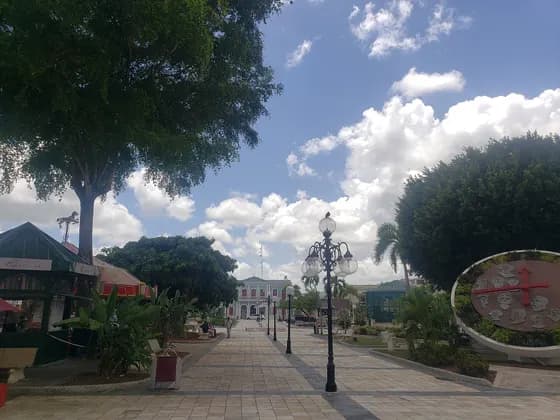
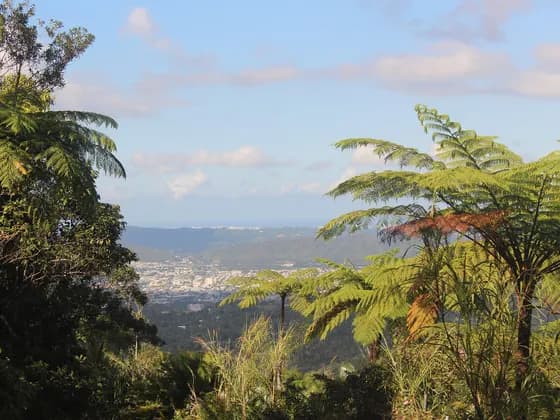
Photo: BrickLightning · CC0 · cropped
Photo: Winifredo Torres · CC BY-SA 2.0 · Photo: chispy2 · CC BY 2.0 · Photo: Ligocsicnarf89 · CC BY-SA 4.0
The San Juan Bautista School of Medicine MD program at a glance (2027 entry)
San Juan Bautista School of Medicine (SJBSM) is a private, nonprofit medical school in Caguas, Puerto Rico, founded in 1978. Its MD is a four-year program, and its classrooms and labs are on the campus of the Mennonite Caguas Hospital. The school calls the MD a bilingual program: English and Spanish are its official languages, and you must be able to read, write, speak and understand both.
The curriculum has two phases. Years 1 and 2, called Biomedical Sciences, are the pre-clerkship (pre-clinical) phase: semester-long courses organized by subject in year 1 and by organ system in year 2. Years 3 and 4, called Clinical Sciences, bring clerkships (the required rotations in the main specialties), then four-week rotations, including electives you choose. Between the two phases you must pass USMLE Step 1.
Five curricular emphases run through all four years: professionalism, research and information literacy, communication skills, clinical skills and community medicine. In practice you meet standardized patients (people trained to act as patients) and community physicians from year 1. You also complete a service learning activity (organized health service in the community) and carry out a public health research project before you graduate.
The Liaison Committee on Medical Education (LCME), which accredits MD programs in the United States, first accredited the program in 2007. Its directory, updated November 13, 2026, lists the school's status as Full, on probation, with the next survey in 2026-27. The school's student handbook, revised in 2026, says the last site visit was in 2025 and that the LCME granted full accreditation on probation. Under the LCME's March 2026 Rules of Procedure, a program on probation keeps its accredited status and rights but must address the noncompliance the LCME found or face withdrawal of accreditation.
| Degree | MD |
|---|---|
| Program length | 4 years: two of Biomedical Sciences courses, then two of clerkships |
| Class size | About 63; entering cohorts of 62 to 63 in a 2025 report |
| Main campus | Caguas, Puerto Rico, on the Mennonite Caguas Hospital campus |
| Languages | English and Spanish; the school requires both |
| Anatomy | Human cadaver dissection in year 1, plus Anatomage digital images |
| First patient contact | Year 1: standardized patients, plus time with physicians in community offices |
| Step 1 timing | End of year 2, usually July; must pass to begin clerkships |
| Grading | Letter grades A to F; 2.50 GPA to enter clerkships and graduate |
| Accreditation | LCME: Full, on probation; next survey 2026-27 (directory, November 13, 2026) |
What makes the San Juan Bautista School of Medicine MD program different
A public health research project across four years
Research is part of the required curriculum: over four years you design and complete a project on a public health question, with an assigned faculty research mentor.
Required community health and service learning
Community Health I and II teach public health and epidemiology, and every student completes a service learning activity with a community partner: an orientation, the service itself and a reflection afterwards. Partners include primary care clinics, school health programs and federally sponsored community health centers.
Patients and colleagues in two languages
You will work with Spanish-speaking patients and communities, and the program requires both languages. The handbook's technical standards, the abilities required for promotion and graduation, expect you to gather information from patients and talk with the health care team quickly and clearly in both English and Spanish.
Professionalism taught across all four years
Year 1 opens with the White Coat Ceremony, when students first wear the white coat, at the start of the first of four one-credit Professionalism courses. They cover ethics, communication, cultural diversity, patients' and physicians' rights and health care quality. In the clinical years the thread continues through role models, case studies and work with patients and families, and every clerkship grade has a pass/fail professionalism component.
How San Juan Bautista School of Medicine teaches medicine
Each of the two pre-clerkship years has two semesters of at least 17 weeks of courses, plus about a week for remediation. A course earns one credit for each weekly hour of class or two hours of lab. Lectures are scheduled in the mornings where possible, leaving time for self-directed study and workshops.
Courses are organized by subject but lined up to support each other. In year 1, anatomy runs alongside histology, physiology, neurosciences, clinical skills and professionalism. In year 2, Pathophysiology, Medical Microbiology, Pharmacology and Therapeutics and Clinical Diagnosis work through the same organ systems together, so you study a disease's mechanisms, causes, drugs and clinical picture side by side. Physiology and pathophysiology cover pediatric and geriatric aspects of every system.
In years 3 and 4 teaching moves into hospitals and clinics, inpatient and outpatient, where you help care for patients as a member of an interdisciplinary team. Rounds, lectures and online virtual patient cases add to that. Residents, doctors in specialty training, share the teaching, and the school prepares them through its Residents as Teachers program.
You are supervised at all times by an attending physician, a fully trained doctor responsible for the patient, or by a resident working under one. Each clerkship syllabus lists what you may do, and your level of responsibility is reviewed at the midpoint of each clerkship and adjusted if needed.
The ways you will learn
| Lectures with clinical correlations | The core of most Biomedical Sciences courses. Lecturers tie the science to clinical conditions, and courses add interactive lectures, conferences, journal articles, case discussions and case presentations. |
|---|---|
| Laboratories | Lab work runs through years 1 and 2, from cadaver dissection and a virtual histology lab to physiology sessions and guided practice in pathophysiology and microbiology. |
| Formative/Summative Integrated Activities | Small-group exercises in which you analyze, discuss and propose solutions to a health problem, using what you have learned across current and earlier courses. They bring in elements of the clerkships and topics from medical education or global public health. Formative assessment is feedback not tied to grades; summative assessment contributes to a grade. |
| Self-directed learning activities | Structured exercises, usually in small groups where a tutor facilitates rather than lectures; problem-based learning (PBL), built around cases, is one format. You identify what you need to learn, search the literature, judge your sources and present your findings for feedback. Year 1 has two and year 2 has three. |
| Clinical skills sessions | In the Clinical Skills Center you practice interviewing, examination, counseling, differential diagnosis and management plans with standardized patients, models and simulation equipment, and are tested on the same skills. |
A typical week on the San Juan Bautista School of Medicine program
In years 1 and 2 you have 34 weeks of instruction a year. The workload policy plans for an average of 20 to 28 hours a week of lectures, conferences and other direct teaching. On top of that come at least 8 to 10 hours of independent study in most weeks and 2 to 12 hours of required out-of-class activities.
Attendance is mandatory. In years 1 and 2, missing more than 15% of a course's scheduled time without an official excuse means failing it. In clerkships, more than three unauthorized days off in a six-week rotation, six in the 12-week one or two in a four-week one can mean failing, and three late arrivals count as one absence. Only the Deanship of Student Affairs can excuse an absence.
In the clinical years, activities can fall on any day, including weekends and holidays, and by day or night. Duty hours are capped at 80 a week, averaged over four weeks, and on-duty shifts come no more than every third night. In year 3 shifts run 4 pm to 10 pm on weekdays and 8 am to 10 pm on weekends and holidays. In year 4 they run 4 pm to 8 am on weekdays and 24 hours on weekends and holidays.
How anatomy is taught at San Juan Bautista School of Medicine
Anatomy is a year 1 subject, taught in Developmental and Clinical Anatomy I (4 credits, fall) and II (5 credits, spring), which combine gross anatomy and embryology in one course. The course teaches you to apply what you learn about the body's structure and development to clinical cases.
Lectures are reinforced in the dissecting laboratory, where you dissect human cadavers yourself under the direct supervision of the anatomy faculty. The school's anatomy labs also teach with electronic images on the Anatomage platform, and the anatomy department links what you dissect to radiographs, CT and MRI scans.
Two other year 1 courses add microscopic and brain anatomy. Histology and Cell Biology I and II have a virtual laboratory where you identify structures on microscope slides and in interactive computer programs. Neurosciences (6 credits, spring), taught jointly by anatomy and physiology/pathology faculty, uses human brain specimens and models and covers neurological imaging.
When you first meet patients at San Juan Bautista School of Medicine
Your first patient encounters are in a controlled setting. Introduction to Clinical Skills I and II, in both semesters of year 1, teach communication, interviewing and a complete history and physical examination adjusted for age, through lectures, workshops and standardized patients. The Clinical Skills department teaches and tests the history and examination system by system.
Real patients come early as well. The Community Preceptorship Program places first- and second-year students with physicians in private community offices, to observe and practice their skills and see how a doctor delivers care. Community Health I and II add presentations on health topics and a service learning activity in the community.
In year 2, Clinical Diagnosis I and II (4 credits each) teach history taking, examination and the meaning of abnormal findings for each organ system, with standardized and computer-designed patients, workshops and preceptorship. In the clinical years each clerkship lists required clinical experiences: the conditions and skills every student must encounter, each at a set level, either observing or participating. You record them in Medtrics, an electronic platform, and your grade stays Incomplete until all are logged.
The San Juan Bautista School of Medicine curriculum, year by year
- Year 1
Biomedical Sciences: how the healthy body works
Year 1 opens in August with orientation and the White Coat Ceremony; in 2026-27 classes run from August 10 to May 7. Two semesters of subject-based courses cover the body's structure and function, with clinical skills, community health, research and professionalism alongside.
- Fall, 22 credits: Developmental and Clinical Anatomy I (4), Histology and Cell Biology I (2), Biochemistry and Genetics in Medicine (8) and Medical Physiology I (4). Alongside them: Introduction to Clinical Skills I (2), Introduction to Research (1) and Professionalism I (1).
- Spring, 25 credits: Developmental and Clinical Anatomy II (5), Histology and Cell Biology II (2), Neurosciences (6), Immunology II (3) and Medical Physiology II (4). Alongside them: Introduction to Clinical Skills II (2), Community Health I (2) and Professionalism II (1).
- Biochemistry and Genetics in Medicine, year 1's largest course, runs from metabolism and molecular biology to clinical genetics and genetic counseling.
- Medical Physiology moves from cell function, nerves, muscle, the heart and the lungs in the fall to the gut, kidneys and endocrine and reproductive systems in the spring.
- Immunology covers normal immune responses and their uses in medicine, from vaccines and transplantation to cancer immunotherapy, with special attention to AIDS.
- Year 2
Biomedical Sciences: disease, system by system
Year 2 studies disease one organ system at a time. In 2026-27 second-year classes run from August 3 to April 9, and the Step 1 review period follows from April 19 to July 9.
- Fall, 23 credits: Pathophysiology I (7), Medical Microbiology I (4), Pharmacology and Therapeutics I (4), Clinical Diagnosis I (4), Community Health II (3) and Professionalism III (1). Systems: cardiovascular, hematology and oncology, head and neck with respiratory, and genitourinary.
- Spring, 24 credits: Pathophysiology II (7), Medical Microbiology II (3), Pharmacology and Therapeutics II (3), Clinical Diagnosis II (4), Behavioral Medicine (5), Translational Research (1) and Professionalism IV (1). Systems: gastrointestinal, endocrine and reproductive, skin and musculoskeletal, eye and central nervous system.
- Behavioral Medicine starts with how the healthy mind works, then covers psychiatric diagnosis, drug and psychological treatments and substance use. By the end you should be able to interview a patient, write a psychiatric history and propose a treatment plan.
- In the spring you can visit and observe autopsies at the Forensic Science Institute of Puerto Rico.
- Microbiology adds a module on biological agents of warfare and terrorism, zoonoses and vector-borne infections, and pharmacology covers toxicology, pharmacogenomics and drug use in children and older adults.
- Year 3
Core clerkships
Year 3 is six core clerkships over 42 weeks in inpatient and outpatient settings, where you work as part of the clinical team under supervision. In 2026-27 third-year students had orientation from August 3 to 7, began rotations on August 10 and finish on June 18.
- Internal Medicine, 12 weeks: adults with acute, chronic and terminal illness on the wards and in clinics, with teaching in daily morning report sessions, attending rounds, lectures and grand rounds.
- Surgery, Obstetrics and Gynecology, Pediatrics, Psychiatry and Family Medicine, 6 weeks each. Radiology is taught within every clerkship, and anesthesiology within surgery and obstetrics and gynecology.
- Pediatrics: the pediatric and adolescent ward, nursery, emergency room and outpatient clinics, with service learning and an emphasis on immunizations and anticipatory guidance, advice that prepares families for a child's next stage.
- Obstetrics and gynecology covers pregnancy, labor and the weeks after birth, with attention to prevention, plus gynecological conditions. Family medicine teaches continuous, comprehensive care for whole families in the community.
- Psychiatry covers diagnosis, prevention and psychological, drug and behavioral treatment of mental disorders. Surgery introduces diagnosis and management before and after operations for the most common surgical problems.
- Year 4
Sub-internship, emergency medicine, research and electives
Year 4 is a series of four-week rotations with more responsibility and longer shifts. In 2026-27 fourth-year rotations run from August 3 to May 21, with commencement planned for June 6, 2027. It is also the year you apply for residency, the specialty training that follows medical school.
- Primary Medicine sub-internship (Sub-I) in internal medicine or pediatrics. A sub-internship is a rotation in which a fourth-year student takes on much of a first-year resident's work under supervision. In the catalog, the internal medicine version includes intensive care and lung, gastrointestinal and neurological medicine.
- Emergency Medicine: stabilizing patients in critical condition and with urgent problems, always supervised by emergency faculty. The department page says you spend about a week each in pediatrics, internal medicine, surgery and obstetrics and gynecology.
- Research clerkship: four weeks of mentored work with an investigator, ending in a project.
- A required selective (a rotation you choose in a core field) and four free electives, four weeks each. One catalog page lists two selectives, so check the current number.
- Residency applications, ending with the school's Match Day ceremony, when students find out where they have matched for residency.
How you are assessed at San Juan Bautista School of Medicine
Pre-clerkship courses are graded with letters: A for 90 to 100, B for 80 to 89, C for 70 to 79, D for 60 to 69 and F below that. Any course that wants to grade pass/fail needs the Curriculum Committee's approval. Courses set comprehensive written exams at the end of each system block, with several courses contributing, plus oral presentations, group work, portfolios and community projects.
Promotion is reviewed each year by the Student Evaluation and Promotion Committee. To enter the clinical years you need a grade point average of at least 2.50 across the Biomedical Sciences courses, a pass in Step 1 and a satisfactory record of professional behavior. To graduate you need a 2.50 average in both phases and passes in Step 1, Step 2 Clinical Knowledge (CK) and a Clinical Performance Examination (CPX), within six years of starting.
Clerkship grades in years 3 and 4 are 30% subject exams from the National Board of Medical Examiners (NBME), standardized national tests in each specialty often called shelf exams, and 70% practical evaluation. An Objective Structured Clinical Examination (OSCE), a practical exam of timed stations often using standardized patients, makes up 20%. The rest is an overall performance evaluation (25%), a formal case presentation (10%), virtual patient cases (10%) and your logbook (5%), with professionalism graded pass/fail.
USMLE Step 1 tests the basic sciences and has been reported only as pass or fail since January 2022. You sit it at the end of year 2: the school's target date is usually the second Saturday in July, after a review period that starts in April. Alongside the required Step 1 Prep Course you take at least three NBME self-assessments, and you need a scaled score of 76 on the final NBME Comprehensive Basic Science Examination (CBSE) to sit.
If you miss that benchmark you reschedule; with the promotion committee's approval, sitting Step 1 by the last week of November and passing still lets you start clerkships in January. That route places you on academic probation, a student status with a remediation plan, separate from the school's accreditation. You get three attempts at each Step, within the six-year limit. Step 2 CK follows year 3: you have July to September to study, with three NBME clinical self-assessments, and your first attempt must be no later than September.
In August 2026 the USMLE program announced a move to designated testing dates from January 2029, with Step exams offered less often each year. Its first announcement, in June 2026, had named 2028. On the current schedule, a 2027 entrant would sit Step 1 around July 2029, within a few months after the switch, and must first attempt Step 2 CK by about September 2030, after it. The USMLE program has encouraged schools to review policies that restrict when students must take the exams, so check the school's current dates.
- In most courses, a D on the written exams earns a remedial comprehensive exam: pass it with at least a C and the course grade becomes a C, for two courses at most. Below 59.5% is an F, and a failed course can be repeated only once.
- In clerkships you need at least 70% in every component and a C overall. Scoring 69.4% or less on the subject exam or the OSCE means a remedial exam, with credit capped at a C, and the NBME remedial is at your own cost.
- Failing the subject exam or the OSCE twice, or one below-expectation professionalism rating, means repeating the clerkship.
- Besides the clerkship OSCEs, you sit a Clinical Skills Competence Exam (CCX), and you must pass the CPX to graduate.
- Feedback is built in: a formal review halfway through every course and clerkship, and narrative assessments, which are written descriptions of your performance. From 2026-27, each third-year clerkship also includes at least one formally observed encounter with a real patient, usually in its final week.
San Juan Bautista School of Medicine clinical rotations: where you will actually train
Your classes are in Caguas, on a 52-acre campus in Turabo Gardens that the school shares with the Mennonite Caguas Hospital, one of its sites for inpatient and outpatient teaching. Puerto Rico's Public Law 136 of July 2006 created regional academic medical centers to help accredited medical schools give students clinical experience. The school and the Mennonite Health System have joined efforts to develop the Central Regional Academic Medical Center, which secures teaching sites for clerkships.
Other teaching partners are named on the school's undated department pages. The family medicine clerkship draws on faculty of the Manatí Medical Center Family Medicine Residency Program, on COSSMA and on private family medicine clinics. COSSMA is a nonprofit network whose website lists eight primary care clinics in eastern and central Puerto Rico, in towns such as Cidra, Cayey and Humacao. Obstetrics and gynecology faculty are private practitioners and faculty of the San Juan City Hospital Ob-Gyn Residency Program.
An undated pediatrics page still gives an 8-week clerkship, where the 2025-2027 catalog lists 6 weeks, so parts of it are out of date. It says students also see children and families at the Puerto Rico Health Department's Early Intervention Clinics for the Caguas Region, on the premises of the hospital where the department is based. The obstetrics and gynecology page describes outpatient clinics, inpatient care, labor and delivery and the operating room, and surgery faculty work across several clinical sites.
The Third and Fourth Year Coordinator assigns your third-year rotation sites and supervises fourth-year sites, working with the Associate Deanship of Clinical Sciences, the school's official link with its affiliated institutions. Affiliation agreements require proper supervision of students, and the school says it will end its affiliation with any site that repeatedly breaks its duty-hour rules.
The Mennonite Caguas Hospital is the school's campus hospital and one of its inpatient and outpatient teaching sites. The Early Intervention Clinics come from an undated, partly outdated pediatrics page, so ask whether pediatrics students still see families there.
- Mennonite Caguas Hospital (Hospital Menonita Caguas)
- Puerto Rico Health Department Early Intervention Clinics, Caguas Region
Named on the school's undated department pages as teaching partners (faculty affiliations) for the family medicine and obstetrics and gynecology clerkships; ask the school which of them students rotate through.
- Manatí Medical Center Family Medicine Residency Program
- COSSMA primary care clinics
- Private family medicine clinics
- San Juan City Hospital Ob-Gyn Residency Program
- Private Ob-Gyn practices
Fourth-year free electives can be taken at institutions on the US mainland.
Electives, selectives and away rotations at San Juan Bautista School of Medicine
Year 4 includes four free electives (courses 467, 468, 470 and 471), each four weeks and 4 credits, in areas of medicine that interest you. Some are not offered every month, so the catalog asks you to contact the Intramural/Extramural/Electives Coordinator before the end of year 3 to schedule them.
Electives can be in Puerto Rico or on the US mainland. Away rotations, electives at another institution, are arranged through Visiting Student Learning Opportunities (VSLO), the application service of the Association of American Medical Colleges (AAMC), or directly with the host institution's visiting-student office. The catalog also uses VSLO's older name, VSAS.
The Registrar certifies your clinical documents and helps upload them to VSLO. In the 2022-23 checklist, students completed a VSLO profile by April 15 and a clerkship petition form, the Wish List, by April 30 of year 3.
You also choose a required selective, a four-week, 6-credit rotation in a core field. The options include internal medicine, surgery, pediatrics, obstetrics and gynecology and psychiatry, and the curricular scheme also lists pediatrics in the emergency room. Your Primary Medicine sub-internship is likewise your choice of internal medicine or pediatrics.
Dual degrees and research years at San Juan Bautista School of Medicine
Research and information literacy is one of the five curricular emphases: every student designs and completes a research project on a public health question over the four years, with a faculty research mentor. Introduction to Research, in the first semester, covers the scientific method, biostatistics, data systems, critical reading, research ethics, funding and a first research proposal. Community Health I expands the proposal, and Community Health II teaches epidemiologic research methods.
Translational Research, in the spring of year 2, covers clinical research methods, evidence-based medicine and epidemiological software. In year 4 the four-week Research clerkship gives you mentored fieldwork with a clinical or basic science investigator in your area of interest. It opens with a week on research methods and statistics, covers research contracts, liability and regulation, and ends with a project your faculty mentor sets from your written proposal.
Outside the required courses, the program offers a Summer Research Internship. The school's Research Center includes a Students' Research Program, research core laboratories, a clinical trials unit and an institutional review board, the committee that approves research on people. A leave of absence of up to 180 days in a 12-month period can be granted for research, among other reasons.
Facilities and support at San Juan Bautista School of Medicine
Where you will learn
The school's buildings hold classrooms, labs for chemistry, microbiology and statistics, the anatomy labs and a student center with kitchen equipment and game tables. Cafeteria services are on the second floor of the campus hospital's main building. The school began in San Juan, which the Spanish originally named San Juan Bautista, and moved in 1998 to Caguas, in east-central Puerto Rico, 18 miles south of the capital.
The Clinical Skills Center has 12 examination rooms with examination tables, simulation equipment, remote observation with video and audio recording, computerized data entry and an intercom. Written exams are given in proctored settings in the Center for Access of Information (CAI).
The library doubles as the main open computer lab, with 105 computers carrying statistical software, plus group study rooms and individual study areas. It opens 8 am to 11 pm Monday to Thursday, 8 am to 9 pm on Friday and 8 am to 5 pm on weekends, and the digital library is open around the clock. Resources include AccessMedicine, ClinicalKey, MEDLINE Complete and more than 150 Aquifer virtual patient cases.
Support while you study
An Academic Advisor, who plays no part in grading or promotion, runs a layered support system. You complete an inventory of your learning style and time management in orientation week and discuss it in an early interview. Students who score below standard on their first exams are referred for follow-up, those at risk get an individual academic plan, and the advisor helps you plan your USMLE study.
Peer tutoring is mandatory when a course coordinator recommends it, for example after a first partial exam score of 70% or less, and student tutors earn a stipend. In the clinical years, professors provide or arrange extra help. Every student has a faculty research mentor, clinical advisors help with career planning and electives, and the school promotes Big Brother/Sister peer mentoring across all four years.
A licensed personal counselor offers confidential individual and group counseling, in the Presidential Building, at a second office in the Mennonite Caguas Hospital, online or after hours. Every first-year student has a mandatory interview with the counselor, who also helps second-year students prepare for the USMLE, including plans for test anxiety. Outside exceptional circumstances, health professionals who treat you take no part in assessing or promoting you.
Career advising follows the AAMC's Careers in Medicine program in all four years, with workshops, specialty panel luncheons and a yearly Residency Fair with program directors. Near the end of year 3 you meet the Student Programs Director to plan applications through the Electronic Residency Application Service (ERAS) and the National Resident Matching Program (NRMP).
Third-year students nominate classmates for the school's Gold Humanism Honor Society chapter, which held its first induction in April 2016. A chapter of Alpha Omega Alpha, a national medical honor society, was approved in August 2020. Student associations working with faculty have started preventive health clinics for homeless people and others in need of health care.
Is the San Juan Bautista School of Medicine program right for you?
This program may suit you if
- You are comfortable working with patients in Spanish as well as English, or ready to be: the program requires both.
- You want community health, service learning and a public health research project built into required courses.
- You like a clear sequence: two years of subject-based courses with lectures and labs, then clerkships once Step 1 is passed.
- You want to dissect a human cadaver in your first year.
- You want to train in Puerto Rico, with the option of fourth-year electives on the US mainland.
Things to think about
- The program is accredited but on LCME probation, with a survey due in 2026-27; check its status as you decide.
- Pre-clerkship courses are letter-graded, and you need a 2.50 grade point average to enter the clinical years and to graduate.
- You cannot start clerkships until you pass Step 1, and missing the practice-exam benchmark can delay your start to January.
- The first two years are lecture-led and organized by subject; if you want small-group cases to drive most of your learning, this program works differently.
- Beyond the campus hospital, the other sites and teaching partners the school names come from undated department pages, so ask where third-year rotations take place now.
San Juan Bautista School of Medicine MD program — frequently asked questions
Applying to San Juan Bautista School of Medicine?
How to get into San Juan Bautista School of Medicine
Prerequisites, MCAT, AMCAS personal statement, secondaries and interview, step by step.
Open the guide →San Juan Bautista School of Medicine admissions profile
MCAT and GPA profile, acceptance rate, interview format and key dates.
See the profile →Compare San Juan Bautista School of Medicine with other schools
Put the teaching style, anatomy teaching and clinical sites next to another school.
Open the comparison →Prepare for the San Juan Bautista School of Medicine interview
Format breakdown, school-specific sample questions and prep tips for this interview.
Read the guide →Where this San Juan Bautista School of Medicine program guide came from
This guide was written from 41 official sources — San Juan Bautista School of Medicine's own program pages and curriculum documents, plus the accreditor and the hospitals and health systems the school trains students in where they publish detail — read on 2026-11-12, then checked claim by claim against those sources.
- San Juan Bautista School of Medicine: Doctorate in Medicine program page
- SJBSM MD program: Curricular Innovations
- SJBSM MD program: On-Duty Program (Shifts)
- SJBSM MD program: Admission (language requirement and program outline)
- SJBSM Institutional Catalog 2025-2027 (revised)
- SJBSM Student Handbook, Academic Year 2025-2027 (revised 2026)
- SJBSM MD Academic Calendar 2026-2027 (in Spanish)
- SJBSM Policy for Students Taking the USMLE Step 1 and Step 2 (reviewed July 2025)
- SJBSM Required Clinical Experiences Policy (2026)
- SJBSM Attendance and Excuse Policy (2024)
- SJBSM Policy on Medical Students' Workload and Duty Hours (revised 2023)
- SJBSM Policy for Self-Directed Learning in the Pre-Clinical Curriculum (2026)
- SJBSM Mid-Term Formative Assessment and Feedback Policy
- SJBSM Narrative Assessment Policy
- SJBSM Clinical Supervision Policy
- SJBSM Direct Observation Policy for Third-Year Clerkships (2026-27)
- SJBSM Residents as Teachers Policy
- SJBSM Students Outcome Report (2025)
- SJBSM 2022-23 Transition to Fourth Year Checklist
- SJBSM Associate Deanship of Clinical Sciences
- SJBSM Department of Family Medicine
- SJBSM Department of Obstetrics and Gynecology
- SJBSM Department of Pediatrics
- SJBSM Department of Surgery
- SJBSM Department of Emergency Medicine
- SJBSM Department of Anatomy
- SJBSM Department of Clinical Skills and Community Engagement
- SJBSM Registrar's Office: clinical sciences registration
- SJBSM Frequently Asked Questions (about 2021-22)
- SJBSM Community Program: academic service learning
- SJBSM Student Association Community Service
- SJBSM Student Organizations
- SJBSM Clinical Research Unit
- COSSMA community health centers (in Spanish)
- LCME directory of accredited MD programs (updated November 13, 2026)
- LCME: About the school directory
- LCME Rules of Procedure, March 2026
- USMLE: transition to designated testing dates will take place in January 2029
- USMLE Designated Testing Dates Information Hub
- USMLE: original June 2026 announcement of limited testing dates
- USMLE examination results and scoring
Curricula are restructured between cycles. Anything here that decides your application — how anatomy is taught, a clinical campus assignment, a required research year — should be confirmed against the official page for your entry year.
Applying to San Juan Bautista School of Medicine?
We help US applicants with MCAT strategy, the AMCAS personal statement, secondary essays and interview prep — everything you need for a competitive San Juan Bautista School of Medicine application.