
The University of Puerto Rico School of Medicine MD program
What you actually study, and where you will be
University of Puerto Rico School of Medicine's MD is a 4-year program with an integrated curriculum, with patient contact from Year 1 and clinical rotations in San Juan, Carolina, Mayagüez, San Germán and Manatí (2027 entry). The University of Puerto Rico's MD spends two years on the basic sciences, arranged in organ-system blocks. Then come two years of clerkships, or clinical rotations, at hospitals in San Juan and around the island. Teaching is in English and Spanish, and patients nearly always speak Spanish. You must pass Step 1 of the United States Medical Licensing Examination (USMLE), the first of the national licensing exams, in the summer after Year 2, before clerkships start in late July.
- Degree
- MD
- Length
- 4 years
- Teaching
- Integrated
- Clinical contact
- Year 1

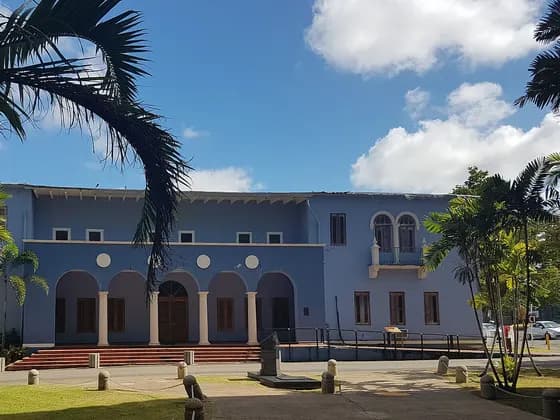
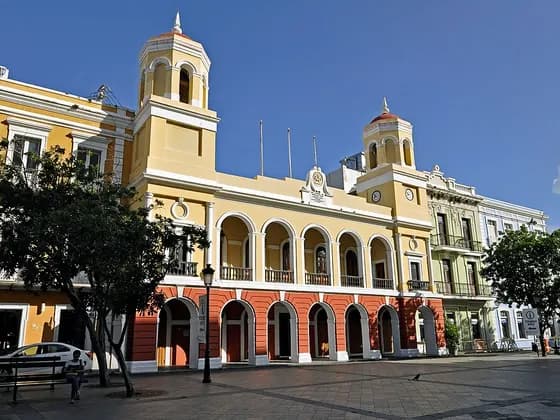
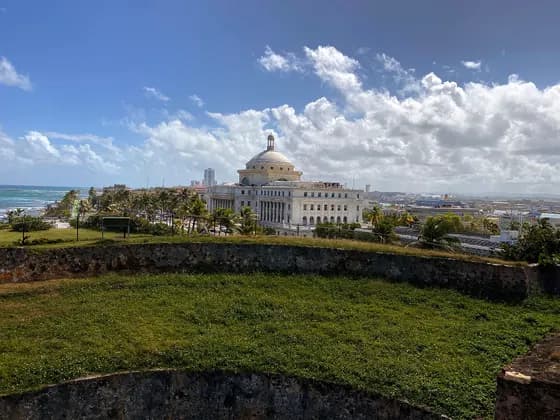
Photo: Moebiusuibeom-en · CC BY-SA 4.0 · cropped
Photo: Justinegv · CC BY-SA 4.0 · Photo: P. Hughes · CC BY-SA 4.0 · Photo: Steam Pipe Trunk Distribution Venue · CC BY 2.0
The University of Puerto Rico School of Medicine MD program at a glance (2027 entry)
The University of Puerto Rico School of Medicine (UPR School of Medicine, or UPR-SOM) runs a four-year MD on the university's Medical Sciences Campus in Río Piedras, San Juan. It admitted its first class in August 1950 and awarded its first 45 MD degrees in June 1954. The Liaison Committee on Medical Education (LCME), which accredits MD programs in the United States, first accredited it in spring 1954. After a January 2025 site visit, the school reported the maximum eight years of reaccreditation.
The program has two halves. Years 1 and 2 are the pre-clerkship phase of basic and behavioral sciences. The school's August 2024 curriculum diagram arranges both years as organ-system blocks, with subjects such as anatomy in Year 1 and pathology in Year 2 running through them. Years 3 and 4 are the clerkship phase: clerkships, the core clinical rotations, in which you work on hospital and clinic teams under supervision, and electives of your choice.
Teaching runs in English and Spanish. The catalog says patient interactions are nearly always in Spanish, so you must be fluent in both, while hospital medical records are written in English. Your first patients are standardized patients, healthy people trained to portray symptoms and illnesses, who teach you interviewing and examination from Year 1.
Public health runs through all four years. Most clinical sites are in the San Juan area. The school's Clinical Affairs office funds its two largest school-run clinical units, at the UPR Hospital in Carolina and in Mayagüez area hospitals.
| Degree | MD |
|---|---|
| Program length | 4 years and at least 4,692 hours; six-year maximum |
| Main campus | Medical Sciences Campus, Río Piedras, San Juan |
| Languages of teaching | English and Spanish; patients nearly always speak Spanish |
| Curriculum | Two pre-clerkship years in organ-system blocks, then two clerkship years |
| Grading | Letter grades A to F; some courses pass/fail |
| Anatomy | Cadaver dissection in Year 1 gross anatomy |
| First patient contact | Standardized patients in Year 1; clerkships from late July, Year 3 |
| Step 1 timing | Summer after Year 2; must be passed before Year 3 |
| Clinical sites | Over 100 affiliated institutions; most teaching sites in metro San Juan |
What makes the University of Puerto Rico School of Medicine MD program different
Training in two languages
The technical standards, the abilities required from admission through graduation, include communicating quickly and clearly in Spanish and English, in speech and in writing. So the two-language requirement runs through the whole program, not just admission.
A four-year public health curriculum
A first-year course opens the school's four-year public health curriculum, and Year 2 adds clinical epidemiology. Year 4 brings a three-week Public Health course and a week on population health, covering health systems and health law.
A west-coast option the class allocates
Some third-year places in pediatrics, surgery, and obstetrics and gynecology are in Mayagüez and San Germán, in western Puerto Rico. The class decides who takes them and names alternates, so students who want time away from San Juan can volunteer.
MD-PhD partners at Yale, Mayo Clinic and Texas
Besides its own MD-PhD, the school runs MD-PhD programs with Mayo Clinic, Yale, and the University of Texas Health Science Center at Houston with MD Anderson Cancer Center. The Yale and Texas programs begin after Year 3, so you finish your core clerkships before the PhD.
A research series that ends in a certificate
Research is optional, but the three-course MCBI series, Research in Basic or Clinical Sciences, puts you on a faculty investigator's project and ends with a certificate at the Hippocratic Oath ceremony.
How University of Puerto Rico School of Medicine teaches medicine
In the pre-clerkship years, lectures sit alongside self-directed learning, small- and large-group discussions, computer simulations, clinical correlations, review sessions and labs. Some courses, such as Medical Histology, belong to one department; others, such as Mechanisms of Disease and Basic Clinical Diagnosis, are taught by faculty from several departments.
Problem-based learning (PBL), where a small group works through a clinical case and decides what it needs to learn, is used in the Integration Seminars, one course in each pre-clerkship year. There, cases tie basic and clinical science to ethics and behavioral science.
In 2024-25 the school reported curricular revisions including pre-clerkship integration and compliance with workload standards, revised syllabi and contact hours for all courses, and narrative evaluations in pre-clinical and clinical courses. It also began using customized exams from the National Board of Medical Examiners (NBME) before clerkships and added the Lippincott Direct and Sketchy DDX learning platforms.
From Year 3, teaching centers on supervised patient care, with conferences, case presentations and seminars. A physician, faculty member or resident supervises every required clinical activity, and you never give a patient a final recommendation without discussing it with the attending physician or a senior resident.
The ways you will learn
| Lectures and laboratories | Lectures carry much of the science, with labs alongside. Medical Histology, on the microscopic structure of cells, tissues and organs, mixes conferences, labs and discussions. Human Physiology has experimental sessions, and Neurosciences has neuroanatomy and neurophysiology labs. |
|---|---|
| Integration Seminars | Small-group, case-based problem solving in Years 1 and 2. Integration Seminar I is pass/fail and also teaches literature searching; Integration Seminar II builds self-directed learning around the second-year content. |
| Clinical skills with standardized patients | Introduction to Clinical Skills in Year 1 and Basic Clinical Diagnosis in Year 2 teach interviewing and examination with standardized patients, who give feedback alongside faculty. Anatomical models are used to practice examinations and procedures. |
| Clerkships and sub-internships | Supervised work on wards, in clinics and in emergency rooms in Years 3 and 4. In Year 4, sub-internships (also called acting internships) have you manage your own patients under supervision, much as an intern would. |
| Medical ethics sequence | Medical Ethics I and II apply principles such as autonomy, beneficence and justice to cases and public policy. Medical Ethics III, in Year 4, is an online course ending in a bedside ethics consultation report. |
A typical week on the University of Puerto Rico School of Medicine program
The school's workload policy shapes a pre-clerkship week. Scheduled teaching is normally capped at 24 hours a week and can rise to 28 for no more than 11 weeks a semester. At least two afternoons a week, preferably three, stay free from 1 to 5 p.m. for independent study, with no review sessions allowed.
On the 2026-27 campus calendar, Years 1, 2 and 4 run from early August to late May with a winter recess, and Year 3 starts in late July. Every Wednesday from 11 a.m. to 1 p.m. is the Universal Academic Hour, a campus-wide slot. The School of Medicine's Wellness Program began using it for art therapy in January 2024.
Clerkships follow the duty-hour limits for first-year residents. You work no more than 80 hours a week, averaged over four weeks, with one day in seven free. No shift runs over 24 hours, you get at least eight hours off between shifts, and no in-house call falls the day before a clerkship exam.
Each syllabus sets that course's attendance rules, and under the 2025-26 policies an unauthorized absence brings a professionalism report from the course or clerkship director. To move an exam or other activity, campus rules approved by the Academic Senate in 2013-14 require a request at least 10 working days ahead, with official evidence.
Valid reasons to ask include illness or injury that keeps you away, childbirth, legal duties, a close relative's death, or a close relative's sudden illness that arises on the day. Taking part officially in academic conferences or workshops, or in sports or arts events representing the university or the country, also counts. In an emergency, you tell the instructor or course coordinator as soon as you can, send the request with evidence, and complete it with them on your first day back. If you skip this process, you lose the right to a make-up.
How anatomy is taught at University of Puerto Rico School of Medicine
Gross anatomy is taught by cadaver dissection in Year 1. Medical Gross Anatomy and Embryology, at 158 to 192 hours the largest first-year course, combines lectures, laboratory dissections and discussions. It covers the body's three-dimensional structure and how each major organ forms in the embryo, which explains congenital malformations. The technical standards list cadaver dissection among the activities every student must be able to do.
On the August 2024 diagram, anatomy runs through most of Year 1 beside the organ-system blocks. In a March 2017 school news item, the chair of Anatomy and Neurobiology said six students shared each cadaver, with about 26 cadavers a year. Most bodies, she said, were donated by the person in life through Puerto Rico's body-donation program. Those figures may have changed.
When you first meet patients at University of Puerto Rico School of Medicine
From Year 1, standardized patients teach you to take a history, examine and communicate, and they and faculty preceptors give you detailed feedback. They take part in courses in all four years, including clerkships.
Introduction to Clinical Skills also covers interviewing adult, pediatric and geriatric patients, using diagnostic equipment, universal precautions, drawing blood, giving injected medications and CPR. The psychiatry department teaches physician-patient communication early in Year 1, and Human Development uses patients among its teaching methods.
In Year 2, Basic Clinical Diagnosis builds full histories and examinations system by system through a series of clinical experiences. Electives open after Year 1, including shadowing and Principles of Emergency Medicine, a two-week course at the UPR Hospital in Carolina with lectures, skills stations and two ambulance runs. Full-time clinical work starts with Year 3 clerkships in late July.
The University of Puerto Rico School of Medicine curriculum, year by year
- Year 1
Normal structure and function, system by system
Year 1 opens with an introductory block, then works through the organ systems, ending in May with human development and behavioral sciences. Science courses run through the blocks, while clinical skills, ethics and an integration seminar run all year. Short translational research and public health blocks come in January.
- Blocks: musculoskeletal, blood and lymph, cardiovascular, respiratory, urinary and renal, and gastrointestinal before the winter recess; then metabolism and nutrition, endocrine, reproductive, head and neck, and neuro.
- Science courses: Medical Histology, Fundamentals of Molecular Medicine, Human Physiology (144 to 176 hours), Medical Gross Anatomy and Embryology, and Neurosciences.
- Introduction to Clinical Skills; Human Development, from conception to old age, including medical genetics; and Human Behavior, the behavioral sciences course.
- Integration Seminar I, and Medical Ethics I on principles such as autonomy, beneficence and justice, including end-of-life dilemmas.
- Public Health, Preventive Medicine and Population Health, the first course of the four-year public health curriculum, and a pass/fail introduction to clinical and translational research.
- Year 2
Disease, diagnosis and treatment
Year 2 revisits the organ systems through disease. After an introductory block that includes clinical epidemiology, blocks run from cardiology to the neurologic system, with psychopathology in April. Late April to mid-May holds shelf weeks, set aside for exams from the NBME, and the CSA (Clinical Skills Assessment), the school's end-of-Year-2 clinical skills exam. The summer recess and dedicated study time for Step 1 follow.
- Pathology and Introduction to Laboratory Medicine (146 to 178 hours), Infectious Diseases, Introduction to Medical Pharmacology and Mechanisms of Disease, through March.
- Blocks: cardiology, respiratory, renal and gastroenterology around the winter recess, then reproductive and endocrine, skin and musculoskeletal, hematologic and neurologic.
- Basic Clinical Diagnosis, covering history and examination of the cardiovascular, respiratory, musculoskeletal, gastrointestinal, reticuloendothelial (lymph nodes and spleen), neurological and genitourinary systems.
- Fundamentals of Clinical Epidemiology and Evidence-Based Medicine, Integration Seminar II, Psychopathology and Medical Ethics II.
- The NBME Comprehensive Basic Science Exam and the CSA, then Step 1 in the summer.
- Year 3
Core clerkships
Year 3 starts in late July. You follow one of six tracks, A to F, each of up to 20 students, which set your clerkship order. A sample order on the school's diagram runs internal medicine, short rehabilitation and neurology blocks, psychiatry, an elective, pediatrics, obstetrics and gynecology, then surgery.
- Internal medicine: 10 weeks, split equally between wards and clinics, with subspecialty time from allergy to rheumatology. It runs three times a year, for up to 42 students each time.
- Pediatrics, from prenatal life to late adolescence, including liaison psychiatry, adolescent medicine and pediatric HIV program rotations; about 60% of your time is outpatient.
- Surgery: 10 weeks through general surgery and the surgical specialties, with daily two-hour conferences for the first six weeks, problem-solving sessions and workshops on suturing and resuscitation.
- Obstetrics and gynecology: six weeks. The department's page, last updated in 2022, splits them into two academic and four clinical weeks, one each in gynecology, antepartum care, the labor room and a primary obstetrics and gynecology service. The catalog requires at least 12 deliveries and 15 case presentations.
- Psychiatry: an intensive five-week course in the 2025-26 catalog. The department's undated page says six weeks and lists inpatient units, the Psychiatric State Hospital, partial hospitalization programs and campus outpatient clinics.
- Short blocks in neurology and clinical physiatry (physical medicine and rehabilitation) and a short elective. On the school's 2024 diagram, two courses run alongside the clerkships all year: dermatology, and diagnostic radiology and nuclear medicine.
- Year 4
Sub-internships, community health and electives
Year 4 is built around your career plans, with a faculty mentor you choose helping design and sign off your schedule. Alongside required courses come at least 560 hours (14 weeks) of electives. On the school's diagram the year opens with the CPX (Clinical Practice Exam), the clinical skills exam you must pass to graduate, and graduation is in June.
- Two four-week selective sub-internships. The first is in a core area such as medicine, surgery, pediatrics or emergency medicine.
- The second must be a different course, from a longer list that adds options such as trauma surgery, neurosurgery, orthopedics, geriatrics, and hematology and oncology.
- The Family Medicine Fourth Year Clerkship, placed in Year 4 by the 2025-26 catalog and four weeks long in the 2024-25 manual, focused on ambulatory care, prevention and interdisciplinary teamwork.
- Public Health: three weeks investigating a community health program to analyze a community's health, using community-oriented primary care.
- A pass/fail week on population health: health systems in the world, Puerto Rico and the United States, emergency care (EMTALA) and privacy (HIPAA) law, and palliative care law.
- Medical Ethics III, an online course ending in a bedside ethics consultation report.
How you are assessed at University of Puerto Rico School of Medicine
Each course is graded A, B, C or F, or pass/fail where it uses that system. An A starts at 89.5%, a B at 79.5% and a C at 70%. Integration Seminar I and the research principles course are pass/fail, and Introduction to Clinical Skills has used letter grades since 2005. A C or a pass is the lowest passing grade, and a GPA below 2.0 at the end of any year can lead to dismissal.
Every course has practice (formative) assessment, and courses of four weeks or more give mid-course feedback. Course directors must contact students who fail a test or formative assessment, or sit at 75% or below at mid-course. Each required clerkship adds a narrative assessment of your professionalism and competencies, which feeds the Medical Student Performance Evaluation (MSPE), the school's letter for residency applications.
A third-year clerkship grade can include a professionalism rating, an OSCE, an NBME subject exam and departmental exams. An OSCE (objective structured clinical examination) is a circuit of timed stations, each testing one clinical task. NBME subject exams, or shelf exams, are national multiple-choice tests in each specialty; a failed one may be retaken, with the score capped at 70%. The OB/GYN department's page, last updated in 2022, weights multiple-choice exams at 30%, a standardized clinical exam 20%, clinical work 30%, case discussions 10% and an evidence-based project 10%.
The Standardized Patient Program prepares both school clinical skills exams. Passing the CSA at the end of Year 2 is required for promotion to Year 3; you get three attempts, the last by August 15. The CPX in Year 4, which includes an inter-professional collaboration station, must be passed to graduate; it brings feedback but no transcript grade. Year 2 also ends with the NBME Comprehensive Basic Science Exam, retaken within four weeks if you score under 50%.
The USMLE is run by the Federation of State Medical Boards and the NBME. Step 1 has been reported only as pass or fail since January 26, 2022, while Step 2 CK (Clinical Knowledge) is still scored. School policy says you sit Step 1 in the summer after Year 2, by a deadline the Associate Dean for Academic Affairs sets each year. You must pass it before Year 3 begins.
In August 2026 the USMLE program announced a move to designated testing dates from January 2029, with Step exams offered less often each year. Its June 2026 announcement had set the change for 2028. On the current schedule, if you enter in 2027 you would sit Step 1 in summer 2029, within a few months after the switch. Step 2 CK, a graduation requirement, has a deadline set each year, and the diagram reserves study time for it at the end of Year 3, so it would also fall after the switch.
- Failing Step 1 at the first attempt, or missing the deadline, means probation. You get three attempts in all and must pass by June 30 of that academic year.
- Students judged at risk can get a Step 1 extension. They sit by December 31 and take MDAA 7006, an independent study course with an assigned professor, registering for no other courses until they pass.
- Step 2 CK also allows three attempts, and failing the first means probation.
- You have six academic years at most to finish, and three for Years 1 and 2. A failed course can be repeated once; failing three pre-clerkship courses, or two third-year clerkships, brings a recommendation for dismissal.
University of Puerto Rico School of Medicine clinical rotations: where you will actually train
Clinical training happens mostly in the San Juan metropolitan area. The school's five major affiliated teaching facilities are the Adult University Hospital, also called the University District Hospital, the University Pediatric Hospital and the San Juan Veterans Administration Hospital. The other two are the Medical Services Administration of Puerto Rico (ASEM, from its Spanish name) and the UPR Hospital in Carolina. Affiliation agreements cover more than 100 institutions across the island, including hospitals and private practices.
You rank the six third-year tracks in late winter of Year 2, and an online match places you. The Curriculum Office can override a track assignment for academic reasons, and classmates can swap by an announced deadline. For most sites, course directors then assign students at random, at least four weeks ahead, balancing students against faculty and patients. The school says experiences are equivalent across sites, based on statistical comparison of clerkship results.
Western Puerto Rico is the main option outside the metro area. The policy sets places in Mayagüez and San Germán for 10 pediatrics, 10 surgery and 5 obstetrics and gynecology students. Your class decides who goes, names an equal number of alternates and sends the list to the Curriculum Office, and swaps are allowed up to four weeks before. The Associate Dean for Student Affairs can help if serious hardship affects an assignment outside the metro area.
Each hospital has credentialing steps to finish before you rotate. The 2024-25 Fourth Year Manual lists items such as a criminal-record certificate, a health certificate, vaccinations, a CPR card and electronic medical record training. La Concepción Hospital also asks for a recent drug test, and VA rotations need paperwork 60 business days ahead.
Your base for Years 1 and 2. The University District Hospital stands on the Medical Center grounds and hosts internal medicine, obstetrics and gynecology, and sub-internships.
- Adult University Hospital (University District Hospital)
- Campus outpatient clinics (psychiatry)
Metro-area affiliates in the catalog. The University Pediatric Hospital hosts a general pediatrics sub-internship and most pediatric electives in the 2024-25 manual. The VA and San Juan City Hospital teach internal medicine, and the VA also hosts psychiatry and many electives.
- University Pediatric Hospital
- San Juan Veterans Administration Hospital (VA Caribbean Healthcare System)
- San Juan City Hospital
- San Jorge Children's Hospital
- Pavía Hospital
- Auxilio Mutuo Hospital
- Comprehensive Cancer Center
Home of one of the two school-run clinical units funded by the Clinical Affairs office: internal medicine, obstetrics and gynecology, emergency medicine and many electives.
- UPR Hospital Dr. Federico Trilla
Third-year pediatrics, surgery, and obstetrics and gynecology places, allocated by the class. The Mayagüez area hospitals house the other school-run clinical unit funded by the Clinical Affairs office.
- Mayagüez Medical Center
- San Antonio Hospital, Mayagüez
- Perea Hospital, Mayagüez
- La Concepción Hospital, San Germán
North-coast affiliates in the catalog; obstetrics and gynecology students can rotate in Manatí.
- Doctor's Center Hospital
- Manatí Medical Center
Electives, selectives and away rotations at University of Puerto Rico School of Medicine
Electives total at least 560 hours (14 weeks), and any taken in Years 1 to 3 count. You can start in the summer after Year 1 if you are in good academic standing, and summer research is strongly encouraged. The newest posted summer list, for 2023, included anesthesiology, emergency medicine, organ and tissue donation, family practice in the community, nuclear medicine and shadowing.
The 2024-25 Fourth Year Manual lists electives by department across the affiliated hospitals. Examples include Tuberculosis Clinical Education at the VA, Clinical Ophthalmology in Isolated and Underserved Areas, a Diabetes Summer Camp elective and Palliative Medicine. Humanities options include Medicine in Shakespeare and the History of Tropical Medicine in Puerto Rico.
To help you choose, the 2024-25 manual also sets out discipline-based pathways. For a residency interest such as anesthesiology or diagnostic radiology, a pathway lists recommended sub-internships and electives, and a departmental pathway advisor helps you plan.
A Service Learning Experience places you with community service programs, with emphasis on health disparities. Peer to Peer in Medical Education, open after Year 1 and, under the 2024-25 manual, with a GPA of 3.0 or more, trains you to teach. In a separate elective, fourth-year students facilitate first-year Integration Seminar sessions.
Away rotations are electives at other schools. You can take them at LCME-accredited institutions through the Association of American Medical Colleges' Visiting Student Learning Opportunities (VSLO) service or the Curriculum Office. Under the 2024-25 manual, you need good academic standing, the department chair's prior approval and at least three months' notice, and you pay your own costs. The same manual says international electives at affiliated programs need approval from the Curriculum Office and the Associate Dean for Academic Affairs, and six months' notice. They also need a safety review of risks such as natural disasters and weak supervision.
Dual degrees and research years at University of Puerto Rico School of Medicine
Research is optional. Everyone takes the research principles course in Year 1 and clinical epidemiology in Year 2; beyond those, research comes through electives. In the 2024-25 Fourth Year Manual, a research experience normally earns up to 160 hours of credit. A longitudinal project, lasting from two months to a year, can earn up to 240 hours, and you can do it alongside your regular courses.
The structured route is the MCBI series: three sequential courses of about 160 hours each on a School of Medicine investigator's project. The 2024-25 manual requires a GPA of 2.50 or more. Each course is graded A to F on your results, data handling, analysis and professionalism, with a report for your portfolio.
The third course aims at a journal manuscript and a presentation at a local or national forum, and completing all three earns a certificate at the Hippocratic Oath ceremony. Departments from anesthesiology to neurosurgery offer research electives for students heading toward residency in their field. In 2024-25 the Hispanic Center of Excellence (HCOE) ran a summer research program for 100 students, and the school reported 170 students in HCOE-supported research projects and 12 graduating with a research certificate.
Dual degrees combine two programs. For the UPR MD-PhD you apply separately to the MD and to a PhD in a basic science department. You start the PhD after completing Year 2 and passing Step 1, then return to finish the MD. The MD-PhD and MD-MS with Mayo Clinic also begin after Year 2. The MD-PhD programs with Yale and with the University of Texas Health Science Center at Houston and MD Anderson Cancer Center begin after Year 3; you return for Year 4.
In the 2025-26 catalog's version of the MD-JD with the UPR School of Law, you go to law school after Year 2. You return for Year 3, and your last year mixes MD and JD requirements. You can also begin with law school. In every dual degree the degrees are awarded separately.
Facilities and support at University of Puerto Rico School of Medicine
Where you will learn
The School of Medicine's administration is on the eighth floor of the Guillermo Arbona Irizarry Building on the Medical Sciences Campus. The Clinical Skills Development Office runs the Standardized Patient Program and an Anatomical Models Laboratory for practicing examinations and procedures. In 2024-25 the school reported upgrading its simulation center with high-fidelity simulators and audiovisual tools.
The same report lists AI-enabled classrooms, electronic study boards and funding to upgrade Amphitheater I. The campus library is the Conrado F. Asenjo Library. Courses run on Blackboard Ultra, exams on ExamSoft's Examplify, and a One45 platform tracks longitudinal assessment.
Support while you study
The Associate Deanship for Student Affairs runs counseling, career advising and student services. Academic counselors help you build an individualized plan to improve your grades, with study skills and time management. You meet a Careers in Medicine advisor in Years 1 to 3, and your fourth-year faculty mentor helps with residency applications, personal statements and interview preparation.
For mental health there is a School of Medicine psychologist, the campus counseling and psychology center (CECSi) and the 24-hour PAS crisis line. The Office of Services for Students with Disabilities (OSEI) arranges accommodations. The Wellness Program, opened in July 2020, runs weekly activities. In 2024-25 the school reported expanded personal counseling, a Wellness Program that reached 319 students and a new student-led food pantry.
If you struggle, course directors must reach out early and refer you to your year's Monitoring Committee, the faculty group that tracks each class's progress. The HCOE's PIEM program supports admitted students from disadvantaged backgrounds, 30 of them in 2024-25. You can report mistreatment to the Student Ombudsperson or the Associate Dean for Student Affairs, and retaliation against good-faith reports is forbidden.
About 30 student and resident associations and interest groups are listed, from the American Medical Student Association to a community service association (AESCO), alongside a chapter of the Alpha Omega Alpha medical honor society.
Is the University of Puerto Rico School of Medicine program right for you?
This program may suit you if
- You speak Spanish and English fluently and want to train in both.
- You want public health built in, including a three-week community health investigation in Year 4.
- You would welcome a third-year rotation in Mayagüez or San Germán, with your class deciding who goes.
- You want optional, structured research that aims at a publication and ends with a certificate.
- You are weighing an MD-PhD with Yale, Mayo Clinic or the Texas partners, or an MD-JD.
Things to think about
- Fluent Spanish is essential, since patient interactions are nearly always in Spanish.
- Courses carry letter grades, and ending any year with a GPA below 2.0 can lead to dismissal.
- Step 1 must be passed before Year 3 starts in late July, leaving a short window after Year 2.
- Clinical sites are spread around the island, and internal medicine alone uses several hospitals.
University of Puerto Rico School of Medicine MD program — frequently asked questions
Applying to University of Puerto Rico School of Medicine?
How to get into University of Puerto Rico School of Medicine
Prerequisites, MCAT, AMCAS personal statement, secondaries and interview, step by step.
Open the guide →University of Puerto Rico School of Medicine admissions profile
MCAT and GPA profile, acceptance rate, interview format and key dates.
See the profile →Compare University of Puerto Rico School of Medicine with other schools
Put the teaching style, anatomy teaching and clinical sites next to another school.
Open the comparison →Prepare for the University of Puerto Rico School of Medicine interview
Format breakdown, school-specific sample questions and prep tips for this interview.
Read the guide →Where this University of Puerto Rico School of Medicine program guide came from
This guide was written from 36 official sources — University of Puerto Rico School of Medicine's own program pages and curriculum documents, plus the accreditor and the hospitals and health systems the school trains students in where they publish detail — read on 2026-11-12, then checked claim by claim against those sources.
- UPR School of Medicine: Doctor of Medicine (MD Program)
- UPR Medical Sciences Campus Catalog 2025-2026 (rev. January 9, 2026), School of Medicine section
- Curriculum Structure Diagram (August 2024)
- 2025-26 Policies and Guidelines for the Evaluation and Advancement of Medical Students
- Fourth Year Manual and Elective Courses Catalog 2024-2025 (rev. May 2024)
- Process of Requesting an Alternative Clinical Site, Third Year Curriculum (January 2024)
- Workload, Duty Hours and Supervision Policy (December 2023)
- Description of Summer Elective Courses 2023-2024
- Visiting Students Guidelines to Apply for Fourth Year Level Electives (rev. April 2024)
- UPR School of Medicine Achievements Report 2024-2025
- Process of Reporting Unprofessional Behavior or Mistreatment (amended April 2024)
- UPR Medical Sciences Campus Academic Senate: Rules for Moving Exams and Academic Activities in Special Situations (2013-14, in Spanish)
- University of Puerto Rico General Student Regulations, compiled version in force from March 2017 (in Spanish), article on course syllabi
- UPR School of Medicine: Standardized Patient Program
- UPR School of Medicine: Anatomical Models Laboratory
- UPR School of Medicine news: the use of cadavers in medical teaching (March 2017, in Spanish)
- Department of Medicine: Medical Student Education
- Department of Obstetrics and Gynecology: Medical Students (last updated March 2022)
- Department of Obstetrics and Gynecology site map, with page update dates
- Department of Psychiatry: Information for Medical Students (undated)
- UPR School of Medicine: Concurrent Degree Programs (MD-PhD)
- UPR School of Medicine: Associate Deanship of Clinical Affairs
- UPR School of Medicine: Associate Deanship for Student Affairs
- UPR School of Medicine: Academic Counseling
- UPR School of Medicine: Counseling and Psychological Services
- UPR School of Medicine: Careers in Medicine
- UPR School of Medicine: Wellness Program
- UPR School of Medicine Wellness Program: student associations and interest groups
- UPR School of Medicine: Organizations
- UPR School of Medicine: Digital Educational Resources Office
- UPR Medical Sciences Campus Academic Calendar 2026-2027 (in Spanish)
- LCME: Accredited Programs directory
- USMLE: Designated Testing Dates Information Hub
- USMLE: Updated Timeline for Designated Testing Dates, transition in January 2029 (August 6, 2026)
- USMLE: Transition to Limited Testing Dates Each Year Starting in 2028 (June 23, 2026, since updated)
- USMLE: Examination Results and Scoring
Curricula are restructured between cycles. Anything here that decides your application — how anatomy is taught, a clinical campus assignment, a required research year — should be confirmed against the official page for your entry year.
Applying to University of Puerto Rico School of Medicine?
We help US applicants with MCAT strategy, the AMCAS personal statement, secondary essays and interview prep — everything you need for a competitive University of Puerto Rico School of Medicine application.