
The Ponce Health Sciences University School of Medicine MD program
What you actually study, and where you will be
Ponce Health Sciences University School of Medicine's MD is a 4-year program taught through case-based learning in an integrated curriculum, with clinical rotations in Puerto Rico and two New York sites for Ponce students (2027 entry). If you enter in 2027, you join the second class on a new organ-system curriculum, which the school announced in March 2026. It moves from a traditional model to a flipped classroom and case-based active learning. At Ponce you train in English and Spanish, and you must pass Step 1 of the United States Medical Licensing Examination (USMLE) before clerkships, the core clinical rotations, begin. The same MD runs at a St. Louis campus, which this guide covers only where it differs.
- Degree
- MD
- Length
- 4 years
- Teaching
- Integrated + Case-based learning


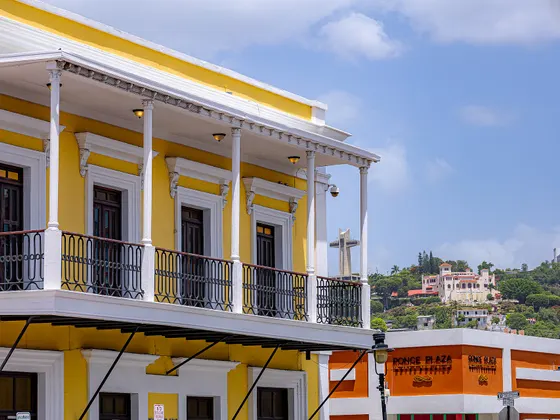

Photo: Rafyrodriguez · CC BY-SA 4.0 · cropped
Photo: P. Hughes · CC BY-SA 4.0 · Photo: Ligocsicnarf89 · CC BY 4.0 · Photo: Ligocsicnarf89 · CC BY 4.0
The Ponce Health Sciences University School of Medicine MD program at a glance (2027 entry)
The Ponce Health Sciences University (PHSU) School of Medicine runs a four-year Doctor of Medicine (MD) program, which the school lists at 166 weeks and 206 credits. The main campus is in Ponce, on the southern coast of Puerto Rico, and the same MD also runs at a branch campus in St. Louis, Missouri. You choose a campus when you apply. This guide centers on Ponce and says where St. Louis differs.
The program is changing. In March 2026 the school announced a move from a traditional model to an organ-system-based curriculum. You study the body system by system, with foundational science tied to clinical practice from the early stages of training. The change is phased in: the first academic year in August 2026, the second in August 2027. The program page gives a start date of July 26, 2027, so a 2027 entrant would be in the second class on the new design.
The new design uses a flipped classroom: you work through material in your own time, and class time goes on applying it. It emphasizes problem-based, team-based and case-based learning, where you work in groups to apply your knowledge to clinical problems and patient cases.
Language shapes life at Ponce. The program lists English and Spanish as its languages, and the school expects Ponce students to communicate in both because they serve a bilingual patient population. The school's mission is to reduce health disparities in the populations it serves in Puerto Rico and the US, and it describes an emphasis on primary care. It links the new curriculum to Puerto Rico's rapidly aging population and the challenge of physician availability.
The first two years are the pre-clerkship, or pre-clinical, phase, which the program page says combines basic sciences with early clinical experiences. You must then pass USMLE Step 1. Years 3 and 4 are clinical: first the core clerkships in each main specialty, then advanced rotations and electives you choose.
The school was founded in 1977, and its first class of 23 students graduated in 1981. Its 2024-25 consumer guide shows 150 students in each Ponce cohort from 2020-21 to 2023-24. The program is accredited by the Liaison Committee on Medical Education (LCME), which accredits MD programs in the United States. The LCME directory, updated November 2, 2026, shows Full status and a next survey date of 2025-26. PHSU's international MD in Tortola, British Virgin Islands, is a separate program with a different accreditor.
| Degree | MD (Doctor of Medicine), four years, listed at 166 weeks |
|---|---|
| Curriculum | New organ-system design, phased in from August 2026 |
| Main campus | Ponce, Puerto Rico; same MD also at St. Louis, Missouri |
| Languages | English and Spanish at Ponce; English at St. Louis |
| Class size | 150 per Ponce cohort, 2020-21 to 2023-24 (school's 2024-25 guide) |
| Teaching style | Flipped classroom with problem-, team- and case-based learning |
| Early clinical experiences | Years 1 and 2, per the program page |
| Clinical sites | Ponce: sites across Puerto Rico, plus two in New York. St. Louis: Mercy Health. |
| Step 1 timing | Before clerkships, no later than July 10 under school policy |
| Grading | Primarily Pass/Fail; national subject (shelf) exams 30% of third-year clerkship grades (2026-27 manual) |
What makes the Ponce Health Sciences University School of Medicine MD program different
A new organ-system curriculum, phased in from 2026
Courses run body system by body system, from Skin and Musculoskeletal to Cardiovascular and Neurology. The school's stated goals include better knowledge retention, closer work between basic science and clinical faculty, and better use of academic time.
Training in two languages at Ponce
You are expected to communicate with patients, families and the healthcare team in English and Spanish, in person and in writing. The Language Support Program offers coaching in either language, plus basic American Sign Language for healthcare.
A clinical network across Puerto Rico
For Ponce students, the MD partner list runs from Ponce hospitals to San Juan, Mayagüez and towns such as Adjuntas and Lares. It adds Veterans Affairs (VA) Caribbean clinics, migrant health clinics and two New York sites. The dean describes settings from rural clinics to tertiary-care hospitals, which treat complex cases.
The university's own clinics as a training site
The Clinics at PHSU, brought under that name in June 2026, see 6,000 to 6,500 patients a month. Services include family medicine, psychiatry, dermatology and endocrinology, and students and resident physicians train there under faculty supervision.
Research through the Ponce Research Institute
The Ponce campus page says students can work with faculty mentors on cancer, neuroscience, mental health, infectious diseases and women's health. The 19th PHSU-PRI Scientific Conference, in May 2025, presented more than 180 projects.
How Ponce Health Sciences University School of Medicine teaches medicine
The new curriculum is built around organ systems rather than separate science subjects. The dean says the aim is to strengthen understanding and retention by connecting classroom learning more directly with clinical practice. Science stays tied to the diagnosis, treatment and management of disease.
The school's March 2026 announcement says it will adopt a flipped classroom, which puts active learning ahead of traditional lectures. The 2026-27 attendance policy fits that model: it encourages every course to record its lectures and use class time for activities that apply the content. Those activities are also meant to give you feedback early enough to fix problems.
The same policy says PHSU does not generally require attendance at class sessions, and that in-person lectures should not be required where a course has recorded them. Course directors can still require in-person activities, such as exams, presentations, small groups, problem-based learning and laboratories. No more than five excused absences are given in one term. In the clinical years, you must take part in person in all clerkship activities.
The diagram of the new curriculum in the school's March 2026 announcement sets out six elements: medical knowledge, clinical reasoning, clinical skills, lifelong learning skills, interprofessional collaboration and professional ethics. Four linked themes sit beside them: research experience, quality improvement and patient safety, being bilingual, and telehealth and virtual care.
The ways you will learn
| Problem-based learning (PBL) | A small group works through a clinical problem, works out what it still needs to learn, then researches and shares the answers. |
|---|---|
| Team-based learning (TBL) | You prepare first, then test and apply your knowledge with a team. |
| Case-based learning (CBL) | You work through a patient case with set learning goals and a facilitator. |
| Laboratories | The MD technical standards, dated March 2024, expect you to examine specimens in anatomy, pathology, microbiology and neuroanatomy laboratories, use a microscope and carry out basic laboratory techniques. |
| Simulation and standardized patients | The university's facilities page describes simulation labs with high-fidelity mannequins. The attendance policy lists simulations and standardized patient exercises, where actors play patients, among activities that need you there in person. |
| Clerkships | Supervised rotations in hospitals and clinics in years 3 and 4, where you work with patients alongside faculty and residents. |
How anatomy is taught at Ponce Health Sciences University School of Medicine
PHSU's sources describe both real and digital anatomy. The dean's message, on a page last updated in December 2025, says students combine a traditional cadaver lab with three-dimensional anatomical software. The MD technical standards, dated March 2024, expect you to take part in dissection of cadavers and to perform anatomical dissections.
The university's facilities pages, which cover all its locations, add 3D virtual dissections and digital anatomy tables, large screens that display the body in three dimensions.
The 2020-2023 catalog, which describes the curriculum now being replaced, said its Gross Anatomy course was taught by prosection and demonstration. In a prosection, someone else has already dissected the specimen, so you study it rather than cut it yourself. The same catalog placed the Gross Anatomy Lab in Building E on the main campus, with room for up to 17 tables.
At St. Louis, the university runs a body donor program, which gives its medical students donated bodies to learn from.
When you first meet patients at Ponce Health Sciences University School of Medicine
The program page places early clinical experiences in the first two years, and the curriculum announcement says clinical practice comes in from the early stages of training. A course series called Essentials of Clinical Care runs through all four pre-clerkship semesters.
Before clerkships you complete the required activities of the Introduction to Clinical Practice course, including a patient safety conference, CPR certification and safety training on universal precautions. You cannot enroll in required clerkships or clinical electives until you have done these.
On clerkships, qualified faculty supervise all patient care, and your responsibility is matched to your level of training. A list sets out the clinical experiences and procedures you need, and whether you should observe, assist or perform. You do nothing without a supervising faculty member or resident there in person, and students cannot write medical orders.
The Ponce Health Sciences University School of Medicine curriculum, year by year
- Year 1
Foundations, then the first organ systems
Year 1 opens the pre-clerkship phase, which the policy manual calls Phase 1. It carries 53 credits across two semesters. You start with two Foundation courses, then move into organ-system courses in the second semester.
- Foundation I (12 credits) and Foundation II (10 credits) make up most of the 26-credit first semester.
- Essentials of Clinical Care I (4 credits) in the first semester and II (6 credits) in the second.
- Second-semester organ-system courses: Skin and Musculoskeletal (4 credits), Gastrointestinal (5), Reproductive/Endocrine (6) and Hematology (5).
- Interprofessional Perspectives in Health Disparities (1 credit). In the 2020-2023 catalog, it covered gaps in health outcomes and social determinants of health such as race, social class and migration status.
- Year 2
The remaining systems, then Step 1
Year 2 carries 45 credits: 25 in the first semester and 20 in the second. You finish the organ-system courses and get ready for clinical work. Once you pass every pre-clerkship course and reach the required score on a national readiness exam, you take Step 1.
- First semester: Cardiovascular (7 credits), Renal Urinary (6), Respiratory (6) and Essentials of Clinical Care III (6).
- Second semester: Neurology (8 credits), Multisystem (4), Essentials of Clinical Care IV (4) and Medical Ethics (2).
- Introduction to Clinical Practice (1 credit). In the 2020-2023 catalog, it covered record management, legal aspects of practice, progress notes, evidence-based medicine and an intensive electrocardiogram course.
- Skills Development (1 credit). In the 2020-2023 catalog, this was four weeks of protected independent study for Step 1.
- Year 3
Core clerkships
Year 3 runs for 40 weeks and carries 53 credits. In the 2025-26 calendar, third-year classes began on July 28, the same day as first-year classes. The clerkship descriptions below come from the 2020-2023 catalog, so details may have changed.
- Pediatrics, Obstetrics Gynecology, Internal Medicine and Surgery: 8 weeks and 10 credits each.
- Clinical Psychiatry and Family Medicine: 4 weeks and 5 credits each.
- Professional Development I & II (2 credits) and Radiology (1 credit) run across all 40 weeks. The catalog described Professional Development as covering professionalism, cultural competence and competing for residency positions.
- The catalog described internal medicine teams of an attending physician (the senior doctor), a resident, an intern (a first-year resident) and two or three students, caring for 7 to 10 inpatients. Students were expected to take at least two new patients a week.
- It described family medicine as comprehensive care of common health problems in the outpatient setting.
- The 2020-2023 catalog ran the surgery clerkship at Damas Hospital and Saint Luke's Hospital in Ponce, with occasional rotations at other affiliated hospitals in Ponce and Yauco. It split internal medicine across two sites and placed psychiatry at the school's outpatient clinics.
- The year ends with the Clinical Practice Examination, a required clinical skills exam.
- Year 4
Advanced rotations and electives
Year 4 runs for 44 weeks and carries 55 credits. Most of the time is yours to shape through electives. In the 2025-26 calendar, fourth-year classes began on June 30, about a month ahead of the other years. This is also when you apply for residency, the specialty training that follows medical school.
- General Internal Medicine (4 weeks, 5 credits). The 2020-2023 catalog said you perform as an intern under direct supervision. Many schools call that role a sub-internship or acting internship.
- Emergency Medicine (4 weeks, 5 credits). The 2020-2023 catalog described learning to assess emergency patients with no diagnosis yet, and to separate those who need admission from those who can go home.
- Primary Care Selective (4 weeks, 5 credits) in Medicine, Pediatrics, Family Medicine or OB/GYN. A selective is a rotation you pick from a set list. In family medicine, the 2020-2023 catalog had you choose your site from primary care physicians in the community.
- Electives: 24 weeks and 30 credits, plus a maximum of 8 weeks of unscheduled time.
- You should not exceed 5 days per clerkship or elective for residency interviews.
How you are assessed at Ponce Health Sciences University School of Medicine
The 2026-27 Student Policy Manual says the MD is primarily graded on a Pass/Fail basis. Class rank still exists. The Registrar's Office works it out from numeric scores for your Medical Student Performance Evaluation (MSPE), the school's assessment of you for residency programs, and for graduation honors. The 2020-2023 catalog's grade table set Honors at 90 to 100, Pass at 70 to 89 and Fail at 69 and below.
To graduate you must pass all required courses, clerkships and electives, the Clinical Practice Examination, Step 1 (in three or fewer attempts) and Step 2 Clinical Knowledge (CK). You must also meet professional conduct standards. The Student Promotions Committee decides who advances.
Step 1 tests the science behind medicine and has been reported only as pass or fail since January 26, 2022. At the end of each semester you take the Comprehensive Basic Science Examination (CBSE), a readiness test from the National Board of Medical Examiners (NBME). You need a minimum CBSE score, revised each year, to be authorized for Step 1. Policy then requires you to take Step 1 by July 10 and pass it before clerkships.
You have three attempts at Step 1. If you fail, you must enroll in the Basic Science Review Course (SKD 091). You cannot spend more than a year in remedial courses or outside the regular curriculum, apart from approved medical leave. A third failure, or a year or more outside the curriculum, sends you to the Student Promotions Committee, which can consider dismissal.
Step 2 CK tests how you apply clinical knowledge to patient care. The school strongly recommends taking it by August 30 of the year you apply to residency, so your score is ready when the Electronic Residency Application Service (ERAS) opens. You need a pass by an annual deadline for PHSU to verify your rank list for the National Resident Matching Program. For a May graduation, your last chance is the last week of April.
In August 2026 the USMLE program announced a move to designated testing dates from January 2029, with Step exams offered less often each year. Its June 2026 announcement had named 2028. On the current schedule, a student entering in 2027 would sit Step 1 a few months after the switch, before clerkships start. The recommended Step 2 CK date would come the following year, also after the switch. These are projections, and the USMLE has encouraged schools to review policies tied to its exams, so PHSU's dates may change.
- Shelf exams are NBME subject exams in each clinical specialty. A minimum shelf score is required to pass third-year clerkships, and the shelf counts for 30% of the final grade. Each department sets its minimum from past PHSU results and NBME guidelines.
- If you miss the shelf minimum, you get an Incomplete and a second try at the same score. Pass, and the two attempts are averaged. Miss again, and you fail the clerkship.
- The Clinical Practice Examination (CPX) comes at the end of your first clinical year, with written feedback. If you fall short, you get guided learning during fourth-year required rotations, then a modified exam.
- The manual also names OSCEs, objective structured clinical examinations, among practical exams you may need to repeat. In an OSCE you move through timed stations, each testing one clinical task.
- If you fail one course, you remediate it in the summer on academic probation. If you fail two or more, or the same course twice, you may have to repeat courses or face dismissal.
- The program is designed for four years, with a maximum of six. You must complete at least 67% of the credits you attempt, counted cumulatively.
- You can appeal a final grade or a narrative assessment, the written evaluation of your work. You start with the course or clerkship coordinator within 30 days of the grade, then the department chair, then the Associate Dean of Medical Education, whose decision is final.
- If you are told to repeat a year or are dismissed, you have five working days to appeal in writing to the Dean of Medicine.
Ponce Health Sciences University School of Medicine clinical rotations: where you will actually train
For Ponce students, the clinical years draw on the MD partner list on the school's Clinical Partnerships page. It covers hospitals, ambulatory clinics, migrant health clinics and VA Caribbean sites across Puerto Rico, plus two New York sites. The dean's message says students gain experience in both Puerto Rico and the mainland US.
The Clinics at PHSU is part of this. The partnerships page, under the older name PHSU Wellness Center, says it gives students hands-on experience in primary care, mental health and preventive medicine. The Clinics network runs from a main clinic in Ponce, with separate dermatology, dental and Adjuntas clinics, and hosts residency programs in dermatology, orthopedic surgery, psychiatry, rural psychiatry and rural family medicine. The Adjuntas clinic opened in 2026 with services including psychology and social work, partly staffed by Clinical Psychology practicum students.
Assignment works by group. The policy manual describes ten clerkship sequences for year 3 and nine for year 4. If your circumstances warrant a particular sequence, you can ask the Vice President of Student Affairs or the Clinical Coordinator before assignments go out. Once you have a site, you can ask the department chair to change it for a justified reason, but only to a site students are routinely assigned to for that clerkship.
St. Louis students follow the same curriculum table. The school's Clinical Partnerships page says they complete third- and fourth-year clerkships through its partnership with Mercy Health. The school's September 2026 announcement adds rotations at Humboldt Park Health, a 200-bed community hospital in Chicago, for St. Louis students from the 2029-30 academic year. A school news item on Match Day 2026 also describes a St. Louis graduate who rotated at SSM Health as well as Mercy.
- Site requests depend on whether the reason is valid and whether comparable sites are available. A reported conflict of interest with a teacher is a major reason to approve a change.
- Third-year hours: no more than 60 a week and 10 a day. Call ends by midnight, with exceptions for continuity of care, and comes no more than twice a week.
- Fourth-year hours: no more than 80 a week, averaged over four weeks. In-house call comes no more often than every third night on average and never runs past 24 hours. After 24 hours of in-house call, you get at least 14 hours free.
- Everyone gets one 24-hour period free each week, averaged over four weeks.
- PHSU Wellness Center (now The Clinics at PHSU)
- Damas Hospital, Ponce
- Hospital Episcopal San Lucas, Ponce
- Mennonite Ponce
- Metro Pavía - Hospital Metropolitano Dr. Pila, Ponce
- San Cristóbal Ambulatory Clinics, Ponce
- VA Caribbean - Ponce Outpatient Clinic
- Ashford Presbyterian Community Hospital, San Juan
- Hospital El Maestro, San Juan
- San Juan Capestrano Hospital, San Juan
- San Jorge Children's Hospital, Santurce
- PR Children's Hospital, Bayamón
- Bella Vista Hospital, Mayagüez
- Mayagüez Medical Center, Mayagüez
- Hospital Buen Samaritano, Aguadilla
- La Concepción Hospital, San Germán
- Metro - Pavía Hospital, Yauco
- Costa Salud 330 Clínica (Rincón & Aguada)
- Auxilio Mutuo San Pablo Hima, Caguas
- Centro Médico Menonita, Cayey
- Hospital General Menonita de Aibonito
- Hospital Episcopal San Lucas, Guayama
- Ryder Hospital Humacao
- Manatí Medical Center, Manatí
- Clínica Castañer, Adjuntas
- Hospital General Castañer, Lares
- Doctor's Center-Orlando Health Systems in PR
- Migrant Health System Clinics - Mayagüez, Guánica, San Sebastián, Lajas, Yauco, Maricao, Morovis, Isabela
- VA Caribbean Healthcare System
- VA Caribbean - Mayagüez Outpatient Clinic, Mayagüez
- Urban Health System, Bronx, NY
- Wyckoff Medical Center, Brooklyn, NY
For St. Louis students, per the school's partnerships page and its September 2026 announcement.
- Mercy Health
- Humboldt Park Health, Chicago (from 2029-30)
Electives, selectives and away rotations at Ponce Health Sciences University School of Medicine
Electives fill much of year 4. The program page's table lists 24 weeks of electives, in blocks of 2 or 4 weeks, plus the Primary Care Selective and the unscheduled time described in Year 4. The electives policy says electives expose you to careers of interest and widen your options, and it encourages experience in more than one specialty.
Career counseling is offered at the mid-clerkship feedback session in each third-year clerkship. The PHSU-SOM Electives Manual describes the electives run by school departments at affiliated sites or by the Basic Sciences Department.
Away rotations are electives at another school. The electives policy, last reviewed in July 2023, says you will be oriented on applying to other LCME-accredited institutions through the visiting-student application service of the Association of American Medical Colleges (AAMC). It calls the service VSAS. Ask the school which service applies to your year. Department directors can also authorize other preceptorships, electives with an individual physician, if you give clear objectives plus the physician's CV and specialty board certification.
- You cannot do any required or elective rotation with a family member.
- You cannot do more than one elective with the same physician, unless you give a reason such as ongoing research.
- You cannot get credit for past experience, such as earlier research or clinic work.
- In the 2020-2023 catalog, off-campus electives needed approval from the department chair and the Clinical Coordination Office, and you could take at most six off-campus electives or selectives. Required rotations had to be at PHSU clinical sites or affiliated institutions.
Dual degrees and research years at Ponce Health Sciences University School of Medicine
Research at PHSU runs through the Ponce Research Institute (PRI), a nonprofit that provides the research infrastructure for its scientists. Research experience is also one of the linked themes on the new curriculum's diagram. PRI's site lists divisions including neurosciences, cancer biology, women's health, infectious diseases, clinical trials and health disparities.
PRI reports taking part in more than 275 Phase 1 to Phase 4 clinical trials, and it has a 10-year partnership with Moffitt Cancer Center in Tampa. The May 2025 PHSU-PRI conference drew 540 participants, including students. During clerkships, presenting at a conference needs permission from the clerkship director and the Vice President for Academic Affairs at least two weeks ahead.
The School of Medicine runs a PhD in Biomedical Science and a Master of Science in Medical Sciences (MSMS) as their own programs. The MSMS also acts as a safety net. If you enter in 2026 or later and leave the MD through dismissal or voluntary withdrawal in good academic standing, you may qualify to apply for it. You must have passed the pre-clinical courses within two years, and passed Step 1 or a Comprehensive Qualifying Examination, with up to three attempts.
Facilities and support at Ponce Health Sciences University School of Medicine
Where you will learn
The university's facilities pages cover all its locations. They list simulation labs, 3D virtual dissections and clinical case simulations, digital anatomy tables and libraries with print and digital collections. Student areas include lounges and kitchens. At Ponce, the library's second floor is open 24 hours a day with 72 individual study seats, and 10 small study rooms are also open around the clock. The St. Louis library is open 24 hours a day.
The 2020-2023 catalog placed the Standardized Patient and Simulation Laboratory Unit in Building O on the main campus, at 11,500 square feet. It also placed a Recording Studio for flipped-classroom material in Building E. The PHSU Academic Tower and Auditorium in Ponce hosted the May 2025 research conference. Preclinical syllabi sit on the online learning system Canvas, and clinical patient logs go in the clinical log system Med Hub.
Support while you study
PHSU's Counseling Centers offer free, confidential academic, personal and career counseling to enrolled students, plus crisis intervention, workshops and telemental health sessions. The model is mainly short-term, and counselors help connect you with outside providers if you need longer support.
Tutoring is also free. You can ask for it, or faculty, course directors or the Student Promotions Committee can recommend it. Tutors are advanced students approved by faculty for their proficiency in the subject.
The Language Support Program helps you build your English or Spanish for coursework, clinical rotations and research. It offers individual coaching, group workshops on grammar, public speaking and clinical communication, and bilingual peer tutors, online or on campus. St. Louis students can use it to learn Spanish.
For disability accommodations, you start with designated disability services staff and a certification from your healthcare provider, and a committee reviews each request. Examples include time and a half on in-class exams, and a 2021 policy lists clerkship order and location. You must request re-evaluation before years 3 and 4, so partner hospitals and clinical sites can prepare.
For careers, the Office of Student Affairs helps with study strategies, test-taking and residency planning. During year 3, and no later than the summer before senior year, you meet individually with the Associate Dean for Student Affairs, who writes your MSPE. Drafting starts in the May before senior year, class rank is added in August, and you can check the final version for errors before it is signed.
- Student groups include chapters of the Latino Medical Student Association and the American Medical Student Association, and specialty interest groups from cardiology to psychiatry.
- Honor societies include Alpha Omega Alpha, limited to one-sixth of each graduating class, and the Gold Humanism Honor Society.
- You arrange your own housing. The school provides information and support to help you find a place near the Ponce campus, including a Ponce Housing Marketplace and a guide to neighborhoods such as La Rambla and Centro Histórico.
Is the Ponce Health Sciences University School of Medicine program right for you?
This program may suit you if
- You want to care for patients in both English and Spanish, and to train in a bilingual setting at Ponce.
- You learn well by applying material in class, through flipped sessions and problem-, team- and case-based learning.
- Reducing health disparities in Puerto Rico and the US is central to why you want to be a doctor.
- You want primary care built into your training, with Family Medicine in year 3 and a Primary Care Selective in year 4.
Things to think about
- The curriculum is new. You would be in its second class, so it will have a short track record when you start.
- You cannot start clerkships without a Step 1 pass, and you have three attempts.
- When a course records its lectures, attending them in person is optional, but course directors can require in-person small groups, problem-based learning and labs. You need the self-discipline to plan your own study around them.
- The program page says you must already be bilingual in English and Spanish to be eligible for admission at Ponce, and a language assessment may be required. The Language Support Program helps you improve once you are at PHSU.
- Partner sites reach well beyond Ponce, so ask how far your rotations may take you.
Ponce Health Sciences University School of Medicine MD program — frequently asked questions
Applying to Ponce Health Sciences University School of Medicine?
How to get into Ponce Health Sciences University School of Medicine
Prerequisites, MCAT, AMCAS personal statement, secondaries and interview, step by step.
Open the guide →Ponce Health Sciences University School of Medicine admissions profile
MCAT and GPA profile, acceptance rate, interview format and key dates.
See the profile →Compare Ponce Health Sciences University School of Medicine with other schools
Put the teaching style, anatomy teaching and clinical sites next to another school.
Open the comparison →Prepare for the Ponce Health Sciences University School of Medicine interview
Format breakdown, school-specific sample questions and prep tips from tutors who interviewed here.
Read the guide →Where this Ponce Health Sciences University School of Medicine program guide came from
This guide was written from 36 official sources — Ponce Health Sciences University School of Medicine's own program pages and curriculum documents, plus the accreditor and the hospitals and health systems the school trains students in where they publish detail — read on 2026-11-07, then checked claim by claim against those sources.
- PHSU: Doctor of Medicine - LCME program page, updated October 2026
- PHSU news: new MD curriculum announcement, March 2026
- PHSU: School of Medicine, Puerto Rico and US, dean's message and mission
- PHSU School of Medicine Student Policy Manual 2026-2027
- PHSU: Clinical Partnerships
- PHSU: Academics Overview (Consumer Information)
- PHSU: Accreditations and Licensures
- LCME: Accredited Programs directory (updated November 2, 2026)
- USMLE Designated Testing Dates Information Hub
- USMLE: Updated timeline, transition to Designated Testing Dates in January 2029 (August 6, 2026)
- USMLE: Transition to limited testing dates each year starting in 2028 (June 23, 2026)
- USMLE: Examination Results and Scoring
- PHSU: Academic Calendar 2025-2026, School of Medicine
- PHSU Catalog 2020-2023 (older; used only where dated in the text)
- PHSU: Facilities and Services (Consumer Information)
- PHSU: Student Facilities and Services
- PHSU: Language Support Program
- The Clinics at PHSU
- PHSU news: services unified under The Clinics at PHSU, June 2026
- PHSU: Ponce, Puerto Rico main campus
- PHSU: St. Louis, Missouri campus
- PHSU news: Humboldt Park Health clinical rotation partnership, September 2026
- PHSU: Student Groups and Associations
- PHSU Counseling Centers
- PHSU: Disability Services
- PHSU: Reasonable Accommodation Policy and Procedures (2021)
- Ponce Research Institute
- Ponce Research Institute: Research Areas
- PHSU news: 19th PHSU-PRI Scientific Conference, May 2025
- PHSU: Consumer Information and Student Achievement Guide 2024-2025
- VA Caribbean Healthcare System: Locations
- PHSU: Body Donor Program (St. Louis)
- PHSU Library: Hours and Locations
- PHSU: Ponce Housing
- PHSU news: Match Day 2026 (cited only for St. Louis clinical rotation sites)
- PHSU news: The Clinics at PHSU opens in Adjuntas, 2026
Curricula are restructured between cycles. Anything here that decides your application — how anatomy is taught, a clinical campus assignment, a required research year — should be confirmed against the official page for your entry year.
Applying to Ponce Health Sciences University School of Medicine?
We help US applicants with MCAT strategy, the AMCAS personal statement, secondary essays and interview prep — everything you need for a competitive Ponce Health Sciences University School of Medicine application.