
The Northeast Ohio Medical University (NEOMED) College of Medicine MD program
What you actually study, and where you will be
Northeast Ohio Medical University (NEOMED) College of Medicine's MD is a 4-year program taught through case-based learning in an integrated curriculum, with patient contact from Year 1 and clinical rotations in Northeast Ohio, Cincinnati, Dayton and the Columbus area (2027 entry). NEOMED's MD opens with two years based in Rootstown: organ-system science courses beside Practice of Medicine, a four-year strand on clinical skills, ethics and health systems. Most first-year courses use peer instruction, where class time goes on questions about material you prepared. Year 3 is seven core clerkships, one-specialty clinical rotations, in community teaching hospitals across Northeast Ohio and, since 2026, in Cincinnati. Year 4 adds a sub-internship, doing much of an intern's work, a critical care rotation and at least four electives of your choice.
- Degree
- MD
- Length
- 4 years
- Teaching
- Integrated + Case-based learning
- Clinical contact
- Year 1

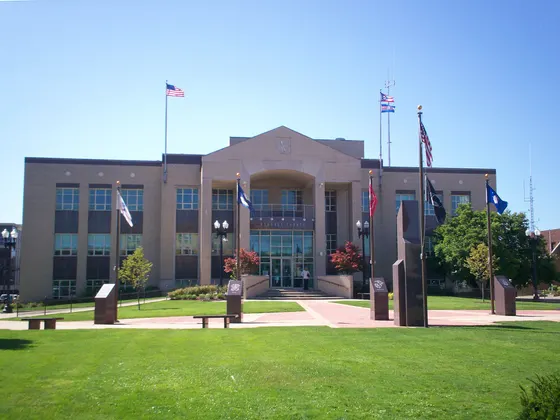


Photo: JonRidinger · CC BY-SA 4.0 · cropped
Photo: JonRidinger · CC BY 3.0 · Photo: JonRidinger · CC BY-SA 4.0 · Photo: Niagara66 · CC BY-SA 4.0
The Northeast Ohio Medical University (NEOMED) College of Medicine MD program at a glance (2027 entry)
Northeast Ohio Medical University (NEOMED) College of Medicine runs a four-year Doctor of Medicine (MD) program from its campus in Rootstown, Ohio. Ohio legislation created the college in August 1973, and its charter class began the medical phase on the new Rootstown campus in September 1977, graduating on May 26, 1981. The 2026-27 catalog gives the class size as 200, but the class is growing. The fall 2026 census counted 204 students, and in October 2026 NEOMED's president said the college expects to welcome 230 next year.
NEOMED numbers the years M1 to M4. M1 and M2 form the pre-clerkship (pre-clinical) phase, about two years of courses based on the Rootstown campus. M3 and M4 are spent on clerkships, where you work on a hospital or clinic team, and on other clinical rotations.
The pre-clerkship years were rebuilt starting with the class that entered in 2024. Most science courses take an organ system or group of systems and tie the science to clinical examples. Practice of Medicine runs alongside, teaching clinical skills and professional development, with simulated patients, people trained to portray patients.
The clinical years take place in community teaching hospitals of partner health systems, including Summa Health, Cleveland Clinic, University Hospitals, Mercy Health, Aultman and MetroHealth, and since June 2026 The Christ Hospital in Cincinnati. NEOMED says this fits its goal of orienting students toward patient care in community settings.
Two optional routes change the shape of the degree: a three-year Accelerated Family Medicine Program and an M.D. & Ph.D. with the Ph.D. nested between M2 and M3. The Liaison Committee on Medical Education (LCME), which accredits MD programs in the United States, lists the program as fully accredited, first accredited in 1977, with its next survey due in 2026-27. NEOMED expects that site visit in April 2027.
| Degree | MD (Doctor of Medicine) |
|---|---|
| Program length | 4 years, July start to May commencement; 3-year family medicine option |
| Class size | 204 at the fall 2026 census; 230 expected in 2027 |
| Main campus | Rootstown, Ohio, for M1 and M2 |
| Teaching style | Integrated organ-system courses, peer instruction in most M1 courses, plus Practice of Medicine |
| Grading | Pass/fail in M1 and M2; clerkships Honors, High Pass, Pass or Fail |
| Anatomy | Lab dissection in Cardiovascular, Pulmonary, Renal, a required M1 course |
| First patient contact | M1: simulated patients, and two half days in a physician's practice in spring |
| Clinical sites | Community teaching hospitals in Northeast Ohio, plus Cincinnati, Dayton and the Columbus area |
| Step 1 licensing exam deadline | M2's second Friday in May; on current policy, May 11, 2029, for 2027 entrants |
What makes the Northeast Ohio Medical University (NEOMED) College of Medicine MD program different
Clerkships in community teaching hospitals
Your seven core clerkships take place in partner hospitals such as Summa Health's Akron campus, Cleveland Clinic Akron General, MetroHealth and Mercy Health St. Elizabeth Youngstown.
A new clerkship option in Cincinnati
Under a partnership announced in November 2025, The Christ Hospital Health Network in Cincinnati became a clerkship site. Its first cohort of 27 third-year students began orientation at the Mt. Auburn campus on June 15, 2026.
A three-year route into family medicine
Once enrolled, you can apply to the Accelerated Family Medicine Program, which meets the same requirements as the four-year MD in three years and leads into family medicine residency at a NEOMED-affiliated hospital. It takes two or three new students a year.
Badges for rural, urban, global and research interests
Optional badges recognize extra work in Rural Medicine, Urban Primary Care Practice, Patient Advocacy and Community Health, Medical Spanish, Global Health, Medical Humanism, and Research and Scholarship. There is no application: you earn points from Bronze (100) up to Platinum (500). Badges are acknowledged in your Medical Student Performance Evaluation (MSPE), the school's letter for residency applications.
How Northeast Ohio Medical University (NEOMED) College of Medicine teaches medicine
M1 and M2 run two strands side by side: organ-system science courses and a parallel Practice of Medicine sequence. The catalog says the design rests on active learning with frequent assessment and feedback.
Most M1 courses use peer instruction, along with lectures, workshops, small-group sessions and labs. Its questions are clinical vignettes written in the style of the National Board of Medical Examiners (NBME), which co-sponsors the United States Medical Licensing Examination (USMLE). You must pass USMLE Step 1 and Step 2 Clinical Knowledge (CK) to graduate.
M2 goes back through the body system by system: the Diagnosis and Treatment courses teach disease, pathology, pharmacology and the mechanisms behind clinical signs.
From M3 most learning is built around your own patients. Teaching rounds, morning reports, small-group discussions, conferences and case studies support the ward and clinic work, and cases from Aquifer, an online case library, feature in several clerkships. Each clerkship that ends in an NBME subject exam, a national specialty test often called a shelf exam, also has a required practice exam partway through.
The ways you will learn
| Peer instruction | NEOMED's 2021 faculty guide describes live sessions in which you answer board-style clinical questions by poll on material prepared beforehand. If fewer than 80% choose the right answer, you discuss it with classmates for two minutes and vote again. A randomly chosen student then explains the answer. |
|---|---|
| Team-based and case-based learning | Group work on clinical cases that links science to patients. The catalog names both in Body and Brain, and case-based learning in Cardiovascular, Pulmonary, Renal. Weekly case-based clinical-reasoning sessions run in M1 and M2. |
A typical week on the Northeast Ohio Medical University (NEOMED) College of Medicine program
In M1 and M2, scheduled class time is capped at 24 contact hours a week, a contact hour being 50 minutes, unless the Curriculum Committee grants an exception. NEOMED assumes you will spend about as long again preparing outside class.
NEOMED's clinical-faculty page lists clinical-skills small groups on Thursday mornings in M1 and periodic Tuesday afternoons in M2, and case-based clinical-reasoning sessions on Friday mornings in M1 and Wednesday and Thursday afternoons in M2. You have four personal days in M1 and two in M2, which cannot be used for exams or for sessions with patient panelists or simulated patients.
On clerkships, clinical and educational work is capped at 80 hours a week averaged over four weeks, with one day in seven free on average and eight hours off between work periods. Continuous assignments stop at 24 hours, plus up to four for handing over. Emergency medicine averages 45 hours a week across day, afternoon and evening shifts, including weekends.
Most clerkships assign call or night float, evening or overnight duty. Obstetrics and gynecology, for example, can assign at least four nights, and you stay with patients in labor. Clerkships with a subject exam schedule independent study time in the last week: a full day in internal medicine and a half day in the five-week clerkships.
How anatomy is taught at Northeast Ohio Medical University (NEOMED) College of Medicine
Anatomy is taught inside the M1 organ-system courses. Body and Brain covers the gross anatomy of the musculoskeletal system and the anatomy and physiology of the central and peripheral nervous systems. It also includes the histology of basic tissues, with some embryology and radiology.
Gross anatomy lab dissection takes place in the next course, Cardiovascular, Pulmonary, Renal, which is required for every M1 student. It combines anatomy with the physiology and biochemistry of the heart, lungs and kidneys and how the three systems regulate one another. In spring, Gastrointestinal, Reproductive and Endocrine Systems covers the anatomy and physiology of those organs.
The bodies used in teaching come through NEOMED's Body Donation Program, which says most donated bodies teach anatomy to medical students. NEOMED counts this as service learning for all students: alongside dissection you take part in the cremation and the body donation service and family reception, then write a reflective essay in Practice of Medicine. Under the 2026-27 exam rules, lab exams may be graded with AI software as well as by faculty.
You can return to anatomy in M4: the 2026-27 rotation list includes Anatomy, Surgical Anatomy, Advanced Anatomy Dissection and Modern Anatomical Sciences.
When you first meet patients at Northeast Ohio Medical University (NEOMED) College of Medicine
Clinical training starts in your first summer with Practice of Medicine I. The required curriculum includes team training and a series of Clinical Skills Assessments with simulated patients at the Wasson Center, NEOMED's simulation center, through your first three years. These give you feedback and evaluate communication, history taking, physical examination, differential diagnosis and basic management plans. The center runs these assessments and objective structured clinical exams (OSCEs), timed encounters with simulated patients, with end-of-year assessments listed for M2 and M3.
NEOMED's clinical-faculty page lists the Primary Ambulatory Care Experience (PACE), a continuity-of-care experience with a physician preceptor, or supervising doctor, at the doctor's own practice. It takes two half days in the spring of M1 and two in the fall of M2. A 2019 NEOMED article says preceptors work in pediatrics, family medicine, internal medicine, obstetrics or geriatrics, and that students practice basic interviewing and examination skills with them.
M2 brings more patient contact. Practice of Medicine V and VI take you into clinical settings with real and simulated patients, and the catalog describes more hands-on time in labs, hospitals, community settings and the simulation center. You attend classes at Rootstown and at community-based clinical teaching sites, where small-group teaching takes place.
M3 starts in June with Prerequisite to the Clinical Curriculum, a preparatory course, and clerkships follow at partner community teaching hospitals; in 2026 NEOMED put the first Christ Hospital rotations in July. Before clerkships, a one-day Technical Skills Day has you practice common procedures with simulation. You become a junior member of clinical teams in hospitals, private offices and clinics, gradually taking on active roles. In internal medicine, for example, you are assigned an average of three new inpatients a week, with a complete history, physical examination and written report on each patient you follow.
You can also volunteer at the NEOMED Free Clinic, started by medical and pharmacy students in 2016 and run by students with board advice. It offers no-cost care to underserved residents, centered on Portage County, with a team of students supporting the provider at each appointment. After online training, volunteers choose their own shifts, mostly on Saturdays.
The Northeast Ohio Medical University (NEOMED) College of Medicine curriculum, year by year
- M1 (Year 1)
Foundations and the organ systems
For the class entering in 2027, orientation runs July 6 to 8, the White Coat Ceremony is on July 9 and classes start on July 12. A six-week summer block, which NEOMED calls the header, lays the scientific groundwork, and the year ends with the May Intersession, May 1 to 20, 2028.
- Foundations of Medicine (summer, six weeks): biochemistry and molecular biology, and biostatistics covering hypothesis testing, research methods and ethics, epidemiology and diagnostic testing.
- Body and Brain (fall, nine weeks), then Cardiovascular, Pulmonary, Renal (fall, seven weeks).
- Gastrointestinal, Reproductive and Endocrine Systems, and Infectious Disease and Immunity (spring, six weeks each). The second covers microbes, the immune system, antibiotics and microbial resistance.
- Foundations of Disease and Treatment (spring, four weeks): an introduction to pathology, pharmacology and genetics, with benign and malignant hematology.
- Practice of Medicine I to III: six weeks in the summer, 16 weeks across the fall, then through the spring. Topics are clinical skills, ethics and health humanities, health systems, interprofessional education, evidence-based medicine and career development.
- M1 Capstone (May, three weeks): an immersive course that pulls the year's science and skills together and prepares you for M2 and early clinical learning.
- M2 (Year 2)
Disease and treatment, then Step 1
M2 starts in late July and ends with the Comprehensive Basic Science Exam (CBSE), a broad test of the basic sciences, and then USMLE Step 1.
- Diagnosis and Treatment I (summer, four weeks): cardiology.
- Diagnosis and Treatment II (fall, 16 weeks): pulmonology, allergy, nephrology, gastroenterology, rheumatology, endocrinology and reproduction.
- Diagnosis and Treatment III (spring, 11 weeks): neurology, psychiatry, dermatology and infectious disease.
- Practice of Medicine IV to VI: clinical skills, physician identity, reflective practice, ethics and humanities, policy and health law, healthcare economics, interprofessional team-based care, psychosocial medicine and wellness.
- Applied and Integrated Medical Science (AIMS, spring): question practice, small-group discussion and independent study that apply the pre-clerkship systems together.
- M3 (Year 3)
Seven core clerkships
M3 runs from June to late May and holds 40 weeks of required clerkships. It includes Prerequisite to the Clinical Curriculum, which draws the first two years together and adds the knowledge and skills the clinical years need. NBME subject exams close each clerkship except emergency medicine.
- Internal medicine (10 weeks): inpatient and outpatient care, with call and weekly topics from cardiac disease to nephrology.
- Surgery (5 weeks) and emergency medicine (3 weeks) share a 10-week period with the Practice of Medicine IX block. Surgery spans inpatient, clinic and operating room work; emergency medicine centers on undifferentiated patients, whose problem is not yet diagnosed.
- Family medicine, obstetrics and gynecology, pediatrics and psychiatry (5 weeks each). In family medicine you see each patient alone before meeting your preceptor, and psychiatry includes time on secure inpatient units.
- Practice of Medicine VII and VIII: workshops on interprofessional teamwork, physician well-being, healthcare economics and patient safety, a Clinical Skills Assessment, career development and reflective practice.
- Practice of Medicine IX: a simulated conference series based on ECHO, a tele-mentoring model, on using technology to share interprofessional expertise and reduce disparities, plus an online module.
- An elective period, which you can opt out of, and a final online, self-paced Step 2 CK preparation course, strongly recommended, with a petition needed to opt out.
- M4 (Year 4)
Sub-internship, critical care and electives
M4 runs from June to mid-April, before commencement in early May. With advisors, you personalize your schedule within the program's requirements and submit it electronically in the late spring of M3.
- At least six four-week rotations: one supervised sub-internship, one critical care rotation and at least four electives, up to two non-patient care.
- Quality Improvement (online): plan-do-study-act cycles, a team root cause analysis and proposed quality projects.
- Social Determinants of Health (online, four weeks): how income, education, race, power, geography and employment shape health, with patient case narratives and advocacy plans.
- Transformational Leadership in Healthcare I to III: a longitudinal course on self-awareness, emotional intelligence and communication.
- Clinical Epilogue and Capstone: large-group sessions on resident rights, palliative care, social justice and medicolegal issues, plus small-group electives in the social sciences, arts and humanities.
- An optional Step 2 CK preparation elective, offered only in block 1; its resources are open to all students.
- Three-year track
Accelerated Family Medicine Program
NEOMED considers enrolled students for this route, also called the Accelerated Family Medicine Track, during their first year, based on academic performance and a strong interest in family medicine in Ohio. It is not a separate route into NEOMED. The program's partner residencies are Mercy Health St. Elizabeth Boardman and Youngstown and Summa Health Akron and Barberton.
- Primary Care Delivery Systems: an eight-week clinical course in the summer between M1 and M2, only for program students, with Quality Improvement and Social Determinants of Health taken the same summer.
- M2's fall and spring courses match the four-year map, but clerkships start early, in May of M2.
- All M3 clerkships and required M4 rotations, including Medical Intensive Care and outpatient family medicine, are completed in one calendar year.
How you are assessed at Northeast Ohio Medical University (NEOMED) College of Medicine
Every M1 and M2 course is graded pass/fail. Behind that, each biomedical science course longer than five weeks computes a score. Weekly quizzes count 5%, midcourse exams 35 to 45% and the final, built as an NBME Customized Assessment of up to 150 items, typically 40 to 60%. Other pieces, such as evidence-based medicine work or reflective essays, are separate pass/fail requirements. Those years still count later: your MSPE includes comparative performance charts for M1 and M2 as well as M3.
You normally get at most one attempt to remediate a failed course, if the course director offers it, and remediation earns at most the lowest passing grade. To move up a year you must pass every course. Failing two courses in one M1 or M2 year, or failing a remediation, leads to review by the Committee on Academic and Professional Progress (CAPP). That committee can require a repeated course or year, or dismissal. The MD must be finished within six years.
The CBSE controls when you can sit Step 1. Under the 2026-27 flowchart, M2 students take a Pre-CBSE on February 19 and a final CBSE on March 24. A final score of 59 or more clears them for Step 1, which they can sit during AIMS. Lower scorers retake the CBSE on April 22 needing 64, with a CAPP referral below that. A Diagnosis and Treatment III failure, or two or more M1 or M2 course failures, means a later route with an M3 clinical study elective in the first block.
Step 1 has been reported only as pass or fail since January 26, 2022. NEOMED's deadline is the second Friday in May of M2, May 14 in 2027, and you must pass to be promoted to M3, though you may start M3 while awaiting your result. If you do not pass, CAPP reviews your record and decides whether you may retake it, and an approved retake must be done by the third Tuesday of December or a date CAPP sets.
In August 2026 the USMLE program announced a move to designated testing dates from January 2029, with Step exams offered less often each year. Its June 2026 announcement had named 2028. On the current policy, a student entering in 2027 would have a Step 1 deadline of May 11, 2029, a few months after the switch. The Step 2 CK deadline would be September 1, 2030, also after it. These are deadlines, not test dates, and the USMLE has encouraged schools to review rules that restrict when students test.
Six of the seven clerkships are graded Honors, High Pass, Pass or Fail, combining clinical performance with the subject exam on the last day. Clinical performance is rated on 15 objectives: 8 or more rated Exceeds Expectations earns Pass with Commendation, and 4 or more rated Below Expectations is a Fail. Honors needs Pass with Commendation on both, with no objective rated below expectations. Emergency medicine has no subject exam and is graded pass/fail. M4 rotations are graded Honors, Pass or Fail.
- A first-attempt subject exam fail leaves the clerkship as Extended Time, a temporary grade until the retake. Passing the retake caps the grade at Pass, failing it makes the clerkship a Fail, and retakes must be done by September 15 after M3.
- Failing a retake, or any three subject exams counting retakes, goes to CAPP, and two first-attempt failures in different clerkships require a meeting with the Learning Center, NEOMED's academic support service.
- A clinical Fail means repeating the whole clerkship, with Pass as the highest grade.
- Each clerkship with a subject exam also requires a Clinical Skills Experience Portfolio, a checklist of activities reviewed with your site director midway and at the end, and a Practice-Based Learning and Improvement project.
- Missing required items on time, such as UWorld question-bank work, Aquifer cases or attendance, earns a Below Expectations rating.
- Your site director's summary comment for each clerkship is used verbatim in your MSPE. Class rank appears there only for the top quartile at the end of M3, identified from performance through that year, with an exact rank for the top 10%.
- Step 2 CK has had a passing score of 218 since July 1, 2025. You can take it once you have passed all M3 subject exams, and you must take it by September 1 of M4. A first failure brings a CAPP file review.
Northeast Ohio Medical University (NEOMED) College of Medicine clinical rotations: where you will actually train
The clinical years run through partner hospitals: NEOMED's hospital-partner page lists 40, 36 of them marked as clerkship teaching sites, with teaching resources of about 7,000 beds and more than 3,500 clinical faculty. NEOMED also recruits simulated patients for teaching at major hospitals in Akron, Canton, Cleveland and Youngstown.
In the spring of M2 you typically go through a lottery, naming your preferred sites for each core clerkship, with details by email and at class meetings one to two months beforehand. The catalog makes you responsible for clinical education costs such as transportation, housing and meals, and for the means and cost of most travel.
A 2017 policy ranks site preference: approved hardship or disability accommodations first, then designated tracks, then scholarship holders such as Mercy Health Scholars. Accelerated Family Medicine students come first at their partner residency hospitals. Health Professions Scholarship Program students and National Health Service Corps scholars get first preference for clerkship order, because of their early residency match.
The Christ Hospital Health Network's acute care hospital is in Mt. Auburn, Cincinnati. The 2026-27 syllabi list it as a site for internal medicine, surgery, emergency medicine, family medicine, obstetrics and gynecology, and psychiatry. Five of the syllabi call it the Southwest Regional Campus in their exam rules. NEOMED's hospital-partner page says the university does not have regional campuses, but in August 2026 it appointed a vice president for academic expansion and regional campus development.
Students rotating in the Cincinnati area sit subject exams at an identified location there. Other subject exams are held on the Rootstown campus or at a center in the Columbus area run by Prometric, a commercial test-center network, and retakes are normally at Rootstown.
University Hospitals, a partner since 2012, added more clerkships from July 2021. In July 2026 NEOMED announced a strategic partnership with Cincinnati-based Mercy Health, which gives students more access to Mercy sites in the Youngstown, Lorain and Cincinnati regions. Aultman Health System formalized a partnership in August 2026.
Base for M1 and M2 classes.
- NEOMED Rootstown campus
- Wasson Center
Summa's Akron campus and Akron General each host six core clerkships in 2026-27. Barberton is a family medicine site, and Akron Children's hosts pediatrics on its Akron and Beeghly campuses.
- Summa Health System, Akron campus
- Summa Health System, Barberton campus
- Cleveland Clinic Akron General
- Akron Children's Hospital, Akron campus
Aultman hosts internal medicine, surgery, emergency medicine, family medicine, and obstetrics and gynecology. Mercy hosts internal medicine and surgery.
- Aultman Hospital
- Cleveland Clinic Mercy Hospital, Canton
St. Elizabeth Youngstown hosts five core clerkships, Boardman hosts family medicine and the behavioral hospital hosts psychiatry.
- Mercy Health St. Elizabeth Youngstown Hospital
- Mercy Health St. Elizabeth Boardman Hospital
- Mercy Health Behavioral Hospital, Youngstown
Between them, these hospitals host all seven core clerkships in 2026-27, from pediatrics at Rainbow Babies & Children's to emergency medicine at Portage.
- University Hospitals Cleveland Medical Center
- UH Rainbow Babies & Children's Hospital
- UH Ahuja
- UH Geauga
- UH Lake Health West
- UH Parma
- UH Portage
- UH St. John
- UH TriPoint
MetroHealth hosts internal medicine, surgery, emergency medicine, family medicine, pediatrics and psychiatry.
- MetroHealth Medical Center
- Louis Stokes Cleveland VA Medical Center
- Cleveland Clinic Fairview Hospital
- Cleveland Clinic Union Hospital
- Western Reserve Hospital
- Mercy Health-Lorain Hospital
- Bluestone Child & Adolescent Psychiatric Hospital
- Northcoast Behavioral Healthcare
- Senders Pediatrics
NEOMED's July 2026 Mercy Health partnership also covers the Cincinnati region.
- The Christ Hospital, Mt. Auburn campus
Riverside Methodist hosts internal medicine, surgery, and obstetrics and gynecology, Mount Carmel hosts family medicine, and the Wylie clinic hosts emergency medicine and psychiatry.
- OhioHealth Riverside Methodist Hospital
- Mount Carmel Health System
- VA Central Ohio Health Care System, Chalmers P. Wylie Veterans Outpatient Clinic
Hosts pediatrics.
- Dayton Children's Hospital
Electives, selectives and away rotations at Northeast Ohio Medical University (NEOMED) College of Medicine
Elective time starts in M3, in a period whose timing varies with your schedule. You can schedule a clinical elective at an affiliated hospital through NEOMED's coordinator team, or choose global health, research, a virtual elective or Step 2 preparation. The clerkship page suggests using the time on a surgical specialty if you want more surgery.
The 2026-27 catalog lists more than 100 four-week M4 rotations, more than two dozen of them in pediatrics. They run from Neurology, Diagnostic Radiology and Anesthesiology to Wilderness Medicine, Culinary Medicine, MEDCAMP, Autism Education, Global Health, Medical Simulation and a Narrative Medicine independent study.
Away rotations, meaning rotations outside NEOMED's catalog, need an application and acceptance. Applications go through Visiting Student Learning Opportunities (VSLO), a common portal reached through your Association of American Medical Colleges account, or directly to hospitals that do not use it. Career Development presentations in M3 cover VSLO.
Dual degrees and research years at Northeast Ohio Medical University (NEOMED) College of Medicine
The M.D. & Ph.D. is a nested degree: the Ph.D. in Basic and Translational Biomedicine comes from NEOMED's College of Graduate Studies. You complete M1 and M2, take a leave of at least three years from the MD to earn the Ph.D., then return to finish the MD. You need acceptance from both the M.D. and Ph.D. admission committees, and both degrees must be completed within eight years of first enrolling unless both deans approve otherwise.
The catalog also lets you add a degree or certificate from the College of Graduate Studies while enrolled in the MD. Examples are the Medical Ethics and Humanities master's and certificate, which NEOMED tailors for medical students and professionals, and a Master of Public Health run with three other Ohio universities.
For time away, an Enrichment Leave of Absence can fall between M2 and M3 or between M3 and M4, for research, another NEOMED program or other structured professional growth. NEOMED does not recommend one between M1 and M2. You petition by February 1 of the year before, and you are expected to take any Step exam due before the leave begins.
The Student Research Fellowship Program offers mentored projects with training in research methods, presentation and writing. Areas include biomedical sciences, family and community medicine and psychiatry, and NEOMED's summer research guide describes the fellowship as paid. Projects can be on campus, at clinical affiliates or at institutions across the country. The summer after M1 gives you about nine weeks; in 2027 that gap runs from May 22 to July 26.
Within the curriculum, Mentored Research and Scholarship is a repeatable M3 and M4 elective. With a designated mentor you develop a scholarly question, complete any required approvals and produce a deliverable such as an abstract, poster or manuscript draft. The M4 list also has a Research Elective, and the Research and Scholarship badge awards points for presentations, peer review and papers. The Journal of Medical Sciences at NEOMED is an online, student-led, peer-reviewed journal.
Facilities and support at Northeast Ohio Medical University (NEOMED) College of Medicine
Where you will learn
The Wasson Center for Clinical Skills Training, Assessment, and Scholarship is on the NEOMED campus. It has eight fully equipped patient exam rooms with remote and on-site viewing, a simulation lab and three orientation and debrief rooms. Teaching rooms have dual cameras and video recording for on-site and telehealth teaching and assessment, and recordings can be streamed securely.
Besides a pool of over 400 trained simulated patients, the center keeps a library of task trainers, models for practicing procedures, and supports simulation-enhanced interprofessional education. It also trains pharmacy students and other health professionals, with simulated patients who can play people seeking medication counseling.
The catalog names the Yassine Gross Anatomy Lab and the multidisciplinary labs among the rooms used for exams. The library, which offers research services and guides to medical students, is in the Aneal Mohan Kohli Academic and Information Technology Center.
Support while you study
From matriculation you belong to a Professional Development Advising Team (PDAT): a clinical advisor, a peer advisor and a small group of classmates. You are also assigned an Academic and Career Advisor (ACA) from Student Affairs, who meets you before you start and routinely after that. Your ACA monitors your progress and helps you identify and plan for a specialty, using a Career Preparation Road Map of checklists and deadlines for each meeting.
Student Affairs can also refer you to a course director, the Learning Center or the College of Medicine Academic Success Team, faculty who give longitudinal content integration support. The Learning Center's learning specialists help with study strategies, time management, exam and board preparation and executive functioning, and it also offers tutoring and accessibility services.
NEOMED's learning communities award the badges. The Health, Education, Advocacy and Leadership (HEAL) community builds competency in serving rural, urban and underserved populations, and the Research and Scholarship community focuses on critical thinking and the pathophysiological basis of disease. Badges are digital and managed through CampusGroups.
Student Affairs oversees career development and the residency Match, and advises NEOMED's chapter of Alpha Omega Alpha, the medical honor society, and the Virtuous Healer Honor Society. If you are called before CAPP, a Student Affairs support person helps you prepare and attends the meeting with you.
Is the Northeast Ohio Medical University (NEOMED) College of Medicine program right for you?
This program may suit you if
- You want your clinical years in community teaching hospitals, working with their faculty and residents.
- You learn well by preparing before class and answering board-style questions live, as in M1 peer instruction.
- You are set on family medicine in Ohio and want to apply for a small three-year route.
- You want to build a record through badges in rural or urban primary care, medical Spanish, global health, humanism or research.
Things to think about
- You rank sites separately for each core clerkship, and the network spans Akron, Canton, Cleveland, Youngstown and beyond. Your third year may involve more than one hospital, and travel and housing costs are yours.
- The CBSE controls access to Step 1, and missing the target means a retake and possibly a CAPP referral.
- Clerkship grades lean on NBME subject exams: failing one the first time caps that clerkship at Pass.
- Time away needs planning: an enrichment leave petition is due by February 1 of the year before.
Northeast Ohio Medical University (NEOMED) College of Medicine MD program — frequently asked questions
Applying to Northeast Ohio Medical University (NEOMED) College of Medicine?
How to get into Northeast Ohio Medical University (NEOMED) College of Medicine
Prerequisites, MCAT, AMCAS personal statement, secondaries and interview, step by step.
Open the guide →Northeast Ohio Medical University (NEOMED) College of Medicine admissions profile
MCAT and GPA profile, acceptance rate, interview format and key dates.
See the profile →Compare Northeast Ohio Medical University (NEOMED) College of Medicine with other schools
Put the teaching style, anatomy teaching and clinical sites next to another school.
Open the comparison →Prepare for the Northeast Ohio Medical University (NEOMED) College of Medicine interview
Format breakdown, school-specific sample questions and prep tips from tutors who interviewed here.
Read the guide →Where this Northeast Ohio Medical University (NEOMED) College of Medicine program guide came from
This guide was written from 97 official sources — Northeast Ohio Medical University College of Medicine's own program pages and curriculum documents, plus the accreditor and the hospitals and health systems the school trains students in where they publish detail — read on 2026-10-31, then checked claim by claim against those sources.
- College of Medicine home page
- College of Medicine: Curriculum Information (M1 to M4 and block schedules)
- College of Medicine: Third-Year Clerkships
- The Compass 2026-2027: Doctor of Medicine program description
- The Compass 2026-2027: Doctor of Medicine curriculum information
- The Compass 2026-2027: Doctor of Medicine degree maps
- The Compass 2026-2027: MEDC 71201 Body and Brain
- The Compass 2026-2027: MEDC 71203 Cardiovascular, Pulmonary, Renal
- The Compass 2026-2027: MEDC 72303 Applied and Integrated Medical Science
- The Compass 2026-2027: GMED 83000 Prerequisite to the Clinical Curriculum
- The Compass 2026-2027: MELE 83020 Medicine Elective
- The Compass 2026-2027: GMED 83003 M3 USMLE Step 2 Prep
- The Compass 2026-2027: GMED 84000 Clinical Epilogue and Capstone
- The Compass 2026-2027: FMCM 72150 Primary Care Delivery Systems
- Northeast Ohio Medical University 2026-2027 Catalog, full PDF (M4 rotations and elective courses)
- The Compass 2026-2027: College of Medicine (history, accreditation, badges, clinical skills assessment)
- The Compass 2026-2027: Committee on Academic and Professional Progress, College of Medicine
- The Compass 2026-2027: Records, Grades
- The Compass 2026-2027: Examination Guidelines and Procedures
- The Compass 2026-2027: Program Length Requirements and Limits
- The Compass 2026-2027: Interruptions of Education
- The Compass 2026-2027: Advising
- The Compass 2026-2027: Student Affairs, College of Medicine
- The Compass 2026-2027: Admissions, College of Medicine (routes into the MD only)
- The Compass 2026-2027: Ph.D. in Basic Translational Biomedicine, curriculum information (M.D. & Ph.D.)
- AY 2024-25 Compass, archived (first year of the current M1 courses)
- AY 2023-24 Compass, archived (previous M1 courses)
- Internal Medicine Clerkship Syllabus, 2026-2027
- Surgery Clerkship Syllabus, 2026-2027
- Emergency Medicine Clerkship Syllabus, 2026-2027
- Family Medicine Clerkship Syllabus, 2026-2027
- Obstetrics and Gynecology Clerkship Syllabus, 2026-2027
- Pediatrics Clerkship Syllabus, 2026-2027
- Psychiatry Clerkship Syllabus, 2026-2027
- Policy 3349-AC-427: Grade Categories for Clerkships
- Policy 3349-AC-432: Academic Promotion, Progression and Graduation Requirements, with the AY26-27 algorithm
- Policy 3349-AC-406: Student Scheduling Preferences (2017)
- Policy 3349-AC-409: Curriculum Contact Hours
- Policy 3349-AC-429: Standardized Scoring for M1 and M2 Biomedical Sciences Courses
- Policy 3349-AC-267: Course Remediation for Professional Degree Programs
- Policy 3349-AC-418: Attendance at Instructional Sessions
- Policy 3349-AC-416: Medical Student Performance Evaluation
- Policy 3349-AC-411: Narrative Assessment
- Office of the University Registrar: Course Registration (M3 lottery and M4 scheduling)
- Office of the University Registrar: Academic Calendars, 2026-27 and 2027-28
- 2026/27 College of Medicine Academic Calendar, with upcoming commencement dates
- Office of the University Registrar: Away Rotation Applications
- NEOMED: Hospital Partners
- College of Medicine: Early Assurance
- College of Medicine: Early Assurance, the process
- Family and Community Medicine: Accelerated Family Medicine Track (updated November 6, 2026)
- College of Medicine: Badging Program
- College of Medicine: Advising and Mentoring
- College of Medicine: Student Research
- NEOMED: Student Research Fellowship Program
- College of Medicine: Summer Research FAQ, 2027 cycle
- Wasson Center home page
- Wasson Center: The Facility
- Wasson Center: Simulated Patients
- Body Donation Program: Use in Education and Research
- Faculty Development: Biomedical Science Teaching (teaching methods only; its course list is out of date)
- NEOMED: The Learning Center
- College of Medicine: Accreditation
- College of Medicine: Facts and Figures (accreditation dates)
- LCME directory of accredited programs, updated November 2, 2026
- USMLE Designated Testing Dates Information Hub
- USMLE: Updated Timeline for Designated Testing Dates, transition in January 2029 (August 6, 2026)
- USMLE: Examination Results and Scoring
- NEOMED news: partnership with The Christ Hospital Health Network and Miami University (November 5, 2025)
- The PULSE: First students head to The Christ Hospital Health Network (June 16, 2026)
- The Christ Hospital: First NEOMED Students Arrive for Orientation (June 15, 2026)
- The Christ Hospital: partnership with NEOMED and Miami University (November 5, 2025)
- NEOMED news: NEOMED and Aultman Health System formalize partnership (August 11, 2026)
- University Hospitals: NEOMED Medical Students on Clerkships (January 2022)
- University Hospitals and Northeast Ohio Medical University Collaboration
- College of Medicine clinical faculty: Teaching and Service Opportunities
- The PULSE: PACE Preceptor Recognition and Appreciation (October 4, 2019)
- Wasson Center: About
- College of Medicine: Fall 2026 Entering Student Profile
- NEOMED news: largest medical class in its history (July 10, 2026)
- NEOMED news: President Langell at the Akron Press Club (October 30, 2026)
- NEOMED news: partnership with Mercy Health (July 20, 2026)
- NEOMED news: vice president for academic expansion and regional campus development (August 24, 2026)
- Family and Community Medicine: Education (Accelerated Family Medicine Program and Master of Public Health)
- Policy 3349-AC-403: Videoconferencing in the Curriculum (2019)
- Faculty Development: Overview of a Peer Instruction Session (2021)
- USMLE Designated Testing Dates FAQs (updated August 6, 2026)
- NEOMED Free Clinic: About the Clinic
- NEOMED Free Clinic: For Student Volunteers
- NEOMED: Clinical Services
- College of Medicine: Service Learning
- College of Graduate Studies: Medical Ethics and Humanities
- Kent State University: KSU and NEOMED Early Assurance Program
- The University of Akron: Bacc/M.D. FAQs (NEOMED Early Assurance Pathway)
- VA Central Ohio Health Care: Chalmers P. Wylie Veterans Outpatient Clinic
- OhioHealth: Riverside Methodist Hospital, Columbus
- Mount Carmel Health System: About Us
Curricula are restructured between cycles. Anything here that decides your application — how anatomy is taught, a clinical campus assignment, a required research year — should be confirmed against the official page for your entry year.
Applying to Northeast Ohio Medical University (NEOMED) College of Medicine?
We help US applicants with MCAT strategy, the AMCAS personal statement, secondary essays and interview prep — everything you need for a competitive Northeast Ohio Medical University (NEOMED) College of Medicine application.