
The The Ohio State University College of Medicine MD program
What you actually study, and where you will be
The Ohio State University College of Medicine's MD is a 4-year program with an integrated curriculum, with patient contact from October of year 1 and clinical rotations in Columbus, Ohio, plus Lima for Community Medicine Track students (2027 entry). Ohio State's four-year MD follows the three-part Lead.Serve.Inspire (LSI) curriculum. Part 1 is 18 months of organ-system blocks, with a half-day in clinic every other week from October of year 1. USMLE Step 1, the first of the national licensing exams, follows. From May, Part 2 runs the core clerkships (the required clinical rotations) as three 16-week rings of related specialties, and Part 3 is an advanced final year. A three-year Primary Care Track and a Community Medicine Track, based in Lima for years 3 and 4, are also offered.
- Degree
- MD
- Length
- 4 years
- Teaching
- Integrated
- Clinical contact
- October of year 1

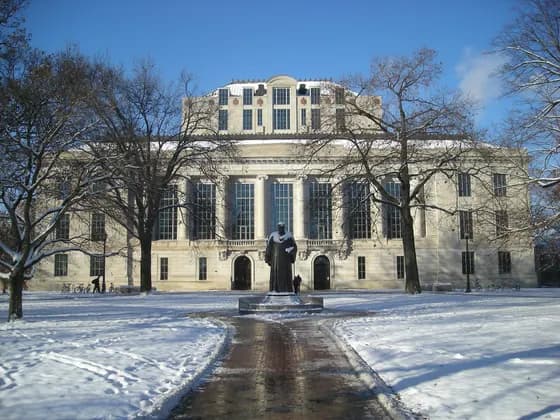
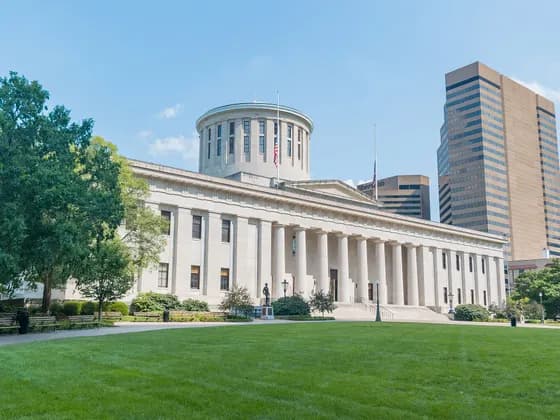

Photo: John Dewees · CC0 · cropped
Photo: Michael Barera · CC BY-SA 4.0 · Photo: Ɱ · CC BY-SA 4.0 · Photo: Paul Wasneski · Public domain
The The Ohio State University College of Medicine MD program at a glance (2027 entry)
The Ohio State University College of Medicine, often called the Ohio State College of Medicine or OSU College of Medicine, awards the MD after a four-year program on Ohio State's campus in Columbus. Its curriculum is called Lead.Serve.Inspire (LSI) and has three parts: Clinical Foundations, Clinical Applications and Advanced Clinical Management. The class entering in 2026 had 214 students, including 15 on the Community Medicine Track, 11 in the MD/PhD Medical Scientist Training Program (MSTP) and 4 on the Primary Care Track.
Part 1 is the pre-clerkship phase, when you learn the sciences medicine rests on. It lasts 18 months and runs as eight blocks: two foundations blocks, then six built around body systems, with anatomy and clinical skills woven in. Patients appear early. From October of year 1 you spend a half-day every other week in a clinic, a strand called Longitudinal Practice. Part 1 has been graded pass/fail since 2017.
After Part 1 you study for Step 1 of the United States Medical Licensing Examination (USMLE), which you must take before clerkships begin. On clerkships you work on hospital and clinic teams under supervision. Ohio State groups them into three 16-week rings starting in May, in hospitals and clinics around Columbus. The final year adds advanced clerkships, electives (rotations you choose yourself) and a clinical track aimed at residency, the specialty training you enter after graduation through the national Match.
The Three-Year Primary Care Track is for students set on family medicine, and the Community Medicine MD Track is for those committed to practicing in rural or smaller communities. The MSTP and four other dual degrees are also offered.
Faculty coaches work with you throughout, using your ePortfolio, an online record of your written reflections. The Liaison Committee on Medical Education (LCME), which accredits MD programs in the United States, lists the College as fully accredited, with its next survey in 2029-30.
| Degree | MD (202 credit hours, typically over 10 semesters) |
|---|---|
| Program length | 4 years; 3 years on the Primary Care Track |
| Curriculum | Lead.Serve.Inspire (LSI), in three parts |
| Class size | 214 new students in 2026, across all tracks |
| Main campus | Hamilton Hall, beside the Wexner Medical Center hospitals, Columbus |
| First patient contact | Longitudinal Practice clinic from early October of year 1 |
| Clinical sites | Eight Columbus hospitals plus community affiliates; Lima for the Community Medicine Track |
| Grading | Satisfactory/Unsatisfactory throughout; Honors distinctions possible only in Parts 2 and 3 |
| Anatomy | Dissection of donated bodies in the Anatomy Wing, Hamilton Hall |
| Step 1 timing | End of Part 1, before clerkships start in May |
What makes the The Ohio State University College of Medicine MD program different
Clinic time with one preceptor from your first October
You work with one faculty preceptor, a practicing doctor who supervises and teaches you, at a clinical site that is often off campus.
Clerkships grouped into three 16-week rings
The rings cover specialized medical needs (internal medicine, neurology, psychiatry), reproductive and surgical needs (surgery, obstetrics and gynecology, anesthesiology) and patients within populations (family medicine, pediatrics, outpatient internal medicine).
Two clinical years in Lima on the Community Medicine Track
After Part 1 in Columbus, you complete all required clinical work for years 3 and 4 at Ohio State's Lima campus and Mercy Health – St. Rita's Medical Center. The first cohort, 12 students, started there in 2026.
Family medicine in three years
The Primary Care Track, running since 2017, keeps you with one family physician in the same clinic for all three years. A summer Host Defense block lets you start clerkships a ring early. If you meet the requirements and rank it, you are positioned to match into Ohio State's family medicine residency.
A yearlong project with a central Ohio community group
In the Community Health Education project you work with a clinic or agency serving an underserved population, such as Moms2B or the Columbus Free Clinic. As the College described it in 2022, you start with a needs assessment, then plan a health-promoting activity. By early 2025, about 2,400 students had given about 72,000 hours of service this way since 2012.
How The Ohio State University College of Medicine teaches medicine
LSI is competency-based: you move on by showing the skills and behaviors a doctor needs. Since 2018 its outcomes have been the eight areas of the Physician Competency Reference Set endorsed by the Association of American Medical Colleges (AAMC). They run from patient care and knowledge for practice to professionalism and interprofessional collaboration, and you must reach the expected level in all of them in each part.
The 2026-27 course catalog describes Part 1 as the study of human development, biology, disease and behavior, organized around patients and organ systems. In 2021, for example, the cardiopulmonary block combined histology, anatomy, physiology, pathophysiology and pharmacology. That year the faculty handbook listed recorded lectures, small-group cases, team-based learning and independent reading as the Part 1 methods. Part 1 also includes BuckIPE, Ohio State's program of team learning with students from other health professions.
Parts 2 and 3 are clinical. Each ring opens with ground school, a week of simulation, small groups and large-group teaching, before you join hospital and clinic teams.
The ways you will learn
| Team-based learning and case discussions | In team-based learning you prepare beforehand, take a readiness test alone and then with your team, and apply the material to problems. Small-group case discussions tie each block's science to clinical reasoning and patient care. |
|---|---|
| Longitudinal Group | A small group that meets for a half-day every week of Part 1 on communication, physical examination, behavioral and social sciences, and clinical reasoning. |
| Longitudinal Practice | At an outpatient site with one faculty preceptor, you take histories and examine real patients. |
| Simulation and standardized patients | At the Clinical Skills Education and Assessment Center you practice procedures on simulators and interview standardized patients, people trained to portray a patient with a particular condition. |
| Assessment weeks | Assessment weeks close each block and ring. Board-style exams test medical knowledge, including each Part 1 block's final exam and, in Part 2, shelf exams: standardized national subject exams in each specialty. Patient care and communication are tested in lab practical stations and the OSCE (objective structured clinical examination), a circuit of timed stations each testing one clinical task. Afterwards you meet your coach to refine a plan for improvement. |
A typical week on the The Ohio State University College of Medicine program
The College's March 2021 faculty handbook capped Part 1 at an average of 20 hours of new content a week and 45 hours of total contact time. For clinical work it adapted the limits used for residents. These were no more than 80 hours a week averaged over four weeks, one day in seven free, and in-house call no more often than every third night.
The family medicine department's undated page, which still refers to 2021-22, says small groups led by family medicine and pediatric faculty meet every Tuesday afternoon during the patients within populations ring.
How anatomy is taught at The Ohio State University College of Medicine
Ohio State teaches anatomy by dissection of donated bodies. The Anatomy Wing at Hamilton Hall covers about 43,500 square feet, with six dissection rooms and space for more than 300 donors. Each table has surgical lighting, and six smart TVs in each room can stream one donor's unusual variation or disease to everyone in the lab.
Anatomy is integrated throughout Part 1, so you learn the regional anatomy that goes with each block's science, and it is tested in practical exams. Lab sessions run within the system blocks, and the Division of Anatomy also runs required anatomy labs in the third-year surgical rotation. Dental students partner with medical students on the dissection. A link to the continuing medical education lab lets practicing physicians walk students through procedures such as a kidney transplant.
All medical students also have a virtual reality anatomy program on their iPads. More than 2,500 learners a year use the wing, from high school summer campers to practicing physicians.
When you first meet patients at The Ohio State University College of Medicine
Foundations 1, the opening block, teaches basic interviewing, physical examination and simple procedures, so that by early October you are ready to start Longitudinal Practice at an outpatient site.
Simulation starts early too. In a 2021 College video, faculty described first-years working with standardized patients early in year 1. They also described physiology labs in which first-years assess a simulated trauma patient and are walked through an intubation.
By the end of Part 1, the 2021 faculty handbook expected you to take a full history and examine the main body systems in adults. You should also be able to present a patient, write a progress note and read a basic electrocardiogram (ECG) and chest x-ray.
Primary Care Track students see patients with a family physician, at their assigned site, from their first week. Community Medicine Track students do Longitudinal Practice at sites linked to Mercy Health – Springfield. Outside the curriculum, medical students manage the Columbus Free Clinic under volunteer physicians, and you can volunteer at free clinics such as La Clinica Latina and the Noor Community Clinic.
The The Ohio State University College of Medicine curriculum, year by year
- Years 1 and 2 (Part 1)
Clinical Foundations
Part 1 runs for 18 months from August of year 1, in eight interdisciplinary blocks covering the foundational sciences and their clinical correlates.
- Foundations 1 (5 weeks) and Foundations 2 (4 weeks) lay the groundwork. In 2021 they covered biochemistry, genetics, histology, cell biology, behavioral science, nutrition and embryology, then anatomy, pathology, research methods, pharmacology and immunology.
- Six organ-system blocks follow: Bone and Muscle (6 weeks), Cardiopulmonary (9), Endocrine and Reproduction (5, or 6 in the 2021 outline), Neurological Disorders (7), GI (gastrointestinal) and Renal (6) and Host Defense (9). All block lengths come from the 2025-26 handbook's table, headed for classes finishing Part 1 by 2024-25.
- Host Defense, the last block in the 2021 outline, covered skin and immune disorders, virology, microbiology, infectious diseases and hematology.
- Three professional development weeks bring sessions with faculty from nearly every specialty, plus financial planning, dual degrees, global health and Step 1 support.
- The yearlong Community Health Education project, plus individual projects on health coaching and on health systems, informatics and quality.
- Spring of year 2
Step 1 and the move to clerkships
After Part 1 you prepare full time for USMLE Step 1. In 2024 the director of the Part 2 program put the dedicated study needed at four to six weeks, and that year it was under way by early March. The Student Clinician's Ceremony each spring, held in May in 2026, marks the move to clinical work.
- First you must post a predicted passing score on a College-sponsored Comprehensive Basic Science Self-Assessment (CBSSA), a practice exam from the National Board of Medical Examiners (NBME). For the class finishing Part 1 in 2026, the deadline was April 18.
- Under the 2025-26 handbook, you must take Step 1 no later than the Saturday before Part 2 starts. You may begin Part 2 while your score is pending, with full entry once you pass. Primary Care Track and MSTP students follow an accelerated Part 1 and take it earlier.
- If neither of two College-sponsored CBSSAs predicts a pass, you cannot start on time. You may start late at the gateway date in week 4 of the first ring, begin with a later ring, or wait a year.
- A gateway start is not marked against you. Any later start is noted as an adverse event in your Medical Student Performance Evaluation (MSPE), the summary letter sent to residency programs. If you miss the gateway with no passing Step 1 score, you move to the next class.
- Part 2 also requires Advanced Cardiac Life Support (ACLS) certification and electronic medical record training.
- Year 3 (Part 2)
Clinical Applications: the three rings
Part 2 starts in May, the start of the College's year 3, with 48 weeks of rotations in three 16-week rings. Each ring has a ground school week and 14 clinical weeks. It ends with an assessment week of an OSCE, a practical exam and NBME subject exams.
- Understanding Patients with Specialized Medical Needs (UPSMN). The College's sample ring has six weeks of inpatient internal medicine, including hospital medicine and cardiology, three of inpatient psychiatry, three of neurology and two of electives, mostly in internal medicine.
- Understanding Patients with Reproductive and Surgical Needs (UPRSN): the surgery clerkship combined with obstetrics and gynecology (Ob/Gyn) and anesthesiology. The Ob/Gyn department's undated page says its six weeks are split equally among obstetrics, gynecology and oncology.
- Understanding Patients within Populations (UPWP): family medicine, including a required four-week adult outpatient rotation, pediatrics and outpatient internal medicine, plus two-week selectives, short rotations offered by other departments.
- One UPWP selective is two weeks of emergency medicine: shifts at Ohio State's main and East hospitals, a ride-along with paramedics, the residents' conference, a simulation and a case you present.
- Year 4 (Part 3)
Advanced Clinical Management
Part 3 runs from May and contains eight months of rotations. You choose a clinical track in the specialty you plan to enter, with advisers in that field, and usually take Step 2 Clinical Knowledge (CK), the second licensing exam, early in the year. Match Day falls on the third Friday in March, and graduation is in May.
- Advanced Management in Hospital-Based Care (AMHBC), an eight-week acute-care clerkship. In 2021 it was four weeks of emergency medicine plus a four-week sub-internship in your track's field, where you take on much of a first-year resident's work under supervision.
- AMHBC-EM, the emergency medicine block, is required of every fourth-year, at a site you request from eight listed options in Columbus, Lima, Springfield and London, Ohio.
- Advanced Management in Relationship-Centered Care (AMRCC), a longitudinal course in team-based care of patients with complex or chronic diseases. You can do the 80 clinical hours of its ambulatory course at Ohio State's Advanced Urgent Care.
- Sixteen weeks of electives, including Advanced Competencies, which are in-depth, typically interdisciplinary experiences that often mix clinical and nonclinical work.
- The emergency medicine track requires a 10-month course with a two-week boot camp in March, and surgery offers a two-week boot camp shortly after the Match.
- Primary Care Track (3 years)
Family medicine in three years
The Three-Year Primary Care Track meets the same core objectives as the four-year curriculum. It starts in mid-July with Primed for Practice, three weeks before other first-years.
- Year 1: Primed for Practice covers note-writing, interviewing and history-taking. ACE+ sessions explore Ohio State's family medicine clinics, and your Longitudinal Group shares an interest in primary care.
- Year 2: you take Host Defense on campus the summer before, finish Step 1 preparation halfway through the year and begin Part 2 on the reproductive and surgical ring in the final semester.
- Year 3: you finish the other two rings and take Step 2. You then complete two AMHBC blocks, called Mini-I and Emergency Medicine, the AMRCC blocks, a quality improvement project and your portfolio before graduating in May.
- A peer tutor supports you through Part 1, and you meet the track's directors each block for career and curriculum advising.
- Medical school plus Ohio State's Family and Community Medicine Residency takes six years in all.
How you are assessed at The Ohio State University College of Medicine
Unless dated otherwise, the College rules in this section come from the 2025-26 student handbook, last updated June 18, 2025. Every course is officially graded Satisfactory or Unsatisfactory, and Part 1 has been pass/fail only since 2017, with no Honors. In Parts 2 and 3, programs may award two internal distinctions, Honors and a Letter of Commendation. These appear on your MSPE, sent in your final year, but not on your transcript.
The College does not report class ranks. The MSPE instead places you in one of five groups: Outstanding (roughly the top 10%), Excellent, Very Good, Good and Capable (roughly the bottom 10%). For students finishing Part 1 in 2025-26 or later, the group rests on Part 2 scores alone, with the three rings weighted equally. Within each ring, the NBME exam provides 30% of the score and clinical performance assessments 40 to 45%.
The College's 2016-17 manual for the reproductive and surgical ring gives an older picture of one ring. It said most students would earn Satisfactory and 25 to 30% Honors or a Letter of Commendation. You had to pass each NBME subject exam. A student who failed a written exam could retake it but could then earn only Satisfactory, and failing the clinical rotations meant repeating the course. These rules may have changed; the student handbook says current standards are in each academic program's own annual handbook.
To graduate you must pass Parts 1, 2 and 3, pass USMLE Step 1 and Step 2 CK and meet the College's professional standards. You must finish within six years, a limit that can be waived for dual degrees and approved research. Step 1 tests the foundational sciences and has been reported only as pass or fail since January 26, 2022. You must pass it by March 31 of the year after you finish Part 1, within three attempts.
Step 2 CK, which the handbook calls an intern-readiness assessment, still gets a three-digit score. It must be taken by the November 30 after you finish Part 2, and passed by the Match certification date in mid- to late February. Step 2 CK has the same limit of three attempts. A failed Step 2 CK not retaken by December 31 takes you out of the following Match, and without a pass by April 1 you are not certified for spring graduation.
In August 2026 the USMLE program announced a move to designated testing dates from January 2029, with Step exams offered less often each year. Its June 2026 announcement had named 2028. On the current four-year schedule, a student entering in August 2027 would finish Part 1 in early 2029 and sit Step 1 that spring, by about early May, a few months after the switch. Step 2 CK would follow around mid-2030, with a November 30, 2030 deadline, also after the switch.
- The 2025-26 handbook lists quizzes, team-based learning, anatomy practical exams, midterms, final exams and OSCEs among Part 1's graded work.
- Part 1 is still scored internally. The College averages your Part 1 scores into an academic standing used for some scholarships and University Honors at graduation, and the medical honor society Alpha Omega Alpha may consider it.
The Ohio State University College of Medicine clinical rotations: where you will actually train
The College says students train in eight hospitals in central Columbus, from the Ohio State Wexner Medical Center hospitals to Nationwide Children's Hospital, and some required rotations run at affiliates. LCME guidelines require every required clerkship to be supervised by College faculty, so all required rotations are at Ohio State's hospitals and affiliates.
You need your own transportation throughout. Longitudinal Practice sites are often off campus, and in Part 2 students are routinely assigned to clinics away from the main campus.
The family medicine department's undated page says its practices for the four-week rotation in year 3 include its two residency practices and rural, urban, suburban and inner-city sites.
Community Medicine Track students choose Lima when they apply and cannot transfer to the standard track. After two years in Columbus they move to The Ohio State University at Lima, completing all required clinical work at Mercy Health – St. Rita's Medical Center and other hospitals in the region. The track is run with Bon Secours Mercy Health.
A 48,000-square-foot medical education center opened on the St. Rita's campus in summer 2021, with simulation and clinical skills labs, classrooms and a 240-seat lecture hall. Lima students have the same level of resources and support services as in Columbus, and are encouraged to take electives in Columbus.
Within walking distance on the medical campus. University Hospital, the flagship, has 820 private rooms in its new 26-story building and a Level I trauma center. The James is a National Cancer Institute comprehensive cancer center, Harding provides behavioral health care and Dodd inpatient rehabilitation.
- Ohio State University Hospital
- Arthur G. James Cancer Hospital (The James)
- Richard M. Ross Heart Hospital
- Ohio State University Hospital – Pavilion
- Ohio State Harding Hospital
- Ohio State Dodd Rehabilitation Hospital
Within a 15-minute drive of the medical campus, with a shuttle. East Hospital has 190 beds and a Level III trauma center on Columbus' east side. Nationwide Children's houses the College's Department of Pediatrics.
- Ohio State East Hospital
- Nationwide Children's Hospital
The Ob/Gyn department's undated page says you may choose one of these for the whole six weeks. A 2016-17 ring manual also showed surgery at Grant, Mount Carmel West, Riverside, East Hospital and Nationwide Children's.
- Grant Medical Center
- Mt. Carmel Medical West
- Mt. Carmel St. Ann's
- Riverside Hospital
- The Ohio State University Wexner Medical Center
About 45 minutes from Columbus. These sites host Longitudinal Practice for the Community Medicine Track, and Springfield Regional is a fourth-year emergency medicine option.
- Mercy Health, Springfield Regional Medical Center
- Faculty and clinical sites linked to Mercy Health – Springfield
Base for years 3 and 4 of the Community Medicine Track and a fourth-year emergency medicine option.
- Mercy Health – St. Rita's Medical Center
- The Ohio State University at Lima
Listed by the College, with Ohio State's hospitals and Nationwide Children's, as sites you can request for the required emergency medicine block.
- Grant Medical Center, Columbus
- Mt. Carmel Medical East, Columbus
- Riverside Hospital, Columbus
- Madison Health, London, Ohio
Electives, selectives and away rotations at The Ohio State University College of Medicine
Electives are concentrated in Part 3, which includes 16 weeks of Advanced Competencies and Electives in four blocks. Four of those weeks must be an Advanced Competency and twelve are other electives. A longitudinal Advanced Competency begun earlier can count for at most four weeks, and each needs advance approval.
The College lists about two dozen Advanced Competencies, including biomedical informatics, critical care and procedures, global health, Latino health, LGBTQ+ health, medical toxicology, research and teaching in medicine. Honors Ultrasound is a 10-month final-year course, and a four-year ultrasound Advanced Competency begins in year 1.
Departments add their own options. The Surgery Honors Program is open, by application, to fourth-years with overall honors or honors in surgery in year 3, and requires a mentored, publishable research project. Family medicine's page lists advanced clinical skills, research and sports medicine electives.
Under the 2025-26 handbook, you may also take up to three month-long electives away from Ohio State and its affiliates in Part 3, if you have no remediation requirements. Each needs a signed request at least 30 days ahead, and none counts for credit in April, since evaluations would arrive too late for May graduation.
The Office of Global Health funds a Global Health Elective in the final year. Its undated requirements page, which still mentions the discontinued Step 2 CS exam, sets a minimum of four weeks and 150 clinical hours. The host site must be in a low- or middle-income country, and the elective is graded Satisfactory or Unsatisfactory. You must have completed Part 2, and rotation 11 is not available. Planning should start at least eight months ahead, and you submit a travel summary and reflective essay afterwards.
Dual degrees and research years at The Ohio State University College of Medicine
Besides the MSTP, Ohio State offers four combined degrees with the MD: MD/MPH (public health), MD/MBA (business), MD/MHA (health administration) and MD/JD (law). All four follow one pattern. You finish years 1 and 2 and pass Step 1, spend year 3 full time in the other program, then return for the clerkships and final-year rotations. You apply to the second program during year 2.
The MD/MPH takes five years and adds supervised field practice and a culminating exam or project. The MD/MBA with the Fisher College of Business takes five years, and students often intern with a Wexner Medical Center administrator the summer after year 2. The MD/MHA typically takes five years, and the MD/JD with the Moritz College of Law takes six.
The MSTP leads to both the MD and a PhD in an average of eight years. You take 15 months of preclinical coursework, then three to four years of research and research training, then the clinical rotations. Core PhD programs are biomedical sciences, neuroscience and biomedical engineering, and a pediatric research fellowship is offered with Nationwide Children's. The program says about 9 to 12 students join each year, and 11 joined in 2026.
Research is common outside the dual degrees too: the College says about 92% of its students take part in faculty-mentored research. You can do it full time in the summer after year 1, part time with approval, or for a year through a leave of absence. STRIVE, a program funded by the National Institutes of Health (NIH) that began in 2025, offers 12 weeks of immunology and virology research, mainly in that first summer.
The LSI Research Advanced Competency builds a hypothesis-driven project with an Ohio State faculty mentor, growing out of earlier summer or part-time research. College scholarships fund student research.
Facilities and support at The Ohio State University College of Medicine
Where you will learn
Hamilton Hall, the College's home, houses the Interdisciplinary Health Sciences Center (IHSC), where you learn alongside students from other health science disciplines. It has three stories of anatomy and surgical labs and classrooms with virtual reality simulators. There is also a 6,000-square-foot student forum, a 125-seat reading room and an electronic health record learning environment, steps from University Hospital and The James.
The Clinical Skills Education and Assessment Center (CSEAC) fills 18,000 square feet on the sixth floor of Prior Hall, the Health Sciences Library building. It has simulation bays set up as an operating room, an obstetric unit and critical care settings, plus procedure labs and ultrasound and surgical skills rooms. Procedures taught there include intubation, lumbar puncture, central line placement and wound suturing.
Standardized patient sessions run in the Ann Crowe Essig Patient Simulation Learning Laboratory on Prior Hall's lower level. The center uses LearningSpace, which records simulations and drafts evaluations against faculty rubrics for faculty review. In fall 2025, third-years piloted an ungraded practice OSCE with an AI-generated standardized patient that gave instant feedback.
Support while you study
Faculty portfolio coaches mentor you across medical school, reviewing your ePortfolio reflections, giving feedback and helping you set goals. You also join a learning community, introduced at orientation. The 2021 faculty handbook described 78 small groups, each with at least one faculty leader, meeting across all four years since 2007 to build academic and social support. A 2024 College brochure for MSTP students described groups of about 12 meeting once each block, with a new coach and a new group in the clinical years.
Learning specialists in the Office of Student Life help with study skills, time management and test-taking, at no cost and without a referral. They run Supplemental Instruction and Group Anatomy Tutoring for all Part 1 students and arrange peer and faculty tutoring. USMLE preparation sessions start in year 1, and students run board review sessions.
Student Life has an embedded licensed counselor, and the College contracts with Harding Hospital for psychological and psychiatric care at no cost to students. These providers play no part in evaluating students. Wellness events include weekly Time Out Tuesdays during Step 1 study and Rings & Things for third-years on rotations.
Career advising starts in Part 1 with the AAMC's Careers in Medicine program, with your coach and learning community leader as your first advisers. Later you work with specialty advisers and clinical track directors. The Residency Match Series begins early in year 3, and before your MSPE goes out in September a member of the dean's staff reviews it with you.
Is the The Ohio State University College of Medicine program right for you?
This program may suit you if
- You want regular clinic time from your first October, with one preceptor through Part 1.
- You like organ-system blocks and specialty rings, each ending with an assessment week and a plan made with your coach.
- You are set on family medicine and would value finishing in three years with a path into Ohio State's residency.
- You plan to practice in a smaller or rural community and would welcome two clinical years in Lima.
- You want to dissect donated bodies, alongside dental students.
Things to think about
- You need your own transportation, since Longitudinal Practice sites and many Part 2 clinics are off the main campus.
- Clerkships wait on Step 1: without a predicted pass on the College's practice exam, your Part 2 start is delayed, and a start after the gateway date can cost you a year.
- The Primary Care and Community Medicine tracks are chosen at application. Community Medicine students cannot transfer out, and Primary Care transfers are not guaranteed.
- From the class finishing Part 1 in 2025-26, your MSPE group rests on Part 2 scores alone, so the clerkship year decides it.
The Ohio State University College of Medicine MD program — frequently asked questions
Applying to The Ohio State University College of Medicine?
How to get into The Ohio State University College of Medicine
Prerequisites, MCAT, AMCAS personal statement, secondaries and interview, step by step.
Open the guide →The Ohio State University College of Medicine admissions profile
MCAT and GPA profile, acceptance rate, interview format and key dates.
See the profile →Compare The Ohio State University College of Medicine with other schools
Put the teaching style, anatomy teaching and clinical sites next to another school.
Open the comparison →Prepare for the The Ohio State University College of Medicine interview
Format breakdown, school-specific sample questions and prep tips from tutors who interviewed here.
Read the guide →Where this The Ohio State University College of Medicine program guide came from
This guide was written from 66 official sources — The Ohio State University College of Medicine's own program pages and curriculum documents, plus the accreditor and the hospitals and health systems the school trains students in where they publish detail — read on 2026-10-31, then checked claim by claim against those sources.
- MD Curriculum, Ohio State College of Medicine
- LSI Curriculum Framework, Ohio State College of Medicine
- MD Program, Ohio State College of Medicine
- 2026 Entering Class Profile, Ohio State College of Medicine
- 2025 Entering Class Profile, Ohio State College of Medicine
- Community Medicine MD Track, Ohio State College of Medicine
- Three Year Primary Care Track, Ohio State College of Medicine
- 3-Year Primary Care Track Program, Department of Family and Community Medicine
- MD Curriculum for Medical Student Educational Programs, Department of Family and Community Medicine
- Medical Student Surgery Education, Department of Surgery
- Understanding Patients with Reproductive and Surgical Needs ring manual (2016-17, older document)
- Medical Student Programs, Department of Obstetrics and Gynecology (undated page)
- Medical Students Programs, Department of Emergency Medicine
- Medical Student Handbook 2025-26 (last updated June 18, 2025)
- Student Handbook Section 6: Academic Affairs
- Student Handbook Section 11: Graduation
- Student Handbook Section 10: Joint Degree Programs
- Student Handbook Section 9: Research Opportunities
- Student Handbook Section 5: Student Life
- Student Handbook Section 1: Core Educational Outcomes
- Faculty Handbook for the MD Curriculum, Section 4: Overview of the LSI Curriculum (2021)
- Faculty Handbook for the MD Curriculum, Section 2: Health and Safety, including duty hours (2021)
- Faculty Handbook for the MD Curriculum, Section 6: Evaluation and Assessment of Students (2021)
- Faculty Handbook for the MD Curriculum, Section 7: Professional Advancement (2021)
- Ohio State class search: MEDCOLL MD curriculum courses, 2026-27 catalog
- Dual Degree Programs, Ohio State College of Medicine
- Doctor of Medicine/Master of Business Administration (MD/MBA)
- Doctor of Medicine/Master of Public Health (MD/MPH)
- Doctor of Medicine/Master of Health Administration (MD/MHA)
- Doctor of Medicine/Juris Doctor (MD/JD)
- Medical Scientist Training Program (MSTP)
- Medical Scientist Training Program Curriculum
- MSTP Application Requirements, Ohio State College of Medicine
- Medical Scientist Training Program brochure (August 2024)
- LSI Research Advanced Competency
- Clinical Skills Education and Assessment Center (CSEAC)
- Division of Anatomy, Ohio State College of Medicine
- Video transcript: Connecting clinical application to clinical care (2021)
- Video transcript: Tour the new anatomy lab (2026)
- Interdisciplinary Health Sciences Center at Hamilton Hall
- Learning Support and Academic Counseling, Office of Student Life
- Mental Health and Wellness, Office of Student Life
- Career Advising and Professional Development, Office of Student Life
- Student Clinician's Ceremony, Office of Student Life
- Orientation, Office of Student Life
- Community Service, Ohio State College of Medicine
- Global Health Medical Student Electives, Office of Global Health
- Global Health Initiative Requirements, Office of Global Health
- From classroom to clinic: students mark transition to clinical training (June 18, 2026)
- Time Out Tuesday creates space and support for students preparing for Step 1 (March 28, 2024)
- AI in the classroom (July 27, 2026)
- New NIH-supported training program aims to boost physician-scientist pipeline (July 24, 2025)
- Service-learning program gives medical students access to community-based educational experiences (August 10, 2022)
- Daniel Clinchot, MD, leaves lasting impact on the College of Medicine (February 13, 2025)
- Ohio State College of Medicine appoints leaders for Community Medicine MD Track (February 3, 2026)
- BuckIPE, Office of Interprofessional Practice and Education, The Ohio State University
- Department of Pediatrics, Ohio State College of Medicine
- LCME directory of accredited programs (updated November 2, 2026)
- USMLE Designated Testing Dates Information Hub
- Updated Timeline for USMLE's Designated Testing Dates: Transition Will Take Place in January 2029
- USMLE Examination Results and Scoring
- Ohio State University Hospital, Ohio State Wexner Medical Center
- Ohio State's New University Hospital
- Ohio State East Hospital
- Ohio State Harding Hospital
- Ohio State Dodd Rehabilitation Hospital
Curricula are restructured between cycles. Anything here that decides your application — how anatomy is taught, a clinical campus assignment, a required research year — should be confirmed against the official page for your entry year.
Applying to The Ohio State University College of Medicine?
We help US applicants with MCAT strategy, the AMCAS personal statement, secondary essays and interview prep — everything you need for a competitive The Ohio State University College of Medicine application.