
The University of Toledo College of Medicine and Life Sciences MD program
What you actually study, and where you will be
University of Toledo College of Medicine and Life Sciences's MD is a 4-year program taught through team-based learning in an integrated curriculum, with patient contact from Year 1 and clinical rotations in Toledo, northwest Ohio, Columbus, Akron and southern Michigan (2027 entry). Rocket Medicine, UToledo's MD curriculum, teaches the sciences in four Threads of system-based courses through team-based learning, cases, lectures and simulation, with regular sessions alongside a practicing doctor from January of year 1. After Step 1, the first licensing exam, year 3 brings seven clerkships, the core clinical rotations, in Toledo and northwest Ohio, with some sites in Columbus, Akron and Michigan. Year 4 centers on electives, preparation for residency and an acting internship, where you work much like a first-year resident under supervision.
- Degree
- MD
- Length
- 4 years
- Teaching
- Integrated + Team-based learning
- Clinical contact
- Year 1

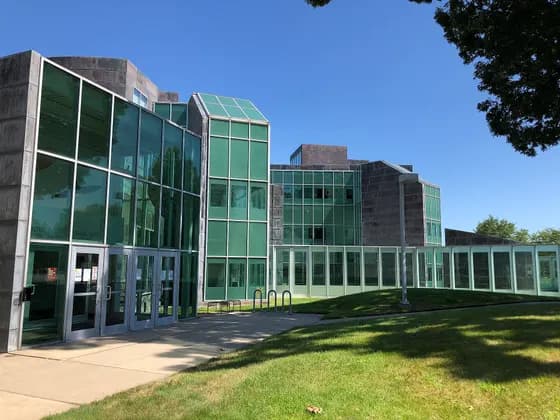

Photo: MrJacon000 · CC BY-SA 4.0 · cropped
Photo: Mbrickn · CC BY 4.0 · Photo: Limpfster94 · CC BY-SA 4.0 · Photo: Mbrickn · CC BY 4.0
The University of Toledo College of Medicine and Life Sciences MD program at a glance (2027 entry)
The University of Toledo College of Medicine and Life Sciences, known as UToledo or UTCOMLS, runs a four-year Doctor of Medicine (MD) program on its Health Science Campus in Toledo, Ohio. Its curriculum is called Rocket Medicine. The class that entered in 2026 had 175 students. The college dates from 1964, became known as the Medical College of Ohio and later the Medical University of Ohio, and merged with the University of Toledo in July 2006.
The school numbers the years M1 to M4. The preclerkship (preclinical) phase, the classroom-based stretch before full-time clinical work, runs from late July of M1 to February of M2 in four Threads, each a semester-long group of courses called Systems. Then comes dedicated study for Step 1 of the United States Medical Licensing Examination (USMLE), the three-step exam for medical licensure in the United States. A short Bridge to Clerkships course follows, helping you move into clerkships.
Clerkships fill M3 from early May, grouped into four themes the school calls dyads. M4, the advanced clinical experience phase, opens with preparation for Step 2 CK (Clinical Knowledge), the second licensing exam. It then runs mainly on electives (the rotations you choose yourself), a 4-week acting internship and preparation for residency, the specialty training doctors complete after medical school.
Regular patient time comes early: from January of M1, the Integrated Clinical Experience (ICE) places you with a practicing doctor for part of each Thread. Clerkships use the University of Toledo Medical Center (UTMC), a teaching hospital on the Health Science Campus. They also use ProMedica Toledo Hospital, part of the Toledo-based ProMedica health system, along with other hospitals and offices. Every student completes at least 8 weeks through the national Area Health Education Center (AHEC) program, in rural or urban underserved settings.
The program holds full accreditation from the Liaison Committee on Medical Education (LCME), which accredits MD programs in the United States. The LCME granted eight years in October 2021, and its directory lists the next survey for 2028-29. The school notes that LCME accreditation is what makes its students eligible to sit the USMLE and its graduates eligible for residencies accredited by the Accreditation Council for Graduate Medical Education (ACGME).
| Program length | 4 years; typical enrollment is 3 years and 10 months |
|---|---|
| Class size | 175 students in the class entering in 2026 |
| Curriculum | Rocket Medicine: four Threads, then clerkships and an advanced clinical year |
| Main campus | Health Science Campus, Toledo, Ohio |
| Teaching style | System-based Threads with team-based learning, cases, lectures and simulation |
| First regular clinical time | January of year 1, through the Integrated Clinical Experience |
| Step 1 timing | End of year 2, by an early-April deadline |
| Grading | Pass/fail in years 1-2; clerkships Honors, High Pass, Pass or Fail |
| AHEC requirement | At least 8 weeks of rural or urban underserved rotations |
| Accreditation | Full LCME accreditation; next survey listed for 2028-29 |
What makes the University of Toledo College of Medicine and Life Sciences MD program different
Time with a practicing doctor from January of year 1
Through ICE you join a doctor's outpatient work for part of every Thread from January of M1, long before clerkships start.
A third year built around four clinical themes
The seven core clerkships are grouped into maternal-child health, biopsychosocial care, medical and neurological care, and surgical care.
Required time with community doctors through AHEC
About 250 regional doctors teach as volunteer faculty in towns across northwest Ohio, and the Zepf Center in Toledo offers an urban option.
Optional four-year Scholarly Pathways of Excellence
Eight selective pathways, from data science and machine learning to rural health and the humanities, add faculty mentorship and scholarly work across all four years. Each takes 5 to 15 first-year students.
USMLE testing on the Health Science Campus
The Academic Test Center includes an on-site Prometric testing facility, the kind of test center that delivers USMLE exams. It delivers only USMLE Step 1, Step 2 CK and Step 3.
How University of Toledo College of Medicine and Life Sciences teaches medicine
Rocket Medicine began as a newly designed preclinical curriculum in fall 2017, and the integrated third year followed in May 2022. The Medical Student Handbook, a web handbook labeled for 2025-26 with sections updated in July 2026, counts four Threads made up of 12 Systems. Each has its own final exam.
Foundational sciences such as anatomy, physiology, pathology, pharmacology, biochemistry and radiology are taught inside the Systems and continue through all four years, with clinicians and science faculty working together on clinically relevant content. Principles of Clinical Medicine (PCM) runs alongside every Thread, covering communication and examination skills, clinical reasoning, ethics, patient safety, nutrition, the business of medicine and interprofessional education, learning with other health professions.
In M3 and M4, longitudinal teaching continues in clinical skills and reasoning and in health systems science, which covers topics such as population health, health care financing, value-based care and health care equity. M4 is anchored by a Transition to Residency course that starts with Step 2 preparation and ends with simulation in the Advanced Clinical Care (ACC) Boot Camp.
The ways you will learn
| Team-based learning | You prepare before class, take an individual readiness test that gives feedback rather than a grade, then apply the material with your team. The handbook calls it an integral part of the preclinical curriculum. |
|---|---|
| Lectures and e-modules | Lectures and assigned online modules form part of scheduled hours. You can review quiz questions afterward, though not those on end-of-System exams. |
| Cases and small groups | Case-based learning is among the listed methods, and Thread 4 gives a significant amount of time to small-group discussion. Obstetrics and gynecology students meet faculty weekly to work through patient management problems. |
| Standardized patients | At the Ruth M. Hillebrand Clinical Skills Center you practice history taking, examination and communication with people trained to act as patients, in practice and graded sessions. |
| Simulation | The Lloyd A. Jacobs Interprofessional Immersive Simulation Center uses simulation models, simulated clinical settings and virtual environments, and is built for different health professions to train together. |
| Clerkship teaching | On the wards and in clinics, teaching runs alongside patient care: neurology's lecture or case discussion on most mornings, internal medicine's grand rounds and conferences, and psychiatry's didactic and simulation sessions. |
A typical week on the University of Toledo College of Medicine and Life Sciences program
In M1 and M2, school policy (revised September 2026) sets scheduled teaching at an average of 25 hours a week and no more than 35, with the rest of the week for self-study. A dedicated study day or weekend should come before every major exam. Under the attendance policy revised in May 2025, lectures and other in-class sessions in M1 and M2 are encouraged but not required. You must attend exams, quizzes, patient presentations and any other session marked as required.
Clerkship weeks are longer. Scheduled hours, including on-call time, cannot exceed 80 a week or 30 in a row, and you must get at least 24 hours in a row off each week. You can take no more than 5 excused days in an academic year, and 1 to 3 days per clerkship depending on its length.
The family medicine clerkship's sample schedule shows one shape. It opens with a virtual orientation and has week 5 lectures on topics such as nutrition, dermatology and asthma. It ends on the final Friday with the National Board of Medical Examiners (NBME) subject exam, a national test known as the shelf exam.
How anatomy is taught at University of Toledo College of Medicine and Life Sciences
Anatomy is taught inside the Systems, and the curriculum schematic lists it among the foundational sciences that run through all four years. The handbook says the anatomy lab starts with Thread 2, which begins in January of M1, and you may need your own scrubs. Anatomy returns in later Threads, including ECOSystems and a dedicated week of reproductive anatomy in Thread 4.
A fourth-year elective sheet approved in April 2024 describes anatomy lab sessions for M1 and M2 students. It has fourth-year students guiding groups at lab tables through cadaveric prosections, specimens already dissected to display the structures, and, if available, plastinated specimens, real tissue preserved with plastic. The sheet calls these laboratory dissection sessions.
The university has four Anatomage Tables, large touchscreens for exploring digitized human cadavers, in the simulation center and the Mulford Library. Its December 2024 news report says medical students have used them.
The school's course sheets describe two optional electives. SOMN 601 Advanced Dissection in Anatomy runs for 10 weeks with about 10 students, in the fall of M2, or the spring of M1 for students in the Advanced Anatomy pathway. You choose an area to dissect, plan your study with an instructor and spend 4 to 6 hours a week in the Laboratory of Anatomical Sciences.
SOMN 609 Applied Anatomy, a 10-week elective for 10 M2 students in the fall, links anatomy to imaging and surgery. You build five presentations from imaging, diagrams and cadaveric prosections, and present a case orally.
The Advanced Anatomy Scholarly Pathway is aimed at fields such as surgery, medical imaging and anatomic pathology.
When you first meet patients at University of Toledo College of Medicine and Life Sciences
Clinical skills start in Thread 1. The handbook says you will meet real patients from the very first day and learn to approach a patient, take a basic history, perform a physical exam and document what you find. Basic Life Support is required in M1.
ICE begins in January of M1 and continues to the end of M2. For each Thread you are assigned a preceptor, a practicing clinician who teaches you, and you work together the equivalent of four half-days, seeing patients in outpatient settings. Across Threads 2, 3 and 4 you get one specialty per Thread: primary care, another medical specialty and a surgical specialty.
The aim is to show why the science matters and help you understand the patient's experience, and the Office of Student Affairs (OSA) notes that many students have found professional mentors through it.
The summer after M1 can add more. OSA's Summer Opportunities program includes preceptorships in family medicine and pediatrics, alongside research and community service. The Pediatric Preceptorship is four weeks in a private office, clinic or hospital, observing history and physical exams and writing notes and prescriptions under close supervision.
You can also volunteer with the CommunityCare Clinics, a student-run organization with free clinics for underserved people in Toledo. Its page, last updated in July 2024, says you help with triage and patient interviews and confer with a physician preceptor, who makes the care decisions. First-year volunteers attend fall training.
M2 ends with Bridge to Clerkships, scheduled across the last two weeks of April. Its roughly 20 hours of teaching and simulation cover presenting on rounds, writing notes and orders, team leadership and communicating with patients.
The University of Toledo College of Medicine and Life Sciences curriculum, year by year
- Year 1 (M1)
Cellular Disease, then Bones, Neuro and Behavior
On the proposed 2027-28 dates, Thread 1 runs from July 21 to December 17, 2027 and Thread 2 from January 3 to May 19, 2028.
- Thread 1, Cellular Disease: Human Blueprint (the genetic code and cell function), a short research and biostatistics block, Immunity, Infectious Disease, and Hematology and Oncology.
- Thread 1 also carries the research curriculum: finding information about a patient's disease and judging its validity.
- Thread 2, Bones, Neuro and Behavior: Neuroscience in Health and Disease, Musculoskeletal, and Behavioral Science and Psychiatric Medicine.
- Each Thread ends with an exam week.
- Year 2 (M2)
ECOSystems, Cycles and Vices, and Step 1
M2 starts in mid-July and finishes the Threads in mid-February. A dedicated study period follows from late February, and you must sit Step 1 by an early-April deadline.
- Thread 3, ECOSystems, named for Elimination (the kidneys), Circulation (the cardiovascular system) and Oxygenation (the lungs): Building Foundations, then CardioRenal and CardioPulmonary.
- Thread 4, Cycles and Vices: the gastrointestinal system, a December week of reproductive anatomy with required in-person sessions and an exam, then reproduction and endocrinology to mid-February.
- Thread 4 also takes on sensitive topics and diagnostic dilemmas, with the patient's perspective at the front.
- Step 1 study runs February 22 to the April 9, 2027 deadline for the Class of 2029, and is proposed for February 21 to April 7, 2028 for the Class of 2030.
- The 2027 study period includes one required in-person NBME qualifying exam, sat on one of two dates.
- Year 3 (M3)
Seven core clerkships in four themes
M3 runs from early May to late April: May 3, 2027 to April 23, 2028 on the calendar approved in September 2026. Each theme builds on what you learned in the preclerkship phase.
- Maternal-child health care: obstetrics and gynecology and pediatrics, 6 weeks each.
- Biopsychosocial approaches to care: family medicine, with family physicians in private offices and the university's academic facilities, and psychiatry, split into two blocks in different settings, 6 weeks each.
- Medical and neurological care: internal medicine, 8 weeks (6 inpatient, 2 outpatient), and neurology, 4 weeks.
- Surgical care: surgery, 8 weeks in two 4-week rotations, general surgery plus a possible subspecialty such as neurosurgery, urology or orthopedic surgery.
- Two 2-week career exploration electives in different specialties.
- Year 4 (M4)
Advanced clinical experience
M4 lasts 45 weeks, 37 of them instruction. For the Class of 2028 it opens with a one-week Step 2 prep course (May 3-9, 2027) and study time to June 6. Electives then run from June to late March, and commencement follows in May.
- A 4-week acting internship, also called a sub-internship, at UToledo or an affiliate.
- 2 weeks of emergency medicine, a required core rotation since 2020.
- At least 24 weeks of clinical electives in all, including those two.
- Final Foundations, a 2-week non-clinical course including Vital Talk communication training and the final clinical skills assessment you must pass to graduate.
- The ACC Boot Camp: 2 weeks of general and specialty-specific simulation to prepare you for day one of residency.
How you are assessed at University of Toledo College of Medicine and Life Sciences
Preclerkship grades are pass/fail and stay out of your grade point average (GPA), which comes only from clerkships. Each System is graded Satisfactory or Unsatisfactory, with 70 percent needed, and each Thread Pass or Fail, with no curve. A Thread grade combines its Systems, professionalism, the Thread final and the Integrated Clinical Skills Exam. That exam, worth 10 percent of each Thread grade, tests communication, history taking, examination, documentation and clinical reasoning.
Students who started in July 2026 or later can also earn distinctions. Satisfactory with Distinction needs 90 percent in a System. Pass with Distinction needs 90 percent in every System of a Thread and in professionalism. Your Medical Student Performance Evaluation (MSPE), the school's summary for residency programs, reports how many you earned.
Quizzes give feedback without a grade. Some Systems end with an NBME Customized Assessment, an integrating exam in USMLE style.
Clerkships are graded Honors, High Pass, Pass or Fail. Each grade has three parts. Preceptors rate you on five competencies, weighted by hours spent with you. The NBME shelf exam is the second part. The third is 20 departmental points, including an OSCE (objective structured clinical examination), a practical exam with standardized patients.
Step 1 has been reported only as pass or fail since January 26, 2022. You must finish the preclerkship curriculum in good standing and take Step 1 by a spring deadline, no later than one week before Bridge to Clerkships. Current students book their own date within the study period. You can start clerkships while awaiting your result, but promotion to M3 depends on passing. Step 2 CK must be passed to graduate, and the OSA guide says students generally take it the month after M3 ends.
In August 2026 the USMLE program announced a move to designated testing dates from January 2029, with Step exams offered less often each year. A June 2026 announcement had named 2028. On the current schedule, a student entering in 2027 would finish the Threads in February 2029 and take Step 1 by about early April 2029, within a few months after the switch. Step 2 CK study would fall around May and June 2030, at the start of M4, also after the switch. These are projections from current calendars.
- A Thread score of 60 to 69 percent allows a re-examination, where you need 70 percent. Below 60 percent there is no re-examination, and a committee reviews you for possible dismissal, as it does if you fail a re-examination.
- You must pass the Integrated Clinical Skills Exam, and any anatomy assessment in a System, on their own.
- Career exploration and preclerkship electives are graded Satisfactory or Unsatisfactory.
- On the school's published rubric, Honors needs Honors-level clinical ratings, the 55th national percentile on the shelf and 17 points. A pass needs the 5th percentile and 11 points.
- Failing the patient care competency means repeating the clerkship. Most other failures, including a failed shelf exam, bring a Defer, a conditional grade until the failed part is remediated, and Pass is then the highest grade.
- A failed shelf exam can be retaken once, before August 31 of M4. A second failure means repeating the clerkship.
- Two Defer or Fail grades in the clerkship year take you off your clerkship schedule and bring review by the Academic Progress Committee.
- A High Pass with honors-level clinical work and departmental points is noted as clinical excellence in your MSPE.
- Every clerkship gives you formative feedback by its midpoint.
- In M4 the acting internship and emergency medicine rotation are graded Honors, High Pass, Pass or Fail.
- You get three attempts at each Step: Step 1 within one calendar year of the first attempt, and Step 2 CK within a maximum of one year. Otherwise you face automatic dismissal.
- Taking more than 36 months for M1 and M2, or six years for the degree, triggers review for possible dismissal, with approved leave extending both, to a maximum of seven years.
University of Toledo College of Medicine and Life Sciences clinical rotations: where you will actually train
Clerkships use UTMC, which has served Toledo since 1964, and ProMedica Toledo Hospital, which the handbook describes as a 794-bed Level I trauma center. Other ProMedica hospitals and outpatient offices around Toledo and northwest Ohio are also used. UToledo's current academic affiliation agreement with ProMedica was signed in May 2024 and runs through June 30, 2033. More than 400 ProMedica-based physicians hold UToledo faculty appointments.
Year 3 schedules come from a lottery. In late winter or spring of M2, the Health Science Campus Registrar asks you to register your M3 track, the order of your clerkships. You may be offered the chance to request a site, but the clerkship offices make the final, binding assignments.
Every student completes at least 8 weeks of AHEC rotations across M3 and M4, in core clerkships or electives. Congress designed the national program in 1971 to train health professionals for underserved communities. UToledo's program has three regional centers, the Bryan, Lima and Sandusky AHECs, plus a Metro AHEC at the Zepf Center in Toledo, and about 250 regional doctors teach students as volunteer faculty.
You list AHEC preferences for clerkship and region when you schedule M3, but they are not binding, and the centers usually confirm your assignment and housing at least four weeks ahead. AHEC housing is generally provided at sites more than 60 miles from campus, and many hospitals offer AHEC students free housing and reduced-cost meals.
Some required clerkships run at partner hospitals in Columbus, Akron and southern Michigan, and school policy requires these alternative sites to match Toledo's rotation length, evaluation and grading. For required clerkships, UToledo provides shared rooms, two students per room, at sites more than 60 miles from campus, at sites offering housing at no cost and at St. Joe's Ann Arbor, but not for electives. The admissions overview says you will need reliable personal transportation to reach clinical sites in northwest Ohio, southeast Michigan and more distant parts of Ohio.
Neurology's inpatient weeks are at ProMedica Toledo Hospital and its clinic weeks at the Neurosciences Center. Bay Park hosts general surgery, and Flower hosts psychiatry. Ebeid, a 169-bed children's hospital, and Nationwide Children's take M4 pediatrics electives.
- University of Toledo Medical Center (UTMC)
- ProMedica Toledo Hospital
- Neurosciences Center
- ProMedica Flower Hospital
- ProMedica Bay Park Hospital
- University of Toledo Pediatric Clinic
- ProMedica Russell J. Ebeid Children's Hospital
- Nationwide Children's Hospital - Toledo
- Zepf Center (Metro AHEC)
Serves Defiance, Fulton, Henry, Paulding and Williams counties. Family medicine runs in all seven towns, internal medicine in Bryan, Defiance and Napoleon, surgery in Bryan, Defiance and Wauseon, pediatrics in Bryan and obstetrics and gynecology in Defiance.
- Archbold
- Bryan
- Defiance
- Hicksville
- Montpelier
- Napoleon
- Wauseon
Serves eight counties including Allen, Hancock and Van Wert. Lima and Findlay offer internal medicine, obstetrics and gynecology, pediatrics, psychiatry and surgery. Family medicine runs in Lima, Bluffton, Van Wert and Fostoria, and surgery also in Van Wert.
- Lima
- Findlay
- Bluffton
- Fostoria
- Van Wert
Serves seven counties including Erie, Sandusky, Wood and Lucas. Fremont offers all six clerkships this center lists. Family medicine also runs in eight other towns, pediatrics in Bowling Green and Tiffin, surgery in Bowling Green, obstetrics and gynecology in Bellevue, internal medicine in Greenwich and psychiatry in Northfield.
- Fremont
- Sandusky
- Bellevue
- Bowling Green
- Tiffin
- Norwalk
- Port Clinton
- Oak Harbor
- Clyde
- Genoa
- Milan
- Stony Ridge
- Greenwich
- Northfield
OhioHealth's largest hospital, with 1,059 beds. M3 options are internal medicine, surgery and obstetrics and gynecology, and for obstetrics and gynecology you spend the whole rotation in Columbus.
- OhioHealth Riverside Methodist Hospital
A 532-bed hospital in the Cleveland Clinic system. The handbook lists surgery and family medicine clerkships here, and the internal medicine clerkship lists it as an inpatient site.
- Akron General (Cleveland Clinic)
The handbook lists internal medicine and surgery at St. Joe's, which Trinity Health's own site lists as Trinity Health Ann Arbor Hospital in Ypsilanti. Hillsdale Hospital, a small rural hospital in south central Michigan, offers obstetrics and gynecology, and the surgery clerkship also lists Adrian.
- St. Joe's Ann Arbor (Trinity Health)
- Hillsdale Hospital
- Adrian
Electives, selectives and away rotations at University of Toledo College of Medicine and Life Sciences
Optional preclerkship electives, graded Satisfactory or Unsatisfactory, go on your transcript once completed. The current list includes Medical Spanish I and II, Art and Medicine, Medical Illustration, Lifestyle Medicine, Child Advocacy, Advanced Interviewing Skills and Centering Pregnancy.
In M3 the two career exploration electives each last 2 weeks in a different specialty, and you meet an advisor about your career direction. The 2026 list includes anesthesiology, dermatology, otolaryngology, emergency medicine, pathology, radiology, urology, neurosurgery and orthopedic surgery, plus internal medicine and pediatric subspecialties.
M4's 37 weeks of instruction include at least 24 weeks of clinical electives, counting the acting internship and emergency medicine. At least 12 weeks must be at UToledo or its affiliates, and global health electives do not count toward those 12. No more than 16 weeks can be in any one ACGME core discipline, meaning a specialty you can enter straight from medical school. Another 8 weeks can be clinical or non-clinical.
Non-clinical options include Clinical Informatics, Simulation Education, Teaching Electives at UTMC, and Student Chief roles in internal medicine or pediatrics. Others cover laparoscopy and surgical robotics, or population and public health with the Toledo-Lucas County Department of Health. Research electives last 2 to 8 weeks in M4 and also run in M3.
Away rotations are electives at other schools or hospitals. Each needs school approval before you apply, and you must be in good academic standing with no incomplete grades. You apply through VSLO, the Visiting Student Learning Opportunities system, or on a paper application if the host is outside it. Akron General's 4-week senior electives, on a page last updated in July 2024, are also applied for through VSLO.
The Global Health Program's page, last updated in July 2024, lists 4-week credit-bearing clinical rotations with partner institutions in Africa, Asia and the Middle East. Partners include Aga Khan University in Karachi and the American University of Beirut. The page also lists 2-week faculty-led medical missions.
- Flexible time: up to 6 weeks across M3 and M4, plus 10 flexible days in M4 for residency interviews and travel.
Dual degrees and research years at University of Toledo College of Medicine and Life Sciences
For each dual degree you must be admitted to both programs. The 2026-27 catalog lists MD/PhD in biomedical sciences, MD/PhD in biomedical engineering, MD/MSBS (a master's in biomedical sciences), MD/MPH, MD/MSOH (occupational health), MD/MBA and JD/MD. MD/PhD and JD/MD students must keep up clinical training during their graduate years, about 8 hours a month with a faculty mentor. It earns up to 8 weeks of M4 elective credit on the PhD route and 4 weeks on the JD route.
The MD/PhD usually takes seven to eight years and typically admits two students a year. You do two lab rotations in M1 and M2, take Step 1, then join a graduate track such as Cell and Cancer Biology or Molecular Medicine. After a qualifying exam and three to four years of research, you defend your dissertation and return for the clinical years. The biomedical engineering version typically takes seven years.
The MD/MBA is an integrated five-year plan, and on the catalog's sample pathway you spend the year after M2 in the business school. The JD/MD takes six years, alternating between the colleges, and its 2024 overview caps it at five students a year. The MD/MPH shares up to 12 credit hours between the degrees.
The Scholarly Pathways of Excellence, a new offering, add scholarly work beyond the standard curriculum. You apply in the fall of M1 (September 14 to October 4 in 2026) for one pathway plus an alternate. You must be taking M1 for the first time and score at least 75 percent in Human Blueprint, the first course. To stay in, you generally must pass Threads, electives, clerkships and Step exams on the first attempt.
The Medical Student Research Program is a competitive, paid summer project after M1, with a faculty mentor, in basic science, clinical or medical education research. OSA reports nine weeks of summer work in 2025. The Pre-Clinical Pathology Student Fellowship takes two or three students a year for a full year after M2 and leads to a graduate certificate. You can also take a leave of absence for full-time research, which delays graduation.
- Academic Leadership: 5 places, ending in a capstone.
- Advanced Anatomy: 10 places.
- Data Science: 15 places, no prior experience needed.
- Health Disparities: 10 places, with a research project or initiative.
- Humanities: 6 places, using literature, poetry, theater and visual arts.
- Machine Learning and Artificial Intelligence: 10 places.
- Medical Education: 5 places, on teaching and mentoring.
- Rural Health: 5 places, built on UToledo's AHEC links.
Facilities and support at University of Toledo College of Medicine and Life Sciences
Where you will learn
The Health Science Campus at 3000 Arlington Avenue is separate from the university's Main Campus on West Bancroft Street. The simulation center there is a three-story, 65,000-square-foot building with three linked centers: progressive anatomy and surgical skills, advanced clinical simulation, and virtual immersive reality.
The Ruth M. Hillebrand Clinical Skills Center, in the Center for Creative Education building, began in 1991 as a Standardized Patient Program and took its current name in 2005. Clerkship OSCEs are held there.
The Mulford Health Science Library fills floors four to six of the Mulford Library Building, with group study rooms and walking and bicycle desks. A clinical medical librarian helps with literature searches and research projects.
Support while you study
OSA provides academic advising, personal counseling and career advising, and runs specialty and residency advising from M1 orientation to graduation. If you plan to become a parent during medical school, the handbook asks you to contact OSA early.
The Academic Enrichment Center (AEC), in the Mulford Library Annex basement, offers academic coaching, wellness coaching and peer tutoring, and helps you build a Step 1 study schedule. A full-time student wellness counselor is based there.
The UTMC Student Behavioral Health Center has a board-certified psychiatrist with no teaching or evaluation role over medical students, and a faculty therapist sees students on weekdays. You also have 24-hour telephone access to a counselor.
Rocket Launch PODs are peer-mentoring groups for first-year students. M2 students apply to mentor through the elective SOMN 736, ideally at least two per POD, and meet their group at an opening meeting and at least three more times. Groups also have a faculty advisor.
The Academic Progress Committee reviews any quiz, exam or clinical score below 75 percent and can refer you to the AEC for coaching or to OSA for support.
Is the University of Toledo College of Medicine and Life Sciences program right for you?
This program may suit you if
- You want regular outpatient time with a practicing doctor from January of M1.
- You learn well by preparing ahead and then working problems through with a team in class.
- You would value time with community doctors in small Ohio towns or an urban underserved clinic.
- You want to sample specialties such as dermatology or radiology during year 3.
- You want an optional four-year track in an area such as data science, AI or rural health, and are ready to compete for a place.
Things to think about
- Expect time away from Toledo: AHEC weeks are required, some clerkship sites are in Columbus, Akron or Michigan, and site assignments are final.
- Clerkship grades are tiered and form your GPA, with NBME shelf exams counting in every clerkship.
- On the current schedule, a 2027 entrant would take Step 1 within a few months after the USMLE's switch to designated testing dates.
- The Scholarly Pathways are selective, and staying in generally requires first-attempt passes.
- The school says you will need reliable personal transportation to reach clinical sites.
University of Toledo College of Medicine and Life Sciences MD program — frequently asked questions
Applying to University of Toledo College of Medicine and Life Sciences?
How to get into University of Toledo College of Medicine and Life Sciences
Prerequisites, MCAT, AMCAS personal statement, secondaries and interview, step by step.
Open the guide →University of Toledo College of Medicine and Life Sciences admissions profile
MCAT and GPA profile, acceptance rate, interview format and key dates.
See the profile →Compare University of Toledo College of Medicine and Life Sciences with other schools
Put the teaching style, anatomy teaching and clinical sites next to another school.
Open the comparison →Prepare for the University of Toledo College of Medicine and Life Sciences interview
Format breakdown, school-specific sample questions and prep tips from tutors who interviewed here.
Read the guide →Where this University of Toledo College of Medicine and Life Sciences program guide came from
This guide was written from 91 official sources — University of Toledo College of Medicine and Life Sciences's own program pages and curriculum documents, plus the accreditor and the hospitals and health systems the school trains students in where they publish detail — read on 2026-10-31, then checked claim by claim against those sources.
- UToledo College of Medicine and Life Sciences: home page
- Rocket Medicine: Your Educational Trajectory (MD curriculum home)
- Rocket Medicine: foundational sciences, M1 and M2, with 2026-2027 and proposed 2027-2028 dates
- Integrated Systems-Based Curriculum: MD curriculum schematic (PDF, 4 pages)
- Class of 2030 Pre-Clerkship Years Grading System (FAQs)
- Curriculum Year 3: Clerkship phase
- Third Year Inpatient Sites (Inpatient Sites for M3 Clinical Rotations by Specialty)
- Third Year Important Dates (2027-2028 clerkship calendar)
- Third Year Career Exploration Courses
- Curriculum Year 4: Advanced clinical experience phase
- Fourth Year Important Dates (2027-28 and 2026-27 calendars)
- Senior Electives Offered by Akron General Hospital
- Non-Clinical Electives (fourth year)
- Fourth Year Away Elective Information
- Rocket Medicine: YOUR CLINICAL LEARNING JOURNEY (Phase 2 clinical curriculum reform)
- Pre-Clerkship Electives
- SOMN 601 Advanced Dissection and Study in Anatomy
- Applied Anatomy (SOMN 609)
- Rocket Launch POD Mentorship Program (SOMN 736)
- Scholarly Pathways of Excellence for the M.D. Program
- Scholarly Pathway: Academic Leadership
- Scholarly Pathway: Advanced Anatomy
- Scholarly Pathway: Data Science
- Scholarly Pathway: Health Disparities
- Scholarly Pathway: Humanities
- Scholarly Pathway: Machine Learning and Artificial Intelligence
- Scholarly Pathway: Medical Education
- Scholarly Pathway: Rural Health
- Medical Student Handbook (Rocket Medicine: Your Manual for Mission Success) - index
- GROUND ZERO: History, Accreditation and Facilities (handbook)
- FLIGHT PLANS: Calendar, Equipment and Curriculum (handbook)
- PROGRAM ANALYSIS: Assessment, Evaluation and Licensure (handbook)
- ZERO GRAVITY: Student Life in Rocket Medicine (handbook)
- MSPE (Medical Student Performance Evaluation) - Medical School Information Page, Class of 2027
- MedLaunch: Pre-Clinical (Office of Student Affairs guide)
- MedLaunch: Clinical (Office of Student Affairs guide)
- Policy 3364-81-04-013-02: Academic Promotion, Grading Criteria, Remediation & Dismissal in the MD Program (PDF)
- Policy 3364-81-04-013-05: Graduation Requirements for the M.D. Degree Program (PDF)
- Policy 3364-81-04-013-06: Grading Policy for Required Clinical Clerkships (PDF)
- Policy 3364-81-04-009-00: Alternative Sites of Instruction for the Required Clerkships (PDF)
- Policy 3364-81-04-012-07: Third Year Clerkships Scheduling Changes (incl. Site Assignments) (PDF)
- Policy 3364-81-04-012-08: Area Health Education Center (AHEC) Program (PDF)
- Policy 3364-81-04-004-00: Assigned Education Hours for Medical Students During Clinical Clerkships (PDF)
- Policy 3364-81-18: Assigned Education Hours for Foundational Science Curriculum (PDF)
- Policy 3364-81-29: Medical student housing for offsite required clinical clerkship rotations (PDF)
- Policy 3364-81-04-012-04: Combined degree programs for medical students (PDF)
- College of Medicine and Life Sciences LCME Accreditation
- LCME Independent Student Analysis (ISA) - summary
- LCME: Accredited Programs (directory)
- USMLE Designated Testing Dates Information Hub
- USMLE: Updated Timeline for USMLE's Designated Testing Dates: Transition Will Take Place in January 2029
- USMLE: Examination Results and Scoring
- UToledo-ProMedica Academic Affiliation (Academic Affiliation Agreement, May 8, 2024)
- University of Toledo Graduate Catalog 2026-2027: College of Medicine & Life Sciences
- University of Toledo Graduate Catalog 2026-2027: Graduate Degrees/Certificates Offered (College of Medicine & Life Sciences)
- University of Toledo Graduate Catalog 2026-2027: M.D./M.B.A. Dual Degree
- M.D./Ph.D. Program - The University of Toledo
- M.D./Ph.D. Program: Overview
- Overview - Joint-Degree (J.D./M.D.) Program at the University of Toledo
- Global Health Program at The University of Toledo (College of Medicine and Life Sciences)
- Student Research (Medical Student Summer Research Program)
- Academic Enrichment Center (Health Science Campus)
- Lloyd A. Jacobs Interprofessional Immersive Simulation Center (IISC)
- About AHEC (University of Toledo Area Health Education Center program)
- Bryan Area Health Education Center - BAHEC
- Lima Area Health Education Center - LAHEC
- Sandusky Area Health Education Center - SAHEC
- Metro AHEC Program (Zepf Center)
- Internal Medicine Student Handbook (required clerkship, 2026-2027)
- Neurology Medical Student Clerkship
- Core Clerkship in Obstetrics and Gynecology
- Medical Education: Pediatrics (M3 clerkship and M4 electives)
- Medical Student Clerkship (Department of Surgery)
- Department of Pediatrics: Clinical Care (ProMedica Russell J. Ebeid Children's Hospital)
- About UToledo Health (University of Toledo Medical Center)
- OhioHealth Riverside Methodist Hospital (hospital's own page)
- Trinity Health Ann Arbor Hospital | Trinity Health Michigan (hospital's own page)
- Hillsdale Hospital | Hillsdale, Michigan (hospital's own page)
- Overview of Medical School (admissions page)
- UToledo News: Learning Brain Anatomy (December 12, 2024)
- Family Medicine Clerkship: Sample Didactic Schedule
- M.D. 2026 Entering Class Profile
- Anatomy Dissection and Teaching (ADT) Elective: fourth-year elective sheet, approved April 2024
- Medical Student Research Program (Office of Student Affairs)
- Policy 3364-81-04-031-00: Dual Degree (MD/PhD; MD/JD) Student Clinical Elective During Graduate Research Years (PDF)
- Policy 3364-81-17: Excused Absences from Required Academic Activities in the MD Program (PDF)
- Policy 3364-81-04-007-00: Satisfactory Academic Progress in the Required Clinical Clerkships (PDF)
- Away Elective Guide (fourth year)
- MedLaunch: VSLO (Aways) (Office of Student Affairs guide)
- Community Care Clinics (CCC) (Office of Student Affairs)
- College of Medicine and Life Sciences: History
Curricula are restructured between cycles. Anything here that decides your application — how anatomy is taught, a clinical campus assignment, a required research year — should be confirmed against the official page for your entry year.
Applying to University of Toledo College of Medicine and Life Sciences?
We help US applicants with MCAT strategy, the AMCAS personal statement, secondary essays and interview prep — everything you need for a competitive University of Toledo College of Medicine and Life Sciences application.