
The University of Minnesota Medical School MD program
What you actually study, and where you will be
University of Minnesota Medical School's MD is a 4-year program with an integrated curriculum, with patient contact from Year 1 and clinical rotations in the Twin Cities, Duluth, St. Cloud and rural Minnesota (2027 entry). The University of Minnesota's MD follows the Serve curriculum on its Twin Cities, Duluth and St. Cloud campuses. An 18-month Foundations phase covers the body system by system, with clinical skills, community health and clinic time from Year 1. After two months of study for USMLE Step 1, the first licensing exam, clerkships start in March of Year 2. You take them in blocks or, from later that spring or summer, in a longitudinal clerkship such as the Rural Physician Associate Program. A final phase is planned around your specialty.
- Degree
- MD
- Length
- 4 years
- Teaching
- Integrated
- Clinical contact
- Year 1

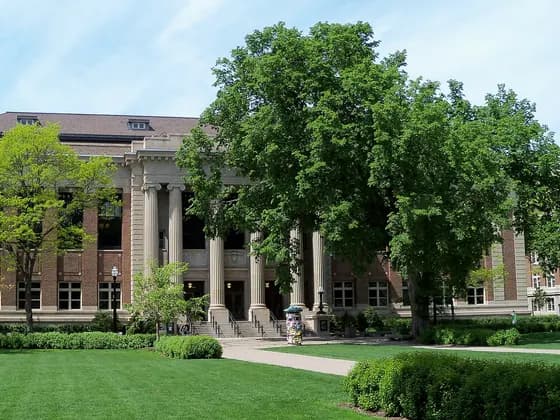


Photo: A Gude · CC BY-SA 2.0 · cropped
Photo: Jon Platek · CC BY-SA 3.0 · Photo: Tony Webster · CC BY-SA 4.0 · Photo: Darb02 · CC BY-SA 4.0
The University of Minnesota Medical School MD program at a glance (2027 entry)
The University of Minnesota Medical School (U of M or UMN Medical School; UMMS in its own policies) runs a four-year Doctor of Medicine (MD) program. It teaches on three campuses: the Twin Cities campus in Minneapolis, the Duluth campus and the CentraCare Regional Campus in St. Cloud. All three use the same curriculum, Serve, which began a rolling launch with the Class of 2027 in August 2023. The school was founded in 1888 as the College of Medicine and Surgery.
Serve has three phases. The Foundations phase, the pre-clerkship (preclinical) stage, lasts about 18 months: a Fundamentals course, then nine organ-system courses from Skin to Gastrointestinal. Clinical skills, community health and Early Clinical Experience, time with real patients in clinics and hospitals, run alongside from Year 1. After two months of dedicated study for Step 1 of the United States Medical Licensing Examination (USMLE), the first licensing exam, you start clerkships, the full-time core clinical rotations, in Year 2.
Each campus has its own focus. Duluth was founded in 1972 to train physicians dedicated to family medicine for rural Minnesota and Native American communities, and became a four-year campus in fall 2025. St. Cloud opened that fall with 24 students and focuses on rural Greater Minnesota and immigrant communities. When you apply you choose a general, rural health or Indigenous health mission, and your offer of admission names your campus.
In Clinical Immersion, the second phase, you take the core clerkships in a lane, the school's term for a set sequence of specialty blocks, or in a longitudinal integrated clerkship (LIC). In an LIC you follow the same patients and preceptors, the physicians who supervise you, for most of a year. One is the Rural Physician Associate Program (RPAP), nine months in a rural community, created in 1971 by family medicine faculty member Dr. John Verby.
The last phase, Specialty-Specific Transitions, runs from March of Year 3 to graduation in May of Year 4 and is planned around the specialty you aim to enter. The Liaison Committee on Medical Education (LCME), which accredits MD programs in the United States, lists the program as fully accredited.
| Degree | MD, fully accredited by the LCME |
|---|---|
| Program length | 4 years; up to 6 on the Flexible MD; MD/PhD about 8 |
| Curriculum | Serve: Foundations, Clinical Immersion and Specialty-Specific Transitions phases |
| Campuses | Twin Cities (Minneapolis), Duluth and CentraCare Regional Campus St. Cloud |
| Class size | 165 Twin Cities, 65 Duluth, 24 St. Cloud (University Key Facts page) |
| Grading | Pass/no pass in Foundations and required clerkships; some electives tiered |
| Anatomy | Thread through systems courses; dissection lab on the Twin Cities campus |
| First patient contact | Early Clinical Experience from the spring of Year 1 |
| Clerkships start | March of Year 2; LICs start between April and late August |
| Step 1 timing | End of dedicated study in January and February of Year 2 |
What makes the University of Minnesota Medical School MD program different
One curriculum, three campuses with distinct missions
Duluth centers on rural and Native American health, with a Rural and Indigenous early clinical preceptorship and the Center of American Indian and Minority Health. St. Cloud centers on rural Greater Minnesota through CentraCare's hospitals and clinics, while Twin Cities students train across the metro area's hospitals.
Nine months as a rural town's only medical student
Through the Rural Physician Associate Program, which takes students from any campus, about 40 a year spend nine months of Year 3 in a rural community in Minnesota or western Wisconsin. You work with a family physician preceptor in clinic, hospital, emergency room, nursing home and patients' homes, complete several required clerkships and a community health assessment project. The school says RPAP was the first LIC.
Hospital-based longitudinal clerkships in the Twin Cities
Three LICs are each based at one hospital. Veterans Affairs Longitudinal Undergraduate Medical Education (VALUE) runs at the Minneapolis VA, Regions Equitable Affordable Community Health (REACH) at Regions Hospital, and the Hennepin Longitudinal Integrated Experience (HeLIX) at Hennepin County Medical Center. The school describes REACH and HeLIX as clerkships for Twin Cities and Duluth students.
Community and pediatric longitudinal clerkships
The Metropolitan Physician Associate Program (MetroPAP), open to Twin Cities and Duluth students, is based in urban family medicine residency clinics. The M Health Fairview Longitudinal Interprofessional Integrated Clerkship (FLIIC) trains you alongside family nurse practitioner students. Education in Pediatrics Across the Continuum (EPAC) moves future pediatricians directly into the university's pediatrics residency.
Assessed on real clinical tasks, with a coach
Clerkship progress is tracked through 13 Core Entrustable Professional Activities (EPAs), everyday tasks of a new intern such as taking a history and examining a patient. You must be observed on at least three a week, a faculty coach reviews your progress, and a committee decides when you can do each task with less supervision.
A final phase built around your specialty
From March of Year 3, the only clinical courses everyone takes are emergency medicine, an acting internship in critical care and an acting internship selective. An acting internship, or sub-internship, gives you much of an intern's work under supervision. The rest follows the school's design for your planned specialty, timed around the Match, the system that places graduates in residency programs.
How University of Minnesota Medical School teaches medicine
The school describes basic and clinical science as integrated across all four years. It says Serve was designed to give plenty of active learning, shorten the classroom phase and add outpatient experience early. Discipline-based curriculum threads run through all the systems courses; the school's 2024 overview lists threads such as anatomy and embryology, pharmacology, physiology, histology and pathology, and public health.
Courses mix formats: large-group active learning, small-group discussion, case-based and problem-based learning, team-based learning in Musculoskeletal, pre-recorded lectures in Endocrine and Reproduction, and lab exercises in Renal and Urinary. Systems courses are timed with Clinical Skills. During Cardiovascular, for example, you study the heart in a concurrent anatomy lab and practice the related examinations and procedures in Clinical Skills.
Social and Community Health runs in four parts through the Foundations phase. It focuses on Minnesota communities that have been underserved by the health system, including 2SLGBTQIA+, immigrant and refugee, Indigenous, rural and urban communities, and on stigmatized conditions such as addiction, disability and housing insecurity. Becoming a Doctor, a series of required on-campus weeks in every year, covers reflective practice, advanced clinical skills and professional identity.
In clerkships you learn on care teams with residents and attending physicians. LICs add their own teaching: VALUE students have a weekly half day on quality improvement, evidence-based medicine, interprofessional practice and health equity, and RPAP students follow an online curriculum.
The ways you will learn
| Large-group active learning | Whole-class sessions built around problems and questions, supported by online modules. |
|---|---|
| Small-group cases | Facilitated groups work through patient cases. In problem-based learning the group decides what it needs to learn; Endocrine and Reproduction runs week-long problem-based cases. |
| Clinical Skills | Four semesters of history taking, examination, differential diagnosis, notes, oral presentations, informed consent and basic procedures, in small groups, simulation and sessions with standardized patients, actors trained to portray patients. |
| Anatomy lab | Tied to the systems courses, with a concurrent lab in Cardiovascular; on the Twin Cities campus, first-year dissection blocks in the dissection lab. |
A typical week on the University of Minnesota Medical School program
In the Foundations phase, the school's workload policy plans 25 hours a week of required activities, counting live sessions and set online work, and assumes an hour of study for each of those hours. The estimated total is capped at 50 hours a week on average; students who regularly go over are encouraged to contact the Office of Learner Development. On the Twin Cities track, many weeks also include a clinic or hospital afternoon.
Clinical weeks depend on the clerkship. On medicine you care for patients six days a week, with rounds starting at 7:00 or 7:30 a.m. and days ending around 4 p.m., or as late as 9 p.m. on call days. Psychiatry runs weekdays from 8:00 a.m. to 5:30 p.m., family medicine roughly 7:30 a.m. to 5 p.m. with Wednesday morning teaching, and pediatrics uses daily shifts of 10 to 12 hours.
- Core clerkships give you at least one day off in every seven, a second consecutive day off every two weeks on average, and a half weekday off every two weeks on average.
- You get at least 10 hours off between shifts. Call stretches are capped at 24 hours, plus up to 4 for patient care and teaching, and overnight call comes no more than every fourth night.
- The critical care acting internship mixes day and night shifts at 80 hours a week.
How anatomy is taught at University of Minnesota Medical School
Anatomy is not a single stand-alone course in Serve. The school's 2024 overview of the Foundations phase lists anatomy and embryology as a thread through the systems courses, and the 2026 St. Cloud preceptor guide says anatomy runs alongside each systems course, focused on the structures relevant to that system. Cardiovascular includes a concurrent anatomy lab on the structures of the heart, and Foundations assessments include anatomy exams.
On the Twin Cities campus, first-year students learn in the dissection lab during set dissection blocks. Senior students can return as teaching assistants through Advanced Clinical Gross Anatomy (ANAT 7601), an elective of two weeks or more. They help faculty plan and run labs, assist with dissection demonstrations and help with lab practical exams, and can time the elective to match a first-year dissection block.
Integrated Preparation for Internship (ANAT 7800) is a four-week Twin Cities elective that several specialty designs list as a surgery boot camp. Each week includes nine hours in the anatomy lab, set up as a simulated operating room, and four hours in the SimPortal simulation lab.
When you first meet patients at University of Minnesota Medical School
Clinical Skills begins in the first fall. At St. Cloud, whose first clinical week fell in March in 2026, the preceptor guide says first-year students have by then taken full histories from standardized patients, learned examination techniques and written practice notes. On the 2026 Twin Cities schedule, clinic afternoons start in the first week of January of Year 1.
Early Clinical Experience (ECE) then brings real patients. Under the 2026 guides, the Twin Cities track gives 20 clinical afternoons over 24 weeks of Years 1 and 2, with online modules in the other weeks. Twelve are with an outpatient preceptor and eight on a hospital team at Hennepin County Medical Center (HCMC), Regions Hospital, the VA Medical Center, Abbott Northwestern or the University of Minnesota Medical Center (UMMC).
In clinic you see a patient first each half day, present to your preceptor, write a note and are observed for a few minutes, with feedback on the related EPAs. Three immersion weeks add about 10 clinical half days, including hospital rounds and a half day in the emergency department. Twin Cities students can opt into a rural track that mirrors Duluth's, as capacity allows, or apply for an Indigenous track.
Duluth and St. Cloud run Early Clinical Immersion as whole weeks with community physicians, in 2026 one week each in March, April and October. Duluth's Rural and Indigenous preceptorship can span clinic, hospital and long-term care; St. Cloud students move to a different site each week, including rural primary care. The 2027-28 calendar moves Year 1's first immersion week to early January.
The University of Minnesota Medical School curriculum, year by year
- Year 1
Foundations: Fundamentals and six organ systems
Year 1's courses run over three semesters, from mid-August to late June; for 2027 entrants, orientation is the week of August 16 and classes start on August 23. Clinical Skills and Social and Community Health run alongside the courses below.
- Fundamentals of Medicine (7 credits), after a Becoming a Doctor week: from cells, metabolism, genetics, pharmacology and infection out to communities and health care systems.
- Skin (3 credits) from mid-October, then Musculoskeletal (5 credits), a five-week course taking each body region in turn, with team-based learning.
- Nervous System and Human Behavior (9 credits) from January: a week of Brain Camp, then eight weeks built around problems such as altered mental status, movement and cognitive disorders.
- Cardiovascular (5 credits) from March, then Respiratory and Renal and Urinary (4 credits each) from May.
- From late June, a summer for a break, enrichment or research.
- Year 2, August to February
Foundations ends, then dedicated Step 1 study
The fall completes the Foundations phase, and you apply for LICs or state lane preferences for your clinical year. In January and February you prepare for and sit USMLE Step 1.
- Endocrine and Reproduction (5 credits) from late August: pituitary, thyroid, adrenal, bone, diabetes, reproduction and transgender care, with week-long problem-based cases.
- Hematological (4 credits) and Gastrointestinal (5 credits), from the mouth through the liver and pancreas, with substantial time on nutrition; Clinical Skills IV and Social and Community Health IV run alongside.
- LIC applications are due in early September, with interviews that month and offers in mid-October. Applications for the Duluth and St. Cloud lanes, a HYBRID option at HCMC and Urban Community Ambulatory Medicine (UCAM) close in late September. Lane assignments are set in November.
- January: the four-week Step 1 Structured Preparation Course, online independent study with check-ins and one-on-one help from Learner Development staff. February: flexible weeks for study, electives or time off.
- Around the start of March: Bridge to Clinical Immersion, a week of preparation for clinical work.
- Year 2 March to Year 3 February
Clinical Immersion: the core clerkships
From March of Year 2 you complete the required clerkships. In a lane, you start specialty blocks, with flexible weeks between, straight after the Bridge week and finish in about 12 months. An LIC starts between April and late August, depending on the program, and RPAP and MetroPAP students first complete the medicine clerkship.
- Medicine (8 weeks) on inpatient teams with interns, residents and faculty, and Surgery (8 weeks) across care before, during and after operations.
- Pediatrics, obstetrics and gynecology, psychiatry and family medicine, 4 weeks each; in family medicine you take part in over half of each day's patient visits.
- Neurology (4 weeks): two weeks on inpatient services and two Brain Weeks of online modules and Tuesday morning team sessions, including a neurological exam skills assessment.
- A two-week Outpatient Selective in a primary care or specialty clinic, FLEX weeks for electives, study or vacation, and Becoming a Doctor weeks in August and late February.
- LIC alternatives: RPAP and MetroPAP (9 months), VALUE, REACH and HeLIX (about 10 to 11 months), FLIIC (9 months) and EPAC for future pediatricians. UCAM offers 8 or 12 weeks in one urban family medicine clinic.
- Year 3 March to Year 4 May
Specialty-Specific Transitions
Only three clinical courses are common to everyone; the rest follows the school's published design for your planned specialty, timed around residency applications, interviews and the Match.
- Required for all: Emergency Medicine (4 weeks), where you act as the supervised primary physician for emergency patients. The Acting Internship in Critical Care (4 weeks) is in a medical, surgical, pediatric or neonatal intensive care unit, and an Acting Internship Selective completes the list.
- Specialty designs, published for more than 20 specialties, run from an application segment (March to September) through an interview segment in the fall to a Match segment (January to April).
- Designs name courses such as a surgery boot camp, recommended electives and, for some fields, away rotations at other schools.
- A movable slot for Step 2 CK (Clinical Knowledge) sits in early March of Year 3; for most specialties the school recommends sitting it before the first Wednesday of September of your Match year.
- The Clinical Competency Assessment, an OSCE (a structured exam in which you are observed doing clinical tasks) required for graduation, falls in late Year 3 or early Year 4.
How you are assessed at University of Minnesota Medical School
Foundations courses are pass or no pass. Grading is criterion-referenced, measuring you against the material rather than your classmates, and you need 70 percent of a course's points to pass. A score just below that, within the margin of error, is reviewed with your name removed by a small faculty committee. Courses use multiple-choice midterms and finals, anatomy exams and quizzes, and a failed course gets one remediation attempt.
Required clerkships have been pass/no pass since 2021-22; electives are graded Honors, Excellent, Satisfactory or No Pass, or pass/no pass. The school does not formally rank students in the Medical Student Performance Evaluation (MSPE), the summary letter residency programs receive. Clerkships assess you on the 13 Core EPAs defined by the Association of American Medical Colleges (AAMC), with at least three observed each week.
An Assessment and Coaching Expert (ACE), a faculty coach, helps you improve, and a Clinical Competency Committee decides when you can do each task under indirect supervision. You must reach that level for EPAs 1, 2, 5 and 6: the history and physical, a prioritized differential diagnosis, documentation and the oral presentation. You also log Required Clinical Experiences, a set list of conditions and procedures, at least weekly.
Some core clerkships end with a National Board of Medical Examiners (NBME) shelf exam, a national multiple-choice subject test. The school's exam guide lists internal medicine, obstetrics and gynecology and neurology, whose shelf is graded pass/fail; others use their own tests, such as a surgical skills exam (OSATS). The Clinical Competency Assessment is held on the Twin Cities campus in spring.
The USMLE has three steps. Step 1 tests the science behind medicine and has been pass/fail since January 26, 2022; Step 2 CK tests the clinical decisions expected of a first-year resident. You must pass Step 1 by the end of the first Clinical Immersion semester, in the spring of Year 2, to progress. You must pass both exams to graduate, and three failures of either lead to a dismissal hearing.
In August 2026 the USMLE program announced a move to designated testing dates from January 2029, with Step exams offered less often each year. Its June 2026 notice had named 2028. On the current schedule, if you enter in 2027 you would spend January 2029 in structured Step 1 preparation. You would sit the exam at the end of that dedicated time, around February 2029, shortly after the switch. Step 2 CK would follow in 2030, under the new model.
- The LCME directory, updated October 14, 2026, lists the school as fully accredited, first accredited before the LCME was founded in 1942, with its next survey in 2027-28. The school's next site visit is set for April 24 to 26, 2028.
- For MD students, attending an LCME-accredited school is what makes you eligible for Step 1 and Step 2 CK; students at osteopathic (DO) schools and eligible international schools qualify through other routes.
- Graduation also requires proficiency in competencies across nine domains, adapted from the AAMC's Physician Competency Reference Set.
University of Minnesota Medical School clinical rotations: where you will actually train
Your offer of admission assigns a Location Campus, Twin Cities, Duluth or St. Cloud, for the whole program, including that campus's clinical sites; the Twin Cities is the home campus that awards every degree. The school calls reassignment extremely rare, limited to new caregiving duties or a medical condition needing local care, and not granted for personal preference.
Required clerkships are planned within a 50-mile drive of your campus, or 40 miles when you must be on site four weekdays a week. RPAP, rural immersion weeks and the Duluth and St. Cloud lanes can go farther, with housing or travel allowances where no housing is provided; students from other campuses can opt into these lanes. The Clinical Housing Program keeps a list of volunteer hosts for stays of 1 to 8 weeks.
Hospital names are changing. On October 19, 2026, Fairview, which runs the M Health Fairview hospitals, said that brand retires at the end of 2026. UMMC's East Bank and West Bank become the East Bank and Riverside campuses of Fairview Minneapolis University Hospital, and Masonic Children's becomes Fairview Masonic Children's University Hospital.
On June 12, 2026 the University's Board of Regents unanimously approved its new agreements with Fairview, including an academic affiliation agreement, and with University of Minnesota Physicians. They take effect on January 1, 2027, the day the M Health Fairview brand ends.
RPAP students live in their host community. More than 120 communities in Minnesota and western Wisconsin have taken part since 1971, with hospitals of 15 to 140 beds, and each site provides free housing or a housing stipend. MetroPAP students are based in urban family medicine residency clinics, and UCAM uses clinics such as Broadway Family Medicine in Minneapolis and United Family Medicine in St. Paul.
Twin Cities clerkships, inpatient Early Clinical Experience and the VALUE, REACH, HeLIX and FLIIC clerkships.
- University of Minnesota Medical Center, East Bank and West Bank (Fairview Minneapolis University Hospital from 2027)
- Masonic Children's Hospital (Fairview Masonic Children's University Hospital from 2027)
- Hennepin County Medical Center (HCMC)
- Regions Hospital
- Minneapolis VA Medical Center
- Abbott Northwestern Hospital
- Children's Minnesota Minneapolis and St. Paul hospitals
- Methodist Hospital and North Memorial Health Hospital
- M Health Fairview Southdale, Ridges, St. John's and Woodwinds hospitals (Fairview from 2027)
Duluth-based clerkships; emergency medicine includes a shift with Mayo Clinic Ambulance, and obstetrics students can spend a day at the WE Health Clinic.
- Essentia Health St. Mary's Medical Center
- St. Luke's Hospital
- WE Health Clinic
St. Cloud-based clerkships, including medicine, surgery, pediatrics, obstetrics, neurology and critical care.
- CentraCare St. Cloud Hospital
- CentraCare Plaza
- CentraCare River Campus Clinic
Obstetrics sites at both; Brainerd adds a critical care site from spring 2028.
- Essentia Health-St. Joseph's Medical Center, Brainerd
- Mayo Clinic Health System, Mankato
RPAP host communities, plus rural Early Clinical Immersion weeks and the two-week Summer Internship in Medicine.
Electives, selectives and away rotations at University of Minnesota Medical School
From the Class of 2027, graduation requires 90 clinical credits, one credit being one week. They comprise 52 credits of required courses, 4 acting internship credits and 34 elective credits, of which at least 14 must be hands-on and 8 specialty-specific. You book most electives yourself in the MEdIS system; arranged electives need the coordinator's approval first.
The school publishes recommended electives for each specialty, some also offered in Duluth or St. Cloud, such as a rural rotation in family medicine. Research electives can earn up to 12 credit weeks.
Away rotations are applied for through Visiting Student Learning Opportunities (VSLO), the national application service, and must be approved at least four weeks before they start. They count as hands-on if at least half the time is direct patient care. Specialty designs suggest how many to take, from none required for pathology to up to three away acting internships for orthopedic surgery.
The Global Medical Education and Research (GMER) program aims to help every student take a global health elective in Year 4, in the United States or at 11 international affiliate sites. In the summer after Year 1 you can take the two-week rural Summer Internship in Medicine or the eight-week Summer Internship in Medical Education, a paid project with the Office of Medical Education.
Dual degrees and research years at University of Minnesota Medical School
The Medical Scientist Training Program (MSTP), funded by the National Institutes of Health, leads to an MD and PhD on the Twin Cities campus in about eight years. After a lab rotation before Year 1 and more in the first summer, you complete Foundations and Step 1. You then spend three to four years on a PhD in one of 12 partner graduate programs, with about a day a month with a clinical mentor from its second year.
Other dual degrees pair the MD with a Master of Public Health (MPH), an MS in Biomedical Engineering or a JD. The MD/MBA takes five years in all, and the MHI in health informatics adds a single year of coursework to the four MD years.
The Flexible MD lets you take up to six years for research, service learning, a fellowship, global health or another degree other than the MD/PhD. An oversight committee approves each plan, and you hold a re-entry meeting 10 weeks before returning. In the Class of 2026, 79 percent finished in four years.
You can do research for credit, for pay or as a volunteer, but not credit and pay for the same work. The Medical School reported $354.6 million in sponsored research funding in fiscal year 2025, and options include $3,000 University of Minnesota Foundation grants for 8 to 12 weeks and several summer research programs.
The optional Arts and Medicine Scholarly Concentration needs no application. Students graduating from 2027 complete 8 credits of courses and arts activities, at least 4 of them formal coursework, plus a 4-credit capstone with a faculty mentor. The capstone, such as a portfolio, paper or arts-related project, is shown at an exhibition in the spring of your graduation year, and your MSPE includes information about the concentration.
Facilities and support at University of Minnesota Medical School
Where you will learn
On the Twin Cities campus, M Simulation in the Health Sciences Education Center provides simulation-based training in a safe setting before you work with patients. The surgical internship course, ANAT 7800, is based on the fifth floor of Jackson Hall and uses the SimPortal and the anatomy lab.
The Duluth Simulation Center has adult, child and baby manikins, a birth simulator and task trainers for pelvic examination, ultrasound, and heart, breath and bowel sounds. Every required course on the Duluth campus includes a simulation case there. The Duluth campus is at 1035 University Drive, and the St. Cloud campus at 1600 County Road 134.
Support while you study
The Houses Program is the Medical School's learning community structure. Each of three Houses, Beacon, Centennial and Zestar, named after apples developed at the University, holds about a third of the student body. Each has an Academic Advisor, Faculty Advisors, tutors and representatives of the Well-being Committee, Peer Mentorship Committee and Peers Supporting Peers. In Duluth, students meet regularly with faculty advisors in Duluth Learning Communities.
Your Academic Advisor is your first contact for academic progress, scheduling, Step registration and timing, lane and LIC choices, and changes to the four-year plan. Your Faculty Advisor, a clinical faculty member, advises on career and professional development, holds scheduled meetings each fall and spring and works with you on your MSPE. Specialty Experts advise on residency applications in their field, and career development staff support you through the Match.
The Office of Learner Development offers one-on-one consultations, exam preparation, peer tutoring and well-being services, including confidential bridging counseling. In Duluth, the Center of American Indian and Minority Health supports Native American and minority students and provides Indigenous health curricula and clinical opportunities at Tribal sites.
Is the University of Minnesota Medical School program right for you?
This program may suit you if
- You want to train toward a defined mission: rural or Indigenous health in Duluth, rural Greater Minnesota in St. Cloud, or training across the Twin Cities' hospitals.
- You would like most of Year 3 with the same patients and preceptors, as the only student in a rural town through RPAP or at one urban site in an LIC.
- You like learning the body one system at a time, with clinical skills, community health and real clinic time alongside from Year 1.
- You want pass/no pass grading with frequent observed feedback and a faculty coach in your clinical years.
- You expect to know your specialty by Year 3 and want your last 15 months planned around it.
Things to think about
- Your campus is fixed at admission for the whole program, and the school calls reassignment extremely rare.
- Step 1 comes early, straight after 18 months of Foundations, and you must pass it by the end of the spring of Year 2 to keep progressing.
- Clerkships can be up to a 50-mile drive from your campus, and regional lanes and RPAP can take you farther.
- LIC applications and interviews come in September of Year 2, while you are still in Foundations courses.
University of Minnesota Medical School MD program — frequently asked questions
Applying to University of Minnesota Medical School?
How to get into University of Minnesota Medical School
Prerequisites, MCAT, AMCAS personal statement, secondaries and interview, step by step.
Open the guide →University of Minnesota Medical School admissions profile
MCAT and GPA profile, acceptance rate, interview format and key dates.
See the profile →Compare University of Minnesota Medical School with other schools
Put the teaching style, anatomy teaching and clinical sites next to another school.
Open the comparison →Prepare for the University of Minnesota Medical School interview
Format breakdown, school-specific sample questions and prep tips from tutors who interviewed here.
Read the guide →Where this University of Minnesota Medical School program guide came from
This guide was written from 83 official sources — University of Minnesota Medical School's own program pages and curriculum documents, plus the accreditor and the hospitals and health systems the school trains students in where they publish detail — read on 2026-10-25, then checked claim by claim against those sources.
- University of Minnesota Medical School: Doctor of Medicine (MD)
- Classroom Experiences: the Foundations phase
- Clinical Courses: Clinical Immersion and Specialty-Specific Transitions
- Preceptor Resources: General Policies and Calendars, with the Serve curriculum description
- Degrees Offered and combined degrees
- Admissions: About Us (three campuses, Serve curriculum)
- University of Minnesota Medical School home page
- History of the Medical School
- Duluth Campus
- CentraCare Regional Campus St. Cloud
- News, October 23, 2024: Duluth Campus to shift to a four-year program in fall 2025
- News, September 2, 2025: Duluth Campus shifts to a four-year program
- News, December 8, 2023: new St. Cloud campus approved
- Facts and Figures: class profile
- University of Minnesota: Medical School Key Facts and Figures
- Why Minnesota? (GMER affiliate sites)
- For MD Students: longitudinal clerkship options
- Simulation Experience: M Simulation and the Duluth Simulation Center
- Competencies Required for Graduation
- Clinical Scheduling: MEdIS and arranged electives
- Domestic Away Rotations
- Clinical Housing Program
- Individualized Pathways
- Flexible MD Program
- Flexible MD Program: options, requirements and process
- House Program
- Research Opportunities for medical students
- Rural Physician Associate Program (RPAP): about, prospective students, application and teaching sites
- Metropolitan Physician Associate Program (MetroPAP)
- M Health Fairview Longitudinal Interprofessional Integrated Clerkship (FLIIC)
- Hennepin Longitudinal Integrated Experience (HeLIX)
- VA Longitudinal Integrated Clerkship (VALUE)
- REACH longitudinal integrated clerkship at Regions Hospital
- Education in Pediatrics Across the Continuum (EPAC)
- Urban Community Ambulatory Medicine (UCAM)
- Global Medical Education and Research Program (GMER)
- Summer Internship in Medical Education (SIME)
- Rural Summer Internship in Medicine (SIM)
- MSTP: Curriculum and Timeline
- Academic Success and Assistance, Faculty Advisors and the Office of Learner Development
- Academic Advising and graduation requirements (Class of 2027 and beyond)
- Career Guidance and the Match
- Course and Exam Preparation: shelf exams, USMLE Step exams and Step 2 CK
- Application Process: missions and campus selection
- Admitted Applicants: Class of 2031 dates
- MSPE Information: grading, EPAs, LICs and the Clinical Competency Assessment (2026 MSPE)
- Arts and Medicine Scholarly Concentration, with requirements for graduates in 2027 and beyond
- Preceptor Resources: assessment in Clinical Immersion and Transitions (CSAs, EPAs, RCEs)
- Medical School LCME accreditation page
- LCME directory of accredited programs (updated October 14, 2026)
- University of Minnesota mediation updates, June 10, 2026
- University of Minnesota Board of Regents minutes, June 2026
- Fairview, October 19, 2026: refreshed brand and new hospital names
- Course Directory: Foundations phase courses
- Course Directory: required Clinical Immersion clerkships and sites
- Course Directory: Emergency Medicine, Acting Internship in Critical Care, Bridge, Step 1 preparation and Becoming a Doctor
- Course Directory: Advanced Clinical Gross Anatomy and Integrated Preparation for Internship
- Policy UME.56: Academic Progress and Graduation
- Policy UME.06: Registration, Grading and Grade Appeals
- Policy UME.55: Requests for Campus Reassignment
- Policy UME.16: Distance Guidelines for Clinical Site Assignments (October 2026)
- Policy UME.47: Required Clinical Experiences
- Policy UME.026: Academic Workload in the Foundations Courses
- Policy UME.59: Academic Remediation and Incompletes in the Foundations Phase
- Policy UME.07: Attendance Requirements and Excused Absences
- Policy UME.18: Duty Hours in the Clinical Immersion and Transitions Phases
- 2023 to 2027 Academic Calendar for the Twin Cities, Duluth and St. Cloud (AY 2024-25 to AY 2027-28)
- Class of 2029 Specialty Immersive Lanes and LICs schedule
- Clinical scheduling timelines, Classes of 2027 and 2028
- Specialty-Specific Transitions Designs, by specialty
- Clinical Immersion Elective Recommendations
- Academic Advising Syllabus
- Early Clinical Experience and Early Clinical Immersion preceptor guides, 2026 (Twin Cities, Duluth, St. Cloud)
- Preceptor Resources: Early Clinical Experience (Twin Cities) and Early Clinical Immersion (Duluth, St. Cloud)
- 2027 clinical periods calendar (spring, summer and fall periods)
- RPAP and MetroPAP Preceptor Guide 2025-2026
- VALUE Curriculum and Clinical Learning
- Serve curriculum phase slides, 2024 (curriculum threads)
- Center of American Indian and Minority Health, Duluth
- USMLE Designated Testing Dates Information Hub
- USMLE, August 6, 2026: transition to designated testing dates will take place in January 2029
- USMLE, June 23, 2026: transition to limited testing dates (since updated to January 2029)
- USMLE: Step 1 transition to pass/fail-only score reporting
Curricula are restructured between cycles. Anything here that decides your application — how anatomy is taught, a clinical campus assignment, a required research year — should be confirmed against the official page for your entry year.
Applying to University of Minnesota Medical School?
We help US applicants with MCAT strategy, the AMCAS personal statement, secondary essays and interview prep — everything you need for a competitive University of Minnesota Medical School application.