
The Wright State Boonshoft School of Medicine MD program
What you actually study, and where you will be
Wright State Boonshoft School of Medicine's MD is a 4-year program taught through team-based learning in an integrated curriculum, with patient contact from Year 2 and clinical rotations in Dayton, the Miami Valley and rural West Central Ohio (2027 entry). Boonshoft's WrightCurriculum opens with a lecture-free Foundations phase: you learn assigned material before class, then work through questions and cases with classmates in Peer Instruction, Team-Based Learning and WrightQ sessions. After about 20 months, ending with six weeks of study for USMLE Step 1 (the first licensing exam), the Doctoring year of core clinical rotations (clerkships) begins in late March of year 2. Instead of a university hospital, the school uses affiliated hospitals around Dayton, including Miami Valley Hospital, Kettering Health, Dayton Children's Hospital and the Dayton VA Medical Center.
- Degree
- MD
- Length
- 4 years
- Teaching
- Team-based learning + Integrated
- Clinical contact
- Year 2
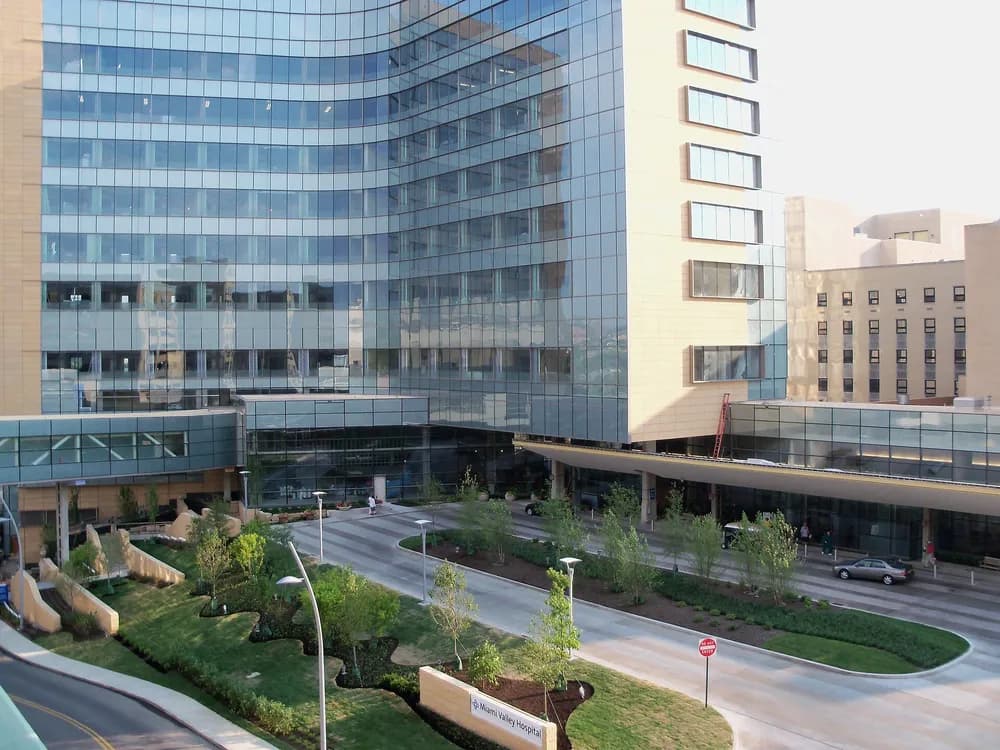
Photo: Texas141 · CC BY-SA 3.0 · cropped
Photo: DBSculpture · CC BY-SA 4.0 · Photo: Warren LeMay · CC BY-SA 2.0 · Photo: Texas141 · CC BY-SA 3.0
The Wright State Boonshoft School of Medicine MD program at a glance (2027 entry)
The Wright State University Boonshoft School of Medicine (Wright State Boonshoft, or BSOM) in Dayton, Ohio, offers a four-year MD. The WrightCurriculum began in 2017 and has two phases. The 73-week Foundations of Clinical Practice phase is the pre-clerkship stage of science and clinical skills. The 102-week Doctoring phase, made up of clerkships and electives, covers the Doctoring year and the final Advanced Doctoring year.
Foundations is taught without lectures. You work through assigned material on your own, and class time is spent applying it to questions in the style of the United States Medical Licensing Examination (USMLE). In Peer Instruction you discuss your answers with a classmate. In Team-Based Learning you solve clinical cases with a team. In WrightQ, the school's version of problem-based learning, a small group investigates a case. Modules teach normal and abnormal function together in a clinical context, mostly one group of body systems at a time.
Clinical work with real patients starts in the Doctoring year, which opens in late March of year 2. Before that you practice interviewing and examination with standardized patients, people trained to act as patients, and required sessions include patient presentations or panels.
The school trains students in affiliated hospitals in the region and has formal agreements with more than 25 other health care institutions in the Miami Valley, the area around Dayton. Rural rotations reach into West Central Ohio.
Optional routes reshape the degree. MD in Three is a three-year track for future family physicians and pediatricians. The Rural Pathway includes clerkships at rural sites, and the Global Health Scholars Program is a four-year certificate. Dual degrees add a PhD, MBA, MPH or MS. The Liaison Committee on Medical Education (LCME), which accredits MD programs in the United States, lists the program as fully accredited, first accredited in 1976 and due its next survey in 2026-27.
| Degree | MD |
|---|---|
| Program length | Four years, or three on the MD in Three track |
| Curriculum | WrightCurriculum: 73-week Foundations phase, then 102-week Doctoring phase |
| Class size | 130 students entered in July 2026 |
| Main campus | Wright State campus, Dayton; Gandhi Medical Education Center in White Hall |
| Teaching style | Lecture-free Foundations: Peer Instruction, Team-Based Learning and WrightQ cases |
| Anatomy | Cadaver dissection in Human Architecture I (year 1) and II (year 2) |
| First patient contact | Foundations: standardized patients and patient presentations or panels; clerkships from April of year 2 |
| Step 1 timing | End of Foundations; about February to March 2029 for 2027 entrants, on current calendars |
| Grading | Pass/fail in Foundations; Honors/Pass/Fail in core clerkships |
What makes the Wright State Boonshoft School of Medicine MD program different
A first phase with no lectures
Class time in Foundations is spent applying what you prepared beforehand. Exams every two to four weeks are taken alone, then again with a small group, so you learn from the discussion.
Clerkships start in the spring of year 2
Foundations ends about 20 months in, and clerkships follow from April. That leaves a full 52-week final year to test specialties before you apply. It has 30 weeks of electives and up to 10 weeks for residency interviews and study for Step 2 Clinical Knowledge (CK), the second licensing exam.
Training spread across Dayton's hospitals
Dayton physicians and community leaders planned the school around the region's existing hospitals rather than a university hospital. You rotate through affiliated hospital systems, a model the school says exposes you to a wide range of patients and settings.
MD in Three for future family doctors and pediatricians
Up to 10 students a year, chosen during year 1, finish in three years and move straight into a Boonshoft family medicine or pediatrics residency. They still register for the Match run by the National Resident Matching Program (NRMP), and can return to the four-year route without penalty.
A rural pathway linked to the Lake Campus
Up to five students a year, selected in January of year 1, join the Rural Pathway of Wright Rural Medical Scholars. The Lake Campus in Celina, about 90 miles northwest of Dayton, is Wright State's only regional campus and can house students on some rural clerkships.
An MBA or MPH in one extra year
The Physician Leadership Development Program adds a graduate year between the Doctoring and Advanced Doctoring years. The MD takes five years in all, and leadership sessions run throughout.
How Wright State Boonshoft School of Medicine teaches medicine
The WrightCurriculum aims to make you a self-directed learner who weighs evidence, with biomedical science joined to clinical practice in both phases.
Faculty use class time to probe your understanding and correct misconceptions. The curriculum FAQ says the design rests on studies showing that active learning, practice testing and spaced recall work better than lectures.
At orientation you join a team of six or seven classmates for Team-Based Learning through the whole Foundations phase, and later a separate group for WrightQ. Teams are never required to do projects outside class. Year 1 also includes workshops on effective learning, note-taking, reading, test-taking and time management.
In the Doctoring phase, faculty preceptors and residents supervise you in hospitals and clinics and assess you through clinical evaluations. Your class still meets twice a month for Clinical Medicine Doctoring during the clerkship year, and monthly in the final year for Clinical Medicine Advanced Doctoring, which prepares you for residency.
The ways you will learn
| Peer Instruction (PI) | A method developed by physicist Eric Mazur. In class you answer questions on case vignettes, tests or treatments with a response device, discuss your answer with a classmate nearby, then answer again. Faculty then clear up the misconceptions the answers reveal. |
|---|---|
| Team-Based Learning (TBL) | You prepare beforehand, take an individual readiness assessment test (IRAT), then answer the same questions with your team in a group test (GRAT). A facilitator corrects misunderstandings and leads an application exercise in which teams use the content on clinical case problems. |
| WrightQ | With a faculty facilitator, your small group investigates a clinical case and decides what it needs to know. You research that on your own, then regroup to agree on the most likely diagnoses and best treatment. The Q stands for learning to ask the right questions. WrightQ is first used in Staying Alive, the heart, lung and kidney module. |
| Clinical Medicine sessions | Clinical Medicine I and II teach interviewing and physical examination with standardized patients, alongside Upstream Medicine (population health, health policy and value-based care), professional skills, and nutrition and lifestyle medicine. |
| Clerkships | Supervised work with real patients on hospital and clinic teams, in seven specialties in the Doctoring year. The final year adds emergency medicine and a sub-internship, where you act much like a first-year resident under supervision. You log required patient encounters and get formal feedback halfway through every clerkship. |
A typical week on the Wright State Boonshoft School of Medicine program
On the 2026-27 block calendars, Monday through Thursday belong to the current Foundations module, such as Origins or Staying Alive. Friday is Clinical Medicine day in both year 1 and year 2.
Module days are made up of Peer Instruction and Team-Based Learning sessions and, from Staying Alive onward, WrightQ cases. The 2025-26 calendar gave first-year students a seven-week summer break from June 1.
Under school policies updated in April 2026, Peer Instruction sessions are graded and count toward each module's engaged-learning grade, and seats are assigned at random. Team-Based Learning readiness tests start at the scheduled time. If you arrive late you score zero on the individual test, unless you use one of the module's allowed absences.
The Foundations absence policy highly recommends attending every session. WrightQ, anatomy lab, the Scholarship in Medicine research module, sessions with other health professions, patient presentations or panels, and interview and examination skills sessions are generally mandatory. Each module allows about 0.3 days of absence per week of its length, so four days in a 12-week module. Scholarship in Medicine allows one absence, and Clinical Medicine allows four missed days in year 1 and two in year 2.
A July 2025 policy caps Doctoring-year absences at seven days, at most two in a six-week clerkship and one in a four-week clerkship; exam days and a clerkship's last clinical day are off limits.
How anatomy is taught at Wright State Boonshoft School of Medicine
You learn anatomy by dissecting, in two required modules. Human Architecture I, five weeks from the end of August on the 2026-27 calendar, introduces the language of anatomy, imaging and embryology. You dissect the thorax in detail, preparing for Staying Alive.
Human Architecture II opens year 2 with four weeks of further dissection, including the neck, abdominal wall and pelvis, ahead of the remaining systems modules. Human Architecture I is the only module you can repeat over the summer, and a repeat of Human Architecture II must be finished before you take Step 1.
The anatomy lab, in the Gandhi Medical Education Center in White Hall, has an integrated audio-video system. The same building houses the school's Anatomical Gift Program, a whole-body donation program founded in 1975 that holds a yearly ceremony of appreciation. In the final year, an Academic Medicine elective in anatomy lets you serve as a teaching assistant for both Human Architecture modules.
When you first meet patients at Wright State Boonshoft School of Medicine
Clinical Medicine I opens year 1 with Upstream Medicine, which introduces Dayton's communities, the social factors that shape health and the local agencies that help patients. After that you practice interviewing and physical examination with standardized patients before any clinical rotation. You are tested in Objective Structured Clinical Examinations (OSCEs), timed stations where you interview or examine a standardized patient while being scored, and in simulated patient encounters (SPEs). Required Foundations sessions also include patient presentations or panels with patient volunteers.
Across Foundations you also complete 16 hours of service learning, with a written reflection, and required activities with students from other health professions, which continue in the Doctoring year. The summer after year 1 is open: the school lists Area Health Education Center (AHEC) experiences, global health, research or time off as options.
Real patients become your daily work once the first clerkship block starts in April of year 2, after the two-week Doctoring Bootcamp of just-in-time training in the skills clerkships demand.
Some tracks add earlier clinical time. Rural Pathway students spend the summer after year 1 with a family physician through an AHEC experience. MD in Three students do four weeks of clinical work that summer and two half-days a month of clinical experience and mentoring in year 2.
The Wright State Boonshoft School of Medicine curriculum, year by year
- Year 1
Foundations: cells, anatomy, infection, heart and lungs
Year 1 has 41 weeks of teaching, from July orientation to late May. Origins is split in two around Human Architecture I, while Clinical Medicine I runs all year.
- Origins (10 weeks): cell biology, biochemistry, genetics and neurophysiology, with introductions to pathophysiology, autonomics and pharmacology.
- Human Architecture I (5 weeks): anatomy, imaging and embryology, with dissection.
- Host and Defense (10 weeks): immunology, bacteriology and virology, with sessions built around diagnosing and treating infections.
- Staying Alive (13 weeks): the heart, lungs and kidneys in health and disease, and your first WrightQ cases.
- Clinical Medicine I, ending in May with interviewing and physical examination OSCEs and a written exam.
- Scholarship in Medicine, meeting weekly for 12 weeks, on the scientific method and using data to test hypotheses, plus self-paced Biostatistics I.
- Year 2, July to March
Foundations: the remaining systems and Step 1
Year 2 runs for 32 weeks, from July to mid-March, ending with a six-week Step 1 block.
- Human Architecture II (4 weeks): further dissection.
- Beginning to End (14 weeks): the endocrine, gastrointestinal and reproductive systems, plus nutrition, hematology and human development.
- Balance, Control and Repair (8 weeks): the nervous, musculoskeletal and integumentary (skin) systems, and behavioral science.
- Clinical Medicine II, with a year 2 OSCE in late January on the 2026-27 calendar, and self-paced Biostatistics II.
- Comprehensive Basic Science Examinations (CBSE), broad tests of the basic sciences, in December and again during Step 1 study. They come from the National Board of Medical Examiners (NBME), which runs the USMLE with the Federation of State Medical Boards.
- Step 1 Study (6 weeks, February to March): you take Step 1 in this block, and students who need more help work with faculty and learning specialists.
- Doctoring year
Bootcamp and core clerkships, from late March of year 2
The 50-week Doctoring year starts with a two-week bootcamp and runs through eight six-week blocks, with the four-week clerkships fitted into four-week sections alongside them. It ends in late March with a spring break before the final year.
- Doctoring Bootcamp (2 weeks): clerkship skills training and an OSCE that gives you summative feedback.
- Six-week clerkships in family medicine (outpatient), internal medicine (inpatient), pediatrics (inpatient and outpatient) and surgery (inpatient).
- Four-week clerkships in neurology and in obstetrics and gynecology (both inpatient and outpatient), and in psychiatry (inpatient, focused on the psychiatric side of primary care).
- 12 weeks of electives, at least six of them in internal medicine.
- Advanced Doctoring year
Emergency medicine, a sub-internship and electives
The 52-week final year is shaped around the specialty you plan to apply in, and ends with graduation in the spring.
- Advanced Doctoring Bootcamp (4 weeks): Advanced Cardiovascular Life Support (ACLS) certification, training in medications for opioid use disorder, a final OSCE and dedicated Step 2 CK study.
- Emergency Medicine Clerkship (4 weeks) at Miami Valley Hospital's Main and North campuses: 100 supervised clinical hours plus simulation, procedure training and a weekly resident conference.
- A four-week sub-internship in family medicine, internal medicine, neurology, obstetrics and gynecology, pediatrics or surgery.
- 30 weeks of electives in two- or four-week blocks.
- Up to 10 weeks of RIB time (residency interviews and board preparation).
- Alternative track: MD in Three
The same Foundations, a shorter clinical phase
Instead of the four-year route above, this three-year path of at least 130 weeks leads into a Boonshoft family medicine or pediatrics residency, with a rural family medicine track. Foundations is unchanged, clinical time starts earlier, and the final year shrinks to emergency medicine and a sub-internship in April and May.
- Doctoring year: internal medicine, surgery and obstetrics and gynecology first, then pediatrics and family medicine, then the Advanced Doctoring Bootcamp with a two-week geriatrics clerkship. Step 2 CK must be taken by the first week of January.
- January to March: psychiatry and neurology or internal medicine electives; then emergency medicine and a sub-internship, graduation, and residency from June.
- To stay on the track you must pass Step 1 and Step 2 at the first attempt, pass or earn Honors in every module and clerkship, and take no delay or leave.
How you are assessed at Wright State Boonshoft School of Medicine
The WrightCurriculum is graded pass/fail, with 70% needed to pass and no rounding. Foundations modules appear on your transcript only as Pass or Fail, while Doctoring-year clerkships and Clinical Medicine Doctoring are graded Honors, Pass or Fail. Faculty narrative comments from rotations go into your permanent record and matter for your Medical Student Performance Evaluation (MSPE), the school's letter to residency programs.
Foundations has a multiple-choice exam every two to four weeks, taken alone and then with a small group. Each module ends with an individual final, usually an NBME exam. Most modules require a cumulative 70% to take the final, and you get one retake of a failed final. From July 2026 you can retake finals in only two modules a year, and needing more sends you to the Student Promotions Committee with a recommendation to repeat the year.
Foundations has three final OSCEs, in interviewing and physical examination at the end of year 1 and a simulated patient encounter in year 2. Clinical Medicine Doctoring adds a bootcamp OSCE and two mid-year OSCEs, which must average 70%, and the final year opens with one more.
To pass a clerkship you need 70% across graded work, at least 58.33% on clinical evaluation items, professional behavior, and completed workshops and patient logs. Honors means consistently exceeding expectations, with no below-expectations ratings from preceptors. A 2017 clerkship policy, still on the school's current policy list, names NBME subject exams, known as shelf exams, among clerkship assessments. The NBME Comprehensive Clinical Science Examination (CCSE), a broad test of clinical science, feeds into reviews of Doctoring-year performance.
You must take USMLE Step 1 between the start of the six-week study block and the last Saturday before Doctoring Bootcamp. Step 2 CK must be taken between the start of the Advanced Doctoring Bootcamp and December 15 of the final year, and passed before the school certifies you for the residency Match. In August 2026 the USMLE program announced a move to designated testing dates from January 2029, with Step exams offered less often each year. Its June 2026 announcement had named 2028.
On the current schedule, a student entering in summer 2027, in the Class of 2031, would take Step 1 in about February to March 2029, shortly after the switch. Step 2 CK would fall between the Advanced Doctoring Bootcamp in spring 2030 and December 15, 2030. These are projections from the 2025-26 and 2026-27 calendars, and the USMLE has encouraged schools to review rules that fix when students test.
- Excellence Across Foundations and Excellence Across Clerkships each go to at most 25% of the class, and the clerkship award appears on the transcript.
- A passed retake or repeat is recorded at the minimum passing grade, and if you repeat a failed module or clerkship, the original F stays on the transcript.
- Passing Step 1 is required for promotion, though you can start clerkships while your score is pending. If you fail after starting, you finish or withdraw from your current clerkship to prepare again. Without a pass by the start of Doctoring Block 3, you are referred to the Student Promotions Committee, which may have you repeat year 2.
- You must finish each phase within three academic years, and the whole MD, outside dual degrees, within six years of matriculation, including any leave.
Wright State Boonshoft School of Medicine clinical rotations: where you will actually train
The school's clinical departments are based in the community, and more than 1,280 community physicians and other professionals teach as voluntary faculty. Its Major Teaching Hospitals page, with hospital details from 2013 to 2018, lists hospitals in Dayton, Kettering and Xenia (Greene Memorial, now Kettering Health Greene Memorial) and on Wright-Patterson Air Force Base. Two rural hospitals, in St. Marys and Coldwater, complete the list.
Under the Doctoring Scheduling policy, last revised in 2019, a computerized lottery builds each student's schedule, and the Office of Student Affairs confirms clerkship assignments by February 28 before the Doctoring year. Assignments can still change with hospital or faculty capacity. You can formally request a different site in writing within a month of assignments being released.
The current final-year catalog shows where senior rotations happen. The emergency medicine clerkship and many sub-internships, from critical care and neurology to obstetrics and trauma surgery, are at Miami Valley Hospital, which the catalog calls a Level 1 trauma center. Internal medicine sub-interns may instead go to Kettering Health Main Campus, Kettering Health Miamisburg or the Dayton VA, and pediatric sub-internships are at Dayton Children's Hospital.
Rural rotations run through Wright Rural Medical Scholars (WRMS), funded by Ohio AHEC money, which works with the Lake Campus. Grand Lake Health and Mercer Health offer rotations in family medicine, pediatrics, general surgery and surgical subspecialties, and students on their clerkships can live at the Lake Campus. Wayne HealthCare and St. Rita's provide student housing, and students outside the pathway can take stand-alone rural experiences.
Beyond the summer AHEC experience, the Rural Pathway puts your family medicine clerkship and at least half of another clerkship at approved rural sites. At least one elective is rural, and it may be an away elective, taken at another institution. Your scholarly work needs a rural theme or a rural mentor, and you attend at least half the Advocates for Rural Medicine meetings during Foundations.
Named in the current final-year catalog for the emergency medicine clerkship and sub-internships.
- Miami Valley Hospital (Main and North campuses), Dayton
- Kettering Health Main Campus, Kettering
- Kettering Health Miamisburg
- Dayton VA Medical Center
- Dayton Children's Hospital
- Five Rivers Family Health Center, Dayton
- Soin Family Medicine, Beavercreek
The school says students may do part of their clinical training here, and a geriatrics elective includes outpatient clinics on the base.
- Wright-Patterson Medical Center
WRMS rotation sites. Family Health Services of Darke County, a federally qualified health center, hosts the family medicine clerkship. The final-year catalog also lists 16 rural electives, and its family medicine elective adds Wilson Health in Sidney, Upper Valley Medical Center in Troy and Lima Memorial in Lima.
- Grand Lake Health System (Joint Township District Memorial Hospital), St. Marys
- Mercer Health (Mercer County Community Hospital), Coldwater
- Family Health Services of Darke County, Greenville
- Wayne HealthCare, Greenville
- Mercy Health St. Rita's Medical Center, Lima
A four-week advanced inpatient psychiatry elective at a 291-bed state psychiatric hospital, one student per block.
- Central Ohio Behavioral Healthcare
Partners for global health electives and the Global Health Scholars Program.
- Cachamsi, Riobamba, Ecuador
- People of Peru Project, Iquitos, Peru
- Medicine in Mission, Santo Domingo, Dominican Republic
- The Luke Commission, Eswatini
- Himalayan Health Exchange, India
- Child Family Health International, several countries
Electives, selectives and away rotations at Wright State Boonshoft School of Medicine
Electives run through both clinical years, and final-year electives come from a catalog of more than 150 Boonshoft courses. Titles range from Clinical Cardiology and Sleep Disorders to Food Is Medicine, Physicians and the Holocaust and a Surgical Boot Camp.
Limits keep the final year balanced. You can take at most 20 weeks of away electives and 16 weeks of student-initiated electives, which you design yourself. Two-week electives are capped at 16 weeks, repeats of the same elective at 12 and non-clinical electives at eight. Some sub-internships, such as internal medicine and neurology, are kept for applicants in that field in blocks 1 to 5.
For an away elective, which the school calls an extramural elective, you apply to the host, often through the Visiting Student Learning Opportunities (VSLO) service. Under a 2019 policy you need Boonshoft's approval 60 days ahead, or 90 for international electives. Student-initiated electives can be clinical, research or longitudinal, subject to approval.
Under 2019 policies you start planning the final year in December of the Doctoring year and finish your schedule in February. The school urges you to spend at least half your final-year elective time on a broad range of interests. In Dayton Street Medicine, a longitudinal elective, you spend Thursday afternoons through the year on a mobile unit stationed at the Dayton Dream Center, plus outreach events and resource fairs.
Every student can take a global health clinical elective of two, four or six weeks in the third or fourth year, at a partner site abroad or with the Indian Health Service. Spanish may be needed at some sites.
First-year students can apply to the Global Health Scholars Program, which comes with a graduation award. It adds global health courses in years 1 and 2, an international service trip the summer after year 1, a further elective abroad or at home and scholarly work. Scholars may do up to two rotations with international partners. It cannot be combined with MD in Three.
Dual degrees and research years at Wright State Boonshoft School of Medicine
Every student takes Scholarship in Medicine in year 1, plus two self-paced biostatistics modules. For further research, the Office of Research Affairs keeps a database that links students to projects and mentors, and all student research must be supervised by a faculty member. The annual Research Symposium accepts up to 120 posters; its fifth meeting was in April 2026.
The MD/PhD takes seven years and is run with the College of Science and Mathematics through the Biomedical Sciences PhD Program. Years 1 and 2 are the Foundations curriculum with summer research rotations, seminars and journal clubs, ending with Step 1. Years 3 to 5 are PhD research and the thesis defense, and years 6 and 7 complete the clinical curriculum and Step 2.
The Physician Leadership Development Program (PLDP) leads to an MBA or MPH. The MBA, from the Raj Soin College of Business, takes three semesters, with a choice of concentrations and an optional hospital administration internship. The MPH, from the school's own program, also takes three semesters of evening courses in person, hybrid or online, with an applied practice experience, a research capstone and a global health option.
The PLDP prefers to admit students in year 1, considering later applicants case by case. Under its 2023 policies you can take an approved clinical elective during the graduate year, then rejoin the Advanced Doctoring class. The program is not compatible with the military's Health Professions Scholarship Program.
The MD/MS in Pharmacology and Toxicology, Clinical Investigation Concentration, offers hands-on clinical research at the Pharmacology Translational Unit in the Wright State Physicians Health Center on campus. It needs 26 semester hours of pharmacology and toxicology coursework plus 4 credit hours counted from medical school courses. The program page places the coursework in two semesters, between years 1 and 2 and between years 2 and 3. Places are limited, there is no thesis, and the MS is awarded after the MD.
Facilities and support at Wright State Boonshoft School of Medicine
Where you will learn
The Ramesh K. Gandhi Medical Education Center in White Hall, on the Wright State campus, was built in 1981 as an ambulatory care center and remodeled as a medical education center in 2008. It has two lecture halls with large screens and remote-conferencing cameras, the anatomy lab and a student lounge open 24 hours a day. The Department of Medical Education and the Office of Student Affairs and Admissions are based there.
White Hall also houses the Skills Assessment and Training Center, which runs the standardized patient program the school has had since 1980. Its standardized patients portray set histories and findings and give you immediate feedback. The Department of Emergency Medicine's Center for Immersive Medical Education and Research (CIMER), set up in 2006, has two simulation labs with task trainers and high-fidelity patient simulators.
The 2026-2030 strategic plan commits the school to modernizing anatomy and simulation resources, adding artificial intelligence to the curriculum and studying whether the MD class could grow. It also plans a simulation consortium with the Dayton VA, Dayton Children's and Premier Health, a regional health system.
Support while you study
The Department of Medical Education tracks every student's results. Its Learning Support Team, made up of a Director of Learning Support, an academic advisor who runs peer tutoring and a learning specialist, contacts you if a module is going badly. If your average on individual exams falls below 70%, or one exam falls below 60%, you go on monitoring status and must meet the team to build a study plan.
Trained peer tutors offer individual and small-group sessions, usually weekly, and exam reviews are open to everyone. In the Doctoring phase, clerkship directors, preceptors and residents are the first source of help. A struggling student may be given a faculty academic mentor or a non-graded clerkship to work on specific weaknesses.
For careers, a career services advisor helps with specialty choice, CVs and personal statements as often as you like. Once you choose a specialty you are assigned a specialty advisor, a faculty member in that field who guides your residency application, program choices, interviews and rank order.
Medical students get free sessions with a licensed professional counselor and free psychiatric appointments for evaluation and medication management, coordinated by the Director of Medical Student Mental Health. In the winter of year 1 you can join the Healer's Art, a noncredit course of five evening sessions on finding meaning in medicine, and completing it adds a letter to your MSPE file. At the White Coat Ceremony every student signs the student-written Honor Code.
Is the Wright State Boonshoft School of Medicine program right for you?
This program may suit you if
- You learn best by preparing on your own and then working problems through with a team.
- You want to reach clerkships in the spring of year 2 and then have a long final year of electives to test specialties.
- You would like to train across several community hospitals, including a Level 1 trauma center, a children's hospital and a VA hospital, rather than in one university hospital.
- You already know you want family medicine or pediatrics and would value finishing in three years through MD in Three.
- You are drawn to rural practice in Ohio and would welcome rural clerkships and a stay at the Lake Campus.
Things to think about
- If you rely on lectures to know what to focus on, the lecture-free Foundations phase and group exams will take adjustment, though year 1 includes study-skills workshops.
- Foundations is short, about 20 months, so Step 1 preparation is concentrated in one six-week block that ends before Doctoring Bootcamp.
- Under the 2019 scheduling policy, clerkship sites come from a computerized lottery across several hospitals, so where you train depends on assignment more than choice, though you can request a change in writing.
- On the current schedule, a 2027 entrant would take both Step exams after the USMLE moves to designated testing dates.
Wright State Boonshoft School of Medicine MD program — frequently asked questions
Applying to Wright State Boonshoft School of Medicine?
How to get into Wright State Boonshoft School of Medicine
Prerequisites, MCAT, AMCAS personal statement, secondaries and interview, step by step.
Open the guide →Wright State Boonshoft School of Medicine admissions profile
MCAT and GPA profile, acceptance rate, interview format and key dates.
See the profile →Compare Wright State Boonshoft School of Medicine with other schools
Put the teaching style, anatomy teaching and clinical sites next to another school.
Open the comparison →Prepare for the Wright State Boonshoft School of Medicine interview
Format breakdown, school-specific sample questions and prep tips from tutors who interviewed here.
Read the guide →Where this Wright State Boonshoft School of Medicine program guide came from
This guide was written from 68 official sources — Boonshoft School of Medicine Wright State University's own program pages and curriculum documents, plus the accreditor and the hospitals and health systems the school trains students in where they publish detail — read on 2026-10-31, then checked claim by claim against those sources.
- Boonshoft School of Medicine: M.D. Program and degree options
- WrightCurriculum overview: phases and design principles
- Foundations of Clinical Practice Phase: modules and lengths
- Doctoring Phase: clerkships, bootcamps, electives and RIB time
- Teaching, Learning, Feedback and Assessment in the WrightCurriculum
- WrightCurriculum Frequently Asked Questions
- Program of Study, updated July 22, 2026
- Policy 14120: MD Program Advancement and Graduation, revised July 22, 2026
- Policy 14150: MD Program USMLE Timing Requirements, revised July 22, 2026
- USMLE Timing Procedures, updated July 22, 2026
- Student Success Policy, approved March 2026
- Transcripts and Permanent Grades Policy
- M.D. Program Accolades, revised December 2025
- NBME Comprehensive Science Exam Attempt Policy
- Clerkship Patient Logger Policy, 2017
- Foundations Absence Policy, revised April 22, 2026
- Foundations Team Based Learning Procedures, updated April 30, 2026
- Peer Instruction Classroom Procedures, updated April 30, 2026
- Doctoring Absence Policy, approved July 23, 2025
- Doctoring Scheduling policy, revised 2019
- Policy on Selectives and Electives, 2019
- Policy 613: Medical Student Research Policy
- M1 Block Calendar, 2026-27
- M2 Block Calendar, 2026-27
- M1 Block Calendar, 2025-26
- M2 Block Calendar, 2025-26
- Doctoring Schedule, March 2026 to April 2027
- Advanced Doctoring Block Calendar, Class of 2027
- Catalog of Advanced Doctoring Courses, updated through November 7, 2026
- M.D. in Three
- M.D. in Three Curriculum timeline
- M.D. and Ph.D. Dual Degree
- Dual Degree Programs
- Physician Leadership Development Program (PLDP)
- PLDP: M.D. and M.B.A. Dual Degree Program
- PLDP: M.D. and M.P.H. Dual Degree Program
- PLDP Policies and Procedures, effective October 2023
- M.S. in Pharmacology and Toxicology, Clinical Investigation Concentration, and M.D. Dual Degree
- Wright Rural Medical Scholars
- Wright Rural Medical Scholars: Rural Pathway requirements
- Wright Rural Medical Scholars: Apply
- Wright Rural Medical Scholars: Rotation Sites
- Global Health Scholars Program
- Global Health Scholars Program: Educational Opportunities
- About the Boonshoft School of Medicine
- Major Teaching Hospitals (hospital details dated 2013 to 2018)
- Information for Military Students
- Facilities
- Skills Assessment and Training Center
- Center for Immersive Medical Education and Research (CIMER)
- Anatomical Gift Program
- Strategic Plan 2026-2030
- Wright State Newsroom: 2026 Convocation and White Coat Ceremony
- Convocation and Orientation
- Academic Support
- Advisors and Mentors
- Medical Student Mental Health Services
- Healer's Art Course
- BSOM Research Symposium, April 2026
- LCME directory of accredited programs
- USMLE Designated Testing Dates Information Hub
- USMLE: Updated Timeline for Designated Testing Dates, transition in January 2029 (August 6, 2026)
- Kettering Health Main Campus
- Kettering Health Miamisburg
- Kettering Health Greene Memorial
- Dayton VA Medical Center
- Grand Lake Health System
- Mercer Health: About Us
Curricula are restructured between cycles. Anything here that decides your application — how anatomy is taught, a clinical campus assignment, a required research year — should be confirmed against the official page for your entry year.
Applying to Wright State Boonshoft School of Medicine?
We help US applicants with MCAT strategy, the AMCAS personal statement, secondary essays and interview prep — everything you need for a competitive Wright State Boonshoft School of Medicine application.