
The Albert Einstein College of Medicine MD program
What you actually study, and where you will be
Albert Einstein College of Medicine's M.D. is a 4-year program with an integrated curriculum, with patient contact from Year 1 and clinical rotations in the Bronx, Queens, Westchester County and the Hudson Valley (2027 entry). Einstein's M.D. starts with pass/fail preclerkship courses, mostly organized by organ system and taught through lectures, problem-based and team-based learning. Alongside them runs Becoming a Physician, a clinical skills course taught in small groups by your learning-community advisor. Clerkships start in late March of year 2, after Step 1 study, with Montefiore's Bronx hospitals and Jacobi Medical Center as the major sites. Every student also takes a four-year service-learning course and completes a mentor-guided scholarly capstone.
- Degree
- M.D.
- Length
- 4 years
- Teaching
- Integrated
- Clinical contact
- Year 1

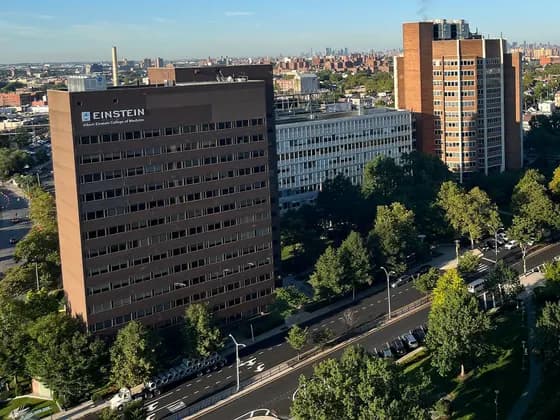

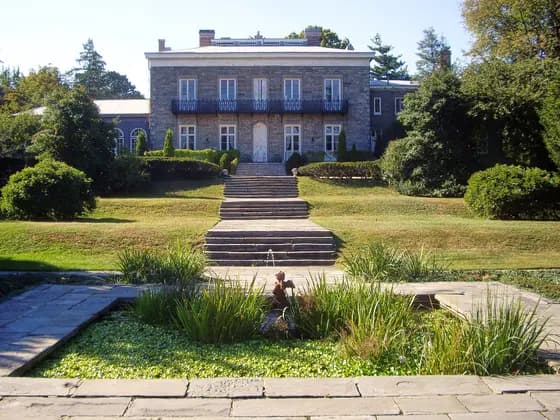
Photo: Dave Johnson · CC BY 3.0 · cropped
Photo: HAL333 · CC0 · Photo: King of Hearts · CC BY-SA 4.0 · Photo: Dmadeo · CC BY-SA 3.0
The Albert Einstein College of Medicine MD program at a glance (2027 entry)
Albert Einstein College of Medicine, usually shortened to Einstein or AECOM, awards the M.D. after four years. Its Jack and Pearl Resnick campus is in the Morris Park section of the Bronx, New York City, and Montefiore is its university hospital. The Liaison Committee on Medical Education (LCME), which accredits M.D. programs in the United States, lists the program with full accreditation, first granted in 1955, and its next survey due in 2030-31.
Einstein divides the curriculum into a preclerkship (pre-clinical) phase and a clinical phase. The preclerkship phase, from August of year 1 to mid-March of year 2, teaches the science of medicine mostly through organ-system courses graded pass/fail. It ends with a study block for Step 1 of the United States Medical Licensing Examination (USMLE), the national exam series for M.D. licensure, then Transition to Clerkship. That course prepares you for clinical rotations.
The clinical phase opens with the 12-month clerkship year. Clerkships are the core clinical rotations, in fields such as internal medicine, surgery and pediatrics. Professional development follows, from late March of year 3 to May of year 4, and prepares you for residency, the specialty training that follows medical school. It brings electives you choose yourself and two acting internships, in which you do much of the work of an intern, or first-year resident, under supervision.
Three longitudinal courses run across the phases. Becoming a Physician teaches clinical skills in small groups led by faculty from the Einstein Learning Communities Program, which places every student in one of four houses for all four years. Service Learning has you working with Bronx community organizations, and IMPACT, a course in scholarship and research, leads to a required capstone project.
Clinical training takes place in the Bronx, Queens, Westchester County and the Hudson Valley, with Montefiore's Bronx hospitals and NYC Health + Hospitals/Jacobi as the major sites.
| Degree | M.D., four years: preclerkship, clerkship year and professional development |
|---|---|
| Class size | 165 M.D. and M.D./Ph.D. students enrolled in 2024, 15 of them M.D./Ph.D. |
| Main campus | Jack and Pearl Resnick campus, Morris Park, the Bronx, New York City |
| Teaching style | Organ-system courses; lectures plus problem-based and team-based learning and small groups |
| Anatomy | Dissected cadavers in Clinical and Developmental Anatomy, August to December of year 1 |
| First patient contact | Year 1, through the Becoming a Physician clinical skills course |
| Clerkship year | Late March of year 2 to March of year 3, order set by lottery |
| Major clinical sites | Montefiore's Moses, Weiler and Wakefield campuses, children's hospital, and Jacobi |
| Step 1 timing | End of preclerkship; early 2029 for 2027 entrants on the current schedule |
| Grading | Preclerkship pass/fail; clinical rotations Honors, High Pass, Pass, Low Pass or Fail |
What makes the Albert Einstein College of Medicine MD program different
One faculty advisor and small group for four years
Every student joins a learning-community small group of about six or seven classmates with one faculty advisor, who teaches your clinical skills and advises you through to residency applications. Einstein Magazine reported in 2025 that advisors give about a day and a half of their working week to the learning communities.
Service with Bronx organizations, built into the M.D.
All students take a four-year service-learning course. In year 1 a lottery matches you with one of 40 community-based organizations, and your team serves 40 hours over the year. In the clerkship year you help run a community health fair and add 20 hours of your own, for at least 60 hours in all.
A required scholarly capstone, with time to do it
The four-year IMPACT course takes you from exploring topics in year 1 to a finished Capstone Product, which you need to graduate. Nearly two-thirds of students get fellowship funding for scholarly work in the summer after year 1, and the final phase allows up to five months of full-time scholarship.
Clinical training in private, public and veterans' hospitals
Training sites include Montefiore's hospitals, NYC Health + Hospitals/Jacobi and North Central Bronx, psychiatric and rehabilitation hospitals, and the VA Bronx Healthcare System, run by the U.S. Department of Veterans Affairs. Einstein's 2026-2027 applicant guide says they serve patients across a wide socioeconomic spectrum.
Global health fellowships and a new distinction
About 70 students finishing year 1 have received travel awards each year for summer projects abroad, and about 30 seniors a year for projects of at least two months. Since January 2026 you can also earn a Distinction in Global Health, which counts work in the Bronx as fully as work overseas.
How Albert Einstein College of Medicine teaches medicine
Preclerkship courses are interdisciplinary. Each organ-system course combines physiology, pharmacology, pathophysiology, histology and pathology for one part of the body. The teaching links the science to diagnosing, preventing and treating disease, and to the structural determinants of health and health disparities. Longitudinal courses in bioethics, health systems and health equity, and biostatistics and epidemiology run alongside.
Lectures sit alongside active formats: problem-based learning, case conferences, laboratory sessions, clinical encounters, small-group discussions and team-based learning. The applicant guide adds flipped classrooms and case-based learning. In small groups you work through clinical problems of varying complexity, with faculty facilitators to help.
In the clinical phase, teaching moves to wards and clinics, backed by problem-based and team-based learning, case-based discussion and online modules. Every student also gets access to ChatGPT Edu, and the curriculum explores how AI can support learning, research and clinical reasoning while stressing its limits and the need for human judgment.
The ways you will learn
| Lectures | Large-group teaching, with first-year lectures mainly in Riklis Auditorium. Canvas, the learning-management system, holds your course materials and schedules, and recordings of lectures, online interactive patient cases and question banks are also available. |
|---|---|
| Problem-based learning (PBL) | A small group works through a patient case, decides what it needs to learn and pulls the answer together. It appears in preclerkship courses, in Becoming a Physician and in the clinical phase. |
| Team-based learning (TBL) | You prepare before class, take a short readiness test alone and then with your team, and spend the session applying the material to problems together. |
| Becoming a Physician small groups | Weekly clinical skills teaching with your learning-community advisor: interviewing, examination, clinical reasoning, presenting and documenting. Practice includes encounters with standardized patients, actors trained to play patients. |
| Simulation | Work with high-fidelity manikins in the Montefiore Einstein Center for Innovation in Simulation builds clinical skills, teamwork and communication. Simulation sessions also feature in Transition to Clerkship and in the clerkship year. |
A typical week on the Albert Einstein College of Medicine program
In the preclerkship phase, Einstein caps required activities at 50 hours a week and leaves at least two half days free. Quizzes and exams are set on Fridays, so weekends are for rest and review, and Thursday afternoons are kept unscheduled for exam preparation. Your Becoming a Physician small group meets every week.
On clinical rotations the cap is 80 hours a week, with required time off between shifts and at least one full day off every week. During the clerkship year you can leave your clinical site after morning duties on designated WellMed Fridays.
How anatomy is taught at Albert Einstein College of Medicine
Anatomy is taught in Clinical and Developmental Anatomy, a Block 1 course running from August to December of year 1. You attend lectures and learn how the body is built from carefully dissected cadavers in the anatomy lab.
Since August 2025 the course has used the Harry H. Gordon Anatomy Lab and Surgical Skills Center, named for Einstein's second dean. At more than 10,000 square feet it is nearly twice the size of the lab it replaced. The lab has surgery-room-quality lighting, and each of its nine dissection stations has a flexible boom holding a tablet, lights and a dissection kit, plus a 75-inch monitor.
Cameras and ceiling-mounted tablets project fine structures onto large monitors in real time. The course director's example is the thin nerves that run to the eye, once hard to show to a group of seven or eight students. Small groups move between neighboring stations: a lesson on the chest wall and lungs uses one for muscles, one for bones and one for organs. A conference room for 50 students holds two 65-inch Sectra touchscreen tables.
When you first meet patients at Albert Einstein College of Medicine
Patient contact starts in year 1 through Becoming a Physician, which pairs small-group skills sessions with clinical experiences. Einstein Magazine reported in 2025 that first-years go to assigned clinical sites in the fall. There they interview hospital patients while a faculty preceptor observes and gives feedback.
In lessons on physical examination and point-of-care ultrasound, classmates can volunteer to be examined, with confidential follow-up from the Student Health Service if something unexpected turns up. Einstein also names the Einstein Community Health Outreach (ECHO) Free Clinic among the places its students train.
Full-time clinical work starts with the clerkships in late March of year 2. You work with attending physicians, fellows, residents, physician assistants, nurse midwives and advanced practice nurses. You take fuller histories and examinations, interpret lab and imaging results, and draw up and evaluate treatment plans under supervision.
Responsibility peaks in the acting internships. At the Children's Hospital at Montefiore Einstein, the main site for pediatric acting internships, you are treated as your patients' primary caregiver under close supervision. You admit, manage and discharge them, write notes and orders, present on rounds and take part in night float and sign-out.
The Albert Einstein College of Medicine curriculum, year by year
- Year 1 (August to early June)
Foundations, anatomy and the first organ systems
Block 1, from August to December, covers the molecular and cellular basis of medicine and anatomy. Block 2, from January to early June, starts the organ-system courses. The summer after year 1 is open for funded research, global health or community projects.
- Block 1: Molecular and Cellular Foundations of Medicine, and Clinical and Developmental Anatomy.
- Block 2: Hematology, Pulmonary, Gastrointestinal and Liver, Cardiovascular, and Renal.
- Longitudinal courses through both blocks: Foundations of Biostatistics and Epidemiology, Bioethics, Health Systems and Health Equity, Becoming a Physician, IMPACT and Service Learning.
- Becoming a Physician: medical interviewing and physical examination, reflection on behavioral medicine, professionalism and the patient-physician relationship, and early clinical reasoning through problem-based sessions and case study.
- IMPACT I: you explore areas of scholarship, meet possible mentors, learn about research ethics and draft a project proposal.
- Service Learning: a lottery matches you with one of 40 community-based organizations in 13 focus areas, and your team gives 40 hours of service over a year.
- Year 2 (August to mid-March)
Last organ systems, Step 1 and the move to clerkships
Block 3, from August to December, finishes the organ systems. A Step 1 study block follows from January to mid-February on the academic calendar, and you take Step 1 on completing the preclerkship curriculum. Then comes the Transition to Clerkship course, four weeks long on the calendar.
- Block 3: Nervous System and Human Behavior, Endocrine, Reproductive Systems, Infectious Diseases, and Musculoskeletal and Skin.
- Becoming a Physician: more complex biopsychosocial issues in behavioral medicine, plus clinical reasoning and presentation skills for the clerkships.
- IMPACT II: survey design, study methods, data analysis and the use of AI in research, while you formally choose a mentor and refine your project.
- Service Learning: the preclerkship stage ends with a handoff presentation, where your team passes its project on to the incoming first-years.
- Step 1 study: January 3 to February 18, 2028 for the class that entered in 2026, about seven weeks, with a UWorld subscription and library access to Boards & Beyond.
- Transition to Clerkship: skills workshops, simulation, clinical reasoning, note writing, laboratory medicine and high-yield clinical review, plus self-assessment work with your Becoming a Physician coach.
- Clerkship year (late March of year 2 to March of year 3)
Core clerkships in lottery order
On the academic calendar the clerkship year is eight six-week rotations, with week-long breaks in June, September and March and a winter break. A lottery sets the order. This layout follows the current clinical-phase page and the 2026-2027 applicant guide. The page lists neurology (4 weeks), Impact (2 weeks), Service Learning (2 weeks) and two 2-week elective blocks separately; the applicant guide groups them into the two six-week blocks below.
- Internal Medicine and Primary Care, 12 weeks: six weeks of inpatient medicine, three weeks of medicine electives and three weeks of primary care, which includes family medicine.
- Surgery, Obstetrics and Gynecology, Pediatrics and Psychiatry: six weeks each.
- Neurology and Service Learning, six weeks: four weeks of inpatient neurology, plus community service, a community health fair you help run and clinical skills simulation. Over the year you also complete 20 hours of independent service.
- Electives and Impact, six weeks: two two-week clinical electives, plus time to advance your scholarly project and more clinical skills simulation.
- Becoming a Physician continues: your small group meets its faculty advisor to reflect on your developing professional identity.
- Professional development (late March of year 3 to May of year 4)
Acting internships, electives and residency preparation
The final phase is 15 four-week blocks on the academic calendar. You take on more patient care under supervision, finish your capstone and apply for residency.
- Two required four-week acting internships, which many schools call sub-internships. One must be in medicine, pediatrics or family medicine; the other can be in those or in emergency medicine, obstetrics and gynecology, psychiatry or surgery.
- 20 weeks of electives, clinical or classroom-based, at Einstein, elsewhere in the US or abroad.
- USMLE Step 2 Clinical Knowledge (CK), the exam on clinical medicine, which you can take any time before August 31 of senior year.
- Residency applications and interviews, with one-on-one advising from student affairs deans and mock interviews.
- Transition to Residency, a required four-week course in block 13, in late February or March, with training for your residency field.
- Your Capstone Product is due, and you can present it at Impact Day. You can also take service electives or apply to join Einstein Senior Leaders in Advocacy and Community Service.
How you are assessed at Albert Einstein College of Medicine
Preclerkship courses are pass/fail, which the applicant guide says is meant to encourage cooperation. To pass, you complete all of a course's requirements and reach its minimum score. Every course also has low- or no-stakes formative assessments, practice questions and quizzes that show how you are doing. Final grades are due within six weeks of a course or clerkship ending.
Exams are written with Step 1 in mind. Instructors add Step 1-style questions through the Customized Assessment Service of the National Board of Medical Examiners (NBME), which co-sponsors the USMLE with the Federation of State Medical Boards. You also take the NBME Comprehensive Basic Science Subject Exam to get used to the Step 1 format.
Clerkships, acting internships and clinical electives are graded Honors, High Pass, Pass, Low Pass or Fail, each with a written performance summary. On every required rotation of four weeks or more, a faculty member, fellow or chief resident watches you take key parts of a history and examination. A midcycle feedback session helps you set goals before the rotation ends.
Subject exams, often called shelf exams, are standardized end-of-rotation tests of clinical knowledge, and the academic support office runs a Clerkship & Shelf Prep 101 workshop. You must log the patients you see on required rotations before you can receive a final grade or sit the subject exam. The pediatrics clerkship adds a practice simulation or Observed Structured Clinical Exercise (OSCE) day. An OSCE is usually a circuit of short stations where you perform clinical tasks while being observed.
Step 1 tests the science behind medicine and has been reported only as pass or fail since January 26, 2022; Step 2 CK is still scored. Because the program is LCME-accredited, its students are eligible to sit the USMLE, and passing both is required to graduate. You take Step 1 after the study block at the end of preclerkship, and Step 2 CK after the clerkships, by August 31 of senior year.
In August 2026 the USMLE program announced a move to designated testing dates from January 2029, with Step exams offered less often each year. Its June 2026 announcement had named 2028. On the current schedule, a student entering in August 2027 would have the Step 1 study block in about January and February 2029, so Step 1 would fall shortly after the switch. Step 2 CK would follow a clerkship year of about March 2029 to March 2030, with the deadline on August 31, 2030. These dates are projected from the calendars for the classes of 2029 and 2030 and the 2026-2027 applicant guide.
- Einstein's USMLE policy, held on the student intranet, sets the exam timelines, eligibility, when you may postpone and what follows a failure.
- The Clinical Skills Center's recording system is used throughout the curriculum to assess and sharpen your examination and communication skills.
Albert Einstein College of Medicine clinical rotations: where you will actually train
Einstein describes its sites as spanning private, public and government health systems. The applicant guide names Montefiore's Moses, Weiler and Wakefield campuses, the Children's Hospital at Montefiore Einstein and Jacobi Medical Center as the major sites. Jacobi belongs to NYC Health + Hospitals and is a designated adult Level 1 trauma center with a burn center and 457 beds.
Weiler stands on the Einstein campus and Jacobi is close by; Einstein's M.D./Ph.D. program description says many clerkships are done at those two hospitals. The Children's Hospital at Montefiore Einstein says most Einstein students take their six-week pediatrics clerkship there.
Einstein runs a weekday shuttle from campus to the 180th Street subway station and to the Moses Campus. For required activities at sites off the shuttle routes, or outside its hours, you book a car service in advance and share rides where you can. On acting internships you follow the clinical site's schedule, which can include holidays.
Home to the campus and the major clerkship hospitals. North Central Bronx and the VA are on Einstein's training-locations list. Bronx Psychiatric Center is a New York State hospital for people with severe and complex mental illness.
- Montefiore Einstein Hospital—Moses Campus
- Jack D. Weiler Hospital—Einstein Campus
- Montefiore Einstein Hospital—Wakefield Campus
- Children's Hospital at Montefiore Einstein
- NYC Health + Hospitals/Jacobi
- NYC Health + Hospitals/North Central Bronx
- VA Bronx Healthcare System (James J. Peters VA Medical Center)
- Bronx Psychiatric Center
Jamaica Hospital is a community hospital named in the applicant guide. Rest Medical Care is a group practice with offices in Jackson Heights and the Bronx.
- Jamaica Hospital Medical Center
- Rest Medical Care, Jackson Heights
Montefiore training hospitals named in the applicant guide, Burke's rehabilitation services, and Four Winds, a family-run psychiatric hospital for children, adolescents and adults.
- Montefiore New Rochelle Hospital
- White Plains Hospital
- Burke Rehabilitation Hospital, White Plains
- Four Winds Hospital, Katonah
Nyack is an additional Montefiore training hospital in the applicant guide; Crystal Run Healthcare is a primary and specialty care practice in Middletown.
- Montefiore Nyack Hospital
- Crystal Run Healthcare, Middletown
Electives, selectives and away rotations at Albert Einstein College of Medicine
In the preclerkship years you can add electives. Medical Spanish has run for first- and second-year students for more than 25 years, at beginning, intermediate and advanced levels. After year 1 you can apply for funding for a summer Spanish program in Central America or Mexico. Medical Mandarin, a one-semester course of 19 sessions, is for students who already speak conversational Mandarin.
Nutrition and Health covers US dietary guidelines, nutrition assessment, popular diets and counseling patients. In Current Topics you research a subject in biochemistry, genetics, pathology or pharmacology, such as cancer immunotherapy, and present it for feedback. Fundamentals of Innovation and Applications in Healthcare is an eight-week course, shared with graduate students, on spotting unmet needs and building solutions.
The clerkship year includes two two-week clinical electives. The applicant guide lists topics such as pathology, radiology, emergency medicine, physical medicine and rehabilitation, dermatology, radiation oncology, anesthesiology, pain management and surgical subspecialties.
The final phase holds 20 weeks of electives, with clinical electives in virtually every department as well as research electives. Away rotations, electives at another medical school, must last four weeks unless the deans for students approve a shorter one. You apply through the Visiting Student Learning Opportunities (VSLO) service of the Association of American Medical Colleges (AAMC), or the host school's own form.
About 30 seniors a year receive global health travel awards for projects of at least two months, in countries such as Uganda, Ethiopia, Colombia, Chile, India and Brazil. A registrar page that still shows a 2024 deadline lists exchanges, mostly for seniors, with schools in Israel, France, Sweden and Japan. They include the Karolinska Institute in Stockholm and Saitama Medical University near Tokyo.
Since January 2026 you can also work toward a Distinction in Global Health. You need at least 10 hours of global health learning and a year or more of sustained project work. You also need a scholarly or applied product, ethics training, a reflection of about 750 to 1,500 words and a final portfolio. Work in the Bronx counts as fully as work abroad.
Dual degrees and research years at Albert Einstein College of Medicine
Every student completes a mentor-guided capstone through the IMPACT course and the Scholarly Impact and Research Program (SIRP). Fields include basic and clinical research, global health, community engagement, health technology and AI, quality improvement and medical education. The Capstone Product can be a research paper, a systematic review, a case report, a bioethics paper, a book, an app, a curriculum or a podcast.
At the 2026 Impact Day, on March 11, students showed 117 posters and gave seven podium talks, the largest showcase since the event began in 2023. By then 59 Class of 2026 projects had been published and 35 more submitted. SIRP also provides fellowship stipends and conference funding, and Einstein awards a Distinction in Research.
In the summer after year 1, nearly two-thirds of students receive fellowship funding for research, global health or community work, including SIRP's six-week Summer Scholarly Fellowship with a stipend. The one-year M.D. Student Research Year Fellowship, unfunded but keeping your student-loan eligibility, usually follows the clerkships.
The M.D./Ph.D. is Einstein's Medical Scientist Training Program (MSTP), funded continuously by the National Institutes of Health (NIH) since 1964. You start in June with a physiology course and a lab rotation, then combine graduate courses with the M.D. preclerkship. After Step 1 you spend three to four years on Ph.D. research in one of more than 200 labs. You can keep seeing patients one evening a week at the MSTP Continuity Clinic at Jacobi. The 116 graduates of the past decade took 8.4 years on average.
The M.D./M.P.H. takes five years and adds a Master of Public Health from the City University of New York (CUNY) Graduate School of Public Health & Health Policy in upper Manhattan. Its page says it is not formally a dual degree: each school's requirements are met separately, and credits do not transfer. If you start in year 1, you take two online courses that summer, then spend year 4 on the M.P.H.; you can also join after year 3. Both schools are reviewing the structure after 2025 federal student-loan changes.
Two other master's degrees take a year. For the M.D./M.S. in Clinical Research, through the Clinical Research Training Program, you study research methods, epidemiology, biostatistics and ethics between the clerkship year and year 4, and write two first-author papers. The online M.S. in Bioethics usually comes between years 3 and 4, and a nine-month Advanced Certificate in Bioethics and Medical Humanities is an alternative.
Facilities and support at Albert Einstein College of Medicine
Where you will learn
The Belfer Education Center for Health Sciences holds the main classrooms and Riklis Auditorium, the main lecture hall for first-years. The Leo Forchheimer Medical Science Building has research labs, lecture halls, Robbins Auditorium, the D. Samuel Gottesman Library and student spaces including the Albert's Den lounge and a café.
The Education Center's rooms are designed for both small and large groups. The main lecture halls and the Belfer classrooms were recently upgraded for livestreaming, and when they are not booked you can study in them.
The Van Etten Building holds the clinical training spaces. The Ruth L. Gottesman Clinical Skills Center has 28 clinical examination rooms, a classroom and a standardized patient lounge, plus a system that records your encounters for feedback. Next door, the Montefiore Einstein Center for Innovation in Simulation has a fully equipped operating room and a four-bed emergency department, each with a viewing room behind a one-way mirror. Montefiore trains its residents there too.
Van Etten's first floor also houses the anatomy lab, alongside a simulated operating room with two surgical tables, a student lounge and a locker room.
Support while you study
The Einstein Learning Communities Program gives every student a home base. It was launched in fall 2024, according to the dean's message in the Fall/Winter 2025 issue of Einstein Magazine. On enrolling you join one of four houses, each with six or seven faculty advisors, one of them the house leader, and students from every class year. Within your house you belong to a small group of about six or seven classmates with one advisor, and you stay with that group throughout medical school.
Your advisor teaches your Becoming a Physician sessions and meets you one-on-one several times a year. In your third year, the same advisor helps you choose a specialty, build your residency application and prepare for interviews. A committee of faculty and students selects the advisors, and older students in your house act as near-peers.
The Office of Academic Support and Counseling offers confidential one-on-one help, workshops such as Step Prep Success and Overcoming Imposter Syndrome, review sessions and office hours. Its Peer Support Team pairs you with upper-year students, and peer tutors are available. After a failing or low-pass exam grade you can book a review of what went wrong, and the office also coaches you for Step 1 and Step 2 CK.
Career advising follows the curriculum. Preclerkship students get career nights and speed networking with specialty advisors, clerkship students plan their final year with student affairs deans, and seniors get panels with residency program directors and mock interviews. The Student Mental Health Center gives free, confidential care, including short-term counseling, medication management and group therapy.
Is the Albert Einstein College of Medicine program right for you?
This program may suit you if
- You want the same faculty advisor and small group from orientation to graduation.
- You want community service built into your degree: a year of team service with a Bronx organization and at least 60 hours in all.
- You enjoy research and want a mentor-guided capstone, a good chance of summer fellowship funding after year 1 and the option of a research year or an extra degree.
- You want to train across private, public and VA hospitals that serve patients across a wide socioeconomic spectrum.
- You hope to care for patients in Spanish or Mandarin, with electives in both and the chance to apply for funding for summer Spanish immersion.
Things to think about
- Step 1 comes midway through year 2: the study block falls in January and February, and clerkships begin in late March.
- A lottery sets your clerkship order, so you cannot choose which specialty comes first.
- Clinical grades are tiered: after a pass/fail preclerkship phase, clerkships, acting internships and clinical electives are graded from Honors to Fail.
- Not everyone finishes in four years. Einstein's May 2026 graduation-rate report, which excludes M.D./Ph.D. students, shows that 71.2% of the 170 students who entered the M.D. program in 2019 graduated in four years. A further 24.1% graduated in five or six years.
- Sites stretch from the Bronx to Queens, Westchester County and the Hudson Valley; shuttles run to the subway and the Moses Campus, with a car service for other required trips.
- An extra degree adds time: the M.P.H. and M.S. options take a year, and M.D./Ph.D. graduates averaged 8.4 years.
Albert Einstein College of Medicine MD program — frequently asked questions
Applying to Albert Einstein College of Medicine?
How to get into Albert Einstein College of Medicine
Prerequisites, MCAT, AMCAS personal statement, secondaries and interview, step by step.
Open the guide →Albert Einstein College of Medicine admissions profile
MCAT and GPA profile, acceptance rate, interview format and key dates.
See the profile →Compare Albert Einstein College of Medicine with other schools
Put the teaching style, anatomy teaching and clinical sites next to another school.
Open the comparison →Prepare for the Albert Einstein College of Medicine interview
Format breakdown, school-specific sample questions and prep tips from tutors who interviewed here.
Read the guide →Where this Albert Einstein College of Medicine program guide came from
This guide was written from 47 official sources — Albert Einstein College of Medicine's own program pages and curriculum documents, plus the accreditor and the hospitals and health systems the school trains students in where they publish detail — read on 2026-10-31, then checked claim by claim against those sources.
- Einstein M.D. Curriculum overview
- Einstein M.D. Curriculum: Preclerkship Phase
- Einstein M.D. Curriculum: Clinical Phase
- Einstein M.D. Academic Calendar: preclerkship schedules for the classes of 2029 and 2030, clinical schedules for 2027 to 2029
- Einstein M.D. Curriculum: Training Locations
- Einstein M.D. Program 2026-2027 Applicant Guide
- Einstein Learning Communities Program and the Becoming a Physician course
- Einstein M.D. Program: Service Learning
- Einstein Scholarly Impact and Research Program and the IMPACT course
- Einstein M.D. Program home page
- Einstein Medical Scientist Training Program: overview
- Einstein MSTP: program overview and completion figures
- Einstein MSTP: program description by year
- Einstein MSTP: courses, including the medical school organ-system courses
- Einstein-CUNY M.D./M.P.H. Program
- Einstein Global Health Center, including the M.D./M.P.H. partnership with the City University of New York
- Clinical Research Training Program: M.S. in Clinical Research Methods
- Einstein Distinction in Global Health, approved January 2026
- Einstein Registrar: fourth-year rotation dates, 2025-26 and 2026-27
- Einstein Registrar: off-campus elective and away rotation registration
- Einstein Registrar: international exchange programs, page showing a 2024 deadline
- Einstein M.D. Student Handbook: public policy summaries
- Einstein Office of Academic Support and Counseling
- Einstein Office of Academic Support and Counseling: exam preparation
- Einstein career advising for M.D. students
- Einstein graduation rates, May 2026
- About Albert Einstein College of Medicine
- Einstein Magazine, Fall/Winter 2025: A Transformed Anatomy Lab Opens at Einstein
- Einstein Magazine, Fall/Winter 2025: the Einstein Learning Communities Program
- Einstein Magazine, Fall/Winter 2025: Message From the Dean
- Montefiore Einstein news, April 17, 2026: Impact Day celebrates medical students' research
- Children's Hospital at Montefiore Einstein: pediatrics clerkship
- Children's Hospital at Montefiore Einstein: fourth-year pediatric acting internship
- Montefiore Einstein Physical Medicine and Rehabilitation: medical student education
- Montefiore Einstein hospital locations
- NYC Health + Hospitals/Jacobi
- VA Bronx Healthcare System
- Burke Rehabilitation, White Plains
- Bronx Psychiatric Center, New York State Office of Mental Health
- Four Winds Hospital
- Jamaica Hospital Medical Center
- Crystal Run Healthcare
- Rest Medical Care
- LCME directory of accredited programs
- USMLE: Updated timeline for Designated Testing Dates, transition in January 2029 (August 6, 2026)
- USMLE Designated Testing Dates Information Hub
- USMLE: Step 1 pass/fail score reporting implementation date
Curricula are restructured between cycles. Anything here that decides your application — how anatomy is taught, a clinical campus assignment, a required research year — should be confirmed against the official page for your entry year.
Applying to Albert Einstein College of Medicine?
We help US applicants with MCAT strategy, the AMCAS personal statement, secondary essays and interview prep — everything you need for a competitive Albert Einstein College of Medicine application.