
The CUNY School of Medicine MD program
What you actually study, and where you will be
CUNY School of Medicine's MD is a 4-year program with an integrated curriculum, with patient contact from Year 1 (M1) and clinical rotations in New York City's five boroughs (2027 entry). The school's pages describe two ways in: a seven-year BS/MD for high-school graduates, and the MPS-HS, a one-year master's for college graduates, which the school presents as preparation for seeking admission to its MD. M1 and M2 pair organ-system modules with clinical skills, population health and required M1 research. You must pass Step 1, the first US licensing exam, to start M3: six core clinical rotations, or clerkships, at New York City hospitals, with order and sites set by lottery. M4 adds three more cores and at least four electives.
- Degree
- MD
- Length
- 4 years
- Teaching
- Integrated
- Clinical contact
- Year 1 (M1)

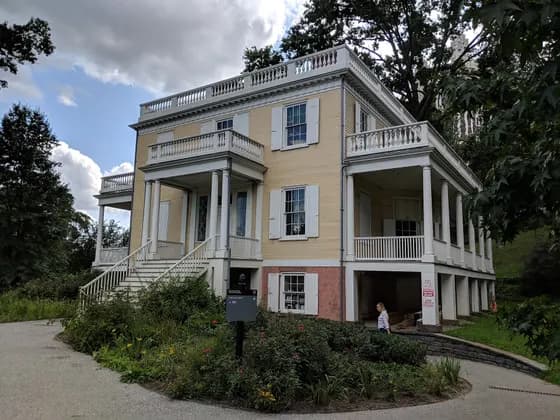

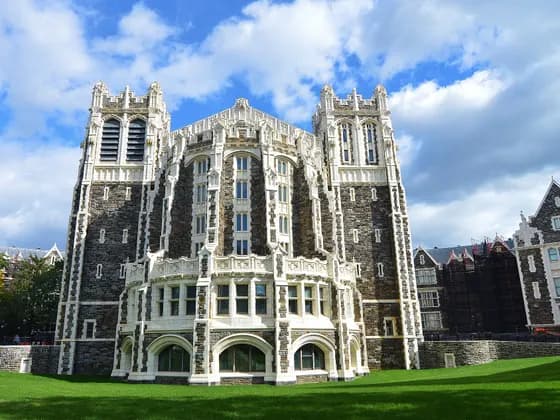
Photo: Ajay Suresh · CC BY 2.0 · cropped
Photo: Kalfatovic · CC BY-SA 4.0 · Photo: Roger Rowlett · CC BY-SA 2.5 · Photo: Gigi Altarejos · CC BY-SA 4.0
The CUNY School of Medicine MD program at a glance (2027 entry)
The City University of New York (CUNY) School of Medicine, which calls itself CUNY Medicine, runs a four-year MD program, numbered M1 to M4. It is based at The City College of New York in Harlem. The school's pages describe two routes to M1. High-school graduates take the seven-year BS/MD, which starts with a three-year BS in Biomedical Science (years U1 to U3). College graduates can take a one-year master's, the MPS-HS, first.
The school's mission is to train doctors for historically underserved communities, with a special emphasis on primary care, and it says community health is emphasized throughout the curriculum. On the BS/MD route, population health courses begin in your first year of college. Every MD student then takes a required population health research course in M1 and evidence-based medicine in M1 and M2.
M1 and M2 are built from organ-system modules taught alongside Practice of Medicine, the clinical skills course. M2 ends with study for Step 1, the first exam of the United States Medical Licensing Examination (USMLE), and you must pass it to begin M3. M3 is six clerkships, the core clinical rotations in each specialty, at affiliated hospitals across New York City, with the order and sites set by a lottery. M4 adds three more core rotations, at least four electives and preparation for residency.
The school began in 1973 as the Center for Biomedical Education at City College, renamed the Sophie Davis School of Biomedical Education in 1978. Its students finished their clinical training and the MD at partner medical schools until 2016, when it became the CUNY School of Medicine. The Liaison Committee on Medical Education (LCME), which accredits MD programs in the United States, granted it full accreditation in June 2023.
Its place within CUNY is changing too. A June 2026 CUNY Graduate Center Self-Study says the CUNY Board of Trustees approved it in 2025 as an independent medical school within CUNY. It is to be housed in the Graduate School and University Center. The report projects that the first students formally enrolled through the Graduate School and University Center will start in fall 2027. The school's pages differ on who awards the MD: the 2026-27 handbook says City College confers both degrees, while the BS/MD pathway page names the CUNY School of Medicine.
| Degree | MD; BS/MD students also earn a BS in Biomedical Science |
|---|---|
| Program length | Four-year MD; seven years in all on the BS/MD route |
| Routes to M1 | Three-year BS from high school, or the one-year MPS-HS after college |
| Main campus | The City College of New York, in Harlem |
| Teaching style | Integrated organ-system modules with Practice of Medicine in M1 and M2 |
| Anatomy | Regional dissection in U3 Clinical Anatomy (BS route); M1-M2 anatomy practicals |
| First patient contact | M1: Practice of Medicine, including an assigned outpatient site |
| Clinical sites | NYC hospitals including Harlem, Saint Barnabas, Kings County and Staten Island University Hospital |
| Step 1 timing | End of M2; a pass is required to start M3 |
| Grading | Pass/fail in M1 and M2; Honors to Fail in clerkships |
What makes the CUNY School of Medicine MD program different
A seven-year BS/MD that starts after high school
The BS/MD takes high-school graduates into a three-year BS in Biomedical Science built around medical school, then the four-year MD, without taking the MCAT in between. The BS is a set curriculum, not an open major: its medical school (MED) courses come in a fixed order, and entry to M1 is decided after U3.
A one-year master's route for college graduates
The Master of Professional Studies in Healthcare Sciences (MPS-HS), introduced in 2025, is two semesters of advanced biomedical science and public health with a year-long research capstone. The school presents it as preparation for seeking admission to its MD.
Population health research is a required part of M1
In Selectives in Population Health Research you get a faculty mentor, work on a topic such as asthma epidemiology, and finish with a paper written as a publishable manuscript. BS/MD students arrive having already assessed the health of their home neighborhood and run a summer project with a community health center.
Clerkships across New York City hospitals
The school's named clinical sites include Harlem Hospital, Jacobi, North Central Bronx and Kings County, all part of the NYC Health + Hospitals system. Saint Barnabas Hospital in the Bronx and Staten Island University Hospital are also named.
A fourth year of three cores and four electives
M4 has three core rotations at CUNY affiliates: emergency medicine, intensive care unit and neurology, and a sub-internship. In the sub-internship you take on much of a first-year resident's work under supervision. Around them you fit at least four four-week electives, including up to 16 weeks at other institutions with the school's approval.
How CUNY School of Medicine teaches medicine
M1 and M2 form the pre-clerkship phase, the two years before full-time clinical rotations. They are built from nine organ-system modules, six in M1 and three in M2. Each module teaches one body system's anatomy, histology, physiology, pharmacology and pathology together, with the diseases that disrupt it. The school calls M1 integrated, with large and small group sessions and self-directed learning.
Practice of Medicine runs through all four pre-clerkship semesters. In it you learn to interview patients, take a full history, carry out an advanced physical examination, reason toward a diagnosis and present your findings aloud and in writing. The catalog says these skills are taught in step with the organ systems. That way you learn how a disease works and how it shows up in a patient at the same time.
Population health continues alongside. Evidence-Based Medicine runs in M1 and M2, training you in advanced biostatistics and epidemiology so you can judge research and apply it to decisions about individual patients. The catalog counts these as the sixth and seventh courses in a population health sequence that BS/MD students begin in U1.
M3 and M4 are taught mainly through clerkships, where you work as part of a hospital or clinic team. Short classroom courses frame them: a one-week Clerkship Orientation at the end of M2, a one-week Intersession in the middle of M3, and Introduction to Internship near the end of M4.
The ways you will learn
| Organ-system modules | The core of M1 and M2: lectures, small groups and labs on one body system at a time, from musculoskeletal and cardiovascular in M1 to hematology and oncology in M2. Modules use exams from the National Board of Medical Examiners (NBME), which co-sponsors the USMLE, and include anatomy practicals. |
|---|---|
| Problem-based learning (PBL) | In PBL, a small group works through a patient case, decides what it needs to learn and then researches it. The catalog describes PBL and laboratory sessions in the Cardiovascular module, and the M1 Organ Systems team includes a PBL coordinator. |
| Practice of Medicine and standardized patients | The course goes beyond history and examination to counseling and health promotion, breaking bad news, advance directives, ethical reasoning and behavioral medicine. Standardized patients, trained actors who play patients, let you practice before and alongside real clinical work. |
| Clerkship teams | In M3 you join inpatient and outpatient teams in each core specialty. The catalog's clerkship descriptions center on focused interviews and examinations, documenting and presenting findings to the team, building a differential diagnosis and proposing a treatment plan. |
How anatomy is taught at CUNY School of Medicine
On the BS/MD route, gross anatomy is taught in Clinical Anatomy (MED 33609), a five-credit course at the end of U3. The catalog describes lectures in gross anatomy and embryology alongside detailed regional dissections, in which you work through the body one region at a time. The course also covers how imaging shows the body's structure. In spring 2027 the course runs every weekday afternoon from April 12 to May 27.
Anatomy then continues inside the M1 and M2 organ-system modules, each of which teaches the anatomy of its body system. The modules include an anatomy practical exam, and the handbook lets a student who fails one pass after a reassessment.
A faculty profile adds that anatomy is taught with ultrasound and 3D CT and MRI images, and that video dissection guides support the cadaver work. Saint Barnabas Hospital's orthopedic residents also serve as anatomy instructors for CUNY medical students. In a tribute reported in March 2026, BS/MD and physician assistant students honored the people who donated their bodies with a publication of art, poetry and essays and a virtual event.
When you first meet patients at CUNY School of Medicine
Patient contact starts in M1 through Practice of Medicine. The MD Degree page says you begin learning clinical skills in classroom and clinical settings in M1. In M2 you keep learning from patients and health care teams in hospitals and clinics.
The catalog's description of Practice of Medicine, which still numbers M1 and M2 as years 4 and 5 of the seven-year program, fills in the detail. You get supervised, hands-on experience with patients through a longitudinal clinical experience (LCE) at an assigned outpatient site you keep returning to, plus other hospital and clinic sessions.
BS/MD students meet community health settings earlier, in the U2 summer course Evaluation in Healthcare Settings. Full-time clinical work starts with M3 in late June. In 2026 the school marked the start of clinical training for third-year students with a Student Clinician White Coat Ceremony on June 10.
The CUNY School of Medicine curriculum, year by year
- U1 to U3 (BS/MD route)
The three-year BS in Biomedical Science
High-school graduates start with a required summer pre-matriculation program. They then spend three years on a BS in Biomedical Science at City College, run by the school's Sophie Davis School of Biomedical Education. MED courses must be taken in a fixed order and semester. After the U3 spring, the Student Academic Progress Committee decides whether you move on to M1.
- Pre-matriculation summer: biology, chemistry and physics, learning-success seminars, Harlem Hospital tours and BLS/CPR certification, plus a team Photovoice research project on community health, presented as posters at an August showcase.
- U1: Biological Foundations, General Chemistry 1 and 2, Physics for the Health Sciences and writing courses. Introduction to Population Health and Community-Oriented Primary Care uses narrative medicine and people's own stories of illness to explore the social causes of ill health.
- U2: Bio-Organic Chemistry, Medical Biochemistry, Introduction to Human Genetics, epidemiology and biostatistics. In Population Health and Community Health Assessment you profile your own home neighborhood using census and New York City health department data.
- U2 summer: Evaluation in Healthcare Settings, a six-credit course run full days from May 24 to July 16 in 2027. Small groups carry out a health services research project developed with community health center leaders.
- U3: Functional Histology and Cell Biology, Fundamentals of Organ Systems I and II (pharmacology, neurophysiology, microbiology and immunology), U.S. Healthcare System and Policy, Introduction to Biomedical Ethics and, at the end, Clinical Anatomy.
- Four Humanities Core courses across U2 and U3, from options such as Spanish for the Health Professions and Leadership in Health Equity; the BS totals at least 120 credits.
- To move on to M1, students finishing the BS in 2026-27 or later need a cumulative GPA of at least 3.5 and a science GPA of at least 3.3. Committee approval is also required.
- MPS-HS (college graduates)
A one-year master's before M1
The Master of Professional Studies in Healthcare Sciences is for college graduates with a four-year bachelor's degree. It starts each fall and runs for two full-time semesters, and the school describes it as preparation for students who want to pursue admission to its MD.
- Advanced biomedical science and public health, with coursework on health equity, health disparities and community-based research.
- A two-semester Capstone Independent Study building research skills around the social determinants of health, educational equity, community engagement and health advocacy.
- The first MPS-HS students received white coats with Sophie Davis BS graduates as the MD Class of 2030 in July 2026.
- M1
Organ systems, clinical skills and research
On the 2026-27 calendar, the M1 fall term opens on August 3. You take six organ-system modules, three each semester, alongside Practice of Medicine and two population health courses. You must pass every M1 course to move on to M2.
- Fall modules: Musculoskeletal (4 credits), Cardiovascular (7.5) and Pulmonary, which also covers the head and neck (7).
- Spring modules: Gastrointestinal and Liver (8 credits), Endocrine (4) and Renal (5).
- Practice of Medicine in both semesters (7 and 7.5 credits), including time at your assigned outpatient site.
- Selectives in Population Health Research I and II, and Evidence-Based Medicine each semester.
- Career advising begins: your Medical Student Advisor introduces specialty choice, CV building and applying for summer research and fellowships.
- M2
Finishing the systems, then Step 1
M2 completes the organ systems and prepares you for clerkships. It ends with a period of Step 1 study, and you must pass every M2 course and Step 1 before you can start M3.
- Fall: Neurology and Psychiatry (10.5 credits) and Reproductive (5), with Practice of Medicine and Evidence-Based Medicine.
- Spring: Hematology/Oncology (5 credits) and the last part of Practice of Medicine.
- The M3 clerkship lottery in early spring, when you rank the order and sites you want for your six core clerkships.
- Clerkship Orientation, a one-week course on working in an inpatient team, presenting on rounds and basic procedures, with training in electronic health records, infection control and HIPAA privacy rules.
- The M2 Clinical Skills Assessment and a required readiness exam before Step 1.
- M3
Six core clerkships
M3 runs from late June to early May. On the 2026-27 calendar it starts on June 22 and runs in seven six-week blocks to May 7, with vacation weeks in August and December. A one-week Intersession in November and a week of summative clinical skills exams in late March break up the year. The Department of Medical Education sets deadlines each year for passing Step 1 in time to start M3 in Block 1 (June 22 in 2026) or Block 2 (August 10).
- Core clerkships in family medicine, internal medicine, obstetrics and gynecology, pediatrics, psychiatry and surgery. Family medicine is an outpatient rotation in a family medicine practice; the rest mix inpatient and outpatient work.
- Each clerkship takes one six-week block, according to the MD Degree page and the 2026-27 curriculum map (updated October 2026). The course catalog's descriptions still give eight weeks for medicine, pediatrics and family medicine.
- Intersession brings you back to the classroom to discuss ethics, professional development, health systems science, reflection and narrative medicine, and the basic science behind your clinical cases.
- The End of M3 Clerkship Clinical Skills Assessment, a summative OSCE (objective structured clinical examination) in which you work through timed encounters with standardized patients. You must pass it to enter M4.
- You choose a career advisor from the clinical faculty in your area of interest, and the M4 core lottery runs in February.
- M4
Advanced rotations, electives and residency
M4 runs in twelve blocks of about four weeks and is the year you apply for residency. In 2026-27 it runs from May 11, 2026 to April 30, 2027, with the official conferral date on June 1, 2027.
- Three core rotations, assigned through the M4 core lottery: emergency medicine, an intensive care unit and neurology core, and a sub-internship.
- At least four four-week electives.
- Step 2 CK, the USMLE exam on clinical knowledge, by a July 31 deadline.
- No clinical rotations in Blocks 7 to 9 (October 26, 2026 to January 15, 2027 on the current calendar).
- Match week comes in mid-March, when graduating students learn where they will train in residency. Introduction to Internship, a required two-week course (March 22 to April 2 in 2027), follows before a final block in April.
How you are assessed at CUNY School of Medicine
M1 and M2 courses are graded pass/fail, and the school does not measure progress by a cumulative GPA. If you pass the rest of a module but fail its NBME exam, you get a Conditional grade and, if eligible, a re-sit; passing it turns the grade into Conditional/Pass. Failing two modules in one semester means repeating both with the next year's class.
Clinical skills are tested in OSCEs. The M2 Clinical Skills Assessment is a week-long summative OSCE, with written assignments, that checks you are ready for clerkships. M3 adds clerkship OSCEs and the end-of-M3 summative OSCE in late March, and you must pass both summative OSCEs to graduate.
Clerkships in M3 and M4 are graded Honors, High Pass, Pass or Fail; High Pass covers strong performance up to the top 40 percent of students. Alongside clinical evaluations, grades draw on an NBME subject exam, called a shelf exam, a clerkship OSCE and a special project. Passing one of these at the second attempt still earns a Pass, noted in your Medical Student Performance Evaluation (MSPE), the evaluation the school writes for residency applications.
Step 1 tests whether you understand and can apply the sciences basic to medicine, and has been reported only as pass or fail since January 26, 2022. Step 2 CK (Clinical Knowledge) is still reported as a three-digit score. LCME accreditation is what makes students of an MD program like this one eligible to sit them.
Before Step 1 you take a required NBME readiness exam, the Comprehensive Basic Science Examination (CBSE). If your score predicts too low a chance of passing, you join Bridge to Clerkship, an independent study course. You have at most three attempts at Step 1, all within a year of the school's deadline. Students who do not pass Step 1 by the deadlines to start M3 in Block 1 or 2 begin M3 the following year.
In August 2026 the USMLE program announced a move to designated testing dates from January 2029, with Step exams offered less often each year. Its June 2026 announcement had named 2028. On the current schedule, a student starting M1 in summer 2027 would sit Step 1 around May to June 2029, a few months after the switch. Step 2 CK would follow by July 31, 2030.
- These are projections from the published calendar pattern, not school dates. The school sets a Step 1 deadline each year within M2; on the 2026-27 calendars, the M2 spring term ends on May 21, 2027, and M3 starts in late June (June 22 in 2026).
- On the current schedule, starting the MPS-HS in fall 2027 would put M1 in 2028, Step 1 around May to June 2030 and Step 2 CK by July 31, 2031. Starting the BS/MD from high school in 2027 would put M1 in 2030, Step 1 around May to June 2032 and Step 2 CK by July 31, 2033.
- Step 2 CK can be taken only after you complete M3, by July 31. You need a pass by May 1 of M4 to be certified for graduation, and a third failure makes you subject to dismissal.
- Also pass/fail: Clerkship Orientation, Intersession, the neurology clerkship, the end-of-M3 assessment, electives and Introduction to Internship.
- Time limits: M1, M2 and Step 1 within four years, M3, M4 and Step 2 CK within four more, and the whole MD within eight years, including leaves.
CUNY School of Medicine clinical rotations: where you will actually train
Clinical training happens at affiliated hospitals and clinics across New York City. The City College catalog says the school partners with the NYC Health + Hospitals system, Saint Barnabas Hospital and others for clinical training across the five boroughs. The Clinical Affiliates page names NYC Health + Hospitals/Harlem, Saint Barnabas Hospital in the Bronx and Staten Island University Hospital. The BS/MD pages add Jacobi/North Central Bronx and Kings County.
Your M3 sites come from a lottery in the early spring of M2. You rank your preferences for the order and sites of your six core clerkships, then have one week to swap sites with classmates. After that, a change needs a compelling reason, such as a major life event, health, disability or a conscientious objection. Once a clerkship has started, concerns about the team or learning environment also count.
Clerkship duties can include nights, weekends and holidays. Duty hours are capped at 80 a week, averaged over a rotation, and no shift may run past 24 hours plus three hours to hand over. Emergency department shifts are limited to 12 hours in a row, and you get one day off in seven. Missing more than a fifth of a clerkship, about one day per week, means repeating it.
In M4, the required core rotations and Introduction to Internship must be completed at CUNY affiliates, while electives can also be taken elsewhere.
The hospital's own page lists 556 beds in operation, and BS/MD students tour it during the pre-matriculation summer.
- NYC Health + Hospitals/Harlem, 506 Lenox Avenue
SBH's orthopedic residency page describes a formal affiliation with the school, and says its residents oversee CUNY students rotating or taking electives on the orthopedic service.
- Saint Barnabas Hospital (SBH Health System)
- NYC Health + Hospitals/Jacobi
- NYC Health + Hospitals/North Central Bronx
Named on the school's BS/MD pages.
- NYC Health + Hospitals/Kings County
Named on the Clinical Affiliates page.
- Staten Island University Hospital
Electives, selectives and away rotations at CUNY School of Medicine
Electives come in M4. You need at least four four-week electives, with no more than three in one specialty, and each is graded pass/fail on a clinical assessment form and on meeting the rotation's requirements. The 2026-27 curriculum map lists M4 electives in 27 subjects, from anesthesiology, dermatology and radiation oncology to narrative medicine, medical education and population health.
You can also design an independent study or research elective with a supervising preceptor, or take away electives at other US institutions, which the school calls extramural. The handbook allows up to 16 weeks of M4 elective time elsewhere. You apply through the Visiting Student Learning Opportunities (VSLO) service or a program's own process, and the Elective Oversight Committee must approve before you accept an offer.
An away clinical elective needs an affiliation agreement with the host, which New York State requires for your malpractice cover. If the school cannot set one up or arrange other cover, the elective cannot go ahead. Clinical electives must avoid Blocks 7 to 9, and before arranging any electives you are expected to meet a Medical Student Advisor to plan a broad mix.
Dual degrees and research years at CUNY School of Medicine
Research is built into M1 through Selectives in Population Health Research, which runs across both semesters. In the fall you choose a topic matched to faculty expertise, such as health services for opioid dependence, and are assigned a faculty mentor. The catalog describes two tracks: tackling population health problems from published research, or an independent mentored project carried on over two years.
In the spring half, the catalog says the class works in small groups on one shared project designed by the course director, ending in a paper written as a publishable manuscript. The course also reviews the research methods, epidemiology and biostatistics you need for Step 1, and is graded pass/fail.
The optional Track of Distinction in Research leads to an MD with Honors in Research, recognized at graduation. Track A is one mentored project from M1 to M4, ending in a manuscript submitted for publication. Track B is a set of projects in one health area, ending in a capstone at the Spring Research Symposium. Track C asks M4 applicants to have published at least five peer-reviewed papers and presented a poster.
For summers, the Rudin Research Fellowship involves at least six weeks of full-time research with CUNY Medicine or City College faculty. The Mack Lipkin Broader Horizons Fellowship lets students with research experience travel abroad after U3 or M1 for a project of their own design. Partner programs include summer programs at Columbia in urology, cardiology, rheumatology and addiction, and a Mount Sinai training program in health disparities research.
For a full research year, a student in good standing who has passed all required licensing exams can request an academic leave of up to one year. The Dorothy and Max Bendich Research Fellowship partly supports a year away from the curriculum for mentored research at an external site.
Facilities and support at CUNY School of Medicine
Where you will learn
Harris Hall, on the City College campus at 160 Convent Avenue, has study and social space for the school's students. There are individual study spaces, group study pods, computer rooms and a student lounge with a pool table, ping pong and microwaves.
The school also has a Clinical Skills Lab, which holds 40 people. Department of Medical Education faculty develop and run the school's patient simulation and standardized patient sessions, mentoring students as they work through them.
Anatomy teaching uses a cadaver lab. According to one anatomy professor's faculty profile, he has developed imaging labs and virtual reality workshops. He also manages a project to bring in Anatomage virtual dissection technology, alongside other improvements to the lab.
Support while you study
At the start of the MD you are assigned a Medical Student Advisor, who meets you in groups and one to one about careers, USMLE preparation and electives. In the second half of the program, the advisors help prepare your MSPE. During M3 you also choose a career advisor from the clinical faculty in the specialty that interests you.
Career advising runs every year. It moves from CV building and the Association of American Medical Colleges' Careers in Medicine resources in M1 to residency application strategy, mock interviews and ranking programs in M4. It also covers the Supplemental Offer and Acceptance Program (SOAP), the process for applicants who do not match.
The Learning Resource Center offers free peer tutoring, in person or remote, plus academic counseling, learning success labs and learning specialists who coach study and test-taking skills. Department of Medical Education faculty also act as academic coaches. Bridge to M1 is a required summer program before M1 for BS graduates who earned B-minus or lower in two or more of four core science courses.
The Counseling and Wellness Center, on the first floor of Harris Hall or by Zoom, has psychologists, clinical social workers and a psychiatrist. There are no session limits, and it offers free neuropsychological evaluations. On the BS route, your advisor meets your advisee group monthly in the first year, and Sophie Davis students can ask to slow the BS to a four-year track.
Is the CUNY School of Medicine program right for you?
This program may suit you if
- You are finishing high school, sure about medicine, and want a seven-year BS/MD in which you move on to the MD without the MCAT.
- You already hold a bachelor's degree and want a one-year master's designed to prepare you for this MD.
- You want population health built in, from a health assessment of your own neighborhood to a required M1 research paper.
- You want clinical training in New York City hospitals such as Harlem Hospital, Saint Barnabas and Kings County.
- You like structured choice: ranking clerkship sites in a lottery, then shaping M4 with four electives and up to 16 weeks away.
Things to think about
- The BS years are tightly set, with MED courses in a fixed order, and moving on to M1 depends on GPA minimums and committee approval.
- You must pass Step 1 before M3, and missing the Block 1 or 2 deadlines means starting clerkships a year later.
- Regional dissection is described for the BS route's Clinical Anatomy course; if you come through the MPS-HS, ask how your anatomy teaching is arranged.
- The MPS-HS page presents the year as preparation for pursuing admission to the MD, so ask what you need to achieve to move on to M1.
- The school is moving within CUNY, and its pages name different institutions as awarding the MD, so ask which one will confer your degree.
CUNY School of Medicine MD program — frequently asked questions
Applying to CUNY School of Medicine?
How to get into CUNY School of Medicine
Prerequisites, MCAT, AMCAS personal statement, secondaries and interview, step by step.
Open the guide →CUNY School of Medicine admissions profile
MCAT and GPA profile, acceptance rate, interview format and key dates.
See the profile →Compare CUNY School of Medicine with other schools
Put the teaching style, anatomy teaching and clinical sites next to another school.
Open the comparison →Prepare for the CUNY School of Medicine interview
Format breakdown, school-specific sample questions and prep tips from tutors who interviewed here.
Read the guide →Where this CUNY School of Medicine program guide came from
This guide was written from 69 official sources — CUNY School of Medicine's own program pages and curriculum documents, plus the accreditor and the hospitals and health systems the school trains students in where they publish detail — read on 2026-10-31, then checked claim by claim against those sources.
- CUNY School of Medicine: MD Degree (M1 to M4)
- CUNY School of Medicine: MD Program
- CUNY School of Medicine: BS/MD Program Overview
- CUNY School of Medicine: BS/MD, A Pathway to a Medical Degree
- CUNY School of Medicine: Accelerated BS in Biomedical Science
- CUNY School of Medicine: BS Program
- CUNY School of Medicine: About the MPS-HS Program
- CUNY School of Medicine: MPS-HS Requirements
- CUNY School of Medicine: Meet Our Clinical Affiliates
- 2026-2027 BS and MD Student Handbook: Curriculum Map
- 2026-2027 Student Handbook: MD Curriculum, Program and Progress Requirements
- CUNY School of Medicine catalog: MD Program Course Descriptions
- 2026-2027 Student Handbook: Undergraduate School of Medicine Courses
- 2026-2027 Student Handbook: MD Program Introduction
- 2026-2027 Student Handbook: Grades Awarded in MD Program Courses
- 2026-2027 Student Handbook: Requirements for Academic Progress and Graduation
- 2026-2027 Student Handbook: Step 1 Policies
- 2026-2027 Student Handbook: Step 2 Policies
- 2026-2027 Student Handbook: M3 Delayed Entry Policy
- 2026-2027 Student Handbook: M3 Clerkship Lottery Policy
- 2026-2027 Student Handbook: Clerkship Failure and Reassessment Policy
- 2026-2027 Student Handbook: Clerkship Attendance Policy
- 2026-2027 Student Handbook: Student Duty Hours During Clinical Rotations
- 2026-2027 Student Handbook: Electives at Other Institutions
- 2026-2027 Student Handbook: Pre-Clerkship Course Reassessment Policy
- 2026-2027 Student Handbook: MD Program Advising System
- 2026-2027 Student Handbook: Maximum Time Frame
- 2026-2027 Student Handbook: Bridge to M1
- 2026-2027 Student Handbook: BS Program Introduction
- 2026-2027 Student Handbook: Requirements for Progression to the MD Program
- 2026-2027 Student Handbook: Humanities Core
- 2026-2027 Student Handbook: Requirements for the Baccalaureate Degree
- 2026-2027 Student Handbook: Undergraduate Advising System
- CUNY School of Medicine 2026-27 Academic Calendar: M1 and M2
- CUNY School of Medicine 2026-27 Academic Calendar: M3
- CUNY School of Medicine 2026-27 Academic Calendar: M4
- AY 2026-2027 M4 Elective Instructions and Guide
- U2 Spring 2027 Class Schedule
- U3 Spring 2027 Class Schedule
- City College 2026-2027 Undergraduate Catalog: The CUNY School of Medicine
- CUNY Graduate School and University Center: Self-Study Design, June 2026
- CUNY School of Medicine: LCME Accreditation
- LCME: Accredited Programs directory
- CUNY School of Medicine: School History
- CUNY School of Medicine: Mission and Vision
- CUNY School of Medicine: Department of Medical Education
- CUNY School of Medicine faculty profile: Clinical Professor of Anatomy
- CUNY School of Medicine faculty profile: Director of Clinical Skills Assessment
- CUNY School of Medicine: Pre-Matriculation Program
- CUNY School of Medicine: Summer 2026 Newsletter
- CUNY School of Medicine: June 2026 Newsletter
- CUNY School of Medicine: March 2026 Newsletter
- CUNY School of Medicine: Track of Distinction in Research
- CUNY School of Medicine: Student Research Fellowships
- CUNY School of Medicine: Student Research Partnership Opportunities
- CUNY School of Medicine: Leaves of Absence and Status Changes
- CUNY School of Medicine: Career Advising
- CUNY School of Medicine: Learning Resource Center
- CUNY School of Medicine: Tutoring Services
- CUNY School of Medicine: Learning Specialists
- CUNY School of Medicine: Counseling Services
- CUNY School of Medicine: Student Facilities and Event Requests
- NYC Health + Hospitals/Harlem
- SBH Health System: About SBH (St. Barnabas Hospital, Bronx)
- SBH Health System: Orthopedics Residency Program
- USMLE Designated Testing Dates Information Hub
- USMLE: Transition to Designated Testing Dates Will Take Place in January 2029
- USMLE: Step 1 pass/fail score reporting implementation date
- USMLE: Step 1
Curricula are restructured between cycles. Anything here that decides your application — how anatomy is taught, a clinical campus assignment, a required research year — should be confirmed against the official page for your entry year.
Applying to CUNY School of Medicine?
We help US applicants with MCAT strategy, the AMCAS personal statement, secondary essays and interview prep — everything you need for a competitive CUNY School of Medicine application.