
The Rutgers Robert Wood Johnson Medical School MD program
What you actually study, and where you will be
Rutgers Robert Wood Johnson Medical School's MD is a 4-year program with an integrated curriculum, with patient contact from Year 1 and clinical rotations in New Brunswick and affiliated hospitals across New Jersey (2027 entry). Rutgers Robert Wood Johnson Medical School teaches the MD in New Brunswick, New Jersey, with Robert Wood Johnson University Hospital as its principal teaching hospital. An 18-month pass/fail pre-clerkship phase of integrated courses, with cadaver dissection and clinical experiences from year 1, leads to eight weeks of Step 1 study and eight core clerkships. The school and Rutgers New Jersey Medical School are seeking a single accreditation as the Rutgers School of Medicine, with a decision expected in June 2027 at the earliest.
- Degree
- MD
- Length
- 4 years
- Teaching
- Integrated
- Clinical contact
- Year 1

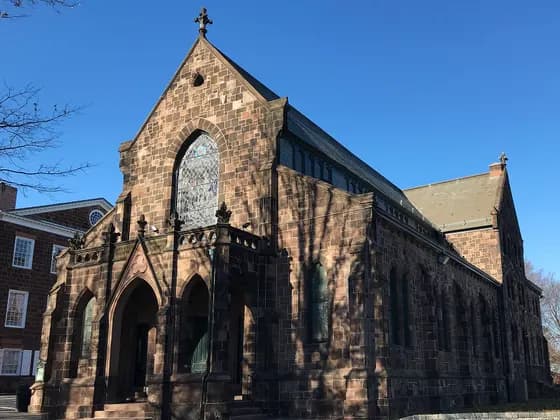
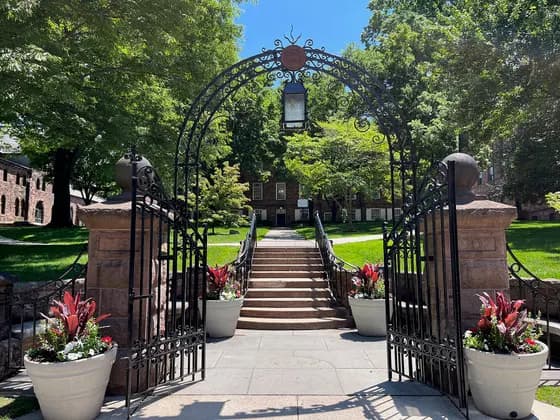

Photo: Ekem · CC BY-SA 3.0 · cropped
Photo: Zeete · CC BY-SA 4.0 · Photo: Antony-22 · CC BY-SA 4.0 · Photo: Tomwsulcer · CC0
The Rutgers Robert Wood Johnson Medical School MD program at a glance (2027 entry)
Rutgers Robert Wood Johnson Medical School (RWJMS) teaches a four-year MD (Doctor of Medicine) on campuses in New Brunswick and Piscataway, New Jersey. Its principal teaching hospital is Robert Wood Johnson University Hospital (RWJUH) in New Brunswick. Since July 2026 the school's home has been the first tower of the Health + Life Science Exchange (HELIX), a new research and innovation complex in downtown New Brunswick. The Liaison Committee on Medical Education (LCME), which accredits MD programs in the United States, lists the program as fully accredited, with initial accreditation in 1966 and its next survey due in 2026-27.
The 5 Cs Curriculum, launched in 2021, is built around curiosity, critical thinking, clinical skills, competence and compassion. The pre-clerkship phase, the classroom-based part before full-time clinical work, lasts 18 months and is graded pass/fail. It starts with foundation courses in the science of medicine, then works through the body's organ systems, framing the science around 33 Core Clinical Conditions the school has defined.
Three longitudinal courses run alongside the science courses. Patient-Centered Medicine and Health Equity (PCM-HE) covers clinical skills and takes you into hospitals, clinics and community settings from year 1. Community Engaged Service Learning (CESL) covers service projects with local communities. Both run through all 18 months. Medical Evidence, Discovery and Dissemination (MEDD) covers research, and the December 2025 curriculum map draws it through year 1.
Year 2 courses end around mid-February. Then come eight weeks of dedicated study for Step 1 of the United States Medical Licensing Examination (USMLE), the exam series used for medical licensure in the United States. Clerkships, the core clinical rotations in the main specialties, fill year 3 from early May.
Year 4 prepares you for residency, the specialty training that follows medical school. It includes a sub-internship, in which you work as an acting intern and take on much of the work of an intern (a first-year resident) under supervision. It also includes critical care, rehabilitation medicine and electives, which are rotations you choose yourself.
RWJMS is also in the middle of a merger. In July 2023 the Rutgers Board of Governors voted to seek a single LCME accreditation for RWJMS and Rutgers New Jersey Medical School (NJMS) in Newark, as the Rutgers School of Medicine (RSM). Rutgers has set the LCME site visit for January 11 to 13, 2027, and expects a decision in June 2027 at the earliest. The RSM charter class, its first entering class, is planned to start in summer 2028, so a 2027 entrant joins RWJMS a year before it.
| Degree | MD (Doctor of Medicine) |
|---|---|
| Program length | 4 years; 3 years on the accelerated primary care track |
| Curriculum | 5 Cs Curriculum, launched 2021, built around 33 Core Clinical Conditions |
| Main campus | The HELIX, New Brunswick, opened July 2026 |
| Class size | 165 students in the class that started in July 2026 |
| Grading | Pass/fail for 18 months; clerkships graded Honors to Fail |
| Anatomy | Cadaveric dissection of back, limbs, thorax and abdomen in year 1 |
| First patient contact | Year 1, through PCM-HE in hospitals, clinics and community settings |
| Step 1 timing | End of year 2, after an 8-week study block, before clerkships |
| Accreditation | LCME, full; merged-school decision expected June 2027 at the earliest |
What makes the Rutgers Robert Wood Johnson Medical School MD program different
Community clinics run by the school and its students
With a community board, the school runs the Eric B. Chandler Health Center, a federally qualified community health center in New Brunswick. On Thursday evenings students run the Promise Clinic there, founded in 2005, giving free primary care to clients of Elijah's Promise Soup Kitchen. Each patient is followed by a team of students from all four years, supervised by volunteer physicians.
A three-year MD for future primary care doctors
The 3-Year Accelerated Program is for students set on family medicine or pediatrics. You add monthly continuity clinics in years 1 and 2, follow individual patients for one to two years and do a five-week clinical skills program the summer after year 1. Year 3 folds in the fourth-year requirements, and you can switch back to four years at any time.
A new medical school building in downtown New Brunswick
In July 2026 the school moved into the first tower of the HELIX in downtown New Brunswick. The school's Winter 2025 magazine described the move as bringing first- and second-year students from Piscataway to New Brunswick, where the clinical years were already based.
Neurology taught through the same cases everywhere
The neurology clerkship's Neurophile program, launched in 2018, gives every student the same core cases whichever hospital they rotate at. You watch short review videos and take a quiz before class, discuss cases in facilitated sessions and manage a simulated neurological emergency in a small group. Over four weeks you move from taking histories to interpreting findings and managing patients.
Distinction Programs that can appear on your diploma
Optional Distinction Programs, from bioethics and climate health to research and community service, reward a substantial project with a faculty mentor. Finishing by August 1 of your final year puts the distinction on your diploma and in the dean's letter that goes with your residency applications.
How Rutgers Robert Wood Johnson Medical School teaches medicine
The MD is competency-based: what you learn maps to eight school-wide competencies, from medical knowledge and patient care to social justice and health equity, and discovery and dissemination. Three themes run through all four years: patient- and family-centered care in the community, evidence-based medicine, and health systems science, the study of how health care is organized and delivered.
The pre-clerkship courses are integrated. Two foundation courses come first, then organ-system courses that build on them, teaching each system's normal function, disease, diagnosis and drug treatment together. Clinical cases are threaded through all 18 months, and clinical experiences, reflection and independent study are built into the schedule.
Every pre-clerkship course mixes large-group lectures with small-group work. Active learning includes dissection, small-group discussion, case-based learning, where a group works through a patient case, and flipped classrooms, where you prepare beforehand and use class time for problems. Lectures are usually recorded, and you decide whether to attend non-mandatory ones in person. Standardized patients, actors trained to play patients, and simulation are used for both learning and assessment.
In the clerkship years, teaching moves to wards and clinics, with bedside teaching from faculty and formats such as the flipped-classroom neurology clerkship and family medicine's Simulated Clinics and case conferences.
The ways you will learn
| Lectures and large-group exercises | The core science of each course. |
|---|---|
| Case-based small groups | Patient cases that tie the science to clinical problems, such as kidney disease or endocrine disorders, plus a Friday interdisciplinary case discussion. |
| Anatomy lab | Cadaveric dissection in the fall of year 1. |
| PCM-HE sessions | Clinical interviewing, examination and reasoning, practiced on campus and then in hospitals, outpatient clinics and community settings. |
| Research small groups | In MEDD, small groups with faculty research mentors define a research question, write a protocol, weigh research ethics and learn to share findings with peers and patients. |
| Standardized patients and simulation | Practice encounters, simulations and OSCEs (Objective Structured Clinical Examinations), circuits of timed stations that each test one clinical task. Faculty observe and give feedback; the school counts more than 2,400 full-time and volunteer faculty. |
A typical week on the Rutgers Robert Wood Johnson Medical School program
The school's orientation site for the class that started in July 2026 describes a year 1 week. Faculty keep scheduled activities at or below 30 hours a week. Orientation week and the first three weeks of courses are fully in person, five days a week, roughly 9am to 4pm.
After that you are usually on campus from 8am to 4pm three days a week, with a possible fourth day during anatomy in September and October. A campus day might hold lectures, case-based learning and lab. On other afternoons you may travel to the hospital from 1pm to 5pm for a PCM-HE experiential activity. Two to three half-days each week are deliberately left free for self-study.
- Sample anatomy week in September: an upper limb lab on Monday morning, then PCM-HE on Tuesday morning and upper limb lectures that afternoon. Wednesday afternoon brings an active learning session on upper limb nerve injuries, Thursday morning lower limb lectures and Friday morning a lower limb lab.
- Sample cardiovascular week: lectures or large-group exercises on Monday, Wednesday and Thursday mornings, PCM-HE on Tuesday morning, a lab or small group on Wednesday afternoon, and a case discussion or exam on Friday morning.
- A formative assessment, a practice test that gives feedback, is released at 4pm on Friday and is due by midnight on Monday.
How anatomy is taught at Rutgers Robert Wood Johnson Medical School
You dissect in Cells to Structure, a 10-week course in the fall of year 1. You study the gross and developmental anatomy of the musculoskeletal, peripheral nervous, gastrointestinal, reproductive and cardiopulmonary systems, with cadaveric dissection of the back, limbs, thorax and abdomen. Common clinical cases link each region to patients who present with pain or problems in it.
The bodies come from the RWJMS Anatomical Association, a whole-body donation program run by the Department of Neuroscience and Cell Biology, which also teaches cell biology, histology, anatomy and neuroscience to medical students. More than 14,000 people have registered with it as donors.
The 2024-25 student handbook set out how the lab works. You sign a cadaver lab agreement before entering, treat donors with the respect owed to a first patient, keep their identities confidential and take no photos. You read the lab manual and watch dissection videos before each session, and teams work at an assigned table, taking turns in different roles.
Anatomy, histology and embryology are also taught within the cardiovascular and gastrointestinal courses, and year 2's clinical neuroscience includes a wet lab on brain structures alongside matching neuroimaging. Optional extras include the Anatomy Lunch Lectures non-credit elective and, in year 4, a Gross Anatomy Teaching Assistantship.
When you first meet patients at Rutgers Robert Wood Johnson Medical School
Clinical skills teaching starts in the first weeks. PCM-HE opens year 1 with a concentrated two-week block, then continues every week of the pre-clerkship phase. It covers clinical interviewing and examination, clinical reasoning, professionalism, ethics, patient-centered care, and the social and economic factors behind health disparities.
The course takes you into hospitals, outpatient clinics and community settings to practice those skills and serve the community, timed to match what your science courses cover. PCM-HE itself is new: Rutgers introduced it in July 2025, and the 2024-25 student handbook, written before then, listed Physicianship courses instead.
CESL runs alongside, guiding you through service projects that meet the needs of the communities around the campuses and building skills in health education, patient advocacy and community-engaged research. From year 1 you can also see patients at the Promise Clinic or join other programs of HIPHOP, the Homeless and Indigent Population Health Outreach Project that two students founded in 1992.
Full-time clinical work begins after the Step 1 study block. A week of transition teaching in mid-April prepares you for the wards, followed by a two-week clinical elective and your first clerkship in early May.
The Rutgers Robert Wood Johnson Medical School curriculum, year by year
- Year 1 (M1)
Foundations, then the first organ systems
The school calls the years M1 to M4. For the class that started in 2026, year 1 runs from July 20 to May 28. It opens with orientation, a two-week PCM-HE block and the one-week MEDD course, then two foundation courses before winter break and four organ-system courses after it.
- Cells to Structure (10 weeks): genetics, molecular and cell biology, histology and anatomy, with cadaveric dissection.
- Concepts in Biomedical Sciences (8 weeks): basic pharmacology, immunity in health and disease, and the causes of infectious disease.
- Musculoskeletal, Skin and Hematologic Systems (5 weeks), the first integrated systems course, which also introduces rheumatologic disease, toxicology and environmental exposures.
- Cardiovascular System (6 weeks), from the heart's electrical activity and muscle physiology to the drugs used for heart and vascular disease.
- Pulmonary System (5 weeks) and Renal System (4 weeks), including lung function tests, blood gases and case-based small groups on kidney disease.
- PCM-HE I, MEDD and CESL I run every week alongside the courses, around a two-week winter break and a one-week spring break.
- Year 2 (M2)
The last organ systems, then Step 1
Year 2 starts in late July and finishes the organ-system courses around mid-February. An OSCE and the CBSE follow; the CBSE is a practice exam on the basic sciences from the National Board of Medical Examiners (NBME). Then come eight weeks of dedicated Step 1 study until about mid-April, when you move into the clinical phase.
- Gastrointestinal System (6 weeks): the esophagus, stomach, intestines, liver, biliary system and pancreas in children and adults, and the drugs used to treat them.
- Endocrine and Reproductive Systems (7 weeks): hormones and reproduction, with case-based learning sessions and a closing series on sexual health that includes panel discussions.
- Nervous System and Behavioral Health (13 weeks, spanning winter break): clinical neuroscience built around the neurological exam, with a brain wet lab, plus behavioral science, psychiatry, child development and the mental status exam.
- PCM-HE II and CESL II run alongside the courses.
- Mid-April: the first week of the Bridge to Clinical Practice, called Transition to Clerkship on the block schedule, then a two-week clinical elective before year 3 begins.
- Year 3 (M3)
Eight core clerkships
Year 3 runs from early May to late April as six eight-week blocks, taken in any order; in 2026-27 it runs from May 4, 2026 to April 30, 2027. Each block holds one eight-week clerkship, a six-week clerkship plus two weeks of electives, or two four-week clerkships.
- Internal medicine (8 weeks): inpatient ward work at the school's hospital affiliates, learning to work up, present and care for adults with complex medical and social problems, with bedside teaching from faculty.
- Surgery (8 weeks): evaluating, diagnosing and treating patients whose problems may need a surgeon, including patient education and emotional support.
- Pediatrics (6 weeks), built on children's growth and development and common childhood illness, and obstetrics and gynecology (6 weeks), with common procedures and pelvic exam skills.
- Family medicine (4 weeks): about 25 hours a week in a family physician's office, plus service learning, an inpatient family medicine service, Simulated Clinics, home visits and case conferences.
- Neurology, psychiatry and emergency medicine (4 weeks each). You learn to localize disease in the nervous system, care for adults or children with mental illness on a treatment team, and work up common emergency complaints, including the role of emergency ultrasound.
- Bridge to Clinical Practice (2 weeks): hospital orientation, a procedure workshop, venipuncture, radiology, safety, and death and dying. The curriculum map shows one week in mid-April and one partway through year 3.
- Six weeks of electives, such as dermatology, sports medicine in New Brunswick, cardiology or gastroenterology in Princeton, or nephrology.
- Year 4 (M4)
Advanced rotations and residency applications
Year 4 runs from early May to late April in four-week blocks and is the year you apply for residency. It combines required advanced rotations with electives and time to study for and sit Step 2 CK, the USMLE exam on clinical knowledge.
- Summative OSCE early in the year (June 1 to 5 in 2026), followed by clinical coaching and career mentoring to help you shape the rest of year 4.
- Sub-internship, or acting internship (4 weeks), in emergency medicine, family medicine, medicine, obstetrics and gynecology, pediatrics or surgery: mainly inpatient work in which you report one-on-one to a resident and an attending physician.
- Critical Care Selective (4 weeks) on a medical or surgical intensive care unit (ICU) team, or in the pediatric ICU.
- Physical Medicine and Rehabilitation (2 weeks): taking a functional history and planning care for people after stroke, brain or spinal cord injury, amputation and other disabling conditions.
- Transition to Residency (2 weeks): a specialty-specific bootcamp at the end of the year; in 2026-27 the sessions run from March 29 to April 9 and April 19 to 30, 2027.
- Electives, which together with year 3's must add up to 20 weeks.
How you are assessed at Rutgers Robert Wood Johnson Medical School
The pre-clerkship phase is pass/fail: your transcript shows Pass or Fail for each course in the first 18 months. Courses set sectional and final exams, and a first-attempt score below 60 sends your record to the Academic Standing Committee for review. Only one remediation, a structured chance to make up a failure, is allowed per course, and failing both foundation courses means restarting the curriculum.
The phase ends around mid-February of year 2 with an OSCE and the CBSE. The 2026-27 Policy Manual also names a Summer Cumulative Exam (SCE): failing it brings a review of your record, and you may sit it no more than three times.
Clerkships are graded Honors, High Pass with Distinction, High Pass, Pass or Fail, and include a shelf exam, a standardized written exam in the clerkship's subject. NBME says schools typically use its clinical science subject exams this way. Failing a shelf exam at the first attempt also sends your record for review. Year 4's advanced rotations are graded Honors to Fail without the distinction tier, and one- and two-week courses are pass/fail.
Every student must pass the Summative OSCE, a seven-station exam at the start of year 4 in which standardized patients present common scenarios from year 3. It tests history taking, writing up the encounter and spotting key findings on electrocardiograms (EKGs) and imaging.
Students at LCME-accredited MD programs such as RWJMS are eligible to sit the USMLE. Step 1 tests whether you understand and can apply the sciences basic to medicine, and has been reported only as pass or fail for exams taken on or after January 26, 2022. Step 2 CK (Clinical Knowledge) tests how you apply clinical knowledge to patient care under supervision. You must pass both to graduate.
The school requires you to take Step 1 before starting any clerkship, rotation or elective for credit, and within 12 months of finishing the pre-clerkship phase. You get two attempts, the second within a year of the first, and after a failure you cannot start new coursework until you pass. Step 2 CK must be taken by September 15 of your graduating academic year, and you get three attempts within two years.
- In August 2026 the USMLE program announced a move to designated testing dates from January 2029, with Step exams offered less often each year. Its June 2026 announcement had named 2028.
- On the current schedule, a student entering in 2027 would have Step 1 due by about mid-April 2029, at the end of the eight-week study block. That is within a few months after the January 2029 switch. Step 2 CK would be due by September 15, 2030, after the core clerkships. These are deadlines, not exam dates.
- The USMLE program says it is still working out how applying for and scheduling exams will work, and it has asked schools to review rules that limit when students take Step exams.
- Attendance: excused absences are capped at 10% of a pre-clerkship course's mandatory sessions or of a clerkship's clinical time.
- Time limits: six years in total for the pre-clerkship, clerkship and advanced phases, and 10 years from starting to the MD.
Rutgers Robert Wood Johnson Medical School clinical rotations: where you will actually train
Your clinical base is New Brunswick. Rutgers Health describes RWJUH as a 600-bed academic medical center with a Level 1 trauma center. It is the flagship cancer hospital of the Rutgers Cancer Institute of New Jersey and includes The Bristol-Myers Squibb Children's Hospital. The school also has clinical affiliations with RWJBarnabas Health and other hospitals and outpatient sites across New Jersey.
Clerkships can take you beyond New Brunswick. Internal medicine runs at the school's hospital affiliates, and Penn Medicine Princeton Medical Center in Plainsboro says students generally do eight-week internal medicine clerkships there. The neurology department lists RWJUH, the JFK Neuroscience Institute in Edison and Monmouth Medical Center in Long Branch. Emergency medicine lists RWJUH New Brunswick, RWJUH Somerset in Somerville and Monmouth. The critical care selective uses ICUs at RWJUH New Brunswick, Hamilton and Somerset and at Monmouth.
Family medicine works differently. The department has over 200 volunteer faculty, so your preceptor could be in almost any region of the state. Preceptors include faculty in the Rutgers Network of Affiliated Family Medicine Residencies and physicians in private practice. The department says you also spend half a day each week with a community organization serving the underserved, such as addiction services or schools.
Under the 2024-25 student handbook, third-year scheduling took place in the spring of year 2 through an online system called OASIS. You entered a preference list, and an algorithm set your clerkship order and sites to give as many students as possible their top choices. A hardship process covered needs such as child care or a spouse's job.
The principal teaching hospital, where many fourth-year electives are based. Saint Peter's hosts electives such as pediatric emergency medicine.
- Robert Wood Johnson University Hospital (RWJUH)
- The Bristol-Myers Squibb Children's Hospital at RWJUH
- Saint Peter's University Hospital
- Eric B. Chandler Health Center
RWJUH Somerset is an emergency medicine clerkship site, and both hospitals have ICUs used for the critical care selective.
- RWJUH Somerset, Somerville
- RWJUH Hamilton
A neurology clerkship site.
- JFK University Medical Center (JFK Neuroscience Institute)
Named for neurology, emergency medicine and critical care, plus electives in otolaryngology, plastic surgery and breast surgery.
- Monmouth Medical Center
Internal medicine clerkships and electives such as hypertension.
- Penn Medicine Princeton Medical Center
Listed as affiliated hospitals in the 2024-25 student handbook.
- Capital Health Regional Medical Center, Trenton
- Hunterdon Medical Center, Flemington
- Raritan Bay Medical Center, Perth Amboy
Family medicine clerkship rotations with volunteer faculty preceptors around the state.
- Family medicine preceptors' practices
Electives, selectives and away rotations at Rutgers Robert Wood Johnson Medical School
You need 20 weeks of electives to graduate, taken across years 3 and 4. Year 3 sets aside six weeks to explore careers, and many fourth-year electives are open to third-year students.
The fourth-year catalog covers a wide range of specialties, many of them at RWJUH: cardiology, infectious diseases, lung and kidney medicine, gynecologic oncology, pediatric subspecialties, radiology, and surgical fields from trauma to kidney transplant. There are subspecialty sub-internships in neurosurgery, urology, orthopedics, plastic surgery, otolaryngology, and stroke and neurocritical care, and teaching electives such as Students as Teachers and a Gross Anatomy Teaching Assistantship.
Electives at other institutions, often called away rotations, count when they are approved electives under the 2026-27 Policy Manual. The 2024-25 handbook let you create an Individually Designed Elective for anything not listed and set no limit on electives elsewhere. It encouraged fourth-year electives abroad or in cities where you might apply for residency, and capped credit for any single experience at eight weeks.
The Office of Global Health runs programs with partner schools abroad, most for one or two students at a time. Partners include Kobe University and Hyogo Medical University in Japan, Seoul National University, the Medical University of Graz in Austria and Universidad de Los Andes in Bogota. Tzu Chi University in Taiwan waives tuition for the school's students. Third- and fourth-years can earn credit abroad through the Global Health Experience elective.
Before clerkships you can take non-credit electives alongside your courses, from Medical Spanish, Mandarin and Arabic to Music and Medicine, ultrasound, narrative medicine and addiction medicine. Medical Spanish, for example, runs 10 small-group sessions at four levels, plus community service with Spanish-speaking patients, and earns a notation on your transcript.
Dual degrees and research years at Rutgers Robert Wood Johnson Medical School
The MD/PhD is run with the Rutgers School of Graduate Studies and Princeton University, with fellowships and tuition support. The usual plan is two medical school years, including Step 1, then four PhD years, then the clinical years; the graduate school gives eight years as the average length. You can join any PhD program on the Rutgers New Brunswick campus or Princeton's Molecular Biology Department or Neuroscience Institute, and must finish the PhD before your first clerkship.
The MD/MBA with Rutgers Business School-New Brunswick takes five years. You apply in year 1, take 6 credits of management courses that summer, spend the program's second year full time at the business school, then return to medicine while finishing 3 more business credits. The MBA totals 60 credits, and the business school requires the GMAT admissions test.
The MD/MPH with the Rutgers School of Public Health, taught in New Brunswick for RWJMS students, takes four or five years. The MPH needs 45 credits, 6 of them shared with the MD. You can take a concentrated public health year between years 2 and 3 or years 3 and 4, spread courses through the MD, or use a summer plus fourth-year elective time. The MD/MSCTS adds a Master of Science in Clinical and Translational Science: at least one full-time year plus a mentored thesis.
The seven-week Summer Research Program runs from mid-June to mid-August after year 1. It has a fellowship track if you already have a mentor and project and a training track if you do not, with weekly lectures and a closing poster.
The Student Scholar Program lets you take approved time out for research or another project once the pre-clerkship phase is over. In a 2016 Rutgers news story, most students took their scholar year after year 3. Under the 2026-27 Policy Manual, it earns up to nine weeks of elective credit, but you still need the usual 20 elective weeks on top. A master's dual degree also leaves the 20 weeks in place, while MD/PhD students need 16 elective weeks.
The Distinction Programs cover ten areas. They are bioethics, climate health and environmental sustainability, global health, inclusive medical practice (IMPACT), leadership in academic health care, medical education, medical humanities, medical innovation and entrepreneurship, research, and service to the community. You express interest by spring of year 1, work with faculty mentors and present at the annual Distinction Symposium.
Facilities and support at Rutgers Robert Wood Johnson Medical School
Where you will learn
The HELIX's first tower, at 20 French Street, opened as the school's new home in July 2026 and welcomed that summer's incoming class for orientation. The HELIX is planned as three buildings, and this first tower also holds a translational research facility for 80 research teams and an innovation hub.
Before it opened, the school's Winter 2025 magazine set out the plan for the school's 165,000 square feet. Floor 5 was to hold classrooms and seminar rooms, and floor 6 a student lounge and wellness space. Floor 7 was to hold a gross anatomy and clinical skills lab, a simulation lab, examination rooms and study space, with a medical library spanning floors 7 and 8.
The school was founded in 1961, and its first 16 students entered Rutgers Medical School in Piscataway in 1966 to earn a two-year master's degree in medical science. For most of its history, students took two years of courses in Piscataway, then did their clinical years about 20 minutes away in New Brunswick. The school still lists campuses in both places.
Support while you study
Every student is assigned to one of three colleges in the College Advising Program, set up in 2011 as learning communities with academic, social and professional roles. Your college links you with peer mentors, alumni, a Student Affairs dean and faculty mentors throughout medical school. The colleges are named after three faculty members from the school's history, Pamela C. Champe, Robert L. Trelstad and Parvin Saidi, and each has its own color, mascot and motto.
From orientation you are also in a small group led by second-year Peer Mentors, who are trained at a retreat. Student Affairs deans give academic and career counseling and run THRIVE, regular sessions on well-being, career planning and equity, from CV workshops to financial literacy. The Advising in Medical Specialties (AiMS) program adds specialty advisers, career fairs and shadowing, built on the Careers in Medicine program of the Association of American Medical Colleges (AAMC).
The Cognitive Skills Program offers free academic support in all four years, from one-on-one help with study and time management to plans for board exams. The Student Wellness Program gives free, confidential counseling, medication management and 24-hour crisis care, through clinicians who are independent of the school and play no part in grading you. Student Health Services, run by the Department of Family Medicine at Monument Square in New Brunswick, comes at no extra cost.
Is the Rutgers Robert Wood Johnson Medical School program right for you?
This program may suit you if
- You want clinical skills teaching from your first weeks, and hospital, clinic and community experiences early in year 1, through PCM-HE.
- You want to dissect: cadaveric dissection is part of Cells to Structure in your first fall.
- You want research and community service built into the pre-clerkship phase, plus a student-run clinic where you follow your own patients.
- You are sure about family medicine or pediatrics and would like to finish the MD in three years.
- You want room to explore, with 20 elective weeks, global health programs at partner schools abroad and ten Distinction Programs.
Things to think about
- You would join RWJMS a year before the planned Rutgers School of Medicine charter class, so ask the school how the transition affects your entering class.
- Clerkship sites include hospitals in Edison, Somerville, Plainsboro and Long Branch as well as New Brunswick, so you may need to travel for some rotations.
- Clerkship grades are tiered from Honors to Fail, and failing a shelf exam at the first attempt puts your record before the Academic Standing Committee.
- The three-year track has no electives, a shortened surgery clerkship and a two-week summer break, so it suits only students already sure of primary care.
Rutgers Robert Wood Johnson Medical School MD program — frequently asked questions
Applying to Rutgers Robert Wood Johnson Medical School?
How to get into Rutgers Robert Wood Johnson Medical School
Prerequisites, MCAT, AMCAS personal statement, secondaries and interview, step by step.
Open the guide →Rutgers Robert Wood Johnson Medical School admissions profile
MCAT and GPA profile, acceptance rate, interview format and key dates.
See the profile →Compare Rutgers Robert Wood Johnson Medical School with other schools
Put the teaching style, anatomy teaching and clinical sites next to another school.
Open the comparison →Prepare for the Rutgers Robert Wood Johnson Medical School interview
Format breakdown, school-specific sample questions and prep tips from tutors who interviewed here.
Read the guide →Where this Rutgers Robert Wood Johnson Medical School program guide came from
This guide was written from 50 official sources — Rutgers Robert Wood Johnson Medical School's own program pages and curriculum documents, plus the accreditor and the hospitals and health systems the school trains students in where they publish detail — read on 2026-10-31, then checked claim by claim against those sources.
- RWJMS: MD Program (competencies, 5 Cs Curriculum, unifying themes)
- RWJMS: MD Program Curriculum (pre-clerkship courses, clerkships, fourth year, electives)
- RWJMS curriculum map, uploaded December 2025 (course lengths and order, Step 1 study block)
- RWJMS Academic Calendar 2026-2027
- RWJMS 2026-2027 third-year clerkship block schedule (linked from the academic calendar)
- RWJMS 2026-2027 fourth-year block schedule (Summative OSCE, Physical Medicine and Rehabilitation, Transition to Residency)
- RWJMS: Requirements for Promotion and Graduation
- RWJMS Policy Manual 2026-2027 (Academic Rules and Regulations, 50th edition)
- RWJMS Student Handbook 2024-2025 (clerkship scheduling, anatomy lab, affiliated hospitals, elective policy)
- RWJMS M1 Student Orientation: Week in the Life (2026)
- RWJMS: 3-Year Primary Care Accelerated Program
- RWJMS: Dual Degree Programs (MD/MBA, MD/MPH, MD/MSCTS, MD/PhD)
- RWJMS: Distinction Programs
- RWJMS: Research Training for medical students (Summer Research Program)
- Rutgers news, September 2016: Taking a Year Off from Medical School (Student Scholar year)
- Rutgers School of Graduate Studies: Rutgers-Princeton MD-PhD Program
- Rutgers School of Public Health: MD/MPH dual degree
- Rutgers Business School: MD/MBA, New Brunswick
- RWJMS: Student Experience (College Advising Program, Peer Mentors, THRIVE, AiMS, Cognitive Skills, wellness)
- RWJMS: Admissions (pre-clerkship experience, standardized patients and simulation)
- RWJMS: About (campuses, principal teaching hospital, LCME status)
- RWJMS: Patient Care (clinical affiliations, Eric B. Chandler Health Center)
- RWJMS: The HELIX
- Robert Wood Johnson Medicine magazine, Winter 2025: the new medical school taking shape at the HELIX
- Rutgers news, July 27, 2026: White Coat Ceremony welcomes the RWJMS Class of 2030
- Robert Wood Johnson Medicine magazine: the Neurophile neurology curriculum
- RWJMS Department of Neurology: clerkship, electives and Neurophile
- RWJMS Department of Emergency Medicine: clerkship sites
- RWJMS Department of Family Medicine and Community Health: medical student education
- RWJMS Department of Neuroscience and Cell Biology: anatomy teaching and the Anatomical Association
- RWJMS: Global Health Programs (partner programs, language courses, Global Health Experience)
- RWJMS: HIPHOP (Homeless and Indigent Population Health Outreach Project)
- RWJMS: HIPHOP Promise Clinic
- RWJMS: Eric B. Chandler Health Center
- Rutgers Health: Clinical Affiliations (Robert Wood Johnson University Hospital)
- Penn Medicine Princeton Medical Center: Department of Medicine (medical student clerkships)
- Hackensack Meridian Health: JFK University Medical Center, Edison
- Rutgers Health: Our Future, Rutgers School of Medicine (accreditation timeline)
- Rutgers Health: Medical School Integration, The Process (charter class timeline)
- Rutgers Health: About the Medical School Integration (curriculum and FAQs)
- Rutgers Health, July 10, 2023: Board of Governors approves single medical school accreditation
- LCME: Accredited Programs directory
- USMLE Designated Testing Dates Information Hub
- USMLE, August 6, 2026: Updated Timeline for Designated Testing Dates, transition in January 2029
- USMLE: Step 1 Transition to Pass/Fail Only Score Reporting
- USMLE Bulletin of Information: Eligibility
- USMLE: Step 1
- USMLE: Step 2 CK
- NBME: Subject Examinations
- NBME: Clinical Science Subject Exams
Curricula are restructured between cycles. Anything here that decides your application — how anatomy is taught, a clinical campus assignment, a required research year — should be confirmed against the official page for your entry year.
Applying to Rutgers Robert Wood Johnson Medical School?
We help US applicants with MCAT strategy, the AMCAS personal statement, secondary essays and interview prep — everything you need for a competitive Rutgers Robert Wood Johnson Medical School application.