
The Cooper Medical School of Rowan University MD program
What you actually study, and where you will be
Cooper Medical School of Rowan University's MD is a 4-year program taught through case-based learning in an integrated curriculum, with patient contact from Week 3 and clinical rotations in Camden and southern New Jersey (2027 entry). Cooper Medical School of Rowan University (CMSRU) teaches the MD in Camden, New Jersey, with Cooper Norcross University Hospital as its core clinical campus. Years 1 and 2 are organ-system courses built around lectures and case-based small groups. From what the school calls the third week of medical school, you help care for patients at a free student-run clinic. Years 3 and 4 are clerkships and electives, and a three-year track lets up to eight students a year train for primary care.
- Degree
- MD
- Length
- 4 years
- Teaching
- Integrated + Case-based learning
- Clinical contact
- Week 3

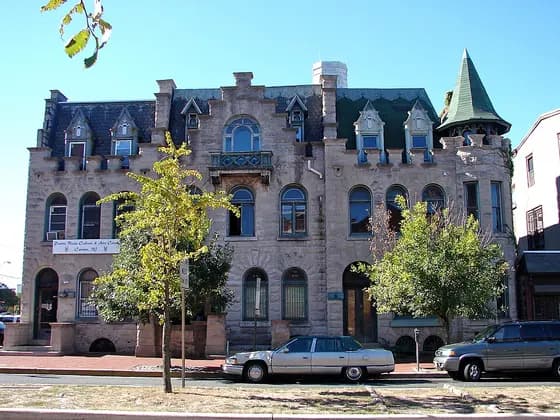
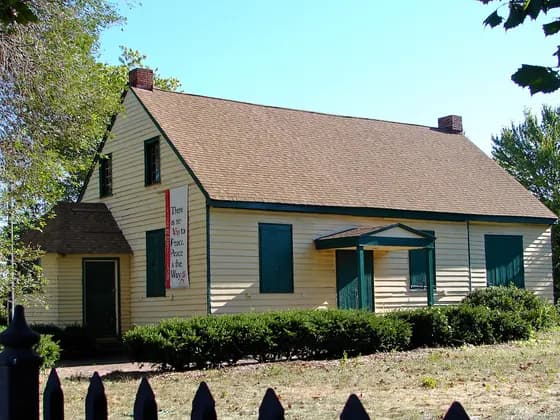

Photo: Pocketmedicine · CC BY-SA 4.0 · cropped
Photo: Smallbones · Public domain · Photo: Smallbones · Public domain · Photo: Bronzeage10 · CC BY 4.0
The Cooper Medical School of Rowan University MD program at a glance (2027 entry)
Cooper Medical School of Rowan University (CMSRU) awards the Doctor of Medicine (MD) after a four-year program in Camden, New Jersey. It opened in 2012 as a partnership between Rowan University and the Cooper health system, now called Cooper Norcross Health. Its Medical Education Building and its main teaching hospital, Cooper Norcross University Hospital, both stand on the Cooper Health Sciences Campus.
The curriculum has two phases. Phase 1, Foundation and Integration, is the pre-clerkship (preclinical) phase: two years of multidisciplinary courses, most covering one organ system. It ends with review for Step 1 of the United States Medical Licensing Examination (USMLE), the exams used for medical licensure in the US. Phase 2, Application, Exploration and Advancement, fills years 3 and 4 with clerkships, the core clinical rotations, and electives.
Clinical work starts early. The school says patient care begins in the third week, at the Cooper Rowan Clinic, a free clinic run by students for uninsured and underinsured adults. You stay on its teams through year 3. Service projects with Camden residents are required every year.
In Phase 1, lectures sit alongside active learning groups, where about eight or nine students and two faculty facilitators work through patient cases. A doctoring course, a course on reading medical research that leads to a capstone project, and humanities Selectives run beside the organ systems. The Class of 2030, welcomed at its White Coat Ceremony in August 2026, has 120 students, which the school calls the largest entering class in its history.
PC3, the Accelerated Three-Year Primary Care Track, lets up to eight students a year finish the MD in three years. Its students have a directed pathway into primary care residencies at Cooper or at Inspira Health, a health system serving southern New Jersey. The Liaison Committee on Medical Education (LCME), which accredits MD programs in the United States, lists CMSRU as fully accredited, with its next survey due in 2028-29.
| Degree | MD (Doctor of Medicine) |
|---|---|
| Program length | 4 years; 3 years on the PC3 primary care track |
| Class size | 120 students in the Class of 2030, which the school calls its largest |
| Main campus | Cooper Health Sciences Campus, Camden, New Jersey |
| Curriculum | Phase 1 in years 1-2; clerkships and electives in Phase 2 |
| Teaching style | Organ-system courses with lectures and case-based active learning groups |
| First patient contact | Week 3, the school says, at the student-run Cooper Rowan Clinic |
| Main teaching hospital | Cooper Norcross University Hospital, formerly Cooper University Hospital |
| Step 1 timing | End of year 2, after a four-week review block and a six-week study period |
| Accreditation | LCME, fully accredited; next survey 2028-29 |
What makes the Cooper Medical School of Rowan University MD program different
Three years on a student-run clinic team
Through the Ambulatory Clerkship you care for uninsured and underinsured Camden adults at the free Cooper Rowan Clinic from year 1 to year 3. Teams mix first-, second- and third-year students with pharmacy, physical therapy and social work students. Your responsibility grows each year, and teams care for their patients over time rather than in one-off visits.
Hospital wards and process improvement in year 1
Week on the Wards 1 puts you on inpatient services in October of year 1. Its second week trains you in Lean Six Sigma, process-improvement tools used for patient safety and quality, and ends in a Yellow Belt certificate.
Service in Camden every year
Service learning is required in every year, and it goes beyond volunteering: you reflect on what you see in small-group discussions and essays. Options include health coaching for high-risk pregnant women, serving meals at Cathedral Kitchen, teaching English to Spanish-speaking residents and Saturday street medicine outreach. Year 4 adds Leadership in Community Health, a required course built on this work.
Ultrasound from year 1 to year 4
You hold an ultrasound probe from year 1, with video lectures before hands-on sessions. You start with ultrasound-guided procedures such as IV placement, then scan the heart, lungs, gallbladder and kidneys on standardized patients (people trained to play patients) and simulators in years 1 and 2. Year 3 ends with an ultrasound OSCE, a practical exam at timed stations, and year 4 adds emergency and critical care scanning.
A three-year MD for future primary care doctors
PC3 is for students who plan careers in family medicine, primary care internal medicine or primary care pediatrics. You start in late June, six weeks before orientation, and spend a half-day a month in a primary care clinic from year 1. PC3 students have a directed pathway into a residency at Cooper or at Inspira Medical Center Vineland.
How Cooper Medical School of Rowan University teaches medicine
Phase 1 joins science and clinical practice from the start: clinical faculty teach with basic science educators, and the courses are multidisciplinary. In Cardiovascular, for example, you study the normal anatomy, histology, physiology and biochemistry of the heart and vessels, then their diseases in children and adults through cases, with imaging, tests and drug treatment. Infections and specific cancers, first met in year 1, come back inside each later organ-system course.
Longitudinal courses run alongside. Foundations of Medical Practice, the doctoring course, meets twice a week throughout Phase 1 and covers communication, ethics, professionalism, teaching and clinical practice through lectures, small groups and sessions with standardized patients. Medical Literature Interpretation, formerly called Scholar's Workshop, runs all four years. In year 1 it teaches you to read research, including biostatistics and study design, and from year 3 you build a capstone project with a faculty mentor.
Some subjects are threads rather than courses. The school counts 40 or more hours of nutrition teaching across courses and clerkships. In 2026 it also described climate and environmental health, from heat-related illness to environmental justice, as part of the core curriculum in every year.
In Phase 2 the teaching moves onto the wards and into clinics. Each clerkship gives its own lectures within the block, inpatient teaching rounds include imaging and pathology, and preceptors (the clinicians who supervise you) and clerkship directors give you regular feedback.
The ways you will learn
| Lectures | Whole-class teaching in the 250-seat auditorium. |
|---|---|
| Active learning groups (ALGs) | About eight or nine students and two faculty facilitators, based in their own active learning room, work through patient cases. ALGs are part of every Phase 1 block course, and the cases bring in social determinants of health, ethics and law as well as biology. |
| Team-based learning | Some courses use team-based learning (TBL): you prepare beforehand, take a short readiness test alone and then with your team, and apply the material to problems. |
| Laboratory and practical sessions | Afternoon practical sessions and lab exercises, with simulation in many courses. |
| Standardized patients and simulation | From the first weeks of year 1 you practice interviews and examinations with standardized patients, members of the public trained to play patients and give feedback. Task trainers and high-fidelity manikins are used for procedures and emergencies. |
| Clerkships | Full-time rotations in years 3 and 4 on hospital and clinic teams, where you admit patients and follow them through their stay. |
A typical week on the Cooper Medical School of Rowan University program
The school's 2026 overview for students includes a sample Phase 1 week. Days start at 8:00. On Monday, Wednesday and Friday you begin with a two-hour active learning group, then two lectures; on Tuesday and Thursday you start with Foundations of Medical Practice. Tuesday's late morning is Medical Literature Interpretation, and Thursday's is service learning.
Lunch is at noon. Monday, Tuesday and Wednesday have a two-hour practical session from 1:00, while Thursday and Friday afternoons are mostly self-directed learning, with a Selective as the Friday option. From Monday to Thursday the 3:00 to 5:00 slot is either your Ambulatory Clerkship shift at the clinic or self-directed study, and a formative quiz goes online on Friday.
How anatomy is taught at Cooper Medical School of Rowan University
Anatomy content runs through the organ-system courses. In year 2, for example, Cardiovascular and Pulmonary start from the normal anatomy, histology and physiology of each system, and Uro-Renal and Introduction to Ob-Gyn build on the anatomy you met in year 1.
Gross anatomy, the study of body structures visible to the naked eye, comes into focus in Skin and Musculoskeletal Systems, the last course of year 1, which runs from April into early June. Its course description says it introduces gross anatomy and anatomic dissection, and you begin instruction in the gross anatomy laboratory during it. Once you begin anatomy you get a locker next to the lab.
When you first meet patients at Cooper Medical School of Rowan University
Your first patients are at the Cooper Rowan Clinic, which the school says you join in the third week. On the 2026-27 calendar, the Ambulatory Clerkship, your clinic course, began on August 10, the week after orientation. The clinic is free, organized and staffed by students, and serves uninsured and underinsured adults Monday to Thursday from 3:30 to 5:00 pm. At least one faculty physician and one pharmacist are on site, and pharmacy students from Saint Joseph's University work on the teams.
Students act as primary care providers for about 600 patients a year. Your role grows each year: first-year students take the history and second-years do the physical examination. Third-years fill any gaps, report to the faculty physician and lead the team's discussion of diagnosis and treatment. You also coordinate your patients' care, going with them to hospital visits and specialist appointments.
In October of year 1, Week on the Wards 1 takes you onto hospital services, where small groups see how inpatient teams work and talk with third- and fourth-year students, residents and faculty. Full-time clinical work starts in late June after year 2. In year 3 you admit patients to the hospital and follow them through their stay. You also log every patient encounter and procedure, and the Office of Medical Education reviews the log at the end of each block.
The Cooper Medical School of Rowan University curriculum, year by year
- Year 1 (M1)
Foundations and the first organ systems
The school's admissions pages say orientation and classes begin in the second week of August. On the 2026-27 calendar, orientation week ended with the White Coat Ceremony on August 7, and six courses followed one after another. That calendar's first-year section also lists a seven-week Introduction to Medical Education from June 15 to July 31, 2026. The 2025-26 calendar had listed a required online pre-matriculation program for all first-years from July 1 to August 4, 2025.
- Molecular Basis of Medicine: physiology, biochemistry and cell biology, genetics, histology, embryology, pathology and pharmacology. On the 2026-27 calendar it ran as three three-week modules, August to early October.
- Week on the Wards 1 (two weeks, October): a week rotating through four inpatient services, including surgery and the emergency department. A second week of Lean Six Sigma training includes a group project on one hospital unit.
- Microbiology, Immunology and Infectious Diseases (eight weeks, to mid-December): microbes and the immune system, testing for infection and anti-infective drugs, including HIV and tuberculosis.
- Hematology-Oncology (five weeks from early January): the blood and lymph systems, blood disorders and the principles of cancer.
- Neurology-Psychiatry (eight weeks, February to early April): neurological and psychiatric disease and the history taking and examination skills for each.
- Skin and Musculoskeletal Systems (eight weeks, April to early June): dermatology, orthopedics and rheumatology.
- All year: the Ambulatory Clerkship, Foundations of Medical Practice and Medical Literature Interpretation, plus your first Selective in the spring.
- Year 2 (M2)
The remaining organ systems, then Step 1
Seven organ-system courses run from August to late March, followed by a week in a specialty you choose. From mid-April you prepare for Step 1, first in the four-week Core Application of Step 1 Elements (CASE) review block and then in a six-week study period that ends with the exam.
- Cardiovascular (five weeks) and Pulmonary (four weeks): normal structure and function, then disease in children and adults through cases.
- Gastroenterology (five weeks) and Uro-Renal (seven weeks, split by the winter break), from the kidney's control of fluids and blood pressure to dialysis and transplantation.
- Endocrine (three weeks, with emphasis on diabetes), Introduction to Ob-Gyn (four weeks) and Otolaryngology, or ENT (three weeks), from January to late March.
- Week on the Wards 2 (one week, late March): immersion in a specialty or subspecialty you choose.
- CASE (four weeks from mid-April): a boot camp on high-yield Step 1 content, with extra self-study time, multisystem active learning groups and application sessions.
- Practice exams: three Comprehensive Basic Science Self-Assessments through the year, to get used to Step 1's format and length, and a Comprehensive Basic Science Exam in early May.
- Step 1 study period (six weeks from about May 10, with a review course in the first four), ending with Step 1, which you must sit by about June 20 to start year 3.
- All year: the longitudinal courses, with your second Selective in the fall.
- Year 3 (M3)
Core clerkships
Year 3 starts with a required orientation week in late June and runs as seven six-week blocks. Five blocks are single clerkships; two pair a four-week clerkship with a rotating two-week one.
- Internal Medicine: five weeks on a daytime medical teaching team and one on night medicine. A team is an attending physician, a senior resident, an intern (a first-year resident), two third-year students and sometimes a fourth-year sub-intern, a student acting as an intern.
- Surgery: first consultations, diagnostic workups, the operating room and post-operative care.
- Obstetrics and Gynecology: the labor floor, antepartum and postpartum floors and gynecologic surgery.
- Pediatrics: the NICU, mother-infant units, general pediatrics, subspecialty clinics and the pediatric emergency room.
- Family Medicine and Adult Primary Care: a family medicine office and an adult primary care office, with weekly conferences.
- Psychiatry (four weeks: the inpatient unit, consultation-liaison on medical and surgical floors, addiction medicine and outpatients), with a two-week Community Medicine clerkship at Inspira rotating through the block.
- Neurology (four weeks with stroke, general neurology, neurocritical care, tele-neurology and neurosurgery teams), with a two-week Anesthesiology clerkship in the operating room, labor and delivery suite and pain procedure room.
- Four one-week electives: one in December and three in a four-week May block that also holds a week of vacation, or an early sub-internship in that slot instead.
- Through the year: the Ambulatory Clerkship, Becoming a Doctor; Staying Human small groups on certain Fridays, ultrasound sessions and your capstone, then Step 2 CK (Clinical Knowledge) review in June.
- Year 4 (M4)
Sub-internship, required clerkships and electives
Year 4 begins at the end of June and runs in four-week blocks, and you must meet every graduation requirement by May 1 to graduate with your class. Match Week in March, when students learn where they will train as residents, is also capstone presentation week, with everyone on campus.
- Sub-internship (four weeks): also called an acting internship, it puts you in the role of a first-year resident under senior residents and faculty. There are 11 specialties to choose from, including internal medicine, pediatrics, urology and vascular surgery.
- Critical care (four weeks): medicine, surgical, pediatric or neonatal, covering resuscitation and care of the critically ill.
- Emergency Medicine (four weeks) in Cooper's emergency department, seeing problems such as chest pain, abdominal pain and headache.
- Interprofessional Care of Chronic Conditions (four weeks): you join a care team in one of eight areas, such as palliative care, bariatric surgery, rehabilitation, geriatrics, hematology-oncology or Cooper's Urban Health Institute.
- Leadership in Community Health (spring): community service as fieldwork, building on your service learning in years 1 to 3.
- Residency preparation: a one-week course on imposter syndrome and professional identity, run virtually in December on the 2026-27 calendar, and a Pre-Internship Bootcamp in early May.
- Electives: 16 weeks, up to 12 of them as away rotations (see Electives).
How you are assessed at Cooper Medical School of Rowan University
Formative assessments give you feedback without high stakes; summative ones are the exams and evaluations that make up a large share of your grade in most courses. Each Phase 1 course has weekly formative quizzes. Summative assessments include written and practical exams, objective structured clinical examinations (OSCEs), capstone work, clinical assessments, presentations, and team-based learning and active learning group assessments.
Foundations of Medical Practice has its own small OSCEs, and you sit a formative OSCE at the midpoint of years 1, 2 and 3. Year 3 ends with a summative OSCE and an ultrasound OSCE, and year 4 includes an oral exam on resuscitation and critical care basics.
In year 3 you sit subject exams, often called shelf exams: national exams in each clinical subject from the National Board of Medical Examiners (NBME), which also co-sponsors the USMLE. A formative one comes at the midpoint of each block and the graded one at the end. Inpatient clerkship grades combine your preceptors' assessment, your subject exam score and tasks such as a written note. Psychiatry and Neurology are graded Honors, High Pass, Pass or Unsatisfactory, and the two-week Anesthesiology and Community Medicine rotations Pass or Unsatisfactory.
Step 1 tests whether you understand and can apply the sciences basic to medicine, and it has been reported only as pass or fail for exams taken on or after January 26, 2022. Step 2 CK tests how you apply clinical knowledge to patient care. Students in LCME-accredited MD programs are eligible to sit both. At CMSRU you sit Step 1 at the end of year 2 and must take it by about June 20 to start year 3.
The school encourages you to take Step 2 CK as soon as possible after year 3. Its 2025-26 calendar required students starting year 4 that summer to schedule and sit it by August 1.
In August 2026 the USMLE program announced a move to designated testing dates from January 2029, with Step exams offered less often each year. Its June 2026 announcement had named 2028. On the current schedule, a student entering in 2027 would sit Step 1 in late spring 2029, a few months after the switch, and Step 2 CK in summer 2030.
- These dates are projections from the school's 2025-26 and 2026-27 calendars. The USMLE program says it is still working out how applying for and scheduling exams will work under the new model.
- The school's PC3 pages list passing Step 1 and Step 2 CK before graduating among the standards required of all students.
- The 2025-26 calendar also set three clinical science self-assessments across year 3 to help with Step 2 CK preparation.
- The 2026-27 calendar sets aside remediation periods, time to make up work you have not passed: June 7-30, 2027 for first-years and May 3-14 for fourth-years. Second-years have May 10 to June 4, the same weeks as the Step 1 review course. A fourth-year still in remediation can take part in Commencement but receives the diploma later.
- The Chiron Honor Society inducts the top 25% of each rising fourth-year class on academic performance in years 1 to 3. Its formula weights Phase 1 course performance at 60%, and the year 3 subject exam average, preceptor assessments and clerkship grades at 13.33% each.
- The LCME gave the program full accreditation in June 2016 and re-accredited it for the maximum eight years in November 2021.
Cooper Medical School of Rowan University clinical rotations: where you will actually train
Teaching is based in Camden. Classes are in the Medical Education Building at Broadway and Benson Streets, and simulation is one block away in the Joint Health Sciences Center. The core clinical campus is Cooper Norcross University Hospital, the 663-bed flagship of Cooper Norcross Health, which houses a Level I trauma center and the Children's Hospital at Cooper Norcross Health.
Cooper's names changed in 2026. Its board voted on July 27 to rename Cooper University Health Care, and the new name, Cooper Norcross Health, went public on September 23. Cooper University Hospital is now Cooper Norcross University Hospital, though many school pages still use the old names. The health system's physicians serve as the school's faculty.
At the start of year 3 the class is divided into cohorts, and the school notes that assignments vary. The emergency medicine clerkship is in Cooper's emergency department, and the two-week Community Medicine clerkship is with Inspira Health. The school says you will need access to a car to reach some affiliated clinical sites in year 3.
The school does not provide student housing; the Office of Student Affairs advises on housing, roommates and relocation. A 24-hour parking garage is available for an annual fee.
Your classes, simulation, clinic shifts and the core clinical campus. The clinic is a three-minute walk from the school.
- Cooper Norcross University Hospital
- Cooper Rowan Clinic, 3 Cooper Plaza
- Medical Education Building
- Joint Health Sciences Center (Clinical Skills and Simulation Center)
- Cooper's Urban Health Institute (an option in the year 4 chronic care clerkship)
- Patient Centered Medical Home clinics (PC3 students)
- Service-learning partners such as Cathedral Kitchen and the Center for Family Services
The two-week Community Medicine clerkship in year 3, in a community setting.
- Inspira Health
Electives, selectives and away rotations at Cooper Medical School of Rowan University
You take two medical humanities Selectives from the Edward D. Viner Center for Humanism: one in the spring of year 1 and one in the fall of year 2. Each meets six times over a semester, mostly on Friday afternoons. Options range from Medical Spanish, Applied Medical Ethics and Racism in Medicine to Murals and Geographies of Camden, where you explore public art within a 20-minute walk of campus, and Medical Sculpting.
Year 3 has four one-week electives across specialties and subspecialties, a chance to sample fields before you plan year 4. The optional Healer's Art, five evening sessions in the fall on the 2026-27 calendar, builds a supportive community of students and physicians around grief, awe in medicine and service.
Year 4 needs 16 weeks of electives, and up to 12 can be away rotations, also called visiting rotations, at other medical schools. Most schools take applications through the Association of American Medical Colleges' (AAMC) Visiting Student Learning Opportunities service, which you can use before year 4 starts. For the rest you contact the school directly, helped by the registrar and the M4 staff.
At CMSRU, electives can be clinical, such as cardiology or gastroenterology, or non-clinical, such as healthcare administration and informatics. Global health options named in a 2024 concentration document include two weeks with Floating Doctors in Panama, fistula care in Rwanda and a longitudinal urogynecology program in the Dominican Republic.
Dual degrees and research years at Cooper Medical School of Rowan University
PC3, launched in 2016, is for students planning careers in family medicine, primary care internal medicine or primary care pediatrics. From 2026 it takes up to eight a year: two each in family medicine and pediatrics, and four in internal medicine, two of them on an Inspira pathway rather than Cooper's. You apply once accepted to CMSRU. If a place opens during year 1, you can apply then and join at the end of the year after an interview, but not in year 2.
PC3 starts in late June, six weeks before orientation, with a five-week Introduction to Basic Clinical Skills and a one-week Clinical Practice Course (June 22 to July 31 on the 2026-27 calendar). From year 1 you spend a half-day a month at a Patient Centered Medical Home (PCMH) clinic in Camden. After year 1 you take a five-week course, Transforming Healthcare in an Urban Environment; late joiners then take a two-week clinical course, Intensive PCMH and Primary Care Exposure. You sit Step 1 with your class.
Year 3 is redesigned: four-week clerkship blocks with study weeks, then the 11-week Cooper Longitudinal Outpatient Clerkship (CLOC), a half-day a week with attending physicians in each of six specialties. You take Step 2 CK by March 1, can match that March and finish with a four-week sub-internship. The pathway depends on meeting the school's standards, and the school warns that applying elsewhere is hard. You can rejoin the four-year track until January 1 of year 3.
The MD/PhD is a physician-engineer program with Rowan's Department of Biomedical Engineering, and you must be admitted to both programs. In the 2020 program document, one track starts with two years of medical school, then three years of PhD coursework and research, then years 3 and 4 of the MD. That makes seven years in all, and your research can serve as your capstone.
The MD/MBA with the William G. Rohrer College of Business takes five years: after Phase 1 and a Step 1 pass, you spend about nine months on the MBA, between years 2 and 3 or years 3 and 4. PC3 students who want another degree must switch to the four-year track. Some students reach CMSRU through BS-MD agreements with Rowan and with Saint Joseph's University.
Scholarly Concentrations are optional, open to students in good academic standing with their advisor's endorsement, and add about 80 to 100 hours of work. Each combines set courses, a capstone in the field and extra work, and appears on your transcript and MSPE, the dean's letter for residency applications. Nine are listed: Biomedical Ethics, Medical Education, Medical Innovation and Entrepreneurship, JEDAI (justice, equity, diversity, anti-racism and advocacy, and inclusion), and Medical Humanities and Narrative Medicine. The other four are Climate Health, Leadership, Patient Safety and Quality Improvement, and Global Health.
- Most concentrations take two to six students per class.
- The school's research page, which cites 2022 figures, describes a Student Summer Research Program and a Camden Scholars' Forum poster competition each spring. Outside grants can fund 8 to 12 summer weeks or a full research year.
Facilities and support at Cooper Medical School of Rowan University
Where you will learn
The six-story Medical Education Building opened in July 2012. It has a 250-seat auditorium, a 120-seat multipurpose room, anatomy labs and 25 active learning rooms. Each of these seats 10 to 12 and is the home base of one active learning group for years 1 and 2, and you can study there when no class is scheduled.
The first floor holds the Learning Commons for study and group work. On the fourth floor are a wellness center with exercise and cardio rooms, showers and a meditation room, and a student lounge. At the hospital, third- and fourth-year students get a locker in Cooper's Dorrance Building and can use a medical student lounge with computers, a printer and a coffee bar.
The Clinical Skills and Simulation Center, run jointly with Cooper, fills over 12,000 square feet of the Joint Health Sciences Center, which opened in 2019. It has 12 OSCE and examination rooms, and five high-fidelity rooms set up as a surgical suite, a birthing suite, a pediatric room and two inpatient rooms. The American Society of Anesthesiologists has accredited it as an Endorsed Simulation Program since 2009.
Support while you study
Learning communities divide a class into groups that share advisors and activities. CMSRU's are four Advisory Colleges, named after Elizabeth Blackwell, Harvey Cushing, Benjamin Rush and William Osler, and you find out which is yours at a sorting ceremony during orientation week. Each college has its own faculty advisors, including a senior director, holds regular meetings and competes through the year for the Advisory College Cup.
At the ceremony you are also paired with a primary career and academic advisor, who guides your progress, career choices and wellness for all four years. You also get a peer advisory liaison, a second-year student in your college. Pre-clinical advisors help with specialty choices and research in years 1 and 2, and specialty mentors take over in years 3 and 4. The Office of Learning Support offers study-skills assessment, peer tutoring, one-on-one meetings, test-taking and time-management help, and USMLE Step preparation.
Student Support Services has two master's-level clinicians on site, meets every incoming student individually, and holds accountability meetings with learning specialists in each course. Confidential counseling, with 24-hour crisis support, comes through Rutgers University Behavioral Health Services' Student Wellness Program, with teletherapy through Uwill and psychiatric care through Cooper. Under LCME rules, anyone who treats you takes no part in assessing or promoting you.
Is the Cooper Medical School of Rowan University program right for you?
This program may suit you if
- You want real patients early: the school says your clinic work starts in the third week, and you stay on a clinic team through year 3.
- You want service in Camden to be part of the degree, from required service learning each year to a year 4 course in community leadership.
- You learn well in small groups working through cases, with a twice-weekly doctoring course and standardized patients alongside.
- You are sure about primary care and would welcome finishing in three years with a directed pathway into a Cooper or Inspira residency.
- You want ultrasound and simulation in every year rather than as a one-off course.
Things to think about
- On the current calendar there is no summer break after year 2 or year 3: year 3 starts days after the Step 1 deadline, and year 4 right after Step 2 CK review.
- You will need access to a car for some year 3 sites, and the school does not provide housing.
- PC3 is a big early commitment: you choose a primary care specialty, give up most of the elective time the four-year track has, and matching outside the Cooper and Inspira pathway is hard.
- The school describes Camden as a city where many residents' basic needs go unmet, and the clinic and service work put those problems in front of you from year 1.
Cooper Medical School of Rowan University MD program — frequently asked questions
Applying to Cooper Medical School of Rowan University?
How to get into Cooper Medical School of Rowan University
Prerequisites, MCAT, AMCAS personal statement, secondaries and interview, step by step.
Open the guide →Cooper Medical School of Rowan University admissions profile
MCAT and GPA profile, acceptance rate, interview format and key dates.
See the profile →Compare Cooper Medical School of Rowan University with other schools
Put the teaching style, anatomy teaching and clinical sites next to another school.
Open the comparison →Prepare for the Cooper Medical School of Rowan University interview
Format breakdown, school-specific sample questions and prep tips from tutors who interviewed here.
Read the guide →Where this Cooper Medical School of Rowan University program guide came from
This guide was written from 62 official sources — Cooper Medical School of Rowan University's own program pages and curriculum documents, plus the accreditor and the hospitals and health systems the school trains students in where they publish detail — read on 2026-10-25, then checked claim by claim against those sources.
- CMSRU: Doctor of Medicine (MD) Program
- CMSRU: Curriculum Map
- CMSRU: M1 Year
- CMSRU: M3 Year
- CMSRU: M4 Year
- CMSRU Overview 2026 (Welcome to CMSRU)
- CMSRU Academic Calendar 2026-2027
- CMSRU Academic Calendar 2025-2026
- CMSRU: Accelerated Three-Year Primary Care Track (PC3)
- CMSRU PC3: Program Structure and Highlights
- CMSRU PC3: Frequently Asked Questions
- CMSRU news: PC3 Track Expands to Include Family Medicine Residency (2025)
- CMSRU news: PC3 expansion with Inspira Health (September 2025)
- CMSRU: Special Pathways and Articulations (BS-MD)
- CMSRU: MD/PhD Program
- MD/PhD in Biomedical Engineering program document (2020)
- CMSRU: MD/MBA Program
- Combined MD and MBA Degree overview (2023)
- CMSRU: Scholarly Concentrations
- Scholarly Concentration: Biomedical Ethics
- Scholarly Concentration: Medical Education
- Scholarly Concentration: Medical Humanities and Narrative Medicine
- Scholarly Concentration: Climate Health (April 2026)
- Scholarly Concentration: Leadership
- Scholarly Concentration: Patient Safety and Quality Improvement
- Scholarly Concentration: Global Health (2024)
- CMSRU: Why CMSRU
- CMSRU: Integrated Ultrasound Curriculum
- CMSRU: Office of Assessment, CQI and Evaluation
- CMSRU: Clinical Skills and Simulation Center
- CMSRU Simulation Center: Interactive Learning Environment
- CMSRU Simulation Center: Research and Accreditation
- CMSRU: Cooper Rowan Clinic
- Cooper Rowan Clinic: About the Clinic
- Cooper Rowan Clinic: Our Clinical Partner
- CMSRU: Learning Support
- CMSRU: Advisory College Learning Communities
- CMSRU: Career and Academic Advising
- CMSRU: Mental Health and Wellness
- CMSRU Viner Center for Humanism: The Selectives
- CMSRU Viner Center for Humanism: Medical Students
- CMSRU: Community Health and Service Learning
- CMSRU Service Learning: Health and Social Outreach
- CMSRU: Medical Student Research
- CMSRU: Our History
- CMSRU Admissions: Frequently Asked Questions
- CMSRU Admissions: Important Dates and Deadlines
- CMSRU Fast Facts 2026
- CMSRU news: White Coat Ceremony for the Class of 2030 (August 2026)
- CMSRU news: integrated nutrition curriculum (2026)
- CMSRU news: climate health education across the curriculum (June 2026)
- LCME: Accredited Programs directory
- USMLE Designated Testing Dates Information Hub
- USMLE: Updated Timeline for Designated Testing Dates, Transition in January 2029
- USMLE Step 1 Transition to Pass/Fail Only Score Reporting
- USMLE Bulletin of Information: Eligibility
- USMLE: Step 1
- Cooper Norcross Health: About Us
- Cooper Norcross Health: Past, Present and Future
- Cooper Norcross University Hospital
- Cooper Norcross Health: Urban Health Institute
- Cooper Norcross Health education site: Cooper Medical School of Rowan University
Curricula are restructured between cycles. Anything here that decides your application — how anatomy is taught, a clinical campus assignment, a required research year — should be confirmed against the official page for your entry year.
Applying to Cooper Medical School of Rowan University?
We help US applicants with MCAT strategy, the AMCAS personal statement, secondary essays and interview prep — everything you need for a competitive Cooper Medical School of Rowan University application.