
The Rutgers New Jersey Medical School MD program
What you actually study, and where you will be
Rutgers New Jersey Medical School's MD is a 4-year program with an integrated curriculum, with patient contact from Year 1 and clinical rotations in Newark and northern New Jersey (2027 entry). Rutgers New Jersey Medical School (NJMS) teaches the MD in Newark, with University Hospital as its principal teaching hospital. Years 1 and 2 are pass/fail, with integrated courses, cadaver dissection, a required research course and community service learning. Eight clerkships, the core clinical rotations, begin in April of year 2. NJMS and Rutgers' other medical school are seeking a single accreditation as the Rutgers School of Medicine, with a decision expected in June 2027 at the earliest.
- Degree
- MD
- Length
- 4 years
- Teaching
- Integrated
- Clinical contact
- Year 1

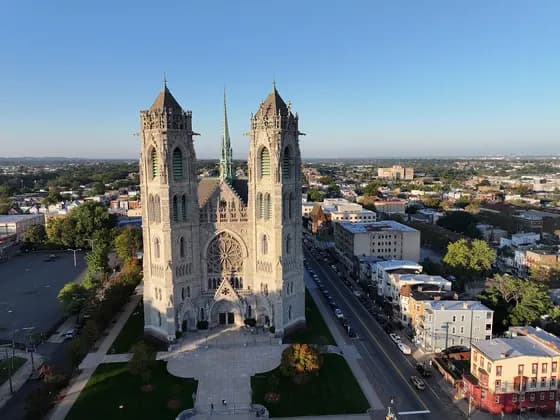
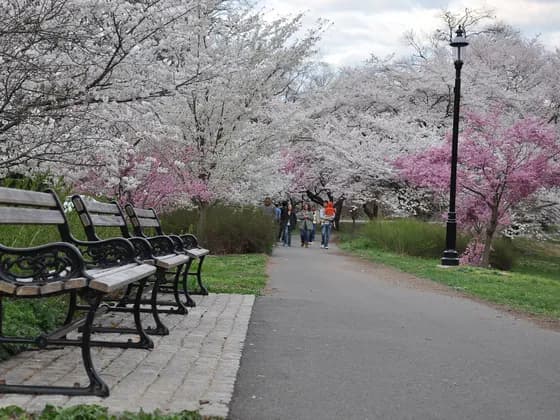
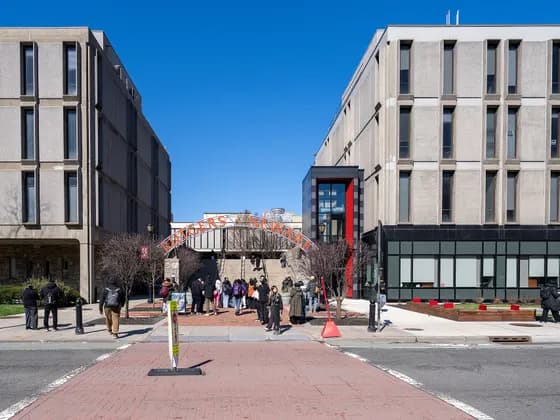
Photo: Hudconja · CC BY-SA 3.0 · cropped
Photo: Arttin497 · CC BY-SA 4.0 · Photo: Siddharth Mallya · CC BY-SA 3.0 · Photo: Ajay Suresh · CC BY 4.0
The Rutgers New Jersey Medical School MD program at a glance (2027 entry)
Rutgers New Jersey Medical School (Rutgers NJMS) teaches a four-year MD (Doctor of Medicine) in Newark, New Jersey, with University Hospital as its principal teaching hospital. Its stated mission is to prepare physicians, educators and researchers focused on the health of underserved and vulnerable populations. The class that entered in 2025 had 174 students. The Liaison Committee on Medical Education (LCME), which accredits MD programs in the United States, lists NJMS as fully accredited, with initial accreditation in 1958 and its next accreditation survey due in 2026-27.
The program runs in three phases. Phase 1, the pre-clerkship (preclinical) phase, lasts from July of year 1 to April of year 2 and is graded pass/fail. Its courses are integrated and co-led by basic science and clinical faculty, so each organ system's science, diseases and treatments are taught together. Three courses run alongside them: Patient-Centered Medicine and Health Equity (PCMHE) for clinical skills; Medical Evidence, Discovery and Dissemination (MEDD) for research; and Community Engaged Service Learning (CESL) for community service projects.
Phase 2 starts in April of year 2 with eight clerkships in the main specialties. Before it you must sit Step 1 of the United States Medical Licensing Examination (USMLE), the exam series used for medical licensure in the United States. Phase 3, year 4, prepares you for residency, the specialty training that follows medical school. It adds an acting internship, where you take on much of a first-year resident's role, plus critical care, rehabilitation medicine, electives (the rotations you choose yourself) and a closing Transition to Residency capstone.
This design is recent: the school says it is effective for the Class of 2030, which started in July 2026. Emergency medicine became a third-year clerkship in 2026-27, and a critical care selective joins year 4 in 2027-28. Alongside the standard route there is the Accelerated 3-Year MD for future primary care doctors, plus three dual degrees: an MD-PhD, an MD/MPH in public health and an MD/MBA in business.
NJMS is also in the middle of a merger. It and Rutgers Robert Wood Johnson Medical School are seeking a single LCME accreditation as the Rutgers School of Medicine, with campuses in Newark and New Brunswick. Rutgers has set the LCME site visit for January 11 to 13, 2027 and expects a decision in June 2027 at the earliest. The merged school's charter class is expected to start in summer 2028 and graduate in spring 2032, so a 2027 entrant joins NJMS a year before it. Rutgers says pre-clerkship courses will be identical on both campuses.
| Degree | MD (Doctor of Medicine) |
|---|---|
| Program length | 4 years; 3 years on the accelerated primary care track |
| Class size | 174 students entered in 2025 |
| Main campus | Newark, New Jersey; University Hospital is the principal teaching hospital |
| Teaching style | Integrated courses co-led by basic science and clinical faculty |
| Grading | Pass/fail in years 1-2; Honors to Fail in clerkships |
| Anatomy | Dissection of anatomical donors in year 1; head and neck in year 2 |
| First patient contact | Year 1, through the PCMHE clinical skills course |
| Step 1 timing | After year 2, before clerkships; Class of 2029 deadline April 11, 2027 |
| Accreditation | LCME, full; merged-school decision expected June 2027 at the earliest |
What makes the Rutgers New Jersey Medical School MD program different
University Hospital as your home teaching hospital
University Hospital in Newark is a 519-bed academic medical center. It describes itself as New Jersey's only public academic medical center and the only state-designated Level I trauma center for northern New Jersey. A Level I trauma center is equipped to treat the most serious injuries around the clock. Rutgers says University Hospital stays NJMS's principal teaching hospital under the merger.
A faculty-mentored research project for every student
MEDD opens with a one-week course in year 1 on biostatistics, epidemiology, evidence-based medicine and the main types of research. For the rest of the pre-clerkship phase, your small group works with faculty research mentors. You define a question, write a protocol, weigh research ethics and learn to share science with peers and patients.
Service learning in Newark, required in years 1 and 2
CESL has been required coursework since 2015, with service projects built around the needs of the communities near the campus. In 2024 the school said first- and second-year students must each complete 20 hours, and many log more than 100. Partners include shelters, schools, health departments and faith and community groups.
A three-year MD for future primary care doctors
Students already accepted to the four-year MD can apply for the Accelerated 3-Year MD, committing to internal medicine, medicine-pediatrics, obstetrics and gynecology, pediatrics or psychiatry. Acceptance brings a conditional place in that Rutgers-sponsored residency. Clinical immersion starts in July of year 1, and a primary care preceptorship with a practicing doctor spans years 1 and 2. Year 3 folds in critical care, a sub-internship (acting internship) and Transition to Residency.
Ten Distinction Programs to add a focus
Optional, ungraded Distinction Programs cover artificial intelligence in medicine, bioethics, innovation and entrepreneurship, global health and medical education. Others cover mentorship and peer support (WellMentor), research, service, service for patients with limited English proficiency, and urban health. Each mixes teaching sessions, mentoring, hands-on work and a capstone. Selection is noted on your transcript, diploma and Medical Student Performance Evaluation (MSPE), the school's summary letter sent with residency applications.
How Rutgers New Jersey Medical School teaches medicine
NJMS describes its curriculum as integrated and organized by organ system, with threads that run through every block. Pediatrics and geriatrics is one: when you study the lungs, for example, you meet cystic fibrosis in children and lung cancer in older adults. Other threads across all four years include culturally competent care, patient safety, prevention and interprofessional education (learning with other health professions).
Most pre-clerkship mornings are lectures or active sessions. The Office of Education also describes dedicated integration and assessment weeks built on clinical case discussions, meant to sharpen critical thinking and problem solving.
In the clerkships, teaching moves to wards and clinics, where you work as part of the team. The school plans structured sessions within clerkships that bring basic science back, such as antimicrobial resistance and clinical pharmacology.
The ways you will learn
| Lectures and podcasts | Large-group lectures carry much of each course, with podcasts and e-learning modules for some topics. On the 2026-27 second-year schedule, each unit exam is preceded by a review session using an audience response system, so the class answers questions live. |
|---|---|
| Team-based learning (TBL) | You prepare before class, then apply the material to problems with your team. TBL sessions appear throughout the 2026-27 schedules, from anatomy to sleep medicine and adult psychiatry. |
| Flipped classrooms and case-based learning | In a flipped classroom you learn the material beforehand and use class time to apply it. Case-based learning (CBL) sessions have you reason through patient problems in small groups. |
| Clinical skills with standardized patients | Clinical skills are taught in small groups with standardized patients, people trained to act as patients, and with simulation. Objective structured clinical examinations (OSCEs) test these skills in timed stations, each a single clinical task. |
| Anatomy lab | Morning dissection sessions of about three hours in year 1, then head and neck dissection and gross brain labs in year 2. |
| Clerkship teaching | You learn through bedside teaching, didactic sessions and case discussions, and some clerkships add simulation and skills labs. |
A typical week on the Rutgers New Jersey Medical School program
The fall 2026 first-year schedule shows how a week works. After orientation come almost two weeks of full-day PCMHE and a week of MEDD ending in an exam. From mid-August, course sessions fill the mornings, roughly 8 or 9 am to noon, and most weeks include a PCMHE afternoon from 1 to 5 pm. Mandatory sessions include dissections, team-based learning and exams.
A sample week from early October 2026 had Cells to Structure lectures on Monday and Tuesday mornings, thorax dissection on Wednesday and Thursday mornings, and a case-based or team-based session on Friday. Beyond the schedule, the school expects an average of 2 hours a week on MEDD and CESL, and an average of four half-days a week of experiential learning or independent study.
A policy effective from July 27, 2026 caps required pre-clerkship activities at an average of 30 scheduled contact hours a week. That count includes lectures, small groups, clinical experiences and required pre-reading, video review or self-directed learning, but not independent study.
How anatomy is taught at Rutgers New Jersey Medical School
Anatomy is taught by dissecting anatomical donors, people who gave their bodies for teaching, starting in Cells to Structure in mid-August of year 1. There you study gross and developmental anatomy alongside genetics, cell biology, histology and embryology. The fall 2026 schedule has two dissection sessions each for the upper limb, lower limb, thorax and abdomen, a pelvis and perineum session, histology and ultrasound labs, and two lab practical exams.
In the thorax, abdomen and pelvis weeks, a Friday case-based or team-based session follows the lab work. Anatomy returns in year 2, when the gastrointestinal and endocrine courses open with anatomy and histology sessions. Nervous System and Behavioral Health teaches head and neck anatomy through dissection, with gross brain labs that link brain structures to neuroimaging. Its 2026-27 schedule also had anatomy team-based sessions, an anatomy practical, an anatomy memorial and an escape-room session alongside the second gross brain lab.
When you first meet patients at Rutgers New Jersey Medical School
Clinical skills start in the first week of classes. PCMHE leads off year 1 with a concentrated block and runs through the whole pre-clerkship phase, covering professionalism, ethics, communication, interviewing, physical examination, clinical reasoning, health systems science and health equity. It includes experiences in hospitals, outpatient clinics and community settings.
The 2025-26 first-year spring schedule, the latest the school has published, also ran a PCMHE Community Preceptorship from February to May. A fifth of the class took part each weekday afternoon. The school's page for volunteer physicians, unchanged since at least 2021, describes a student working a half-day a week in a physician's office, practicing history taking and examination.
In year 2, the 2026-27 schedule adds patient interview sessions inside the organ-system courses, plus ultrasound sessions. There are also interprofessional education (IPE) afternoons in groups of about one-eighteenth of the class. Full-time clinical work starts after a Transition to Clerkship Week in April of year 2.
Students also run the Student Family Health Care Center, set up in 1967 and overseen by the family medicine department. It cares for uninsured and underinsured people in Greater Newark and residents of local homeless shelters.
The Rutgers New Jersey Medical School curriculum, year by year
- Year 1 (Phase 1)
Foundations, then the first organ systems
Year 1 runs from late July to late May. After orientation and the opening PCMHE and MEDD weeks come two foundation courses in the fall and four organ-system courses after winter break. The summer after year 1 is free for research, work or a break.
- MEDD 1, a one-week course in August that ends in an exam and launches your faculty-mentored group research project.
- Cells to Structure, from mid-August to late October: genetics, molecular and cell biology, histology, embryology and anatomy with dissection, with three multiple-choice exams and two lab practicals. The White Coat Ceremony falls during this course.
- Concepts in Biomedical Sciences, from late October to the December break: pharmacology, immunology and the causes of infectious disease, with two exams.
- Musculoskeletal, Skin and Hematologic Systems, the first organ-system course, which also introduces rheumatologic disease, toxicology and environmental exposures.
- Cardiovascular System, Pulmonary System and Renal System, three separate courses on normal function, disease mechanisms, pathology and treatment. Renal closes the year by connecting the earlier systems.
- PCMHE 1 and CESL 1 run all year alongside the courses.
- Year 2 (Phase 1)
Three organ systems and Step 1
Year 2 runs from late July to April, with three organ-system courses: the gut, the endocrine and reproductive systems, and the brain and behavior. On the curriculum map, the year ends with a Year 2 OSCE and the Comprehensive Basic Science Examination (CBSE), a cumulative readiness exam. In the 2026-27 schedule the CBSE came in October, after the endocrine and reproductive course, and the year closed with the OSCE and a mock exam. Dedicated Step 1 study time and a Transition to Clerkship Week in April follow.
- Gastrointestinal System: a review of normal anatomy and physiology, then diseases of the esophagus, stomach, intestines, liver, biliary system and pancreas in children and adults, and the drugs that treat them.
- Endocrine and Reproductive Systems: hormones across the stages of life, sexual health and reproductive disease. The 2026-27 schedule included workshops on pregnancy complications and on fertilization through birth.
- Nervous System and Behavioral Health: head and neck anatomy, clinical neuroscience and the neurological exam, and the major neurological and psychiatric disorders, ending with a multi-system review before Step 1 study.
- PCMHE 2, MEDD 2 and CESL 2 continue alongside the courses.
- In the 2026-27 schedule, the last week before Step 1 study included asepsis training, preparation for sterile work on the wards.
- Year 3 (Phase 2)
Eight core clerkships
Phase 2 runs from April to April. On the curriculum map the eight clerkships form two groups of four, with an Integrative Week between them. You can also take up to 6 weeks of electives in two-week blocks.
- Internal medicine, 8 weeks: six weeks of inpatient medicine and two weeks on a subspecialty service. The inpatient weeks are split between an affiliate site and a tertiary medical center, a hospital that takes referrals for specialized care.
- Surgery, 8 weeks at two sites, with three on-call shifts per four-week block. Teaching includes weekly sessions, case discussions and skills labs in suturing, knot-tying and sterile technique. You can also attend morbidity and mortality conferences, which review complications and deaths, and tumor boards, where teams plan cancer care.
- Pediatrics, 6 weeks, from newborns to adolescents, with introductions to neonatology and pediatric emergency medicine. Obstetrics and gynecology, 6 weeks, introduces maternal-fetal medicine, gynecologic oncology and reproductive endocrinology and infertility.
- Family Medicine and Primary Care, 4 weeks of outpatient care across the lifespan, including patient education, motivational interviewing and preventive screening.
- Emergency medicine, 4 weeks: you take ownership of patients under supervision, follow them through the department and perform procedures such as wound care, vascular access and splinting, plus point-of-care ultrasound.
- Neurology, 4 weeks, inpatient and outpatient, with flipped classes aligned with American Academy of Neurology guidelines. Psychiatry, 4 weeks, covers inpatient and emergency services plus consultation-liaison, the psychiatric care of patients admitted under other services.
- Year 4 (Phase 3)
Acting internship, critical care and electives
Year 4 runs from May to May and centers on your career choice. You sit Step 2 CK, the second USMLE exam, by a December deadline, and Match Day, when you learn where you will do residency, falls in March. A Graduation OSCE is also required to graduate.
- Acting internship or sub-internship, 4 weeks, in a specialty that fits your first year of residency. You are the point person for your patients, reporting one-on-one to a resident and an attending physician.
- Critical care selective, 4 weeks, from 2027-28: you join an intensive care team in a surgical, medical or pediatric unit, with supervised patient care, lectures and case-based learning.
- Rehabilitation medicine (physical medicine and rehabilitation), 2 weeks: assessing function, disability and rehabilitation needs with common functional measurement tools.
- Transition to Residency capstone, 2 weeks: specialty-specific preparation and an OSCE on transitions of care and informed consent. You also earn the Institute for Healthcare Improvement (IHI) basic certificate in quality and safety and work through podcasts, such as one on writing orders.
- Electives, mostly in four-week blocks; 20 elective weeks are required across years 3 and 4.
How you are assessed at Rutgers New Jersey Medical School
Under the grading policy approved in July 2026, Phase 1 is pass/fail: your transcript shows Pass or Fail for each course in years 1 and 2. The school also records a numerical grade, kept off the transcript, to compare performance within and across courses. Courses are examined mainly through unit exams, with lab practicals in anatomy, and every pre-clerkship course must give you formative feedback, such as practice questions or post-exam reviews, by its midpoint.
Cumulative or readiness exams sit on top of course exams. They include the CBSE, which the curriculum map places at the end of year 2, and cumulative Customized Assessment Services exams from the National Board of Medical Examiners (NBME). The school uses them for promotion and Step 1 preparation. You must clear every pre-clerkship requirement before starting clerkships. Only one remediation, the make-up work assigned after a failure, is allowed per course, and failing both foundation courses means restarting the curriculum.
Third-year clerkships are graded Honors, High Pass with Distinction, High Pass, Pass or Fail. Each ends with an NBME shelf exam, the national subject exam that schools typically use at the end of a clerkship. Your final score combines clinical components with points converted from your shelf result. In 2026-27, Honors needs at least 90 points and the 65th national percentile on the shelf, and High Pass with Distinction needs 90 points and the 40th percentile.
High Pass needs 80 to 89.99 points and Pass 70 to 79.99, each with at least the 5th percentile on the shelf, or the 2nd for emergency medicine. Each professionalism lapse, such as missing a required session or submitting work late, costs a point, and a professionalism conduct form drops your grade a level. Third-year electives are pass/fail. In year 4, two-week electives and courses are pass/fail and other rotations are graded Honors to Fail. Every clerkship and selective also gives you a narrative assessment.
Students at LCME-accredited MD programs such as NJMS are eligible to sit the USMLE. Step 1 tests whether you understand and can apply the sciences basic to medicine. It has been reported only as pass or fail for exams taken on or after January 26, 2022. Step 2 CK (Clinical Knowledge) tests how you apply clinical knowledge to patient care under supervision.
NJMS requires you to sit Step 1 after completing year 2 and before clerkships, by a class deadline. For the Class of 2029 it is April 11, 2027, the day before their Phase 2 orientation. Step 2 CK comes after all third-year requirements, by a class deadline such as December 6, 2026 for the Class of 2027. You get two attempts at each, and passing both, along with the NJMS Graduation OSCE, is required to graduate.
- In August 2026 the USMLE program announced a move to designated testing dates from January 2029, with Step exams offered less often each year. Its June 2026 announcement had named 2028.
- On the current schedule, a student entering in 2027 would finish year 2 courses around February 2029. Step 1 would be due by about early April 2029, after a dedicated study period whose exact dates are not published. That is within a few months after the switch. Step 2 CK would be due by about December 2030.
- These dates are projections from the 2025-26 and 2026-27 calendars. The USMLE program says it is still working out how applying for and scheduling exams will work, and that it will publish each year's testing dates more than a year ahead.
- Rutgers says assessment and grading decisions for the future Rutgers School of Medicine are under deliberation.
- Time limits: you must finish the pre-clerkship phase within three academic years and the whole MD within six, not counting approved leave, dual degrees or scholars programs.
Rutgers New Jersey Medical School clinical rotations: where you will actually train
Clinical training is based in Newark and northern New Jersey, with University Hospital in Newark as the principal teaching hospital. The 2026-27 clerkship assessment form lists four other sites: Cooperman Barnabas Medical Center in Livingston, Newark Beth Israel Medical Center, Jersey City Medical Center and the East Orange VA Medical Center. Rutgers says each campus of the merged school keeps its principal teaching hospital and all its affiliate teaching sites.
Each clerkship sets its own pattern. Surgery places you at two of University Hospital, Cooperman Barnabas, the VA, Jersey City and Newark Beth Israel, four weeks at each. Team assignments are planned so you do not repeat a service. Psychiatry runs at University Hospital and Newark Beth Israel, and the pediatrics department teaches at both and at Cooperman Barnabas.
Family medicine is taught in community practices: the department's page, which still uses the clerkship's older name, counts more than 40. Sites are assigned by lottery in all four years. You can ask the Associate Dean for Student Affairs for a switch, or ask to move at any time over a learning-environment concern. You arrange your own travel to affiliates, by car, carpool or public transit.
Clerkship hours follow a policy effective April 20, 2026. You work no more than 80 hours a week averaged over four weeks, and no more than 24 hours in a row plus 4 for patient handoffs. You get one day off in seven, averaged over four weeks, and at least 8 hours between duties. There is no overnight call the night before an exam, and call rooms are there if you are too tired to get home safely.
Under an attendance policy approved in April 2026, you cannot be excused from more than 10% of the clinical time in any clerkship, with separate rules for illness and approved conferences. The internal medicine, surgery, obstetrics and gynecology and pediatrics clerkships also allow one flexible day each, approved by the clerkship director, that you do not have to make up.
Newark Beth Israel, established in 1901, is a 665-bed teaching hospital with a pediatric hospital, and psychiatry, pediatrics and surgery all teach students there.
- University Hospital
- Newark Beth Israel Medical Center
An RWJBarnabas Health acute care hospital. The surgery department describes it as a large university-affiliated hospital with busy services such as renal transplant, colorectal and breast surgery, and pediatrics also teaches here.
- Cooperman Barnabas Medical Center (formerly Saint Barnabas Medical Center)
A regional referral and teaching hospital serving Hudson County since 1882. On surgery, students there spend most of their time on one team, with trauma, general surgery and some subspecialties.
- Jersey City Medical Center
A Veterans Affairs hospital in VA New Jersey Health Care offering primary and specialty care. The surgery department calls it slower paced, with general and vascular surgery and plenty of time for teaching.
- East Orange VA Medical Center
Electives, selectives and away rotations at Rutgers New Jersey Medical School
Electives start in year 3. You can take up to 6 weeks of third-year electives as three two-week blocks; in 2026-27 the two-week windows ran from April 2026 to April 2027. Third-year electives are pass/fail and range from anesthesiology, medical toxicology and an introduction to emergency medical services to tuberculosis, trauma surgery, clinical genetics and a global health elective.
In total you need 20 elective weeks across years 3 and 4. Fourth-year electives run mostly in four-week blocks from May to April. The 2026-27 rules limit you to 16 weeks in any one department in a year and count no more than 8 weeks of departmental research toward the degree. Forms for fall electives go out in February of year 3 and are processed in lottery-number order; spring elective forms follow in September.
The 2026-27 fourth-year elective book lists acting internships from internal medicine and pediatrics to neurosurgery and urology. Other options include International Medicine, Global Surgery, a Global Tuberculosis Institute elective, Introduction to Correctional Medicine and Health, Plant-Based Nutrition, and boot camps for surgery and emergency medicine. A child and adolescent psychiatry elective runs at Trinitas Regional Medical Center in Elizabeth.
Away rotations are electives at other medical schools, which NJMS calls externships. You can schedule them in the fall (May to October) or spring (November to April) of year 4, and changes must be made at least four weeks before the start.
Dual degrees and research years at Rutgers New Jersey Medical School
Every student does a research project through MEDD, and there are several ways to go further. The MD with Thesis program adds a year devoted entirely to your own laboratory, clinical or population research. It is run through the Office of the Senior Associate Dean for Research with the Office of Education. The Distinction in Research can be done during the standard years or with a scholars year.
The school's scholars policy lets a research or scholars year extend your degree while you stay enrolled full time. It can sit within an NJMS Distinction Program, an outside program such as the National Institutes of Health (NIH) Medical Research Scholars Program, or an approved project you design with a supervisor. A scholars year earns 4 weeks of elective credit at most.
The MD-PhD program has run since 1994 under NJMS and what is now the Rutgers School of Graduate Studies (formerly the Graduate School of Biomedical Sciences). You complete the first two years of medical school and Step 1, spend three to four years on PhD research, then return for years 3 and 4. A 2021 survey put the average time to graduate at 7.79 years. Students already in the MD can sometimes switch into the MD-PhD, usually after finishing year 2, by contacting the program's co-directors.
The MD-PhD curriculum page, which still lists the previous MD course names, describes two or three lab rotations before you choose a thesis lab. You then pass a qualifying exam built on a research proposal in the format of an NIH F30 fellowship application.
During the PhD, the family medicine department offers weekly preceptorship shifts to keep your clinical skills going. The mandatory Integrated Clinical Experience is a two-week block 6 to 8 weeks before your first clerkship. You see patients, present them on attending rounds and draw up differential diagnoses and management plans under supervision.
Two joint degrees use other Rutgers schools. The MD/MPH with the Rutgers School of Public Health takes five years, and you must be accepted to the MD first. For the MD/MBA you apply separately to Rutgers Business School, before you start or during year 1, for a 60-credit, full-time MBA on the Newark campus.
Facilities and support at Rutgers New Jersey Medical School
Where you will learn
NJMS's Office of Education and registrar are in the Medical Science Building at 185 South Orange Avenue in Newark, and University Hospital is at 150 Bergen Street. Rutgers said in July 2026 that educational and research spaces in the Medical Science Building were being renovated.
The Clinical Skills Center trains and assesses students with standardized patients and runs OSCEs. Its web page, unchanged since at least 2021, describes 12 standardized patient rooms and added mannequin-based simulation. Its contact address is now the NJMS Cancer Center at 205 South Orange Avenue.
Support while you study
The Center for Academic Success and Enrichment (CASE) offers confidential one-on-one and class-wide sessions, by appointment or at weekly walk-in hours. Topics include study strategies, licensing exam preparation, and residency applications and interviews. If you hit academic difficulty, the promotion policy requires you to meet a CASE content specialist and learning specialist and agree on a written academic learning plan.
Student Affairs arranges one-on-one tutoring from fourth-year students for shelf exams and first- and second-year material. A newer Peer Support Program offers emotional support from fellow students alongside professional services. Confidential counseling comes from the Student Wellness Program, run by University Behavioral Health Care staff independently of the school.
Careers in Medicine (CiM) guides your specialty choice from arrival to graduation, with a dedicated team and faculty advisors, and its lunchtime sessions appear in the first- and second-year schedules. In 2026-27, Student Affairs also ran a lunchtime Step 1 Series for second-year students.
Is the Rutgers New Jersey Medical School program right for you?
This program may suit you if
- You want your clinical base to be a public academic hospital: University Hospital in Newark is the principal teaching hospital and northern New Jersey's state-designated Level I trauma center.
- You want to dissect: anatomical donors in year 1, then head and neck dissection and gross brain labs in year 2.
- You would like a faculty-mentored research project from year 1, with the option of a research year, an MD-PhD or a Distinction in Research.
- You want community work built in, through required service learning in years 1 and 2 and a student-run practice for uninsured patients.
- You are sure about primary care and would welcome a three-year MD with a conditional Rutgers residency place.
Things to think about
- Clinical sites are assigned by lottery across Newark, Livingston, Jersey City and East Orange, and you arrange your own travel by car, carpool or public transit.
- You would join NJMS a year before the planned Rutgers School of Medicine charter class, so ask the school how the transition affects your entering class.
- Clerkship grades are tiered and lean on national shelf percentiles: in 2026-27, Honors needed the 65th percentile, and each professionalism lapse cost a point.
- The three-year track asks you to commit to a specialty and a Rutgers residency before you start, with fewer electives and a shorter summer.
Rutgers New Jersey Medical School MD program — frequently asked questions
Applying to Rutgers New Jersey Medical School?
How to get into Rutgers New Jersey Medical School
Prerequisites, MCAT, AMCAS personal statement, secondaries and interview, step by step.
Open the guide →Rutgers New Jersey Medical School admissions profile
MCAT and GPA profile, acceptance rate, interview format and key dates.
See the profile →Compare Rutgers New Jersey Medical School with other schools
Put the teaching style, anatomy teaching and clinical sites next to another school.
Open the comparison →Prepare for the Rutgers New Jersey Medical School interview
Format breakdown, school-specific sample questions and prep tips from tutors who interviewed here.
Read the guide →Where this Rutgers New Jersey Medical School program guide came from
This guide was written from 65 official sources — Rutgers New Jersey Medical School's own program pages and curriculum documents, plus the accreditor and the hospitals and health systems the school trains students in where they publish detail — read on 2026-10-31, then checked claim by claim against those sources.
- NJMS Curriculum at a Glance, effective for the Class of 2030 (Rutgers NJMS Office of Education)
- Office of Education: mission, curriculum themes, threads and teaching formats (Rutgers NJMS)
- Education overview, older version of the curriculum page (Rutgers NJMS)
- Rutgers NJMS MD Program Class of 2030 curriculum overview (PDF)
- Pre-Clerkship: First Year Classes (Rutgers NJMS)
- Year Two Courses (Rutgers NJMS)
- Third Year Courses: the eight core clerkships (Rutgers NJMS)
- Fourth Year Courses (Rutgers NJMS)
- Transition to Residency (T3) (Rutgers NJMS)
- Rutgers NJMS Academic Calendar 2026-2027 (PDF)
- Rutgers NJMS Academic Calendar 2025-2026 (PDF)
- M1 Fall 2026 Block Calendar (PDF)
- 2026-2027 Rutgers NJMS M2 Block Schedule (PDF)
- Rutgers NJMS First Year Spring Schedule, AY 2025-2026 (PDF)
- Rutgers NJMS Student Handbook, Student Policy Section: promotion, USMLE, grading, hours, site assignment, assessment and scholars policies (PDF)
- Introduction to Clinical Years: Student Guide 2026-2027 (PDF)
- Electives for Third Year Students 2026-2027 (PDF)
- NJMS Elective Courses 2026-2027, Fourth Year (PDF)
- Graduation Requirements (Rutgers NJMS Office of the Registrar)
- Clinical Skills and Simulation: The Clinical Skills Center (Rutgers NJMS)
- Community Preceptorship, information for volunteer preceptors (Rutgers NJMS)
- Distinction Programs (Rutgers NJMS)
- Accelerated 3-Year MD Program (Rutgers NJMS)
- Accelerated 3-Year Primary Care MD Program FAQ (PDF)
- Rutgers NJMS Accelerated 3-Year MD Program Fall 2026 curriculum diagram (PDF)
- NJMS MD-PhD Program: Program Curriculum
- NJMS MD-PhD Program: Clinical Activities During the PhD Phase
- NJMS MD-PhD Program: History and Training Outcomes
- NJMS MD-PhD Program: Alternate Pathway, switching from the MD to the MD-PhD
- Rutgers Creates School of Graduate Studies (Rutgers University news, April 6, 2017)
- Joint Degree Programs: MD/MPH Program (Rutgers NJMS)
- Joint Degree Programs: MD/MBA Program (Rutgers NJMS)
- Joint Degree Programs: MD with Thesis Program (Rutgers NJMS)
- Discover New Jersey Medical School, admissions pamphlet updated May 2026 (PDF)
- Explore, Serve and Learn: Rutgers New Jersey Medical School Opens Its Doors to the Community (Rutgers Health news, May 2024)
- Department of Family Medicine: Message From the Chair (Rutgers NJMS)
- Core Surgery Clerkship: Clerkship Structure and Site Information (Rutgers NJMS Department of Surgery)
- Psychiatry and Neurology Clerkship (Rutgers NJMS Department of Psychiatry)
- Department of Pediatrics: Message from the Chair (Rutgers NJMS)
- Center for Academic Success and Enrichment (CASE): Academic Support (Rutgers NJMS)
- Tutoring Services (Rutgers NJMS Office of Student Affairs)
- Peer Support Program (Rutgers NJMS Office of Student Affairs)
- Student Wellness (Mental Health) Program (Rutgers NJMS Office of Student Affairs)
- NJMS Careers in Medicine (CiM)
- University Hospital, Newark: home page
- Newark Beth Israel Medical Center (RWJBarnabas Health)
- Cooperman Barnabas Medical Center, Livingston (RWJBarnabas Health)
- Jersey City Medical Center (RWJBarnabas Health)
- East Orange VA Medical Center, VA New Jersey Health Care
- Trinitas Regional Medical Center, Elizabeth (RWJBarnabas Health)
- LCME directory of accredited programs
- USMLE Designated Testing Dates Information Hub
- Updated Timeline for USMLE's Designated Testing Dates: Transition Will Take Place in January 2029
- USMLE Designated Testing Dates FAQs
- USMLE Step 1 Transition to Pass/Fail Only Score Reporting
- USMLE Step 1
- USMLE Step 2 CK
- USMLE Bulletin of Information: Eligibility
- NBME Clinical Science Subject Exams
- Our Future: Rutgers School of Medicine (Rutgers Health)
- About the Medical School Integration: curriculum, FAQs and single accreditation (Rutgers Health)
- The Process: Medical School Integration timeline (Rutgers Health)
- Integration Update: December 2025 (Rutgers Health)
- Spotlighting the 2026 Integration Summit (Rutgers Health, July 2026)
- Rutgers Board of Governors Approves Single Medical School Accreditation (Rutgers Health, July 2023)
Curricula are restructured between cycles. Anything here that decides your application — how anatomy is taught, a clinical campus assignment, a required research year — should be confirmed against the official page for your entry year.
Applying to Rutgers New Jersey Medical School?
We help US applicants with MCAT strategy, the AMCAS personal statement, secondary essays and interview prep — everything you need for a competitive Rutgers New Jersey Medical School application.