
The USC Floyd School of Medicine MD program
What you actually study, and where you will be
USC Floyd School of Medicine's MD is a 4-year program with an integrated curriculum, with patient contact from Year 1 and clinical rotations in Columbia, the Midlands and Florence in the Pee Dee (2027 entry). USC Floyd's MD opens with two pass/fail classroom years in Columbia. Year 1 brings a combined anatomy course, physiology and molecular medicine; year 2 works through organ-system blocks. Ultrasound runs through all four years, starting in first-year anatomy. Years 3 and 4 are clinical, in Columbia's Prisma Health hospitals and Dorn VA Medical Center or, for up to 20 a class, the Florence Regional Campus.
- Degree
- MD
- Length
- 4 years
- Teaching
- Integrated
- Clinical contact
- Year 1

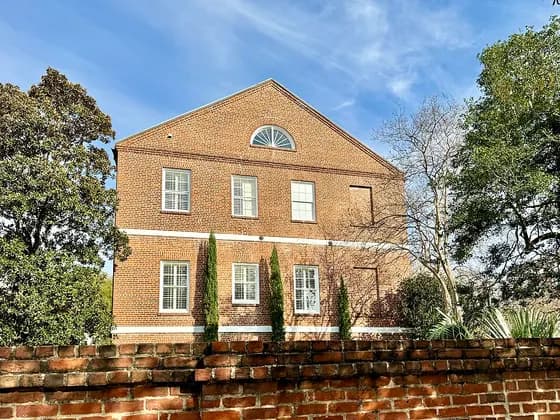

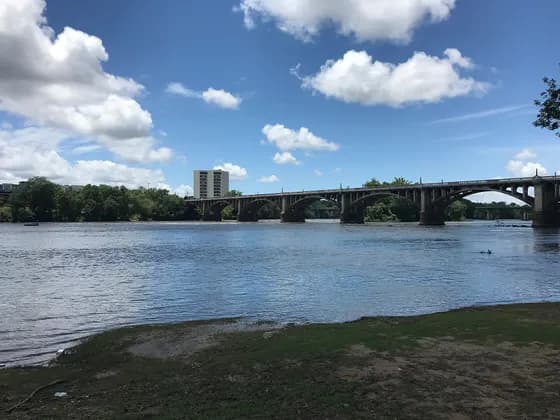
Photo: w_lemay · CC BY-SA 2.0 · cropped
Photo: w_lemay · CC BY-SA 2.0 · Photo: Thomas Kirchel · CC BY-SA 4.0 · Photo: Dr. Blazer · CC BY-SA 4.0
The USC Floyd School of Medicine MD program at a glance (2027 entry)
The University of South Carolina Kay and C. Edward Floyd, M.D. School of Medicine (USC Floyd School of Medicine) offers a four-year MD in Columbia, South Carolina. Until May 22, 2026, it was known as the University of South Carolina School of Medicine Columbia. That day it was renamed in honor of the late surgeon and longtime USC trustee Dr. C. Edward Floyd and his wife, Kay. Its first class, of 24 students, started in fall 1977.
The program has two halves. Years 1 and 2 are the pre-clerkship phase of classroom and lab teaching, graded pass/fail. Year 1 covers the healthy body and year 2 covers disease, one organ system at a time. Years 3 and 4 are clinical: clerkships, the core rotations in each main specialty, then an acting internship and electives you choose. On an acting internship you take primary responsibility for your own patients on a ward team.
Ultrasound runs through the whole program. The school has taught it in all four years since 2006 and counts itself among the first medical schools in the country to do so. You first scan standardized patients, community members trained to act as patients, in first-year anatomy. Clinical skills start in year 1 too, including a clinical preceptorship, in which a practicing clinician supervises you in a clinical setting.
For years 3 and 4, most students stay in Columbia, at Prisma Health hospitals and the William Jennings Bryan Dorn VA Medical Center. Up to 20 students a class instead train at the Florence Regional Campus, in the Pee Dee region of northeastern South Carolina, on the same curriculum. Classes are capped at 105. Of the 102 students who started in 2026, 78 were South Carolina residents.
The MD is fully accredited by the Liaison Committee on Medical Education (LCME), which accredits MD programs in the United States. Its directory, updated November 13, 2026, lists 1976 as the school's first year of accreditation and 2026-27 for the next survey. Accreditation makes you eligible, as an MD student, for the United States Medical Licensing Examination (USMLE). You must pass its Step 1, on the sciences behind medicine, and Step 2 Clinical Knowledge (CK) to graduate.
| Degree | MD (Doctor of Medicine) |
|---|---|
| Program length | 4 years; up to 6 allowed, not counting dual-degree time |
| Class size | Capped at 105; 102 students started in 2026 |
| Main campus | VA Campus in Columbia, on the Dorn VA Medical Center grounds |
| Teaching style | Integrated courses: combined anatomy in year 1, organ-system blocks in year 2 |
| Anatomy | Cadaver dissection in the fall of year 1 |
| First patient contact | Year 1: standardized patients and a clinical preceptorship |
| Clinical campuses | Columbia for most students; Florence for up to 20 a class |
| Grading | Pass/fail in years 1 and 2; letter grades A to F in year 3 |
| Step 1 timing | By late June of year 2; pass required for promotion to year 3 |
What makes the USC Floyd School of Medicine MD program different
Ultrasound in all four years, from anatomy lab to bedside
Ultrasound is taught within existing courses and clerkships, focused on what each one needs, starting with scans of normal anatomy in year 1. On clerkships, hand-held scanners are available in internal medicine, family medicine and pediatrics, and ultrasound features in some end-of-clerkship exams.
A smaller clinical campus in Florence
A small group from each class spends years 3 and 4 at the Florence Regional Campus. The school describes most learning there as unopposed. You work directly with attending physicians, the senior doctors in charge, with no residents (doctors in specialty training) in that specialty ahead of you. Sites include two tertiary care hospitals (hospitals that take referrals for specialist care) and a large community health center.
Nutrition taught every year, plus a cooking elective
Nutrition runs through every year: about 25 hours of teaching in year 1, 20 in year 2 and 40 in year 3. Topics run from metabolism and food insecurity to counseling patients about diet, and clerkships include online nutrition case studies. Since 2020 the school has offered a hands-on Culinary Medicine elective in year 4.
A scholarly requirement that can be creative
The scholarly activity every student must now complete does not have to be lab research. A creative work on a health theme that engages the community, such as a play or a mural, also counts.
An AI in Medicine track with USC's engineering college
Each summer between years 1 and 2, the school picks 10 students for an extracurricular AI in Medicine track. It is run with the USC Molinaroli College of Engineering and Computing and the USC AI Institute. From year 2 to year 4, lectures and projects cover language methods, predictive analytics and imaging interpretation, matched to what you know of medicine at each stage.
How USC Floyd School of Medicine teaches medicine
Years 1 and 2 are taught on the school's campus in Columbia as what the school calls a series of integrated courses. Year 1 merges gross anatomy, histology (microscopic anatomy), neuroanatomy and embryology into one fall course. Year 2 folds pathology, microbiology, immunology and pharmacology into blocks on each organ system. In each block you learn how diseases develop, how they present and how they are diagnosed and treated.
Two courses run beside the science in both years, numbered I in year 1 and II in year 2. Introduction to Clinical Medicine (ICM) covers interviewing, the physical exam, ethics, prevention and how health care is delivered. Application of Clinical Evidence (ACE) teaches you to read and judge research.
From year 3, teaching moves to wards and clinics. You learn as a member of the care team on teaching rounds, in conferences and through supervised patient care, with lectures and case-based study alongside. Ultrasound teaching continues in five clerkships through image reviews, bedside scanning rounds and supervised scanning of patients.
The ways you will learn
| Lectures | Lectures are a main format in the science courses. Molecular Foundations of Medicine is mainly lecture-based, with clinical correlation sessions. In year 2, lectures and small-group sessions linking disease to clinical cases use ultrasound images to show what disease looks like on a scan. |
|---|---|
| Ultrasound labs | Formal labs within courses teach a set of scans on standardized patients, simulators and phantoms (practice models), with open labs for extra practice. Ultrasound OSCEs (Objective Structured Clinical Examinations) check your technique. An OSCE is a practical exam in which you carry out set tasks and are scored on a checklist or by clinical raters. |
| Standardized patient sessions | In ICM small groups you interview and examine standardized patients, who are trained to portray the same case consistently for every student. The early focus is on teaching rather than grading, and the standardized patient often gives you feedback during the session. |
| Problem-based learning | ICM also uses problem-based learning, in which a small group works through a patient case and decides what it needs to learn. In the spring of year 2, a series of these exercises pulls the first two years together to prepare you for clerkships. |
| Evidence small groups | ACE trains you in evidence-based medicine: framing a clinical question in the PICO format (patient, intervention, comparison, outcome), searching the literature and appraising studies with classmates. |
A typical week on the USC Floyd School of Medicine program
School policy caps scheduled activity in years 1 and 2 at an average of 28 hours a week. That includes lectures, labs, small groups, problem-based learning and assigned self-directed modules. A lecture hour is 50 minutes plus a 10-minute break. Attendance is highly recommended, and course directors can make sessions mandatory.
The 2026-27 calendar set first-year orientation for July 27 to 31, ending with the White Coat Ceremony, and classes from August 3. Fall finals run to December 11 and spring finals to May 14, with a week of spring break in March.
On clerkships, duty hours, which include time on call in the hospital, are capped at 80 a week averaged over four weeks. You get at least one day in seven free on average. A continuous shift may not exceed 24 hours, plus up to four more for rounds and teaching.
How anatomy is taught at USC Floyd School of Medicine
Anatomy is taught in one 12-credit course, Foundational Medical Anatomy, in the fall of year 1. It combines gross anatomy, neuroanatomy, histology and embryology, taught region by region and tied to clinical medicine. Methods include lectures, case discussions, ultrasound and cadaveric dissection.
In the lab you perform dissections and also study prosections, specimens already dissected to display particular structures, working through the whole body region by region. The bodies come from donors in the school's Gift of Body program, whom the course treats as students' first patients. For histology you use slides, digitized images and electron micrographs, and imaging teaching covers cross-sectional anatomy.
You are assessed through written multiple-choice and essay exams, lab practical exams, an oral presentation and an OSCE. Later in the program, a Clinical Anatomy elective lets you propose your own plan of study, which normally includes several more dissections.
When you first meet patients at USC Floyd School of Medicine
Patient contact starts in year 1 with standardized patients. In the fall you scan them in anatomy's ultrasound labs. In ICM you practice interviewing and the mental status exam on them, then learn the full physical exam in the spring.
ICM I also includes the clinical preceptorship, and you write reflection papers about it. In year 2, ICM II objectives include talking with real patients, breaking bad news and learning breast, pelvic, pediatric and male genitourinary exams.
Full-time clinical work begins in July of year 3, after you have sat Step 1. From then on you are part of hospital and clinic teams every day. You log the patients you see, and your clerkship director reviews that log with you at a mid-rotation feedback meeting.
The USC Floyd School of Medicine curriculum, year by year
- Year 1
The healthy body
Year 1 is pre-clerkship and graded pass/fail. Anatomy fills the fall, and physiology and molecular medicine fill the spring, with ICM and ACE running all year. Ultrasound labs sit inside the science courses.
- Fall: Foundational Medical Anatomy (12 credits), with formal ultrasound labs on the heart, liver and gallbladder, kidneys and bladder, shoulder and knee, and the neck.
- Spring: Medical Physiology (7 credits), covering every organ system except the central nervous system. Its ultrasound labs use Doppler to show blood flow, link heart sounds to valve closure and show how shock looks on a heart scan.
- Spring: Molecular Foundations of Medicine (8 credits) covers biochemistry, molecular biology and genetics. It is tested by school exams and a biochemistry exam from the National Board of Medical Examiners (NBME).
- ICM I (3 credits in the fall, 4 in the spring): interviewing, the mental status and physical exams, healthy lifestyles, child development and sexual history. It also covers caring for LGBT patients and patients with disabilities.
- ACE I (1 credit each semester): biostatistics and study design, so you can interpret the evidence behind clinical decisions.
- Year 2
Disease, one organ system at a time
Year 2 is still pass/fail and is organized in organ-system blocks, each ending with an NBME final exam. The year ends in May with ICM and ACE finals. Then come the Comprehensive Basic Science Exam (CBSE), an NBME exam whose score predicts a Step 1 pass, and Step 1 itself.
- Fall: General Principles (6 credits), then Cardiovascular/Renal (5), Pulmonary (2), Hematology (3) and Musculoskeletal (2), which also covers skin disease.
- Spring: Gastrointestinal (3), Endocrine/Reproduction (4), Neuroscience (6), which includes psychiatric disorders, and Integrated Disease (2), a case-based review of infections and antimicrobials across all organ systems.
- ICM II (2 credits each semester): advanced physical diagnosis, psychiatric and developmental problems, radiology and lab tests, ethics and interprofessional teamwork.
- Ultrasound labs inside the blocks: echocardiography, the aorta and inferior vena cava, a rapid scan for shock, and leg-vein scans for clots. Spring adds guided procedures on phantoms and pelvic and scrotal scans.
- ACE II (1 credit each semester): appraising studies, plus weekly cases that combine physiology, pathology, microbiology, immunology and pharmacology.
- In the 2026-27 calendar, ICM and ACE finals run May 3 to 6. The CBSE is on May 10 and 11, and the Step 1 deadline is June 25.
- Step 1 Preparation (0 credits), listed in the 2026-27 bulletin: a designated study period that ends with sitting Step 1. You must pass Step 1 to pass the course.
- Year 3
Core clerkships
Year 3 is the core clerkship year, with letter grades. Orientation is at the end of June and rotations start in early July. The 2026-27 calendar splits the year into two 24-week halves. One covers internal medicine with neurology, obstetrics and gynecology and psychiatry; the other covers surgery, pediatrics and family medicine.
- Internal Medicine/Neurology (12 weeks): 4 weeks of inpatient general medicine, 4 of a subspecialty elective, 2 of ambulatory medicine, and 2 of neurology consults and clinics.
- Surgery (8 weeks): general and vascular surgery, trauma and critical care. You learn wound care and suturing, including in a suture lab, and assist in the operating room.
- Pediatrics (8 weeks): 4 weeks on the general ward, including the pediatric ICU and hematology/oncology, and 2 in clinic. It also includes a week in the newborn nursery and developmental pediatrics, with home visits, and a week of subspecialty and community pediatrics.
- Family Medicine (6 weeks): 2 weeks at the Family Medicine Center at Prisma Health Richland or at the Florence Regional Campus, and 2 on the inpatient service. Another 2 are in a community family physician's office, in settings from rural to urban.
- Obstetrics and Gynecology (6 weeks): 3 weeks of obstetrics, including a week of day shifts and a week of nights on labor and delivery. The other 3 weeks are gynecology, split evenly between the operating room and clinics.
- Psychiatry (6 weeks): 3 weeks on an inpatient unit and 3 in outpatient or subspecialty settings. You attend an Alcoholics Anonymous meeting and record an interview for faculty review.
- Two one-week electives sit inside the 8-week family medicine block, and a one-week intersession falls in March or early April.
- Year 4
Acting internship, electives and the move to residency
Year 4 is 40 weeks of four-week rotations, worth 32 credits. Four blocks are required and the rest are electives. In the 2026-27 calendar, Match Day, when residency places are announced, falls on March 19, and commencement on May 6.
- Acting internship (4 weeks): mostly inpatient, with night call, in family medicine, internal medicine, intensive care, obstetrics and gynecology, pediatrics, psychiatry, surgery or neurology. With approval, you can do it as an away rotation, at another school or hospital.
- Critical care rotation (4 weeks): emergency medicine, an intensive care unit or anesthesia.
- USMLE Step 2 Preparation (4 weeks): protected study time with your own plan. You get credit only if you pass Step 2 CK on the first attempt.
- Capstone: Transition to Residency (4 weeks), the final block, with workshops on the clinical, medicolegal and management skills you need as a new resident.
How you are assessed at USC Floyd School of Medicine
Years 1 and 2 are graded pass/fail: you pass a course or block with at least 69.5 percent of the available points, and some courses also require a pass in each component. Courses of two weeks or more give feedback, such as quizzes, before the final. Every year 2 block ends with an NBME final you must pass. Fail it and the block is Incomplete until a retake, before the spring semester for fall blocks or by mid-May for spring blocks; fail again and the block must be remediated.
Exam formats include written multiple-choice and essay papers, anatomy lab practicals, OSCEs with standardized patients and NBME subject exams, such as Introduction to Clinical Diagnosis in ICM II. Failed year 1 courses are normally made up at the end of the year. Failing more than eight credit hours, though, means repeating year 1, or only its spring semester if every failure fell then. In year 2, four academic deficiencies (a failed block NBME final at the first attempt, or a failed course or block) mean repeating the year.
Year 3 clerkships are letter-graded from A to F, and every one must include an NBME subject exam, often called a shelf exam, and an OSCE. You need at least the 5th percentile on the NBME's national norms to pass a shelf exam. A failure is retaken the next semester and noted in your Medical Student Performance Evaluation (MSPE), the school's summary letter for residency programs. A July 2026 policy update added an NBME exam for neurology.
Each clerkship sets its own weights. In the 2024-25 handbook, clinical evaluations made up 25 to 50 percent of a grade and the NBME exam 20 to 40 percent. OSCEs and other tasks made up the rest. Your year 3 GPA sets class rank and graduation honors, from cum laude at 3.5 to summa cum laude at 4.0. Acting internships, critical care, Capstone and electives may be graded pass/fail.
You must pass Step 1 and Step 2 CK to graduate, with three attempts at each. Step 1 has been reported pass/fail since January 2022, and Step 2 CK still gets a three-digit score. You sit Step 1 at the end of year 2 and must pass it to be promoted to year 3. If you have sat it by the deadline but are still waiting for the result, you can start your first clerkship, but you are removed from it if you fail.
In August 2026 the USMLE program announced a move to designated testing dates from January 2029, with Step exams offered less often each year. Its first announcement, in June 2026, had named 2028. On the current schedule, a student entering in 2027 would sit Step 1 in about May to June 2029, within a few months after the switch. Their Step 2 CK deadline would fall in December 2030. The USMLE has asked schools to review rules on when students test, so these dates may change.
- Before Step 1 you must reach a target score on the CBSE, set each year and shared by May 1. The CBSE is offered at least three times between year 2 finals and year 3 orientation.
- Miss the CBSE target by year 3 orientation and school policy puts you on administrative leave, so you cannot start clerkships. If you have not reached the target and passed Step 1 by August 1, the leave is automatically extended into the fall semester, and you then have until December 31 to do both.
- Step 2 CK is meant for the end of year 3. Its deadline falls in mid- to late December of year 4: December 18 in the 2026-27 calendar, December 20 in school policy.
- The school encourages you to take Step 2 CK at the end of the four-week preparation block, and early enough for your score to be back when residency applications are released in late September.
- Each core clerkship and the acting internship has a Clinical Skills Attainment Document, a list of skills you must be observed performing. Missing skills leave the clerkship Incomplete.
USC Floyd School of Medicine clinical rotations: where you will actually train
For years 3 and 4 you are based at one of two clinical campuses. Most students stay in Columbia, while up to 20 per class train at the Florence Regional Campus.
Assignment is settled during year 2. You can state a preference, but your preferred campus is not guaranteed. You can also make a binding commitment to do your clinical years in Florence at any time after the campus visit at first-year orientation. Places go first come, first served; if more students commit than there are places, a wait list forms. If needed, a lottery may be held to assign students based on the educational resources of both campuses.
Students facing academic or personal challenges are assigned to whichever campus best supports their success. Two students can agree to swap campuses before April 1 of year 2. If you signed the binding commitment, you can appeal your assignment until February 1 of year 2, citing circumstances beyond your control or undue hardship.
In Columbia, core clerkships run at affiliated hospitals, mainly Prisma Health hospitals and the Dorn VA Medical Center, affiliated with the school since 1975. The school's 2024-25 rotations handbook described Prisma Health Richland as a 649-bed teaching hospital serving 17 Midlands counties.
Florence students live in Florence and do their core rotations, an acting internship and a number of electives there. They also sit their shelf exams in Florence. The campus offices are in the Luther F. Carter Center for Health Sciences in downtown Florence. It hosts monthly sessions on medicine, careers, financial literacy, community outreach and scholarship. Columbia students may schedule some year 4 rotations in Florence when space allows.
Base for most students' clinical years. Acting internships run at Prisma Health Richland, the Dorn VA or community sites, and Lexington Medical Center hosts a hospitalist elective.
- Prisma Health Richland
- Prisma Health Baptist
- Prisma Health Children's Hospital-Midlands
- William Jennings Bryan Dorn VA Medical Center
- Family Medicine Center, Prisma Health Richland
- Lexington Medical Center
The school lists two tertiary care hospitals, a large federally qualified health center (a federally funded community health center) and independent specialty practices. Its partner page says HopeHealth has providers in 12 specialties.
- McLeod Regional Medical Center
- MUSC Health Florence Medical Center
- HopeHealth
- Luther F. Carter Center for Health Sciences
Rural medicine electives run in small towns within driving distance of Columbia.
- Community family medicine practices
- South Carolina Area Health Education Consortium (SCAHEC) rotations in year 4
Electives, selectives and away rotations at USC Floyd School of Medicine
Electives begin in year 3 with two one-week electives inside the family medicine block; the emergency medicine and critical care medicine options include supervised ultrasound scanning. Year 4 holds most of the choice: at least four four-week electives, plus two optional four-week blocks.
You build your year 4 schedule in the spring of year 3. You meet a faculty advisor, then enter your choices in the OASIS scheduling system, which allocates rotations by lottery. Up to four rotations can be away rotations, booked through the AAMC's Visiting Student Learning Opportunities service or a similar system. Since a June 2024 change, up to four rotations may be in the same specialty, up from three.
In year 4, rotations at either of the school's clinical campuses, Columbia or Florence, through SCAHEC or at any Prisma Health site in the Midlands or the Upstate count as home rotations. Electives can also be independent study, away electives in the United States and Canada, or international electives. In year 4 you can request at most three days off a required four-week rotation, and five off an elective, for residency interviews and exams.
- Rural Medicine: working in a small-town family physician's office; some sites let you stay in the community.
- Global Health and Primary Care: two weeks of study in the United States, then two weeks of care overseas.
- Culinary Medicine: three-hour sessions in which you role-play patient cases, practice how to talk with patients about food, cook affordable meals in teams and share the meal, based on the Mediterranean diet.
- Centering Pregnancy: you help lead ten two-hour group prenatal visits for 9 to 12 low-risk patients and can be on call to deliver their babies.
- Emergency Medicine Ultrasound: twenty eight-hour emergency department shifts and at least 100 bedside scans.
- Medical Legal Partnership: working with law and social work students on cases referred from Children's Hospital outpatient centers.
Dual degrees and research years at USC Floyd School of Medicine
Every student who entered from fall 2023 onward must complete an approved scholarly activity to graduate. It can be biomedical research, quality improvement and patient safety, community health work or medical education research. A creative work on a health theme that engages the community also counts, such as a play, a mural, a song or a public service announcement. A three-member committee led by a faculty member directs the creative work.
The standard route to meeting the requirement is a formal, peer-reviewed presentation, as presenting or co-presenting author. Discover USC, a hospital research showcase or a state, regional, national or international conference all qualify. In year 4, an extended case report or literature review can also count.
SOAR is a competitive, full-time, eight-week summer research program for students finishing year 1. Students apply in the fall and are matched with faculty mentors; 73 members of the Class of 2029 took part. QUEST teaches quality improvement. After 13 online modules from the Institute for Healthcare Improvement and fall workshops, you join a quality team at Prisma Health or McLeod Health. You are usually paired with a student from another health profession.
PRISM, Praxis in Social Medicine, is a service-learning program on the social determinants of health, guided by faculty and community mentors. Its community partners include the Good Samaritan Clinic, The Free Medical Clinic, Sistercare and Foodshare. The March Seabrook Leadership Program gives selected students leadership coaching, seminars and a mentored project. Meeting its requirements earns graduation with leadership distinction.
For a research career, the MD/PhD track combines the MD with a PhD in biomedical sciences. You must first be admitted to the MD, then interview for the track before year 1 begins. You apply to the PhD separately through the USC Graduate School and must pass Step 1 before starting it. The six-year limit for finishing the MD does not count time spent on a dual degree.
A separate route begins in college: the Accelerated Undergraduate to M.D. program with the South Carolina Honors College. Fewer than 10 students a cohort finish undergraduate requirements in three years and start this MD in their fourth, about seven years in all.
Facilities and support at USC Floyd School of Medicine
Where you will learn
Pre-clerkship teaching takes place on the School of Medicine's campus on the grounds of the Dorn VA Medical Center, in renovated historic buildings. It is about four miles from USC's main Columbia campus. Most clinical departments are at Richland Medical Park in central Columbia.
The Clinical Skills Center, opened in 2014, has ten examination rooms with closed-circuit monitoring from a central control room. There you interview and examine standardized patients through the school's Standardized Patient Program, launched in 1996. The 6,355-square-foot Simulation and Interactive Learning Center is run with the Columbia VA Health Care System. It has high-fidelity mannequins, a working ICU room and a mock operating room with a ventilator.
The Ultrasound Institute, founded in 2006 by Dr. Richard Hoppmann, supports the ultrasound curriculum and runs scanning and simulation sessions for students. A new medical education and research building of more than 300,000 square feet is rising in Columbia's BullStreet District. It is the first part of a 16-acre Health Sciences Campus. At the February 2025 groundbreaking the university expected it to be finished in August 2027. Plans include classrooms, simulation space, an ultrasound lab and a library.
Support while you study
The Student Success and Wellness Center offers one-to-one academic counseling and weekly sessions for many courses led by returning students. It also keeps lists of student tutors, helps you plan for board exams and runs review sessions, for example for the anatomy course, the hematology block and the internal medicine shelf exam.
Licensed counselors provide brief individual counseling in person or online, and you are matched with one who is not tied to your academic program. Florence students have a named counselor they can contact.
Each student has general and specialty career advisors, and incoming students are assigned student mentors in June before they start. Ombudspersons handle reports of mistreatment. In year 4, a residency interview prep panel brings in program directors, and some alumni offer a place to stay during away rotations and interviews.
Is the USC Floyd School of Medicine program right for you?
This program may suit you if
- You want to learn ultrasound from your first semester, scanning standardized patients in anatomy and using hand-held scanners on clerkships.
- You like the idea of a smaller clinical campus: Florence takes up to 20 students a class, with mostly unopposed teaching.
- You prefer pass/fail early years in which pathology, microbiology and pharmacology are taught together, one organ system at a time.
- You care about nutrition and lifestyle medicine, with about 85 hours of nutrition teaching across years 1 to 3 and a Culinary Medicine elective.
- You want room to shape your scholarly work, since quality improvement, community projects and creative work can all meet the requirement.
Things to think about
- Year 1 is built around three large science courses rather than organ-system blocks.
- Step 1 is a firm gate: you need the school's CBSE target to sit it, and a pass to be promoted to year 3.
- Year 3 clerkships are letter-graded, with shelf exams and OSCEs in each, and your year 3 GPA sets class rank and graduation honors.
- Your clinical campus is settled in year 2 with no guarantee of your choice, and a commitment to Florence is binding.
USC Floyd School of Medicine MD program — frequently asked questions
Applying to USC Floyd School of Medicine?
How to get into USC Floyd School of Medicine
Prerequisites, MCAT, AMCAS personal statement, secondaries and interview, step by step.
Open the guide →USC Floyd School of Medicine admissions profile
MCAT and GPA profile, acceptance rate, interview format and key dates.
See the profile →Compare USC Floyd School of Medicine with other schools
Put the teaching style, anatomy teaching and clinical sites next to another school.
Open the comparison →Prepare for the USC Floyd School of Medicine interview
Format breakdown, school-specific sample questions and prep tips for this interview.
Read the guide →Where this USC Floyd School of Medicine program guide came from
This guide was written from 76 official sources — University of South Carolina Floyd School of Medicine's own program pages and curriculum documents, plus the accreditor and the hospitals and health systems the school trains students in where they publish detail — read on 2026-11-12, then checked claim by claim against those sources.
- USC Floyd School of Medicine: M.D. Program
- USC Floyd School of Medicine: Curriculum
- USC Floyd School of Medicine: Pre-Clerkship Curriculum
- USC Floyd School of Medicine: Clerkship Curriculum
- USC Floyd School of Medicine: Integrated Ultrasound
- USC Floyd School of Medicine: Ultrasound Curriculum, year by year
- USC Floyd School of Medicine: Nutrition curriculum
- USC Floyd School of Medicine: Florence Regional Campus
- USC Floyd School of Medicine: Florence clinical partners
- HopeHealth: Family doctors, primary care providers, pediatricians (home page)
- USC Floyd School of Medicine: Florence Regional Campus (curriculum section)
- USC Floyd School of Medicine: About the M.D. Program
- USC Floyd School of Medicine: Our History
- USC Academic Bulletin 2026-27: Floyd School of Medicine overview
- USC Academic Bulletin 2026-27: MD curriculum plan of study
- USC Academic Bulletin 2026-27: Doctor of Medicine (MD) requirements
- USC Academic Bulletin 2026-27: Cell Biology and Anatomy (MCBA) courses
- USC Academic Bulletin 2026-27: Biomedical Science (BMSC) courses
- USC Academic Bulletin 2026-27: Pharmacology, Physiology and Neuroscience (PHPH) courses
- USC Academic Bulletin 2026-27: Medical Topics (DMED) courses
- USC Academic Bulletin 2026-27: Family and Preventive Medicine (FPMD) courses
- USC Academic Bulletin 2026-27: Medicine (MEDI) courses
- USC Academic Bulletin 2026-27: Neurology (NEUR) courses
- USC Academic Bulletin 2026-27: Obstetrics and Gynecology (OBGY) courses
- USC Academic Bulletin 2026-27: Pediatrics (PEDI) courses
- USC Academic Bulletin 2026-27: Neuropsychiatry (NPSY) courses
- USC Academic Bulletin 2026-27: Surgery (SURG) courses
- USC Floyd School of Medicine: Pre-clerkship learning objectives, Fall 2026 (PDF)
- USC Floyd School of Medicine: Pre-clerkship learning objectives, Spring 2027 (PDF)
- USC Floyd School of Medicine: MD academic calendar 2026-27 (PDF)
- USC Floyd School of Medicine policy UME 1.12: USMLE Step policy (PDF)
- USC Floyd School of Medicine policy STA 1.06: assignment to clinical campuses (PDF)
- USC Floyd School of Medicine policy STA 1.07: academic review (PDF)
- USC Floyd School of Medicine policy UME 1.18: M4 academic year (PDF)
- USC Floyd School of Medicine policy UME 1.01: clerkship absence and attendance (PDF)
- USC Floyd School of Medicine policy UME 1.20: academic workload and duty hours (PDF)
- USC Floyd School of Medicine policy UME 1.23: grading system (PDF)
- USC Floyd School of Medicine policy UME 1.11: NBME exams in the M3 year (PDF)
- USC Floyd School of Medicine policy UME 1.10: M1/M2 remediation (PDF)
- USC Floyd School of Medicine policy UME 1.03: requirements for graduation (PDF)
- USC Floyd School of Medicine policy UME 1.08: scholarly requirement (PDF)
- USC Floyd School of Medicine policy UME 1.22: formative feedback (PDF)
- USC School of Medicine Columbia: Student Handbook to Clinical Rotations 2024-25 (PDF)
- USC Floyd School of Medicine student site: M.D. Program (electives and scheduling)
- USC Floyd School of Medicine student site: For MD Students
- USC Floyd School of Medicine student site: New M.D. Student Information
- USC Floyd School of Medicine: Internal Medicine clinical skills and encounters 2026-27 (PDF)
- USC Floyd School of Medicine: Clinical Skills Center
- USC Floyd School of Medicine: Standardized Patient Program
- USC Floyd School of Medicine: Simulation and Interactive Learning Center
- USC Floyd School of Medicine: Ultrasound Institute
- USC Floyd School of Medicine: Ultrasound Institute education programs
- USC Floyd School of Medicine: The new USC Health Sciences Campus
- USC News, February 2025: School of Medicine Columbia breaks ground on new facility
- USC News, May 22, 2026: School of Medicine named in honor of Floyd family
- USC Floyd School of Medicine: Admissions (class size and Class of 2030 profile)
- USC Floyd School of Medicine: Admissions FAQs (campus location)
- South Carolina Honors College: Accelerated Undergraduate to M.D. program
- USC Floyd School of Medicine: M.D./Ph.D.
- USC Graduate Academic Bulletin 2026-27: Graduate combination, dual-degree and joint degree programs
- USC Floyd School of Medicine: SOAR summer research
- USC Floyd School of Medicine: QUEST quality improvement program
- USC Floyd School of Medicine: PRISM, Praxis in Social Medicine
- USC Floyd School of Medicine: March Seabrook Leadership Program
- USC Floyd School of Medicine: AI in Medicine Extracurricular Track
- USC Floyd School of Medicine: Well-Being and Academic Support
- USC Floyd School of Medicine: Student Success
- USC Floyd School of Medicine: School of Medicine Counseling
- USC Floyd School of Medicine: Career Advising
- USC Floyd School of Medicine: Department of Pediatrics
- USC Floyd School of Medicine: LCME Accreditation
- LCME: Directory of accredited MD programs
- USMLE: Designated Testing Dates Information Hub
- USMLE, August 6, 2026: Designated Testing Dates transition will take place in January 2029
- USMLE, June 23, 2026: Transition to limited testing dates each year starting in 2028 (since updated)
- USMLE: Examination results and scoring
Curricula are restructured between cycles. Anything here that decides your application — how anatomy is taught, a clinical campus assignment, a required research year — should be confirmed against the official page for your entry year.
Applying to USC Floyd School of Medicine?
We help US applicants with MCAT strategy, the AMCAS personal statement, secondary essays and interview prep — everything you need for a competitive USC Floyd School of Medicine application.