
The UTMB John Sealy School of Medicine MD program
What you actually study, and where you will be
UTMB John Sealy School of Medicine's MD is a 4-year program with an integrated curriculum, with patient contact from Year 1 and clinical rotations in Galveston, League City, Clear Lake, Angleton and Texas community practices (2027 entry). UTMB's John Sealy School of Medicine teaches its four-year MD from Galveston Island through the Integrated Medical Curriculum, whose first-year courses were revised for the class that entered in 2026. Organ-system courses, dissection and clinical skills training run from August of first year to early spring of second, followed by a dedicated study period for Step 1, the first national licensing exam. On the current calendar, core clerkships, the full-time clinical rotations, start that May at UTMB Health hospitals and with community doctors around Texas.
- Degree
- MD
- Length
- 4 years
- Teaching
- Integrated
- Clinical contact
- Year 1

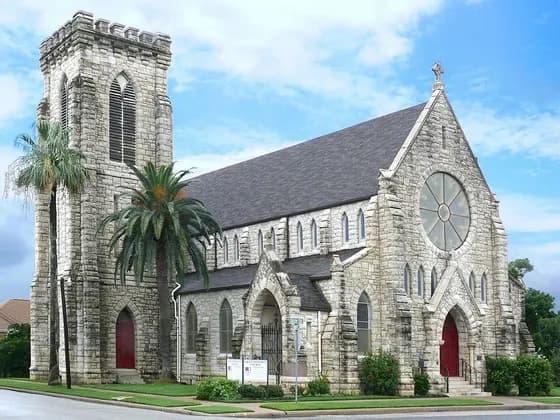
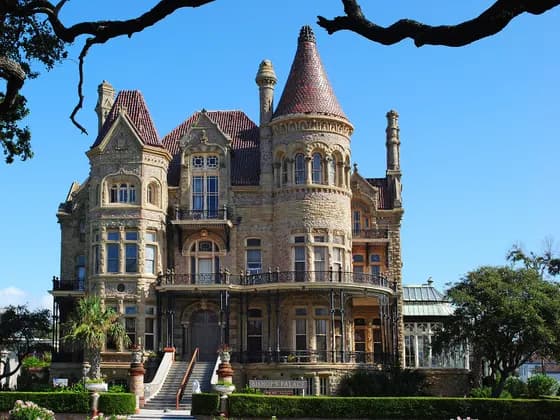
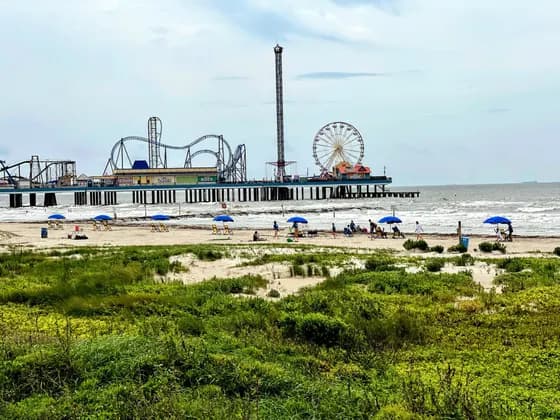
Photo: Jim Evans · CC BY-SA 4.0 · cropped
Photo: Jim Evans · CC BY-SA 3.0 · Photo: Rwminix · CC BY-SA 3.0 · Photo: Devin P Morris · CC BY-SA 4.0
The UTMB John Sealy School of Medicine MD program at a glance (2027 entry)
The University of Texas Medical Branch (UTMB) John Sealy School of Medicine, known for short as UTMB or JSSOM, awards the MD after four years of study based on Galveston Island, Texas. UTMB's history page says it was founded in 1891 as the state's first medical school. About 230 students start each year. The program is called the Integrated Medical Curriculum, and the 2026-27 calendar shows the class that entered in August 2026 taking a revised set of first-year courses.
The pre-clerkship (or pre-clinical) phase runs from August of first year to early spring of second year. Its courses combine the basic sciences for each body system and are taught mostly in small groups. In problem-based learning (PBL) a group researches its way through a patient case. In team-based learning (TBL) you prepare in advance, then solve problems as a team, and case-based learning (CBL) is a more structured case discussion guided by faculty.
Clinical skills start in the first week through the Doctoring and Clinical Skills (DoCS) course. Every pre-clerkship semester includes an OSCE (Objective Structured Clinical Examination), where you move through timed stations, each testing one clinical task. Late in the phase comes a dedicated study period for Step 1 of the United States Medical Licensing Examination (USMLE), the exam series state medical boards use in licensing decisions.
Core clerkships, the full-time rotations in which you work on hospital and clinic teams, begin in May of second year on the current calendar. They run at UTMB Health hospitals in Galveston, League City, Clear Lake and Angleton and with community physicians around Texas. Fourth year adds acting internships (AIs, which some schools call sub-internships), where you take more responsibility for patients on a hospital team. It also has two required selectives (courses you pick from a set list) and electives.
The Liaison Committee on Medical Education (LCME), which accredits MD programs in the United States, lists the program as fully accredited, with its next survey in 2030-31 (directory updated November 13, 2026). The program's accreditation predates the LCME's own founding in 1942. After the LCME's January 2023 survey visit, the school's LCME page listed a full curricular revision among its ongoing work.
| Degree | MD |
|---|---|
| Program length | 4 years, starting with orientation in late July |
| Curriculum | Integrated Medical Curriculum, with revised first-year courses since August 2026 |
| Class size | About 230 students enter each year |
| Main campus | Galveston Island, Texas |
| Teaching style | Organ-system courses taught mainly in PBL, TBL and CBL small groups |
| Anatomy | Dissection in Gross Anatomy and Radiology, first semester of Year 1 |
| First patient contact | Year 1: Doctoring and Clinical Skills from the first day of class |
| Clinical sites | UTMB Health Galveston, League City, Clear Lake, Angleton; community doctors statewide |
| Step 1 timing | Spring of Year 2, in a study period before May clerkships |
What makes the UTMB John Sealy School of Medicine MD program different
Some rotations reach the prison hospitals on campus
UTMB's Correctional Managed Care program, set up with the Texas Department of Criminal Justice in 1994, cares for more than 125,000 patients, about 80% of the state's incarcerated population. Neurology students may rotate through the TDC (prison) hospitals on the Galveston campus, and fourth-years can choose an orthopedic surgery acting internship titled TDC/Trauma.
Outpatient time with community doctors across Texas
Family medicine and pediatrics place you with volunteer community physicians around Texas for outpatient time; pediatrics alone places about 240 third-year students a year.
Eight learning communities named after Galveston streets
Each learning community mixes students from all four years, so peer mentors are often just a step ahead of you. You join through your DoCS small group, so the faculty who coach your clinical skills also advise you on careers and electives. Each community also has its own space.
Scholarly concentrations from aerospace medicine to bilingual care
Optional concentrations add a four-year thread to the MD, recognized at commencement. Eleven are running, among them Aerospace Medicine, which draws on UTMB Health's links with the Johnson Space Center, and Bilingual Health, built around Spanish-language care. Physician Healer spreads about six months of training in reflection and resilience across the four years.
Nutrition built into every phase from fall 2026
UTMB said in June 2026 that it would build 40 hours of nutrition education into the curriculum that fall, the amount a federal Health and Human Services framework recommends. Its plan puts more than 36 contact hours in the pre-clerkship phase and 15 in clerkship objectives, plus electives such as Culinary Medicine.
Global health sites from the Amazon to Sapporo
Through Child Family Health International, UTMB's global health page lists sites for MD students in nine countries. It also lists clinical and research work in Kenya, a research program on emerging infections in Cusco, Peru, supported by UTMB faculty, and a tropical diseases rotation in Lima. Others include the Amazon Hope medical ship near Iquitos and Teine Keijinkai Hospital in Sapporo, Japan.
How UTMB John Sealy School of Medicine teaches medicine
The pre-clerkship phase integrates anatomy, physiology, pathology, pharmacology, microbiology and immunology for each major body system, and every course is interdisciplinary. In the 12-week Cardiovascular, Pulmonary and Renal (CPR) course, for example, you study how the heart, lungs and kidneys together keep blood pressure and fluid balance steady. You then see how those mechanisms break down in common diseases. Courses build on one another, so Dermatology, Musculoskeletal and Connective Tissue (DMC) reuses anatomy, histology, microbiology and pharmacology to explain skin and musculoskeletal disease.
Each course mixes formats in its own way. Neuroscience and Human Behavior (NHB), for example, adds interactive polling, retrieval-based learning (practice at recalling material from memory) and regular formative quizzes, which give feedback without deciding your grade.
DoCS runs alongside the science courses for the whole pre-clerkship phase. It covers history taking, physical examination, clinical reasoning, medical ethics, professional identity formation, preventive health, behavioral medicine and evidence-based medicine, linked to the science courses through case-based learning. It also teaches cultural humility and the social factors that shape health.
From third year you learn mainly on clerkships, in clinics, wards and operating rooms. UTMB's Office of Interprofessional Education and Practice also runs core curriculum activities that bring students of different health professions together, and a nutrition curriculum runs through every phase.
The ways you will learn
| Problem-based learning (PBL) | A small group works through a clinical case over several sessions, using clinical reasoning and self-directed study to apply the basic sciences. You must arrive prepared and contribute throughout, and each case's learning objectives are listed at its end. |
|---|---|
| Team-based learning (TBL) | You prepare thoroughly beforehand because sessions include graded tasks, then work with your team on application exercises whose objectives are set out at the start. Gross Anatomy and Radiology uses TBL to connect anatomy with radiology in clinical scenarios. |
| Case-based learning (CBL) | A structured, faculty-guided small group works through real clinical cases, linking science with clinical reasoning, communication and teamwork. Faculty may lead the discussion or simply facilitate. DoCS uses CBL to connect its clinical topics to the science courses. |
| Lectures, labs and clinical skills sessions | Large-group lectures and laboratory and pathology sessions support the small groups. DoCS sessions build history taking and examination, and learning community faculty run extra sessions where you practice and get feedback in simulated and real settings. |
How anatomy is taught at UTMB John Sealy School of Medicine
You learn anatomy by dissection. Gross Anatomy and Radiology (GAR) runs from the first day of class to mid-December and treats the body you dissect as your first patient. Dissection shows how anatomy varies between people and lets you practice basic clinical skills, while TBL and other exercises pair anatomy with radiology in clinical scenarios.
DMC, which follows in January, applies GAR's anatomy to skin, muscles, bones and connective tissue, and NHB in the spring includes dissection laboratory sessions. The Interprofessional Simulation Center also has six 3D virtual anatomy dissection tables.
Old Red, the red-brick Ashbel Smith Building completed in 1890, is listed on the National Register of Historic Places and survived the Galveston hurricane of 1900. Its top floor held UTMB's gross anatomy laboratory until Hurricane Ike in 2008, when the lab moved out permanently because classes had outgrown the space.
When you first meet patients at UTMB John Sealy School of Medicine
Patient-care skills start in your first week, when DoCS begins teaching you to interview and examine patients. The class that entered in 2026 sits its first two OSCEs in November 2026 and May 2027. Learning community faculty facilitate the DoCS groups.
The Office of Clinical Education oversees community-based and other clinical experiences from the pre-clerkship phase onward. First- and second-years can volunteer at St. Vincent's, a student-run clinic in Galveston.
Optional preceptorships in the summer after first year put you with practicing physicians, and from May of second year clerkships put you on teams full time. In the pediatric outpatient weeks, preceptors are asked to let you see patients on your own after a day or two of shadowing. You take the history, examine the child and present an assessment and plan, and you are encouraged to write notes in the electronic record.
The UTMB John Sealy School of Medicine curriculum, year by year
- Year 1 (Phase 1)
Foundations, dissection and the first organ systems
On the 2026-27 calendar, first year for the class that entered in 2026 runs from early August to early July. Two foundation courses fill the fall, then three organ-system courses carry you into the summer, with DoCS throughout.
- Orientation: July 26 to 28, 2027 on the Galveston campus, compulsory and in person. The 2026 class's White Coat Ceremony fell during orientation week.
- Doctoring and Clinical Skills (DoCS), all year, with an OSCE each semester.
- Gross Anatomy and Radiology (GAR), August to mid-December.
- Molecules to Mechanisms (M2M), mid-August to December: cell and molecular biology, genetics, biochemistry, pharmacology, histology, immunology, microbiology and pathobiology.
- Dermatology, Musculoskeletal and Connective Tissue (DMC), about five weeks in January and February.
- Neuroscience and Human Behavior (NHB), mid-February to early April, joining basic neuroscience with clinical neurology and psychiatry.
- Cardiovascular, Pulmonary and Renal (CPR), 12 weeks from mid-April to early July.
- Ten Student Affairs Professional Identity Formation mornings across the year, about one a month.
- Summer: July 5 to August 27, 2027 is set aside for research, a clinical preceptorship or vacation, with a remediation window in the first two weeks.
- Year 2 (Phase 1)
Remaining organ systems, then Step 1
The 2026-27 calendar and the school's Year 2 page show second year for the class that entered in 2025, which took the earlier first-year courses. The revised first year already covers the heart, lungs and kidneys in CPR. On that pattern, organ-system courses and DoCS run until early March, then come Step 1 study and a short course to prepare you for clerkships.
- DoCS, with an OSCE in October and an end-of-year OSCE in January and February.
- Cardiovascular and Pulmonary (CVP) in September and October, taught through CBL, PBL, workshops and simulations.
- Gastrointestinal/Nutrition (GIN) in November and December, with special weight on pathology labs.
- Essentials of Endocrine and Reproduction (EER) in January and February, including how clinical trials and drug regulation work.
- A Clinical Capstone, tentatively January 11 to February 18, 2027.
- The Comprehensive Basic Science Examination (CBSE), set by the National Board of Medical Examiners (NBME), on January 12, 2027.
- A USMLE Step 1 study period from March 8 to April 16, 2027, ending on the Step 1 deadline.
- Transition to Clerkships, a two-week course from April 26 to May 7, 2027.
- Year 3 (Phase 2)
Core clerkships
Core clerkships start in May of second year (May 10, 2027 on the current calendar) and run until the following April. You rotate through seven: family medicine, internal medicine, neurology, obstetrics and gynecology (OB-GYN), pediatrics, psychiatry and surgery. Beforehand you rank preferences for family medicine and pediatric outpatient sites and for internal medicine subspecialty services.
- Family medicine, 6 weeks, with Texas family physicians at outpatient sites you rank in advance.
- Internal medicine, for which you rank subspecialty services; an undated Division of General Medicine page calls the division the main clinical teaching service for clerkships in general inpatient and outpatient medicine.
- Neurology, 4 weeks, inpatient and outpatient, practicing the neurological examination.
- OB-GYN, 6 weeks across inpatient and outpatient services, operating rooms and UTMB OB-GYN off-site clinics.
- Pediatrics, 6 weeks: 2 inpatient, 1 in a subspecialty, 1 in the newborn nursery and 2 with a community pediatrician.
- Surgery, 8 weeks: four of general surgery and four in a surgical subspecialty, with skills training in the Sealy & Smith Laboratory for Surgical Training, Assessment and Research (LSTAR).
- The current third-years finish with the Comprehensive Clinical Science Examination (CCSE) and a Match Boot Camp in April 2027.
- Year 4 (Phase 3)
Acting internships, selectives and the move to residency
Fourth year starts in late April and runs to commencement the following May. It combines acting internships, two required selectives and electives, with a Transition to Residency course late in the year.
- Acting internships: four-week rotations chosen from more than 30, from inpatient internal medicine and the medical intensive care unit to neonatology and trauma surgery at League City.
- A two-week emergency medicine selective and a four-week Basic Science and Humanities (BSHS) selective.
- Transition to Residency, February 22 to March 19, 2027 for the current fourth-years, with Match Day on March 19 and commencement on May 1.
How you are assessed at UTMB John Sealy School of Medicine
Pre-clerkship courses set major exams on the calendar and may add quizzes and other graded exercises. On the 2026-27 calendar's tentative dates, first-years sit two GAR exams, four in M2M, one in DMC, two in NHB, three in CPR and two in DoCS. Some pre-clerkship exams are NBME Customized Assessment Services (CAS) exams, built from the NBME question bank to match a school's own courses. Remediation windows follow the courses.
Clinical skills are tested in an OSCE every pre-clerkship semester. Two NBME comprehensive exams come at key points: the CBSE in January of second year and the CCSE at the end of third year. NBME designs them to measure progress and readiness for USMLE Steps 1 and 2.
For the clerkships, the Office of Clinical Education posts a shelf exam schedule. Shelf exams are NBME clinical science subject exams, typically taken at the end of a third-year clerkship. Community preceptors hold a midpoint review and send a final evaluation. Clerkship grades are tiered: the school's chapter of Alpha Omega Alpha (AOA), the medical honor society, scores Honors, High Pass and Pass when selecting members.
Step 1 of the USMLE has been reported only as pass or fail for exams taken on or after January 26, 2022. Step 2 CK (Clinical Knowledge) is still scored on a three-digit scale. LCME accreditation is what makes the school's MD students eligible to sit the USMLE. On the 2026-27 calendar, second-years have a Step 1 study period from March 8 to April 16, 2027, ending on the Step 1 deadline, before clerkships begin on May 10.
In August 2026 the USMLE program announced a move to designated testing dates from January 2029, with Step exams offered less often each year. Its June 2026 notice had said 2028. On the current schedule, a student entering in 2027 would sit Step 1 in about March or April 2029, within a few months after the switch. That projection follows the current second-year pattern, because the 2026-27 calendar covers only the first year of the revised curriculum.
- Pediatrics adds a virtual OSCE-style exercise on the Virti platform: an AI-driven teenage patient at a well-child visit, followed by a transcript and feedback.
- Acting internships are graded Satisfactory or Fail and BSHS selectives Pass or Fail, as were summer preceptorships under the 2026 rules.
- You can appeal an exam score, evaluation or course grade within 5 business days, and then once more to the Academic Review Committee.
UTMB John Sealy School of Medicine clinical rotations: where you will actually train
Clinical training is based in UTMB Health's own hospitals. In Galveston, John Sealy Hospital has long anchored the campus, whose emergency department is a Level 1 trauma center for nine counties. The campus added Jennie Sealy Hospital in 2016. The health system also runs hospitals at League City, Clear Lake and Angleton Danbury.
Family medicine and pediatrics include outpatient time with community physicians who volunteer to teach UTMB students around Texas. Before third year you submit site preferences (the 2026 deadline was February 27) and say where in Texas you have housing. A commutable site is within 50 miles of your base, a non-commutable one elsewhere in the state. Preferences are not guaranteed, and students who miss the deadline are placed wherever there is housing and a teaching physician.
You can also set up your own site at least eight weeks before the course. The preceptor must be licensed in Texas, board certified in the discipline and neither a relative nor your own doctor. Pediatrics also wants a full-time outpatient generalist seeing at least 15 patients a day. In the pediatric outpatient weeks you spend four and a half days a week in the office, with a 45-hour weekly cap.
UTMB's home campus for more than a century, long anchored by John Sealy Hospital. Surgery and neurology both list it, and neurology adds the TDC hospitals.
- John Sealy Hospital
- Jennie Sealy Hospital
- TDC hospitals
Neurology, an emergency medicine selective and a trauma and acute care surgery acting internship.
- UTMB Health League City Campus hospital
UTMB Health's newest hospital; used for surgery, neurology and an emergency medicine selective.
- UTMB Health Clear Lake Campus hospital
Serves southern Brazoria County; used for surgery, neurology and an emergency medicine selective.
- Angleton Danbury Hospital
Listed among the surgery clerkship's campuses.
- Victory Lakes campus
A surgery clerkship campus. The electives brochure also lists two Tyler electives that you apply for as a visiting student: occupational and environmental medicine and a general surgery acting internship.
- UT Health Tyler
The neurology page says Houston-based students may rotate at MD Anderson; Houston electives include rehabilitation at TIRR Memorial Hermann and ambulatory cardiology.
- MD Anderson Cancer Center
- TIRR Memorial Hermann
Family medicine and pediatric outpatient time with volunteer, board-certified community physicians.
Electives, selectives and away rotations at UTMB John Sealy School of Medicine
A November 2025 information session put the graduation requirement at 24 weeks of electives, and summer preceptorships and research after first year count toward it. The electives brochure also lists online, one-week and Houston electives.
Two selectives are compulsory. The four-week Basic Science and Humanities selective is original research, a scholarly project or an immersion experience in a basic science, social science or humanities topic. It ends in a graded written project, is marked Pass/Fail and runs throughout the year. One emergency medicine selective, two weeks long, is also required.
Away rotations are electives at other medical schools, open only to students in good academic standing and credited only in blocks of two or four consecutive weeks. Where the host uses the Association of American Medical Colleges' (AAMC) Visiting Student Learning Opportunities (VSLO) system, you apply there, with access opened in January. Other U.S., international and military rotations need a B-Form, due 120 days ahead for a U.S. rotation or 180 days for an international one. They also need an affiliation agreement, which can take up to four months, or up to six months abroad, and sometimes longer.
Acting internships are four-week courses designated in advance, graded Satisfactory or Fail, with varying capacity. The electives brochure's acting internship list says you must complete one, and that away rotations do not earn AI credit. Enrollment Services' 2026 away-rotation guides instead let you earn credit for one of your AIs at another school, provided the other is done at UTMB. That needs a signed C Form, UTMB's form for adding a course, and Office of Clinical Education approval if the away course is not titled as an acting or sub-internship.
You can also design an off-campus elective of at least two weeks with a mentor you find, who cannot be a family member. You submit it at least 60 days ahead to the electives committee, which meets monthly, and it counts as general, not clinical, elective credit.
The summer after first year has its own options. The preceptorship brochure lists 20 preclinical preceptorships, including statewide programs in family medicine and pediatrics, and under the 2026 rules you could take two four-week UTMB preceptorships in different fields. The Summer Research Program offers four- or eight-week projects with a mentor and a compulsory poster session; for the 2026 entering class it runs July 6 to September 3, 2027.
Dual degrees and research years at UTMB John Sealy School of Medicine
The MD/PhD program has trained physician-scientists since 1983. Its outline has two medical years, with extra graduate courses in the first, ending with Step 1. Graduate study and dissertation research fill years 3 to 6, and years 7 and 8 complete the required clerkships and clinical electives. As of September 11, 2026 it had 39 students, the largest groups in Biochemistry and Molecular Biology and in Neuroscience.
The MD/MPH with UTMB's School of Public and Population Health fits within the four years of medical school, because shared credits cut the MPH to 30 hours instead of 42. The MD/MBA with the University of Houston-Clear Lake College of Business usually means applying in third year, then taking an approved leave for about three semesters of business study. Planned carefully, the pair can take as little as five years. The academic programs page also lists an MD/MS.
Scholarly concentrations add a focus without a second degree or a separate admission. Completing one makes you a scholar of the concentration, with a certificate signed by the dean and recognition at commencement, and you can combine two if both directors agree. Eleven are now running, among them Aerospace Medicine, Bilingual Health, Bioethics and Health Humanities, Community Engaged Public Health, Geriatric Health and Global Health. The other five are High Impact Basic Science and Clinical Research, Learn to Lead, Physician Healer, Rural Health and Translational Research.
Aerospace Medicine takes first-years only, by September 1. Rural Health needs six points, including at least 12 meetings, a rural clinical rotation and a capstone. Physician Healer meets monthly over dinner in small faculty-led groups, and Translational Research starts with an eight-week summer project.
The Office of Research & Scholarship's Director of Medical Student Research connects you with mentors from a list updated in October 2026. Every project first needs three online CITI Program courses, in research conduct, human subjects and good clinical practice. Students also run the National Student Research Forum, which began in 1960; its 67th meeting was held in Galveston on March 7, 2026.
Facilities and support at UTMB John Sealy School of Medicine
Where you will learn
The Interprofessional Simulation Center in UTMB's Health Education Center covers 80,500 square feet. It has 30 physical examination spaces in four skills labs, 16 exam rooms for standardized patients (people trained to portray patients consistently), 17 simulated inpatient rooms and 10 critical care rooms. There are also two operating rooms, a model living suite, a virtual reality lab and an ambulance bay.
Training there uses manikins that can talk, bleed and even give birth, task trainers for procedures such as IV placement, standardized patients and video review. UTMB's standardized patient program gained full accreditation in human simulation from the Association of Standardized Patient Educators in May 2025.
LSTAR is an American College of Surgeons Accredited Education Institute, and the surgery clerkship uses it to teach suturing, knot tying and minor bedside procedures.
The Galveston National Laboratory, a high-containment lab for research on dangerous infections, was built to withstand a Category 5 hurricane. In a major storm it keeps a team on site even when the rest of campus closes.
Support while you study
Learning communities anchor your support. The eight are Dolphin, Ball, Post Office, Harborside, The Strand, Market, Seawall and Broadway, each named by a vote of its members. Your community's trio of faculty member, student affairs dean and learning specialist is your first stop for questions, problems and good news, and a wellness curriculum runs through the communities.
Academic Support and Career Counseling (ASCC) is free for MD students. It runs group tutoring led by upper-level students, workshops on study strategies and Step preparation, and help with learning disability assessments and NBME accommodation requests. In its Step 1 Mentoring Program, free to all second-years, strong third- and fourth-years lead small groups that build a study plan around the UWorld question bank.
Career advising follows the AAMC's Careers in Medicine program. You keep the same career advisor through third and fourth years and can book mock interviews and personal statement reviews. Student Health and Counseling offers primary care, psychiatry and counseling in person or by video, and a student mental health crisis line answers around the clock.
Is the UTMB John Sealy School of Medicine program right for you?
This program may suit you if
- You want to dissect from your first semester, with anatomy tied to radiology and clinical scenarios.
- You learn well in small groups, with PBL, TBL and CBL leading and lectures in support.
- You are drawn to incarcerated, rural or underserved patients: neurology can include the campus TDC hospitals, one orthopedic acting internship is titled TDC/Trauma, and the Rural Health concentration focuses on rural and underserved communities.
- You would like a four-year concentration such as Aerospace Medicine, Bilingual Health or Physician Healer.
Things to think about
- Outpatient time in family medicine and pediatrics may be away from Galveston, and the office asks where you have housing; miss the preference deadline and you go wherever housing and a preceptor exist.
- The revised curriculum is new and only its first year is on the current calendar. On the current pattern you would sit Step 1 in spring 2029, within a few months after the USMLE's move to designated testing dates.
- Galveston is an island: the school keeps a severe weather policy, and campus may close during a major storm.
UTMB John Sealy School of Medicine MD program — frequently asked questions
Applying to UTMB John Sealy School of Medicine?
How to get into UTMB John Sealy School of Medicine
Prerequisites, MCAT, AMCAS personal statement, secondaries and interview, step by step.
Open the guide →UTMB John Sealy School of Medicine admissions profile
MCAT and GPA profile, acceptance rate, interview format and key dates.
See the profile →Compare UTMB John Sealy School of Medicine with other schools
Put the teaching style, anatomy teaching and clinical sites next to another school.
Open the comparison →Prepare for the UTMB John Sealy School of Medicine interview
Format breakdown, school-specific sample questions and prep tips for this interview.
Read the guide →Where this UTMB John Sealy School of Medicine program guide came from
This guide was written from 79 official sources — University of Texas Medical Branch John Sealy School of Medicine's own program pages and curriculum documents, plus the accreditor and the hospitals and health systems the school trains students in where they publish detail — read on 2026-11-28, then checked claim by claim against those sources.
- Course Information Overview: Integrated Medical Curriculum (JSSOM Instruction Management Office)
- Year 1 and Year 2 Course Information (John Sealy School of Medicine)
- JSSOM Academic Calendars, Classes of 2027 to 2030 (2026-27)
- Office of Clinical Education: Student Information, Year 3 and Year 4 Curriculum
- Welcome to the Office of Clinical Education
- Clerkship Site and Specialty Preference Ranking
- Student-Created Preceptor Sites
- UTMB Community Teaching Physicians
- LCME Accreditation (John Sealy School of Medicine)
- LCME Directory of Accredited Programs (updated November 13, 2026)
- JSSOM Policy and Key Document Hub
- The Learning Communities (JSSOM Student Affairs)
- Academic Support Programs (Academic Support and Career Counseling)
- Appeals (JSSOM Student Affairs)
- Careers in Medicine: Career Advising (JSSOM Student Affairs)
- Areas of Scholarly Concentration (JSSOM Office of Research and Scholarship)
- Welcome to the Office of Research and Scholarship
- MD-PhD Program Curriculum (UTMB)
- MD-PhD Current Student Quick Facts (data as of September 11, 2026)
- MD-MBA Dual Degree Program (UTMB School of Medicine)
- Medicine and Public Health Dual Degree, MD/MPH (UTMB School of Public and Population Health)
- Academic Programs (JSSOM Medical Education)
- Global Health: International Education, Research and Student Opportunities (JSSOM)
- Nutrition Medicine (JSSOM Educational Affairs)
- UTMB integrates 40 hours of nutrition education to strengthen prevention, chronic disease care (UTMB News, June 8, 2026)
- Summer Research Program (JSSOM Office of Research and Scholarship)
- National Student Research Forum (JSSOM)
- Admissions Policies and FAQs: class size (JSSOM)
- SOM Electives and Selectives Brochure (UTMB School of Medicine)
- Basic Science and Humanities (BSHS) Selectives
- Acting Internship List (Electives Brochure)
- Emergency Medicine Selectives (Electives Brochure)
- Houston Electives (Electives Brochure)
- Applying to External Electives using VSLO (UTMB Enrollment Services, updated January 2026)
- Applying to External Electives using the B Form (UTMB Enrollment Services, updated September 2026)
- Year 1-2 Summer Preceptorship Program Brochure
- Summer Preceptorships 2026 information session (November 14, 2025)
- Ob/Gyn Clerkship Welcome (UTMB Department of Obstetrics and Gynecology)
- Surgery Core Clerkship for Medical Students (UTMB Department of Surgery)
- Neurology Clerkship Program (UTMB Department of Neurology)
- UTMB 3rd Year Pediatric Clerkship, Outpatient Portion (Department of Pediatrics)
- Sealy and Smith Laboratory for Surgical Training, Assessment and Research (LSTAR)
- Family Medicine 6-Week Clerkship (UTMB Department of Family Medicine and Community Health)
- Education, Division of General Medicine (UTMB Department of Internal Medicine)
- Alpha Omega Alpha Member Selection Criteria (UTMB chapter)
- Hospitals and Campuses (UTMB Health)
- UTMB Health Galveston Campus
- Correctional Managed Care (UTMB)
- Updated Timeline for USMLE Designated Testing Dates: Transition in January 2029 (USMLE, August 6, 2026)
- USMLE Designated Testing Dates Information Hub
- USMLE to Transition to Limited Testing Dates Each Year Starting in 2028 (June 23, 2026, since updated)
- USMLE Examination Results and Scoring
- JSSOM MD Student Grade-Appeal Portal
- New Student Orientation: 2027 JSSOM MD Orientation
- Office of Interprofessional Education and Practice (UTMB)
- UTMB Interprofessional Simulation Center
- Standardized Patient Program Earns Full Accreditation in Human Simulation (May 8, 2025)
- Student Health and Counseling (UTMB)
- Galveston National Laboratory at UTMB
- The History of the UTMB John Sealy School of Medicine
- About the Museum: Old Red and the gross anatomy laboratory to 2008 (Old Red Medical Museum, UTMB)
- Drop in and Draw Bones: The Art of Anatomy (UTMB Impact, April 20, 2017)
- Medical Student Programs in Orthopaedics (UTMB)
- Aerospace Medicine Scholarly Concentration
- Bilingual Health Scholarly Concentration
- Physician Healer Scholarly Concentration
- Rural Health Scholarly Concentration
- Translational Research Scholarly Concentration
- NBME Subject Examinations
- NBME Comprehensive Subject Exams
- NBME Customized Assessment Services
- Welcome to Academic Support and Career Counseling
- Road to Residency (JSSOM Student Affairs)
- MD-PhD Combined Degree Program (UTMB)
- St. Vincent's Student Run Clinic, Coordinated Hepatitis C Program (UTMB President's Cabinet Award, July 24, 2023)
- Educational Leadership, including the Phase 1 and Phases 2/3 roles (John Sealy School of Medicine)
- Welcome to the JSSOM Office of Educational Affairs
- Family Medicine Courses and Electives, including the Acting Internship (UTMB)
- Welcome to Admissions and Recruitment (JSSOM)
Curricula are restructured between cycles. Anything here that decides your application — how anatomy is taught, a clinical campus assignment, a required research year — should be confirmed against the official page for your entry year.
Applying to UTMB John Sealy School of Medicine?
We help US applicants with MCAT strategy, the AMCAS personal statement, secondary essays and interview prep — everything you need for a competitive UTMB John Sealy School of Medicine application.