
The Long School of Medicine UT Health San Antonio MD program
What you actually study, and where you will be
Long School of Medicine UT Health San Antonio's MD is a 4-year program taught through case-based learning in an integrated curriculum, with patient contact from Year 1 and clinical rotations in San Antonio hospitals and clinics (2027 entry). The Long School of Medicine's MD follows its CIRCLE curriculum. A 20-month preclinical phase of classroom and lab modules teaches the body system by system, with a weekly small-group patient case and clinical skills from first year. Clerkships, the core hospital and clinic rotations, can start in March of second year at University Hospital, the Audie Murphy VA Medical Center, Brooke Army Medical Center and clinics across San Antonio.
- Degree
- MD
- Length
- 4 years
- Teaching
- Integrated + Case-based learning
- Clinical contact
- Year 1
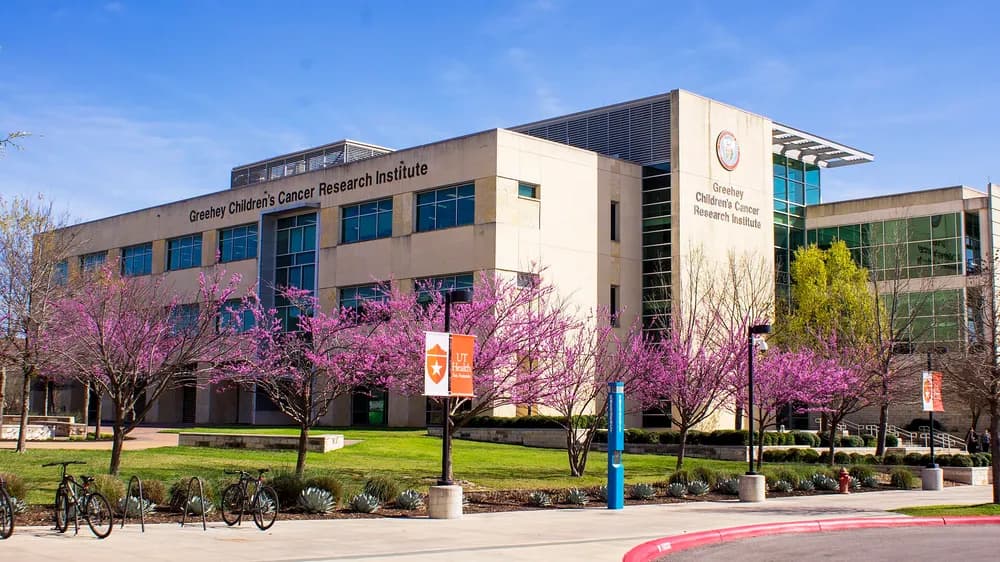
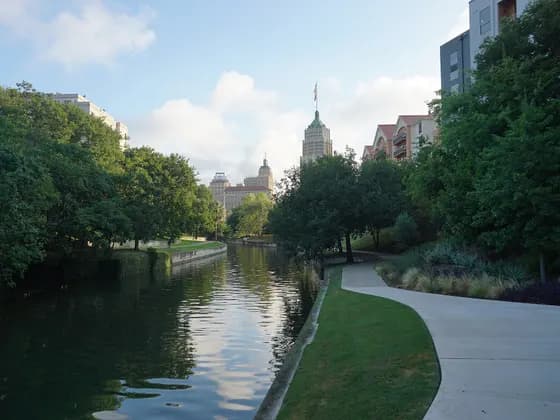
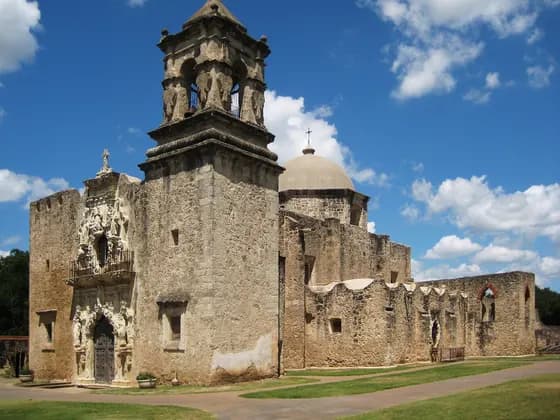
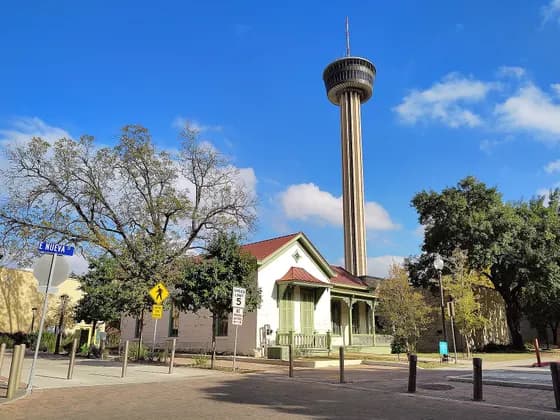
Photo: Brika9231 · CC BY-SA 4.0 · cropped
Photo: Michael Barera · CC BY-SA 4.0 · Photo: Liveon001 ©Travis Witt · CC BY-SA 3.0 · Photo: Adrianna Chavez · CC BY-SA 4.0
The Long School of Medicine UT Health San Antonio MD program at a glance (2027 entry)
The Joe R. and Teresa Lozano Long School of Medicine at The University of Texas at San Antonio, often called the Long School of Medicine or LSOM, offers a four-year MD. The school's home page counts 960 medical students, and 234 began first year in July 2026.
Many school pages still use the name UT Health San Antonio. That was the short name of the University of Texas Health Science Center at San Antonio before it merged with the University of Texas at San Antonio (UTSA) on September 1, 2025. The merged university is UT San Antonio, and UT Health San Antonio is now its clinical arm, which runs the UT Health hospital and clinics named below.
The curriculum is called CIRCLE, and its first 20 months are the preclinical phase. You take three foundational modules, then eight modules that each teach one organ system, such as circulation or digestive health, through anatomy, physiology, pathology, pharmacology and clinical skills together. Each week's topics come together in a small-group synthesis case built around a patient. From first year, the Clinical Skills module teaches history taking and examination with standardized patients, people trained to portray a patient, and with real patients.
The preclinical phase closes with the Comprehensive Basic Science Exam (CBSE), set by the National Board of Medical Examiners (NBME), and you must meet a score benchmark before starting clerkships. Clerkships can then begin in March of second year, in an individually assigned order, and must be finished by the end of third year. Most run through University Hospital, a Level I trauma center next to the school's Medical Building, and the Audie Murphy VA Medical Center, a Veterans Affairs hospital. Brooke Army Medical Center and partner sites across San Antonio add more.
Fourth year brings two selectives, required rotations that return you to a core specialty with more responsibility: an inpatient sub-internship, designed as a bridge from student to intern, and an ambulatory selective. Electives, rotations you choose, and a didactics block fill the rest. To graduate you must pass Step 1 and Step 2 CK (Clinical Knowledge) of the United States Medical Licensing Examination (USMLE), the national licensing exams.
The Liaison Committee on Medical Education (LCME), which accredits MD programs in the United States, first accredited the school in 1968. Its directory, updated November 13, 2026, lists full accreditation with the next survey in 2026-27, and the school's curriculum committee manual puts that visit in January 2027.
| Degree | MD |
|---|---|
| Program length | 4 years: 20 months preclinical, then clerkships, selectives and electives |
| Curriculum | CIRCLE: organ-system modules with weekly small-group synthesis cases |
| Class size | 234 first-year students in July 2026; 960 medical students in all |
| Main campus | Long Campus, San Antonio, next to University Hospital |
| Anatomy | Supervised cadaver dissection in tank teams of four |
| First patient contact | Year 1, with standardized and real patients in Clinical Skills |
| Clerkships | 48 weeks, from March of second year to the end of third year |
| Grading | Honors, High Pass or Pass in modules and clerkships; electives pass/fail |
| Step exams | Step 1 and Step 2 CK both due by December 31 of fourth year |
What makes the Long School of Medicine UT Health San Antonio MD program different
Clerkships can start in March of second year
Once you meet the CBSE benchmark, you can begin clerkships in March of second year or use the open time at the end of second year for Step 1 study, electives or research. The school says this flexibility helps with specialties whose residency match runs early, such as ophthalmology, urology and military programs, and with those that require away rotations (electives at other schools).
A teaching hospital, a VA and an Army medical center
Clinical training mixes University Hospital, University Health's teaching hospital and a Level I trauma center, with the Audie Murphy VA Medical Center and Brooke Army Medical Center. Almost half of all students are chosen at random to rotate at Brooke Army Medical Center during internal medicine, and some pediatrics students train there too. Surgery adds the Baptist, Methodist and Christus health systems.
Veritas advising families that mix all four classes
At matriculation you are randomly placed in one of 20 Veritas families, grouped into five color societies named after founding faculty. Each family has 11 to 12 students from each class, a faculty coach, a resident, and second- and fourth-year student leaders. You stay in your family for all four years, and it meets about once a month on topics from Step 1 study to planning clerkships.
Exploring Clinical Medicine runs alongside third year
Three one-credit modules cover topics common to every specialty: professional communication and difficult encounters, then quality, safety and value, then social concerns such as human trafficking and barriers to care. Each mixes live and self-paced sessions and ends with an objective structured clinical examination (OSCE), a timed, observed exam with simulated patients.
Dual degrees in public health, business and AI
Once enrolled, you can apply to add a Master of Public Health within your four years, or a Master of Business Administration (MBA) or Master of Science in Artificial Intelligence on a five-year track. MD/MSAI students take electives open only to them, including health data standards, a two-part research capstone and Advanced Generative AI.
Global health electives in every year
The Charles E. Cheever Jr. Center for Medical Humanities and Ethics develops the school's global health electives, and its year-by-year course list offers one in every year of medical school. Options include Foundations in Global Health, Leadership in Global Health, International Medicine, Serving Marginalized Communities: From Local to Global, and Poverty, Health and Disease.
How Long School of Medicine UT Health San Antonio teaches medicine
CIRCLE sets common learning outcomes for everyone but leaves room to individualize, and it leans on active learning with regular checkpoints where you test yourself. Science and clinical skills are taught together. Each organ-system module covers the anatomy, physiology, pathology, histology and pharmacology of one body system, with clinical skills teaching built in.
Each block module ties its week together with a synthesis case, in which a small group works through an interactive patient case. Team-based learning (TBL) sessions also run: you prepare beforehand, take a short readiness test alone and then with your team, and apply the ideas to problems. Hematology adds panel discussions with patients and members of their care teams.
From March of second year the teaching moves to wards and clinics. Every clerkship holds weekly teaching sessions, while Exploring Clinical Medicine adds shared sessions across third year. Fourth year adds sub-internships and a four-week didactics block meant to prepare you for internship.
The ways you will learn
| Lectures | Lectures are capped at half of scheduled class time in any week, and at 10 hours a week in morning-only modules. |
|---|---|
| Synthesis cases | The weekly small-group patient case in each block module. It is assessed through individual and team readiness tests (iRAT and tRAT) and peer assessment, and is worth 20 of 100 points in most module grades. |
| Team-based learning | At most one session a week in any module, lasting up to two and a half hours including the readiness test. TBL quizzes can count toward a module's summative grade. |
| Anatomy and histopathology labs | Supervised cadaver dissection in Language of Medicine and Form and Function. Histopathology labs, where you study diseased tissue, last up to two hours, at most one a week per module. |
| Clinical skills and standardized patients | History taking and examination with real patients and with standardized patients from the H-E-B Clinical Skills Center's standardized patient program. |
| Bedside ultrasound | A hands-on ultrasound curriculum runs across all four years, using live and simulation models with supporting teaching. The ultrasound program's undated page lists early sessions on the lungs, heart, kidneys and bladder, and the musculoskeletal system, then use in the emergency medicine, medicine and obstetrics and gynecology clerkships. |
A typical week on the Long School of Medicine UT Health San Antonio program
In the preclinical phase, scheduled teaching falls between 8:00 and 11:50 a.m. and 1:00 and 5:00 p.m., Monday to Friday, under a policy last reaffirmed in July 2025. Language of Medicine and Clinical Skills meet only in the afternoon, and Form and Function uses both halves of the day. The other modules, including the organ-system blocks, meet only in the morning.
Scheduled class time is capped at 32 hours a week in the fall of first year and the spring of second year. In the spring of first year and the fall of second year the cap is 24 hours. Open time inside those windows is self-directed learning time, with no assigned tasks.
Sessions default to discretionary attendance, which is not tracked, though you remain responsible for their content. Exams, synthesis cases, TBL sessions and histopathology labs are mandatory. Some other sessions require you to attend a set share, never more than 80%.
Each academic year, under an absence policy amended in June 2026, you get 10 health-related days, 2 flex days for events such as weddings, 8 personal days and 2 unplanned days. Unused days do not carry over. You can use at most two personal days in any one course or rotation, and clerkships usually require missed clinical time to be made up.
How anatomy is taught at Long School of Medicine UT Health San Antonio
Anatomy starts in Language of Medicine, a first-year afternoon module that gives you the shared vocabulary of structure and development, and continues inside each organ-system module. In Language of Medicine, teaching sessions stress clinical relevance, and in the lab you perform supervised cadaver dissection. Imaging, prosections (specimens dissected in advance), demonstrations and presentations by clinical specialists supplement the dissection.
You dissect in a tank team of four students, sharing a lab drawer and a lab copy of the Netter anatomy atlas. Each student is asked to have a dissection kit and gloves. Anatomy lab returns in second year in Form and Function, whose module goals, revised in 2019, include practicing dissection skills and working as a dissection team. At least 18 of the 56 summative points you need to pass it must come from the afternoon anatomy lab.
Senior students taking the Advanced Anatomy course tutor Language of Medicine students under faculty supervision.
When you first meet patients at Long School of Medicine UT Health San Antonio
The school says CIRCLE brings clinical experiences in from the first day of medical school. Clinical Skills starts in first year and runs through both preclinical years, adding simulations, small groups and labs to sessions with standardized and real patients. It ends with OSCE II, a capstone exam on which you need 70% to pass the module.
The Student Clinician Ceremony each February marks your move from the classroom into clinical settings, and clerkships can start the following month.
Outside scheduled teaching, the school points to student-faculty collaborative clinics in the community. Some zero-credit enrichment electives are prerequisites for preclinical students who want to join or lead these clinics. An undated page from the Cheever Center lists clinics at Alpha Home and San Antonio Metropolitan Ministries. The admissions page says 80% of students volunteer at the school's student-run clinic by second year.
The Long School of Medicine UT Health San Antonio curriculum, year by year
- Year 1
Foundations, then the first organ systems
First year has 39 weeks of required teaching. It opens in July with orientation, a one-day off-campus Veritas retreat and the White Coat Ceremony. Three foundational modules come first, then the first four organ-system modules, with Medicine, Behavior and Society and Clinical Skills running through the year.
- Molecules to Medicine (9 weeks, 9 credit hours): the molecules, cells and tissues that keep the body in a stable state, through labs, small groups and clinical cases.
- Attack and Defense (9 weeks, 9 credit hours): microbiology, immunology and infectious disease, including public and international health.
- Language of Medicine (5.4 credit hours): anatomy and the development of the body, with supervised cadaver dissection.
- Hematology (3 weeks), Respiratory Health (4 weeks), Renal and Male Reproductive (5 weeks) and Circulation (5 weeks).
- Medicine, Behavior and Society (6 credit hours, across both years): history, law, ethics, the social and cultural context of medicine, consent and health literacy, and human development from infancy to death.
- Clinical Skills (14.75 credit hours, across both years): history taking and physical examination with standardized and real patients.
- Optional enrichment electives, such as Introduction to Generative AI, Introduction to Python and Machine Learning, or Introduction to Research Study Design.
- Year 2
Organ systems, the CBSE and the move to clinical work
Second year has 31 weeks of required teaching, built around four organ-system modules that close the 20-month preclinical phase before the clinical curriculum begins in March. You must meet the CBSE benchmark before you can start clerkships or electives or sit Step 1. The time left at the end of the year is individualized: Step 1 preparation, early clerkships, electives or research.
- Mind, Brain and Behavior (9 weeks): the nervous system, common neurological, neurosurgical and psychiatric disorders, and how to assess them.
- Endocrine and Female Reproductive (7 weeks), then Digestive Health and Nutrition (7 weeks).
- Form and Function (6 weeks): the musculoskeletal system and skin, with morning sessions and an afternoon anatomy lab.
- CBSE: benchmarks are announced in the fall, and you retake the exam at scheduled dates until you meet them, with an individual plan if you use up every scheduled sitting.
- Clerkships (March of Year 2 to end of Year 3)
48 weeks of core clerkships
You rotate through eight clerkships in blocks of four to eight weeks, taking on more patient care as you reach set milestones. Each clerkship ends with an NBME subject exam, a national end-of-clerkship test often called a shelf exam. Exploring Clinical Medicine runs from July to April, and required Career Month workshops in January start your residency planning.
- Internal medicine (8 weeks): two four-week inpatient rotations at two different hospitals, six days a week, with resident rounds from about 7 a.m.
- Surgery (8 weeks): four weeks of general surgery and four on a selective such as vascular, urology, plastics, orthopedics or anesthesia. Expect overnight trauma call and labs in suturing and placing nasogastric tubes and urinary catheters.
- Family medicine (6 weeks): one outpatient site for all six weeks, five clinic sessions a week, Monday to Friday.
- Obstetrics and gynecology (6 weeks): three weeks of obstetrics (an inpatient week, a night-float week of five overnight shifts and a clinic week) and three of gynecology. You must observe at least five deliveries.
- Pediatrics (6 weeks): inpatient wards, pediatric intensive care, the newborn nursery, the neonatal intensive care unit and outpatient clinics.
- Psychiatry (6 weeks): clinical work on four weekdays, Tuesdays kept for teaching, and one weekend call shift.
- Emergency medicine (4 weeks): 10 clinical shifts and one nursing shift in University Hospital's adult and pediatric emergency department, including nights and weekends.
- Neurology (4 weeks): three inpatient weeks, weekdays from 7 a.m., and one outpatient week, with a lab on lumbar puncture (spinal tap).
- Year 4
Sub-internships, electives and residency applications
Fourth year has 32 weeks of required instruction in four-week blocks that start in early July. You complete an inpatient sub-internship and an ambulatory selective, both at the school, finish your 20 weeks of electives and apply for residency. Match Day is in March and graduation in May.
- Inpatient selective (4 weeks): you act as a sub-intern and a full member of the team, with more than half of your clinical work on wards or in intensive care.
- Ambulatory selective (4 weeks): focuses on systems of care and how they shape patient care.
- Didactics block (4 weeks, starting around the beginning of March): three required courses and four you choose, with no other rotations that block.
- Longitudinal electives that run across the year, worth up to 4 credit hours.
- Residency applications open in the second block, and your MSPE, the dean's letter that summarizes your record for residency programs, is released in the third.
How you are assessed at Long School of Medicine UT Health San Antonio
Preclinical modules are graded Honors, High Pass or Pass rather than simply pass or fail. In most block modules, 80 points come from summative exams and quizzes and 20 from synthesis cases, plus a pass/fail participation component. You pass with 56 of 80 and 14 of 20; High Pass needs 68 and 17, and Honors 72 and 18. Every module gives formative feedback, practice assessment that does not count, by its midpoint.
Clerkships are graded Honors, High Pass, Pass or Fail, and each grade combines 50 points of clinical performance, the shelf exam and a pass/fail professionalism component. Clinical performance can include workplace assessments, OSCEs, observed histories and physicals, and quizzes. A pass needs 35 points and the 5th percentile on national shelf norms. High Pass needs 42 points and the 50th percentile, and Honors 45 points and the 70th percentile, though emergency medicine sets lower cut-offs on its own exam.
The school calculates a GPA and class rank at the end of the preclinical phase and again after the clerkship deadline, weighting the two halves equally. Electives are pass/fail and do not count toward the GPA. A first module failure in an academic year gets one chance to remediate, such as a remediation exam passed at 70%. A failed shelf exam, if it is the only part you failed, allows one retake, recorded as Remediated Pass if you pass.
You must pass USMLE Step 1, which tests basic science and has been reported only as pass or fail since January 26, 2022, and Step 2 CK to graduate. Policies revised in October 2026 require you to take both by December 31 of fourth year, and the handbook recommends Step 2 CK by September of fourth year. After a first Step 1 failure you cannot start new coursework until you have made a second attempt.
In August 2026 the USMLE program announced a move to designated testing dates from January 2029, with Step exams offered less often each year. Its June 2026 notice had said 2028.
On the current schedule, a student entering in July 2027 would finish the preclinical modules in early 2029, and the school encourages you to take Step 1 promptly after that. That would put Step 1 within a few months after the switch, and Step 2 CK in 2030. The USMLE has asked schools to review rules that limit when students test, so these dates could change.
Long School of Medicine UT Health San Antonio clinical rotations: where you will actually train
Clerkships run through hospitals and clinics in San Antonio, with University Hospital at the center. It stands on University Health's main campus on Medical Drive, next to the school's Medical Building. Most clerkships ask every student to be ready to rotate at University Hospital and the VA, with credentials and electronic health record access for each system.
Sites are assigned clerkship by clerkship. Several clerkships ask for preferences two to six weeks ahead: surgery has you rank its general and selective rotations, and obstetrics and gynecology and psychiatry take requests in the order they arrive. You can ask a clerkship for a different site, and you can swap clerkship sequences with a classmate if the vice dean for undergraduate medical education approves.
Brooke Army Medical Center takes students in internal medicine and pediatrics, and those selected hear two to three months before the clerkship. For internal medicine the choice is random and affects almost half of all students.
Clinical work is capped at 80 hours a week averaged over four weeks, and at 24 hours in a row plus up to four hours for handoffs or teaching. Overnight call in the hospital comes no more than every third night. You get at least three days off in a four-week rotation, five in six weeks and seven in eight weeks.
University Hospital, a Level I trauma center, hosts all of emergency medicine and is also used in internal medicine, surgery, neurology, pediatrics, obstetrics and gynecology and psychiatry. University Medicine Associates is University Health's physician group. Pediatrics uses all three outpatient sites, and obstetrics and gynecology the Robert B. Green and UMA clinics.
- University Hospital
- Robert B. Green Clinic
- University Medicine Associates (UMA) clinics
- Texas Diabetes Institute
Used in internal medicine, including cardiology and intensive care teams, and in surgery, neurology, psychiatry and obstetrics and gynecology, which has a VA gynecology team.
- Audie Murphy VA Medical Center
General medicine teams in internal medicine, and the newborn nursery and general outpatient clinics in pediatrics, for the students selected. Pediatrics asks those students to finish the hospital's paperwork promptly.
- Brooke Army Medical Center
The university's own hospital, which opened in 2024, and its clinics are used in surgery, obstetrics and gynecology, psychiatry and the outpatient week of neurology.
- UT Health San Antonio Multispecialty and Research Hospital
- UT Health clinics
- UT Health MARC Ambulatory Surgical Center
- Mays Cancer Center
- Centers for Brain Health
- UT DeZavala clinic
Surgery uses the three health systems, and psychiatry the other three sites. Family medicine uses outpatient sites across the San Antonio area, and pediatrics and neurology also use private practices.
- Baptist Health System
- Methodist Health System
- Christus Health System
- Clarity Child Guidance Center
- Center for Healthcare Services
- UTSA
Electives, selectives and away rotations at Long School of Medicine UT Health San Antonio
You need 20 weeks of electives, clinical or research, which the curriculum map shows as five four-week blocks. Individual electives last two to four weeks and can be taken in San Antonio or anywhere in the US. They open in March of second year once you have finished the preclinical phase and met the CBSE benchmark, are graded pass/fail, and are listed in an online elective catalog.
Student Affairs supports third- and fourth-year students who want away rotations at other schools, booked through the Visiting Student Learning Opportunities (VSLO) service of the Association of American Medical Colleges (AAMC). An away rotation counts for credit if the school has an affiliation agreement with the host and you file a course approval form at least a week before starting. Hosts commonly ask for proof that you passed Step 1. Away rotations are most common in surgery, emergency medicine, ophthalmology, orthopedics, neurosurgery, dermatology and ear, nose and throat (ENT).
International experiences count as clinical electives, and the school offers travel awards for an international elective delivering care abroad. Research electives (INTD 4210, 4211 and 4212) give credit for 50 to 100 hours of mentored research in a four-week block. Optional zero-credit enrichment electives of at least 20 hours appear on your transcript.
Dual degrees and research years at Long School of Medicine UT Health San Antonio
The MD/PhD runs through the South Texas Medical Scientist Training Program (STX-MSTP), designated by the National Institutes of Health and run with the Graduate School of Biomedical Sciences. It takes eight students a year, and its mean time to graduation is 7.97 years. Applications go through the American Medical College Application Service (AMCAS), with a deadline of November 1 of the year before you enroll, and the program considers internal applications from enrolled students case by case.
The MD/MPH is completed within the four years, and its information sessions are for current first-year students. From the Class of 2029 the MPH comes from UT San Antonio's Kate Marmion School of Public Health; the Classes of 2027 and 2028 work with UTHealth Houston's School of Public Health.
The MD/MBA and MD/MSAI each run on a single five-year track. For the MBA you apply in the fall of second year and start in January, with in-person MBA classes at UTSA. For the MSAI you file an intent to apply as a third-year student, and the master's coursework is in person at the College of AI, Cyber, and Computing. The MD/OMS on the same list is a six-year oral and maxillofacial surgery residency for dentists, not a route for pre-med applicants.
The Distinction in Research needs a High Pass (3.5) GPA, a faculty mentor, a research elective and the Introduction to Research Study Design course. You also log 250 hours, present a poster by December 1 of fourth year and give a capstone presentation in January. The Distinction in Medical Humanities asks for 180 hours, including volunteering and three electives from the Cheever Center, plus a capstone project with a four-week operations month devoted to it.
A page last updated in 2023 describes the Distinction in Medical Education as a teaching or curriculum project with 250 hours of scholarly work. The Office for Research keeps a directory of faculty looking for student researchers, arranges statistics help through Stats 4 Students, and offers limited publication and travel funding. The admissions page says 90% of students take part in mentored research before third year.
Facilities and support at Long School of Medicine UT Health San Antonio
Where you will learn
On the Long Campus, preclinical students keep lockers on the second floor of the Medical Building, under the Lecture Hall Commons. Clinical students can get lockers on its first floor, next to University Hospital. All medical students share a lounge with a kitchen, couches, televisions and pool, ping pong and foosball tables.
The H-E-B Clinical Skills Center teaches and assesses clinical skills through simulation, and as a university-wide resource it also helps you prepare for clinical skills exams and OSCEs. The Dolph Briscoe Jr. Library is open to students around the clock, with standing and exercise desks and a reflection room. Its fifth floor houses the Office for Undergraduate Medical Education.
Support while you study
Veritas is the school's advising system, and your family's faculty coach meets you regularly about career goals. Taking part is optional, but Veritas also hosts events such as Color Wars between societies, career nights, CV workshops and mock interviews, and its leadership roles open from second year.
Tutoring is free through the Office for Undergraduate Medical Education. Second-year students coach first-years on study skills and time management, fourth-year students give content tutoring, and shelf exam tutors are available in the clinical years. A learning specialist runs study skills workshops, and student affairs deans hold a drop-in advising hour on Wednesdays from 1 to 2 p.m.
Career advising starts at orientation with the AAMC's Careers in Medicine tools, and about 32 specialty advisors chosen by their departments help with electives and residency plans. For wellbeing, the Resilient Physician Series runs for first-years in their second semester and Rediscover Wellness each fall. The Student Counseling Center is free for medical students, and clinicians who treat you take no part in assessing you.
Is the Long School of Medicine UT Health San Antonio program right for you?
This program may suit you if
- You want to dissect a cadaver yourself in a small tank team, with anatomy lab again in second year.
- You want the option to start clerkships in March of second year and some say over when you sit Step 1.
- You want clinical training across a teaching hospital, a VA medical center and an Army medical center.
- You would value a mentoring family that mixes students from all four classes with a resident and a faculty coach.
- You are interested in pairing the MD with public health, business or artificial intelligence.
Things to think about
- Modules and clerkships are graded Honors, High Pass or Pass and a class rank is calculated, so grades carry more weight than in a pass/fail program.
- You must meet a CBSE benchmark before starting clerkships, electives or Step 1, and missing it can delay your plans.
- Brooke Army Medical Center rotations in internal medicine are by random selection, so you may or may not train there.
- Internal medicine and surgery run about six days a week, and surgery includes overnight trauma call and work on holidays.
- The MBA and MSAI dual degrees each add a fifth year.
Long School of Medicine UT Health San Antonio MD program — frequently asked questions
Applying to Long School of Medicine UT Health San Antonio?
How to get into Long School of Medicine UT Health San Antonio
Prerequisites, MCAT, AMCAS personal statement, secondaries and interview, step by step.
Open the guide →Long School of Medicine UT Health San Antonio admissions profile
MCAT and GPA profile, acceptance rate, interview format and key dates.
See the profile →Compare Long School of Medicine UT Health San Antonio with other schools
Put the teaching style, anatomy teaching and clinical sites next to another school.
Open the comparison →Prepare for the Long School of Medicine UT Health San Antonio interview
Format breakdown, school-specific sample questions and prep tips for this interview.
Read the guide →Where this Long School of Medicine UT Health San Antonio program guide came from
This guide was written from 81 official sources — UT San Antonio Joe R. and Teresa Lozano Long School of Medicine's own program pages and curriculum documents, plus the accreditor and the hospitals and health systems the school trains students in where they publish detail — read on 2026-11-28, then checked claim by claim against those sources.
- Long School of Medicine: Curriculum (CIRCLE)
- Long School of Medicine: Preclinical Curriculum
- Long School of Medicine: Clinical Curriculum
- MD Curriculum Overview schematic (CIRCLE curriculum), 2026-27
- MD Program Student Handbook AY 2026-27
- Clerkship contact, clinical site and schedule information 2026-27
- UME Policy: Graduation Requirements for the MD Degree
- UME Policy: Student Requirements for USMLE Step 1 (revised October 2026)
- UME Policy: Student Requirements for USMLE Step 2 CK (revised October 2026)
- Policy: Student Progress Based on NBME Comprehensive Basic Science Exam Performance
- UME Policy: Preclinical Grade Composition
- Form and Function Module Goals (revised 2019)
- UME Policy: Clerkship Grade Composition
- UME Policy: GPA and Class Rank Calculation
- UME Policy: Impact of Course Failure on Academic Progression
- UME Policy: Remediation Framework for Failed Courses
- UME Policy: Formative Assessment and Feedback
- UME Policy: Scheduled Class Time in Preclinical Coursework
- UME Policy: Clerkship Scheduling and Assignment to Clinical Sites
- UME Policy: Medical Student Clinical and Educational Work Hours
- UME Policy: Short-Term Absence Policy (amended June 2026)
- UME Policy: For-Credit Electives
- UME Policy: Enrichment Electives
- UME Policy: Requirements for Longitudinal Electives
- UME Policy: Non-Involvement of Healthcare Providers in Student Assessment
- MS4 Elective Planner 2026-27
- MS4 Elective Planner 2027-28
- UME Policy: Administration of Make-Up and Remediation NBME Subject Examinations
- Obstetrics and Gynecology Clerkship AY 26-27: objectives and required clinical experiences
- Curriculum Committee Policies and Procedures Manual FY26-27
- Long School of Medicine: Elective Planning
- Long School of Medicine: Away Rotations
- Long School of Medicine: Milestones
- Long School of Medicine: New Student Orientation (Class of 2030)
- Long School of Medicine: Veritas
- Veritas: Frequently Asked Questions
- Long School of Medicine: Academic Advising
- Long School of Medicine: Career Advising
- Long School of Medicine: Specialty Advisors
- Long School of Medicine: Student Wellness
- Long School of Medicine: Dual Degree and Distinction Programs
- Long School of Medicine: MD/MPH Program
- MD/MPH: Prospective Students
- MD/MBA: Prospective Students
- MD/MSAI: Prospective Students
- MD/MSAI: Current Students and electives
- South Texas Medical Scientist Training Program (MD/PhD)
- South Texas Medical Scientist Training Program: About the Program
- South Texas Medical Scientist Training Program: Admissions (AMCAS deadline November 1)
- South Texas Medical Scientist Training Program: Frequently Asked Questions
- School of Dentistry: Oral and Maxillofacial Surgery Residency (MD/OMS)
- Office for Research: MD with Distinction in Research
- Center for Medical Humanities and Ethics: MD with Distinction in Medical Humanities
- Long School of Medicine: Distinction in Medical Education (2023 page)
- Office for Research: Medical Student Research Enrichment
- Office for Research: Research Training Electives
- Office for Research: Medical Student Research Electives
- Center for Medical Humanities and Ethics: Curriculum by year (updated March 2026)
- Center for Medical Humanities and Ethics: INTD 4030 Serving Marginalized Communities: From Local to Global
- Center for Medical Humanities and Ethics: Global Health
- Center for Medical Humanities and Ethics: Student Organizations (undated)
- Long School of Medicine bedside ultrasound curriculum (undated)
- H-E-B Clinical Skills Center
- Long School of Medicine: Simulation Training
- Long School of Medicine home page
- School newsroom: Newest class of medical students welcomed (Class of 2030 White Coat Ceremony, July 18, 2026)
- Long School of Medicine: Admissions (By The Numbers)
- UT Health San Antonio: History
- UT Health San Antonio: About Us
- UTSA and UT Health San Antonio complete merger (September 1, 2025)
- University Health: University Hospital
- University Health: University Medicine Associates (UMA)
- University Health: Texas Diabetes Institute
- University Health news: Texas Diabetes Institute (TDI) community garden (March 2016)
- LCME: Accredited MD Programs (updated November 13, 2026)
- About the LCME
- USMLE: Designated Testing Dates transition will take place in January 2029 (August 6, 2026)
- USMLE Designated Testing Dates Information Hub
- USMLE: June 23, 2026 notice of limited testing dates starting in 2028 (since updated)
- USMLE: Examination Results and Scoring
- USMLE: Step 1
Curricula are restructured between cycles. Anything here that decides your application — how anatomy is taught, a clinical campus assignment, a required research year — should be confirmed against the official page for your entry year.
Applying to Long School of Medicine UT Health San Antonio?
We help US applicants with MCAT strategy, the AMCAS personal statement, secondary essays and interview prep — everything you need for a competitive Long School of Medicine UT Health San Antonio application.