
The McGovern Medical School UTHealth Houston MD program
What you actually study, and where you will be
McGovern Medical School UTHealth Houston's MD is a 4-year program with an integrated curriculum, with patient contact from Year 1 and clinical rotations in the Texas Medical Center and greater Houston (2027 entry). McGovern Medical School is UTHealth Houston's MD school, based in the Texas Medical Center. After a first semester of foundations and gross anatomy, you study one organ system at a time through lectures and small-group patient cases, and see clinic patients from January of year one. Year three is spent in clerkships, the core clinical rotations, and year four in a Career Focus Track that suits the specialty you plan to enter.
- Degree
- MD
- Length
- 4 years
- Teaching
- Integrated
- Clinical contact
- Year 1
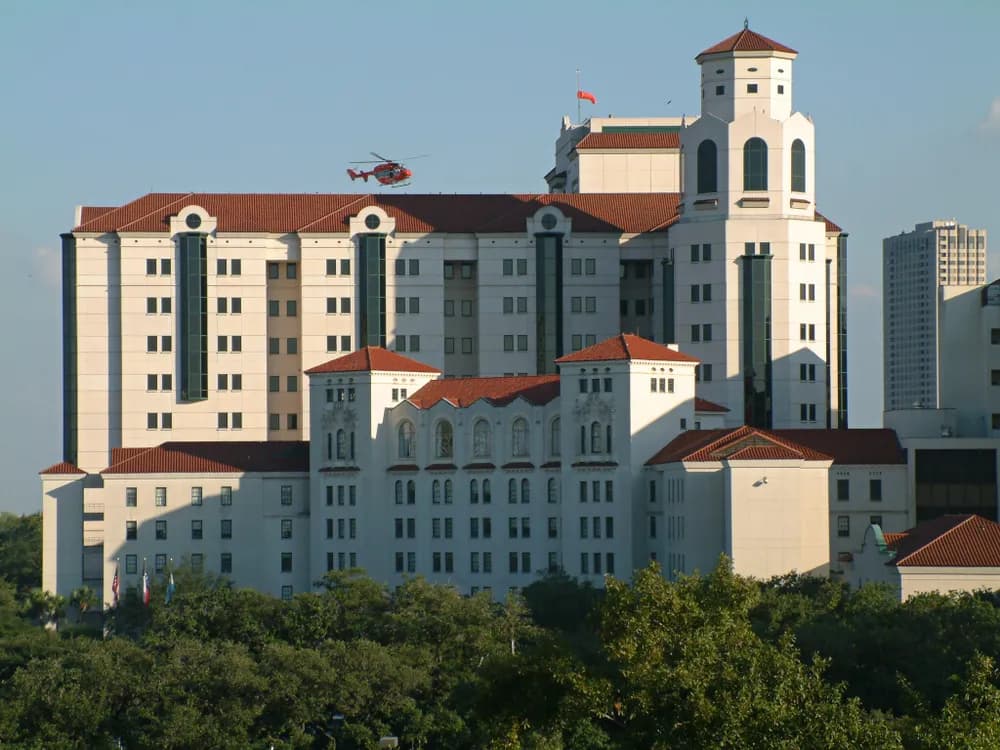
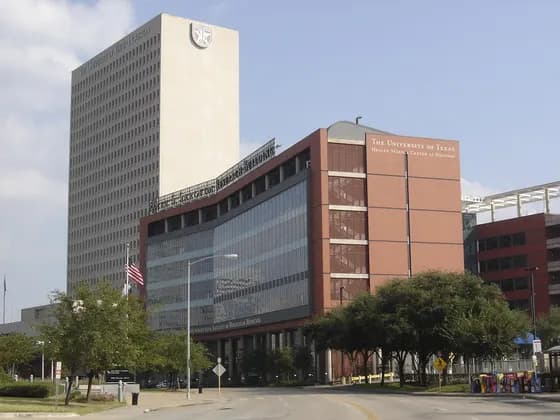


Photo: Rechlin · Public domain · cropped
Photo: Zereshk · CC BY 3.0 · Photo: xiquinhosilva · CC BY 2.0 · Photo: Tony Webster · CC BY 2.0
The McGovern Medical School UTHealth Houston MD program at a glance (2027 entry)
McGovern Medical School at UTHealth Houston, usually shortened to McGovern Medical School, awards the MD (Doctor of Medicine) through a four-year program. UTHealth Houston is The University of Texas Health Science Center at Houston, and until 2015 the school was The University of Texas Medical School at Houston. This public school sits in the Texas Medical Center. School figures from November 2026 show 240 incoming students.
The program has three phases. The pre-clerkship phase, also called Integrated Medical Science, is the stage of classes, labs and small groups, from August of year one to the end of April of year two. Its first semester covers the foundations of medical science, gross anatomy (the structures you can see) and clinical skills. Nine organ-system modules follow, from the blood to the muscles, bones and skin.
Cases drive much of the small-group work. In team-based learning (TBL), teams test themselves and then apply what they know to a problem. In problem-based learning (PBL), six to ten students work through a patient's case with a faculty facilitator. You practice on standardized patients, people trained to act as patients, and from January of year one you see real patients with a preceptor, a physician who teaches you in clinic.
Year three is the clerkship phase, in hospitals and clinics around Houston: seven required rotations, a week of geriatrics and palliative medicine, and a three-week elective (a rotation you choose). In year four, the Career Focus Track phase, you pick one of four tracks, take three advanced rotations and six electives, and prepare for residency, the specialty training after medical school.
The Liaison Committee on Medical Education (LCME), which accredits MD programs in the United States, lists the program as fully accredited, with its next survey in 2027-28. Its directory was updated on November 13, 2026. September 2026 school news gave the site visit as March 6 to 8, 2028. LCME accreditation makes students eligible for the United States Medical Licensing Examination (USMLE), the national licensing exams that include Step 1 and Step 2 Clinical Knowledge (CK).
| Degree and length | MD, four years |
|---|---|
| Class size | 240 incoming students (November 2026) |
| Main campus | Texas Medical Center, Houston |
| Curriculum | Integrated Medical Science, then Required Clerkships, then Career Focus Tracks |
| Teaching style | Organ-system modules; team-based cases first, then problem-based groups |
| Anatomy | Cadaver (donated body) dissection in the first semester |
| First patient contact | Year 1: standardized patients in fall, preceptor clinics from January |
| Step 1 timing | Preparation block in spring of year 2; must be taken before year 4 |
| Grading | Honors grades counted in years 1 to 3 (honor society page, July 2026) |
| Accreditation | LCME, full; next survey 2027-28 (directory of November 13, 2026) |
What makes the McGovern Medical School UTHealth Houston MD program different
Twelve half-days in clinic before clerkships
You spend six half-days in a physician preceptor's clinic in the spring of year one and six more in the fall of year two. Each visit brings at least one patient and a written note, so clerkships are not your first time in a working clinic.
A final year shaped around your specialty
In year four you choose one of four Career Focus Tracks. Each brings specialty-related activities through the year and active mentoring in the field you plan to enter.
A public hospital that every student trains in
Under clerkship rules linked from the school's third-year page, every student must rotate at least once during internal medicine at Harris Health Lyndon B. Johnson (LBJ) Hospital, a public hospital in northeast Houston. The school says 100 medical students a month train there.
One community partner for two years
Professionalism Learning Underscored by Service (PLUS) is part of the pre-clerkship curriculum. Through your McGovern Society, an advising group, about ten of you visit the same Houston-area organization with a faculty facilitator in the fall and spring of years one and two. Afterward you debrief and write a reflection. An August 2026 page counts more than 30 partner organizations.
Nutrition teaching that includes cooking
Under a federal initiative starting in fall 2026, the school has committed to at least 40 hours of nutrition education or an equivalent level of competency. Before clerkships, every student has required hands-on cooking in a teaching kitchen and learns to counsel patients about diet.
Concentrations from trauma to space medicine
Scholarly concentrations are voluntary programs in 21 areas, each built around a mentored project. Some are very small. Space Medicine expects one to three new students a year and includes a tour of NASA's Neutral Buoyancy Laboratory; Trauma takes up to six.
How McGovern Medical School UTHealth Houston teaches medicine
Science and clinical skills run side by side from the start. In Foundations of Medical Science, the first-semester course, you learn how the major organs are built and how they work. Meanwhile you practice the matching physical exam in Doctoring 1, the first clinical skills course.
The organ-system modules then teach normal function, disease and treatment together. The cardiovascular module, for example, combines pathology (how disease damages tissue), pharmacology (how drugs work) and clinical skills for conditions such as high blood pressure and heart failure. It is deliberately linked to the lung and kidney modules taught the same spring.
Seven longitudinal themes are threaded through the program: ethics and professionalism, evidence-based medicine, health systems science, population health, nutrition, health disparities and advocacy, and artificial intelligence and healthcare. You also learn with other professions. In an April 2026 mass casualty simulation, medical students treated mock victims alongside nursing, dentistry and social work students.
In the clinical years you work with residents and faculty on wards and in clinics, but scheduled teaching continues. Clerkship rules linked from the current third-year page make surgery's Thursday teaching, pediatrics' Wednesday mornings and psychiatry's Wednesday afternoons mandatory.
The ways you will learn
| Lectures | Course lectures from the first two years are recorded, so you can stream them soon afterward. Selected online lessons from ScholarRx, a commercial study tool the school provides, back up the content. |
|---|---|
| Team-based learning | Team-based cases run through the first semester, and some Doctoring sessions in years one and two use the format too (March 2025 page). You answer questions alone, then as a team, then apply the ideas to a problem. Teammates also evaluate one another. |
| Problem-based learning | In the spring of year one and the fall of year two, your group meets a faculty facilitator twice a week. Each case unfolds in sections over two or three days. When the group reaches something nobody knows, a student researches it and presents it next time. |
| Doctoring 1, 2 and 3 | Eighteen months of required teaching in communication, examination and professional development, using standardized patients, simulation, PBL and preceptor visits. You learn to document encounters and to turn findings into a differential diagnosis, a list of possible causes. |
| Simulation and skills sessions | The Surgical and Clinical Skills Center has standardized patients and computerized manikins. Transition to Clerkships, just before third year, teaches practical procedures. |
A typical week on the McGovern Medical School UTHealth Houston program
A policy approved on October 21, 2026 caps pre-clerkship contact time at 30 hours a week, averaged over each block or module and counting everything running at once. Contact time covers lectures, labs, small groups, clinical assignments and scheduled independent learning. A separate limit keeps required reading and other preparation to an average of 15 hours a week.
Some times are fixed. PBL groups meet on Mondays and Wednesdays, either 10 a.m. to noon or 2 to 4 p.m. An October 2025 page puts first-semester TBL on Fridays. A weekly practice quiz opens at 1 p.m. on Friday, and midpoint tests are on Monday mornings.
A November 2024 policy says you need approval in advance to miss a required activity, except in extenuating circumstances. On rotations, a January 2024 policy caps clinical and teaching hours at 80 a week averaged over four weeks, with at least one day in seven free, also averaged. A continuous shift is capped at 24 hours, plus up to four for handoffs and teaching.
How anatomy is taught at McGovern Medical School UTHealth Houston
Gross anatomy is taught in the first semester through hands-on cadaver dissection, according to an April 2026 page on the school's anatomy staff educator. The page describes peer teaching and team-based exploration in the lab. A fourth-year student honored for gross anatomy described it, in April 2026 school news, as a full head-to-toe dissection.
It starts early: in 2026 first-year students finished their first lab on August 7, four days after classes began.
Donors come through the Willed Body Program, which receives more than 400 whole-body donations a year, school news said in January 2026. When the course ends, first-year students hold a memorial. In January 2026 they lit 42 candles, one for each of 42 donors.
Anatomy comes back in later modules such as gastrointestinal (September 2023 page). Students who enjoy it can teach: school news in 2025 and 2026 describes award winners who had been anatomy pedagogues, or peer teachers.
When you first meet patients at McGovern Medical School UTHealth Houston
In Doctoring 1, during the first semester, you learn to interview, take a full history, examine a healthy adult and document it all, with practice on standardized patients. You also train specifically in interviewing psychiatric patients. A January 2024 psychiatry page adds that first-year students can interview real patients, with faculty supervising, in two small-group sessions.
From January you visit a preceptor's clinic, primary care or specialist, for six half-days, alone or with one classmate. Six more follow in the fall of year two. Keeping one preceptor for the semester lets you get to know the patients and the office. Each visit means at least one patient and one note, with feedback on your notes and evaluations halfway and at the end.
Patients also appear inside modules (September 2023 page). Nervous System and Behavior includes clinical presentations with patients, and the musculoskeletal and skin module takes you into the dermatology clinic. Optional statewide preceptorships for the summer after year one offer two to four weeks with a family physician, four with a general pediatrician, or time with a community internist (January 2026 page).
Full-time patient care starts with clerkships in May, after year two. Under a July 2026 policy you are supervised at all times, ultimately by a McGovern faculty physician in required clerkships, and you perform procedures only with a supervisor in the room. Where sites allow, you can propose orders for an authorized clinician to review and sign.
The McGovern Medical School UTHealth Houston curriculum, year by year
- Year 1
Foundations, then the first four organ systems
Classes began on August 3 in 2026, after an orientation week. Foundations, gross anatomy and Doctoring 1 fill the fall, and four organ-system modules follow from January to mid-May. Module dates are approximate, read from the school's 2026 curriculum map. Summer is vacation, with optional research or preceptorships.
- Foundations of Medical Science (August to December): the cellular, biochemical and physiological basis of disease, plus the structure and function behind the physical exam, with team-based cases.
- Doctoring 1, History and Physical Exam, with attention to groups such as children and older adults.
- Professionalism small groups of eight or nine in October, and a White Coat Ceremony in January.
- Hematologic System and Introduction to Oncology (January to mid-February): anemias, clotting disorders, solid tumors and blood cancers.
- Cardiovascular (mid-February to mid-March), then Renal and Pulmonary (late March to mid-May): heart and vessel disease, kidney function and failure, and lung disease from infection to a clot in the lung.
- Doctoring 2, Longitudinal Clinical Experience: histories and exams on patients with disease, basic lab results and differential diagnosis, plus an interprofessional patient safety meeting.
- Year 2
Five more organ systems, then Step 1
Organ-system modules run from August to mid-March, with PBL and preceptor visits in the fall. On the 2026 curriculum map, which gives the approximate dates below, a Step 1 preparation block follows from about mid-March to the third week of April. Transition to Clerkships closes the phase. Module content comes from a page last updated in September 2023.
- Gastrointestinal (August to early September): digestive and liver disease and nutrition.
- Nervous System and Behavior (September to mid-November): the nervous system alongside mental illness and substance use, taught jointly by the psychiatry, neurology, and neurobiology and anatomy departments (January 2024 page). The last became the Department of Neuroscience in November 2026.
- Endocrine (mid-November to mid-December): growth, pituitary, thyroid, adrenal and metabolic disorders.
- Reproductive Systems (January to mid-February): infertility, pregnancy, gynecologic and breast disease, and male genitourinary disease.
- Musculoskeletal and skin (mid-February to mid-March): bone and soft tissue disease, pain and common skin disorders.
- Doctoring 3 until mid-March, and five monthly ethics sessions in the fall, in groups of eight or nine, with a graded advocacy assignment.
- Transition to Clerkships: airway control, IV access, drawing blood, lumbar puncture (a spinal tap), wound care, reading ECGs (heart tracings) and scrubbing for surgery.
- Year 3
Required clerkships
The 2026-27 clerkship year runs from May 4, 2026 to April 30, 2027. You follow one of 24 streams, set sequences that hold the same blocks in different orders. Vacation adds up to four weeks: one in summer, two over the winter break and one in March.
- Internal Medicine, eight weeks in two blocks: you take histories, examine adults hospitalized with acute illness and document your findings, with time at LBJ.
- Surgery, eight weeks: preoperative, postoperative, emergency and ambulatory (outpatient) care. It includes a four-week subspecialty rotation (2022 neurosurgery page). On neurosurgery, for example, you spend a week each on trauma, spine, cranial and pediatric services (April 2026 page).
- Pediatrics, eight weeks: four inpatient, including a week in the newborn nursery, and four in an outpatient clinic.
- Obstetrics and Gynecology, six weeks: the operating room, labor and delivery, the emergency room, clinics and wards.
- Psychiatry, six weeks: general services and options in geriatric, child and adolescent, and consultation-liaison psychiatry, which advises other hospital teams (January 2024 page). Everyone also spends at least an hour observing electroconvulsive therapy (ECT), a treatment for severe psychiatric illness (January 2026 page).
- Family Medicine, four weeks of outpatient care, covering the 30 most common problems (September 2024 page).
- Neurology, four weeks in two blocks: a full neurologic exam and working out where in the nervous system a problem lies.
- Geriatrics and Palliative Medicine, one week paired with a preceptor, and a three-week elective.
- Year 4
Career Focus Tracks
The final phase runs from May to April, mostly in four-week blocks. Everyone meets the same graduation requirements, and your track guides which specialties you choose within them.
- Choose a track: Primary Care (for example internal medicine, pediatrics, psychiatry), Acute Care (emergency medicine, anesthesia), Applied Anatomy (surgery, radiology, pathology) or, by application, Academic Career, for students with a significant research project. You can switch until September 1.
- Ambulatory Medicine: outpatient care in emergency medicine, family medicine, internal medicine, obstetrics-gynecology or pediatrics, plus a critical review of research on a question you choose.
- Critical Care: very sick patients in an intensive care unit, with a focus on procedures and ventilators, plus Advanced Cardiac Life Support (ACLS) certification.
- Advanced Patient Care, the acting internship (sub-internship or Sub-I): you take the role of an intern, a first-year resident, on an inpatient team, admitting patients and practicing order entry under supervision.
- Six electives, a clinical skills exam in May or June, and a Night on Call simulation in February or March (October 2025 page).
- Transition to Residency, March 8 to 19 in 2027: specialty workshops and skills practice, with Medical Jurisprudence (the law of medical practice).
- Up to three and a half blocks of vacation, depending on when you took Step 1 and on your earlier progress.
How you are assessed at McGovern Medical School UTHealth Houston
Under an October 2024 policy, formative assessments, which exist to give feedback, come every pre-clerkship week except exam weeks. Scoring above 70% on them adds up to three points to a course grade. The midpoint one is required, with up to 40 questions in up to an hour, and a score under 70% brings in a learning specialist.
For summative assessments, the exams that count, the school uses National Board of Medical Examiners (NBME) exams and, in years one and two, the ExamSoft computer testing system. The 2024-25 brochure describes summative feedback every three to five weeks. PBL content is tested in module and Doctoring exams, and your facilitator's grade for taking part counts toward Doctoring.
The school's Alpha Omega Alpha (AOA) honor society page, updated in July 2026, counts Honors grades from the first two years and from third year. Under the advancement policy, revised in 2024, a Below Pass or Fail means remediating (required extra work) or repeating the course, and both grades stay on your transcript.
In clerkships, under 2024 policies, you meet faculty or a senior resident for feedback by the midpoint of any required rotation of four weeks or more. Every required clerkship includes a written narrative assessment. The school tracks NBME subject exams, known as shelf exams, which test a clerkship's specialty. Neurology's June 2024 page requires one at the end and bases half the grade on clinical evaluations.
Step 1, the USMLE exam on the sciences behind medicine, has been reported only as pass or fail since January 26, 2022. School policy requires you to take it before the fourth-year phase. If you do not pass, you retake it within 90 days of being told, unless granted an extension. Step 2 CK must be taken before graduation, and a January 2025 page strongly encourages doing so by mid-August of year four.
In August 2026 the USMLE program announced a move to designated testing dates from January 2029, with Step exams offered less often each year. Its June 2026 notice had named 2028. On the current schedule, a student entering in 2027 would reach the Step 1 preparation block around mid-March 2029 and take the exam that spring, within a few months after the switch. Step 2 CK would follow around summer 2030, on the school's mid-August advice.
- MD/PhD students take Step 1 in April or May of year two and Step 2 in the summer after year three, on that program's typical sequence.
- The Comprehensive Clinical Competency Examination (CCCE), a recorded clinical skills exam, is taken in May or June of year four. Under a July 2024 policy it is pass/fail and required for graduation. After a first fail you review the recording, meet a committee member and try again.
- Neurology's December 2023 page also lists an objective structured clinical examination (OSCE), a hands-on skills test, with a standardized patient.
- Emergency medicine's general fourth-year elective is graded Honors, High Pass, Pass, Below Pass or Fail, while its third-year elective is pass/fail.
- Under the advancement policy, you must finish all first-year courses before year two, all second-year pre-clerkship courses before clerkships, and clerkships before the Career Focus Track phase. Students must graduate within six years of entering, MD/PhD students excepted.
- Under the advancement policy's guidelines, first-time students who fail either Foundations or Doctoring 1 repeat the first year; failing both meets the criteria for dismissal. So does any student's total of four Fails or six non-passing grades, even if remediated. The promotions committee decides each case.
McGovern Medical School UTHealth Houston clinical rotations: where you will actually train
The school's November 2026 list of primary teaching hospitals has seven names, shown by area below. Memorial Hermann-Texas Medical Center, which the emergency medicine department calls the school's principal teaching site, is a Level I trauma center, the highest designation.
LBJ is run by Harris Health, the public system for Harris County, and staffed by UTHealth Houston faculty and residents. Harris Health describes 215 licensed beds, a Level III trauma center and more than 80,000 emergency visits a year. In January 2026 it planned to open a new hospital on the campus, named for John M. O'Quinn, in January 2029, adding clinical training for McGovern students. If both timelines hold, that is a few months before a 2027 entrant starts clerkships.
Your stream sets the order of your clerkship year. On a January 2024 scheduling page, students ranked the streams they wanted and then their choices for the three-week elective. An October 2023 policy lets you swap your whole stream with a willing classmate, or ask to change a site, subject to space.
Sites are handled clerkship by clerkship, under undated request rules linked from the third-year page. Surgery asks for preferences 12 to 16 weeks ahead, pediatrics three weeks and psychiatry at least two. The other clerkships consider requests sent in time, though family medicine does so only for extenuating circumstances. Several say no site is guaranteed, and you are asked to raise life events, conferences or transportation needs early.
Family medicine and outpatient pediatrics take you to clinics around Houston. Family medicine's site page, last updated in September 2024, lists seven Harris Health centers and five clinics of UT Physicians, the school's clinical practice. They stretch from Humble and Baytown to Cinco Ranch.
Fourth-year emergency medicine shifts cover Memorial Hermann's medicine, trauma and pediatric areas, and the third-year anesthesiology elective is mainly in its operating rooms.
- Memorial Hermann-Texas Medical Center
- Red Duke Trauma Institute of Memorial Hermann-Texas Medical Center
- Children's Memorial Hermann Hospital
Also a site for fourth-year emergency medicine and anesthesiology.
- Harris Health Lyndon B. Johnson Hospital
Psychiatry orientation is at the Harris County Psychiatric Center, which says it has 274 beds and treats about 9,000 adults, adolescents and children a year. Students may also see inpatient care at the Dunn center through the interventional psychiatry service, as year and availability allow (January 2026 page).
- UTHealth Houston Harris County Psychiatric Center
- John S. Dunn Behavioral Sciences Center at UTHealth Houston
Surgery students can request MD Anderson, which needs extra paperwork and credentialing.
- The University of Texas MD Anderson Cancer Center
Clerkship list last updated in September 2024.
- Acres Home Health Center
- Aldine Health Center
- Baytown Health Center
- Danny Jackson Health Center
- El Franco Lee Health Center
- Settegast Health Center
- Squatty Lyons Health Center (Humble area)
Clerkship list last updated in September 2024.
- Family Medicine Clinic, Texas Medical Center
- Family Practice, Bayshore
- Multispecialty Clinic, Bellaire
- Multispecialty Clinic, Cinco Ranch
- Multispecialty Clinic, Sienna (listed as Sienna Village)
Electives, selectives and away rotations at McGovern Medical School UTHealth Houston
The third-year elective lasts three weeks and lets you explore a subspecialty. Choices on department pages include emergency medicine (ten eight-hour shifts), emergency ultrasound, neurosurgery, pathology, research and, in the second half of the year, anesthesiology.
In year four, under an October 2024 policy, you need six elective credits, or 24 weeks. A four-week elective counts as one credit and a two-week mini-elective as half, with a limit of four mini-electives. You can take up to four electives in one specialty and up to two blocks of research, though MD/PhD and Academic Career students are exempt from the research limit.
Away electives, done at other institutions, must last at least four weeks to earn elective credit. If a program offers only two-week electives, two in a row with a single evaluation can count, provided student affairs approves before you apply. The 2026-27 rules allow up to three blocks away, but none in a month when you are scheduled for the CCCE.
Most away applications go through Visiting Student Learning Opportunities (VSLO), run by the Association of American Medical Colleges (AAMC). Electives abroad need prior approval and are refused where the State Department has issued a travel warning.
Emergency medicine's list shows the range: toxicology, opioid treatment, space medicine (two students a year) and prehospital medicine, including ride-outs with Houston Fire Department and other crews as available. The McGovern Center for Humanities and Ethics runs seminars such as Contemporary Physician Authors. Outside Houston, 2025 guidelines describe primary care electives with the South Texas Area Health Education Center, across 38 counties, with travel reimbursement and housing.
You plan year four with a specialty advisor, who must sign your preference form. For 2026-27, required rotations went through a lottery with results in late March, and electives opened for enrollment on March 30. Extracurricular (formerly blue book) electives are non-credit courses on topics from space medicine to theater.
Dual degrees and research years at McGovern Medical School UTHealth Houston
You can apply for a scholarly concentration from January of year one, after completing your first semester, and can join only one. You attend seminars, courses or journal clubs and complete a mentored independent project, earning a certificate and recognition at graduation. Six of the 21, such as neurosciences, require the summer research program.
The Summer Research Program takes ten weeks, at 40 hours a week, between years one and two. You write an abstract as first author and present a poster in the fall. In year three, a pass/fail research elective is open to projects beyond literature reviews and case reports. The fourth-year Academic Career track allows extra elective time to ready a project for publication.
The MD/PhD, called the Medical Scientist Training Program (MSTP), is run with the MD Anderson Cancer Center UTHealth Houston Graduate School of Biomedical Sciences. It takes seven to nine years, with an average of 8.1 over the past decade. You complete three years of medical school, do your dissertation research, then return for the fourth year. The program generally takes seven or eight new students a year.
Most students who apply to both programs can complete the MD/MPH (Master of Public Health) in four to five years, though enrolling late may take more than five. You spend fall and spring semesters at UTHealth Houston School of Public Health after the first, second or third year, and twelve of the 45 credits are shared with the MD. The MD/MS in biomedical informatics, with the McWilliams School of Biomedical Informatics, is a five-year program that accepts up to 12 credit hours from the MD.
The MD/MBA is offered with the University of Houston-Clear Lake and, from fall 2026, at the Houston campus of UT Austin's McCombs School of Business. McCombs students can take a year for the MBA, with weekend classes, and finish both degrees in about five years (March 2026 news). The school's September 2025 page describes four- and five-year MD/MBA versions. The five-year MD/MBE adds a Master of Bioengineering at Rice University during a year of leave, typically May to April, after both Step 1 and Step 2.
The MD/OMFS (oral and maxillofacial surgery) is a six-year residency for dentists, who join medical school for years two to four, so it is not a route for college applicants. The MD/MBE policy, approved in December 2023, says students can enroll in only one dual degree.
Facilities and support at McGovern Medical School UTHealth Houston
Where you will learn
Teaching is based in the Medical School Building at 6431 Fannin Street. Its basement holds the Surgical and Clinical Skills Center. Two simulation labs can mimic an operating room or emergency room, and a wet lab of about 2,000 square feet has task trainers for practicing procedures. A page last updated in 2021 adds 14 patient rooms for standardized patient work.
The Learning Resource Center on the ground floor has 168 study carrels and 11 group rooms, six of which double as PBL classrooms. Two more rooms have manikins for practicing heart and lung sounds. A smaller center at LBJ, open around the clock to students with an LBJ badge, has 16 carrels.
You can also use the TMC Library, shared by Texas Medical Center institutions. Required cooking sessions use the Nourish Program's teaching kitchen at the UTHealth Houston School of Public Health.
Support while you study
Every first-year student joins a McGovern Society, a group of eight to ten led by a clinical faculty member. A page last updated in 2021 says groups are assigned before you start and stay together through medical school, with second- and fourth-year peer mentors. A February 2026 page describes required noon meetings and confidential mentoring kept apart from graded coursework.
Academic help, described on a July 2025 page, runs from study strategies and Step 1 study calendars to shelf exam and Step 2 preparation. Peer tutoring in first- and second-year courses is free, and student-led Virtual Study Reviews go over the previous week's material. A four-week summer Pre-Entry Program invites about 30 incoming students who would benefit from a head start (May 2025 page).
Career advising starts in years one and two with sessions on the AAMC's Careers in Medicine program and weekly drop-in hours. In the clinical years, deans and specialty faculty advise on electives, specialty choice and residency applications.
Counseling and psychiatry are free to students at the Student Health clinic across from the school, and visits are confidential, according to January 2024 pages. The McGovern Mini Market is a student-run pantry with free food and hygiene items.
Is the McGovern Medical School UTHealth Houston program right for you?
This program may suit you if
- You want to see real patients early, through 12 half-days in a physician's clinic before clerkships.
- You want hospital variety in one city: a Level I trauma center, a public hospital, a children's hospital and a psychiatric center.
- You like the idea of a final year organized around a specialty track, with mentoring in that field.
- You care about community service or nutrition, both of which are built into the pre-clerkship years.
- You have a side interest, such as trauma or space medicine, and would enjoy a mentored project in it.
Things to think about
- Classes are large, at 240 students a year, though PBL groups and McGovern Societies break them up.
- The first semester carries weight: for first-time students, the promotion guidelines say failing either Foundations or Doctoring 1 means repeating the year.
- The school's honor society page (July 2026) counts Honors grades from the first two years, so early results may be more than pass or fail.
- Clinics stretch from Humble and Baytown to Cinco Ranch, and several clerkships say no site is guaranteed, so plan for travel.
- On the current schedule, a 2027 entrant would take both Step exams after designated testing dates begin in January 2029.
McGovern Medical School UTHealth Houston MD program — frequently asked questions
Applying to McGovern Medical School UTHealth Houston?
How to get into McGovern Medical School UTHealth Houston
Prerequisites, MCAT, AMCAS personal statement, secondaries and interview, step by step.
Open the guide →McGovern Medical School UTHealth Houston admissions profile
MCAT and GPA profile, acceptance rate, interview format and key dates.
See the profile →Compare McGovern Medical School UTHealth Houston with other schools
Put the teaching style, anatomy teaching and clinical sites next to another school.
Open the comparison →Prepare for the McGovern Medical School UTHealth Houston interview
Format breakdown, school-specific sample questions and prep tips for this interview.
Read the guide →Where this McGovern Medical School UTHealth Houston program guide came from
This guide was written from 129 official sources — McGovern Medical School at UTHealth Houston's own program pages and curriculum documents, plus the accreditor and the hospitals and health systems the school trains students in where they publish detail — read on 2026-11-25, then checked claim by claim against those sources.
- McGovern Medical School: Curriculum
- MD Program Curriculum Map 2026 (image, uploaded August 2026)
- MS1 Curriculum Descriptions
- MS2 Curriculum Descriptions
- MS3 Clerkship Descriptions
- MS4 Required Courses and Selectives (Career Focus Tracks)
- Manual for Undergraduate Curricular Affairs (November 2026)
- Prospective Students: Curriculum Overview
- Problem-Based Learning (PBL)
- Preceptorship
- Ethics Small Group
- Professionalism Small Group
- Teaching Opportunities, by year (October 2025)
- Nutrition Education
- Nutrition Curriculum Content
- Teaching Kitchen
- P.L.U.S. Service-Learning Curriculum
- P.L.U.S.: Become a Partner (August 2026)
- Student learning systems: Canvas, ExamSoft, InteDashboard, NBME and ScholarRx
- Policy on United States Medical Licensing Examinations (USMLE)
- Policy on the Comprehensive Clinical Competency Examination
- Policy on Student Assignment to Clerkships and Clinical Sites
- Policy on Fourth-Year Electives (Career Focus Tracks)
- Policy on Student Advancement and Appeals
- Policy on Clinical and Educational Hours
- Policy on Clinical Supervision of Medical Students (July 2026)
- Policy on Formative Feedback (Pre-clerkship Curriculum)
- Policy on Mid-Rotation Feedback
- Policy on Narrative Assessment
- Policy on Pre-Clerkship Preparatory and Contact Hours (October 2026)
- Policy on Excused Absences for Pre-clerkship Students
- Policy on Dual Degree MD/MBE Program
- Guidelines for Away and Foreign Electives (2025)
- MS I Students page (October 2025)
- Texas Statewide Preceptorship Programs (January 2026)
- MS III Students page
- 2026-2027 Clerkship Schedule
- Clerkship Request Policies (undated, linked from the MS III page)
- Fourth Year Scheduling Information, 2026-27
- Fourth year Ground Rules, 2026-27
- Fourth year Required Courses, 2026-27
- Fourth year Elective Courses, 2026-27
- USMLE Requirements for fourth-year students (January 2025)
- Away Electives (November 2026)
- McGovern Societies (last updated December 2021)
- Mental Health services (January 2024)
- Student Services (January 2024)
- Educational Support (July 2025)
- Academic and Career Advising (October 2026)
- McGovern Mini Market
- Alpha Omega Alpha Honor Medical Society (July 2026)
- Why McGovern (January 2025)
- 3rd-Year Scheduling Information (January 2024)
- Family Medicine Third Year Clerkship (September 2024)
- Family Medicine Third Year Clerkship Sites (September 2024)
- UT Physicians Outpatient Clinics, Pediatrics (September 2026)
- Neurology clerkship: Education for Medical Students (December 2023)
- Neurology clerkship: Evaluation and Guidelines (June 2024)
- Pediatrics: clerkship and scholarly pathways
- Psychiatry medical student education: Program Overview (January 2024)
- Center for Interventional Psychiatry: Medical Students (January 2026)
- Neurosurgery: Third-year Clerkships (March 2022)
- Neurosurgery: Surgical Subspecialty Clerkship, SURG 3001 (April 2026)
- Neurosurgery: Elective Clerkship, NSUR 3030 (April 2026)
- Geriatric and Palliative Medicine: Education and Training
- Emergency Medicine: Medical Students
- Emergency Medicine: Courses and Electives (August 2026)
- Anesthesiology: Medical Students
- Pathology: Student Rotations
- LBJ Hospital: Education and Helpful Links
- Learning Resource Center: Facilities and Services
- Learning Resource Center: Instructional Resources
- McGovern Facts and Figures (November 2026)
- Emergency Medicine: Hospital Profiles
- Family Medicine residency: Training Sites
- Harris Health: Lyndon B. Johnson Hospital
- Harris Health news: John M. O'Quinn Hospital (January 2026)
- Harris Health: Acres Home Health Center
- Harris Health: Aldine Health Center
- Harris Health: Baytown Health Center
- Harris Health: Danny Jackson Health Center
- Harris Health: El Franco Lee Health Center
- Harris Health: Settegast Health Center
- Harris Health: Squatty Lyons Health Center
- UTHealth Houston Harris County Psychiatric Center: Inpatient Services
- News: Students honor first patients at Cadaver Memorial (January 2026)
- News: MS1s complete their first anatomy lab (August 2026)
- News: Top student in gross anatomy (April 2026)
- Surgical and Clinical Skills Center
- Standardized Patient Program (last updated February 2021)
- Office of Educational Programs: anatomy staff educator (April 2026)
- Our Traditions
- News: Outstanding Student in Gross Anatomy (June 2025)
- Scholarly Concentration Program
- Summer Research Program
- Preparation for Research and research FAQs
- MS3 Student Research Elective, SCHO 3030
- Space Medicine Scholarly Concentration
- Trauma Scholarly Concentration
- MD/MBA
- News: Texas McCombs MD/MBA for Houston medical students (March 2026)
- Medical Scientist Training Program (MD/PhD): overview
- Medical Scientist Training Program (MD/PhD): curriculum
- Medical Scientist Training Program (MD/PhD): FAQ
- UTHealth Houston School of Public Health: dual degrees, including MD/MPH
- McWilliams School of Biomedical Informatics: dual degrees, including MD/MS
- Oral and Maxillofacial Surgery Residency
- Dual-Degrees Offered
- News: Welcome home, Class of 2030 (July 2026)
- News: Medical students return to campus (August 2026)
- News: Dean's Dialogue, plans for the year ahead (September 2026)
- News: New Department of Neuroscience name (October 2026)
- News: Class of 2029 dons white coats (January 2026)
- News: Mass casualty simulation (April 2026)
- News: Community lessons help shape future physicians, PLUS (September 2026)
- LCME: Accredited Programs directory (updated November 13, 2026)
- LCME: About the LCME
- USMLE: updated timeline, designated testing dates from January 2029
- USMLE: Designated Testing Dates Information Hub
- USMLE: June 2026 notice on limited testing dates (since updated)
- USMLE: Examination Results and Scoring
- About Us
- 2024-2025 Recruitment Brochure
- Pre-Entry Program
- McGovern Center: Required Sessions (March 2025)
- McGovern Center for Humanities and Ethics
- McGovern Center: Fourth-Year Electives, 2026-27
- McGovern Center: Extracurricular Electives
- Pediatrics: Year-Round Mentoring and McGovern Societies (February 2026)
Curricula are restructured between cycles. Anything here that decides your application — how anatomy is taught, a clinical campus assignment, a required research year — should be confirmed against the official page for your entry year.
Applying to McGovern Medical School UTHealth Houston?
We help US applicants with MCAT strategy, the AMCAS personal statement, secondary essays and interview prep — everything you need for a competitive McGovern Medical School UTHealth Houston application.