
The UH Fertitta Family College of Medicine MD program
What you actually study, and where you will be
UH Fertitta Family College of Medicine's MD is a 4-year program taught through team-based learning in an integrated curriculum, with patient contact from Year 1 and clinical rotations in Greater Houston, McAllen and rural Texas towns (2027 entry). UH Fertitta's MD opens with 18 months of pre-clerkship courses, most organized by organ system, alongside a weekly half-day in a primary care clinic and household visits with nursing and social work students. The core clerkships, the full-time clinical rotations, follow as a hybrid longitudinal integrated clerkship that mixes block rotations with weekly clinic days. You then take Step 1 of the United States Medical Licensing Examination (USMLE) and spend 15 months on advanced rotations and electives.
- Degree
- MD
- Length
- 4 years
- Teaching
- Integrated + Team-based learning
- Clinical contact
- Year 1

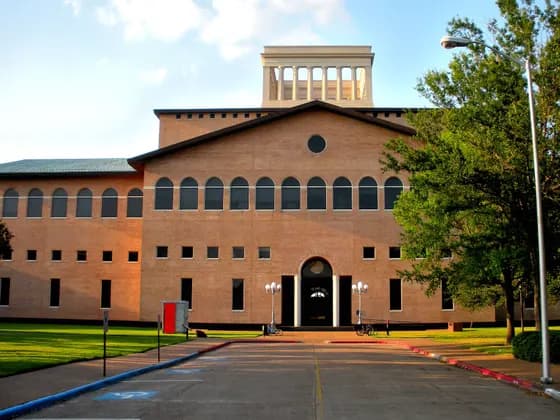
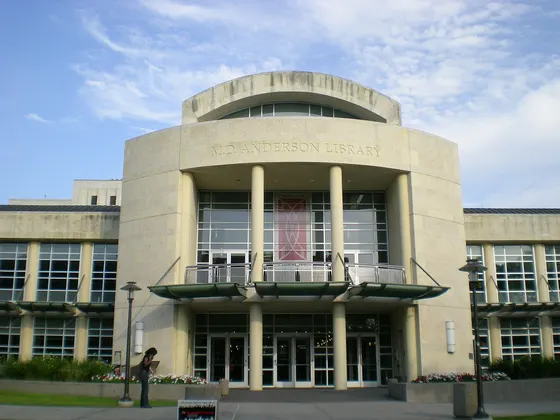

Photo: RJN · CC BY-SA 3.0 · cropped
Photo: RJN2 · CC BY-SA 3.0 · Photo: BrianReading · CC BY-SA 4.0 · Photo: Hequals2henry · CC BY-SA 3.0
The UH Fertitta Family College of Medicine MD program at a glance (2027 entry)
The University of Houston Tilman J. Fertitta Family College of Medicine (UH Fertitta Family College of Medicine, also called the UH College of Medicine) offers a four-year MD. Its first class of 30 started in fall 2020. The college was founded on a social mission to train doctors for underserved urban and rural communities in Houston and across Texas, with a focus on primary care. Classes are now about 60 students.
Phase 1, the 18-month Pre-Clerkship phase, teaches biomedical science through the organ systems, alongside clinical skills, primary care and community work. Phase 2, the Core Clerkship phase, is a hybrid Longitudinal Integrated Clerkship (LIC) of about 10 months. Pediatrics, obstetrics and gynecology and psychiatry run as six-week blocks, while family medicine, internal medicine and surgery run side by side so you can follow some patients over time. Phase 3, the 15-month Advanced Clerkships and Electives (ACE) phase, adds required rotations, electives and preparation for residency.
Primary care and community health run through the program. In the pre-clerkship phase you spend a half-day each week in a primary care practice. You also join household visits in the East End and Third Ward, neighborhoods near the college, with community health workers and nursing and social work students.
Step 1 of the USMLE, the first of the national licensing exams, tests the basic sciences and comes after the core clerkships, in January or February of year 3. Step 2 CK, on clinical knowledge, follows in Phase 3. Pre-clerkship courses are pass/fail; clerkships and clinical electives are graded Honors, Pass or Fail.
The Liaison Committee on Medical Education (LCME) accredits MD programs in the United States. Its directory, updated November 13, 2026, lists the program's accreditation status as Full, with 2020 as its initial year of accreditation and its next survey in 2028-29. For MD students, LCME accreditation is what makes them eligible to sit the USMLE.
| Degree | MD |
|---|---|
| Program length | 4 years: 18-month pre-clerkship, about 10-month core clerkship, 15-month ACE phase |
| Class size | About 60 students per class (April 2026) |
| Campus | College of Medicine building, Martin Luther King Boulevard, Houston (opened 2022) |
| Teaching style | Integrated organ-system courses with team-based, interactive classroom teaching |
| First patient contact | Year 1: weekly primary care clinic, plus Household-Centered Care |
| Core clerkships | Hybrid LIC, March of year 2 to mid-December of year 3 |
| Step 1 timing | January to February of year 3, after core clerkships; by March 31 |
| Grading | Pass/fail pre-clerkship; Honors/Pass/Fail clerkships and clinical electives |
| Accreditation | LCME Full; next survey 2028-29 (directory updated November 13, 2026) |
What makes the UH Fertitta Family College of Medicine MD program different
A weekly primary care clinic from your first semester
Through Longitudinal Primary Care (LPC) you spend a half-day a week in a primary care practice within 45 miles of the college, supervised by a physician preceptor. You learn as a junior member of the team, giving continuity of care to patients, and take on more as your skills grow.
Household visits with nursing and social work students
In Household-Centered Care (HCC) you join a team of community health workers and students from UH's Andy & Barbara Gessner College of Nursing and the social work program at the University of Houston-Downtown. Overseen by licensed UH faculty, teams visit families facing complex health and social problems in the East End and Third Ward, find services and referrals, and run community improvement projects.
A hybrid longitudinal integrated clerkship
In FIS, the family medicine, internal medicine and surgery half of the core clerkship, you combine hospital immersions with a full day each week beside a preceptor in each discipline. The goal is to follow at least three patients over time. Pediatrics, obstetrics and gynecology and psychiatry, known as POP, run as six-week blocks.
Rotations in rural Texas and the Rio Grande Valley
Every student completes a four-week Rural Health rotation; the 2025-26 ACE manual lists clinics, mostly in family medicine, in towns such as Bay City, Borger, Edna, Weimar and Winnie. The DHR Health hospital system in McAllen is a training site. The same manual lists it for Phase 3 sub-internships, in which you take on close to a first-year resident's duties, and for emergency medicine and intensive care.
A curriculum aimed at five societal problems
The college chose five problems for their impact on health in its region and threads them through the curriculum. They are access to care, health behaviors, depression and suicide, substance use disorders and the effects of adverse childhood experiences. Two one-week Clinical Focus Sessions in your first semester introduce this social mission.
How UH Fertitta Family College of Medicine teaches medicine
The college aims to teach biomedical, clinical, behavioral and social, health system and population health sciences together across all four years. In the pre-clerkship phase this rests on four pillars: Biomedical Sciences courses, Physicians, Patients and Populations (PPP), Longitudinal Primary Care and the Clinical Focus Sessions, with Household-Centered Care alongside.
The Biomedical Sciences courses take an organ-system approach. Two nine-week foundation courses come first: Clinical Anatomy and Human Development, then Scientific Foundations of Medicine. Nine organ-system courses of three to nine weeks follow, each teaching the anatomy, embryology, histology, physiology and pathophysiology of one system with the causes, diagnosis and treatment of its common and serious diseases.
Classroom sessions are interactive, and the 2026 student handbook expects you to complete pre-work before each session and review afterwards. Each biomedical science course sets a weekly in-class formative quiz, a feedback test you must complete to pass, with one closed-book attempt and explanations for every question.
In the clerkships, teaching moves to hospitals and clinics. Core clerkship students also have Wednesday academic days of four to eight hours with case-based conferences, simulation and core biomedical content. In Phase 3, LPC continues as virtual patient cases on i-Human software and case-based seminars each semester.
The ways you will learn
| Team-based and interactive sessions | The MD program page highlights team-based, interactive classroom teaching. Formative work can include case-based, problem-based and team-based learning, small groups and lab activities. |
|---|---|
| Physicians, Patients and Populations | A course of four hours a week through the pre-clerkship phase. It builds clinical skills and covers communication, professionalism, ethics, health disparities, evidence-based medicine, clinical reasoning, quality improvement, patient safety and health policy. It also houses the required Student Scholarly Project. |
| Standardized patients and PETA teaching | Standardized patients are trained community members who play patients. In CCASEL, the Center for Clinical Arts, Skills and Experiential Learning, they give feedback on your communication. Physical Examination Teaching Associates (PETA), also trained community members, teach examination technique on their own bodies, in small groups with immediate feedback, so you can practice without fear of hurting a patient. |
A typical week on the UH Fertitta Family College of Medicine program
A pre-clerkship policy revised in April 2026 caps scheduled learning, meaning classroom, lab and clinic time, at 24 hours a week, and assigned work outside those hours at 16. Your total academic workload is capped at 40 hours, and every week keeps three half-days unscheduled for self-study and personal time.
Activities generally run Monday to Friday during business hours on campus, apart from patient care in PPP and LPC. Alongside your biomedical science courses you have four hours of PPP, a half-day in your LPC practice and HCC activities. Under the college's 2024 attendance policy, you must attend every mandatory session and clinical experience, and non-emergency absences need approval at least four weeks ahead. Missing 10% or more of a course's, clerkship's or elective's required hours, for any reason, typically means not meeting its minimum requirements.
In the core clerkships, schedules vary by site and can include evenings, nights, weekends and call. During FIS outpatient weeks you spend a full day each week with each of your three preceptors, plus the Wednesday academic day. Duty hours are capped at 80 a week, with one day in seven off averaged over two weeks. You must have at least eight hours off between shifts, and in-house call comes no more often than every fourth night.
How anatomy is taught at UH Fertitta Family College of Medicine
Anatomy starts almost at once. Clinical Anatomy and Human Development runs for nine weeks from late July, straight after the first Clinical Focus Session, and covers gross anatomy, the basics of histology, and embryology and human development. In 2026 it had two exams and a final, on August 12, September 9 and September 25.
After that, anatomy is taught inside each organ-system course alongside embryology, histology, physiology and pathophysiology. Graded assessments can include laboratory practicals as well as written exams.
Sessions take place in the college's anatomy lab, where you wear a long white lab coat over scrubs; the coat leaves the lab only to be washed. The lab works with donated bodies: a 2023 University of Houston story describes a new class meeting their donors for the first time in July, then talking through the experience in small groups.
When you first meet patients at UH Fertitta Family College of Medicine
Your first patients come in year 1, through Longitudinal Primary Care. Your preceptor is a member of the UH voluntary faculty, assigned at random. The 2025 clinical assignment policy says these preceptors are mainly family physicians, general internists and geriatricians.
In clinic you take histories, examine patients, document visits and present cases, gaining independence as your skills grow. First-year objectives start with basic histories and exams under guidance; by year 2 you build a broad differential diagnosis, interpret common tests and recommend prevention, including nutrition. Preceptors evaluate you twice each semester, and several LPC sessions each semester take place in CCASEL.
Full-time clinical work begins with the core clerkships in March of year 2. You are never the sole provider of care: a licensed provider supervises you at all times, and how closely depends on the situation, your skill and your stage in the program.
The UH Fertitta Family College of Medicine curriculum, year by year
- Phase 1, year 1
Foundations and the first organ systems
On the 2026-27 calendar, year 1 starts on July 20 with a one-week Clinical Focus Session, followed by two nine-week foundation courses. From January you move into the organ-system courses, and classes end in early June.
- Clinical Focus Session 1, Our Community, Our Mission (July), on the neighboring Third Ward and the social determinants of health. Clinical Focus Session 2, Closing the Quality Gap (late November to early December), a project-based week on health equity and quality improvement.
- Clinical Anatomy and Human Development (late July to late September), then Scientific Foundations of Medicine: molecular and cell biology, human genetics, biochemistry and metabolism, and introductions to pharmacology and immunology.
- Integumentary System (four weeks), Hematologic and Lymphatic Systems (four weeks), Nervous System (six weeks), Musculoskeletal System (three weeks) and Gastrointestinal System and Nutrition (four weeks).
- PPP 1 and 2, LPC 1A and 1B and HCC 1A and 1B, with a week for exam retakes at the end of each semester.
- Phase 1, year 2
The last organ systems and the move to clerkships
Year 2 starts in July with the cardiovascular and respiratory systems and ends its organ-system courses with Behavioral Medicine in January. February brings the Comprehensive Basic Science Examination (CBSE), a National Board of Medical Examiners (NBME) exam on the basic sciences that the college uses to judge readiness, and Transition to Clerkships.
- Cardiovascular and Respiratory Systems (nine weeks), Renal and Urinary Systems (five weeks) and Reproductive and Endocrine Systems (six weeks) in the fall.
- Behavioral Medicine and PPP 4 in January, with LPC 2A and 2B and HCC 2A and 2B continuing.
- A CBSE study week in early February: the 2026 handbook requires a CBSE score of at least 50 to begin the clerkships.
- Transition to Clerkships (three weeks): oral case presentations, Advanced Cardiac Life Support (ACLS), common procedures, ECG and x-ray interpretation, history-taking and note writing.
- Phase 2, years 2 to 3
Core clerkships in a hybrid LIC
The core clerkship runs in two phases, from March to mid-July of year 2 and from August to mid-December of year 3. It covers six disciplines in two halves, POP and FIS, while HCC household visits continue and Wednesday academic days add classroom teaching.
- POP (20 weeks): pediatrics, obstetrics and gynecology and psychiatry as six-week block clerkships, each mixing inpatient and outpatient work.
- FIS (21 weeks): family medicine, internal medicine and surgery, with four-week inpatient immersions in surgery and internal medicine and a 10-week longitudinal outpatient experience.
- Required experiences in the 2026 clerkship manual range from newborn assessments, well-child visits, prenatal care and deliveries to mental status exams, diabetes and hypertension, acute chest pain, suturing and wound care.
- Exams in each LIC phase, then a week for retaking NBME subject exams (national end-of-clerkship tests, often called shelf exams). Retakes of Objective Structured Clinical Examinations (OSCEs), timed stations that test clinical skills with standardized patients, follow in January.
- Year 3, January to February
Step 1 study and exam
After the winter break, the 2026-27 calendar sets aside about eight weeks, early January to late February, as Step 1 study and elective time before Phase 3 starts in March. The MD program page describes four weeks to prepare for and take USMLE Step 1, extended to eight if needed.
- You take the CBSE three times before Step 1, including at the end of the LIC, when a score below the threshold can lead to advice to take extra study time.
- The 2026 handbook requires a CBSE score of 68 or better before you take Step 1.
- Phase 3, years 3 to 4
Advanced Clerkships and Electives
Phase 3 runs for about 15 months, from March of year 3 to graduation in May of year 4, in blocks of about four weeks. You complete four required rotations, at least 24 weeks of electives and Step 2 CK, and you can spend up to eight weeks interviewing for residency.
- Intensive care (four weeks): medical, surgical, pediatric or newborn ICU.
- Sub-internship (four weeks) in medicine, surgery, pediatrics, obstetrics and gynecology, psychiatry or family medicine.
- Emergency medicine (four weeks): 14 to 16 shifts (2025-26 ACE manual) and an end-of-rotation shelf exam.
- Rural Health (four weeks) at a clinic in a small Texas town, with three short writing assignments (2025-26 ACE manual).
- LPC virtual cases and seminars, and HCC household visits and community projects.
- Up to 16 self-scheduled weeks for Step 2 preparation and testing, residency interviews and vacation, then two weeks of Transition to Residency in late April.
How you are assessed at UH Fertitta Family College of Medicine
Pre-clerkship courses are graded Pass, Pass* or Fail. To pass, you need at least 70% on the cumulative final exam and at least 70% across all of the course's summative assessments, the graded exams, and you must complete every formative assignment. If you fall short, you get one retake; passing it earns a P*, a pass after an initial fail, which stays on your transcript.
Retakes are limited: one course in the fall of year 1, two in the spring and one in the pre-clinical part of year 2. Failing a retake means remediation before the next stage. Summative exams can be multiple-choice, short-answer or essay questions, laboratory practicals or OSCEs, which test communication, examination skills, professionalism and clinical reasoning. Instead of reviewing exact exam questions, you get feedback such as exam reports or rubrics.
Core clerkships, required advanced clerkships, selectives and clinical electives are graded Honors/Pass/Fail, while LPC, HCC and non-clinical electives are pass/fail. Clinical grades draw on preceptor evaluations, and required clerkships give written narrative feedback on areas such as communication and professionalism. Failing one core clerkship means remediation before Phase 3, and failing three or more can mean repeating the whole LIC or dismissal.
For the Class of 2028, the fall 2026 LIC exam dates are September 14 and November 2 for POP, October 7 and November 11 for FIS, and December 18 for both. The family medicine objectives list NBME exams among their assessment methods. In Phase 3, the emergency medicine rotation ends with a shelf exam.
Step 1 has been reported only as pass or fail for exams taken from January 26, 2022, while Step 2 CK gets a numeric score. The college expects you to take Step 1 after the core clerkships, by March 31 of year 3 and before Phase 3. Your first Step 2 CK attempt must come by August 15 of the year before graduation, ideally by June 1 to help residency advising. You must pass it to graduate, with the passing score documented by May 1 of the year you graduate.
In August 2026 the USMLE program announced a move to designated testing dates from January 2029, with Step exams offered less often each year. Its June 2026 notice had said 2028. On the current schedule, a student entering in 2027 would finish the core clerkships in December 2029 and sit Step 1 in January or February 2030, about a year after the switch. Step 2 CK would come between March and August 15, 2030, so both sittings would fall after the switch.
- No CBSE grade is recorded on your transcript; the exam is used to judge readiness for the clerkships and for Step 1.
- Sitting Step 1 without the college's approval brings a sanction on your Medical Student Performance Evaluation (MSPE), the summary letter sent with residency applications. You must then show a passing score before starting Phase 3.
- The college's grading policy notes that Texas licensure limits you to three attempts at each Step. Failing Step 1 or Step 2 CK three times leads to review by the Student Performance and Advancement Committee and probable dismissal.
- The USMLE has asked schools to review rules that restrict when students take the Step exams, so the college's timing could change.
- You must finish the pre-clerkship phase within three years and the whole MD within six, including any leave of absence.
UH Fertitta Family College of Medicine clinical rotations: where you will actually train
Clinical training takes place at partner hospitals, practices and clinics, and the 2026 handbook says the vast majority of clerkship activity is off-site. In the pre-clerkship phase and core clerkships, sites are normally within 40 miles of campus, though you may sometimes be sent further, with possible support for travel and lodging. Some sites cannot be reached by public transport, and you arrange and pay for your own travel.
An April 2026 University of Houston announcement says students train at sites including HCA Clearlake, HCA Kingwood, HCA Women's Care, DHR Health, St. Joseph Medical Center and Memorial Hermann Memorial City, a new partner that year. HCA Houston Healthcare, a system of hospitals across and around Houston, also co-sponsors residency programs with the college. Affiliations with Texas Children's Hospital Austin, Driscoll Children's Hospital in Corpus Christi and Nexus Health broaden students' exposure further. Core clerkship sites are assigned by randomizer based on capacity.
Phase 3 rotations are assigned by a lottery that weighs your preferences. In the 2025-26 ACE manual, emergency medicine runs at HCA Houston Healthcare North Cypress, Kingwood and Clear Lake and at DHR Health in McAllen. Sub-internships and ICU rotations use HCA Kingwood, DHR Health, Texas Children's Hospital (TCH) sites in Katy and The Woodlands, Woman's Hospital of Texas and St. Joseph, with a limited family medicine option in Waco.
Under the 2025-26 ACE manual, the college covers housing for rural and DHR Health rotations, and travel to rural sites as the syllabus sets out; travel to DHR Health is your own cost. For DHR rotations the manual strongly advises against crossing into the neighboring Mexican state of Tamaulipas, noting that it is on the US State Department's Do Not Travel list. In October 2025 UH and DHR Health announced a joint medical research and education center in the Rio Grande Valley, which DHR Health will build with space for UH faculty, students and researchers.
Core clerkship hospitals, LPC practices and many Phase 3 rotations. The 2025-26 ACE manual lists MD Anderson as a home elective site.
- HCA Houston Healthcare Kingwood
- HCA Houston Healthcare Clear Lake
- HCA Houston Healthcare North Cypress
- HCA Women's Care
- Woman's Hospital of Texas
- St. Joseph Medical Center
- Memorial Hermann Memorial City
- Texas Children's Hospital sites in Katy and The Woodlands
- MD Anderson
- Primary care practices within 45 miles of the college
Listed among student training sites in April 2026. The 2025-26 ACE manual places Phase 3 emergency medicine, sub-internships and ICU rotations here, with housing covered.
- DHR Health, McAllen
The required four-week Rural Health rotation, mostly in family medicine, at clinics listed in the 2025-26 ACE manual.
- Clinics in Bay City, Wharton, Borger, Cleveland, Edna, Weimar and Winnie
Affiliations the university named in April 2026, plus the Waco option listed in the 2025-26 ACE manual.
- Texas Children's Hospital Austin
- Driscoll Children's Hospital, Corpus Christi
- Waco (family medicine sub-internship, limited availability)
Electives, selectives and away rotations at UH Fertitta Family College of Medicine
Phase 3 includes at least 24 weeks of electives, and the 2025-26 ACE manual recommends 28. Electives can be clinical, educational or research, picked with your advisor from an approved catalog, and four-week electives cannot be cut to two.
The manual sets limits: no more than 12 weeks of non-clinical electives, including research; 8 weeks of research; 12 weeks of away rotations; and 12 weeks in any one specialty. Home electives include HCA hospitals, St. Joseph Medical Center, MD Anderson, DHR Health and Houston-area practices of UH volunteer faculty, each with its own onboarding steps, due one to two months ahead.
Away rotations, also called extramural electives, are electives at other institutions, often used to explore a specialty or a residency program. Under the 2025-26 manual, you apply through the Visiting Student Learning Opportunities (VSLO) system, with access managed by the Office of Student Affairs. You must be in good academic standing and pay your own costs, including travel and housing, and global health electives require the college's preparation course or a similar one.
In the 2025-26 manual's timeline, you plan Phase 3 with your specialty advisor in the fall of year 3. You then submit a schedule request they have signed in December and enter a lottery, with schedules released in January.
The Department of Health Systems and Population Health Sciences has run week-long trips abroad. In July 2025 medical students went to Ghana, meeting University of Ghana Medical School students and joining clinical rounds at Korle Bu Teaching Hospital in Accra, a November 2025 University of Houston story reports. The same story says students and faculty had cared for patients in rural Honduras for several years. The department's April 2026 Honduras trip was canceled.
Dual degrees and research years at UH Fertitta Family College of Medicine
Every student completes a Student Scholarly Project (SSP) in the pre-clerkship PPP course: a mentored project that applies what you learn in biostatistics, evidence-based medicine, public health and bioinformatics. Students work in pairs with a research mentor for the year and present a poster at the Student Scholarly Project Research Day.
In Phase 3 you can take four or eight weeks of research electives for credit. The 2025-26 ACE manual requires approval two months ahead, a faculty supervisor, at least 40 hours a week and a deliverable. You are also encouraged to use up to 12 weeks of elective time for a scholarly concentration, a focused area of study with its own project. Fields include primary care, community and population health, global health, health informatics, health care administration, quality improvement, patient safety, health policy and biomedical ethics.
Summer options include the Biomedical Sciences Summer Research Program: eight to ten weeks of full-time research with a faculty mentor, paid $4,000 on completion. There are also the STEM RISE program in a UH lab, the Humana Institute's interprofessional summer health research program and a research exchange with Swansea University in Wales. The college's March 2026 report on its second annual Student Research Day counted 38 student presenters.
Facilities and support at UH Fertitta Family College of Medicine
Where you will learn
The college's building opened in summer 2022 on a 43-acre site along Martin Luther King Boulevard, minutes from the University of Houston's main campus. Its spaces include a team-based learning auditorium, an active learning classroom, an anatomy lab, a simulation lab, a skills lab, exam rooms and learning community rooms. An information commons on the first floor houses part of the Health Sciences Library.
CCASEL is the college's hub for simulation and clinical skills training and home to its Standardized Patient and PETA programs. Current students can book its space for self-directed practice at no charge.
Course materials, calendars and grades live in Canvas, and MedHub handles clinical schedules, case logs and evaluations.
Support while you study
You are preassigned to one of six learning communities, groups for academic, social and peer support. They are named for physicians, among them Dr. Rebecca Lee Crumpler, Dr. Paul Farmer and Dr. Thelma Patten Law, one of the first African American women physicians in Texas and the first in Houston. Each has a learning community professor, a faculty member you meet one-on-one every pre-clerkship semester and can turn to with academic or personal problems. An October 2025 college story describes about one planned event a month, plus Spirit Week and Field Day.
Career advising runs through Cougar CiM, based on the Careers in Medicine program of the Association of American Medical Colleges (AAMC), with class meetings every semester from orientation. During the core clerkships you choose a specialty advisor, who helps with specialty choice, fourth-year rotations, electives and residency applications and signs your Phase 3 schedule.
The Office of Academic Support offers learning-strategy workshops, one-on-one peer tutoring for courses, clerkships and USMLE preparation, and an academic success coach. Course directors meet any student who misses a formative threshold, and repeated misses lead to an individualized learning plan drawn up with Student Affairs and your learning community professor.
An embedded counselor from UH Counseling and Psychological Services (CAPS) works at the college, with drop-in triage hours on Mondays, Wednesdays and Fridays. The American Medical Association's Student Assistance Program adds six confidential counseling sessions with access around the clock.
Is the UH Fertitta Family College of Medicine program right for you?
This program may suit you if
- You want a weekly primary care clinic from your first semester, giving continuity of care to patients as a junior member of the team.
- Community health appeals to you, including household visits in the East End and Third Ward with nursing and social work students.
- You like the idea of following patients across family medicine, internal medicine and surgery at once, with a weekly clinic day in each.
- You would rather take Step 1 after the core clerkships, with up to eight weeks set aside to prepare.
- Rural or underserved practice interests you, and you would value a required rural health month and the chance of rotations at DHR Health in McAllen.
Things to think about
- Clinical sites are spread across Greater Houston and beyond, some without public transport, and you arrange and pay for your own travel.
- Core clerkship sites are assigned by randomizer, so your hospital may not be your first choice.
- Basic science stays with you through year 3: you need a CBSE score of 50 to start the LIC and 68 to sit Step 1.
- The college is young: its first 22 graduates earned their MDs in May 2024, and its clinical network has grown from a handful of sites since it opened in 2020.
- Grading turns tiered once clerkships start, with Honors, Pass or Fail for every clerkship and clinical elective.
UH Fertitta Family College of Medicine MD program — frequently asked questions
Applying to UH Fertitta Family College of Medicine?
How to get into UH Fertitta Family College of Medicine
Prerequisites, MCAT, AMCAS personal statement, secondaries and interview, step by step.
Open the guide →UH Fertitta Family College of Medicine admissions profile
MCAT and GPA profile, acceptance rate, interview format and key dates.
See the profile →Compare UH Fertitta Family College of Medicine with other schools
Put the teaching style, anatomy teaching and clinical sites next to another school.
Open the comparison →Prepare for the UH Fertitta Family College of Medicine interview
Format breakdown, school-specific sample questions and prep tips for this interview.
Read the guide →Where this UH Fertitta Family College of Medicine program guide came from
This guide was written from 50 official sources — University of Houston Tilman J. Fertitta Family College of Medicine's own program pages and curriculum documents, plus the accreditor and the hospitals and health systems the school trains students in where they publish detail — read on 2026-11-28, then checked claim by claim against those sources.
- MD Program (curriculum phases, courses, LIC and Phase 3 requirements; links the clerkship and LPC faculty manuals)
- Four-Year Curriculum diagram
- Course Schedule, Fall 2026 to Summer 2027
- 2026 Student Handbook
- Advanced Clerkship and Electives Student and Faculty Manual, 2025-2026 Edition
- Grading Policies (Student Performance and Advancement Committee), revision 8, August 2026
- Grading Criteria in Pre-Clerkship Courses Policy
- Clinical Assignment Policy
- Pre-Clerkship Scheduled Time Policy, April 2026
- Attendance and Absence Policy, approved May 14, 2024
- Clinical Duty Hours Policy
- Narrative Assessment Policy
- Clinical Supervision Policy
- Exam Schedule 2026-2027, Class of 2030
- Exam Schedule 2026-2027, Class of 2028
- Exam Schedule 2026-2027, Class of 2027
- Office of Medical Education (grading and clinical skills FAQs)
- Education, including the Center for Clinical Arts, Skills and Experiential Learning (CCASEL)
- Preceptorship (Longitudinal Primary Care; links the LPC faculty manual)
- Education Resources (learning software)
- Household-Centered Care Program
- Interprofessional Student Teams
- Behavioral and Social Sciences (the five societal issues)
- Tilman J. Fertitta Family College of Medicine home page (building and facilities)
- About the college (mission and accreditation)
- Reflections on Life, Death and Humanity: medical students honor body donors (2023)
- UH Fertitta College of Medicine expands clinical clerkships (April 2026)
- UH and DHR Health establish a medical research and education center in the Rio Grande Valley (October 2025)
- UH Fertitta College of Medicine welcomes new dean (September 2024)
- UH College of Medicine newest member of Texas Medical Center (February 2021)
- Student Life (first graduating class)
- Medical Student Research Hub
- Student Scholarly Projects
- Medical Student Research FAQ
- Summer Research Project Opportunity
- Houston to Swansea research exchange (July 2026)
- Innovation on display at Medical Student Research Day (March 2026)
- Ghana Trip (July 2025)
- Healing Beyond Borders: UH medical students in Ghana (November 2025)
- Honduras Trip (2026 trip canceled)
- Learning Communities
- Support and belonging through learning communities (October 2025)
- Office of Student Affairs
- HonorsMed, The Honors College
- LCME directory of accredited programs (updated November 13, 2026)
- USMLE: Updated timeline for designated testing dates, transition in January 2029 (August 6, 2026)
- USMLE Designated Testing Dates Information Hub
- USMLE notice of June 23, 2026 on limited testing dates
- USMLE Step 1 transition to pass/fail only score reporting
- USMLE Score Interpretation Guidelines (updated August 17, 2026)
Curricula are restructured between cycles. Anything here that decides your application — how anatomy is taught, a clinical campus assignment, a required research year — should be confirmed against the official page for your entry year.
Applying to UH Fertitta Family College of Medicine?
We help US applicants with MCAT strategy, the AMCAS personal statement, secondary essays and interview prep — everything you need for a competitive UH Fertitta Family College of Medicine application.