
The Texas A&M Vashisht College of Medicine MD program
What you actually study, and where you will be
Texas A&M Vashisht College of Medicine's MD is a 4-year program with an integrated curriculum, with patient contact from Year 1 and clinical rotations in Bryan-College Station, Dallas, Houston and Round Rock, Texas (2027 entry). Texas A&M's MD opens with about 18 months of integrated science blocks and clinical-skills courses, then clerkships, the full-time clinical rotations, from April of second year. On the Bryan-College Station track you learn the core specialties side by side for a year; Dallas, Houston and Round Rock students first spend at least a year in Bryan-College Station. The Engineering Medicine (EnMed) track spends all four years in Houston and adds a Master of Engineering.
- Degree
- MD
- Length
- 4 years
- Teaching
- Integrated
- Clinical contact
- Year 1

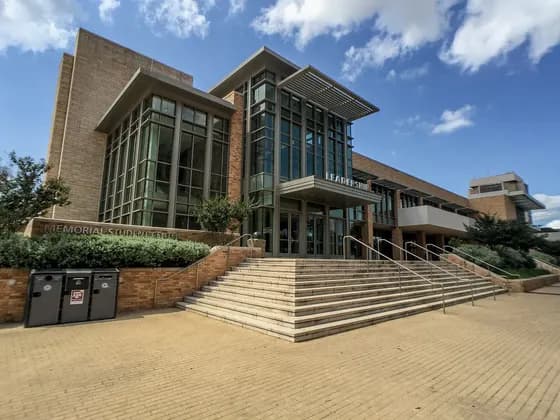
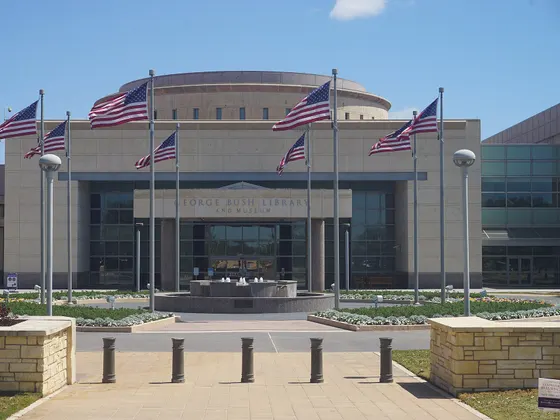
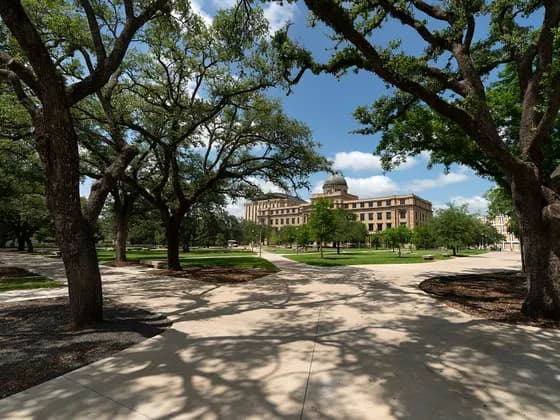
Photo: Texas A&M Health Science Center · CC BY-SA 4.0 · cropped
Photo: Patrick Creighton · CC BY-SA 4.0 · Photo: Michael Barera · CC BY-SA 4.0 · Photo: Kailynn.Nelson · CC BY-SA 4.0
The Texas A&M Vashisht College of Medicine MD program at a glance (2027 entry)
The Texas A&M University Naresh K. Vashisht College of Medicine (Texas A&M College of Medicine, or VCOM) awards the MD, Doctor of Medicine, after a four-year program and enrolls 200 students a year. Its headquarters, the Bryan-College Station campus, is in Bryan, and students also train on campuses in Dallas, Houston and Round Rock. The college opened in 1977 with a charter class of 32, one of five medical schools created under the Teague-Cranston Act, which paired new schools with existing Veterans Affairs hospitals. It took its current name on August 9, 2025, after a gift from Naresh K. Vashisht.
About 18 months of pre-clerkship study teach the science in integrated blocks, Foundations first and then the organ systems. Alongside them, Practice of Medicine courses teach you to interview and examine patients from the first semester. About 30 months of clinical training follow. Clerkships in the core specialties begin in April of second year, after a study block for Step 1 of the United States Medical Licensing Examination (USMLE).
Bryan-College Station students stay all four years and take the A&M Integrated Medicine (AIM) program. It is a longitudinal integrated clerkship: you learn the core specialties together across a year while following your own panel of patients. Dallas and Round Rock students move after 12 months, and Houston (Willowbrook) students after 12 or 18 months (the MD page gives both). The EnMed track is based in Houston's Texas Medical Center for all four years and adds a Master of Engineering (MEng); everyone else is on what the school calls the MED track.
Pre-clerkship courses are graded Satisfactory or Unsatisfactory, and clerkships Honors, High Pass, Pass or Fail. The Liaison Committee on Medical Education (LCME), which accredits MD programs in the United States, lists the program's status as Full, with its next survey in 2027-28, in a directory updated November 13, 2026.
| Degree | MD (Doctor of Medicine), four years |
|---|---|
| Class size | 200 students a year |
| Campus tracks | Bryan-College Station (AIM), Dallas, Houston (Willowbrook), Round Rock; EnMed in Houston |
| Teaching style | Integrated blocks; lectures, team-based learning, case sessions and labs |
| Anatomy | Dissection-based Medical Gross Anatomy in the fall of first year |
| First patient contact | Year 1, in Practice of Medicine clinical-skills courses |
| Clerkships begin | April of second year, after the Step 1 study block |
| Grading | Pre-clerkship Satisfactory/Unsatisfactory; clerkships Honors, High Pass, Pass or Fail |
| LCME status | Full; next survey 2027-28 (directory updated November 13, 2026) |
What makes the Texas A&M Vashisht College of Medicine MD program different
A year-long integrated clerkship in Bryan-College Station
In AIM, which the school dates to 2013, you spend half or full days with community physicians in six core specialties throughout the year. You follow your own panel of patients to their consultations, surgeries and hospital stays, using two to three free half days a week. You also take call in labor and delivery or surgery.
Four campus tracks across Texas
Beyond AIM in Bryan-College Station, Dallas students train at Baylor University Medical Center at Dallas, Houston students with Houston Methodist, and Round Rock students across more than ten hospitals in Williamson and Travis counties.
An MD and a Master of Engineering in four years
EnMed, run with Texas A&M's College of Engineering and Houston Methodist Hospital, starts with a six-week summer course on developing medical devices. Engineering courses run alongside the MD, three Innovation Immersion Experiences have you prototype and test early medical technologies, and you graduate with both degrees.
Rural, military and aerospace options
The Rural Medicine Program, founded in 2021, offers two- or four-week rural rotations with free housing from first year. Military medicine electives run at Army, Air Force and veterans' medical facilities, and 15 optional Distinctions, from aerospace and rural medicine to ultrasound, run across all four years.
How Texas A&M Vashisht College of Medicine teaches medicine
Most science is taught in integrated blocks. Foundations of Medicine I covers histology and organ physiology, Foundations of Medicine II covers biochemistry, genetics and pharmacology, and gross anatomy runs alongside them. Partway through first year you move into organ-system blocks, which teach normal function, disease and treatment for each system together, from cardiovascular to integument and musculoskeletal.
Practice of Medicine is the clinical thread. It starts with history taking, examination, communication, ethics and patient safety, adds special populations and the social determinants of health, and in second year moves into primary care practices. Humanities, Ethics, Altruism and Leadership (HEAL) content adds lectures, discussion and small-group cases.
Delivery differs by track. On the MED track most lectures are recorded and posted within three business days, though mandatory sessions are not, and some lectures are shared by video conference with other locations. EnMed teaches the pre-clerkship phase as a flipped classroom: you prepare beforehand, and class time goes to team-based learning, labs and workshops. Both tracks are paperless and run on Canvas.
The ways you will learn
| Team-based learning (TBL) | You prepare before class, take a short readiness test alone and then with your team, and apply the material to problems. TBL assessments count among each course's minor assessments. |
|---|---|
| Case sessions | Clinical Synthesis and Integration Exercises (CSIEs) and Clinicopathologic Correlations (CPCs) are case sessions that can carry graded quizzes. The MD page highlights this synthesis case-based teaching across the pre-clerkship phase, and Introduction to Disease is taught through cases. |
| Clinical skills and OSCEs | Physical exam teaching associates (PETAs) let small groups practice a head-to-toe examination on them, and gynecological and male urogenital teaching associates teach breast, pelvic, prostate and urogenital exams. Objective Structured Clinical Examinations (OSCEs), timed stations with standardized patients (trained actors), test these skills. |
| Medical Student Grand Rounds | A first-year course in which you learn literature searching, study one medically relevant topic in depth, drawing mainly on biochemistry and genetics, and present it to peers and faculty in a small group. |
| Interprofessional learning | You learn alongside nursing, pharmacy, public health and other Texas A&M Health students. Disaster Day, a day-long emergency simulation for about 700 students, is set for April 2, 2027 at the Brazos County Expo in Bryan. |
A typical week on the Texas A&M Vashisht College of Medicine program
A work-hours policy shapes the pre-clerkship week. Scheduled activities run Monday to Friday between 8am and 6pm and average no more than 28 hours a week. At least 25 hours a week are unstructured opportunity time for independent study, including at least 10 weekday hours in blocks of two to five hours. Total workload, including study, should average no more than 60 hours.
Each course must average at least three hours a week of active learning, such as labs or TBL, and together these rules are expected to keep lectures under 13 hours a week. Clerkship weeks are longer: the 2026 faculty handbook estimates 60 to 70 hours on surgery, 50 to 60 on internal medicine and 40 to 55 on the 6-week clerkships.
- Mandatory sessions need a sign-in, and arriving more than 10 minutes late counts as an absence. You get two personal days in first year and one in the pre-clerkship part of second year.
- Missing more than 20% of a course's mandatory sessions, or 25% in a semester, for any reason, can mean repeating the course or semester.
- Under the November 2025 handbook, clerkship work is capped at 80 hours a week averaged over four weeks, with one day in seven free. Continuous duty is limited to 16 hours, plus up to 4 more.
How anatomy is taught at Texas A&M Vashisht College of Medicine
Medical Gross Anatomy (MEID 607) is an 8-credit course in the fall of first year, taken alongside Foundations of Medicine and Practice of Medicine I. The catalog describes it as integrated, dissection-based teaching that applies anatomic principles to patient care. On the 2025-26 MED chart it ran from late July to mid-December; on the 2026-27 EnMed chart it runs from late July to early November, in Houston.
The bodies come from the college's Willed Body Program, administered from the Medical Research and Education Building in Bryan. The teaching laboratory is restricted to medical students, teaching faculty, necessary staff and health professionals. When the course ends, first-year students hold an annual memorial service for the donors. Netter's Atlas of Human Anatomy is a required textbook, available electronically through the Medical Sciences Library.
When you first meet patients at Texas A&M Vashisht College of Medicine
Clinical skills start in the first semester. Practice of Medicine I has you complete, document and present a patient encounter, and pre-clerkship skills sessions include work with physical exam teaching associates. Pre-clerkship OSCEs use standardized patients at the Simulation and Immersive Learning Center.
Second year takes you into clinical settings. The renal block includes a visit to a dialysis unit. In the fall, Practice of Medicine III rotates you through primary care in family medicine, internal medicine, pediatrics, gynecology, obstetrics, otolaryngology (ear, nose and throat), ophthalmology, dermatology and orthopedics. EnMed students need a car, since required rotations in both phases take them to hospitals and clinics outside the Texas Medical Center.
You can add clinical time of your own. Rural community medicine electives start in first year, the MED track's 10-week summer break leaves room for research or clinical experiences, and the catalog lists clinical shadowing courses. An indigent health care elective has students manage a student-run clinic and teach first- and second-year students there to assess and present patients.
The Texas A&M Vashisht College of Medicine curriculum, year by year
- Year 1
Foundations, anatomy and the first organ systems
In 2026, orientation was on July 20 and first-year classes began on July 23. MED-track students spend the year in Bryan-College Station and EnMed students in Houston. The fall builds the scientific foundations and anatomy; spring turns to the nervous system, disease mechanisms and the heart.
- Fall: Foundations of Medicine I (7 credits) and II (5 credits), Medical Gross Anatomy (8) and Practice of Medicine I (8).
- Spring: Neuroscience (6 credits), Introduction to Disease (9), covering immunology, microbiology, pathology and pharmacology, and Cardiovascular (5).
- Practice of Medicine II (8 credits) and Medical Student Grand Rounds (2) run through spring.
- On the MED track a 10-week break follows, for wellness, research or clinical experiences. On EnMed's 2026-27 chart, June holds a break or an optional Innovation Immersion Experience, and second year starts in early July.
- Year 2
Organ systems, Step 1 and the move to clerkships
Dallas and Round Rock students now study on their clinical campus. The fall covers most of the remaining organ-system blocks (all of them on EnMed's 2026-27 chart). On the MED track's 2025-26 chart, January and February held Endocrinology and Reproductive Sciences, Evidence Based Medicine and Transition to Clerkship, followed by Step 1 study until clerkship orientation in early April.
- Fall blocks: Respiratory (3 credits), Hematology/Oncology (4), Renal Genitourinary (4), Metabolism/Gastrointestinal/Nutrition (5) and Integument-Musculoskeletal (2).
- Practice of Medicine III (6 credits): rotations through primary care practices.
- Spring on the MED track: Endocrinology and Reproductive Sciences (5 credits), the last organ-system block.
- Evidence Based Medicine (1 credit): critical appraisal, biostatistics, a team-based journal club and an introduction to research.
- Transition to Clerkship (4 credits): history taking, examination, note writing and presenting patients, practiced for each clerkship.
- Clerkship phase
Core clerkships, April of year 2 to March of year 3
Outside AIM, MED-track students take internal medicine and surgery as 8-week blocks and the other core clerkships as 6-week blocks, with an elective period after each 8-week block in the 2026 chart. Bryan-College Station students take the same specialties together in AIM.
- Internal medicine (8 weeks): rounds, progress notes, admissions, discharges and follow-up clinics.
- Surgery (8 weeks): wards, operating room, pre- and post-operative care and suturing; some rotations use night float.
- Family medicine, pediatrics, psychiatry and obstetrics and gynecology (6 weeks each); obstetrics includes overnight labor and delivery shifts.
- Radiology (2 weeks), analyzing and interpreting images, fitted into the elective periods.
- Practice of Medicine IV and V prepare you to teach and cover topics such as patient safety, impaired physicians and moral injury.
- Study for Step 2 CK (Clinical Knowledge), the second USMLE exam, which tests applied clinical science: the 2026 chart shows students taking about four to six weeks, between January and March.
- Transition to Residency
April of year 3 to May of year 4
The last 13 months or so run mostly in 4-week sessions. You complete the remaining required rotations, take selectives matched to your specialty and electives, and keep about four weeks for residency interviews. The year also includes a capstone in March, a wellbeing week and a bootcamp in early May before graduation.
- Emergency medicine (4 weeks): 16 eight-hour shifts, including nights.
- Neurology (4 weeks, third or fourth year): inpatient rounds, consults and outpatient clinics.
- Critical care (4 weeks), with cardiovascular, neonatal, surgical and neuro intensive care units among the options.
- Practice of Medicine Capstone (2 weeks): medical law, risk management, prescribing, practice management, financial planning and licensure.
- Interprofessional Social and Ethical Dilemmas in Healthcare: online, case-based ethics with students from other Texas A&M Health professions.
- EnMed track
Engineering alongside the MD, all four years in Houston
EnMed students, who need a degree in engineering or computer science, take the MD courses with engineering added. A six-week engineering course starts in late May, before orientation. On the 2026-27 chart, the organ-system blocks and Evidence Based Medicine finish by mid-December of second year and the Step 1 study and exam block runs from early January to mid-February. Clerkships at Houston Methodist Hospital start in mid-April.
- Introduction to Engineering Innovation in Medicine: the biodesign process of identifying needs, inventing solutions and implementing them.
- Engineering Foundations in Medicine I to III and a weekly journal club alongside the pre-clerkship courses.
- Three Innovation Immersion Experiences (4 credits each) in design thinking, prototyping and testing, in elective time.
- Engineering Analysis of Clinical Processes I to V during clerkships: regular reflection and a personal library of clinical needs.
How you are assessed at Texas A&M Vashisht College of Medicine
Pre-clerkship courses are graded Satisfactory (70 to 100) or Unsatisfactory (69 or below). To pass you need 70% overall and a weighted average of 70% on the major assessments, which make up at least 85% of the grade. Quizzes, TBL and case-session assessments and lab quizzes make up the rest. Exams are in person, on your own laptop with Examplify software, and several courses use NBME (National Board of Medical Examiners) Customized Assessments drawn from USMLE and NBME subject exam question pools.
Fail a course and you get one remediation exam; passing it records the grade as U/S, but it still counts as a failure. One failure in a year brings an Academic Warning, two lead the Student Promotions Committee to review your whole record, and three in a year mean repeating the year or semester. For major exams you get a Strengths and Opportunities report rather than question-by-question feedback.
Clerkships are graded Honors, High Pass, Pass or Fail under Texas A&M Student Rule 10 (revised 2026). Grades generally combine clinical evaluations, an NBME subject exam (a national end-of-clerkship test, often called a shelf exam), an OSCE or oral exam, logs and professionalism. Since the Class of 2025, class rank has been based only on clerkship grades, and the Medical Student Performance Evaluation (MSPE), the dean's letter for residency applications, reports it by quartile.
Under an April 2026 policy you get two attempts at each shelf exam: a first miss is an Incomplete, not a failure, and passing the retake makes the clerkship grade a Pass. Failing the retake, the OSCE or oral exam at its second attempt, the clinical rotation or professionalism means an F, even if you pass everything else. After remediation the grade becomes F/P, and the remediated part cannot earn Honors or High Pass. Failing two or more components means repeating the whole clerkship.
You must pass Step 1, reported only as pass or fail since January 26, 2022, before starting fourth year. Graduation also needs a pass in Step 2 CK. On the MED track, a student not ready by the end of the Step 1 study block attends clerkship orientation but starts clerkships later. Step 2 CK should follow your last third-year clerkship, with a first attempt by August 15 and a pass by May 1 of fourth year.
In August 2026 the USMLE program announced a move to designated testing dates from January 2029, with Step exams offered less often each year. Its June 2026 notice had said 2028. On the current schedule, a MED-track student entering in 2027 would sit Step 1 in late March or early April 2029, within a few months after the switch. EnMed students would sit it shortly after the switch, at the end of a study block that starts in January, and both tracks would reach Step 2 CK around early 2030.
- AIM students not ready for Step 1 by orientation week still start AIM and sit the exam after their AIM clerkships.
- In required clinical courses, patient and procedure logs must be updated by 7 a.m. every Monday, and failing to complete them means a 69/F for the course.
- Failing the same USMLE exam three times sends your case to the Student Promotions Committee for possible dismissal. The handbook's Step 1 rules cover the MED track; EnMed's own policy was awaiting approval in November 2025.
- LCME accreditation is what makes the school's MD students eligible to take the USMLE.
Texas A&M Vashisht College of Medicine clinical rotations: where you will actually train
Before you start, you rank the campus tracks, and a Campus Designation Committee, with a representative from each campus and fourth-year Student Advocates, assigns places within capacity limits set each year. You can ask for a different campus in the spring of first year; after that, a change needs a compelling personal reason and depends on capacity.
Each clerkship assigns its own sites, and the clerkship director decides any request. Outside AIM, MED-track students can request a clerkship order, subject to capacity, and then have one week to swap a whole schedule with a classmate on the same campus, with Student Affairs approval. They can also ask to take a single clerkship on another campus if space allows, and AIM students can ask to spend some opportunity time elsewhere. Some rotations are elsewhere in Texas, such as pediatrics at Driscoll Children's Hospital in Corpus Christi.
The headquarters campus; students stay all four years. CommonSpirit's own site now lists the St. Joseph hospitals as CommonSpirit - St. Joseph Hospital - Bryan and - College Station. AIM includes two-week inpatient blocks in pediatrics at Driscoll Children's Hospital, Corpus Christi, and in psychiatry at a veterans hospital in Waco or La Hacienda Treatment Center in Hunt.
- CHI St. Joseph Regional Health Center (310 beds)
- CHI St. Joseph College Station Hospital (167 beds)
- Baylor Scott & White Hospital College Station
- The Physicians Center
- Vashisht College of Medicine Family Medicine Residency, Bryan
Students arrive after 12 months in Bryan-College Station and stay three years. Baylor Dallas, part of Baylor Scott & White Health, had 914 licensed beds and 312 residents and fellows in fiscal year 2022.
- Baylor University Medical Center at Dallas
- Cook Children's Medical Center
- University Behavioral Health Denton
The campus, set up in 2014, lists clerkship directors for the Texas Medical Center and, separately, for Willowbrook. Obstetrics and gynecology is mainly at Houston Methodist Hospital and St. Joseph Medical Center, and family medicine clinics are around Houston and Willowbrook. EnMed's required clerkships are within Houston Methodist Hospital.
- Houston Methodist Hospital
- St. Joseph Medical Center
Students arrive after 12 months in Bryan-College Station. The campus, opened in 2008 and in its current building since 2009, works with three major hospital systems and more than ten hospitals in Williamson and Travis counties, with over 400 faculty.
Electives with military and veteran patients, and research tied to their needs.
- Brooke Army Medical Center
- Carl R. Darnall Army Medical Center
- Central Texas Veterans Health Care System
- Wilford Hall Ambulatory Surgical Center, Lackland Air Force Base, San Antonio
Electives, selectives and away rotations at Texas A&M Vashisht College of Medicine
Fourth year is mostly electives. The 2026-27 catalog requires 40 elective credit hours: 12 in selectives, which follow recommendations for your chosen specialty, and 28 in electives that include a 4-credit acting internship and 4 credits of critical care. You can choose catalog electives on any campus, design your own, or take a limited number at other medical schools.
An acting internship, also called a sub-internship, is a month of working at near-intern level. It must last at least four weeks, include significant inpatient work and give you primary responsibility for a panel of patients under an attending or senior resident, never an intern. You can do it on a Texas A&M campus or, with advance approval, at an LCME-accredited school or a site accredited by the Accreditation Council for Graduate Medical Education (ACGME).
Away rotations, electives at other institutions, go through the student-initiated elective process: each needs written objectives, a faculty evaluator and approval before it starts, or you get no credit. Catalog options range from point-of-care ultrasound, toxicology and prehospital medicine to healthcare for the underserved at Baylor Community Care clinics, a county health department and rural community medicine. International choices include global health in Costa Rica and history of medicine research in London.
For residency interviews in fourth year, you can be excused for up to two weekdays of a two-week rotation or four of a four-week one. The handbook suggests planning time off for the November to January peak.
Dual degrees and research years at Texas A&M Vashisht College of Medicine
The MD/PhD, which took its first student in 1992, typically takes seven to eight years, about eight on average. You can do the PhD in the college's Medical Sciences program or another Texas A&M program related to biomedicine, with research opportunities through the Houston Methodist partnership. Students choose a 2-4-2 sequence (about two preclinical years, four of research and two clinical) or 3-4-1, with core clerkships before the PhD. They start five weeks before orientation and attend a weekly journal club.
MD Plus adds a year for a master's degree, taken before the MD or between third and fourth year rather than alongside it. The tracks are MD + MBA, MD + MS in Medical Sciences, MD + MPH, MD + EDHP (education for healthcare professionals) and MD + STJR (science and technology journalism). Two more are MD+ ENLD (entrepreneurial leadership and innovation) and MD+ MLS (health law, policy and management). The MS is condensed to 12 months, with a basic scientist and a clinical scientist as mentors.
EnMed's Master of Engineering needs at least 30 credits, 10 blended with medicine, 8 of engineering alone and the rest project-based, plus a final examination. Up to 12 experiential engineering credits can count toward the MD as elective credit, through a credit-by-exam process. The program says translational research is part of every EnMed student's training.
For a research year without a PhD, the Academy of Physician Scientists is open to MED- and EnMed-track students between third and fourth year. Scholars work toward an MS in Medical Sciences or an MEng with a 12-month Clinical and Translational Research course that starts with a one-week boot camp.
The 15 Distinctions are optional programs that run across all four years. They cover aerospace medicine, art in medicine, artificial intelligence and innovation, clinical scholarship and research, community service, disaster and emergency preparedness, and global health. The others are health systems science, humanities, lifestyle medicine, medical education, military medicine, rural medicine, telehealth and ultrasound. Several require a peer-reviewed manuscript, and completing one earns a medallion, awarded at the hooding ceremony and worn at graduation.
Facilities and support at Texas A&M Vashisht College of Medicine
Where you will learn
The Texas A&M Health campus on John Sharp Parkway in Bryan is the base for first year on the MED track. The Health Professions Education Building (HPEB) houses the college, the College of Nursing and the Simulation and Immersive Learning Center. The Administration Building, formerly Clinical Building 1, holds the Medical Sciences Library, which moved its main location there from College Station in 2026 and is open 24 hours by badge.
The Simulation and Immersive Learning Center, operating since 2005, uses computer-programmed full-body manikins and a standardized patient program, with sites in Bryan, Round Rock, Houston and at Baylor University Medical Center in Dallas. Round Rock's building, shared with the College of Nursing, has a library renovated in August 2026.
EnMed's building at 1020 Holcombe Boulevard in the Texas Medical Center holds the EnMed Innovation Center. It has a maker space with more than 20 3D printers and molding and casting equipment, a machine shop and a computational lab with VR headsets. A hospital simulation floor provides practice with standardized patients, and EnMed students also use the Fischer Engineering Design Center on the main Texas A&M campus.
Support while you study
Each campus has Student Affairs deans, academic support staff and an Academic Navigator, who helps with registration, scheduling and progress toward your degree. Academic Support Services offers study-skills and exam-analysis sessions, learning-disability screening, Step 1 study calendars with one-on-one check-ins, and shelf exam preparation in the clinical years. The college also provides a stipend toward study materials.
Career advising includes monthly Doc Talks and specialty interest groups in the pre-clerkship years, a specialty-specific faculty advisor by February of third year, and fourth-year mock interviews by specialty.
The November 2025 handbook says the college pays for up to nine confidential counseling sessions a year with contracted counselors, and some campuses offer telehealth visits with the college's Department of Psychiatry. The TELUS Health Student Support app gives 24/7 access to a counselor. Each class elects Student Advocates as confidential contacts, and the Aggie Conduct Awareness form lets you report concerning or exemplary behavior, confidentially if you wish.
Is the Texas A&M Vashisht College of Medicine program right for you?
This program may suit you if
- You want to learn the core specialties together over a year and follow your own patients, as AIM students do in Bryan-College Station.
- You want full-time clinical training to start in April of second year, with elective periods during the clerkship year.
- You hold an engineering or computer science degree and want an MD and a Master of Engineering in four years.
- You want options in rural, military or aerospace medicine, from rural rotations with free housing to electives at military medical centers.
Things to think about
- Unless you are on the Bryan-College Station or EnMed track, you change cities during the program. Dallas and Round Rock students leave Bryan-College Station after 12 months, and Houston students after 12 or 18 months (the MD page gives both).
- Campus places depend on capacity, so you may not get your first-choice track.
- Step 1 comes after about 18 months, and on the current schedule 2027 entrants sit it in the first months after the USMLE's switch to designated testing dates.
- AIM's inpatient pediatrics and psychiatry blocks are away from Bryan, and EnMed students need a car for rotations outside the Texas Medical Center.
Texas A&M Vashisht College of Medicine MD program — frequently asked questions
Applying to Texas A&M Vashisht College of Medicine?
How to get into Texas A&M Vashisht College of Medicine
Prerequisites, MCAT, AMCAS personal statement, secondaries and interview, step by step.
Open the guide →Texas A&M Vashisht College of Medicine admissions profile
MCAT and GPA profile, acceptance rate, interview format and key dates.
See the profile →Compare Texas A&M Vashisht College of Medicine with other schools
Put the teaching style, anatomy teaching and clinical sites next to another school.
Open the comparison →Prepare for the Texas A&M Vashisht College of Medicine interview
Format breakdown, school-specific sample questions and prep tips for this interview.
Read the guide →Where this Texas A&M Vashisht College of Medicine program guide came from
This guide was written from 65 official sources — Texas A&M University Naresh K. Vashisht College of Medicine's own program pages and curriculum documents, plus the accreditor and the hospitals and health systems the school trains students in where they publish detail — read on 2026-11-28, then checked claim by claim against those sources.
- Doctor of Medicine (MD) Program, Texas A&M Vashisht College of Medicine
- A&M Integrated Medicine (AIM) Program
- Doctor of Medicine, Texas A&M Catalogs 2026-2027
- MEID course descriptions, Texas A&M Catalogs 2026-2027
- Vashisht College of Medicine Student Handbook, revised November 2025
- Pre-Clerkship Student Manual, AY 2026-2027
- Affiliate Clinical Faculty Handbook (January 2026): curriculum charts and clerkship tables
- EnMed Track Curriculum Model, AY 2026-27
- Vashisht College of Medicine Academic Calendar 2026-27, Texas A&M Catalogs
- Pre-Clerkship Work Hours Policy
- Clerkship Remediation and Failure Policy, effective April 2026
- Texas A&M Student Rule 10, Grading (revised 2026)
- Patient Encounter and Procedure Logs
- Vashisht College of Medicine Campuses
- Bryan-College Station Regional Campus
- Dallas Regional Campus
- Houston Regional Campus
- Round Rock Campus
- About CommonSpirit in Brazos Valley
- Military Medicine Training Sites
- Electives Information: acting internship and critical care
- Student Initiated Electives
- EMED course descriptions, Texas A&M Catalogs 2026-2027
- MFCM course descriptions, Texas A&M Catalogs 2026-2027
- MHUM course descriptions, Texas A&M Catalogs 2026-2027
- Master of Engineering in Engineering and Doctor of Medicine Combined Degree Program, Texas A&M Catalogs
- ITDE course descriptions, Texas A&M Catalogs 2026-2027
- EnMed Courses and Curriculum Model
- EnMed Facilities
- EnMed Frequently Asked Questions
- EnMed Pre-Matriculation Policies and Information
- MD/PhD Program
- MD/PhD Combined Degree Program, Texas A&M Catalogs 2026-2027
- MD Plus Program
- MD Plus frequently asked questions
- MD + MS in Medical Science
- Academy of Physician Scientists Pathway Overview
- Academy of Physician Scientists Curriculum
- Vashisht College of Medicine Distinctions
- Rural Medicine Program: Strengthening the Rural Physician Pipeline
- Rural Medicine Program History
- Willed Body Program
- Simulation and Immersive Learning Center, Texas A&M Health
- Simulation and Immersive Learning Center: About Us
- Standardized Patient Program and locations
- Physical Exam Teaching Associate (PETA) Program
- Gynecological and Male Urogenital Teaching Associate Program
- Disaster Day, Texas A&M Health interprofessional simulation
- Interprofessional Social and Ethical Dilemmas in Healthcare (ISEDH)
- Texas A&M Health campuses: Bryan-College Station
- Texas A&M Health campuses: Houston
- Texas A&M Health campuses: Round Rock
- Medical Sciences Library, Bryan
- Medical Sciences Library, Round Rock
- Academic Support Services
- Student Affairs Team by campus
- Principles and Guidelines for Curriculum Development (revised October 2019)
- Vashisht College of Medicine Student Services Guide, updated June 2026
- History of the Vashisht College of Medicine
- Texas A&M Naresh K. Vashisht College of Medicine home page (August 2025 renaming)
- LCME directory of accredited programs, updated November 13, 2026
- USMLE Designated Testing Dates Information Hub
- USMLE: Updated timeline, transition to designated testing dates in January 2029 (August 6, 2026)
- USMLE: Transition to limited testing dates starting in 2028 (June 23, 2026, since updated)
- USMLE Step 1 transition to pass/fail only score reporting
Curricula are restructured between cycles. Anything here that decides your application — how anatomy is taught, a clinical campus assignment, a required research year — should be confirmed against the official page for your entry year.
Applying to Texas A&M Vashisht College of Medicine?
We help US applicants with MCAT strategy, the AMCAS personal statement, secondary essays and interview prep — everything you need for a competitive Texas A&M Vashisht College of Medicine application.