
The Penn State College of Medicine MD program
What you actually study, and where you will be
Penn State College of Medicine's MD is a 4-year program taught through problem-based learning in an integrated curriculum, with patient contact from Year 1 and clinical rotations in Hershey, central Pennsylvania and State College (2027 entry). Penn State College of Medicine's MD is built on four pillars: biomedical sciences, clinical sciences, health systems science and health humanities. Phase I, roughly the first year and a half, pairs small-group problem-based learning with patient work from Year 1. USMLE Step 1, the first national licensing exam, comes before clerkships, the required clinical rotations, which start in March of Year 2. Most students train around Hershey, and a small group trains at the University Park Regional Campus in State College.
- Degree
- MD
- Length
- 4 years
- Teaching
- Problem-based learning + Integrated
- Clinical contact
- Year 1

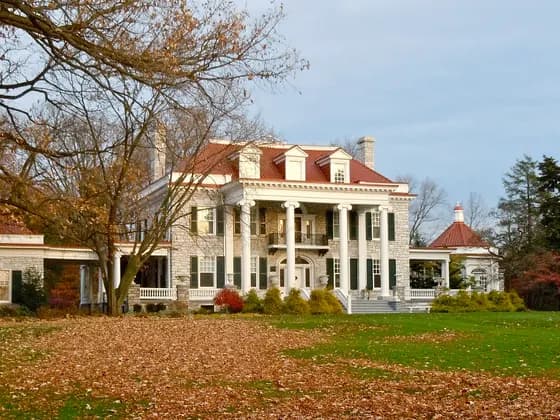
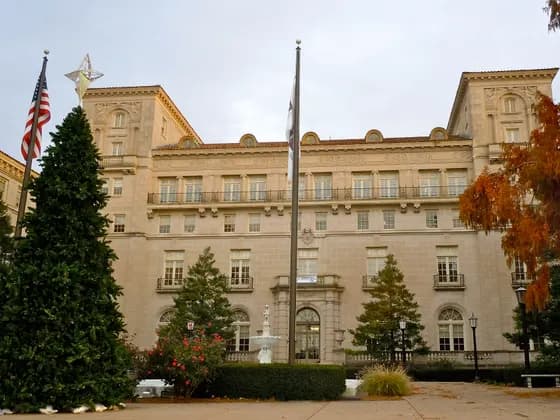

Photo: Penn State Health · CC BY 2.0 · cropped
Photo: Smallbones · CC0 · Photo: Smallbones · CC0 · Photo: J. Passepartout · CC BY-SA 4.0
The Penn State College of Medicine MD program at a glance (2027 entry)
Penn State College of Medicine (Penn State Hershey) offers a four-year MD based in Hershey, Pennsylvania, next to Penn State Health Milton S. Hershey Medical Center. The class that entered in 2026, the Class of 2030, had 146 students. Most study in Hershey, and a small group studies at the University Park Regional Campus in State College.
The curriculum rests on four pillars: biomedical sciences, clinical sciences, health systems science and health humanities. Health systems science covers how care is organized, paid for and improved, and health humanities looks at how culture and ethics shape care. The school presents this as a move beyond the traditional two pillars, because care now concerns populations as well as individual patients.
The program runs in three phases. Phase I: Foundations is the pre-clerkship stage of classroom, lab and early patient work, followed by study for Step 1 of the United States Medical Licensing Examination (USMLE). Phase II: Clinical Core holds the clerkships from March of Year 2. Phase III: Discovery and Residency Prep leads into residency, the specialty training after medical school.
Day to day, Phase I centers on problem-based learning (PBL), in which a small group works through a patient case and sets out what it needs to learn.
The Liaison Committee on Medical Education (LCME), which accredits MD programs in the United States, lists the program's status as Full, with its next survey in 2027-28. That directory page is dated November 2, 2026. The college's Bulletin, its official catalog, says it was reviewed in February 2026. LCME accreditation is what makes MD students eligible to sit the USMLE.
| Degree | MD |
|---|---|
| Program length | 4 years; 3-year pathways in five specialties |
| Curriculum | Four pillars across three phases |
| Class size | 146 first-year MD students in the Class of 2030 |
| Main campus | Hershey, Pa., beside Penn State Health Milton S. Hershey Medical Center |
| Regional campus | University Park Regional Campus, State College: 12 spots a year |
| Anatomy | Cadaver lab with dissection at Hershey; anatomy runs in five Phase I courses |
| First patient contact | Year 1: patient navigator for a semester, guiding people through their care |
| Step 1 timing | After Phase I, before clerkships start in March of Year 2 |
| Grading | Phase I pass/fail; graded clinical courses Honors, High Pass, Pass, Fail |
What makes the Penn State College of Medicine MD program different
A patient navigator role in Year 1
For a semester of Year 1, the Patient Experience Program makes you a patient navigator at a clinical site, guiding people through their care. The program began in 2014.
Health systems science as a full pillar
Three Phase I courses move from how care is structured and financed, to population health and the economics of care, to quality improvement and patient safety. The subject stays embedded in the clerkships, and Phase II closes with a two-week course tying it to the humanities.
Humanities in every phase of the program
The school says its Department of Humanities, created when the college opened in 1967, was the first in a US college of medicine. Humanities coursework fills Tuesday mornings in Phase I, meets twice monthly through the clerkships and ends with a required month-long selective, a course you choose from those on offer.
A very small class at University Park
The University Park Regional Campus in State College has 12 spots a year, and nine students joined it in the Class of 2030. The campus stresses rural health.
Three-year MD pathways into residency
If you already know your specialty, accelerated pathways in five fields let you graduate in three years. Finishing the pathway brings a scholarship equal to one year of tuition.
A required research project
Every MD student except MD/PhD students completes a mentored Medical Student Research project. The final report follows the shape of a journal article, and its title appears in the evaluation letter sent to residency programs.
How Penn State College of Medicine teaches medicine
Phase I teaches the four pillars side by side. Biomedical courses run one after another, mostly by organ system. Longer courses in clinical skills, humanities and health systems science run alongside them, so in the weeks you study the heart you are also practicing history taking and learning how care is financed.
The Bulletin names two formats common to every curriculum option: small-group PBL and direct patient experiences, with lectures as a supplement. The curriculum page adds team-based learning, peer instruction, simulation and lab work. PBL is the backbone of Host Defense/Host Response, and Form and Function uses PBL cases to connect its subjects.
Teaching moves to the wards and clinics in Phase II, through bedside rounds, case-based discussion, conferences and self-study, while humanities and health systems teaching continue. In Phase III you take on more responsibility in acting internships, also called sub-internships, where you function at the level of an intern, a first-year resident.
The ways you will learn
| Problem-based learning | You work with a group of eight peers and a faculty facilitator to analyze cases. The school's MD/PhD handbook, which refers to the 2025-26 year, says sessions run two hours, three times a week, all year, graded pass/fail largely on participation and preparation. |
|---|---|
| Clinical skills groups | Foundations of Patient-Centered Care runs within your Society, a learning community explained under support. Clinical Skills Educators, all trained physicians, teach history taking, examination, presentations and clinical reasoning, when possible with the same group across both years. |
| Standardized patients | These are people coached to act out a case and give you feedback. Sessions can be recorded for review, and they let you practice hard conversations, such as giving bad news, before you face them on a ward. |
| Peer physical examination | You practice on classmates as clinician, patient and observer. You can work with a peer of the same gender identity, and you can decline a specific exam without giving a reason. |
| Wet labs and simulation | Gastrointestinal Pathophysiology and Nutrition uses wet labs, which are hands-on bench sessions, and simulation labs. Neural and Behavioral Science has pathology wet labs, and Transition to Clerkships teaches advanced clinical skills through simulation. |
A typical week on the Penn State College of Medicine program
School guidelines cap scheduled Phase I class time at 28 hours a week, and all required work in and out of class at 34 hours, both averaged over the academic year. Three-year pathway students may spend six more hours a week on pathway coursework.
The MD/PhD handbook describes the weekly rhythm. Medical courses run every weekday from 8 a.m. to noon, and afternoons are for independent study and PBL preparation, with clinical skills sessions on some afternoons. The Bulletin adds humanities coursework every Tuesday morning.
On clerkships, clinical and on-site work is capped at 80 hours a week, with one day in seven free and no more than 24 continuous hours plus four for handoffs and teaching. Call comes no more than once a week in Phase II and every third night in Phase III, averaged over four weeks.
In Phase I, attendance is required at sessions where you work with classmates or patients, or whose learning cannot be recreated. The handbook allows up to two general absence days and five medical absence days each semester. General days cannot fall next to a break or on sessions that cannot be recreated, such as exams, clinical skills exams, simulation sessions and Neurology Day. On clerkships you get at most two excused days in a four-week clerkship, and Phase III allows up to four per four-week rotation for residency interviews.
How anatomy is taught at Penn State College of Medicine
The 2026-27 calendar marks five Phase I courses as running with anatomy. Cardiovascular Medicine, Form and Function, and Gastrointestinal Pathophysiology and Nutrition fall in Year 1, and Endocrinology and Reproductive Medicine and Neural and Behavioral Science in Year 2. Anatomy therefore arrives in stretches tied to the body system you are studying.
The school's handbooks point to hands-on dissection in the Hershey anatomy lab. The MD/PhD handbook marks anatomy lab sessions as mandatory and names Grant's Dissector as the reference for in-class dissections. The MD Student Handbook's lab rules require goggles and a mask when students use hammers, chisels, bone pliers and saws.
At Hershey, the Education Program on Human Structure runs anatomy teaching, the anatomy lab, the willed-body donation program and ultrasound teaching for medical students. Anatomy graduate students help teach in its cadaver-based labs and lab exams. The Graduate Bulletin's learning outcomes for anatomy PhD students include lab presentations of prosections, specimens already dissected for study. Once you have completed Year 3 you can take Musculoskeletal Advanced Anatomy, and the catalog also lists a one-credit special-topics course in Advanced Dissection.
The Cognitive Skills Program's tips show how the work goes. You preview each session in the Dissector, then meet the same terms in lecture, afternoon review sessions and formal lab and imaging time. It suggests choosing seven to ten structures a day and going back to the lab with classmates to find them on several bodies, ideally five.
Safety training covers allergens and respiratory irritants. If you have allergies or a respiratory condition, or are pregnant or breastfeeding, Student Health can screen you and recommend extra protective equipment, which the school provides.
Students also honor the donors. At the 2022 Anatomy Memorial Service, led in planning by a second-year student, more than 150 family members and friends remembered 97 people who had donated their bodies.
When you first meet patients at Penn State College of Medicine
Two Year 1 strands bring you to patients. Foundations of Patient-Centered Care starts physical examination early, under physician supervision, on classmates, standardized patients and real patients, with applied sessions in inpatient or outpatient settings.
The Patient Experience Program then gives you a role of your own. As a navigator at your assigned site you build a relationship with a patient, take a history that includes the social conditions affecting their health, and work with the care team on those barriers.
Contact builds through Phase I. Neurology Day in Neural and Behavioral Science puts small groups with about 14 patients who have different neurological disorders. You can also volunteer at LionCare, the student-run free clinic at the Bethesda Mission in Harrisburg, where each first-year pairs with a second-year under a supervising physician.
Full-time clinical work starts in mid-March of Year 2, after the two-week Transition to Clerkships course in early March. On clerkships a supervisor must be present or readily available while you take a history or examine a patient, and no order goes ahead without a supervisor's approval.
The Penn State College of Medicine curriculum, year by year
- Year 1 (Phase I)
Foundations, then the organ systems
Year 1 opens with orientation in mid-July and a one-week Transition to Medical School course. Broad science leads into organ-system courses. Months below follow the 2026-27 calendar.
- Scientific Principles of Medicine (late July to early September): biochemistry, physiology, histology, genetics, cell and molecular biology and hematology, with the basics of pharmacology.
- Host Defense/Host Response (September and October): eight weeks on microbiology, infectious disease, immunology and oncology.
- Cardiovascular Medicine with anatomy (November to mid-December), then Respiratory Medicine (January to early February) and Renal Medicine (February to mid-March).
- Form and Function with anatomy (late March and April): anatomy, rheumatology, orthopedics and dermatology, taught as linked subjects.
- Gastrointestinal Pathophysiology and Nutrition with anatomy (May to early June).
- Alongside: Foundations of Patient-Centered Care; Foundations of Health Humanities, then Humanities in Context; Foundations of Health Systems Science, then Health Systems Science in Context.
- Medical Student Research Project 1: research methods, ethics and literature searching.
- OSCE I in May: your first Objective Structured Clinical Examination, a practical test of clinical skills in standardized scenarios.
- Summer: time for research or global health work.
- Year 2, July to February (Phase I)
Final courses, then Step 1
Second-year courses run from August to December and complete Phase I coursework. You then study for USMLE Step 1, which you must take before clerkships begin.
- Endocrinology and Reproductive Medicine with anatomy (August to early October): hormones, the reproductive systems and pregnancy.
- Neural and Behavioral Science with anatomy (October to December): neuroscience, neurology, psychiatry and behavioral science, with pathology wet labs and Neurology Day.
- Science of Health Systems: quality improvement, patient safety, design thinking, process-improvement methods such as Six Sigma, and leadership.
- Communications: the assumptions and biases that shape communication between two people and in teams.
- Foundations of Patient-Centered Care continues, ending with OSCE II in December.
- Consolidation course (four weeks in January): optional large-group review sessions and required timed practice exams from the National Board of Medical Examiners (NBME), inside a study period of up to eight weeks.
- Year 2 March to Year 3 March (Phase II)
Clinical Core: eight required clerkships
The calendar sets out 12 four-week rotations in six eight-week blocks, from mid-March to the end of February. They hold the eight core clerkships and a four-week elective, a rotation you choose.
- Internal Medicine: the catalog describes a four-week inpatient team block and two two-week selectives in subspecialties.
- Surgery: pre- and post-operative care, procedures and early trauma management, as part of the surgical team.
- Family and Community Medicine: largely outpatient care with family physicians.
- Pediatrics (four weeks): inpatient, outpatient and newborn nursery care.
- Obstetrics and Gynecology (four weeks): labor and delivery, clinics, the operating room and a subspecialty.
- Psychiatry (four weeks): the catalog lists two weeks inpatient, one week seeing patients on other hospital services, called consultation-liaison, and one week outpatient.
- Neurology, also called the Neuroscience Clerkship (four weeks): two weeks of core neurology and two weeks of selectives.
- Community Health Systems Integration (four weeks): community-based care across Penn State Health, in settings such as physician offices, urgent care and specialty clinics.
- Humanities Across Clerkships: twice-monthly sessions, also called backstory rounds, on the stresses of clinical work and professional identity.
- Systems-Conscious and Humanistic Medicine: two weeks (March 1 to 14 in the 2026-27 calendar) on case reviews called morbidity and mortality conferences, handoffs, informed consent and residency applications.
- Year 3 spring and Year 4 (Phase III)
Discovery and Residency Prep
Discovery gives you time for career exploration, research and study for USMLE Step 2 CK (Clinical Knowledge), the second licensing exam. As you settle on a specialty, Residency Prep moves you into acting internships. The phase ends with Transition to Internship in early May and graduation in mid-May.
- One ward acting internship: cardiology, family medicine, general surgery, hematology-oncology, obstetrics and gynecology, medicine or pediatrics.
- One critical care acting internship: anesthesia, emergency medicine, medical intensive care, pediatric critical care or surgical intensive care.
- 24 weeks of electives, plus a month-long humanities selective.
- At least two four-week clinical rotations with active patient care in the five months before graduation.
- USMLE Step 2 CK, with the option of a four-week dedicated study period.
- Medical Student Research Project II: your final report.
- Transition to Internship: workshops and small-group selectives on clinical skills, handoffs, teaching and your own support systems.
- Three-year pathways
Accelerated MD in five specialties
Accelerated pathways in emergency medicine, family medicine, internal medicine, pediatrics and psychiatry run at Hershey and aim at a Penn State Health residency. You apply separately once accepted, before you start or, depending on the pathway, during Year 1. Graduation requirements match the four-year program, but electives and vacations are reduced.
- A Career Confirmation Elective in spring of Year 1, then six weeks of electives the following summer, so there is no full summer break.
- A clerkship spread over the second year of Phase I, then the remaining core clerkships with your classmates.
- Step 1 within six weeks of finishing Phase I, and Step 2 CK passed by March 10 of your graduation year.
- At least eight weeks of electives rather than 24.
- After your first semester, any deficiency, including on an OSCE, moves you to the four-year program.
- Commencement in May of Year 3 and residency from June, with entry through the National Resident Matching Program.
- Residencies last three years, except psychiatry at four. Psychiatry takes up to two students a year.
- Penn State Health supports five family medicine students a year with tuition and a stipend, in return for five years of work there after residency.
How you are assessed at Penn State College of Medicine
Every Phase I course is graded Pass or Fail under University Faculty Senate Policy 47-45, last revised in February 2026. To move on you need an overall 70% or above in each course, plus OSCE I and OSCE II, or a remediation plan for OSCE II. Courses of four weeks or more must give you practice feedback by their midpoint. In every phase, final grades must reach you within six weeks of a course or clerkship ending.
In Phases II and III, courses offered on a graded basis use Honors, High Pass, Pass and Fail, and all others are Satisfactory or Unsatisfactory. Each clerkship director sets the criteria, including the passing standard, with approval from the curriculum committee. Knowledge is tested with NBME shelf exams, national subject exams in a specialty, or customized versions. Surgery, for example, adds an OSCE, a group case presentation across the four pillars and a health systems reflection.
If you fall short, there is a set path. A knowledge deficiency in Phase I means a Personal Improvement Plan and a remediation exam, and passing puts a Pass on your transcript. Failing a shelf exam the first time also means one remediation exam, with Pass the highest grade possible. Failing a remediation means a Fail, repeating the course or clerkship and referral to the Academic Progress Committee.
You must pass USMLE Step 1 and Step 2 CK to graduate. Step 1 has been reported as pass or fail only since January 26, 2022, and Step 2 CK still gets a three-digit score, with a minimum pass of 218. A committee can place you in a four-week Intensive Review of Medical Knowledge elective if your practice exams suggest you need longer than eight weeks. You must pass Step 1 within three attempts and by December 31 of your study year.
You can sit Step 2 CK once Phase II is complete, apart from Systems-Conscious and Humanistic Medicine. The school urges you to take it early in Phase III, because your score may affect career choice and scheduling. The deadline is the start of Phase III Rotation 7, on or around August 31 of Year 4, and you have three attempts.
In August 2026 the USMLE program announced a move to designated testing dates from January 2029, with Step exams offered less often each year. Its June 2026 announcement had named 2028. On the current schedule, projected from the 2026-27 calendar for both campuses, a student entering in July 2027 would start the study period in January 2029. That student would sit Step 1 shortly after the switch, before clerkships start that March. Step 2 CK would follow in 2030, with a deadline around August 31, 2030, also after the switch.
- OSCEs test communication, history taking, physical examination, clinical reasoning and medical knowledge. You must pass all of them, including OSCE III, a Phase II requirement. If you fail OSCE III, you go through remediation, and failing that sends you to the Academic Progress Committee.
- From the 2026-27 study period on, students who have not taken Step 1 after 12 weeks go on extended absence and return only after passing, typically in September or the next March.
- The Step 1 result can arrive after clerkships start. If it is a fail, you finish a four-week clerkship first, but you leave an eight-week one, return to study and later repeat it in full.
- A first Step 2 CK failure means a four-week study elective that does not count toward Phase III requirements, and each retake must come within eight weeks.
- The USMLE FAQ, updated August 6, 2026, lists 17 Step 1 and 14 Step 2 CK administrations for 2029, with dates published more than a year ahead.
- The Medical Student Performance Evaluation (MSPE), or dean's letter, summarizes your performance for residency programs. The school says it does not rank students.
- To graduate you must also complete the research project and finish within seven years of entering, with separate rules for MD/PhD students.
- The handbook lists grounds on which you can be considered for dismissal. They include a Does Not Meet rating, its mark for falling short, in three Phase I courses, or two failed shelf exams in Phase II.
Penn State College of Medicine clinical rotations: where you will actually train
A lottery sets your clerkship schedule and sites. Right after it you can swap sites with classmates for a set period, and then the assignment is final unless compelling circumstances apply. Hershey students center on Penn State Health Milton S. Hershey Medical Center, the 551-bed flagship hospital of a system serving 15 counties.
Family and Community Medicine spreads farthest, with sites from Hershey and Harrisburg out to Altoona, Indiana, Pittsburgh and Washington, Pa. Community Health Systems Integration lists Cumberland, Berks and Lancaster/Lebanon as regions. Most sites beyond Hershey Medical Center cannot be reached by public transportation, so the school highly recommends a car, and sites are not changed for transportation reasons.
Year 2 students can apply for the Kaiser Permanente Mid-Atlantic Permanente Medical Group longitudinal integrated clerkship (LIC). An LIC is a year-long format in which you stay with the same teachers and patients across specialties instead of moving through separate blocks. This one offers customized schedules, one-to-one teaching from over 60 physician faculty, surgical skills training and a scholarship toward living expenses.
All applicants go through the same admissions process. Once you hold an offer from the college, you can interview for a University Park spot, which carries a partial scholarship each year. The 2026-27 Bulletin says the Hershey, accelerated and University Park options share the same vision, core curriculum, three-phase framework and graduation competencies, by a design that ensures comparability. It lists the same year-by-year courses for both campuses and names this one the University Park Regional Campus.
The campus page describes longitudinal clinical training at Mount Nittany Medical Center in all three phases, and it hosts most core inpatient experiences. The shared calendar and the Bulletin list block rotations and the year diagrams read Clerkship Blocks/LIC, so ask the campus how clerkships run for your class. Trips to Hershey happen for orientation and for sessions and assessments common to all students, and the school highly recommends a vehicle.
The Rural Health Scholars Program, with up to six places in 2026-27, runs across all four years. You have a summer community experience in rural Pennsylvania after Year 1, one core clerkship with a rural clinical partner, then an advanced rural elective and a final capstone project in Year 4. Its 2025 sites were Indiana and Snowshoe, Pa. The program is linked to the LION Mobile Clinic, a student-led, physician-supervised unit launched in 2022 that takes preventive care and screenings to rural communities.
Main base for Hershey students. Golisano Children's Hospital and the Penn State Cancer Institute are also in Hershey.
- Penn State Health Milton S. Hershey Medical Center
- Penn State Health Medical Group practices in Hershey and Palmyra
Holy Spirit is used for Internal Medicine and Psychiatry. The practices are Family Medicine sites.
- Penn State Health Holy Spirit Medical Center, Camp Hill
- Penn State Health Medical Group practices in Camp Hill, Harrisburg, Mechanicsburg and Middletown
The VA is used for Internal Medicine and Psychiatry. The others are Family Medicine sites.
- Lebanon VA
- WellSpan Good Samaritan Hospital, Lebanon
- Lancaster General Health
- Penn State Health Medical Group practices in Elizabethtown and Mount Joy
A Family Medicine site.
- Penn State Health St. Joseph Medical Center
Family Medicine sites. At UPMC St. Margaret you must supply your own housing.
- Indiana Regional Medical Center, Indiana
- UPMC Altoona Family Physicians, Altoona
- UPMC St. Margaret, Pittsburgh
- UPMC Washington, Washington
Clerkship sites for University Park students. The Neuroscience Clerkship page lists the Pleasant Gap hospital at the same address under the name HealthSouth.
- Mount Nittany Medical Center
- Mount Nittany Health practices in State College, Boalsburg and Bellefonte
- Penn State Medical Group practices in State College
- University Health Services, University Park
- Encompass Health Rehabilitation Hospital of Nittany Valley, Pleasant Gap
Electives, selectives and away rotations at Penn State College of Medicine
Phase II includes the equivalent of four weeks of electives. Phase III needs at least 24 weeks, 12 or more of them at Penn State Health or College of Medicine affiliates and no more than eight in research. Your Longitudinal Academic Counselor must approve your choices before they enter the lottery, and changes generally close four weeks before a rotation.
Medicine alone offers more than a dozen electives and acting internships. Third-year choices include cardiology, emergency medicine, neurosurgery and otolaryngology. Fourth-year choices include addiction medicine at Hershey and primary care sports medicine, with separate Hershey and University Park versions. Social Impact and Community Advocacy in Medicine can use the LION Mobile Clinic as an anchor site.
Recent humanities selective topics include human virtue, jazz and the art of medicine, and graphic storytelling, and since 2009 fourth-years have created comics in the graphic storytelling course.
An away rotation is an elective taken at another institution. Established electives at any LCME-accredited US medical school can count if you file the form at least a month ahead. Other institutions need two months' notice and added review. Independent international electives go preferably through the Global Health Center's partner sites, and others are considered case by case.
The Global Health Scholars Pathway is a four-year track you apply to in the fall of Year 1. You spend two four-week stays at one site, the first in the summer after Year 1 and the second in Year 4. Sites for 2026-27 are in Australia, Brazil, China, Croatia, Ghana, India, Ireland, Nepal, Peru, the Philippines, Vietnam and Zambia.
Dual degrees and research years at Penn State College of Medicine
The Medical Student Research program, set up by founding dean George Harrell, is a graduation requirement except for MD/PhD students. You choose a mentored project in clinical, social, basic science or education research, on or off campus. Students typically work on it full-time in the summer after Year 1, and scholarship awards of up to $2,000 and federal work-study can help.
The MD/PhD Medical Scientist Training Program typically takes eight years and comes with full tuition, a stipend and health benefits. You complete Phase I with some graduate courses, do two lab rotations in the summer after Year 1, and must pass Step 1 within two attempts. Thesis research usually takes four to five years, in graduate programs from Neuroscience and Biomedical Sciences to Anthropology and Engineering Sciences and Mechanics. The MD/PhD handbook places your clerkships at Hershey Medical Center only.
The five-year MD/MPH, which adds a Master of Public Health, puts 27 credits of public health study between Years 3 and 4, at Hershey with several courses online. They include a practicum, an internship on a project at a public health site, and a capstone, a final project presented as a paper and poster. The rest of the 42 credits transfer from the MD.
The five-year MD/MBA, which adds a Master of Business Administration, starts with three years in Hershey. You begin Smeal College of Business coursework at University Park in Year 4 and finish with MD and MBA coursework and clinical rotations in Year 5.
The Clinician Educator Pathway awards an MD and a Master of Education (MEd) in Lifelong Learning and Adult Education within four years. You apply during Year 3 and take the MEd courses in Year 4.
The Clinician Scientist Training Pathway is a year of mentored research, from July to June, open after you finish Phase II and pass Step 1. The pathways page describes it as research within the four years, and the handbook lets students who have completed eight full-time semesters extend into a ninth and tenth at reduced tuition.
Facilities and support at Penn State College of Medicine
Where you will learn
The college began with a $50 million offer from the M.S. Hershey Foundation to Penn State in 1963, and it opened to students in 1967. The Hershey campus, which also holds the Medical Center, has grown to 550 acres.
The Clinical Simulation Center is a 10,000-square-foot facility with mock operating rooms, intensive care units and emergency departments, high-fidelity manikins and audio-visual recording for debriefing. It also houses the Standardized Patient Program.
The Library Commons of the Harrell Health Sciences Library is open 24 hours a day and has 12 small group study rooms. University Manor, the on-campus housing, has 248 garden-style apartments in its east section and 31 furnished four-bedroom apartments in its west section.
Support while you study
Every student belongs to one of five George T. Harrell Societies, four at Hershey and one at University Park: Bond, Davis, Mortel, Vastyan and Waldhausen. These learning communities mix students from each MD and physician assistant year with faculty advisors, and they support learning, wellness, leadership and career development.
You are assigned a Longitudinal Academic Counselor, a faculty advisor you meet at least once a semester, who has no role in assessing or promoting you. More than 30 Specialty Advisors can then help with career choice and residency applications.
The Cognitive Skills Program offers workshops and individual help with study plans, test-taking and time management, including for shelf exams. The handbook says the MD program does not pass information about you forward to your next course or clerkship.
The Office for Professional Mental Health offers free, confidential services. COMMpanion, Penn State Health's telehealth-first primary care service, uses clinical staff with no role in teaching or assessing students.
You can report mistreatment anonymously to the Office for a Respectful Learning Environment, or go to one of two faculty ombudspersons, a neutral and confidential service in place since 1991.
Is the Penn State College of Medicine program right for you?
This program may suit you if
- You learn well by working through cases in a small group, with lectures in a supporting role.
- You want health systems science and humanities taught as core parts of the program.
- You want a real role with patients in Year 1, rather than waiting for clerkships.
- You already know your specialty and would trade electives and vacation for a three-year MD.
- You would like a very small class and a rural focus at University Park.
Things to think about
- On the current schedule, a 2027 entrant's Step 1 falls shortly after the USMLE moves to designated testing dates, so watch how the school adapts its calendar.
- Plan on a car. A lottery sets your sites, and most beyond Hershey Medical Center lack public transportation. Family Medicine sites reach as far as Altoona and Pittsburgh.
- Choose your campus carefully. You are expected to finish where you start, transfers are exceptional requests, and scholarships may not move with you.
- The three-year pathways leave little margin. Any deficiency after your first semester moves you to four years, and the scholarship turns into a loan if you leave.
Penn State College of Medicine MD program — frequently asked questions
Applying to Penn State College of Medicine?
How to get into Penn State College of Medicine
Prerequisites, MCAT, AMCAS personal statement, secondaries and interview, step by step.
Open the guide →Penn State College of Medicine admissions profile
MCAT and GPA profile, acceptance rate, interview format and key dates.
See the profile →Compare Penn State College of Medicine with other schools
Put the teaching style, anatomy teaching and clinical sites next to another school.
Open the comparison →Prepare for the Penn State College of Medicine interview
Format breakdown, school-specific sample questions and prep tips from tutors who interviewed here.
Read the guide →Where this Penn State College of Medicine program guide came from
This guide was written from 75 official sources — Penn State College of Medicine's own program pages and curriculum documents, plus the accreditor and the hospitals and health systems the school trains students in where they publish detail — read on 2026-11-07, then checked claim by claim against those sources.
- Penn State College of Medicine: MD Program
- MD Curriculum: phases, year-by-year details and year diagrams
- MD Academic Calendar, Academic Year 2026-2027
- College of Medicine Bulletin 2026-2027: MD Program
- Penn State University Bulletins: Medicine course descriptions
- College of Medicine Bulletin 2026-2027: About the College of Medicine
- College of Medicine Bulletin 2026-2027: Resources
- MD Student Handbook
- MD/PhD Student Handbook
- University Faculty Senate Policy 47-45: Grading System for Medical Courses
- Medical Education at University Park
- Penn State College of Medicine welcomes MD Class of 2030 at White Coat Ceremony (August 3, 2026)
- Accelerated MD Pathways
- Family Medicine 3+3 Accelerated MD Pathway
- Internal Medicine 3+3 Accelerated MD Pathway
- Emergency Medicine 3+3 Accelerated MD Pathway
- Pediatrics 3+3 MD Pathway
- Psychiatry 3+ Accelerated Pathway
- Clinician Educator Pathway (MD/MEd)
- Clerkships, Electives and Acting Internships
- Community Health Systems Integration Clerkship
- Medicine Clerkships, Electives and Acting Internships
- Surgery Clerkships, Electives and Acting Internships
- Family and Community Medicine Clerkships and Acting Internships
- Pediatrics and Med-Peds Clerkships and Acting Internships
- OB/GYN Clerkships, Electives and Acting Internships
- Psychiatry and Behavioral Health Clerkship and Electives
- Neuroscience Clerkship
- Kaiser Permanente Mid-Atlantic Permanente Medical Group Longitudinal Integrated Clerkship
- Emergency Medicine Electives and Acting Internships
- Primary Care Electives and Acting Internships
- Neurosurgery Electives and Acting Internships
- Otolaryngology Electives and Acting Internships
- Patient-centric clerkship guides future physicians at Penn State College of Medicine (May 20, 2019)
- Health Systems Science: MD Students
- Department of Humanities
- Projects and Initiatives in Humanities
- History of Penn State College of Medicine
- Medical Student Research
- Medical Student Research Guidelines
- Medical Student Research Funding and Awards
- Global Health Scholars Pathway
- Rural Health Scholars Program
- Philanthropy expands Rural Health Scholars Program (February 20, 2026)
- LION Mobile Clinic
- McShane recognized nationally for community-based medical education (June 3, 2026)
- LionCare student-run free clinic
- MD/PhD Medical Scientist Training Program
- MD/PhD Program Details
- MD/MPH Program
- MD/MPH Curriculum
- MD/MBA Program
- Clinical Simulation Center
- Clinical Simulation Center: About Us
- Cognitive Skills Program, including Approaching Anatomy tips
- Education Program on Human Structure
- Graduate Bulletin 2026-2027: Anatomy (PhD and MS), Hershey
- Anatomy PhD
- 2026 Anatomy Graduate Program Handbook
- University Bulletins 2026-2027: Anatomy - MD (ANAT) course descriptions
- Their gifts live on: Anatomy Memorial Service (September 27, 2022)
- George T. Harrell Societies
- Career and Professional Development for MD Students
- Medical Student Performance Evaluation
- Office for Professional Mental Health
- Office for a Respectful Learning Environment
- Ombudspersons
- Penn State Health: About Us
- Encompass Health Rehabilitation Hospital of Nittany Valley, Pleasant Gap
- LCME: Accredited Programs directory, updated November 2, 2026
- USMLE: Updated Timeline for Designated Testing Dates, transition in January 2029
- USMLE Designated Testing Dates Information Hub (announcement dated August 6, 2026)
- USMLE: announcement of June 23, 2026, naming 2028
- USMLE Designated Testing Dates FAQs, updated August 6, 2026
- USMLE: Examination Results and Scoring
Curricula are restructured between cycles. Anything here that decides your application — how anatomy is taught, a clinical campus assignment, a required research year — should be confirmed against the official page for your entry year.
Applying to Penn State College of Medicine?
We help US applicants with MCAT strategy, the AMCAS personal statement, secondary essays and interview prep — everything you need for a competitive Penn State College of Medicine application.