
The Drexel University College of Medicine MD program
What you actually study, and where you will be
Drexel University College of Medicine's MD is a 4-year program taught through case-based learning in an integrated curriculum, with patient contact from Year 1 and clinical rotations in Pennsylvania, New Jersey, Delaware, Maryland and Northern California (2027 entry). Drexel's MD follows one curriculum, Foundations and Frontiers, on two campuses: University City in Philadelphia and West Reading. About 18 months of integrated science built around a weekly clinical case lead to study for Step 1, the first US licensing exam. A clerkship year of core clinical rotations follows, then a fourth year shaped by a specialty Pathway. The college does not operate the hospitals you train in, so clerkships run through affiliated health systems, assigned mainly by lottery.
- Degree
- MD
- Length
- 4 years
- Teaching
- Integrated + Case-based learning
- Clinical contact
- Year 1
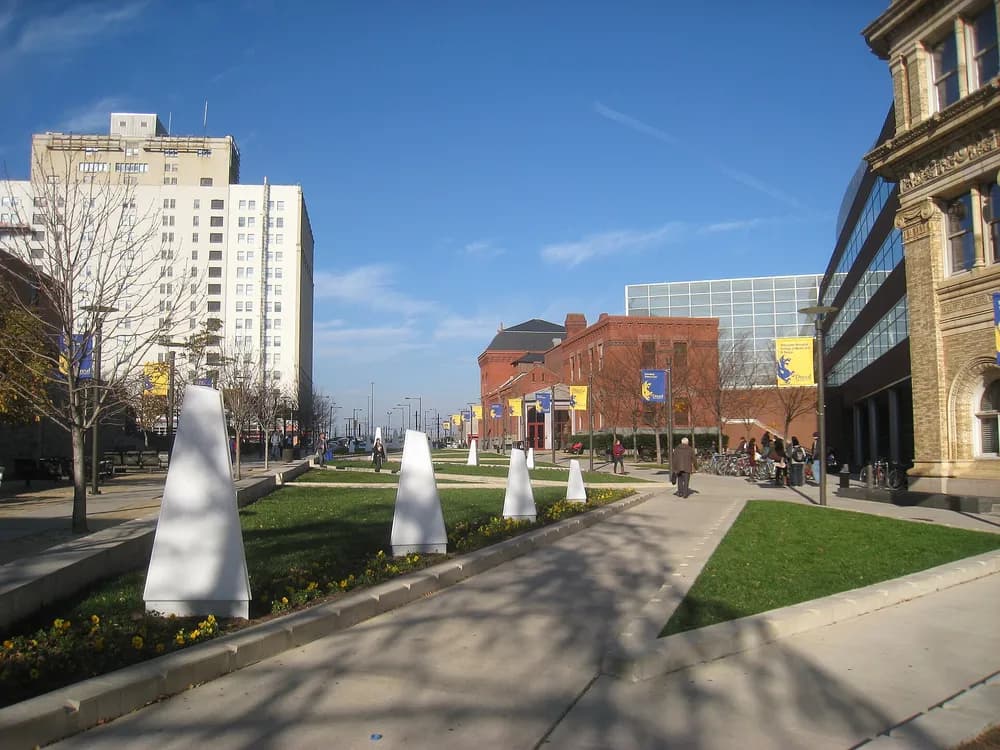
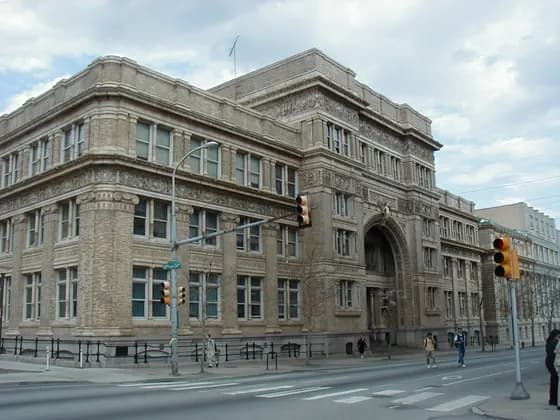


Photo: Daderot · Public domain · cropped
Photo: User TexasDex on en.wikipedia · CC BY-SA 3.0 · Photo: Zhicheng Zhao · CC BY-SA 4.0 · Photo: Max Binder · CC BY-SA 3.0
The Drexel University College of Medicine MD program at a glance (2027 entry)
Drexel University College of Medicine, often shortened to Drexel Med or DUCOM, offers a four-year MD program through a curriculum called Foundations and Frontiers. The Liaison Committee on Medical Education (LCME), which accredits MD programs in the United States, lists it with full accreditation and a next survey in 2028-29. The college took its current name in 2002. Its roots run through Hahnemann Medical College and the Woman's Medical College of Pennsylvania, founded in 1850, which the 2022-23 bulletin calls the world's first degree-granting medical school for women.
You start on one of two campuses, and both teach the same curriculum. The Philadelphia campus is the Health Sciences Building in University City, home to first- and second-year MD students since August 2023. The West Reading campus is a four-year regional medical campus, meaning a campus tied to a partner health system, less than a mile from Tower Health's Reading Hospital. The Class of 2030 had 305 incoming students across both in August 2026.
The curriculum has three phases: Foundations (years 1 and 2), Applications (year 3) and Transitions (year 4). Foundations is the pre-clerkship phase, the classroom-based stretch before full-time clinical work, and lasts about 18 months. You cover the healthy body in year 1 and disease in year 2. A small-group clinical case anchors each week, and short recorded modules let you study much of the content when it suits you.
Patients appear early. Standardized patients, who are actors trained to play patients, and simulation start in your first weeks, and a first-year course matches you with a community site for the whole year. After classes end in mid-February of year 2, you study for Step 1 of the United States Medical Licensing Examination (USMLE). Clerkships begin that May, about 21 months after you arrive.
The college does not operate the hospitals you train in. You either spend the clerkship year at one regional medical campus or rotate across affiliates, with lotteries setting the sites, while West Reading campus students train at Reading Hospital. Fourth year is built around Pathways, a specialty advising system, with sub-internships (rotations where you work much like a first-year resident) and applications for residency, the supervised specialty training every new physician completes.
| Degree and length | MD, 4 years; dual degrees and research years can add time |
|---|---|
| Curriculum | Foundations and Frontiers, in three phases |
| Class size | 305 incoming students in the Class of 2030, across both campuses |
| Campuses | University City in Philadelphia, and West Reading, Pennsylvania |
| Teaching style | Integrated courses with a weekly clinical case, team sessions and recorded modules |
| Anatomy | Full-body cadaver dissection in groups of 4-5, first year, both campuses |
| First patient contact | Year 1: standardized patients within weeks, then a year-long community site |
| Clinical sites | Eight regional medical campuses plus other affiliates on the 2026-27 map |
| Step 1 timing | Late in year 2, after a six- to seven-week study block |
| Grading | Years 1-2 pass-fail in 2023-24 school pages; rotations Honors, Highly Satisfactory or Satisfactory |
What makes the Drexel University College of Medicine MD program different
One curriculum on two campuses
West Reading's first cohort of 40 arrived in August 2021, and its first students graduated in May 2025.
Most of the class based at one regional campus
A March 2025 college article said about 220 students in a class of around 300 are based at one regional medical campus, and the rest rotate across affiliates. The 2026-27 map names eight campuses, from Allegheny Health Network in Pittsburgh to Kaiser Permanente in the Bay Area.
Third-year time for careers and scholarship
Two of your ten third-year clerkships sit outside the usual core. Career Exploration is four weeks of shadowing in other disciplines. Research/Scholarship gives you four weeks for research, community work or leadership, ending in a product such as a manuscript, presentation or program proposal.
A required year in the community
In the Health Advocacy Practicum you work with a community site for all of year 1, usually two to three afternoons a month. The school works with over 50 sites around Philadelphia and over 25 around West Reading, serving groups such as people experiencing homelessness, older adults and refugees.
Student-run free clinics around both campuses
Through the Health Outreach Project, students provide care under physician supervision at shelters, recovery programs and street outreach sites around Philadelphia and West Reading. It is volunteer work on top of the required curriculum.
A fourth year organized around your specialty
In your final year you join one of 21 specialty Pathways. Each sets your required sub-internship options and may add its own required course, and a Pathway director advises you on electives and residency applications.
How Drexel University College of Medicine teaches medicine
Foundations and Frontiers debuted in 2017-2018. In Phase 1, courses are multidisciplinary, so anatomy, physiology and other sciences meet in the same block rather than running as separate subjects.
Lectures look different from the traditional 50-minute format. Content arrives as tutorials, handouts and recorded videos, most of them 20 to 30 minutes long, and the school says most students watch at home at 1.5 times speed. About half of scheduled hours are team-oriented sessions with faculty, focused on applying the material.
Four one-week Frontiers blocks add health informatics, population health, quality and patient safety, health care economics and translational research. Required health advocacy courses cover topics such as street medicine and care for people who are incarcerated, and an ethics curriculum covers informed decision-making, medical mistakes and end-of-life choices.
From the clerkship year on, you learn mainly on clinical teams, and you usually follow your resident's schedule. All sites share common objectives, and each clerkship location has an on-site associate director who works with a clerkship director at the college.
The ways you will learn
| Independent Learning modules | Faculty-assigned materials you can work through at any hour, which the school says frees daytime hours for service, scholarly projects and exercise. |
|---|---|
| Case-Based Learning | Your small group meets weekly with faculty guidance to work through a new clinical case and build a differential diagnosis, a ranked list of possible causes. The case raises the concepts you study that week. |
| Team-based learning and labs | Live sessions where teams apply the week's content with help from faculty. Labs include gross anatomy and microscope work, with video-linked microscopes for neuroanatomy, microbiology and pathology. |
| Foundations of Patient Care | Your clinical skills course in years 1 and 2. Small-group, simulation and standardized patient sessions teach communication, interviewing and physical exams, and you reflect on how your own values affect how you listen. |
| Simulation | Centers on both campuses use computer-controlled manikins that breathe, blink and respond to injected drugs. Sessions are recorded for review, and task-training rooms cover skills such as drawing blood and suturing. |
| Online clinical tools | DxR Clinician lets you question an online patient and order lab tests. Doc.com, developed by Drexel faculty, teaches communication through video encounters. |
A typical week on the Drexel University College of Medicine program
The school's sample schedule, dated August 2023, shows a Phase 1 week running from 8 a.m. to 5 p.m. The school says every week has built-in study time.
- Mondays: usually several hours of Independent Learning materials, which prepare you for the weekly case, and self-directed study.
- Tuesday mornings: Case-Based Learning, a two-hour block either 8 to 10 or 10 to 12, with independent work for the rest of the morning.
- Wednesday to Friday mornings: team-based learning, labs, modules or self-directed study.
- Afternoons: Foundations of Patient Care or the Health Advocacy Practicum on Tuesdays and Thursdays, more live sessions or independent work on Wednesdays, and a multidisciplinary review on Fridays.
How anatomy is taught at Drexel University College of Medicine
Anatomy sits inside your first-year courses rather than in a stand-alone class. The Department of Neurobiology and Anatomy runs it as the Gross Anatomy thread, a subject that runs through several courses, organized by body region. The back, limbs, head and neck come in Human Structure and Function 1, and the thorax, abdomen and pelvis in Human Structure and Function 2.
The department's teaching page, read in November 2026, calls dissection of human cadavers an important part of the thread. The anatomy lab's facilities page, modified in March 2026, says students on both campuses work in groups of 4-5 to complete full-body dissections. The department says dissection lets you discover structures and the variation between people, build empathy for those who donated their bodies and practice communicating in a team. You also learn to identify structures in four imaging methods used in practice.
You can download dissection instructions to the lab computers or your own laptop or iPad, and faculty use cameras to review dissection material and radiographs with the class. Lab components have practical exams.
Each campus also has prosection stations, where donor bodies are prepared in advance for you to study, and Sectra tables for virtual dissection and 3D views. University City adds an Anatomy Resource Center with models and bones, and West Reading a Bio-Skills Lab. In Philadelphia, the anatomy lab's page describes point-of-care ultrasound sessions, mainly for first-year students, on regions such as the head and neck and the heart.
When you first meet patients at Drexel University College of Medicine
Your first clinical practice is with stand-ins. In your first few weeks you start with virtual patients, standardized patients in the Clinical Education and Assessment Center (CEAC) and the simulation center. Foundations of Patient Care also uses real patients on hospital wards for interviewing practice, and students visit geriatric living facilities, an emergency room and an Alcoholics Anonymous meeting.
The Health Advocacy Practicum is your first sustained contact with people in the community. You send the course your top five sites at the start of year 1. You might visit a hospice patient, get to know an older adult with chronic illness, teach high school students training as nursing assistants, or help someone at a shelter write a resume.
Supervision steps down in stages. Under a policy last revised in 2021, first- and second-year students are directly supervised when they first enter clinical settings, and may take histories, do exams and perform procedures they are trained for. Third- and fourth-year students work at least under indirect supervision, with a physician or delegate available on site. Breast, rectal and gynecologic exams and procedures needing extra consent wait until third year, under direct supervision.
Health Outreach Project clinics add patient contact if you volunteer. Philadelphia sites include the Salvation Army Adult Rehab Center, the Red Shield Center family shelter and Streetside at Prevention Point. West Reading sites include Berks Clinic, FaithCare Clinic and Street Medicine at Hope Rescue Mission.
The Drexel University College of Medicine curriculum, year by year
- Year 1 (Phase 1)
The healthy body, from molecules to organ systems
If you enter in 2027 you join the Class of 2031. Your year starts on August 2, 2027, and classes run to May 19, 2028. Science courses come in sequence, while patient care, case work and health advocacy run alongside them. A summer term to July 31 follows on the calendar, which a 2020 chart marks as summer break.
- Molecules to Organs: genetics, embryology, biochemistry, cell biology and nutrition, plus the start of organ systems, basic statistics and library searching.
- Human Structure and Function 1: anatomy, microanatomy, physiology, embryology and neuroscience of the nervous and musculoskeletal systems and skin, then the head and neck, brain and endocrine system.
- Human Structure and Function 2: the cardiovascular, respiratory, renal, gastrointestinal and reproductive systems.
- Foundations of Disease: how disease starts at the cellular and molecular level, immune defenses and inflammation, microbial pathogens, and the principles of drug treatment.
- Alongside these: Case Based Learning 1, Foundations of Patient Care 1 and the Health Advocacy Practicum. The 2026-27 course list also names Foundations of Professionalism and the Heart of Medicine.
- Frontiers 1: three one-week blocks.
- Year 2 (Phase 1, then Phase 2)
Disease, then Step 1 and Clerkship Fundamentals
You return to the major organ systems, this time focusing on what goes wrong in them. After classes end, the rest of the spring goes to Step 1 study and preparing for clinical work. Phase 2 begins in April. On the current schedule, a 2027 entrant reaches this stretch in early 2029.
- Human Disease Systems: an eight-month course combining microbiology, pathology, pharmacology and pathophysiology. A 2020 chart lists cardiology, pulmonary, nephrology/endocrine, multi-system, neuropsychiatric and gastrointestinal/reproductive modules.
- Case Based Learning 2 and Foundations of Patient Care 2 continue your weekly cases and clinical skills.
- Health Advocacy 2: a deeper look at the economic, social and political structures behind health disparities, linked to advocacy for individual patients, neighborhoods and health policy.
- Frontiers 2: one more one-week block, bringing the total to four.
- Step 1 study: six to seven dedicated weeks, with two comprehensive exams from the National Board of Medical Examiners (NBME) to gauge readiness, and optional review materials from faculty thread leaders.
- Clerkship Fundamentals: a required course, part online and part on campus, lasting four weeks for the Class of 2029 from April 12, 2027. It reinforces history-taking, note-writing and physical exams and covers privacy rules and writing orders.
- Year 3 (Phase 2)
Ten required clerkships
Clerkships start in May: May 10, 2027, for the Class of 2029, and May 2029 for a 2027 entrant on the current schedule. You move through ten clerkships in an order set by the lottery, each in one unbroken stretch. These lengths come from the Class of 2029 guide; some older school pages still show five- and ten-week clerkships.
- Eight weeks each: Inpatient Internal Medicine and General Surgery.
- Four weeks each: Ambulatory Medicine, Family Medicine, Neurology, Obstetrics and Gynecology, Pediatrics and Psychiatry.
- Career Exploration (four weeks): shadowing in other disciplines.
- Research/Scholarship (four weeks): a project in research, community work or leadership.
- The 2025-26 student guide adds patient logging in an app called Clerkship Companion, live standardized patients online on five clerkships, and video meetings with your original small group.
- Year 4 (Phase 3)
Pathways, sub-internships and the residency Match
Transitions starts in May and prepares you for residency. You choose one of 21 specialty Pathways. For the Class of 2027, a full schedule meant 32 weeks by February 1 of the graduation year. On the current schedule, a 2027 entrant finishes in May 2031.
- Emergency Medicine Sub-internship: required of everyone and, in the Class of 2027 guide, done at a Drexel affiliate. You assess patients who arrive without a diagnosis, closely supervised by attending physicians and residents.
- Required Sub-internship: medicine, surgery, pediatrics or obstetrics and gynecology, depending on your Pathway. You carry more patients than in third year and write notes and orders, all under supervision.
- Pathway courses: most Pathways add at least one required course of their own.
- Transition to Clinician: a two-week course, online then on site, covering end-of-life care and delivering bad news. Workshops such as advanced suturing are chosen to fit the residency you matched into.
- Residency interviews and the Match: the absence policy lets you miss up to three days of a four-week rotation for interviews, and none of a two-week rotation. Match Day, when students learn their residency programs, falls on March 17 in 2028.
How you are assessed at Drexel University College of Medicine
In Phase 1 you take weekly checkpoint quizzes, with answers and explanations shown once you finish. Major integrated exams come every three to four weeks and are mainly multiple choice, in the style of USMLE questions. Lab-based components have practical exams, and clinical skills are assessed with standardized patients and other formats. Each course also takes part of its grade from work such as oral presentations, papers and projects.
The 2023 look book (an MD program brochure) and a program page published in June 2024 both describe a pass-fail program for the first two years. Drexel's financial aid page says the college does not measure progress by a cumulative grade point average. It says you need an S (Satisfactory) grade or better in each required course, and that the Promotions Committee reviews your performance at the end of each academic year. To earn the MD you must take and pass USMLE Step 1 and Step 2 CK (Clinical Knowledge).
Clinical rotations are graded Honors, Highly Satisfactory or Satisfactory. Under a policy effective in February 2020, passing a third-year clerkship takes two things. You must meet expectations in your clinical work and reach the clerkship's minimum score on an NBME subject exam, known as a shelf exam. These national tests come at the end of most clerkships.
Honors requires excellent clinical performance and a set exam score, and most clerkships set one for Highly Satisfactory too. Some clerkships add presentations, projects or oral exams. The 2020 policies also promise mid-block feedback on rotations of four weeks or more, and final grades within six weeks. Clinical skills training includes a fourth-year Clinical Practice Examination before graduation, and the absence policy for Phases 2 and 3 names a Clinical Skills Assessment.
Step 1 tests the science behind medicine and has been reported pass/fail since January 26, 2022. Year 2 classes end in mid-February, and six to seven weeks of dedicated study follow. As one past example, a reference table in November 2023 slides for the Class of 2026 had students starting clerkships on time sit by April 12, 2024, the Friday before Clerkship Fundamentals.
In August 2026 the USMLE program announced a move to designated testing dates from January 2029, with Step exams offered less often each year. A June 2026 announcement had said 2028, and the program's FAQs list 17 Step 1 and 14 Step 2 CK administrations for 2029. On the current schedule, projected from earlier classes, a 2027 entrant finishes year 2 classes in mid-February 2029 and starts Clerkship Fundamentals that April. So Step 1 falls within a few months after the switch, and Step 2 CK comes after it too.
- Step 2 CK, Class of 2025 example: November 2023 slides recommended sitting between May and August. The school deadline was August 25, 2024, or 42 calendar days after finishing third year and its shelf exams, whichever was later. A pass was needed for the school to certify you for the Match.
Drexel University College of Medicine clinical rotations: where you will actually train
Training sites work with the college through academic affiliation agreements, and their physicians hold Drexel faculty appointments. The 2026-27 clerkship grid names 28 sites, from large health systems to family practices, plus others chosen by departments. The school warns that sites can change. Notes on each area draw on slides the sites showed students in late 2025.
An online system called DOCSS runs the lottery in two stages in the Class of 2029 guide. Stage 1 sets everyone's order of rotations, with fewer options for regional campus students, and in Stage 2 students who rotate across sites rank those sites. Everyone gets an equal chance, but you may land your last choice. A few students in each discipline and block get a Various Sites slot, with the site decided later.
A regional medical campus can host you for the whole clerkship year, and on the college's own figures it is the more common route. A March 2025 college article said about 220 students in a class of around 300 are based at one. The 2026-27 site map names eight, and students can ask for a full third year at one.
The Class of 2029 timeline marks the all-year request for Philadelphia campus students. For the Class of 2029, requests are due December 3, 2026, and places go by random number and ranking. The Class of 2029 guide says you then stay at that campus's sites and take required fourth-year courses there. Empty places go to volunteers, then to a random draw, and primary caregivers and students with a disability accommodation letter can ask for an all-year site.
A car is required for clinical training, and travel costs are yours, including gas, parking and tolls. On the 2026-27 map and grid, no housing is provided at sites within commuting distance of Philadelphia, or for students based all year at a regional campus. Rotating students, meaning those who move between sites rather than staying at one campus, are housed if assigned to a regional campus for 12 or fewer consecutive weeks, except at Kaiser and AtlantiCare.
Daily attendance is mandatory in Phases 2 and 3, and missed time has to be made up. Clinical work is capped at 80 hours a week averaged over four weeks.
West Reading campus students train at Reading Hospital all four years. November 2023 slides split its 60 regional slots into 40 West Reading and 20 Philadelphia students. The hospital is a Level I trauma center.
- Reading Hospital
- Phoenixville Hospital
- Tower Health outpatient sites, including Pottstown
St. Christopher's takes third-year students for pediatrics and, on the 2026-27 grid, surgery. Friends, Girard and Haven are behavioral health sites used for psychiatry.
- St. Christopher's Hospital for Children
- Main Line Health
- Mercy Fitzgerald Hospital
- Jefferson Abington Health
- St. Mary Medical Center
- Friends Hospital
- Girard Behavioral Health
- Haven Behavioral Health
- Coatesville VA Medical Center
- Drexel Medicine
- Delaware Valley Community Health
- Northwest (Drexel Family Medicine)
- Norristown Family Physicians
- Penn Neurologic Associates
Allegheny Health Network is a regional medical campus. Its slides put family medicine at Forbes, 17 miles from Allegheny General, and internal medicine, surgery and pediatrics among the rotations at West Penn, 4 miles away.
- Allegheny General Hospital
- West Penn Hospital
- Forbes Regional Hospital
- AHN-St. Vincent Hospital
- Washington Health System
UPMC Harrisburg is a regional medical campus, and UPMC Altoona became one in May 2026, starting with 12 students on a two-year rotation. For 2026-27, Harrisburg's slides send psychiatry to Altoona and family medicine to sites 5 to 45 miles away. The affiliates page and catalog list York as a regional campus; the 2026-27 map shows it as a site.
- UPMC Harrisburg
- UPMC Altoona
- WellSpan York Hospital
- St. Luke's University Health Network, Monroe and Easton
AtlantiCare and Capital Health are regional medical campuses. AtlantiCare's slides list sites across Atlantic, Cape May and Ocean counties and say travel is required. Capital Health's slides put rotations at or near its main campuses, in Mercer County, New Jersey, and Bucks County, Pennsylvania.
- AtlantiCare
- Capital Health
- Virtua Health
Bayhealth is a regional medical campus. Its slides offer free housing for rotating students, first come, first served.
- Bayhealth Kent Campus, Dover
- Bayhealth Sussex Campus, Milford
A family medicine site.
- Kaiser Permanente Mid-Atlantic, Rockville
Kaiser Permanente's Bay Area campus spans the Greater Southern Alameda Area and the Diablo Service Area. Its slides assign students between them alphabetically by last name, and you must be willing to travel.
- Kaiser Permanente San Leandro
- Kaiser Permanente Fremont
- Kaiser Permanente Walnut Creek
Electives, selectives and away rotations at Drexel University College of Medicine
Most of your choice comes in fourth year, which you schedule largely yourself through a lottery and an add/drop period. Each Pathway recommends electives, and the online Senior Elective Catalog describes each course. In 2023 the school counted over 250 electives at Drexel and its affiliates. Rotations run for two or four weeks, and the Class of 2027 could take up to 16 weeks in any one discipline, or 24 in medicine.
An away rotation is an elective outside Drexel's clinical affiliates, often at another medical school, and can help you learn about a residency program or region. You can take up to 16 weeks away, and you usually apply through the Visiting Student Learning Opportunities service run by the Association of American Medical Colleges. Required rotations cannot be done at other medical schools.
On the school's electives guide, international electives count within the 16 away weeks, last at least four weeks and need at least eight weeks' notice to the Special Electives Committee. It suggests starting to plan about a year ahead, and November 2023 slides advised allowing at least nine months. You need approval from the host, your Pathway director or advisor, that committee and the Global Health Office. The guide advises avoiding the November to January interview season and being abroad on Match Day.
Earlier options exist too. A yearlong Medical Spanish Elective runs as live virtual evening classes for first-year students, and the Medical Humanities program offers over 10 elective courses a year. A global health experience is possible in the summer between years 1 and 2, and Bridging the Gaps is a summer community health internship. In fourth year, a two-week Gross Anatomy elective lets you help teach the labs.
Dual degrees and research years at Drexel University College of Medicine
Scholarship is part of the core program, since every student completes the four-week Research/Scholarship clerkship in third year, using it for research, community-focused work or leadership. The school says more than half of students take part in some form of research, in areas such as cancer biology, drug discovery, infectious diseases and neuroscience.
Dual degrees let you earn a second degree alongside the MD, and most add a year between years 3 and 4. Scholars programs and shorter research options fit inside the four years.
- MD/PhD: for future physician-scientists, taking seven to eight years on average. You complete three years of medical school, then three to four years of PhD research, then the final medical year. Both degrees are awarded together. Research areas include neuroscience, cancer biology, immunology, physiology and biomedical engineering.
- MD/PhD entry: for the 2026-27 cycle you can enter directly, and the program says it will also review transfer applications from Drexel MD students in years 1 and 2.
- MD/PhD rules: you complete two to three six-week lab rotations. Policies modified in September 2023 expect a pass on Step 1 and Step 2 at the first sitting, or you may return to the MD program, subject to appeal.
- MD/MPH: with the Dornsife School of Public Health, generally five years, with a full public health year between years 3 and 4.
- MD/MBA: with the LeBow College of Business, five years. You complete 39 MBA credits over three quarters between years 3 and 4.
- MD/MS: set up in fall 2017 for students aiming at competitive residencies with a research requirement, with a year of research between years 3 and 4.
- EDGE (Educational Development and Growth Experience): up to one academic year of approved study, research, clinical or service work between years 3 and 4.
- Scholars programs: scholarly concentrations, meaning guided extra study alongside the MD, that end in graduation with distinction. Options are Medical Humanities, Women's Health and Equity, and Medical Research, which has five tracks.
- Medical Student Summer Research Fellowship: up to 50 first-year students spend six full-time weeks on a project for a $2,500 stipend, then present at Discovery Day, the college's annual research day.
- Fourth-year options: a research elective of four or eight weeks, a scholarly project with a faculty member, or a graduate certificate in a Frontiers area through another Drexel college.
- Planned three-year MD: in May 2026 the college said it is developing a three-year program, first aimed at primary care specialties such as family medicine, pediatrics and internal medicine. It aims to enroll a first cohort in 2028-29, after a 2027 entrant starts, and the four-year MD continues.
Facilities and support at Drexel University College of Medicine
Where you will learn
The Health Sciences Building, at 60 N. 36th Street, is the Philadelphia base. It brings together the College of Medicine, its graduate school and the College of Nursing and Health Professions. Inside are a simulation center, standardized patient exam rooms and anatomy labs. The Queen Lane campus in East Falls, the old home of years 1 and 2, now serves graduate students.
The West Reading campus is at 50 Innovation Way in Wyomissing. It has standardized patient rooms, anatomy labs and simulation labs, plus a fitness center, an Information Commons (the library), lounges, a game room and a cafe.
Each campus has a Clinical Education and Assessment Center, where exam rooms look like physicians' offices and link to control and observation rooms. Your clinical skills videos stay in a database over all four years so you can see how you improve. The Virtual Microscope puts digitized histology and pathology slides online. All entering students must own an iPad and a desktop or laptop computer.
Support while you study
You join one of seven learning societies when you enroll. These learning communities are named after local landmarks: Athenaeum, Liberty Bell, Physick House, Rocky Statue, Reading Terminal, Eakins House and Pagoda. Each has a faculty director and student representatives, and faculty advise small groups of students in years 1 and 2. Societies run social, wellness and service events, and first-year students compete for the Dean's Cup each August.
The Big Brother/Big Sister program matches you with a second-year student. The Student Academic Support Office helps with study habits and test-taking, individually or in small groups, and offers Step 1 and Step 2 preparation resources. Through the Student Success Network, academic coaches meet students regularly to review material and prepare for exams.
The Office of Student Affairs & Career Advising works with you from the summer before year 1 and handles academic and career advising and residency applications. In fourth year you have a Pathway advisor and a yearlong Student Affairs Advising Dean. Wellness topics are part of the formal curriculum, and the college provides on-campus fitness centers and professional counseling.
Is the Drexel University College of Medicine program right for you?
This program may suit you if
- You learn well from cases, because a small-group clinical case sets up your science courses each week.
- You want control over your study time, with recorded modules at any hour and team sessions for applying them.
- You want community work built in: a year at a community site, a second-year advocacy course and free clinics if you want more.
- You would value seeing several health systems, or settling at one regional medical campus for the whole clerkship year.
Things to think about
- Lotteries set your clerkship sites, so you may land a campus or rotation you ranked low.
- You need a car, you pay your own travel costs, and students based all year at a regional campus find their own housing.
- Your campus is assigned. Your preference is requested, but the school cannot always give you your first choice.
- If you prefer live lectures, note that much of the content arrives as recorded modules you work through alone.
- On the current schedule, a 2027 entrant sits Step 1 within a few months after the USMLE's January 2029 change, so watch for updates to testing dates.
Drexel University College of Medicine MD program — frequently asked questions
Applying to Drexel University College of Medicine?
How to get into Drexel University College of Medicine
Prerequisites, MCAT, AMCAS personal statement, secondaries and interview, step by step.
Open the guide →Drexel University College of Medicine admissions profile
MCAT and GPA profile, acceptance rate, interview format and key dates.
See the profile →Compare Drexel University College of Medicine with other schools
Put the teaching style, anatomy teaching and clinical sites next to another school.
Open the comparison →Prepare for the Drexel University College of Medicine interview
Format breakdown, school-specific sample questions and prep tips from tutors who interviewed here.
Read the guide →Where this Drexel University College of Medicine program guide came from
This guide was written from 94 official sources — Drexel University College of Medicine's own program pages and curriculum documents, plus the accreditor and the hospitals and health systems the school trains students in where they publish detail — read on 2026-11-07, then checked claim by claim against those sources.
- College of Medicine MD Program
- MD Program: Curriculum - Foundations and Frontiers
- MD Program Foundations and Frontiers: Course Descriptions
- MD Program: Clinical Experience (early clinical exposure)
- MD Program: Community Service Opportunities for Medical Students
- Foundations & Frontiers FAQ (info sheet)
- Foundations and Frontiers Curriculum Year 1 & 2 (chart)
- A Typical Week as a Drexel Med Student (sample schedule)
- Health Advocacy FAQ (info sheet)
- Doctor of Medicine (MD) Program, Drexel University Catalog
- Office of Medical Education course descriptions, Drexel University Catalog
- MD Program: Program Objectives and Graduation Competencies
- MD Student Bulletin 2022-23
- WebCampus: Phase 1 - Year 1
- WebCampus: Phase 1 - Year 2
- MD Program Foundations and Frontiers Academic Calendar Start/End Dates 2027-2028
- MD Program Foundations and Frontiers Academic Calendar Start/End Dates 2026-2027
- Guide to Scheduling, third year, Class of 2029
- Anticipated Third Year Clerkship Opportunities 2026-2027
- Drexel University College of Medicine 2026-2027 Anticipated Phase 2 Sites (map)
- Clinical Rotation Grading and Evaluation Policy
- Medical Student Clinical Duty Hours (Workload) Policy
- Clinical Rotation Feedback Policy
- Phase 2 and 3 Clinical Rotation Absence Policy
- Supervision of Medical Students in Clinical Learning Environments
- Guide to Scheduling the Fourth Year, Class of 2027
- Specialty Pathways, fourth year
- Electives, fourth year (away, special and international)
- DUCOM Required Subinternship: Discipline Options by Pathway
- 4th Year Start Dates AY 2027-2028
- The 3rd Year and the Clinical Clerkships: Guidelines for Phase 2 (Class of 2026 meeting slides)
- Phase 2 DOCSS Stage 2 Rotator Scheduling (Class of 2027)
- Planning the 4th Year (Class of 2025 webinar slides)
- Student Technology Guide 2025-2026: Clerkship Companion logging
- Affiliated Hospitals and Health Systems
- Regional Medical Campus Affiliates
- Academic Campus Affiliates
- Pediatric Training at St. Christopher's Hospital for Children
- Campuses
- University City Campus
- Drexel University Health Sciences Building (brochure)
- West Reading Campus
- West Reading Campus: A Place to Make a Difference
- About Reading Hospital
- MD Program Application Process: Campus Assignment Protocol
- Medical Student Demographics: Meet the Class of 2029
- Innovative Medical Technology (facilities, anatomy labs)
- Clinical Education & Assessment Center
- Simulation Centers
- Physician Scientist MD/PhD
- MD/PhD Dual Degree Program: Curriculum
- MD/PhD Program Policies and Procedures
- MD/MPH Dual Degree
- MD/MBA Dual Degree
- MD/MS Dual Degree
- Scholars Programs for Medical Students
- Additional Opportunities During Medical School (EDGE and others)
- Research Opportunities for Medical Students
- Medical Student Summer Research Fellowship
- Showcase your Specialty: Shadowing Opportunities Needed for 3rd Year Clinical Medical Students
- Office of Global Health Education (fact sheet)
- Office of Engaged Humanities and Health Advocacy (fact sheet)
- Learning Societies: Fostering Connection, Wellness and Tradition
- Mentoring & Advising (MD program sections)
- Medical Student Affairs
- Health & Wellness
- Satisfactory Academic Progress (College of Medicine section)
- Health Outreach Project (student-run free clinics)
- Health Outreach Project: Philadelphia Clinics
- Health Outreach Project: West Reading Clinics
- Accreditation, Office of Institutional Effectiveness
- Allegheny Health Network: Clinical Site Fair slides
- AtlantiCare: Clinical Site Fair slides
- Bayhealth Medical Center: Clinical Site Fair slides
- Capital Health: Clinical Site Fair slides
- Kaiser Permanente: Clinical Site Fair slides
- UPMC Harrisburg: Clinical Site Fair slides
- LCME Accredited Programs
- Updated Timeline for USMLE's Designated Testing Dates: Transition Will Take Place in January 2029
- USMLE Designated Testing Dates Information Hub
- USMLE to Transition to Limited Testing Dates Each Year Starting in 2028
- USMLE Designated Testing Dates FAQs
- USMLE Exam Results & Scoring
- Medical & Graduate Teaching: Department of Neurobiology and Anatomy
- Anatomy Lab: Clinical Training
- Stability and Change at Bayhealth Medical Center: Drexel's Distributed Education Model at Work (Alumni Magazine, Winter 2025)
- Drexel Anatomy Laboratory: Facilities
- MD Program Look Book: It's in Our DNA (2023)
- MD Program - The Drexel Difference: Built to Heal
- Drexel's College of Medicine Plans to Develop Three-Year MD Program (May 15, 2026)
- Class of 2028: Welcome to Drexel University College of Medicine at Tower Health (August 9, 2024)
- MD Program Class of 2030 Celebrates White Coat Ceremony in Philadelphia (August 7, 2026)
- MD/PhD Program Frequently Asked Questions
- Drexel University College of Medicine and UPMC Altoona Establish Regional Medical Campus Collaboration (April 9, 2026)
Curricula are restructured between cycles. Anything here that decides your application — how anatomy is taught, a clinical campus assignment, a required research year — should be confirmed against the official page for your entry year.
Applying to Drexel University College of Medicine?
We help US applicants with MCAT strategy, the AMCAS personal statement, secondary essays and interview prep — everything you need for a competitive Drexel University College of Medicine application.