
The Sidney Kimmel Medical College at Thomas Jefferson University MD program
What you actually study, and where you will be
Sidney Kimmel Medical College at Thomas Jefferson University's MD is a 4-year program taught through case-based learning in an integrated curriculum, with patient contact from Year 1 and clinical rotations in Philadelphia, wider Pennsylvania, Delaware and New Jersey (2027 entry). Sidney Kimmel Medical College (SKMC) teaches its four-year MD, the JeffMD curriculum, in Center City Philadelphia. In the 21-month pre-clerkship phase, each week centers on a patient case worked through in a small group, with dissection labs, clinical skills sessions and, from year 1, shifts helping patients with social needs. Clerkships, the core clinical rotations, begin in April of year 2. Every student follows a Scholarly Inquiry track, doing research or project work across all four years.
- Degree
- MD
- Length
- 4 years
- Teaching
- Case-based learning + Integrated
- Clinical contact
- Year 1

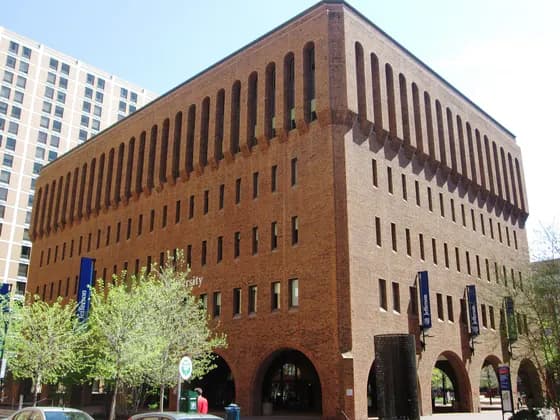
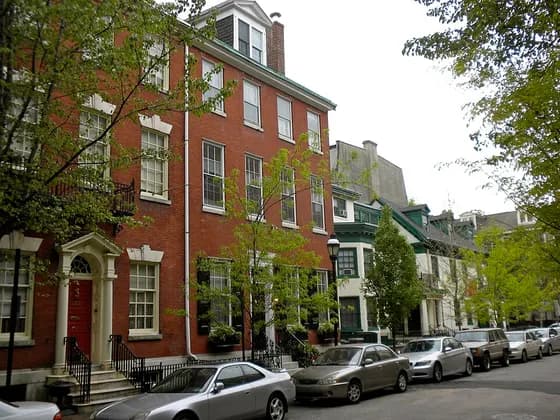
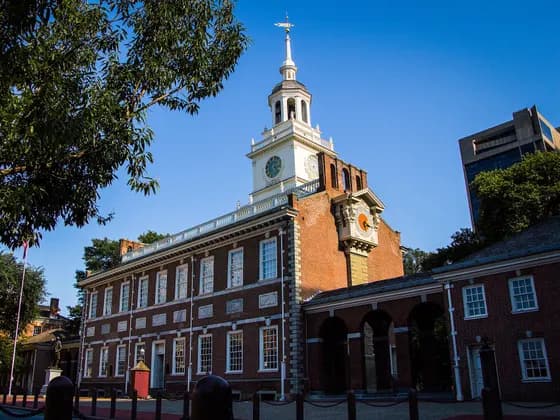
Photo: Ajay Suresh · CC BY 2.0 · cropped
Photo: Beyond My Ken · CC BY-SA 4.0 · Photo: Smallbones · Public domain · Photo: Andrew Rehbein · CC BY-SA 4.0
The Sidney Kimmel Medical College at Thomas Jefferson University MD program at a glance (2027 entry)
Sidney Kimmel Medical College at Thomas Jefferson University (SKMC) teaches a four-year MD, listed at 45 months, on the university's Center City campus in Philadelphia. It was founded in 1824 as Jefferson Medical College and took its present name after a 2014 gift from the Sidney Kimmel Foundation. The Liaison Committee on Medical Education (LCME), which accredits MD programs in the United States, lists the program as fully accredited, with its next survey in 2030-31.
The JeffMD curriculum has three phases. Phase 1, the pre-clerkship stage of classroom, lab and small-group learning, lasts 21 months. Phase 2 lasts 12 months and is made up of clerkships in subjects such as internal medicine, surgery and pediatrics. Phase 3 lasts another 12 months. It includes electives you choose and a sub-internship, where you work close to the level of an intern, a doctor in the first year of residency training.
Science in Phase 1 is taught in organ-system blocks. Each week features a patient case that you explore in a small group. Anatomy includes hands-on dissection, and all Phase 1 courses are pass/fail.
From September of year 1 you work in a clinical setting as a health navigator, helping patients with social needs that affect their health. Clerkships begin in April of year 2, not at the start of year 3. Before that you take Step 1 of the United States Medical Licensing Examination (USMLE), the first national licensing exam. Alongside all this runs Scholarly Inquiry, a required four-year strand.
If you enter in 2027 you start on the Philadelphia campus. The school plans two new four-year regional campuses. Delaware plans a first class of 40 in July 2028, pending LCME approval, and Lehigh Valley a first class of 45 in July 2029. Both start after your entering class, although you can apply to do most of your clerkships in the Lehigh Valley or at ChristianaCare in Delaware.
| Degree | MD (Doctor of Medicine) |
|---|---|
| Program length | 4 years, listed by the school as 45 months |
| Entering class | About 272 a year on the prospectus; 277 entered in 2026 |
| Main campus | Center City Campus, Philadelphia, for 2027 entrants |
| Curriculum | JeffMD: three phases of 21, 12 and 12 months |
| Teaching style | Weekly small-group cases with lectures, labs and clinical skills sessions |
| Anatomy | Hands-on dissection within the Phase 1 blocks |
| First patient contact | September of year 1, through the Clinical Experience course |
| Step 1 timing | On the current schedule, about February to April 2029 for 2027 entrants |
| Grading | Phase 1 pass/fail; clerkships Honors, High Pass, Pass or Fail |
What makes the Sidney Kimmel Medical College at Thomas Jefferson University MD program different
Clerkships from April of year 2
The school says Phase 1 is 12 weeks shorter than a traditional first two years. Phase 3 is 12 weeks longer than a traditional fourth year, leaving more time for residency applications and specialty electives.
Four years of required Scholarly Inquiry
Every student follows one of seven tracks and works with a faculty mentor from year 1.
A working role with patients in year 1
Clinical Experience gives you a working role at a clinical site from September of year 1, where you learn how care is delivered and how a clinical team works.
Arts-based Humanities Selectives
Humanities Selectives are Phase 1 courses you pick from a list, and many are built by professional artists with medical educators. They train close observation, listening and comfort with ambiguity. Recent options include The Art of Observation at the Pennsylvania Academy of the Fine Arts, The Language of Music: Improvisation in Sound, and Food as Medicine with Vetri Community Partnership.
A rural program with its own clerkship sites
The Physician Shortage Area Program (PSAP), begun in 1974, provides up to 24 first-year places for students from rural areas and small towns who intend to practice in similar places. You get an advisor in Family and Community Medicine and a second-year PSAP student as your Big Sib, a peer guide.
A Phase 2 immersion in the Lehigh Valley
You can apply to spend most of Phase 2 at two Lehigh Valley hospitals. Cedar Crest has 850 beds, a Level 1 adult trauma center and a children's hospital, and residency program directors meet students during clerkships.
How Sidney Kimmel Medical College at Thomas Jefferson University teaches medicine
The school describes JeffMD as inquiry-based and integrated. Basic science, clinical science and health systems science, the study of how care is delivered and improved, are taught together. Subjects such as anatomy, pathology, pharmacology and physiology run through the four years as threads, not as separate courses, building in breadth and complexity over the three phases.
Phase 1 focuses on small-group case-based learning, with less time in the lecture hall. The weekly case gives clinical context to the science, and lectures, labs and clinical skills sessions support it. Cases grow more complex as you progress, so earlier learning comes back and is built on.
Phase 2 shifts the balance toward clinical work, but science continues, tied to the patients you see. Clerkships are paired, such as family medicine with psychiatry, so you can see how care overlaps between specialties. Every six weeks all students return to the main campus for Dimensions of Clinical Medicine.
Phase 3 is shaped around your career plans. A school graphic shows four pathways: internal medicine; surgery, obstetrics and gynecology, and emergency medicine; pediatrics; and family medicine. You are encouraged to declare a specialty interest before this phase, but undecided students can choose electives by the skills they want to strengthen, and you can change direction.
The ways you will learn
| Case-based learning | Groups of 9 or 10 students and one faculty facilitator meet twice a week and change after 12 weeks. On day 1 a case unfolds in short segments, and the group chooses questions, called learning issues, to research individually. On day 2 you share what you found, finish the case and debrief. |
|---|---|
| Lectures and team-based learning | Lectures cover block content in subjects such as pathology, pharmacology and biochemistry. In team-based learning you prepare before class, then work through problems with a team. A sample year 2 timetable uses this format for an evidence-based medicine critique. |
| Clinical skills sessions | You learn communication, physical examination and procedures in small groups, with simulation and with standardized patients, who are people trained to portray patients and give you feedback. |
| Clerkship teaching | You join the care team on wards and in clinics, with teaching linked to the rotation. In internal medicine this includes hands-on physical diagnosis sessions, small groups on clinical reasoning, and sessions on arterial blood gases and EKGs. |
| Simulation before internship | Gateway to Internship pairs teaching on core management topics with simulated patients and small-group discussions of evidence. You practice sign-out, which means handing patients over to another doctor, and cross-covering while multitasking as an intern must. |
A typical week on the Sidney Kimmel Medical College at Thomas Jefferson University program
Handbook policies limit the Phase 1 workload. Required in-class activities should average no more than 30 hours a week over the academic year, and required out-of-class work, such as case preparation, no more than 10 hours. Courses must also leave, on average, four two-hour blocks free of scheduled teaching in each five-day week.
The school's sample weeks, posted in 2023, show how that can look. In an early year 1 week, case-based learning runs from 8:00 to 10:00 on Tuesday and Thursday. An anatomy lab follows on Tuesday and a histopathology lab on Thursday. Monday and Wednesday mornings are lectures, and Monday afternoon is clinical skills. Friday opens with a weekly quiz and review, and Tuesday and Friday afternoons are for self-directed learning.
A sample year 2 week on the musculoskeletal system has case-based learning on Monday and Wednesday mornings. Tuesday and Thursday mornings bring lectures on back pain, opioids and the anatomy of the hip, knee and foot, and Thursday afternoon is a four-hour dissection lab. Monday, Tuesday and Friday afternoons are for self-directed learning.
In Phase 1, attendance is required at case-based learning, clinical skills, Clinical Experience, sessions with a patient present, and assessments. In Phase 2, more than one day of absence must be made up on a clerkship of four weeks or less, and more than two days on one of six weeks or longer. More than seven days across the phase must also be made up, sometimes during a break.
On clerkships, duty hours cover patient care, in-hospital call and scheduled teaching. They are capped at 80 a week averaged over four weeks, with one day in seven free on average. A single stretch on site cannot exceed 24 hours, and you get at least 8 hours off between work periods and 14 hours off after 24 hours of in-house call. You may be expected to report on Memorial Day, Independence Day and Labor Day.
How anatomy is taught at Sidney Kimmel Medical College at Thomas Jefferson University
You learn anatomy through hands-on dissection. Gross and microscopic anatomy and embryology are built into the Phase 1 organ-system blocks, with dissection labs running for one to two weeks at a time. The labs follow the systems you are studying: dissection of the thorax, including the heart and lungs, is tied to the teaching on those organs.
Labs take place in the Dissection Facility in Jefferson Alumni Hall, which has six dissection rooms and an in-house embalming suite. Each table has two each of scalpel handles, probes, forceps and scissors, and you wear scrubs, closed shoes and safety glasses. Across the university programs it serves, the Division of Anatomy Education also uses instructor-guided prosections, which are specimens already dissected for study, and self-paced interactive modules.
Block exams can include an anatomy practical. Anatomy can also return later, since Phase 3 offers two-week Anatomy and Pathology courses on the thorax, abdomen, pelvis and perineum, head and neck, and musculoskeletal system.
When you first meet patients at Sidney Kimmel Medical College at Thomas Jefferson University
Contact with patients starts soon after you enroll, at a level that suits a new student. In Clinical Experience, you screen patients for social determinants of health, the conditions in which people are born, grow, work and age. Supervised by a community health worker, you link their needs to community resources. Each shift ends with a reflection. You might find out what worries a patient most, what support they have at home and what they believe about their health.
A chart from the Jefferson Center for Interprofessional Education (JCIPE) shows how Medicine meets the university's requirements for learning with other health professions: virtual modules, the Health Mentors Program and Team SAFE. Team SAFE is a simulation program on teamwork and speaking up about patient safety. Health Mentors are volunteers with chronic conditions. A group of 4 to 6 Jefferson students meets one three times over 1.5 years, including a home visit in the spring of year 1.
Over 200 medical students a year also volunteer at JeffHOPE, a student-run network formed in 1991. It holds free weekly clinics at four homeless shelters and one drop-in center in Philadelphia. Other volunteer clinics include a free acute care clinic that Refugee Health Partners runs with the Bhutanese American Organization of Philadelphia on the first Saturday of each month. Students also volunteer at the free Chinatown Clinic on Wednesday evenings at Holy Redeemer Chinese Catholic Church.
Responsibility grows through the phases. In clinical settings, Phase 1 students can take a history and perform a physical exam with a faculty member immediately available, then review it with them right away. In Phases 2 and 3 you take part in managing patients. You perform basic procedures, such as phlebotomy or placing a nasogastric tube, only after being taught them and only under direct supervision.
The Sidney Kimmel Medical College at Thomas Jefferson University curriculum, year by year
- Phase 1, year 1
Foundations of Medicine I and II
A 2027 entrant starts with orientation on July 26-30, 2027, and classes on August 2, 2027. The year covers the first six blocks named in the 2026-27 Course Catalog. On the posted calendar, summer break begins on May 19, 2028, and you can use it for vacation, Scholarly Inquiry or experiences abroad.
- Foundations of Medicine I (fall): Introduction to the Study of Medicine, Host Defense and Blood, and Cardiovascular.
- Foundations of Medicine II (spring): Pulmonary, Renal, and Gastrointestinal/Liver.
- Clinical Experience from September, with an assigned clinical site and health navigator training.
- Humanities Selectives, one credit each in the fall and spring. If you take only one in year 1, you take the other in year 2.
- Phase 1, year 2
Foundations of Medicine III and IV
Year 2 finishes the remaining three blocks. Phase 1 courses end in mid-February: February 12 in 2027 and February 11 in 2028 on the two posted calendars. Standardized exams during this stretch help the school gauge your readiness for Step 1.
- Foundations of Medicine III: Neurological System and Psychiatry.
- Foundations of Medicine IV: Endocrine, Urology and Reproduction, then Musculoskeletal, Dermatology and Rheumatology.
- The Comprehensive Basic Science Self-Assessment, an online take-home, during Foundations III, and the proctored Comprehensive Basic Science Examination during Foundations IV.
- Step 1 period, year 2
Eight weeks for Step 1 and vacation
After Phase 1 courses end, eight weeks carry no scheduled academic activities. The school says many students study intensively for about six weeks and take two weeks of vacation, and you can change that split. You must take Step 1 before the first day of Transition to Clerkships, in the second week of April.
- You can sit Step 1 only after completing all Phase 1 requirements, and you must pass it to be promoted to Phase 2.
- If you are not ready, you need written approval from the Office of Student Affairs & Career Counseling to delay. The first six weeks of Phase 2 are then dropped, and you join a mandatory four-week Step 1 preparation course.
- Phase 2, years 2 to 3
Core clerkships
Phase 2 starts in April of year 2 with Transition to Clerkships, a one-week course with workshops on oral presentations and note writing. You then rotate through four 12-week blocks of paired clerkships, nine rotations in all. The order differs from student to student, and the phase has four weeks of vacation.
- Internal Medicine (two four-week rotations) with Neurology (four weeks).
- General Surgery (six weeks), a three-week surgical subspecialty and Emergency Medicine (three weeks). The subspecialty is anesthesia, neurosurgery, orthopedics, otolaryngology, ophthalmology or urology.
- Family Medicine (six weeks) with Psychiatry (six weeks).
- Obstetrics and Gynecology (six weeks) with Pediatrics (six weeks).
- Dimensions of Clinical Medicine: seven sessions, one every six weeks, with small-group reflection, observed patient encounters and sessions on residency applications.
- An end-of-phase Objective Structured Clinical Examination (OSCE), a practical exam in which you move through timed clinical stations.
- Phase 3, years 3 to 4
Differentiation and residency preparation
Phase 3 begins in late April of year 3 with Gateway to Internship A, after a two-week vacation. You then build a schedule of required rotations and electives in two- or four-week blocks, with time for vacation and for Step 2 Clinical Knowledge (CK), the second licensing exam. You apply for residency in this phase. The calendars show Match Day, when you learn where you will train, in March and commencement in May.
- Medicine Inpatient Subinternship, four weeks. Family Medicine and Pediatrics pathway students can use their own inpatient sub-internship instead.
- Outpatient Experience, four weeks, chosen from a list that includes dermatology, geriatrics, outpatient cardiology and adolescent medicine.
- Critical Care Experience, two weeks on an intensive care team. You can request a unit, but it is not guaranteed.
- Advanced Basic Science, two weeks, using the literature to connect science with clinical decisions. Options include Pandemic Preparedness and Clinical Pharmacology.
- Electives, 28 weeks, plus up to eight weeks of unscheduled flex time.
- Gateway to Internship B in March, tailored to your pathway, and a summative OSCE that tests the skills you have gained in medical school.
How you are assessed at Sidney Kimmel Medical College at Thomas Jefferson University
JeffMD is competency-based, so you move on because you have shown the required competencies, not just because you have put in the time. All Phase 1 courses are pass/fail. Failing any assessment component of a Foundations of Medicine course fails the whole course, although remediation may be approved. You sit multiple-choice block exams, some with an anatomy practical, plus clinical skills exams and quizzes.
Your block exam scores still matter. The class position in your Medical Student Performance Evaluation (MSPE), the summary used in residency applications, averages two scores: the mean of your block exams and a Phase 2 clinical score. It is reported as top, middle or lower third, with a note for the top 10%, and it stays off your transcript.
Phase 2 clerkships are graded Honors, High Pass, Pass or Fail. All core clerkships use a National Board of Medical Examiners (NBME) subject exam, or shelf exam, at the end of the rotation. It counts for 20% of the grade, and you must pass it to pass the clerkship. Where a clerkship uses a summative OSCE, that counts for 10%. Professionalism counts for 5%, all or nothing, and course directors set the rest, including the clinical component.
In Phase 3, all four-week clinical courses use the same four tiers. Research, Advanced Basic Science, Gateway to Internship, Scholarly Inquiry and all two-week courses are pass/fail, and you can take at most 16 weeks of pass/fail courses.
Step 1 covers the sciences basic to medicine and has been reported only as pass or fail for exams taken on or after January 26, 2022. Step 2 CK is reported with a numeric score. Students in LCME-accredited MD programs are eligible to sit both. You become eligible for Step 2 CK after completing all Phase 2 requirements, and you need a pass to graduate. A take-home self-assessment helps you prepare.
In August 2026 the USMLE program announced a move to designated testing dates from January 2029, with Step exams offered less often each year. Its June 2026 announcement had named 2028. On the current schedule, a 2027 entrant would sit Step 1 at about February to April 2029, within a few months after the switch. You would become eligible for Step 2 CK only after Phase 2 ends, about April 2030, so it also falls after the switch.
- These dates are worked out from the school's 2026-27 and 2027-28 calendars. The USMLE program has asked schools to review policies tied to exam timing, so the timing may change.
- The USMLE program's FAQs list 17 Step 1 and 14 Step 2 CK administrations in 2029.
- A first shelf exam failure gives a temporary Conditional Pass and, with permission, a retake. A second failure fails the clerkship. Make-up shelf exams run during fall, winter and spring breaks. If three are outstanding, you stop clerkships until you pass at least two.
- After a failed Step exam, the Committee on Student Promotions can allow a retake or dismiss you. A third failure of either exam means dismissal. If a Step 1 failure is reported after you have started a clerkship, you can finish its clinical work, then pause Phase 2 for a four-week preparation course.
- In required courses and clerkships of four weeks or more, you get formative feedback, meaning feedback that does not count toward a grade, by at least the midpoint.
- You are expected to finish within six years, including approved leaves, or 12 years on the MD/PhD.
Sidney Kimmel Medical College at Thomas Jefferson University clinical rotations: where you will actually train
Your main clinical base is Thomas Jefferson University Hospital at 111 South 11th Street in Center City. The school's prospectus says training is directed by faculty there and at sites in suburban Philadelphia; northeastern, central and western Pennsylvania; Delaware; and New Jersey. Most sites are within 60 miles of the Center City campus, and you reach them by car or public transportation. Jefferson Health, the university's health system, includes 33 hospitals, the prospectus says.
The Internal Medicine clerkship is generally four weeks at Thomas Jefferson University Hospital and four at an academic affiliate. Other clerkships run at the hospital and its affiliates on the published Clinical Training Sites list, grouped below. Family medicine uses locations across the tri-state area, plus community sites and subspecialty clinics.
The Registrar's Office assigns sites by lottery, using your preferences, disability accommodations and approved special-circumstances requests. In Phase 2 you can swap sites with a classmate in the same clerkship and block during a set period, up to six weeks before the rotation. After that, a change needs extenuating circumstances. Phase 3 has no swap period, and changes go through add/drop, which closes six weeks before each block.
The Lehigh Valley Clinical Immersion takes up to 48 students about to start Phase 2, who complete most of their clerkships at Cedar Crest or Muhlenberg. You apply in the fall and need a car; if not chosen, you go into the general scheduling lottery. This option is separate from the four-year Lehigh Valley campus the school announced in July 2026. Based at One Center Square in Allentown, that campus will teach JeffMD, with clinical training across Jefferson Health - Lehigh Valley Region.
ChristianaCare runs a Delaware Branch Campus for SKMC and Philadelphia College of Osteopathic Medicine students. ChristianaCare says they can do all their third-year core rotations, and some fourth-year ones, at its Delaware hospitals, and that over 100 have graduated from the program in the last eight years. This is separate from the four-year Delaware campus the school announced in June 2026. Pending LCME approval, that campus will teach JeffMD: the first two years at the University of Delaware in Newark, then clinical training statewide, with priority on Kent and Sussex counties.
PSAP students must take at least one required Phase 2 clerkship in a smaller community. Current sites include Excela Latrobe Hospital for family medicine and WellSpan York Hospital for internal medicine, general surgery or obstetrics and gynecology. The August 2026 prospectus also lists family medicine at York. PSAP is also piloting a longitudinal curriculum, in which clerkship subjects run together instead of in separate blocks. It covers the six Phase 2 clinical rotations with Atlantic Health System, at rural and suburban sites in New Jersey.
- Thomas Jefferson University Hospital
- Jefferson Abington Hospital
- Jefferson Health – Einstein Healthcare Network
- Jefferson Health – New Jersey
- Jefferson Health Northeast
- Jefferson Methodist Hospital
Main Line Health hospitals in Bryn Mawr and Wynnewood. Main Line Health says Lankenau has taught third-year obstetrics and gynecology to Jefferson students for more than 30 years.
- Bryn Mawr Hospital
- Lankenau Medical Center, Main Line Health
Now called Jefferson Health - Lehigh Valley Region. The site list uses the older name, Lehigh Valley Health Network.
- Lehigh Valley Hospital-Cedar Crest
- Lehigh Valley Hospital-Muhlenberg
PSAP clerkship sites named by the school.
- Excela Latrobe Hospital
- WellSpan York Hospital
ChristianaCare runs the Delaware Branch Campus described above. Bayhealth, with hospitals in Dover and Milford, says it hosts SKMC students for internal medicine, family medicine and neurology rotations. Nemours says its third-year rotations are reserved for SKMC pediatric clerkship students.
- ChristianaCare Health System
- Nemours Children's Health, Delaware Valley
- Bayhealth Medical Center
- Wilmington VA Medical Center
Atlantic Health hospitals. Atlantic Health says it is affiliated with Thomas Jefferson University and hosts a regional campus of SKMC. Overlook's family medicine residency, in Summit, lists SKMC among partner schools for its third-year outpatient family medicine rotation.
- Morristown Medical Center
- Overlook Medical Center
Electives, selectives and away rotations at Sidney Kimmel Medical College at Thomas Jefferson University
You must complete at least 28 weeks of electives to graduate. They run for two or four weeks. You can pick from the SKMC catalog, which has close to 200 Phase 3 entries, or from the catalogs of other LCME-accredited medical schools. You can also design an independent elective with a faculty mentor.
Sub-internships run in fields such as neurosurgery, psychiatry and radiation oncology. Other options include Point-of-Care Ultrasound, Wilderness and Environmental Medicine, Introduction to Correctional Medicine, Homeless Care Continuum and Immigrant Health. Some courses are online. Research and four-week online courses are each capped at eight weeks.
A few electives take you beyond Center City. Outpatient Community Experience in Family Medicine places you with a rural physician in Lancaster, Palmyra or Bellefonte, Pennsylvania, and you cover your own transportation and housing. Rural Community Pediatrics runs in southern Delaware with accommodations provided, and Health Inequities in Pediatric Medicine is based at a Nemours clinic in Wilmington, Delaware.
An away rotation is an elective at another school or hospital. The catalog allows up to three in the same department. The university's study away office says SKMC students can do a fourth-year rotation at healthcare institutions around the world.
Students with advanced Spanish can join the four-year Medical Spanish Program. It includes a five-month first-year course and shadowing at Puentes de Salud and the Jefferson Latina Women's Health Clinic. Selected students can take a four-week immersion at CES University in Medellin, Colombia, after year 1. In year 4 you can return for a clinical elective.
Dual degrees and research years at Sidney Kimmel Medical College at Thomas Jefferson University
Scholarly Inquiry is a required scholarly concentration. You choose from seven tracks: Clinical and Translational Research, Design, Digital Health, Health Policy and Systems, Humanities, Medical Education, and Population Health Research. Design is based in the Jefferson Health Design Lab, and Digital Health at Jefferson's Center for Digital Health. You can switch tracks at certain points.
A June 2026 school feature says Scholarly Inquiry has its own department, and that a platform called ForagerOne helps you find mentors. It also says the Class of 2026 co-authored 332 manuscripts, and that students can receive $2,000 summer stipends between years 1 and 2.
The MD/PhD typically takes eight years. You complete Phase 1 and Step 1, with research rotations before or during vacations, then choose a thesis mentor and PhD program in the Jefferson College of Life Sciences. The PhD usually takes up to four years, with a possible fifth, and you must defend your thesis before returning for Phases 2 and 3.
The MD/MPH runs with the Jefferson College of Population Health. You usually complete two Phase 3 rotations, study for the Master of Public Health from September to June, return in July and receive both degrees the following May. Accepted students can instead defer their medical school start by a year to complete the MPH.
The MHA/MD adds a dedicated year between years 3 and 4 for an accelerated Master of Healthcare Administration, making five years in all. You complete 38 credits of online coursework, including a practicum using Lean Six Sigma, a set of methods for improving how processes work, and 12 more come from the SKMC curriculum. The prospectus also lists a five-year MD/MBA-MHA with Widener University and an MD/MBA with the University of Delaware, and the Handbook says the MBA portion typically takes one year.
For a research year, you request a leave of absence from the Committee on Student Promotions. It is generally limited to one year, and work done on leave does not count toward graduation. Two undergraduate links also feed the MD: the seven-year Penn State Accelerated BS/MD and the eight-year University of Delaware Medical Scholars Program.
- Year 1: choose a track, take common and track-based sessions, then propose an individual or group project and start work.
- Summer after year 1: optional extra research time.
- Year 2: complete the project and present it as a poster, oral presentation and abstract.
- Phase 2: propose a research project from what you see on rotations, with more limited mentor support, and learn to present your work in writing.
- Phase 3: choose scholarly selectives such as seminars, journal clubs and manuscript reviews, and practice a short pitch of your work for residency applications.
Facilities and support at Sidney Kimmel Medical College at Thomas Jefferson University
Where you will learn
The Rector Clinical Skills & Simulation Center fills three floors of the Dorrance Hamilton Building. Its 20 clinical exam rooms have audio and video recording, and the center's equipment includes Sim-man and Harvey simulators and models for practicing procedures. The rooms allow two major OSCEs to run at once.
Scott Memorial Library is open 24 hours a day, seven days a week, with study space on the first four floors of the Scott Building. Every student is issued an iPad during orientation. Campus housing is in Barringer, Martin and Orlowitz Halls.
Support while you study
When you enroll you are assigned a dean in the Office of Student Affairs & Career Counseling, who stays your academic and career advisor throughout medical school. You are also sorted into one of four Learning Societies, learning communities that build long-term relationships and peer support.
For academic help, you can work with the Director of Academic Support Services or peer tutors from the school's honor societies. For clinical skills, there is a Director of Clinical Proficiency Remediation. The Student Counseling Center offers free, confidential personal counseling.
Career planning runs through all four years. Phase 1 offers specialty interest groups and shadowing, Dimensions of Clinical Medicine includes a career curriculum, and specialty advisors help you plan your final year. MD Compass is a student-driven career program alongside this.
JeffBEACON is a four-year program for students committed to underserved communities. It grew out of the Urban Underserved Program, begun in 2001, and runs with the Department of Family & Community Medicine and the Jefferson Community Health Collaborative. You apply in the fall of year 1, and it offers community outreach, leadership training and customized clerkship scheduling.
Is the Sidney Kimmel Medical College at Thomas Jefferson University program right for you?
This program may suit you if
- You learn well by preparing a case and talking it through, since small-group case work runs twice a week in Phase 1.
- You want a clinical role in year 1 and clerkships by April of year 2.
- You want research or project work built into all four years.
- You hope to work in rural or underserved communities, through PSAP, JeffBEACON or JeffHOPE.
- You want a long final phase to shape around a specialty.
Things to think about
- Phase 1 is pass/fail, but your block exam scores feed the class position that residency programs see.
- You must take Step 1 before clerkships start and pass it to be promoted to Phase 2, and designated testing dates may affect how the eight-week study period works for you.
- Graded clerkships start in April of year 2, with a shelf exam you must pass in each core clerkship.
- Sites come through a lottery. Most are within 60 miles, but some options need a car or your own housing.
Sidney Kimmel Medical College at Thomas Jefferson University MD program — frequently asked questions
Applying to Sidney Kimmel Medical College at Thomas Jefferson University?
How to get into Sidney Kimmel Medical College at Thomas Jefferson University
Prerequisites, MCAT, AMCAS personal statement, secondaries and interview, step by step.
Open the guide →Sidney Kimmel Medical College at Thomas Jefferson University admissions profile
MCAT and GPA profile, acceptance rate, interview format and key dates.
See the profile →Compare Sidney Kimmel Medical College at Thomas Jefferson University with other schools
Put the teaching style, anatomy teaching and clinical sites next to another school.
Open the comparison →Prepare for the Sidney Kimmel Medical College at Thomas Jefferson University interview
Format breakdown, school-specific sample questions and prep tips from tutors who interviewed here.
Read the guide →Where this Sidney Kimmel Medical College at Thomas Jefferson University program guide came from
This guide was written from 73 official sources — Sidney Kimmel Medical College at Thomas Jefferson University's own program pages and curriculum documents, plus the accreditor and the hospitals and health systems the school trains students in where they publish detail — read on 2026-11-07, then checked claim by claim against those sources.
- SKMC: Undergraduate Medical Education (MD Program, At a Glance)
- SKMC: Phase One, with sample Year 1 and Year 2 weeks
- SKMC: Phase Two
- SKMC: Phase Three
- SKMC: Threads
- SKMC: Scholarly Inquiry
- SKMC: Case-based Learning
- SKMC: Guiding Principles
- SKMC: Frequently Asked Questions (JeffMD)
- SKMC: JeffMD Curriculum Overview and JeffMD Schedule (PDF and matching graphics)
- SKMC Student Handbook 2026-27 (Version 03, October 7, 2026)
- SKMC Course Catalog 2026-27 (Version 03, March 16, 2026)
- SKMC Academic Calendars 2027-2028 (Class of 2031 first-year calendar)
- SKMC Information for Prospective Students, 2027 Cycle (August 2026)
- SKMC: Lehigh Valley Clinical Immersion
- Sidney Kimmel Medical College Locations (One Medical College, Three Campuses)
- Sidney Kimmel Medical College Lehigh Valley Campus FAQs
- Sidney Kimmel Medical College Delaware Campus FAQs
- Thomas Jefferson University to Establish Regional Medical College Campus in Lehigh Valley
- Governor Meyer and Thomas Jefferson University Partner to Establish Delaware's First Medical School
- How Sidney Kimmel Medical College's Scholarly Inquiry Program Shapes the Next Generation of Physician-Researchers
- SKMC: Division of Anatomy Education (Department of Medical Education)
- SKMC: Information for Admitted Students: iPad, medical instruments, supplies for anatomy and clinical skills sessions
- Thomas Jefferson University: Rector Clinical Skills & Simulation Center, RCSSC Overview
- Thomas Jefferson University: Rector Clinical Skills & Simulation Center, Standardized Patients Program
- SKMC: Other Educational Programs (index)
- SKMC: MD/PhD Program
- SKMC: MD/PhD Program: Curriculum
- SKMC: MD/PhD Program: Frequently Asked Questions
- SKMC: Dual MD/MPH Program
- MD/MPH - SKMC (Jefferson College of Population Health)
- SKMC: Dual MHA/MD Program
- Master of Healthcare Administration (MHA) - Clinical (MD) Dual Degree (Jefferson College of Population Health)
- SKMC: Physician Shortage Area Program
- SKMC: University of Delaware Medical Scholars Program
- SKMC: Penn State Accelerated BS/MD Program
- SKMC: Department of Medicine: Medical Student Education
- SKMC: Department of Family & Community Medicine: Courses
- SKMC: JeffHOPE
- SKMC: JeffHOPE: Clinics
- SKMC: JeffHOPE: About Us
- SKMC: JeffBEACON
- SKMC: Medical Spanish Program
- SKMC: Office of Student Affairs & Career Counseling
- SKMC: Academic Advising
- SKMC: Career Counseling & Mentoring
- SKMC: Personal Support & Student Wellness Resources
- SKMC: Student Engagement (Student Council and the Learning Societies program)
- Thomas Jefferson University: Foundational Requirements for Interprofessional Collaborative Practice (JCIPE)
- Thomas Jefferson University: Health Mentors Program: FAQ (JCIPE)
- Thomas Jefferson University: A Global Education: Study Away!
- Thomas Jefferson University: Traditions & History
- SKMC: Admissions FAQ (profile of the 2026 entering class)
- SKMC: Refugee Health Partners: Clinics
- Thomas Jefferson University: Team SAFE (Jefferson Center for Interprofessional Education)
- SKMC: Delaware Institute of Medical Education & Research (DIMER) Program
- ChristianaCare: Undergraduate Medical Education
- ChristianaCare: Delaware Branch Campus
- Atlantic Health: Who We Are
- Atlantic Health: Family Medicine Residency at Atlantic Health Overlook Medical Center (partner medical schools)
- Jefferson Health: Jefferson Methodist Hospital
- Main Line Health: Clerkships and Electives
- Main Line Health: Lankenau Medical Center
- Main Line Health: Bryn Mawr Hospital
- Bayhealth: Campus Students (undergraduate medical education)
- Nemours Children's Health: Rotations and Dates for visiting medical students
- VA Wilmington Health Care: Wilmington VA Medical Center
- Accredited Programs - LCME
- USMLE Designated Testing Dates Information Hub
- Updated Timeline for USMLE's Designated Testing Dates: Transition Will Take Place in January 2029
- USMLE to Transition to Limited Testing Dates Each Year Starting in 2028
- USMLE Designated Testing Dates FAQs
- Examination Results and Scoring (USMLE)
Curricula are restructured between cycles. Anything here that decides your application — how anatomy is taught, a clinical campus assignment, a required research year — should be confirmed against the official page for your entry year.
Applying to Sidney Kimmel Medical College at Thomas Jefferson University?
We help US applicants with MCAT strategy, the AMCAS personal statement, secondary essays and interview prep — everything you need for a competitive Sidney Kimmel Medical College at Thomas Jefferson University application.