US Medicine · 2027 Entry

Yale School of Medicine (MD) Medical School2027 Entry Requirements & Interview Format

Location New Haven, CT, United StatesEstablished 1810Interviews September–JanuaryDecisions March 30

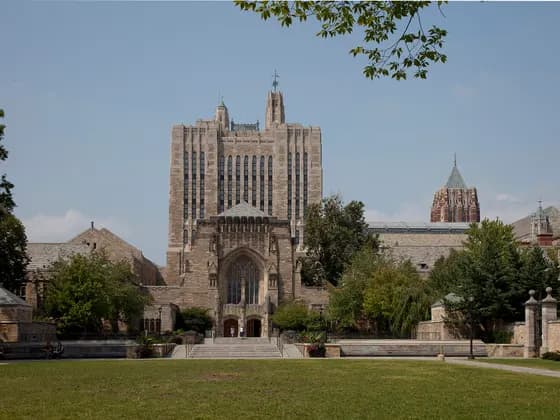
Photo: Raf2016 · CC BY-SA 4.0

Start here
Overview

About Yale School of Medicine (MD)

Yale School of Medicine, founded in 1810, is distinguished by its student-centered curriculum and distinctive "Yale System" — a no-grade, no-rank educational philosophy that encourages independent scholarship and collaborative learning. Located in New Haven, Connecticut, the school is affiliated with Yale New Haven Hospital and the West Haven VA Medical Center. The Yale System has produced generations of physician-scientists who value intellectual freedom and self-directed learning.

What makes it different

The Yale System — no grades, no class rank, and a required thesis — is unique among top US medical schools. Every Yale MD graduate writes a research thesis, making the program exceptionally research-intensive. The conversational interview style reflects the school's collaborative, non-competitive culture.

Course & teaching

Traditional curriculum. The Yale System: 4-year MD with no grades and no class rankings in Years 1–2. Students take a written thesis as a graduation requirement (unique among top US medical schools). Preclinical studies use a Pass/Fail system. The thesis fosters deep independent scholarly work in a self-chosen area.

Research strengths

Yale School of Medicine (MD) has notable research strength in Immunology, Infection and host defense, Cancer biology, Neuroscience, Global health.

Interview

Yale School of Medicine (MD) interviews via Traditional one-on-one interviews; conversational, student- and faculty-led.

Intake

Approximately 100 students per year.

At a glance

Founded in 1810, based in New Haven, CT. Programmes offered: Immunology, Infectious Disease, Public Health, Basic Science Research, Primary Care.

Entry requirements

What you need to apply to Yale School of Medicine (MD)

Admission overview
Bachelor's degree and MCAT required. Yale seeks candidates who are self-directed, intellectually independent, and committed to scholarly inquiry. No specific major required. AMCAS plus secondary application.
MCAT median
521 (range 516–526)
GPA median
3.90 overall / 3.88 science (BCPM)
Acceptance rate
3.5%
Class size
100
In-state preference
None
CASPer
Not required
AAMC PREview
Not required
Holistic review emphasis
Intellectual independence, scholarly potential, research curiosity, and collaborative character.
Notes
MCAT/GPA approximate from Yale class profile data.
Specialities offered
Immunology, Infectious Disease, Public Health, Basic Science Research, Primary Care
Interview

How Yale School of Medicine (MD) interviews applicants

Format
Traditional one-on-one interviews; conversational, student- and faculty-led
Interview window
September–January
Decision date
March 30
Tutor insight
Yale's interview is notably conversational and relaxed compared to other T10 schools — interviewers are genuinely curious about you as a person and scholar. Come prepared to discuss your intellectual interests with depth and enthusiasm; the Yale System rewards self-motivated learners who thrive without the structure of grades and rankings. Your thesis topic concept does not need to be fully formed at interview, but being able to articulate a genuine scholarly curiosity is essential. If you are the type of student who finds competitive grading demotivating, Yale's culture should strongly appeal to you — and make that case clearly in your secondary essays.
Practice

Practise for your Yale School of Medicine (MD) interview

PrometheusQuestion Bank621 medicine questions inside

Interview questions matched to Yale School of Medicine (MD)

Two questions our tutors flagged as a strong fit for Yale School of Medicine (MD)’s interview style. Try answering them out loud, then open Prometheus for the model answers and follow-up tips.

EasyPanelQ1

Service Orientation: Health Education in Underserved Schools

As part of a student-led initiative, you developed and taught a semester-long health education curriculum at a Title I middle school in a low-income neighbourhood. The curriculum covered nutrition, mental health, puberty, and substance abuse prevention. Describe what you learned about the relationship between education and health, and how this work has shaped your sense of what medicine can and cannot do.

Likely follow-up · What is the evidence that school-based health education programmes affect long-term health behaviour?

3 expert tips in Prometheus
MediumMMI · PanelQ2

AAMC Core Competency: Ethical Responsibility to Self and Others

The AAMC identifies Ethical Responsibility to Self and Others as a core competency, which includes maintaining personal integrity, managing one's own wellbeing, and upholding the welfare of patients and colleagues. A fellow pre-medical student — a close friend — confides that he has been using a prescription stimulant without a prescription to manage the demands of organic chemistry and MCAT preparation. He asks you not to tell anyone. How do you respond?

Likely follow-up · How does unprescribed stimulant use among pre-medical students connect to the broader culture of performance pressure in medical training?

3 expert tips in Prometheus
Get support

Apply to Yale School of Medicine (MD) with confidence

We've helped students into Yale School of Medicine (MD) and other US medicine schools — get tailored support for each stage of the application.

FAQ

Yale School of Medicine (MD) — frequently asked questions

Apply to Yale School of Medicine (MD) with confidence

We've helped students turn their MCAT, personal statement and interview prep into offers from Yale School of Medicine (MD) and other US medicine schools.