
The Aberdeen (Graduate Dentistry) Dentistry course
What you actually study, and where you will be
Aberdeen's BDS is a 4-year (graduate entry, direct into year 2) course taught through case-based learning and enquiry-based learning in an integrated curriculum, with patient treatment from Year 1 and placements in Aberdeen, with outreach in Elgin and Stornoway (2027 entry). A very small graduate-entry route, with 20 places a year, where applicants with the right biomedical background enter directly into year 2 of the BDS (BDS2). In that first year on the course, students start practical training in the clinical skills lab and have direct patient contact from the second term.
- Degree
- BDS
- Length
- 4 years (graduate entry, direct into year 2)
- Teaching
- Integrated + Case-based learning + Enquiry-based learning
- First patients
- Year 1
- UCAS code
- A201
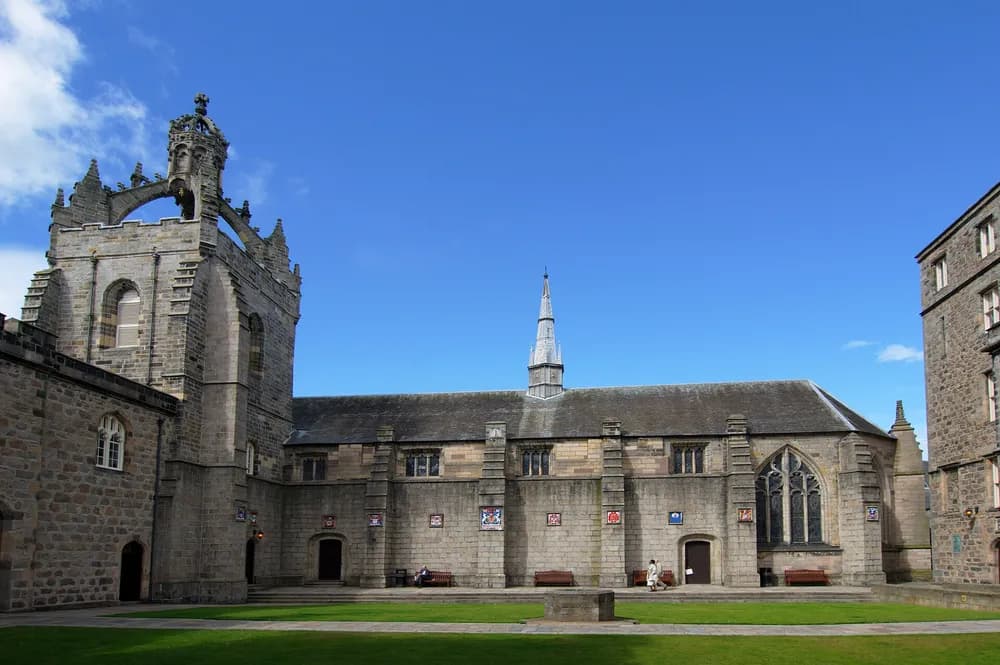
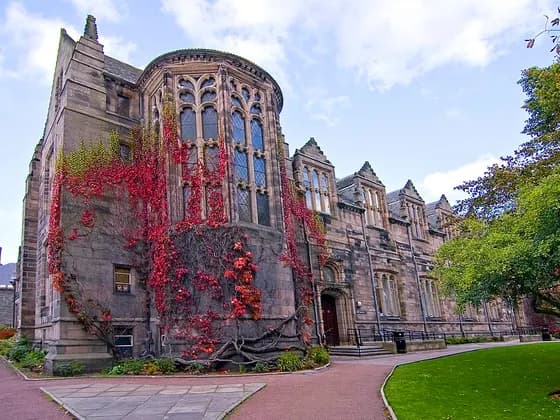


Photo: Mussklprozz · CC BY-SA 3.0 · cropped
Photo: Alan Findlay · CC BY-SA 2.0 · Photo: Kognos · CC BY-SA 4.0 · Photo: Appie Verschoor · CC BY 3.0
The Aberdeen (Graduate Dentistry) dentistry course at a glance (2027 entry)
Dentistry at the University of Aberdeen is a four-year course for graduates that leads to the BDS, the Bachelor of Dental Surgery. A UK dental degree normally takes five years. Aberdeen only takes students who already hold a degree, and they skip the first year and join at the second, so your four years are called BDS2 to BDS5. The degree lets you register with the General Dental Council (GDC), which regulates dentists across the UK.
The course is run by the university's Institute of Dentistry, whose first students graduated in 2012. It is based in a purpose-built dental school and clinic building on the Foresterhill Health Campus in Aberdeen. The university and NHS Grampian, the local health board, jointly own the campus, which also holds the medical school and a large teaching hospital. Each year group has 20 places, and the whole Institute has about 80 BDS students.
Because everyone arrives with a degree, the teaching assumes you can already study on your own. Case-based learning is one of several methods, alongside lectures, tutorials and individual projects. In it you learn by working through realistic patient cases. The course also uses enquiry-based learning, where you are expected to find answers yourself rather than wait to be told. The sciences are woven into the clinical teaching instead of coming first as a separate block.
Patients come early. You begin practical training in the clinical skills lab, where you practise procedures in simulation, and you start treating patients in the second term of your first year. Clinical time grows each year. In the later years you also treat patients at outreach clinics in Elgin and Stornoway, which means working in NHS community clinics away from the dental hospital.
The GDC's most recent published inspection of the course took place in January 2019. It concluded that the BDS remained sufficient for graduates to register as dentists. After graduating, the university explains, most new dentists go straight into a year of foundation training, also called vocational training, in an NHS general dental practice.
| Degree | BDS (Bachelor of Dental Surgery) |
|---|---|
| UCAS code | A201 (institution code A20) |
| Course length | 4 years full time, joining the five-year BDS at year 2 |
| Entry route | Graduate entry only, straight into BDS2 |
| Year group | 20 places a year, about 80 BDS students in total |
| Main base | Institute of Dentistry, Foresterhill Health Campus, Aberdeen |
| Teaching style | Several methods, including case-based and enquiry-based learning |
| First patients | Second term of your first year (BDS2) |
| Anatomy | Taught in BDS2, practicals in the Suttie Centre Anatomy Facility |
| Outreach | NHS clinics in Elgin and Stornoway, late BDS4 and final year |
What makes Aberdeen (Graduate Dentistry) dentistry different
A four-year dental degree built for graduates
You join the five-year BDS at its second year, so you qualify in four. The course assumes you already have the science grounding and study habits of a first degree. Offer holders receive pre-learning materials, and in your first weeks a practice assessment on them shows your strengths and gaps. It does not count towards your marks.
Treating patients in your first year
After starting in the clinical skills lab, you begin treating patients during year 1. Many of your patients are people without an NHS dentist who volunteer for free, supervised care. Your clinical work then grows every year.
A year group of 20
Only 20 students start each year, and the whole Institute has about 80 BDS students. When the GDC inspected in 2019, the clinics ran at one clinical supervisor to every five students. You are still part of a larger campus, shared with medical and science students.
Taught alongside NHS Grampian's dental teams
The Institute works with NHS Grampian's consultant teams in restorative dentistry and orthodontics, its dental nurses and its laboratory staff. Restorative dentistry means fillings, crowns and other work that repairs or replaces teeth. Local general dental practitioners, the dentists who work in ordinary high-street practices, supervise the student restorative clinics.
Outreach in Moray and the Western Isles
All students spend time at purpose-built outreach clinics in Elgin (NHS Grampian) and in Stornoway on the Isle of Lewis. The island clinic belongs to NHS Western Isles, the health board for the Outer Hebrides. The visits start towards the end of year 3 (BDS4) and continue through the final year.
A final year built around complete cases
In your last year you pull everything together in integrated oral care, which means planning and delivering all the treatment a patient needs rather than one procedure at a time. Part of your final assessment looks at cases you treated during your four years.
How Aberdeen (Graduate Dentistry) teaches dentistry
Aberdeen designed this course for people who have already been to university. It builds on the study skills you bring and expects you to take charge of much of your own learning. Teaching is planned around patients as people, so you think about how they feel and what their lives are like, not only the treatment they need. You are also asked to reflect on your own clinical work from an early stage.
The sciences are not a separate first stage. A course called Applied Medical and Dental Sciences runs in every year next to the clinical courses, so the science connects to the patients you are treating. Your timetable and teaching materials live on MyBDS, the course's own online learning site. You may be asked to listen to a podcast or read ahead before a live session, and there are online quizzes and discussion boards.
The balance shifts over the four years. Early on, much of your learning happens in teaching sessions and the clinical skills lab. By years 3 and 4, the course catalogue describes the non-restorative subjects, such as children's dentistry, orthodontics and oral surgery, as heavily based on clinical treatment sessions. Much of what you learn then comes from treating patients under supervision.
You are taught by, and watch, dental professionals from primary care, such as high-street practices, and from secondary care, such as hospital specialists. NHS Education for Scotland (NES), which trains NHS staff, contributes to some sessions. So do the dental protection organisations, which give dentists legal advice and indemnity, and the GDC itself.
The ways you will learn
| Case-based learning | You work through realistic patient cases and research the science, clinical knowledge and communication needed to manage each one. The course pairs this with enquiry-based learning, where you are expected to set your own questions and track down the answers. |
|---|---|
| Lectures, tutorials and online preparation | Lectures and tutorials are part of the course. Materials sit on MyBDS, and some sessions expect you to prepare beforehand by listening to a podcast or doing set reading, so the live session can focus on using what you learned. |
| Clinical skills lab | A simulation lab where you practise clinical procedures before doing them on patients. Your practical training starts here in year 1. When the GDC visited in 2019, students said they could return to the lab to rebuild confidence in a procedure they had not done for a while. |
| Supervised patient clinics | Treatment sessions in the dental hospital, with restorative clinics first. From year 2 you also work in radiography clinics, where dental X-rays are taken and read, and in children's and oral surgery clinics. Emergency and special care clinics are added in year 3. Special care dentistry treats people whose disability or medical, mental or social circumstances make routine care harder. |
| Reflective practice | You are expected to reflect on your clinical work from early in the course, which means looking back at what went well and what you would change. In 2019 the Institute told the GDC that students wrote marked reflective essays about their clinical experience every year. |
| Individual projects and research | Individual projects and research are among the learning methods the university lists for the course. You can also apply for funded summer research placements, covered in the questions at the end of this guide. |
How anatomy is taught at Aberdeen (Graduate Dentistry)
According to the Anatomy department's teaching page, anatomy in your first year (BDS2) is taught jointly by Institute of Dentistry staff and the university's Anatomy department. You have the lectures at the dental school and the practical classes in the teaching laboratories of the Anatomy Facility in the Suttie Centre, on the same campus. The teaching covers every region of the body, with most emphasis on the head, neck and chest.
Anatomy comes back in the clinical teaching too. The first-year local anaesthesia teaching in Clinical Dentistry 2 (DE2070) covers the anatomy of the mouth alongside the reasons for giving anaesthetic. The Anatomy Facility also has a 3D virtual anatomy resource.
Your anatomy knowledge is examined in an Objective Structured Practical Examination (OSPE) in Anatomy and Oral Biology (DE2066). An OSPE is a practical exam in which you move round a series of timed stations, answering questions on the material set out at each one.
When you start treating patients at Aberdeen (Graduate Dentistry)
You begin with practical training in the clinical skills lab, then start treating patients in the second term of your first year. Training in the clinical skills lab carries on into year 2, alongside your regular clinics.
Local anaesthesia is taught and assessed in the first year. It covers infiltration injections, which numb the area around a tooth, and nerve block injections, which numb a larger area supplied by one nerve. You then use these techniques in the patient clinics.
Many of your patients are adults and children who are not registered with an NHS dentist. They volunteer through the Institute and their treatment is free. Each person first attends an assessment clinic with an experienced clinician, who decides whether their needs suit student care. Some are not accepted because the work needed is too complex for students.
Once accepted, a patient is booked with a student. Appointments last 60 to 90 minutes depending on how experienced the student is, because students work more slowly and their work has to be checked. An experienced senior clinician supervises every student clinic, and all the clinicians and clinical nurses are registered with the GDC.
When the GDC inspected in 2019, the Institute's clinics ran at one clinical supervisor to five students, which the inspectors judged sufficient. There was one dental nurse to every two students in the Institute's clinics and one per student at the outreach clinics. Responsibility then builds year by year, from restorative clinics to full, complex cases in your final year.
Year by year at Aberdeen (Graduate Dentistry)
- Year 1 (BDS2)
Foundations, clinical skills and first patients
The course starts a week before the university's Welcome Week. In 2026, induction was on 31 August. There you meet your Year Lead, the member of staff who oversees your year group. The year builds your understanding of the mouth, dental health and disease, and the basics of managing patients, communicating with them and practising ethically. You train in the clinical skills lab first, then begin treating patients.
- In your first weeks you sit a formative assessment, a practice test that does not count towards your marks, on pre-learning materials sent out with offers. You get feedback on your strengths and weaknesses.
- Applied Medical and Dental Sciences 1 (DE2055), Clinical Dentistry 1, Year One (DE2069) and Contemporary Professional Skills (DE2068).
- Clinical Dentistry 2, Year One (DE2070): the start of the non-restorative teaching thread, beginning with the theory and practice of local anaesthetic injections.
- When the GDC visited in 2019, first-year teaching covered applied medical sciences, oral biology, human disease and anatomy. It also began dental public health, which looks at the dental health of whole communities, and teaching in communication, professionalism and ethics.
- Your exams are the Anatomy and Oral Biology OSPE (DE2066) and a single best answer (SBA) paper (DE2067). In an SBA paper you choose the best of several plausible answers to each question. Together they assess all of the year's dental courses.
- Year 2 (BDS3)
Regular restorative clinics and new specialties
This year is about seeing why each subject matters in the clinic. You build clinical and communication skills on the restorative clinics, where you now see patients regularly, backed by more training in the clinical skills lab. You also develop the habit of reflecting on your own learning.
- Regular restorative clinics, where you treat patients who need fillings and other repairs to their teeth.
- Clinical Dentistry 2, Year Two (DE3070) covers paediatric dentistry (treating children), orthodontics (straightening teeth), oral surgery (extractions and minor surgery) and oral medicine (diseases of the mouth). You put it into practice in the radiography, children's and oral surgery clinics.
- Applied Medical and Dental Sciences 2 (DE3045), Clinical Dentistry 1, Year Two (DE3069) and Contemporary Professional Skills 2 (DE3068).
- Assessment through Clinical Scenario Papers 2 (DE3036), written exams built around patient scenarios, Clinical Scenario Reports (DE3067) and OSCE 2 (DE3037). An Objective Structured Clinical Examination (OSCE) is a circuit of timed stations where examiners watch you carry out clinical or communication tasks.
- When the GDC visited in 2019, this year introduced research skills, more complex restorative work in simulation and the study of dental materials.
- Year 3 (BDS4)
Emergency and special care clinics
This year you use what you know on real patients, working out what each one needs and planning treatment to suit them. You start in the emergency and special care clinics and spend more time in the children's clinics, which you first meet in year 2. Much of the year is spent in clinical treatment sessions.
- Clinical Dentistry 2, Year Three (DE4070) adds special care dentistry. Paediatric dentistry, orthodontics, oral surgery and oral medicine continue.
- Clinics for children, dental emergencies and special care patients.
- Visits to watch clinicians working in specialist areas of dentistry.
- Short outreach visits to partner NHS clinics begin towards the end of the year.
- When the GDC visited in 2019, this year included specialist attachments in consultant restorative dentistry, oral and maxillofacial surgery, and anaesthesia and sedation.
- Applied Medical and Dental Sciences 3 (DE4045), Clinical Dentistry 1, Year Three (DE4069) and Contemporary Professional Skills 3 (DE4068).
- Assessment through Clinical Scenario Papers 3 (DE4036), OSCE 3 (DE4038) and Clinical Scenario Reports 2 (DE4067).
- Year 4 (BDS5)
Integrated care and complex cases
The final year brings everything together in integrated oral care, where you plan and carry out all the treatment a patient needs. You also work on team working, ethics and management skills. Several of your patients have complex needs, and you see each of them through a whole course of treatment before presenting the case.
- Clinical Dentistry 2, Year Four (DE5070): paediatric dentistry, orthodontics, oral surgery, oral medicine and special care, taught mostly through treatment sessions.
- Outreach visits continue throughout the year.
- Clinical Skills and Practice Assessments (DE5037), Applied Medical and Dental Sciences 4 (DE5045), Clinical Dentistry 1, Year Four (DE5069) and Contemporary Professional Skills 4 (DE5068).
- The Integrated Structured Clinical Examination (DE5039), a final clinical exam that draws on skills from the whole course, and Clinical Scenario Papers 4 (DE5050). Together they assess all of the year's dental courses.
- An assessment of some of the cases you have treated during your four years at the Institute.
How you are assessed at Aberdeen (Graduate Dentistry)
You are examined in several formats. Written papers include single best answer questions and clinical scenario papers. Practical and clinical exams include the anatomy OSPE, Objective Structured Clinical Examinations (OSCEs) and Structured Clinical Objective Testing (SCOT). In the final year these come together in an Integrated Structured Clinical Examination (ISCE) and an assessment of cases you have treated.
Each year's dental courses are assessed together through a small set of integrated assessments, rather than an exam for every course. In year 1 these are the anatomy OSPE and the single best answer paper. In years 2 and 3 they are a clinical scenario paper, an OSCE and clinical scenario reports. In year 4 they are the ISCE and a clinical scenario paper.
Before you can sit end-of-course assessments, the Dental Progress Committee must confirm that you have done all the required teaching and activities and grant you a class certificate. You normally get at most two attempts at the assessment for each course in a year, and resits happen within the same academic year. You must pass everything to move up a year.
Across the whole course you are normally allowed one repeat year, although you are entitled to repeat the final year even if you have already repeated another. You must usually finish within five calendar years of first registering, not counting approved time out. The BDS can be awarded with Honours or with Commendation. Students who leave early may receive a Certificate or Diploma of Higher Education (Dentistry) or a Bachelor of Dental Science (B Dent Sci), but none of these lets you register as a dentist.
Your clinical work is also tracked continuously. When the GDC inspected in 2019, students logged every procedure on LiftUpp, a digital system in which the supervising clinician records the treatment, how complex it was, and the student's communication and professionalism. A paper Clinical Skills Passport recorded the skills each student had been signed off in. It could be withdrawn after a concern, until the student completed extra training, and the Institute planned to move it online from 2020/21.
- Single best answer (SBA): multiple-choice questions in which you pick the best of several plausible options.
- Clinical scenario papers: written exams built around clinical scenarios, testing how you would apply your knowledge to a patient.
- OSPE: a practical exam used for anatomy and oral biology, with timed stations.
- OSCE: the station-based clinical exam you sit in years 2 and 3 (OSCE 2 and OSCE 3), testing clinical and communication skills.
- Structured Clinical Objective Testing (SCOT): named by the university alongside OSCEs as one of the ways your clinical skills are assessed at set stages.
- ISCE: the final-year clinical exam, which combines skills from across the course.
Where you will actually be at Aberdeen (Graduate Dentistry)
For most of the course you are based in one building. All clinical skills teaching, dental laboratory teaching and patient clinics are compulsory and take place at Aberdeen Dental Hospital and the Institute of Dentistry on the Foresterhill Health Campus. Your written and practical exams are held there or elsewhere on the same campus.
In the later years you also spend time with members of the Oral and Maxillofacial Department, which treats conditions of the face, jaws and mouth. You also work with colleagues at Aberdeen Health Village, an NHS Grampian community health centre in Aberdeen city centre whose services include dentistry.
Every Aberdeen student spends some time at purpose-built outreach clinics in Elgin, in Moray (NHS Grampian), and in Stornoway on the Isle of Lewis (NHS Western Isles). The university's 2026 induction guidance describes short visits from towards the end of year 3 (BDS4) and throughout the final year. While there, you may also watch timetabled specialist clinics.
The arrangements have changed over time. In 2019 the university reported two final-year students' four-week placement at the Western Isles Dental Practice in Stornoway, and the GDC noted plans to replace two-week outreach blocks with a longer final-year period. At that time the Institute had a dedicated Outreach Lead who visited the centres and supported their staff.
Your base for all four years: clinical skills, laboratory teaching, patient clinics, anatomy practicals and exams.
- Aberdeen Dental Hospital and Institute of Dentistry
- Suttie Centre for Teaching and Learning in Healthcare
Time with oral and maxillofacial staff, and with colleagues at the NHS Grampian community health centre on Frederick Street, in the later years.
- Oral and Maxillofacial Department
- Aberdeen Health Village
Purpose-built community outreach clinic used by senior students, from late year 3 through the final year.
- NHS Grampian outreach dental facility
Island outreach clinic run by NHS Western Isles, used from late year 3 through the final year.
- NHS Western Isles outreach dental facility
Facilities and support at Aberdeen (Graduate Dentistry)
Where you will learn
The Institute of Dentistry's purpose-built building on Foresterhill holds both teaching space and working dental clinics. It has facilities for oral surgery, a dental accident and emergency service, restorative dentistry, integrated oral care, orthodontics, paediatric dentistry and dental imaging, as well as dental laboratories. Your clinical skills teaching also takes place in the building.
Two other dental services share the site. The Aberdeen Dental Education Centre is a postgraduate dental training centre with its own outreach clinics, and Argyll House has surgeries for NHS Grampian's dental service.
The Suttie Centre for Teaching and Learning in Healthcare is a partnership between the university and NHS Grampian that opened in 2009. It houses a clinical skills centre and the Anatomy Facility where your anatomy practicals take place. You share the campus, the Suttie Centre and the Medical Library with medical and science students. You can also use the Sir Duncan Rice Library at King's College, plus online journals and textbooks.
Support while you study
The course is small enough for staff to know you. At induction you meet your Year Lead and the Institute's administration team. When the GDC inspected in 2019, Year Leads reviewed each student's clinical record every month and reported on every student to the committee that decides on progression.
At that visit, students described staff as approachable and said they felt able to ask for feedback. If a student was not making enough progress, their Year Lead met them to agree a plan to catch up. In the final year, Clinical Mentors each looked after two students and met them regularly each semester to review their progress.
Is the Aberdeen (Graduate Dentistry) course right for you?
This course may suit you if
- You are prepared to complete a first degree before dentistry and want a course that builds on it, finishing in four years rather than five.
- You want to start treating patients in your first year.
- You would like to be one of only 20 in your year, in a dental school of about 80 BDS students.
- You enjoy learning through patient cases and working things out for yourself.
- You are curious about dentistry in smaller communities, with outreach visits in Elgin and on the Isle of Lewis.
Things to think about
- You cannot join straight from school. Your total time at university is a full first degree plus four more years.
- Every course in all four years is compulsory, so there is little room to choose what you study.
- All students spend some time at the outreach clinic in Stornoway on the Isle of Lewis, a long way from Aberdeen.
- The progression rules are strict: you must pass every assessment to move up, and you normally get only one repeat year across the course.
- The GDC's most recent published inspection is from January 2019, so the regulator's view of the course is several years old.
Aberdeen (Graduate Dentistry) dentistry course — frequently asked questions
Applying to Aberdeen (Graduate Dentistry)?
How to get into Aberdeen (Graduate Dentistry)
Entry requirements, UCAT, personal statement and interview, step by step.
Open the guide →Aberdeen (Graduate Dentistry) UCAT cut-offs and offers
UCAT cut-offs, A-level offers, interview format and decision dates.
See the requirements →Compare Aberdeen (Graduate Dentistry) with other schools
Put the teaching style, anatomy teaching and placements next to another school.
Open the comparison →Prepare for the Aberdeen (Graduate Dentistry) interview
Format breakdown, school-specific sample questions and prep tips from tutors who interviewed here.
Read the guide →Where this Aberdeen (Graduate Dentistry) course guide came from
This guide was written from 22 official sources — University of Aberdeen Graduate Dentistry's own course pages and programme documents, plus the regulator and NHS placement partners where they publish detail — read on 2026-09-24, then checked claim by claim against those sources.
- Study Dentistry (BDS), Institute of Dentistry, University of Aberdeen
- Dentistry (BDS) degree programme page with year-by-year courses, University of Aberdeen
- BDS application process and first-weeks formative assessment, Institute of Dentistry
- Degree of Bachelor of Dental Surgery programme specification, 2026 University Calendar
- Medicine and Dentistry Supplementary Regulations, 2026 University Calendar
- DE2070 Clinical Dentistry 2, Year One, Catalogue of Courses
- DE3070 Clinical Dentistry 2, Year Two, Catalogue of Courses
- DE4070 Clinical Dentistry 2, Year Three, Catalogue of Courses
- DE5070 Clinical Dentistry 2, Year Four, Catalogue of Courses
- New student induction for Dentistry (BDS), September 2026, University of Aberdeen
- Patient treatment at the Institute of Dentistry student clinics
- Institute of Dentistry campus page, University of Aberdeen
- About the Institute of Dentistry, University of Aberdeen
- Anatomy teaching at the Suttie Centre, including dentistry
- Anatomy Facility, The Suttie Centre, University of Aberdeen
- The Suttie Centre for Teaching and Learning in Healthcare
- Undergraduate research opportunities, Institute of Dentistry
- Aberdeen BDS students discuss rural outreach in Stornoway, University of Aberdeen news, January 2019
- GDC education quality assurance inspection report, University of Aberdeen BDS, 2019
- GDC approved providers of dentistry programmes and their inspection reports
- Aberdeen Community Health and Care Village (Aberdeen Health Village), NHS Grampian
- Dental clinics, NHS Western Isles (the health board for the Outer Hebrides)
Courses are restructured between cycles. Anything here that decides your application — an anatomy offer, a placement city, a compulsory intercalated year — should be confirmed against the official page for your entry year.
Applying to Aberdeen (Graduate Dentistry)?
We have helped hundreds of applicants turn their UCAT, personal statement and interview prep into offers from Aberdeen (Graduate Dentistry) and other UK dentistry schools.