
Aberdeen (Graduate Dentistry) Dentistry Interview
Format, Questions & Prep Tips
Aberdeen dentistry interviews for 2027 entry are multiple mini interviews (MMI). Aberdeen describes the format as: 90-minute MMI. Published figures: Places per year 20 (graduate entry only); Interviewed per cycle ~60; Shortlisting Degree result 60% + UCAT 40%.
- Institution
- University of Aberdeen Graduate Dentistry
- Interview (2027 entry)
- February – March per the BDS FAQ (2026 entry schedule listed 3–8 December 2025) — check your invitation
- Decisions (2027 entry)
- On UCAS by the beginning of April at the latest

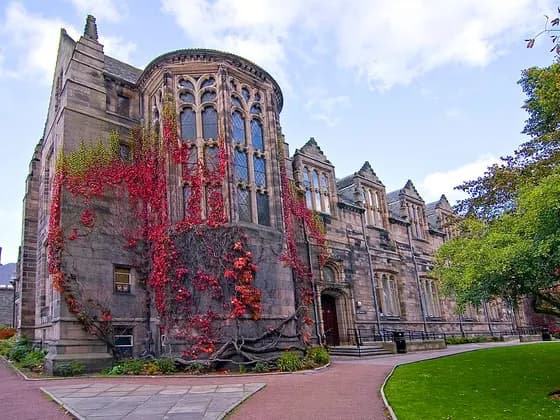
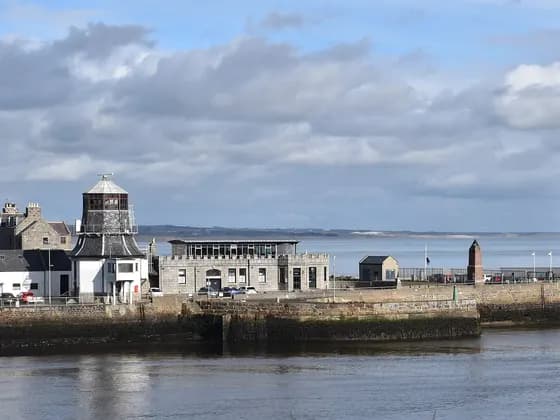
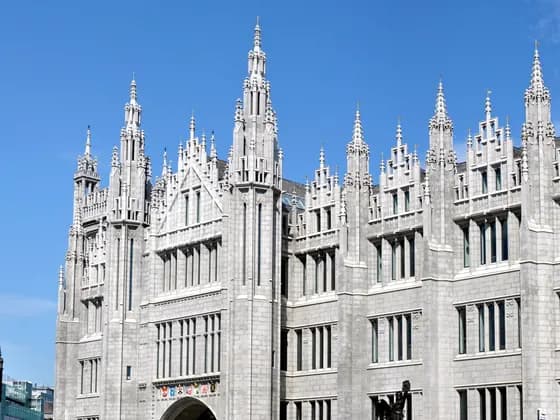
Photo: Mussklprozz · CC BY-SA 3.0 · cropped
Photo: Alan Findlay · CC BY-SA 2.0 · Photo: Kognos · CC BY-SA 4.0 · Photo: Appie Verschoor · CC BY 3.0
Still deciding where to apply? Hear it from a student who's there
Aberdeen's BDS is a graduate-only dental programme — just 20 places a year, entered directly into what is effectively year 2 of a five-year model and completed in four years at the Institute of Dentistry on the Foresterhill Health Campus. Every applicant already holds (or is completing) a 1st or 2:1 in a medical or health science, and every applicant must sit the UCAT — including medicine graduates.
Shortlisting scores your degree result (60%) against your UCAT (40%) with no fixed UCAT cut-off, and around 60 candidates are interviewed each cycle. From there the stakes are unusually clean: Aberdeen states that all offers are made on interview performance alone. The MMI runs as a circuit of 7-minute stations lasting roughly 90 minutes in total, with one selector per station scoring a published set of domains — work experience, understanding of dentistry issues, problem-solving, motivation, communication and manual dexterity.
The school's identity is unapologetically Scottish-workforce-focused: clinical teaching at Aberdeen Dental Hospital, outreach placements in Elgin and Stornoway, a £4,000-per-year Dental Student Support Grant tied to NHS Scotland service, and no international intake. Interviewers are listening for graduates who understand that mission, not school-leavers with a rehearsed script.
Aberdeen (Graduate Dentistry) interview key facts (2027 entry)
| Places per year | 20 (graduate entry only) |
|---|---|
| Interviewed per cycle | ~60 |
| Shortlisting | Degree result 60% + UCAT 40% |
| UCAT cut-off | None fixed — competition sets the bar |
| Format | MMI — 7-minute stations, ~90 minutes total |
| Offers | Made on interview performance alone |
| International places | None — home and RUK applicants only |
Interview Format
- Multiple Mini Interview — a circuit of 7-minute stations, roughly 90 minutes in total
- One selector per station, each scoring a single question area or domain independently
- Published domains: work experience, understanding of dentistry issues, problem-solving, motivation, communication and interpersonal skills, manual dexterity
- Communication is assessed at every station, not just the communication-flavoured ones
- Once shortlisted, offers are decided on interview performance alone — the degree and UCAT scores have done their work
- Interviews are held at the Institute of Dentistry with a dental-school tour offered on the day
- Around 60 candidates interviewed for 20 places
Sample Interview Questions
Why dentistry now — via a second degree — rather than straight from school?
Aberdeen's cohort is entirely graduates, so "career-change maturity" is the baseline, not a bonus. Show how your first degree or working life tested and confirmed the decision: shadowing, conversations with dentists, a considered comparison with the career you are leaving.
Why Aberdeen's graduate-entry BDS specifically?
Reference the 20-place cohort, direct entry into year 2, the co-located Foresterhill campus shared with NHS Grampian, and the Elgin and Stornoway outreach placements. Generic "small cohort" answers are weaker than ones grounded in the actual programme structure.
What did your work experience teach you about the realities of a dental career?
Aberdeen's own guidance says it is "more revealing" to explain what you learned about a dental career and its implications than to list placements. Pick one or two moments and reflect: NHS time pressure, anxious patients, the business side, the physical toll.
How has your first degree prepared you for a compressed, clinically front-loaded BDS?
You enter at what is effectively year 2, with patient contact in the second term. Map your degree content — anatomy, physiology, microbiology, pharmacology — onto that head start, and evidence self-directed learning under load.
Explain a complex concept from your degree to a patient with no science background.
Plain language, an analogy, and a check of understanding. Communication and interpersonal skills are scored at every Aberdeen station, so treat this as the skill the whole MMI is watching.
What evidence can you give us of your manual dexterity?
Manual dexterity is one of Aberdeen's published assessment domains. Concrete, sustained examples — an instrument, fine art, model-making, suturing practice, laboratory bench work — with reflection on how you improved through deliberate practice.
A patient with capacity refuses the restorative treatment you believe they need. What do you do?
Autonomy governs once capacity is established. Explain risks clearly, document, keep the door open, and reference GDC Standards. Selectors want structured reasoning, not a lecture.
An anxious patient asks you to extract a restorable tooth because it is cheaper and quicker. How do you respond?
Balance autonomy against your duty to advise in the patient's best interests. Explore the anxiety driving the request, explain the long-term consequences honestly, and involve them in a real shared decision.
(Possible station) A patient has been waiting 45 minutes and is angry when you call them through. Speak to them.
Acknowledge and apologise without blaming colleagues, listen for the real concern — pain, a school run, fear — and offer something concrete. Composure under pressure is what the selector is scoring.
(Possible station) A chart shows NHS dental participation falling sharply with distance from Scotland's cities. What does it show, and what could be done?
Describe the pattern before interpreting it. Discuss workforce distribution, travel and access barriers, and prevention — then connect to Aberdeen's own answer: outreach training in Elgin and Stornoway.
The Dental Student Support Grant ties £4,000 a year of funding to matched years of NHS Scotland service. Is it right to tie student funding to workforce commitments?
Argue both sides: an evidenced NHS dentist shortage and public investment on one hand; graduate autonomy and life circumstances on the other. Land on a reasoned position — selectors score the weighing, not the conclusion.
Tell us about a time you resolved a conflict in a team.
STAR structure with genuine reflection. Graduates are expected to bring workplace-grade examples — group projects, jobs, sports teams — and to show listening, not just resolution.
What concerns you most about starting dentistry as a graduate?
Honest, informed self-awareness scores: four intense years, finances, restarting at the bottom of a profession, the physical demands. Pair each concern with how you have prepared for it.
Describe a piece of difficult feedback you received during your degree or work, and what you did with it.
Pick real feedback that changed your behaviour. Reflection and sensitivity are explicitly in Aberdeen's scoring language; a polished non-answer wastes the station.
Should NHS dentistry prioritise prevention over restorative activity, given current access pressures?
Engage with the prevention argument — most dental disease is preventable — against the reality of patients who need treatment now. Show awareness of NHS access pressures without reciting statistics you cannot defend.
Which oral-health issue facing Scotland concerns you most, and why?
Pick one you can genuinely defend — access and inequality, remote and rural provision, alcohol- and tobacco-related oral cancer — and link it to prevention and workforce. Depth on one issue beats a tour of five.
Practise the Aberdeen (Graduate Dentistry) interview
Rehearse the real format before the day — on demand with our AI interviewers, or live with a tutor.
Sit a mock with photoreal AI interviewers — any time
A timed MMI or panel interview on video — British & international voices — with interviewers who listen, react and press with follow-ups. Rubric-scored feedback and a replay the moment you finish.






Live mocks with a tutor who’s been in the room
A full Aberdeen (Graduate Dentistry)-style mock with a medic or dentist tutor — honest scoring against real marking criteria, a station-by-station debrief and a written action plan.
Book a mock interviewHow to Prepare
Weight your preparation the way Aberdeen weights its decision: once you are shortlisted, offers are made on interview performance alone.
Build an evidence grid for the six published domains — work experience, dentistry issues, problem-solving, motivation, communication, manual dexterity — with two concrete examples in each.
Practise 7-minute stations with a hard reset between them; the full circuit runs about 90 minutes and stamina is part of the test.
Take the UCAT seriously even with a strong degree — there is no cut-off, but Aberdeen publishes the lowest scores invited to interview each year and recent cycles have sat well above 2,000.
Research the NHS Scotland dental workforce picture, the Elgin and Stornoway outreach model, and the Dental Student Support Grant terms — they are the mission your motivation answers should connect to.
Refresh the GDC Standards principles so ethics stations have a professional frame, not just instinct.
Get the logistics right early: UCAS deadline is 16 October, all applicants must sit the UCAT that summer, and reapplicants must re-sit it each cycle.
Invited to interview at Aberdeen (Graduate Dentistry)? Say your first answer out loud today with the free two-minute warm-up drill, then sit a timed mock set up for Aberdeen (Graduate Dentistry).
Common Pitfalls
Frequently Asked Questions
Related guides
Free, evidence-based guides from current UK medical and dental students.
Free Interview Resources
Worked-through MMI stations, ethics scenarios, and panel questions.
Read guideNHS Core Values Guide
The 6 NHS values examiners listen for in every interview answer.
Read guideMedical School Rankings
See interview format (MMI vs panel) for each UK medical school.
Read guideUCAS 2026 Personal Statement
The new three-question format your interviewer will reference.
Read guideContextual Offers for Medicine
Every UK medical school's widening-access scheme in one place.
Read guideSources & official admissions information
We cross-check every interview guide against the school’s own admissions guidance and the UK regulators.
- University of Aberdeen Institute of Dentistry — BDS interview — Scoring 60% academic / 40% UCAT; offers on interview alone; 7-minute MMI stations, about 90 minutes in total.
- University of Aberdeen — Graduate-entry BDS — 20 places a year; interviews February to March; outcome on UCAS by the beginning of April.
- University of Aberdeen — Interview dates (2026 entry) — Lists BDS interviews in person at the Dental School, 3–8 December 2025, for 2026 entry.
- UCAT Consortium — Official UCAT registration, test format, scoring methodology and free practice materials.
- General Dental Council (GDC) — recognised UK dental qualifications — Statutory regulator. Recognised dental qualifications and registered-dentist register.
- Dental Schools Council — Coordinated body of UK dental schools. Entry-requirements comparison and widening-participation initiatives.
Ready to nail your Aberdeen (Graduate Dentistry) interview?
Book a mock interview with a current dental student who recently went through the same process, or practise on demand with the AI interviewer.