
The Birmingham Dentistry course
What you actually study, and where you will be
Birmingham's BDS is a 5-year course taught through a traditional, lecture-led structure, with patient treatment from Year 2 and placements in Birmingham and the West Midlands (2027 entry). Taught in Birmingham Dental Hospital and School, an integrated, stand-alone dental hospital and school. Birmingham publishes exactly how placement-heavy each year is — 1% of year 1, rising to 60% of year 5.
- Degree
- BDS
- Length
- 5 years
- Teaching
- Traditional / lecture-led
- First patients
- Year 2
- UCAS code
- A200

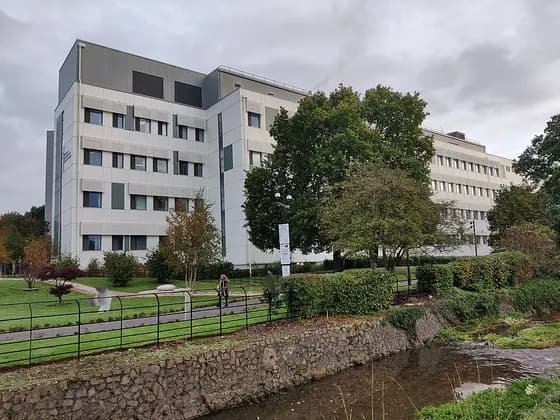
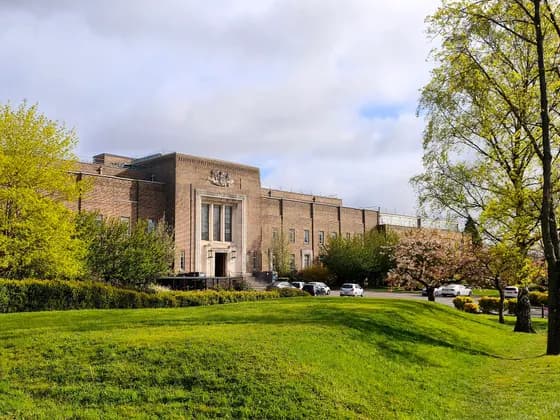

Photo: mattbuck · CC BY-SA 3.0 · cropped
Photo: Andy Mabbett · CC BY-SA 4.0 · Photo: Athikhun.suw · CC BY 4.0 · Photo: Andrew Abbott · CC BY-SA 2.0
The Birmingham dentistry course at a glance (2027 entry)
Birmingham's dentistry degree is the BDS, short for Bachelor of Dental Surgery. It lasts five years full time, the UCAS code is A200, and it is run by the School of Dentistry within the university's College of Medicine and Health. There were 65 places for 2026 entry.
Most of your teaching, simulation practice and clinics are at Birmingham Dental Hospital and School of Dentistry, on the former BBC Pebble Mill site in Edgbaston. Birmingham Community Healthcare NHS Foundation Trust runs the hospital in one wing, and the school teaches in the other. Some teaching takes place at the Medical School on the main university campus, about a mile away. The year 3 Human Diseases module is taught largely there, and so are the year 4 sessions on taking medical histories.
The course moves from science, to simulation, to patients. Year 1 is mainly biological science, with a first taste of clinic as a chairside assistant. In year 2 much of your time goes on practising procedures on phantom heads, which are mannequin heads fitted with artificial teeth. You start treating your own patients in the summer term of year 2, once you have passed skills checks the school calls gateways.
From then on the patients stay with you, and you keep seeing the same people until you graduate. Clinical work takes up more of each year as you go. In years 4 and 5 it reaches beyond the dental hospital, to community clinics and a week in an acute hospital, meaning a general hospital that treats sudden and serious illness.
Your progress is tracked closely. Every patient you see is logged in CAFS (the Clinical Assessment and Feedback System), the school's electronic portfolio, where staff grade your work and you write a reflection on it. The General Dental Council (GDC), which regulates dentistry in the UK, inspected the course in November 2025 and judged every requirement it examined to be met.
| Degree | BDS (Bachelor of Dental Surgery) |
|---|---|
| Course length | 5 years, full time |
| UCAS code | A200 |
| Year group | 65 places for 2026 entry |
| Main base | Birmingham Dental Hospital, Pebble Mill; some teaching at the Medical School |
| Teaching style | Science modules first, then simulation, then supervised clinics |
| Anatomy | Prosection: Craniofacial Anatomy, a 40-credit module in term 2 of year 1 |
| First patient treatment | Summer term of year 2, after passing clinical gateways |
| Phantom head practice | About 10.5 hours a week for 25 weeks in year 2 |
| Placement share | About 1% of year 1, rising to about 60% of year 5 |
| Final BDS | Written part in January and clinical part in April of year 5 |
| Intercalation | Optional; Clinical Anatomy MSci open to dental students in year 2 |
What makes Birmingham dentistry different
Your own patients from year 2 until graduation
Once you pass your gateways in the summer of year 2, you are given your own patients. You plan and carry out their care and keep looking after them until you graduate, so you see how your treatment holds up over time.
A Head of Firm for every third of the year
Each year group is split into three firms, and each firm has a senior clinician called a Head of Firm. They get to know their students, advise on clinical skills and study, and offer pastoral support, meaning help with personal and wellbeing matters. They may suggest extra phantom head practice for a procedure you have not done recently. Students praised the system to GDC inspectors in 2025.
A working dental hospital in the same building
Birmingham Dental Hospital handles around 115,000 patient attendances a year, from walk-in emergencies to specialist clinics such as orthodontics, which straightens teeth, and oral surgery. The trust says the hospital is there partly to support dental education, and between them the NHS staff and the school cover every dental specialty.
Chairside from your first year
In term 2 of year 1 you spend ten sessions assisting at the chairside, doing the dental nurse's job for senior students and hygienists. It gives you a close view of real treatment, and of how a dental team works, a year before you treat anyone yourself.
Former students return to talk about working life
Each year, former students come back to tell current students about dental foundation training and working in practice. Foundation training is the year most new UK dentists spend working in an NHS general dental practice after graduating. The GDC gave the school credit for this in 2025 and found the final-year group confident about starting.
How Birmingham teaches dentistry
The course is organised into compulsory modules, each with its own mix of lectures, seminars, small-group tutorials, laboratory work and, later, clinical practice. Every year also includes a professionalism module that carries no credits but must still be taken. Across the five years these build from academic skills in year 1 to preparing for independent practice in year 5.
The balance of your time shifts steadily from the classroom and independent study towards the clinic. The year-by-year section gives the published split for each year, and the typical week section shows the hours behind it.
Course materials, discussion forums and online submission of your work sit on Canvas, the university's virtual learning environment, which you can use at any hour. The school also runs its own e-learning systems, where you set goals and reflect on your progress. You can upload photos of your practical work to see how your technique changes, and staff use the same records to spot early when someone needs extra help.
You also have opportunities to work with qualified and trainee dental nurses, which is practice for working as part of a dental team. The school recently reviewed its curriculum to take account of the Safe Practitioner framework, the GDC's set of learning outcomes and behaviours for dental education, which took effect from 1 August 2025.
The ways you will learn
| Lectures | Lectures cover the science and theory behind each module. Scheduled teaching, which includes lectures, takes roughly a quarter to a third of your time in years 1 to 3. It drops to about a tenth in years 4 and 5. |
|---|---|
| Seminars and small-group tutorials | Smaller groups where you discuss and apply the lecture material with a tutor. The school describes small-group and collaborative sessions as a regular part of how it reinforces learning. |
| Laboratory work | Practical sessions in the laboratories built for the school. The school counts lab practice as part of your scheduled teaching in every year, alongside lectures and small-group tutorials. |
| Phantom head and haptic simulation | In the computerised phantom head laboratory you practise procedures on phantom heads before you touch a patient. You also use haptic technology, computer simulators that let you feel resistance as you work on a virtual tooth. Once you are on clinic, you use spare clinic bays and a virtual simulation suite for extra practice when a patient cancels or does not attend. |
| Supervised clinics | From the summer of year 2 you treat your own patients at the Dental Hospital, with qualified dentists supervising your work. Tutors grade your work session by session, and these continuous assessment grades count towards your clinical modules. |
| Specialty clinics and observation | Clinics led by specialists give you experience of individual branches of dentistry, such as restorative dentistry, which repairs and replaces damaged teeth, and children's dentistry. Specialty clinics begin in year 2, and in later years some sessions are for observation rather than treatment. |
A typical week on the Birmingham course
Year 2 has the heaviest load of practical work before you meet patients. In the Clinical Skills Suite at the School of Dentistry you spend on average about 7 hours a week on conservative dentistry, which covers fillings and other repairs to teeth. You spend about another 3.5 hours a week on prosthetic dentistry, which here means designing and making partial and full dentures.
Both run for 25 weeks, and you practise gum treatment in simulation as well. Over the year that adds up to 220 hours of practical classes. Alongside it, Behavioural Management and the Foundations of Clinical Practice has 90 hours of lectures, 60 hours of seminars and 120 hours of work-based learning. This is where you learn to take a medical history, give local anaesthetic and take dental X-rays.
From year 3 most of your week is spent in clinic. Introduction to Clinical Practice alone includes around 300 hours of face-to-face clinical teaching over the year. By year 5, Advanced Clinical Practice lists 400 hours of work-based learning, which means treating patients under supervision.
How anatomy is taught at Birmingham
Anatomy starts in term 1 of year 1 with Body Systems, a 40-credit module on the digestive, kidney, hormone, heart and lung systems. It uses lectures, small-group tutorials and plastinated models, which are real body parts preserved with plastic. The aim is for you to understand how a patient's general health affects their mouth and their dental treatment.
Head and neck anatomy then has its own module, Craniofacial Anatomy, worth 40 credits and taught in term 2. Craniofacial means the skull and face, so this is where you learn the structures a dentist works among every day. The module pays close attention to the nerves and blood vessels you need to understand for giving local anaesthetic and for oral surgery.
You learn from prosected specimens, which are body parts that staff have dissected in advance, so you study the structures rather than dissecting them yourself. This happens in teaching rooms licensed by the Human Tissue Authority, which regulates the use of human tissue. Alongside the specimens you use bones, anatomical models, medical scans and living anatomy, where you find structures on real people.
You also use Anatomage, an interactive virtual dissection system, the Complete Anatomy software and online dissection videos. The module lists 37 hours of lectures, 52 hours of tutorials, 18 hours of practical classes and 43 hours of work-based learning, with about 250 hours of independent study.
Craniofacial Anatomy is assessed half by a 1.5-hour short-answer paper and half by an Objective Structured Clinical Examination (OSCE). In an OSCE you move round a circuit of short, timed stations, each testing one task or piece of knowledge.
If you want to dissect for yourself, the Clinical Anatomy MSci intercalated degree, described below, includes full-body dissection.
When you start treating patients at Birmingham
You are on clinic from year 1, though not yet as the dentist. In term 2, dental nurses teach you infection control and how the dental chair and instruments work, and you practise examining the face and mouth on each other.
You then spend two sessions shadowing a senior clinician and ten sessions assisting at the chairside. There you do the dental nurse's job for students in years 3 to 5 and for hygienists. Up to six first-year students join each session. The sessions span new patient assessments, fillings, root canal treatment, dentures, gum care and general dental practice clinics.
Year 2 prepares you through simulation, and you must pass the gateway for each procedure before you do it on a real person. Your own patient care begins in the summer term of year 2.
Your patients then stay with you. You look after a group of patients through years 3, 4 and 5, planning and carrying out all the dental care each one needs. This teaches you to organise treatment and see its long-term effects. The school works with its NHS partners to keep a steady supply of suitable patients, and staff can assign extra ones if you need a particular kind of case.
Supervision is closest at the start. At first one supervising dentist looks after three or four students, and the ratio loosens as you progress. Clinic staff can see which students need more support and how complex each booked procedure is, and they adjust staffing to match. Morning safety huddles, short team briefings on clinic, are used to share lessons from any incidents.
Your patients come through Birmingham Community Healthcare NHS Foundation Trust. Members of the public refer themselves, are screened for suitability, and then receive free treatment from students in appointments of two to three hours. Student clinics do not offer implants, tooth whitening, complex root canal treatment, complex crown and bridge work or treatment under sedation.
Year by year at Birmingham
- Year 1
Science foundations and first clinic sessions
Year 1 is built around the biological sciences that dentistry rests on. About 26 per cent of your time is scheduled teaching, 73 per cent independent study and about 1 per cent placement. In term 2 you get your first time on clinic as a chairside assistant.
- Introduction to Cells and Tissues (20 credits) and Body Systems (40 credits) in term 1.
- Craniofacial Anatomy (40 credits), the head and neck anatomy module, in term 2.
- Dental Application of Biological Science (10 credits) in term 2. It covers tooth anatomy, the medicines that matter in dentistry and your first clinic sessions, and is assessed by a one-hour online quiz.
- Law and Ethics (10 credits) in term 2.
- Academic Skills and Professionalism, a compulsory module worth no credits that runs all year.
- In your first week you are introduced to the GDC's Standards for the Dental Team, the rules of conduct you are expected to follow throughout the course.
- Year 2
Simulation and your first patients
Year 2 adds oral science and a large amount of simulated clinical work on phantom heads. Scheduled teaching rises to about 35 per cent of your time, with 55 per cent independent study and 10 per cent placement. If you pass your gateways, you begin treating patients in the summer term.
- Simulated Clinical Procedures and Dental Materials Science (40 credits), running all year. Dental materials science is the study of the substances used to fill, repair and replace teeth.
- Behavioural Management and the Foundations of Clinical Practice (40 credits), running all year. It covers local anaesthetic, dental X-rays, basic life support, medical emergencies and how to communicate well with patients.
- Oral Biology, Microbiology and Immunology (20 credits) and Public Health and Epidemiology (20 credits) in term 1. Epidemiology is the study of how common diseases are and who gets them.
- Professionalism and Preparing for Clinical Practice, a compulsory module worth no credits.
- The Gateway to Patient Care OSCE and your gateway skills checks, then your first patients in the summer term, plus specialty clinics.
- Year 3
Clinical practice and restorative dentistry
Clinic becomes a major part of your week, with placement at about 40 per cent of your time, 28 per cent scheduled teaching and 32 per cent independent study. You treat your own patients and learn about disease elsewhere in the body, so you can care safely for patients with medical conditions. Specialist teaching begins in restorative dentistry and oral surgery.
- Introduction to Clinical Practice (40 credits), running all year. In the summer term you begin oral surgery, the branch of dentistry that includes taking teeth out, first as skills practice and then with patients.
- Restorative Dentistry Specialty Teaching (40 credits). Restorative dentistry covers repairing and replacing damaged or missing teeth, including fillings, crowns, bridges, dentures, root canal and gum treatment.
- Human Diseases (40 credits), running all year and taught largely at the Medical School. It covers infection, pathology, pharmacology (how medicines work), medicine, surgery and therapeutics, taught by university and NHS staff.
- The Individually Tailored Component in the last four weeks of the summer term, where you choose a research project or extra clinical experience.
- Professionalism and Teamwork, a compulsory module worth no credits, plus observation sessions.
- Year 4
Whole-patient care, hospital medicine and the specialties
Placement rises to about 50 per cent of your time, with 11 per cent scheduled teaching and 39 per cent independent study. You carry on caring for your own patients and need less supervision for routine procedures. Specialty modules add children's dentistry, orthodontics, oral medicine and more advanced restorative work.
- Clinical Patient Care (40 credits), running all year. It adds medicine and surgery, adult outreach (treating patients at clinics away from the hospital), sedation, oral surgery, primary care (high-street dentistry) and clinical audit, meaning checking care against agreed standards.
- Within Clinical Patient Care you carry out simple extractions, see minor oral surgery and train for medical emergencies using simulation and role play. You also learn about conscious sedation, where a nervous patient is given medicine to relax while staying awake.
- Fixed Prosthodontics and Endodontics (20 credits). Fixed prosthodontics means crowns and bridges; endodontics means root canal treatment.
- Integrated Paediatric Specialty Teaching (20 credits), which covers children's dentistry and orthodontics (straightening teeth), in the Dental Hospital and in community outreach clinics. You must pass each half separately.
- Oral Pathology and Oral Medicine Specialty Teaching (20 credits). Oral pathology is the study of disease in the tissues of the mouth; oral medicine covers diagnosing and managing mouth conditions without surgery.
- Dental Public Health and Behavioural Science (20 credits), assessed by a written report. Dental public health looks at the oral health of whole communities rather than individual patients.
- Professionalism, Interpersonal and Emotional Skills, a compulsory module worth no credits. It covers mandatory training such as safeguarding and life support, and asks you to reflect on your hospital placements and collect patient feedback.
- Year 5
Advanced practice and finals
Final year is the most clinical, with about 60 per cent of your time on placement, 9 per cent scheduled teaching and 31 per cent independent study. You take on more complex cases with more independence, sit Final BDS in two parts, then prepare for working life as a dentist.
- Advanced Clinical Practice (50 credits), the largest module in the course. You treat patients at the Dental Hospital and at community outreach clinics, with further teaching in conscious sedation and X-rays.
- Advanced Specialty Teaching (40 credits), covering restorative dentistry, root canal treatment, oral surgery, children's outreach, sedation and special care dentistry, which is care for people with disabilities or complex health needs. It includes a sedation week.
- Final BDS (20 credits): Part 1, a written paper and an OSCE, in January, then Part 2, the clinical examinations, in April.
- Transition to Independent Practice (10 credits) after finals, where you take a study option allocated by preference, alongside Professionalism and the Transition to Independent Practice, worth no credits.
How you are assessed at Birmingham
You are assessed through written exams, coursework, OSCEs and continuous assessment, where tutors grade your practical and clinical work session by session. At the start of each module you are told how and when it will be assessed. You get feedback within four weeks, and particularly detailed feedback on any exam you fail.
Written exams use several formats. In multiple choice questions (MCQs) you pick the right answer from a list. Single best answer questions (SBAs) are similar, but several options are plausible and you choose the best one. Short answer questions (SAQs) need a brief written answer. A structured oral test is a spoken exam in which examiners work through set questions with you.
Gateways are the skills checks you must pass before you may carry out each type of procedure on patients. When one is assessed, you carry out the whole procedure from start to finish, having practised it several times first. Most gateways, such as taking a history, examining the mouth, giving local anaesthetic, taking X-rays and infection control, can be retaken as often as needed. You cannot treat patients until you pass them.
The Class II filling gateway in year 2 is the exception. A Class II filling repairs a cavity that reaches the side of a back tooth, where it touches its neighbour. You have four attempts in total, and at the fourth the external examiner, an assessor from outside the university, is present. If you fail all four, you fail the module and are asked to leave the BDS.
Your progress is reviewed through the year. Gateway Boards weigh your clinical numbers against the complexity of your cases, your attendance, staff feedback and core skills such as infection control. There are also two check-in points each year. You are graded on professionalism too. After every clinical session you must write a reflection in CAFS within seven days, or your account is locked and the programme team is told.
Everything feeds into a sign-off at the end of each year, and you must meet every requirement to move up. Students who are struggling get a tailored plan with extra teaching, but those who still fall short may be given an education plan or asked to repeat the year. Year 5 Advanced Clinical Practice has no standard resit, so failing it means repeating the final year.
- Year 1: written exams and coursework in the science modules, an SAQ paper and an OSCE in anatomy, and a one-hour online quiz on your introduction to clinic.
- Year 2: the Gateway to Patient Care OSCE, worth half of Behavioural Management and the Foundations of Clinical Practice. Actors play patients at some stations to test communication, professionalism and ethics, and other stations test charting (recording the state of each tooth) and core clinical skills.
- Year 2 also brings a communication role-play assessment, an MCQ paper on X-rays and dental disease, a 2-hour exam on dental materials and continuous assessment of your phantom head work.
- Year 3: Human Diseases has a 2-hour exam of 100 SBA questions, which you must pass to move into year 4. It also has three case studies on patients you have seen who have other medical conditions. Restorative Dentistry has a structured oral test worth half the module, and Introduction to Clinical Practice has an OSCE worth half.
- Year 4: Clinical Patient Care combines continuous assessment of your clinical work (34 per cent), an OSCE (33 per cent) and a 2-hour paper of ten SAQs (33 per cent). Oral Pathology has a 2-hour exam of 50 MCQs and 10 SAQs.
- Final BDS Part 1, in January of year 5, is 40 per cent of finals. It has a 3-hour written paper of five long-answer questions built around clinical scenarios, and a 3-hour OSCE. You must pass it to sit Part 2.
- Final BDS Part 2, the clinical part in April, is 60 per cent. Examiners question you on up to two cases from a portfolio of patients you have treated yourself. You also get 30 minutes to study the records of an unseen adult case and an unseen child case, then discuss your diagnosis and treatment plan with two examiners.
- Within each part of finals a strong mark can make up for a slightly weaker one, but the written and clinical parts must each be passed in their own right. If you fail Part 1 you can resit in May, and some students who narrowly fail Part 2 can resit in June.
Where you will actually be at Birmingham
Your main clinical base in every year is Birmingham Dental Hospital at 5 Mill Pool Way in Edgbaston, in the south of the city. It is run by Birmingham Community Healthcare NHS Foundation Trust, the school's NHS partner for patient care. Student clinics run in the hospital itself, in the same building as most of your teaching.
Some teaching is at the Medical School on the main university campus, about a mile away. The year 3 Human Diseases module is taught largely there, in lectures and small groups. In December and January of year 4 you go back for sessions on taking the medical history of patients who have other health conditions.
The trust tells patients that student clinics run in three blocks: late September to early December, late January to Easter, and Easter to late July, with two weeks off over Easter. Appointments are on weekdays between 9am and 5pm, so the clinical years run from autumn well into the summer.
In years 4 and 5 you also treat adults and children at outreach clinics. These are clinics away from the dental hospital, in the community dental service in the West Midlands. Each outreach placement starts with an induction where local supervisors review your CAFS record with you. Outreach staff record and assess your work in the same system, so outreach cases count towards your progress.
In year 4 you spend a week on placement in an acute hospital in the West Midlands. It is part of the medicine and surgery strand of Clinical Patient Care, which also includes visits to hospitals to examine patients.
You also observe in the oral and maxillofacial surgery department of a local hospital. This specialty, often shortened to MaxFax, treats conditions of the face, jaws and mouth, and the school has a close working relationship with the department.
Your main teaching base and clinic.
- Birmingham Dental Hospital and School of Dentistry, 5 Mill Pool Way, Birmingham B5 7EG
About a mile from the Dental Hospital. Year 3 Human Diseases teaching and year 4 sessions on medical histories.
Outreach clinics in years 4 and 5, where you treat adults and children.
Part of the medicine and surgery strand of Clinical Patient Care.
Observation of oral and maxillofacial surgery.
Electives and chosen modules at Birmingham
There are two points in the course where you follow your own interests. The first is the Individually Tailored Component, which fills the last four weeks of the summer term in year 3. It carries no credits but is compulsory.
You choose one of two options. You can plan and carry out a small research project on any topic, dental or not, and write it up in a report of up to 2,000 words. Or you can spend the time on extra clinical experience tailored to what you need. You then write a report of up to 1,500 words, including a critical review of one published research paper.
The second comes after finals in year 5, in the Transition to Independent Practice module. You choose from a range of study options outside the core course. Places on each are limited, so you give your preferences and are allocated from them. Some options are clinical and some less so, and some general dental practice clinics stay open so you can finish treating your patients.
Seminars in the same module prepare you for qualifying. They cover the limits of what each member of the dental team may do, why you need indemnity (cover against claims from patients) and how to lead a dental team.
Intercalation at Birmingham
Intercalation means taking a year out of your dentistry degree to study for an extra degree in a related subject, then returning to the course. At Birmingham it is optional, and you need to meet academic criteria showing that you are doing well on your course.
The Clinical Anatomy MSci is open to dental students who are in year 2 of the BDS, so you would take it between years 2 and 3. It includes full-body dissection. Dental students are advised to talk to the programme lead before applying, both for this degree and for the Medical Sciences MSci.
The College of Medicine and Health currently offers the options below, and says the list may change as it adds more. You can also apply to intercalate at another university, which needs an approved leave of absence from Birmingham.
- BA Medical Humanities
- BMedSc Medical Science (Birmingham students only)
- MSci Medical Sciences
- MSci Clinical Anatomy
- MSci Health Management and Leadership
- BSc Human Neuroscience (Birmingham students only)
- BSc Sport, Exercise and Health Science
- Year in Computer Science
- Year in Civic Leadership
Facilities and support at Birmingham
Where you will learn
The Birmingham Dental Hospital and School of Dentistry opened in 2016 on the site of the old BBC Pebble Mill studios. It cost £50 million and was opened by the Queen, accompanied by the Duke of Edinburgh. One wing holds the NHS dental services, and the other holds the teaching and research space used by more than 600 undergraduate and postgraduate students and trainees.
Inside you use a computerised phantom head laboratory, a virtual simulation suite, dedicated training clinics, laboratories built for the school, lecture theatres, study spaces and a computer cluster. The hospital's own clinics cover walk-in emergency care, restorative dentistry, oral surgery, oral medicine, orthodontics and children's dentistry.
Dentistry has a long history in the city. There has been a dental hospital in Birmingham since 1858. The university has been able to award the BDS, and the higher MDS degree, since it was founded in 1900.
Support while you study
You are assigned a personal academic tutor who follows your progress through the course. CAFS sets a minimum number of meetings with your tutor or Head of Firm, and staff follow up if you do not attend. Your Head of Firm is a second person to go to about both clinical and personal worries.
The school has its own wellbeing team based in the Dental Hospital. The Student Services Centre in the Medical School, about a mile away, runs drop-ins with a Wellbeing Assistant from 9am to 5pm on weekdays. If you need more, it books a follow-up with a Wellbeing Officer or year tutor. You can book telephone appointments, which helps when you are on placement, and there are phone lines for problems outside working hours.
If illness or personal problems affect an assessment, you can apply for extenuating circumstances with evidence, and a panel of academics decides. If your claim is accepted, your next attempt counts as a first attempt. Staff will also talk through a leave of absence where that makes more sense, and plan your return with you.
The Birmingham University Dental Students Society, known as BUDSS, links students across all five years. It offers mentoring from students in the senior years, sports teams and a social calendar that includes a Dental Ball.
Is the Birmingham course right for you?
This course may suit you if
- You want a science-heavy first year, with clinic limited to shadowing and chairside assisting before you train on phantom heads.
- You would like to follow your own patients over several years, from the summer of year 2 until you graduate.
- You like close supervision and clear structure, with one supervisor for every three or four students at first and a named Head of Firm.
- You want most of your teaching, simulation and clinics in one building.
- You are comfortable having your work tracked in detail, with every patient logged, graded and reflected on in CAFS.
Things to think about
- You will not treat patients until the summer term of year 2, and only after passing the relevant gateways.
- The year 2 Class II filling gateway allows four attempts, and failing all four means leaving the course. Most other gateways can be retaken as often as needed.
- Year 5 Advanced Clinical Practice has no standard resit, so failing it means repeating the final year.
- Reflections are due within seven days of every clinical session or your CAFS account is locked, so written reflection is a constant part of clinical life.
- Clinical years are long, with the trust scheduling student clinics from late September to late July.
- Some teaching is a mile away at the Medical School, so in year 3 and parts of year 4 you split your time between two sites.
Birmingham dentistry course — frequently asked questions
Applying to Birmingham?
How to get into Birmingham
Entry requirements, UCAT, personal statement and interview, step by step.
Open the guide →Birmingham UCAT cut-offs and offers
UCAT cut-offs, A-level offers, interview format and decision dates.
See the requirements →Compare Birmingham with other schools
Put the teaching style, anatomy teaching and placements next to another school.
Open the comparison →Prepare for the Birmingham interview
Format breakdown, school-specific sample questions and prep tips from tutors who interviewed here.
Read the guide →Where this Birmingham course guide came from
This guide was written from 20 official sources — University of Birmingham School of Dentistry's own course pages and programme documents, plus the regulator and NHS placement partners where they publish detail — read on 2026-09-24, then checked claim by claim against those sources.
- Dental Surgery BDS course page, University of Birmingham
- Programmes and Modules Handbook 2026/27: BDS programmes 1874 and 1875 and their module pages, University of Birmingham
- Programmes and Modules Handbook 2026/27, module 36302 Human Diseases, University of Birmingham
- Programmes and Modules Handbook 2026/27, module 40552 Behavioural Management and the Foundations of Clinical Practice, University of Birmingham
- Programmes and Modules Handbook 2026/27, module 37510 Craniofacial Anatomy, University of Birmingham
- Programmes and Modules Handbook 2026/27, module 37540 Clinical Patient Care, University of Birmingham
- Programmes and Modules Handbook 2026/27, module 37547 Final BDS, University of Birmingham
- GDC Education Quality Assurance Inspection Report, University of Birmingham BDS (inspected November 2025, published January 2026)
- Learning, teaching and facilities in the School of Dentistry, University of Birmingham
- About Dentistry, University of Birmingham School of Dentistry
- Student support in the School of Dentistry, University of Birmingham
- Successful applicants: non-academic requirements for dentistry, University of Birmingham
- BDS Dental Surgery admissions cycle 2025-26 summary and statistics, University of Birmingham
- Intercalated degrees, College of Medicine and Health, University of Birmingham
- Clinical Anatomy (Intercalated degree) MSci, University of Birmingham
- Medical Sciences (Intercalated degree) MSci, University of Birmingham
- Birmingham Dental Hospital, Birmingham Community Healthcare NHS Foundation Trust
- Student treatment at Birmingham Dental Hospital, Birmingham Community Healthcare NHS Foundation Trust
- Learning outcomes and behaviours: the Safe Practitioner framework, General Dental Council
- Dental Foundation Training, NHS England Workforce, Training and Education
Courses are restructured between cycles. Anything here that decides your application — an anatomy offer, a placement city, a compulsory intercalated year — should be confirmed against the official page for your entry year.
Applying to Birmingham?
We have helped hundreds of applicants turn their UCAT, personal statement and interview prep into offers from Birmingham and other UK dentistry schools.