
The Bristol Dentistry course
What you actually study, and where you will be
Bristol's BDS is a 5-year course with an integrated, spiral curriculum, with patient treatment from Year 2 and placements in Bristol and the surrounding area (2027 entry). A new £36 million school in Bristol city centre, opened in 2023. You practise on peers in year 1 and start treating adult patients in the second term of year 2.
- Degree
- BDS
- Length
- 5 years
- Teaching
- Integrated + Spiral
- First patients
- Year 2
- UCAS code
- A206

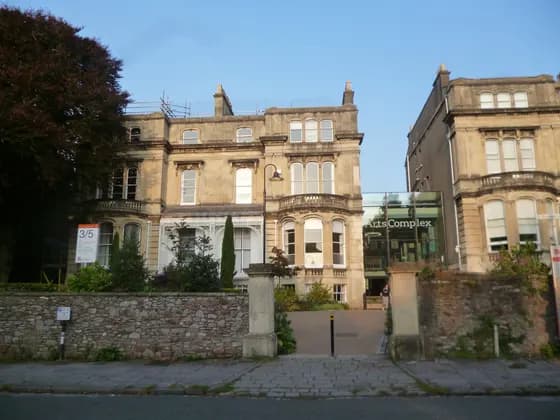
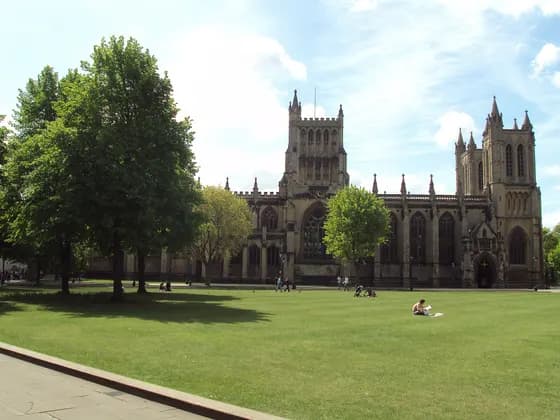

Photo: Suicasmo · CC BY-SA 4.0 · cropped
Photo: AmW22 · CC BY-SA 4.0 · Photo: Rept0n1x · CC BY-SA 3.0 · Photo: John Winder · CC BY-SA 2.0
The Bristol dentistry course at a glance (2027 entry)
Bristol's dentistry degree is the BDS, short for Bachelor of Dental Surgery. It runs for five years full time and its UCAS code is A206. The General Dental Council (GDC), the body that regulates dentists and the rest of the dental team across the UK, lists it as a qualification that leads to registration as a dentist. The school says it has trained dentists since 1906, and the GDC's 2024 inspection put the yearly intake at 90 students.
Most of your hands-on training happens in one building: Bristol Dental School at 1 Trinity Quay, on the university's Temple Quarter Enterprise Campus beside Bristol Temple Meads station. It opened in September 2023 and has 119 dental chairs. The university runs it as its own clinic, registered with the Care Quality Commission (CQC), which regulates health services in England, rather than teaching inside an NHS hospital. Specialist clinics still take place at the NHS-run University of Bristol Dental Hospital.
The curriculum, called BDS21, is built around four strands: you as a person and citizen, a scholar and scientist, a practitioner, and a professional who can bring about change. Beneath these sit 13 threads that run through all five years. Bristol calls the design helical, meaning you meet a topic early and then return to it several times in more depth, rather than finishing the science before clinical work starts.
Patients come early. After practising on classmates and on training mannequins, you start treating members of the public during year 2. Each new kind of treatment is unlocked only after you pass a competency test on it, so your clinical range widens step by step.
Most of your clinical training happens in the school's own clinic rather than in a hospital. The school says its focus is preparing you for primary care, meaning everyday dentistry of the kind offered by high-street practices. You train beside students on Bristol's dental hygiene, dental therapy and dental nursing courses. Your patients include people who have contacted NHS 111 with dental emergencies, and you take oral health training out to care homes.
| Degree | BDS (Bachelor of Dental Surgery) |
|---|---|
| Course length | Five years full time; no part-time route |
| UCAS code | A206 |
| Yearly intake | 90 students, according to the GDC's 2024 inspection |
| Clinical base | Bristol Dental School, 1 Trinity Quay, beside Temple Meads station |
| Curriculum | Helical: topics revisited in greater depth each year |
| First patient treatment | February of year 2, after passing gateway assessments |
| Specialist clinics | University of Bristol Dental Hospital, Lower Maudlin Street, run by the NHS |
| Finals | Three equally weighted parts in year 5, January to spring |
| Intercalation | Optional extra year after year 3 |
What makes Bristol dentistry different
A university-run clinic rather than an NHS hospital
Since 2023 the university has run its own 119-chair clinic building instead of teaching inside an NHS dental hospital. The GDC's 2024 inspectors noted that students no longer compete with other NHS services for clinical space, and that the school can update its procedures quickly. Specialist teaching still uses the NHS dental hospital.
Training beside hygienists, therapists and dental nurses
From year 1 you share teaching and teamwork sessions with students training to be dental hygienists and therapists. Year 2 includes a joint gum-disease symposium with dental therapy students, run like a professional conference. In year 5 you work on a general practice clinic with one-to-one support from student dental nurses, much as a qualified dentist works with a nurse.
A 20-strong team that finds your patients
To graduate you must complete a set of minimum clinical requirements, a spread of treatments you must have carried out. A team of 20 staff allocates patients, using the school's electronic portfolio to see which students still need which kinds of case. You can also ask the team directly. Students told the GDC in 2024 that the requirements felt fair and achievable.
Urgent care for patients booked through NHS 111
NHS 111 is the NHS phone and online service for urgent health problems. During term the school runs a daily emergency dental clinic for patients booked through it, and the GDC's 2024 report says students treat around half of the dental cases that come through 111 locally. From year 3 you work in these Urgent Dental Care clinics, managing people with acute oral disease and dental pain.
Community work built into the timetable
Social accountability, a dentist's responsibility to the wider community, is one of the course's threads. You plan and deliver oral health training for groups such as care home staff, so that they can look after residents' teeth and dentures. Your patients include children referred through local primary schools and people referred by a homeless health service. In year 4 you also share learning with University of Bath pharmacy students.
How Bristol teaches dentistry
Each year of the BDS counts as one single unit rather than a bundle of separate modules. The named blocks on your timetable, such as Oral Biology or Pharmacology, organise the teaching, but you are assessed on the year as a whole. Staff from the university's schools of Anatomy, Biochemistry, Physiology, Pharmacology and Neuroscience, and Cellular and Molecular Medicine all contribute, and every science topic is taught with its dental relevance made explicit.
The balance of teaching shifts year by year. Year 1 is mostly lectures, laboratory classes, anatomy and practice on classmates. Years 2 and 3 move from phantom heads (mannequin heads with artificial teeth) in the clinical skills laboratory to real patients, each step unlocked by a competency test. All knowledge-based teaching finishes by the end of year 4, so year 5 is spent mainly treating patients.
Year 5 also prepares you for Dental Foundation Training (DFT). This is a year of supervised work in an NHS general dental practice, which most newly qualified UK dentists choose to do before working independently in the NHS. You also complete a portfolio of clinical evidence that you began in year 1.
The course is aligned to the GDC's Safe Practitioner framework, the learning outcomes and behaviours that new dental professionals must meet. The GDC published it in November 2023, and it took effect from August 2025. Evidence-based practice runs through every year, from year 3 workshops on judging the quality of research to a written evidence summary in year 4. Every student also completes Good Clinical Practice training from the National Institute for Health and Care Research (NIHR), which prepares you to ask patients to take part in clinical studies.
Digital dentistry is a recent addition. The school invested in upgrading its digital dentistry capacity in 2024, and since September 2025 it has built digital clinical workflows into its courses. A digital clinical workflow is a treatment process in which some of the steps are carried out with digital equipment and software. The school says digital dentistry now runs through its teaching.
The ways you will learn
| Flipped classroom and symposia | You work through recorded lectures and online tutorials in your own time, then use the scheduled session for workshops, discussion and problem solving. Larger sessions can include live voting and break-out groups, and some topics are taught as symposia, such as the year 2 local anaesthetic symposium. |
|---|---|
| Case-based sessions | From year 2 to year 4, small groups work through patient cases together, prepare short presentations and discuss them with peers. These sessions link what you learn in the science teaching with what you see on clinic, and they help prepare you for the end-of-year exams. |
| Clinical skills laboratory with phantom heads | Phantom heads are mannequin heads fitted with artificial teeth and jaws. In the clinical skills laboratory you use them to practise fillings, root canal treatment, crowns and other procedures. Staff give regular feedback until you reach the standard needed to do the same on a patient. |
| Classmates as patients | In years 1 and 2 you are allocated to act as a patient for a range of classmates, and they do the same for you, with informed consent and close supervision. Between you, you take histories, examine the head, neck and mouth, chart teeth and gums, record plaque levels, give oral health advice, practise suction and take impressions. In year 2 this extends to giving local anaesthetic injections. |
| Professional actors | From year 2, trained actors play patients in small-group sessions on clinical communication and on ethics, law and professionalism. This lets you rehearse conversations with patients in a safe setting before and alongside your real clinics. |
| Supervised clinics | Each clinic session begins with a discussion of the students' patient cases. A supervisor looks after a small group, teaches at the chairside and grades every case on clinical skill, knowledge and professionalism, with written feedback stored in your electronic portfolio. |
A typical week on the Bristol course
The faculty's guidance for all its professional courses, which include dentistry, medicine and veterinary science, says teaching runs across all five weekdays. It gives core hours of 8am to 6pm and an average workload of around 40 hours a week. Wednesday afternoons are kept free for sport and clubs in the early years where possible. The faculty says this free afternoon is usually not available in later years.
Student clinics at the Dental School are usually held on Mondays, Tuesdays, Thursdays and Fridays. Each day has a morning session from 9am to 12.30pm and an afternoon session from 1.30pm to 5pm, and a single patient appointment can last up to three hours. By year 5, a large share of each week is spent treating patients.
Patients are booked on fixed days that follow the student timetable, and there is no treatment by students in the holidays. The building is open to patients only until 12.30pm on Wednesdays, and it is closed at weekends.
The faculty says terms on its professional courses often run longer than the standard university year, and that many assessments fall outside the normal exam timetable. For the BDS, the GDC's 2024 report gives a programme length of 178 weeks across five years, an average of about 36 weeks a year.
How anatomy is taught at Bristol
Anatomy is taught from year 1 as practical sessions alongside laboratory and clinical skills work, with input from the university's School of Anatomy. The focus is the head and neck: one of the year's stated outcomes is that you can explain how the human body is built and works, with particular attention to this region. The course page tells applicants that training involves contact with human and animal cadaveric material.
Tooth morphology, the detailed shape of each tooth, starts in year 1 and becomes a must-pass test in year 2. Anatomy also returns in a clinical setting. In year 2 you study the anatomy of local anaesthesia alongside pain and anxiety management, and in year 3 you learn the oral and dental anatomy that underpins oral surgery.
When you start treating patients at Bristol
Your first clinical experiences are with classmates rather than patients. In year 1 you observe in clinics and practise basic examinations on each other under supervision. In term 1 of year 2, a clinical week with hygiene and therapy students lets you practise gum assessments, preventive advice and basic gum treatment on each other.
Before you treat a member of the public you must pass the Gateway to Patients exam, which checks your clinical skills and your knowledge of the processes and diseases involved. You can resit it during year 2 until you pass. You then start treating adult patients in February, beginning with periodontal (gum) care and preventive advice. After passing operative skills tests on phantom heads, you begin your first fillings under local anaesthetic later that term.
Year 3 widens your scope term by term, adding root canal treatment, children, extractions and dentures, each after a laboratory competency. Crowns and bridges, orthodontic patients and specialist clinics led by consultants (senior hospital specialists) follow in year 4. In year 5 you consolidate across restorative, children's, oral surgery and primary care clinics.
Supervision is matched to your stage. The school reviewed and increased its supervision ratios before the GDC's 2024 visit, and students act as dental nurses for each other on clinic until year 5. Radiographs work differently: once you pass a radiography competency you can take X-rays without a radiographer beside you, and the radiography team audits a sample of images.
Year by year at Bristol
- Year 1
Foundations and first steps in the clinic
The year opens with an eight-week Foundations of Dentistry block covering study skills, wellbeing, introductory biomedical science, communication, ethics, teamwork and a first look at clinics. It is designed so everyone reaches the same baseline, whatever qualifications they arrived with. The rest of the year follows a spine of clinical topics, each backed by the relevant biomedical and social science.
- Foundations of Dentistry ends with a conference towards the end of term 1, where you present a topic that interests you, followed by a practice assessment that does not count.
- Human Health and Disease covers how the healthy body works and the principles of acute and chronic inflammation, the groundwork for later teaching on oral disease.
- Whole Person Care looks at the needs of different patient groups: children, adults, older people, people from different cultural backgrounds and those with special care needs.
- Preparing for Patients introduces the clinic: you observe clinics and start practising examinations and other basic procedures on classmates.
- Tooth morphology and dental biomaterials, the materials used to repair and replace teeth, are introduced here and built on in later years.
- Practice exams at the end of term 1 mirror the real ones, and a short unseen clinical case at the end of term 2 previews the case exams of later years.
- End-of-year exams in May, with resits in June. Knowledge papers worth 60% combine multiple short answer questions (short written answers) and single best answer questions (picking the best of several options).
- The other 40% is an Objective Structured Practical Examination (OSPE) and spotter. An OSPE usually means moving between timed stations to complete practical tasks, and a spotter asks you to identify what is shown at each station.
- Year 2
Simulation, gateways and first patients
Year 2 turns preparation into practice. You build gum-care and filling skills on phantom heads and on each other, learn to take and read X-rays, and study the diseases you will treat: gum disease, tooth decay and tooth wear. It is also the year you start treating adult patients, once you pass the gateway assessments.
- A clinical week in term 1 with hygiene and therapy students, practising periodontal assessment, prevention and treatment on peers.
- Science teaching in human disease, pharmacology, microbiology and immunology, oral biology, caries (tooth decay) and periodontology, plus the common mouth-lining diseases your patients may have.
- Radiography theory, including IR(ME)R, the legal rules on using X-rays on patients, then a practical rotation in small groups in term 2 or 3.
- A Local Anaesthetic Symposium in term 2, and practice giving local anaesthetic to consenting classmates, linked to teaching on pain, anxiety and the anatomy and pharmacology of injections.
- Removable prosthodontics (dentures) begins in the laboratory, and you observe on the children's clinic.
- A disability awareness workshop, ethics lectures and a joint periodontal symposium with dental therapy students, set out like a professional conference with short presentations.
- Eight must-pass checks, including tooth morphology, gum instrument skills, clinical communication, a reflective writing task, the Gateway to Patients exam and an unseen clinical case.
- End-of-year exams: two 2-hour knowledge papers worth 60%, and an Objective Structured Clinical Examination (OSCE) held on clinic worth 40%. An OSCE is a practical exam of timed stations, each testing a clinical skill or conversation.
- Year 3
Broadening clinical care
Year 3 widens what you can do for patients. New laboratory skills in root canal treatment, crowns and dentures lead in turn to treating patients, and you start seeing children, extracting teeth and working in the urgent care clinic. Later in the year you learn to plan care for patients with slightly more complex needs.
- Practical radiography teaching in the radiography department in term 1, then further X-ray skills on each clinic.
- Endodontics (root canal treatment) on patients from term 2 and dentures from term 3; fixed prosthodontics (crowns and bridges) is signed off at the end of term 3 for use from year 4.
- Oral surgery: you learn extraction techniques on simulators and must pass a competency before extracting teeth from patients, which starts in term 2.
- Children's dentistry with small-group tutorials. Where opportunities allow, you visit local schools to promote oral health; otherwise you observe on the children's clinic.
- A two-week block placement in a local medical hospital in term 2, run with University Hospitals Bristol and Weston and North Bristol NHS Trust, showing how general health conditions affect dental care.
- Introductions to gum surgery and dental implants, managing medical emergencies in the dental chair, and workshops on judging the quality of research.
- End-of-year exams in May or June: knowledge papers worth 50%, a 2 hour 10 minute OSCE worth 40%, and an unseen clinical case worth 10%.
- The unseen clinical case is a structured oral exam on a patient case you have not seen before, with 20 minutes to prepare and 20 minutes of questioning.
- Year 4
Specialties and complex care
Year 4 deepens your clinical range and completes the course's knowledge-based teaching. You carry out advanced restorative work, treat children and orthodontic patients, and rotate through consultant-led specialist clinics. Science is taught through the patients you meet, such as diseases of the mouth lining and the dental care of people with complex medical conditions.
- Adult restorative care including crowns, bridges, root canal treatment and dentures, while keeping up your gum treatment skills.
- Children's dentistry continues, with teaching on advanced behaviour management including inhalation sedation, where a child breathes a mix of nitrous oxide and oxygen to help them relax.
- Orthodontics, the straightening of teeth and correction of bites, becomes a major feature, with small-group tutorials supporting orthodontic patient sessions.
- Consultant clinic rotations in oral medicine, special care dentistry, paediatric dentistry and orthodontics start in term 2.
- New teaching in oral and maxillofacial medicine, pathology and surgery, pain and anxiety control, and maxillofacial radiology.
- An evidence summary project in pairs across terms 1 and 2: you choose a clinical question and write up what the research says.
- Community engagement under the social accountability theme, classroom teaching on access to care and what drives poor health, and shared learning with University of Bath pharmacy students.
- A workshop on whistle-blowing, and further work on consent and explaining risk to patients.
- A hospital rotation with University Hospitals Bristol and Weston begins in term 3 and runs until term 3 of year 5.
- End-of-year exams in May or June: knowledge papers worth 40%, an OSCE worth 40% and an unseen clinical case worth 20%.
- Year 5
Preparing for practice
Year 5 is mostly spent treating patients and getting ready for working life. With the knowledge-based teaching finished, you consolidate your clinical skills, complete your portfolio of clinical evidence, apply for Dental Foundation Training and sit BDS Finals.
- Six strands: oral diagnosis, urgent care and specialist clinics; restorative dentistry; oral surgery; paediatric dentistry; community-based dental learning; and the dentist in society.
- Time on the general practice clinic with one-to-one support from student dental nurses, alongside restorative, children's, oral surgery and primary care clinics.
- Consultant clinic rotations in oral medicine, special care dentistry, paediatric dentistry and orthodontics during terms 1 and 2.
- Teaching on preparing for Dental Foundation Training, a webinar on what being registered with the GDC means, and a personal development plan that runs into your foundation year.
- BDS Finals: knowledge papers in January and clinical case exams in the spring. Both have in-year resits, timed so that a student who narrowly fails can still take up a foundation training place.
- Completing the minimum clinical requirements, which you need alongside passing Finals in order to graduate.
How you are assessed at Bristol
Bristol assesses each year as a whole. At the end of every year you sit an integrated set of exams, and you must pass each part separately: a strong result in one part cannot make up for a fail in another. Most parts are standard set, meaning examiners judge the difficulty of the paper to fix the pass mark, and marks are then scaled so the pass sits at 50%.
From year 2 the OSCE is held in the clinic itself, and as well as reaching the pass mark you must pass at least two-thirds of the stations. The unseen clinical case, added from year 3, carries more weight as you progress: 10% of the year 3 mark and 20% of the year 4 mark.
Alongside the exams sit must-pass requirements that carry no marks, such as the year 2 gateway tests. A Progress Committee meets each term to check your engagement, your results in these tests and your professionalism, and it can stop you moving up a year even if you pass the exams. You normally have two attempts at each year's exams.
Clinical work is assessed continuously. Supervisors grade each patient case and record it in CAFS, the school's electronic portfolio, which staff review monthly for years 1 to 4 and fortnightly in year 5. Feedback also comes from patients, peers and other healthcare professionals, and about 60% of patients leave feedback on tablets placed around the building.
BDS Finals have three equally weighted parts, and you must pass all three. Part 1, in January, is four two-hour knowledge papers. Part 2 is presentations of two patients you have treated: one adult restorative case and one child. Part 3 is six unseen cases covering adult restorative dentistry, oral surgery and medicine, and children's dentistry. Merits and distinctions are awarded on the degree as a whole.
If you leave the course early, the years you have passed can still lead to an award. The programme specification lists a Certificate of Higher Education in the Science of Dentistry after year 1 and a Diploma of Higher Education in the Science of Dentistry after year 2. It lists a BSc in the Science of Dentistry for students leaving after year 3 or year 4, with the exact rules set by the university's regulations.
Where you will actually be at Bristol
The GDC's 2024 inspection found that students gain most of their clinical experience in the Dental School building itself, where supervision is easiest to manage. It also noted that assessment methods are the same at every teaching location.
Specialist teaching uses the University of Bristol Dental Hospital on Lower Maudlin Street in central Bristol, part of University Hospitals Bristol and Weston NHS Foundation Trust (UHBW). There you observe or carry out treatment under close supervision in paediatric dentistry, orthodontics, oral surgery, maxillofacial surgery, oral medicine and special care dentistry. A formal agreement with UHBW also covers the hospital rotation from late year 4 into year 5.
Outside dental settings, the year 3 block placement in a medical hospital is run with UHBW and North Bristol NHS Trust. Outreach, meaning clinical and health work away from the main school, takes you into care homes and, in year 3 where opportunities allow, schools. The school reviews its agreements for external placements every year.
The course page describes treating a diverse range of patients in and around Bristol, and the school's 2026 Social Impact Report puts figures on this. In 2024/25 students and staff gave 54,510 free appointments, nearly 9% of all NHS primary care dental appointments in Bristol, North Somerset and South Gloucestershire. Some 55% went to patients from the most deprived postcodes in Bristol, where NHS dental care is known to be hardest to get.
Some patients reach you through the school's community schemes. It works with primary schools in Lawrence Hill, Easton and St George West, where parents can refer their children directly for treatment by supervised dental and dental therapy students. More than 1,500 children have been seen so far, many of whom had never seen a dentist before.
After a pilot in 2024, the school also set up a care pathway for people experiencing homelessness. The BrisDoc Homeless Health Service in Stokes Croft refers them, and students treat them under supervision at the Dental School. In 2026 the school reported 29 patients under treatment through this route.
Your main clinical base for all five years, beside Bristol Temple Meads station. It houses the clinical skills laboratory, a general practice clinic, the urgent dental care clinic and the other student clinics.
- Bristol Dental School, 1 Trinity Quay, Avon Street
Clinics led by consultants and other specialists in paediatric dentistry, orthodontics, oral and maxillofacial surgery, oral medicine and special care dentistry.
- University of Bristol Dental Hospital, Lower Maudlin Street, central Bristol (University Hospitals Bristol and Weston NHS Foundation Trust)
A two-week Human Disease block placement in term 2 of year 3, to see how patients' medical conditions affect their dental care.
- University Hospitals Bristol and Weston NHS Foundation Trust
- North Bristol NHS Trust
Students train care home staff to champion oral health, coached before and during visits by the dental charity Bridge2Aid. Parents at the partner primary schools can refer their children for treatment by students, and in year 3 you may visit schools to promote oral health where opportunities allow.
- Care homes, including homes run by St Monica Trust
- Primary schools in Lawrence Hill, Easton and St George West
Intercalation at Bristol
Intercalating means taking a year out of the dental course to complete a separate degree, then returning to carry on. At Bristol it is optional and happens after year 3, so the whole programme would take six years. You can study for a BSc, a BA, an MRes (a research master's) or an MSc, and the faculty's list also includes a master's in law (LLM) in Health, Law and Society.
The faculty lists a wide range of intercalated degrees open to dental students. BSc examples include Functional and Clinical Anatomy, Global Health, Healthcare Ethics and Law, Neuroscience and Pharmacology, and there is a BA in Medical Humanities. Master's options include Public Health, Epidemiology, Health Sciences Research and Artificial Intelligence for Medicine and Health. Several BSc options are a one-year entry into the final year of an existing three-year degree.
Facilities and support at Bristol
Where you will learn
The Dental School at 1 Trinity Quay, a £36 million facility in a refurbished building, opened in September 2023. It covers 7,300 square metres over five storeys and was designed with input from students and staff. The extra space was intended to let the university increase its dental student places by around 25%.
There are 119 dental chairs across six clinical areas, including a general practice clinic meant to give you the feel of a real practice. Students are supported by dental nurses, dental technicians, sterilisation staff and patient administrators. The clinical skills laboratory is where you work on phantom heads before treating patients.
Treatment in the building is free for adults and children. The school does not hold an NHS contract, so it accepts patients whose needs match what students must learn and does not offer everything, such as tooth whitening. The CQC inspected in February 2025 and found the school met the regulations. It then hosted 412 undergraduate and 60 postgraduate oral health students.
Support while you study
Every student has a personal tutor within the Dental School, backed by a network of senior tutors. Each year you write a personal development plan and review it with your tutor, using the Bristol Skills Profile, the university's framework of nine skills it wants every student to build. In year 5 that plan extends into your foundation training year.
Wellbeing is part of the timetable rather than an add-on. Lifelong learning and wellbeing feature in every year's teaching, with a named Lifelong Learning and Wellbeing block from year 2, and the opening Foundations block includes study skills and wellbeing training.
Peer Assisted Study Sessions (PASS) are the university's informal study groups, led by trained later-year students. Dental Surgery is one of the courses running them in 2026/27, and first years are added to a group automatically, though you can opt out. Later-year dental students can be paid to lead these sessions.
On clinic, the patient allocation team helps you find the cases you still need, and you can give feedback on your supervisors through CAFS. The GDC's 2024 inspectors found students largely content with the number of supervisors available, and supervision is kept up during staff absences using floating and extra staff.
Is the Bristol course right for you?
This course may suit you if
- You want to treat real patients from year 2, with each new treatment unlocked by a laboratory competency rather than one big leap.
- You like the idea of learning as part of a dental team, alongside dental hygiene, dental therapy and dental nursing students.
- You would rather do most of your clinical training in one purpose-designed clinic in central Bristol than move between many outreach sites.
- Community work appeals to you, from urgent care for NHS 111 patients to teaching oral health in care homes and schools.
- You find frequent feedback helpful: the course uses quizzes, practice exams and clinic grades to guide you before the exams that count.
Things to think about
- You will act as a patient for classmates in years 1 and 2, including receiving local anaesthetic injections, always with consent.
- The timetable is full at around 40 hours a week with little flexibility, and Wednesday afternoons are protected only in the early years.
- Exam parts cannot make up for each other, and termly engagement and professionalism checks apply, so steady work through the year matters.
- Bristol is part-way through moving to the GDC's newer Safe Practitioner outcomes. Years 1 and 2 are already written to them, but the published pages for years 3 to 5 still cite the older outcomes, so expect changes there before you reach them.
Bristol dentistry course — frequently asked questions
Applying to Bristol?
How to get into Bristol
Entry requirements, UCAT, personal statement and interview, step by step.
Open the guide →Bristol UCAT cut-offs and offers
UCAT cut-offs, A-level offers, interview format and decision dates.
See the requirements →Compare Bristol with other schools
Put the teaching style, anatomy teaching and placements next to another school.
Open the comparison →Prepare for the Bristol interview
Format breakdown, school-specific sample questions and prep tips from tutors who interviewed here.
Read the guide →Where this Bristol course guide came from
This guide was written from 29 official sources — University of Bristol Dental School's own course pages and programme documents, plus the regulator and NHS placement partners where they publish detail — read on 2026-09-24, then checked claim by claim against those sources.
- BDS Dentistry, 2027 entry - University of Bristol
- BDS Dentistry, 2026 entry - University of Bristol
- Programme specification: Dental Surgery (BDS) in 2027/28 - University of Bristol
- Unit information: Year 1 BDS in 2027/28 - University of Bristol
- Unit information: Year 2 BDS in 2027/28 - University of Bristol
- Unit information: Year 3 BDS in 2027/28 - University of Bristol
- Unit information: Year 4 BDS in 2027/28 - University of Bristol
- Unit information: Year 5 BDS in 2027/28 - University of Bristol
- Undergraduate study - Bristol Dental School
- About - Bristol Dental School
- Dental clinical placements - Bristol Dental School
- Bristol's new Dental School officially opens (September 2023) - University of Bristol
- Community Engagement - Bristol Dental School
- Dental treatment - Bristol Dental School
- Intercalated degrees - Faculty of Health and Life Sciences, University of Bristol
- Intercalation eligibility and entry criteria - University of Bristol
- GDC education quality assurance inspection report: University of Bristol BDS (inspected November 2024)
- Approved dentistry (BDS) education providers - General Dental Council
- University of Bristol Dental School inspection summary (February 2025) - Care Quality Commission
- Social Impact Report 2026 - Bristol Dental School, University of Bristol
- Dental care pathway developed for local homeless people - Bristol Dental School
- Treatment by dental students - Bristol Dental School
- New location - Bristol Dental School
- Bridging the gap in access to dental care (June 2026) - University of Bristol
- Peer assisted study sessions - Current students, University of Bristol
- Bristol Skills Profile - Current students, University of Bristol
- Learning outcomes and behaviours - General Dental Council
- GDC launches new Safe Practitioner framework (November 2023) - General Dental Council
- The Safe Practitioner: framework of behaviours and outcomes for dental professional education, Dentist - General Dental Council
Courses are restructured between cycles. Anything here that decides your application — an anatomy offer, a placement city, a compulsory intercalated year — should be confirmed against the official page for your entry year.
Applying to Bristol?
We have helped hundreds of applicants turn their UCAT, personal statement and interview prep into offers from Bristol and other UK dentistry schools.