
The Manchester Dentistry course
What you actually study, and where you will be
Manchester's BDS is a 5-year course taught through enquiry-based learning, team-based learning and problem-based learning, with patient treatment from Year 2 and placements in Greater Manchester (2027 entry). Manchester is explicit that traditional lectures are not a major part of the course — it runs on enquiry-based and team-based learning, with problem-based learning groups in Years 3 to 5, and pushes students out into custom-built community clinics where treatment needs are high.
- Degree
- BDS
- Length
- 5 years
- Teaching
- Enquiry-based learning + Team-based learning + Problem-based learning
- First patients
- Year 2
- UCAS code
- A206

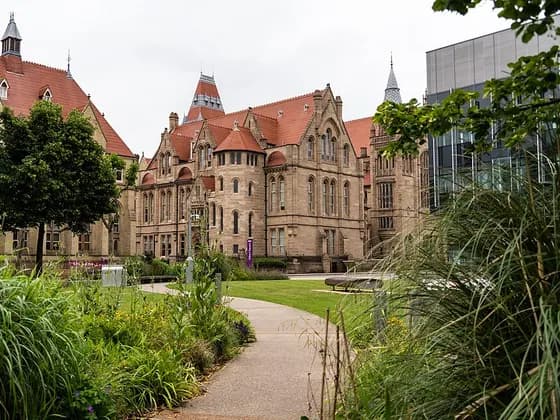
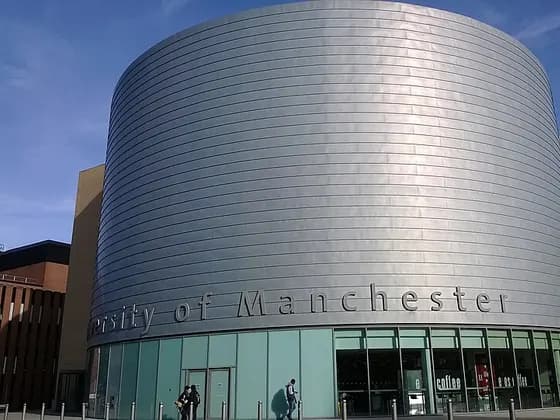
Photo: Happytree9527 / Wikimedia Commons · CC BY 4.0 · cropped
Photo: citysuitesimages · CC BY 2.0 · Photo: Arcona B B · CC BY 3.0 · Photo: Stephen McKay · CC BY-SA 2.0
The Manchester dentistry course at a glance (2027 entry)
Manchester's Bachelor of Dental Surgery (BDS) is a five-year degree leading to registration as a dentist with the General Dental Council (GDC), which regulates UK dental professionals. The GDC still lists the course as approved, but its approval for future years hinges on a reinspection, explained in the FAQs. Most of your clinical training happens at the University Dental Hospital of Manchester, on the main campus. There are 67 places a year for home students and four for international students.
Teaching is mainly in small groups rather than lecture theatres. In enquiry-based learning (EBL), a tutor gives your group a case, the group decides what it needs to find out, and each of you researches and reports back. Science and clinical dentistry run side by side from Year 1, and practical skills start in your first semester.
You treat patients from Year 2, and responsibility grows until, in Year 5, you have three restorative clinic sessions a week, repairing and replacing damaged teeth, and lead junior students on oral surgery clinics. You also spend time in other hospitals in Manchester and Trafford and in community clinics around Greater Manchester, known as outreach. Throughout, you share patients with students on the BSc Dental Hygiene and Therapy course.
The university says the course is under review and teaching may change from 2026 entry. The GDC's 2025 report adds that Manchester has submitted changes to fit the Safe Practitioner framework, the GDC's statement of what new dentists must know and do. It became the curriculum document for all UK dental degrees from September 2025. Much of this guide draws on the 2024-25 handbook, the latest published, so check details at an open day. Later sections and the FAQs cover the GDC's recent inspections.
| Degree | Bachelor of Dental Surgery (BDS) |
|---|---|
| Course length | 5 years, 202 weeks in total (GDC, 2025) |
| UCAS code | A206 (institution code M20) |
| Places | 67 home and 4 international students a year |
| Main clinical base | University Dental Hospital of Manchester, on the main campus |
| Teaching style | Small-group enquiry-based, team-based and problem-based learning, plus weekly lecture-style symposia |
| Anatomy | Weekly two-hour dissection-room session in Year 1, using pre-dissected specimens (student blog, 2025) |
| First patients | Year 2; fillings only after passing phantom-head gateways |
| Outreach | Possible community dental service placement (Year 3); Bupa practices (Year 4, from 2024) |
| Intercalation | Optional extra year after Year 2 or Year 3 |
| GDC status | Approved; Nov 2025 report cleared 2025 graduates to register; reinspection was due March 2026 |
What makes Manchester dentistry different
Restoring teeth in your first semester
In the Year 1 tooth morphology course you get your own Sculpt kit of 64 computer-generated cavities in back teeth. After drawing exercises to learn each tooth's shape, you fill the cavities with tooth-coloured composite resin using hand instruments, then pass a practical gateway test.
Learning through small-group cases
Manchester says traditional lectures are not a major part of the course, though weekly lecture-style sessions called symposia run alongside. Years 1 and 2 revolve around EBL cases. Year 3 adds team-based learning and the first problem-based learning (PBL) cases, in which a facilitated group works through clinical scenarios. PBL continues in Years 4 and 5; final-year cases focus on treatment planning for patients with complex medical and social backgrounds.
Sharing patients with hygiene and therapy students
The school also trains dental hygienists and therapists. Students from different years of both courses work as a team on shared patients. In Year 5 your Integrated Dental Team helps with the first, stabilising stage of your patients' treatment, getting disease under control before more complex work.
Final-year students lead juniors on clinic
On triage clinics, where new patients are assessed, each final-year student is paired with a Year 3 student who helps and learns from them. On oral surgery sessions, Year 5 students lead the team, with third or fourth years assisting at first and then treating while you guide them.
Community dentistry from Year 2 onwards
In Year 2 you visit a community oral health improvement team for the Prevention into Practice module. In Year 3 you may spend four to six weeks at an NHS community dental service, and Year 4 outreach is at Bupa Dental Care practices, phased in from 2024. Students also treat long-term unemployed residents through the Working Well: Roots to Dental scheme.
Hospital medicine, surgery and sedation
Year 4 includes a week-long medicine and surgery placement at North Manchester General Hospital. In Year 5 you join the oral and maxillofacial surgery team at Manchester Royal Infirmary for full days of ward rounds, clinics and theatre. You also attend sedation sessions, mainly to observe, where patients are sedated with gas or through a vein.
How Manchester teaches dentistry
The course is built around five themes that run through all five years: human health and disease; the mouth in health and disease; clinical competence; scientific understanding; and team working, communication and reflective practice. Clinical subjects are taught alongside the basic sciences from Year 1. For example, the biology of gum inflammation is taught together with how to examine and start treating a patient's gums.
In Years 1 and 2 your week is anchored by EBL cases and symposia, with anatomy, laboratory and clinical skills classes timed to match your EBL topics. From Year 3 the balance shifts towards clinics, with group learning and symposia running alongside your patient sessions.
Research runs through the course. Besides a research project and a clinical case presentation, you write a Critically Appraised Topic: you pose a clinical question, such as whether water fluoridation prevents tooth decay, and weigh up the published evidence. Finished reviews are added to the school's online database.
The ways you will learn
| Enquiry-based learning (EBL) | In Years 1 and 2 your group and a tutor, who may be a bioscientist or a dentist, work through one case every two weeks. A one-hour session launches it, then a 90-minute and a one-hour session follow the next week. In between, you research what the group agreed to learn. Groups and tutors change after Christmas. |
|---|---|
| Team-based learning (TBL) | Used for some Year 3 dentistry teaching. You prepare set material in advance, then solve problems in a small team using an online system called LAMS. Attendance is compulsory. |
| Problem-based learning (PBL) | A facilitator guides a group of 10 to 12 students through clinical cases. PBL begins in Year 3 with Oral Health and Development cases on children's dentistry, orthodontics and public health. In Year 4 your group meets for an hour on selected Wednesdays and stays together all year. In Year 5, clinicians run cases designed to prepare you for your final exams. |
| Symposia | Weekly lecture-style sessions in a lecture theatre, mixing presentations, clinical cases and interactive exercises across subjects. They usually last two hours in Years 1 to 3, such as Tuesday 9am to 11am in Year 1, and three hours on Friday mornings in Year 5. From Year 3 most are recorded as podcasts. |
| Clinical skills and phantom heads | In the clinical skills classroom on the dental hospital's first floor you practise on phantom heads, which are mannequin heads with plastic teeth. Key procedures have a gateway, a competency test sat under exam conditions, which you must pass before doing that treatment on patients. |
| Clinics | On the ground floor restorative clinic you work with a clinical partner, assisting each other, under a supervising tutor who usually stays with you all year. Later you rotate through oral surgery, oral medicine, children's dentistry, orthodontic and outreach clinics. |
A typical week on the Manchester course
The 2024-25 handbook sets out the fixed points of a Year 1 week. There is a symposium every Tuesday from 9am to 11am, your weekly anatomy class and, most weeks, a practical in the Stopford teaching labs. Each EBL case takes about three and a half hours of group time over two weeks, with an assessed group task on the final Friday.
Each week you also work through a worksheet and watch a video before a Fundamentals of Dentistry group session. Topics include tooth decay risk, fluoride, diet, health inequalities and infection control. In Semester 1 there are tooth morphology lectures and practicals.
Later years are organised around clinics. A Year 4 student describing her week on the university's student blog in 2024 had a full patient clinic day every Tuesday, shared with her clinical partner. Wednesday was a teaching day of lectures and a case-based seminar. She was usually timetabled on three days a week, with extra blocks such as oral medicine or oral surgery consultation clinics.
She also described practical sessions on taking blood and inserting cannulas, thin tubes placed in a vein to give fluids or medicines, as part of the medicine and surgery module. Her oral surgery sessions took one of three forms: consultations, simple extractions that students carry out themselves, or assisting with a surgical extraction.
How anatomy is taught at Manchester
You have a weekly two-hour session in the Stopford Building dissection room with an anatomy demonstrator. A first-year student writing on the university's student blog in 2025 said her first semester spent 11 weeks on the head and neck, the area you will work on as a dentist.
She described the sessions as using prosections: parts of donated bodies that experts have already dissected, so the structures you have studied are laid out in front of you. The university's anatomy teaching page says dissection and prosections form the basis of its teaching, and that dentistry students use the same facilities as medicine, physician associate and bioscience students.
In Year 2 you study the gross anatomy, meaning structures visible to the naked eye, of the thorax, bones and joints, and the nervous system. Histology, the study of tissues under the microscope, is taught online through Blackboard, the university's learning platform, with drop-in help on Zoom.
When you start treating patients at Manchester
Manchester introduces you to the clinical environment in your first semester. So before you start, you must show you are not infectious for HIV, hepatitis B and C, and tuberculosis, and pass health screening with Student Occupational Health. Year 1 clinical work is mostly simulated, including a simulated local anaesthetic course. The GDC's 2025 report notes some clinical experience towards the end of Year 1, but treating patients yourself starts in Year 2.
Direct patient contact starts in Year 2, once Occupational Health has issued your Clinical Placement Certificate confirming you are safe to work with patients. That year you also give your first local anaesthetic injection. The first-year student who wrote on the university's student blog in 2025 said Year 2 students practise this on each other. You must pass the phantom-head gateways before any restorative treatment on patients, meaning work that repairs or replaces damaged teeth, such as fillings.
Year 3 opens with a three-week introduction to the clinics before your own restorative sessions start. In Year 4 you treat patients for comprehensive care, planning and carrying out all the treatment each one needs. By Year 5 you assess new patients, deal with emergencies and lead oral surgery sessions.
The GDC looked closely at supervision when it inspected in February 2025. On the main ground floor clinic, the school's policy is one supervisor for every six to eight treatment bays; because students work in pairs, a tutor may oversee up to 16 students. Students and staff told the GDC that one tutor to 20 students was common. Some students said they did not feel competent or supported on clinic, and at times did not feel safe.
Students also said they often relied on graduate teaching assistants for supervision, though these staff are meant to be extra help, not supervisors. Lower-year students struggled to find patients for their milestones, the set assessments of real treatments, and there was no patient coordinator to help. The GDC said that, without its intervention, students would have graduated without enough experience to count as safe beginners, or without the evidence to support that decision. Safe beginner is the GDC's term for a new dentist who is ready to practise safely.
The school's published response says it has since recruited more tutors, assigned tutors to zones of the clinic and added senior staff at busy times. It also planned to appoint a patient coordinator by early 2026.
Year by year at Manchester
- Year 1
Foundations of Biomedical Science and Dentistry
Year 1 builds the scientific base and your first practical skills. Bioscience comes mainly through EBL and symposia, while dentistry courses cover tooth shape, gum disease, prevention and professionalism. Early on you take an affirmation, a spoken promise about how you will treat patients, at a welcome event in Whitworth Hall.
- Subjects include biomedical and dental sciences, pharmacology, dental public health, radiography, restorative dentistry, law and ethics, medical emergencies, communication, dental materials and sustainable dentistry.
- Five EBL cases in Semester 1 and six in Semester 2, covering anatomy, biochemistry, cell and molecular biology, microbiology, physiology and pathology.
- The tooth morphology course in Semester 1, ending in a gateway test.
- A course on the periodontium, the tissues that hold teeth in place, covering immunology, inflammation, gum examination and the first stage of treating gum disease.
- The weekly Fundamentals of Dentistry sessions and a simulated local anaesthetic course.
- Mandatory online NHS and safety training, and an academic malpractice test you must pass with 100%.
- A bioscience poster competition in Semester 2, marked pass or fail.
- Year 2
Intermediate Biomedical Sciences and Dentistry
Year 2 deepens the science and brings direct patient contact. On phantom heads you place fillings in plastic teeth and work towards the gateways for treating patients. You also begin the course in indirect restorations, which are made outside the mouth, such as crowns.
- Restorative dentistry covering endodontology (root canal treatment), periodontology (gum disease), prosthodontics (replacing teeth) and fillings, plus pharmacology, dental materials, radiology and medical emergencies.
- EBL groups of eight to ten students, with a marked bioscience presentation at the end of Semester 1.
- Symposia on Mondays from 9am to 11am, and a restorative theory course on Tuesday afternoons.
- Prevention into Practice: a 2,000-word assignment by early November, then a visit with a partner to a Greater Manchester community oral health improvement team and a group presentation in April.
- Your Clinical Placement Certificate must be in place by the first week of December before you join clinics.
- Year 3
Mastering the Theoretical Basis of Dentistry
Year 3 combines the last large block of theory with regular clinics. You run your own restorative sessions on the dental hospital's ground floor, rotate through several clinical settings and start specialist subjects such as children's dentistry, orthodontics, oral surgery and oral medicine.
- Subjects include oral surgery, oral medicine, radiology and clinical photography, endodontics, acute dental conditions, prosthodontics, periodontology, and law, ethics and professionalism.
- Restorative clinics in pairs with your own supervising tutor, completing the year's clinical milestones, which are set assessments of real treatments.
- Possible rotations: four weeks assisting on postgraduate clinics, where you may place simple fillings, and four to six weeks at an NHS community dental service. You may also spend four to six weeks on triage clinics with a final-year partner.
- Oral Health and Development: PBL cases on children's dentistry, orthodontics and public health in Semester 1, then seminars and skills sessions.
- An occlusion course on how upper and lower teeth meet, plus TBL, EBL groups of 10 to 12 and Thursday symposia.
- A Law, Ethics and Professionalism module built on practice scenarios such as complaints and the duty of candour, which means being open with patients when things go wrong.
- Small-group teaching on raising concerns about patient safety, which is formally assessed.
- Year 4
Developing the Safe Dental Practitioner
Year 4 is about reaching clinical competence. You treat patients for comprehensive care, go out to outreach practices, and spend a large part of the year on human disease: medicine and surgery, oral medicine, radiology and oral surgery.
- Three clinical skills refresher sessions, with competency tests in preparing teeth for crowns or similar restorations and in molar root canal treatment.
- Restorative clinic sessions that each begin with a compulsory 30-minute seminar.
- Medicine and surgery lectures and a week-long placement at North Manchester General Hospital.
- Oral medicine clinics in two blocks, of five weeks and three weeks, and radiology symposia including radiation protection.
- Clinical sessions in the oral surgery department.
- Outreach placements at Bupa Dental Care practices.
- A critical appraisal module on judging research papers, with an assignment set in December and due in January.
- Year 5
Towards Professional Competence and Independent Practice
Final year prepares you to work as a dentist. You manage patients' care from assessment to completion, finish your clinical milestones, gain hospital experience in surgery and sedation, and sit the Final Examination, which normally begins in April or May.
- Three restorative clinic sessions a week; you must complete all observed and written milestones to graduate.
- Triage clinics in blocks of four to six weeks, including patients in pain and emergencies such as lost temporary crowns or dental trauma.
- Oral surgery sessions under local anaesthetic at the dental hospital.
- Full days in the Head and Neck Surgical Unit at Manchester Royal Infirmary: ward rounds, outpatient clinics and theatre.
- Sedation sessions in pairs, mainly observing: one student does the dental treatment while the other focuses on the sedation, swapping for each patient. Inhalation sedation is in the dental hospital's children's suite and intravenous sedation, given through a vein, at Manchester Royal Infirmary.
- A pass or fail clinical audit project, required before you can sit finals.
- Three consultant clinic sessions, orthodontic and paediatric clinics, Friday morning symposia and careers help for applying to dental foundation training, the salaried first post most new dentists take.
How you are assessed at Manchester
You are assessed through multiple choice questions, short-answer papers, projects, presentations of patients you have treated with an oral exam called a viva, peer assessment and reflective journals. There are also Objective Structured Clinical Examinations (OSCEs), circuits of timed stations that each test a practical or communication skill in front of an examiner.
Each year's main exams are normally in May or June, with a second chance in July, and you must pass to move up a year. In Years 1 and 2, coursework marks also come from the assessed final session of each EBL case. Failing at the second attempt ends your studies unless the Student Progress Committee gives special permission.
Clinical progress is tracked separately. Gateways test skills in the clinical skills room, and milestones are observed or written assessments of real treatments. These, your tutors' grades for each patient and any professionalism cards, green for good conduct and amber or red for concerns, are logged on an electronic system called CAFS.
Before each exam period a sign-up meeting checks your attendance, clinical progress and professionalism; if you are not signed up, you cannot sit the exams. The school expects 100% attendance, and in Year 1 lateness counts as absence.
The Year 5 Final Examination has a short-answer written paper and a viva of three clinical case examinations. The vivas are recorded, and external examiners from outside the university review any fail grades. Students who fail may need up to 12 months of further training before trying again. Honours go to students with consistently high marks at the first attempt.
Assessment has changed since the GDC's 2025 inspection, which found clinical grades were applied inconsistently and OSCE marks could hide weak areas. Now you must score 50% on a station to pass it and pass at least half the stations. A revised clinical grading scale has applied since September 2025, with Satisfactory as the pass grade for gateways.
Where you will actually be at Manchester
Your main base is the University Dental Hospital of Manchester, part of Manchester University NHS Foundation Trust, on the university campus. Around 90,000 adults and children are treated there each year, across services including oral and maxillofacial surgery, oral medicine, orthodontics, paediatric dentistry and restorative dentistry.
A new teaching clinic, the Advanced Dental Education Centre, has space for up to 16 dental chairs. The school told the GDC it passed its inspection by the Care Quality Commission (CQC), which regulates health services in England, at the end of September 2025 and would open soon after. The school says it adds to, rather than replaces, space on the main clinic, and that extra tutors were recruited to run it. The GDC was unsure how much it would ease supervision problems, given the size of the year group.
Hospital placements are in Manchester: the Year 4 medicine and surgery week at North Manchester General Hospital, and Year 5 maxillofacial surgery days and intravenous sedation at Manchester Royal Infirmary. Some Year 5 general anaesthetic lists are at Trafford General Hospital.
Outreach takes you into the community. In Year 3 you may spend four to six weeks at an NHS community dental service, which sits between high-street practice and hospital and treats adults and children with more complex needs. Year 4 outreach is at Bupa Dental Care practices. When the GDC visited in February 2024, two Bupa centres were in use and five practices, each with two chairs, were being added during 2024.
While Bupa places were being phased in, the handbook gave priority to students with stronger results in the assessments that count. You pay travel to community clinics in Greater Manchester from Year 4, with no discounted campus parking. The GDC's 2025 report says the school tries to place you somewhere easy to reach, lets you ask to swap and offers bursaries towards outreach travel.
The same report found students' experience of treating children was low compared with other dental schools, and some students finished their children's dentistry rotation very close to graduation. The handbook warns that the Year 4 placement in the paediatric (children's dentistry) department depends on availability and may move to Year 5 because of a backlog from COVID.
The dental hospital is your clinical base throughout, with extra clinic space at the Advanced Dental Education Centre. Stopford and Coupland 3 are university teaching and staff buildings.
- University Dental Hospital of Manchester
- Advanced Dental Education Centre
- Stopford Building
- Coupland 3 Building
Used for the Year 4 medicine and surgery week and for Year 5 maxillofacial surgery, sedation and general anaesthetic lists.
- Manchester Royal Infirmary
- North Manchester General Hospital
- Trafford General Hospital
Bupa practices host Year 4 outreach. The GDC names Morris Dental Care as one of the organisations delivering the course, and a student described a paediatric placement there on the university's student blog in 2024.
- Bupa Dental Care outreach practices
- NHS Community Dental Services
- Morris Dental Care, Oldham
Electives and chosen modules at Manchester
In Year 4 you can apply for an international exchange with the Henry M Goldman School of Dental Medicine in Boston, USA, or Nippon Dental University in Tokyo, Japan. The school explains the conditions during the year.
Some extra clinical opportunities are also by application. A student writing on the university's student blog in 2024 was selected for paediatric outreach at Morris Dental Care in Oldham. She spent three Mondays treating under-16s, including fissure sealants to protect back teeth and small fillings.
Intercalation at Manchester
Intercalating is optional. You take one extra year, between Years 2 and 3 or between Years 3 and 4, to earn a BSc or a master's degree, then return to the BDS. For a BSc you join the final year of a Manchester honours degree.
Current options are BSc Biomedical Sciences, Genetics, Global Health and Medical Biochemistry, or MA Humanitarianism and Conflict Response, MSc International Disaster Management and MSc Molecular Pathology of Cancer. Most have a large research component.
A place depends on outstanding performance in Years 1 and 2, staff availability and demand. You enquire through your Academic Year Lead in Year 2 or 3. If you pay your own fees you do so for the extra year too; if your local authority pays, check with it.
Facilities and support at Manchester
Where you will learn
At the dental hospital, undergraduate treatment happens mainly on the ground floor restorative clinic, a large open-plan space. The clinical skills classroom with its phantom heads is on the first floor, and the second floor holds the orthodontic and paediatric clinics, the children's sedation suite and a prayer room.
The Division of Dentistry is on the ground floor of the Coupland 3 Building, where most dental staff are based. The Stopford Building has the dissection room and teaching labs.
Support while you study
In your first week you meet a peer mentor, a more senior student, who sees you and a small group of classmates four or five times in Year 1. Your EBL tutor is also your academic adviser and meets you one to one several times a year. You can ask to change adviser through the Undergraduate Pastoral Officer.
At least twice a year you have a Student Development Review with your year lead, covering results, clinical progress and wellbeing. If there are concerns, you are set specific targets and may be referred to the Student Progress Committee, whose main aim is to support you.
The School of Medical Sciences has a Student Support and Wellbeing team for personal, health, disability and money problems, including Hardship Fund applications. Student hubs in the Stopford Building and Coupland 3 answer everyday questions.
Is the Manchester course right for you?
This course may suit you if
- You want to handle dental instruments from your first semester.
- You learn best by discussing cases in a small group and researching answers yourself, rather than in lectures.
- You are drawn to community dentistry and patients with high needs, through outreach and schemes such as Roots to Dental.
- You like the idea of treating patients alongside hygiene and therapy students, and of learning from and then teaching students in other years.
- You want hospital experience, from a medicine and surgery week to ward rounds and theatre with the maxillofacial team.
Things to think about
- The GDC's 2025 inspection raised serious concerns about supervision, patient supply, grading and progression, and some students reported not feeling supported, or at times safe, on clinic. Ongoing approval was due to be decided at a March 2026 reinspection.
- The course is under review, so teaching for your year may differ from the 2024-25 handbook described here.
- Attendance is expected to be 100%, and missed sessions or milestones can stop you sitting exams.
- From Year 4 you pay your own travel to community clinics.
- Paediatric placements depend on availability, and the GDC found experience of treating children was low compared with other schools, with some students finishing that rotation close to graduation.
- If you start the course in 2027 or later, a planned government rule may require you to work in the NHS for a minimum period after qualifying, as the FAQs explain.
Manchester dentistry course — frequently asked questions
Applying to Manchester?
How to get into Manchester
Entry requirements, UCAT, personal statement and interview, step by step.
Open the guide →Manchester UCAT cut-offs and offers
UCAT cut-offs, A-level offers, interview format and decision dates.
See the requirements →Compare Manchester with other schools
Put the teaching style, anatomy teaching and placements next to another school.
Open the comparison →Prepare for the Manchester interview
Format breakdown, school-specific sample questions and prep tips from tutors who interviewed here.
Read the guide →Where this Manchester course guide came from
This guide was written from 15 official sources — University of Manchester School of Dentistry's own course pages and programme documents, plus the regulator and NHS placement partners where they publish detail — read on 2026-09-24, then checked claim by claim against those sources.
- BDS Dentistry (first-year entry), 2027 entry course page, University of Manchester
- UG Dentistry programme handbook 2024-25, Faculty of Biology, Medicine and Health
- GDC Education Quality Assurance Inspection Report, University of Manchester BDS (inspected February to June 2025, signed November 2025)
- GDC Education Quality Assurance Inspection Report, University of Manchester BDS (inspected February 2024)
- GDC launches new Safe Practitioner framework (GDC news, November 2023)
- Intercalated BDS degrees, University of Manchester
- Dentistry admissions FAQs, University of Manchester (places per year)
- Dentistry undergraduate student support, Welcome to Manchester
- University Dental Hospital of Manchester, Manchester University NHS Foundation Trust
- Working Well: Roots to Dental scheme, University of Manchester news, March 2026
- My first semester as a dentistry student, a first-year student post on the Faculty of Biology, Medicine and Health student blog (Faculty-run, hosted on wordpress.com), February 2025
- A week in the life of a dental student, a Year 4 student post on the Faculty of Biology, Medicine and Health student blog (Faculty-run, hosted on wordpress.com), April 2024
- My paediatric outreach placement on the BDS Dentistry course, a student post on the Faculty of Biology, Medicine and Health student blog (Faculty-run, hosted on wordpress.com), July 2024
- Anatomy teaching and facilities, Faculty of Biology, Medicine and Health, University of Manchester
- Dentistry programmes and qualifications leading to GDC registration (approved programmes list), General Dental Council
Courses are restructured between cycles. Anything here that decides your application — an anatomy offer, a placement city, a compulsory intercalated year — should be confirmed against the official page for your entry year.
Applying to Manchester?
We have helped hundreds of applicants turn their UCAT, personal statement and interview prep into offers from Manchester and other UK dentistry schools.