
The Newcastle Dentistry course
What you actually study, and where you will be
Newcastle's BDS is a 5-year course with an integrated curriculum, with patient treatment from Year 3 and placements in Newcastle upon Tyne (2027 entry). Structured in five stages, with phantom head training in stage 2 and your own patients from stage 3. The dental hospital is part of an integrated teaching and hospital complex.
- Degree
- BDS
- Length
- 5 years
- Teaching
- Integrated
- First patients
- Year 3
- UCAS code
- A206

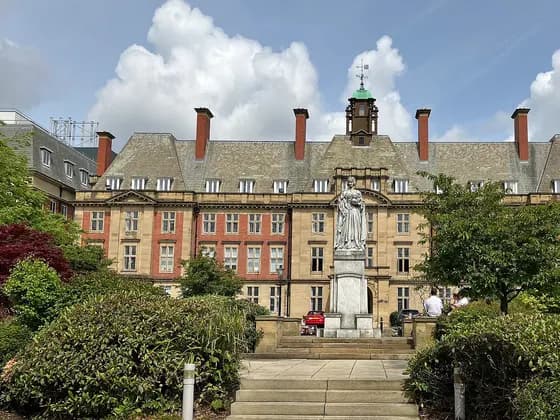


Photo: Sarah Cossom · CC BY-SA 3.0 · cropped
Photo: Anthony Foster · CC BY-SA 2.0 · Photo: Anthony Foster · CC BY-SA 2.0 · Photo: Benjamin Smith · CC BY-SA 4.0
The Newcastle dentistry course at a glance (2027 entry)
Newcastle's Bachelor of Dental Surgery (BDS) is a five-year, full-time course run by the School of Dental Sciences, which shares a building with Newcastle Dental Hospital. It is accredited by the General Dental Council (GDC), which registers dentists in the UK, so graduates can apply to register and practise. Each year of the course is called a Stage, and the GDC's November 2025 inspection report records 76 students starting each year.
In Stages 1 and 2 you learn the biomedical and behavioural science behind dentistry. The last term of Stage 2 is largely hands-on practice on phantom heads, which are manikin heads with jaws and teeth that you work on before you touch a patient. From Stage 3 you treat your own patients under close supervision, and by the end of Stage 4 about half of your time goes on patient care.
All of your patient work is with one NHS partner, the Newcastle upon Tyne Hospitals NHS Foundation Trust (often called Newcastle Hospitals, or NuTH), which runs the Dental Hospital. The GDC's 2025 inspection found the school had lost some of its outreach placements (treating patients in community clinics outside the hospital). Most clinical experience now comes from the hospital, as the placements section explains.
The course is fixed rather than pick-and-mix, with no optional modules. You share parts of your training with students on Newcastle's Dental Therapy BSc (dental therapists are registered professionals who carry out a narrower range of treatments than dentists, such as fillings and gum treatment).
The school is also updating the course to the GDC's newer learning outcomes, called the Safe Practitioner Framework. It is keeping the same basic structure and adding new learning where needed, and the first students to take the whole course under the new outcomes are due to graduate in 2030.
| Degree | Bachelor of Dental Surgery (BDS); Honours only with enough Stage merits and distinctions |
|---|---|
| Course length | 5 years full time, 190 weeks of study (GDC, 2025) |
| UCAS code | A206 |
| Intake | 76 students a year (GDC inspection, November 2025) |
| Main base | Newcastle Dental Hospital building, Royal Victoria Infirmary site |
| First own patients | Stage 3, after passing the Key Clinical Skills course |
| Patient care | With NuTH, mainly at the Dental Hospital, plus short supplementary placements |
| Elective | Up to eight weeks at the end of Stage 4 |
| Intercalation | Optional year: a BSc after Stage 2 or a master's after Stage 4 |
What makes Newcastle dentistry different
School and Dental Hospital in one building
The School of Dental Sciences shares a building with Newcastle Dental Hospital, on the Royal Victoria Infirmary site about five minutes' walk from the city centre. The simulation unit where you learn procedures and the clinics where you later treat patients are under one roof.
New simulation facilities opened in 2025
The £5.5 million Dental Clinical Simulation Facilities opened in February 2025. Alongside new phantom heads, you can practise on digital simulators and use digital manufacturing to make crowns, veneers and bridges. It also has mouth scanners and 3D printers, as dental practice is becoming more digital.
A tested gateway before your first patient
Before you treat anyone, you must pass the Key Clinical Skills course at the end of Stage 2, practising on phantom heads. Failing its end-of-course exam twice means repeating the whole Key Clinical Skills course, so everyone reaching the Stage 3 clinics has passed a practical check.
Training alongside dental therapy students
You take the Key Clinical Skills course with Dental Therapy BSc students, and later you can share a patient's care with them where the treatment allows. Qualified therapists also help supervise you, only for treatments they are trained to do, with a dentist always available.
A final clinical exam called the MOSLER
Your final-year clinical skills are examined with a Multi-station Objective Structured Long Examination Record (MOSLER). The school developed it because it considers it tests clinical skills more deeply than an Objective Structured Clinical Examination (OSCE), the short timed-station exam common in healthcare courses. You get one attempt: failing it means repeating the whole final year.
How Newcastle teaches dentistry
Teaching mixes lectures, seminars, practical laboratory classes and clinical demonstrations. Some laboratory demonstrations are shown on closed-circuit TV, and some topics use computer-assisted learning packages you work through at your own pace. Directed self-study is a major part of the course: time is set aside for it in the working day, but you will also need to study in the evenings and at weekends.
In Stages 1 and 2 the science is taught with dentistry always in view. Clinical staff teach alongside scientists and use clinical examples, so you can see where each topic will be needed later. Stage 2 then turns to oral biology, oral health and what goes wrong in disease.
From Stage 3 the course is built around clinical attachments. You are placed continuously in most of the Dental Hospital's clinical departments, with blocks of time in oral surgery and dental sedation. Clinical skills courses in the simulation unit prepare you for the main types of treatment first. Each clinical subject is taught separately at first, but as your cases grow more complex you combine them into one plan of care.
Starting in Stage 3, lectures and further practical courses cover subjects such as radiology (X-ray imaging), preventive dentistry, periodontology (the treatment of gum disease), crown and bridgework, and advanced root canal treatment. They also cover oral medicine, which means diagnosing and treating diseases of the mouth without surgery. A course on Professionalism and Personal and Professional Development runs through all five Stages. Clinical work also stops for compulsory Clinical Governance Afternoons on the safety and quality of patient care, which students attend within normal hours.
The ways you will learn
| Lectures and seminars | Lectures introduce new material, which you follow up with reading. Seminars are smaller group sessions for clearing up questions from lectures and practicals, analysing data together and practising speaking to an audience. |
|---|---|
| Practical classes | Practical sessions linked to the lectures let you study anatomical specimens, tissue sections, bacteria and dental materials directly and learn to handle equipment, with staff on hand to answer questions. |
| Projects | Several science courses, such as Microbiology for Dentistry and Nutrition and Diet, include projects. You form a hypothesis, design a study, and collect and analyse the data, alone or in a group. |
| Clinical skills courses | These start with the Key Clinical Skills course in Stage 2, and later you return for advanced courses in root canal treatment, crown and bridgework, dentures and aspects of implants. You learn practical procedures in the laboratory and on phantom heads, under close supervision, before carrying them out on patients. |
| Clinical attachments | From Stage 3 you treat patients in the hospital's clinical departments under supervision. Each session starts with a short staff and student meeting, where you say which patients you expect so supervisors can plan cover. |
| Case presentations and portfolio | You build a portfolio of patients you have treated and present cases to show your clinical skills and progress. In the final Stage, case presentations are also part of how your knowledge is examined. |
How anatomy is taught at Newcastle
Anatomy of the Head and Neck is one of the Stage 1 courses. The first two Stages cover normal structure and function across the whole body, with the most detail on the structures that matter in dental practice. The GDC notes that Year 1 also introduces oral and dental anatomy, and a further course, Applied Anatomy, follows in Stage 3.
Anatomy is taught through lectures and linked practical sessions with anatomical specimens and tissue sections. Dentistry is one of the courses that use the university's Anatomy Laboratory. The lab is licensed under the Human Tissue Act 2004 and regulated by the Human Tissue Authority, the regulator that oversees how donated human bodies and tissue are stored and used. It also teaches with anatomical models and 3D software such as Complete Anatomy and Virtual Human Dissector.
When you start treating patients at Newcastle
You meet patients early, but only as an observer at first. Later in Stage 1 you shadow senior students in the Dental Hospital clinics, watching simple procedures such as fillings and root treatments. In the early Stages you also practise simple examinations on fellow students.
Stage 2 adds a Plaque Growth Project, which gives you further clinical experience. Its third term is mainly the Key Clinical Skills course in the simulation unit. Working on phantom heads, you learn periodontal management (treating gum disease) and the first stages of root canal treatment. You also study dental materials and how disease is managed, and practise communication and reflecting on your own work.
The Key Clinical Skills course is assessed through written reflections and single best answer papers (multiple-choice questions where you pick the best option). It also uses In-course Simulated Clinical Assessments (INSCAs), which are practical tests in the simulation unit. Students with consistently good INSCA results can be excused the end-of-course clinical exam. Everyone else must pass it to enter the patient clinics, and failing it twice means repeating the whole Key Clinical Skills course.
There are also safety checks before patient work. You have an enhanced Disclosure and Barring Service (DBS) criminal record check when you start and again before clinical teaching begins in Stage 3. You are screened for hepatitis B, hepatitis C and HIV early in the course, and the school pays for your hepatitis B vaccination.
Stage 3 opens with an intensive Clinical Introduction Course, then you start managing your own patients, giving simple treatment under close supervision. Patients refer themselves or are referred by their dentist onto waiting lists, and clinicians match them to the skills students need. Volunteer patients are treated free of charge.
Supervision tightens as procedures get harder: for more complex treatment the ratio goes up to one supervisor for every two students, or one to one. The Stage 4 oral surgery block focuses on surgical extractions. Across Stages 4 and 5 you are also introduced to orthodontics (correcting the position of teeth, for example with braces), dental implants and intravenous sedation (calming medicine given into a vein).
Year by year at Newcastle
- Stage 1
Science foundations and a first look at clinics
Stage 1 builds the science that dentistry rests on, covering how the whole body works with extra depth on the head, mouth and teeth. You see patients only as an observer.
- Orientation and Study Skills, the induction course at the start of the year.
- Cell Biology, Metabolism and Homeostasis (how the body keeps its internal conditions stable), Dental Physiology and Neurobiology.
- Anatomy of the Head and Neck.
- Introduction to Clinical Practice, and Interpersonal Skills and Shadowing, including shadowing senior students on the clinics later in the year.
- The start of the Professionalism and Personal and Professional Development course, and of iDentity, the online portfolio you keep for all five years.
- Stage 2
Oral biology, disease and key clinical skills
Stage 2 moves from the healthy body to the mouth and to what goes wrong in disease. The third term is mainly the Key Clinical Skills course, which you must pass before you treat patients.
- Craniofacial and Tooth Biology: the biology of the skull, face and teeth.
- Microbiology for Dentistry, Immunology and Healthcare, and Basic Pharmacology (how medicines act on the body).
- Behavioural and Social Science for Dentists, Nutrition and Diet, and Dental Materials Science, each with project work.
- The Plaque Growth Project, which adds clinical experience.
- Term 3: the Key Clinical Skills course, taken alongside Dental Therapy BSc students.
- Stage 3
Your first patients
Stage 3 is where you start managing your own patients, doing simple treatments under close supervision, while lecture courses on disease run alongside.
- Clinical attachments through the year in restorative dentistry (repairing and replacing teeth), paediatric dentistry, oral surgery, radiology and the Dental Emergency Clinic.
- Learning to plan treatment, prevent disease, place fillings, do root treatments, treat gum disease, make dentures, extract teeth and carry out simple surgery, and to use X-rays, local anaesthetic and cross-infection control safely.
- A block of oral surgery focused on simple extractions.
- Clinical skills courses in complete dentures, partial dentures and endodontics (root canal treatment), plus orthodontics.
- Lecture courses in Human Diseases, Oral Diseases, Dental Public Health (the study of oral health across whole communities), Applied Anatomy and Dental Materials Science.
- Primary care outreach in the form of oral health education with community groups.
- Stage 4
More complex care and the elective
Your clinical work grows more complex, and by the end of the year about half of your time is spent treating patients.
- Continuing clinical attachments in restorative dentistry, paediatric dentistry and oral surgery.
- An oral surgery block on surgical extractions, where a tooth has to be removed with a small operation.
- Clinical skills courses in Advanced Restorations, Restorative Management of Tooth Loss and oral surgery.
- Lecture courses in Human Diseases, Oral Diseases and Dental Public Health.
- An elective of up to eight weeks at the end of the Stage.
- Stage 5
Final year: reaching safe beginner
The final year aims to bring you to the level the GDC calls a safe beginner: the standard expected of a newly qualified dentist.
- Clinical attachments in restorative dentistry, paediatric dentistry, the Dental Emergency Clinic and oral and maxillofacial surgery (surgery of the mouth, jaws and face).
- An attachment to primary care outreach, treating patients away from the main hospital clinics.
- Further oral surgery blocks.
- Courses in Gerodontology (dental care of older people), Oral Diseases and Dental Public Health.
- Final BDS, with academic and clinical sections, including the single-attempt MOSLER.
How you are assessed at Newcastle
Each of Stages 1 to 4 ends with exams you must pass to move on, with continuous assessment during each term. There is no compensation: a strong result in one area cannot make up for a fail in another. Each Stage is recorded as a pass or fail, but merits and distinctions are awarded for excellent first-attempt results.
Written and online exams mainly use single best answer and structured short answer questions, which test knowledge, problem solving and clinical reasoning. Objective Structured Practical Examinations (OSPEs) test knowledge together with observation skills, and OSCEs test clinical skills at a series of short timed stations. Academic results are graded Merit, Satisfactory, Borderline or Unsatisfactory, and only the first two are passes.
Clinical skills are also checked through in-course clinical competency assessments (INCCAs), which you must complete to progress. These and the MOSLER are generally graded from 1 to 4 against the safe beginner standard. A 3 means you are at that level and would need only minimal supervision next time; a 4 means you are above it.
Other assessments include written assignments, group work, project and case reports, portfolios, case-based discussions and presentations. Professionalism is assessed throughout, drawing on your attendance, tutor feedback and approach to clinical work, including whether you follow the GDC's standards. Student Progress Appraisals review your behaviour alongside your marks.
If you fail, you normally have two resit chances. The first is within the same year; failing that usually means repeating the year. Resit grades are capped at Satisfactory. In Stages 3 to 5 there are no in-year resits for clinical assessments, so failing one at first attempt means repeating the year. No more than two extra repeat years are allowed across the whole course.
Stage merits and distinctions earn points: 3 for a distinction and 1 for a merit. With 6 points and a merit in both the academic and clinical sections of Final BDS, you graduate with a BDS with Honours. Ten points with a merit in either section also qualifies.
Where you will actually be at Newcastle
Newcastle Dental Hospital, where you do most of your patient work, is run by Newcastle upon Tyne Hospitals NHS Foundation Trust on the Royal Victoria Infirmary site. The course is attendance-based and mainly face to face at the city campus and linked clinical locations. Sessions planned as face-to-face teaching cannot be swapped for online study.
Inside the hospital you rotate through oral surgery, restorative dentistry, child dental health, oral medicine, radiology and the dental emergency clinic. Specialist clinics also cover oral and maxillofacial surgery and orthodontics. In February 2025 the university said its students treat around 30,000 patients a year across the Dental Hospital and clinics in the city.
The school names clinics around the city in Arthur's Hill, Byker, Kenton and Walker. In Stage 3, outreach means oral health education with community groups. In Stage 5 it is a clinical attachment treating patients away from the main hospital clinics.
The GDC's November 2025 inspection found the school had lost some outreach placements because of funding difficulties, so most clinical experience now comes from the hospital, with short placements adding to it. Inspectors judged that students still get enough experience to graduate as safe beginners, and students said they were content. The GDC asked the school to consider bringing back more primary care outreach. The school is reviewing its options, and progress will be checked in 2027/28.
Your base for all five years, and where most of your patient treatment happens.
- Newcastle Dental Hospital (Newcastle upon Tyne Hospitals NHS Foundation Trust)
- Dental Clinical Simulation Facilities, School of Dental Sciences
Clinics around the city where the school says students treat volunteer patients.
- Arthur's Hill
- Byker
- Kenton
- Walker
Electives and chosen modules at Newcastle
With no optional modules, the elective is your main chance to follow your own interests. At the end of Stage 4 you have up to eight weeks to travel, attend clinics in the UK or overseas, or do research, and the school says most students take some elective study.
Recent students have watched research at European universities and given simple dental care in Latin America, the tropical Pacific and the Amazon basin. Others observed cosmetic dentistry in New York or took on projects closer to home.
A limited number of students can take a special care elective in the region. Special care dentistry looks after people whose disability, illness or circumstances make routine dental treatment harder.
Intercalation at Newcastle
Intercalation means taking an optional year out of the BDS to study for a separate, related degree, often with your own research project, before returning to dentistry. Newcastle dental students can do this at two points.
You can study at Newcastle or, if the Senior Tutor for Intercalation agrees the programme is suitable, at another university after Stage 2 or Stage 4. Newcastle cannot help fund study elsewhere.
- After Stage 2: the final year of a Newcastle bioscience degree, leading to a BSc Honours in Biochemistry, Biomedical Genetics, Biomedical Sciences, Pharmacology or Physiological Sciences.
- After Stage 4: a Master of Research (MRes) in a Biomedicine subject, a Master of Public Health (MPH), a master's in Medical Education or a Master of Arts (MA) in History of Medicine.
- Also after Stage 4: a Master of Science (MSc) in Health Services Research, Bioinformatics, Computational Neuroscience and Neuroinformatics, or Synthetic Biology.
Facilities and support at Newcastle
Where you will learn
The school has library and computing facilities and lecture theatres on site, and you can also use the facilities of the main university campus. It belongs to the Faculty of Medical Sciences, which also covers medicine, biomedical sciences, psychology and pharmacy.
The simulation facilities were funded by the university and the Office for Students. Besides the phantom heads and digital equipment, they hold space for training in dental prosthetics (making dentures, crowns and bridges) and an X-ray department. A separate postgraduate suite, for dentists in further training after qualifying, has operating microscopes for learning advanced techniques.
Treatment in a demonstration surgery can be streamed live into a seminar room, so a whole group can watch a procedure close up.
Other teaching spaces include a conservation clinic (for fillings and root treatments), a children's clinic and a dental learning resource unit. The school also has research laboratories in oral biology and dental materials science, and a clinical research facility.
Support while you study
An academic adviser from the staff supports you through the whole degree with academic and personal issues and career choices. In your first year, fellow students act as peer mentors to help you settle in.
Your iDentity e-portfolio records your clinical work, assessment results, reflections and personal development plan across all five years. Your personal tutor uses it in regular meetings and to draw up action plans if needed. When you graduate you can download it as evidence for employers, and you keep access to it in your first period after qualifying.
In the Key Clinical Skills course, students flagged by ongoing assessment get targeted support before the end-of-course exam and before any resit. Stage Tutors also meet students where needed, for example before final examinations.
Is the Newcastle course right for you?
This course may suit you if
- You want your simulation training and patient clinics in the same building, next to the city centre.
- You would rather build solid science and simulation skills first, with your own patients arriving in Stage 3 after a tested gateway.
- You like the idea of learning alongside dental therapy students and sometimes being supervised by therapists, as in a real dental team.
- You want the option of an extra degree, either a BSc after Stage 2 or a master's after Stage 4.
Things to think about
- The GDC found in 2025 that the course lacks a full outreach programme, so you may see less of community and general practice settings before you graduate.
- The course is fixed, with no optional modules, so the elective is your main chance to choose what you do.
- Clinical assessments in Stages 3 to 5 have no in-year resit, and the MOSLER has a single attempt, so a fail means repeating a year.
- Teaching is attendance-based and mainly in person, with no online alternative to planned face-to-face sessions.
Newcastle dentistry course — frequently asked questions
Applying to Newcastle?
How to get into Newcastle
Entry requirements, UCAT, personal statement and interview, step by step.
Open the guide →Newcastle UCAT cut-offs and offers
UCAT cut-offs, A-level offers, interview format and decision dates.
See the requirements →Compare Newcastle with other schools
Put the teaching style, anatomy teaching and placements next to another school.
Open the comparison →Prepare for the Newcastle interview
Format breakdown, school-specific sample questions and prep tips from tutors who interviewed here.
Read the guide →Where this Newcastle course guide came from
This guide was written from 13 official sources — Newcastle University School of Dental Sciences's own course pages and programme documents, plus the regulator and NHS placement partners where they publish detail — read on 2026-09-24, then checked claim by claim against those sources.
- Dental Surgery BDS, Newcastle University undergraduate course page
- BDS Programme Specification 2025/26, Newcastle University
- BDS Programme Regulations 2025/26, Newcastle University
- GDC Education Quality Assurance Inspection Report, Newcastle University BDS (inspected November 2025)
- Undergraduate study, School of Dental Sciences, Newcastle University
- New clinical facilities will transform dental education and training, Newcastle University Press Office (February 2025)
- Facilities, School of Dental Sciences, Newcastle University
- Engagement and Partnerships, School of Dental Sciences, Newcastle University
- Public Engagement, School of Dental Sciences, Newcastle University
- Intercalation opportunities, Faculty of Medical Sciences, Newcastle University
- School of Dental Sciences Admissions Policy 2027 Entry (health and DBS requirements)
- Anatomy, School of Medicine, Newcastle University (programmes that use the Anatomy Laboratory)
- Dental workforce expansion and contract reforms, written ministerial statement HCWS1392, Department of Health and Social Care, 10 March 2026
Courses are restructured between cycles. Anything here that decides your application — an anatomy offer, a placement city, a compulsory intercalated year — should be confirmed against the official page for your entry year.
Applying to Newcastle?
We have helped hundreds of applicants turn their UCAT, personal statement and interview prep into offers from Newcastle and other UK dentistry schools.