
Keele Medicine Interview
Format, Questions & Prep Tips
Keele medicine interviews for 2027 entry are a traditional interview, held December 2026 – April 2027. Keele describes the format as: Two 15-minute structured online interviews (traditional format, not MMI. Published figures: Interview shortlist threshold (2025) 15/25 (UCAT + personal statement); Format Two 15-minute online interviews (Microsoft Teams); minimum UCAT (home) 1,700 total and SJT band 1–3.
- Institution
- Keele University
- Interview (2027 entry)
- December 2026 – April 2027
- Decisions (2027 entry)
- Earliest decisions January/February 2027 (reserve list possible)

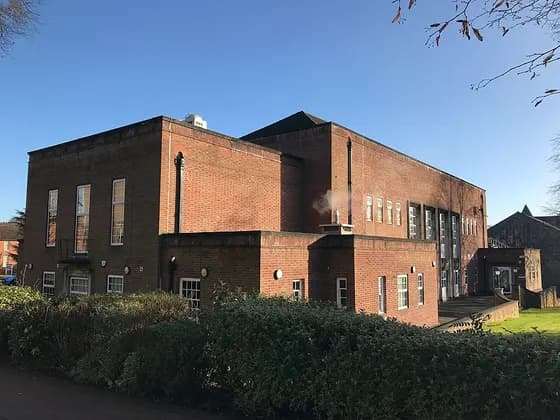


Photo: Jonathan Hutchins / Geograph Britain and Ireland · CC BY-SA 2.0 · cropped
Photo: Jonathan Hutchins · CC BY-SA 2.0 · Photo: Rept0n1x · CC BY-SA 2.0 · Photo: Tanya Dedyukhina · CC BY 3.0
Still deciding where to apply? Hear it from a student who's there
Keele's 2027-entry selection uses **two 15-minute structured online interviews** via Microsoft Teams, usually about two hours apart, discussing pre-released GMC 'Good Medical Practice' guidance and a case scenario. It is not an MMI.
Keele's selection philosophy is unapologetically values-driven. The school is built around problem-based learning (PBL), early patient contact, and substantial rural and community placements across Staffordshire, Shropshire and the wider West Midlands. Interviews probe the attributes in Keele's person specification, the broader roles and responsibilities of doctors, and your ability to engage with patients outside large teaching hospitals — assessors want medics who will thrive in District General Hospitals and GP surgeries, not only in tertiary centres.
Home applicants are shortlisted on a combined UCAT and personal statement score out of 25 (the 2025 threshold was 15/25), and interviews run from December 2026 to April 2027. The school is friendly and small enough that interviewers genuinely want to find reasons to admit you — concise, structured answers that show insight tend to score well.
Keele interview key facts (2027 entry)
| Interview shortlist threshold (2025) | 15/25 (UCAT + personal statement) |
|---|---|
| Format | Two 15-minute online interviews (Microsoft Teams) |
| Minimum UCAT (home) | 1,700 total and SJT band 1–3 |
Interview Format
- Two 15-minute structured online interviews via Microsoft Teams, usually about two hours apart.
- Discussion builds on pre-released GMC 'Good Medical Practice' guidance — read it closely beforehand.
- A case scenario tests applied ethical reasoning; not a station-based MMI.
Sample Interview Questions
Why Keele specifically, beyond the offer of a medicine place?
Reference PBL, early clinical contact, the Staffordshire and Shropshire placement footprint, community and rural exposure, and the small cohort feel. Generic "good reputation" answers fall flat.
Keele has a strong rural and community placement programme. How does that appeal to you?
Show you understand what community medicine actually involves — continuity, social context, smaller teams, broader scope of practice. Link to any GP or community work experience.
Explain a recent news story about the NHS to a non-medical relative.
Pitch your language carefully, check understanding, avoid jargon. Show you can simplify without being patronising.
A 15-year-old asks you for contraception and does not want her parents told. How do you respond?
Reference Gillick competence and Fraser guidelines. Confidentiality is the default; safeguarding overrides it if you have specific concerns. Show structured reasoning.
You are a senior student. A first-year peer admits they have copied parts of an essay. Speak with them.
Empathy first — find out why. Then make clear the seriousness, signpost academic support, and explain why escalation may be necessary. Avoid lecturing.
You are given a graph of paediatric A&E attendances over five years. What do you notice, and what might explain it?
Describe before interpreting. Identify trends, seasonal patterns and outliers. Offer plausible explanations (winter pressures, COVID disruption, primary care access) without overclaiming.
Tell me about a time you received difficult feedback. What did you do with it?
Pick a real example. Show reflection, a specific change you made, and what you learned. Avoid the humble-brag "weakness" trap.
Should the NHS continue to fund treatments that offer only small extensions to life?
Engage with cost-effectiveness, QALYs, NICE thresholds and patient autonomy. Acknowledge the emotional and ethical weight on both sides.
PBL means you will spend a lot of time learning in small groups with peers. How do you handle group learning?
Give a concrete example. Acknowledge challenges — uneven contributions, disagreements — and how you have navigated them.
Describe a piece of medical research or reading that genuinely interested you.
Specifics matter. Authors, findings, why it changed your thinking. Avoid name-dropping journals without substance.
A patient is anxious about a routine blood test. Reassure them.
Acknowledge the fear, explain what will happen step by step, check understanding, offer small choices (which arm, sitting/lying). Avoid dismissive "it's fine" language.
What did you learn from your work experience that you could not have learned from reading?
Pick a concrete moment. Focus on what you observed about communication, teamwork, or the emotional reality of clinical work.
A colleague smells of alcohol on shift. What do you do?
Patient safety first. Speak with them privately, escalate to a senior. Use GMC guidance on raising concerns. Do not collude or ignore.
Describe a time you adapted your communication style for a particular audience.
Concrete example — teaching, tutoring, volunteering with children or older people. Focus on what you adjusted and why.
Why do you think you will cope with the workload of a Keele medicine degree?
Honest reflection on study habits, support networks, and prior experience juggling commitments. Avoid bravado.
Practise the Keele interview
Rehearse the real format before the day — on demand with our AI interviewers, or live with a tutor.
Sit a mock with photoreal AI interviewers — any time
A timed MMI or panel interview on video — British & international voices — with interviewers who listen, react and press with follow-ups. Rubric-scored feedback and a replay the moment you finish.






Live mocks with a tutor who’s been in the room
A full Keele-style mock with a medic or dentist tutor — honest scoring against real marking criteria, a station-by-station debrief and a written action plan.
Book a mock interviewHow to Prepare
Run timed 15-minute mock interviews on video — Keele interviews online and you must finish coherently.
Practise PBL-style reasoning out loud: structure thinking, invite collaboration, summarise.
Read up on rural and community medicine in the UK, including continuity of care and GP workforce challenges.
Refresh Gillick/Fraser, capacity (MCA 2005), and confidentiality vs safeguarding overrides.
Have two or three concrete reflective stories ready that show personal growth, not just achievement.
Test your Microsoft Teams set-up in advance — it is your responsibility to have working technology for the online interviews.
Read the GMC's Achieving Good Medical Practice section on professionalism (key areas of concern) closely, and study the short case sent with your invitation.
Invited to interview at Keele? Say your first answer out loud today with the free two-minute warm-up drill, then sit a timed mock set up for Keele.
Common Pitfalls
Frequently Asked Questions
Related guides
Free, evidence-based guides from current UK medical and dental students.
Free Interview Resources
Worked-through MMI stations, ethics scenarios, and panel questions.
Read guideNHS Core Values Guide
The 6 NHS values examiners listen for in every interview answer.
Read guideMedical School Rankings
See interview format (MMI vs panel) for each UK medical school.
Read guideUCAS 2026 Personal Statement
The new three-question format your interviewer will reference.
Read guideContextual Offers for Medicine
Every UK medical school's widening-access scheme in one place.
Read guideSources & official admissions information
We cross-check every interview guide against the school’s own admissions guidance and the UK regulators.
- Keele University — Medicine: how to apply (2027 entry) — Shortlisting on UCAT + personal statement (/25), two 15-minute Teams interviews, December 2026 – April 2027.
- Keele — official admissions page — Programme overview, entry requirements, interview format and timeline straight from the school.
- UCAT Consortium — Official UCAT registration, test format, scoring methodology and free practice materials.
- General Medical Council (GMC) — Statutory regulator. Approved medical schools, the registered-doctor register, and fitness-to-practise standards.
- Medical Schools Council — Selecting-for-excellence guidance, MMI principles, and an A–Z of UK medical schools.
Ready to nail your Keele interview?
Book a mock interview with a current medical student who recently went through the same process, or practise on demand with the AI interviewer.