
The Jacobs School of Medicine and Biomedical Sciences at UB MD program
What you actually study, and where you will be
Jacobs School of Medicine and Biomedical Sciences at UB's MD is a 4-year program taught through case-based learning in an integrated curriculum, with patient contact from Year 1 and clinical rotations in Buffalo and the surrounding Western New York region (2027 entry). Well Beyond, the curriculum since July 2024, has three phases. Phase 1 teaches the sciences in about 18 months of mostly organ-system courses, with small-group case work twice a week, three two-week clinical immersions and community service. In Phase 2 the clerkships (the core clinical rotations) run from April of year 2 in four 12-week blocks: three pair two specialties and one pairs pediatrics with a four-week elective. Phase 3, from April of year 3, brings advanced rotations, electives and residency preparation.
- Degree
- MD
- Length
- 4 years
- Teaching
- Integrated + Case-based learning
- Clinical contact
- Year 1

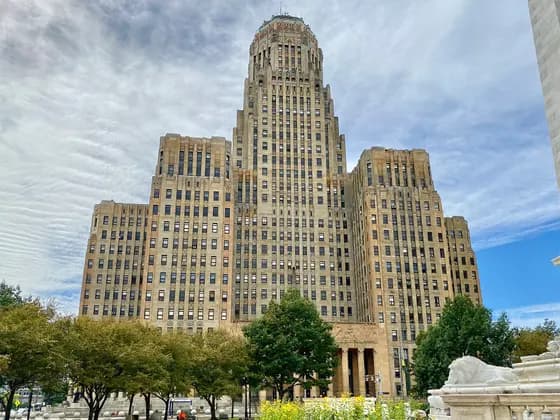
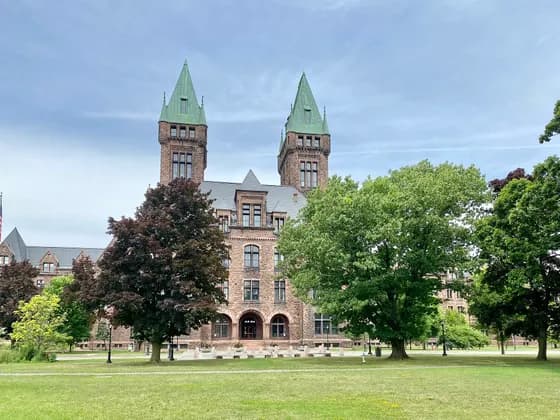
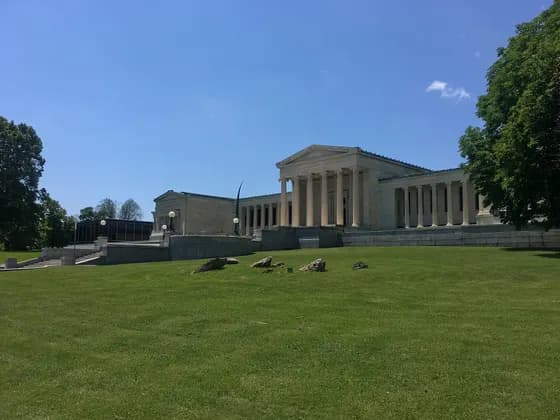
Photo: Buffaboy · CC BY-SA 4.0 · cropped
Photo: w_lemay · CC BY-SA 2.0 · Photo: w_lemay · CC BY-SA 2.0 · Photo: Andre Carrotflower · CC BY-SA 4.0
The Jacobs School of Medicine and Biomedical Sciences at UB MD program at a glance (2027 entry)
The Jacobs School of Medicine and Biomedical Sciences at the University at Buffalo (the Jacobs School, or UB Jacobs) runs a four-year Doctor of Medicine (MD) program in downtown Buffalo, New York. The school was founded in 1846, and the MD is conferred by the State University of New York (SUNY). The Liaison Committee on Medical Education (LCME), which accredits MD programs in the United States, lists it as fully accredited.
Since July 2024 the program has run a redesigned curriculum called Well Beyond, which every class entering from 2024 follows; students admitted earlier finish on the older Classic curriculum. Phase 1, the pre-clerkship (preclinical) phase, lasts about 18 months and ends with Step 1 of the United States Medical Licensing Examination (USMLE), the national exam series for a US medical license. Step 1 tests the science behind medicine. The core clerkships of Phase 2 start in April of year 2, and Phase 3 runs from April of year 3 to graduation.
Phase 1 teaches the sciences in courses mostly built around one or two organ systems, with clinical problems as the framework, while five longitudinal courses run alongside them for the whole phase. Twice a week you work through a clinical case in a small, student-led group, a method the school calls case-based inquiry learning. Your learning community, six students per year with one faculty coach, stays together for all four years.
Clinical work comes in concentrated doses before the clerkships: three two-week clinical immersions in Phase 1, plus CommunityConnect, regular service with a Buffalo community organization. Clerkships run in four 12-week blocks, three of them pairing related specialties and one pairing pediatrics with a four-week elective. They take place at Buffalo-area hospitals including Buffalo General Medical Center, Erie County Medical Center and the Buffalo VA Medical Center, a Veterans Affairs hospital.
| Degree | MD, conferred by the State University of New York |
|---|---|
| Curriculum | Well Beyond, for every class entering since July 2024 |
| Program length | 4 years, starting with orientation in mid-July |
| Class size | 180 MD students and 8 dual-degree MD-PhD students entered in July 2026 |
| Main campus | 955 Main Street, Buffalo Niagara Medical Campus, downtown Buffalo |
| Teaching style | Organ-system courses plus twice-weekly small-group case work |
| First patient contact | Two-week clinical immersion in late October of year 1 |
| Clerkships | From early April of year 2, in four paired 12-week blocks |
| Step 1 timing | January or February of year 2, after a dedicated study period |
| Grading | Pass/fail in Phase 1; Honors to Unsatisfactory in clerkships |
What makes the Jacobs School of Medicine and Biomedical Sciences at UB MD program different
Clerkships taught in four paired 12-week blocks
Phase 2 pairs related fields instead of giving each its own rotation: internal medicine with family medicine, neurology with psychiatry, and obstetrics and gynecology with surgery. The fourth block pairs pediatrics with a four-week elective. Each block starts with an onboarding week and ends with a week of assessment and coaching.
Three clinical immersions before the clerkships
Phase 1 includes three two-week clinical immersions, two in year 1 and one in year 2. During each you have no other responsibilities, and between them they cover inpatient, outpatient and procedure-based settings.
Three semesters with a Buffalo community organization
Through CommunityConnect your small team works with one of the school's community partners. In October 2026 the dean said new students were partnered with some 50 organizations.
One faculty coach and small group for four years
The group is your base for the Phase 1 clinical skills course, and your coach also offers academic guidance and career advice.
A residency-preparation phase that starts in year 3
Phase 3 gives you an acting internship, or sub-internship, where you take on much of the work of an intern (a first-year resident) under supervision. It also brings advanced rotations, five electives and flexible time for study and residency interviews.
How Jacobs School of Medicine and Biomedical Sciences at UB teaches medicine
Well Beyond is designed so that clinical problems frame the science from the start. Phase 1 opens with Medicine and Society and the 12-week Foundations of Medicine course. Then come the organ-system courses: musculoskeletal and skin, heart and lungs, kidneys and gut, endocrine and reproductive, and the nervous system and behavior. Anatomy, histology, pathology, pharmacology, microbiology and genetics run through these courses as threads, alongside ethics, anti-racism, biomedical informatics, disease prevention and the social determinants of health.
The five longitudinal courses are Foundations of Patient-Centered Care, Learning Communities, Humanism (the Art of Medicine), Scientific Literacy and Inquiry, and Health Systems Science. Health systems science covers how care is paid for, run and made safer. The school builds the curriculum on five pillars: foundational sciences, clinical sciences, health systems science, humanities and humanism (including anti-racism and cultural humility), and scientific literacy and inquiry.
The school describes its methods as less time in lecture halls and more on problem-solving, with case-based inquiry learning as the main small-group format. From Phase 2 the teaching moves to wards and clinics, and Phase 3 adds more independence in advanced rotations.
The ways you will learn
| Case-based inquiry learning | Twice a week in Phase 1 you meet a small group that students lead and a faculty member facilitates. You take apart a clinical case, agree on learning goals, research them and come back to teach each other, and the facilitator gives you written narrative feedback. |
|---|---|
| Foundations of Patient-Centered Care | The clinical skills course, from July of year 1 to December of year 2: patient interviewing and communication, physical examination and clinical note-writing, with an emphasis on caring for diverse populations. Your learning community and its coach are the base for it, and scheduled clinical skills exercises check your progress. |
| Role players and simulation | You practice histories, examinations and difficult conversations with role players, people trained to portray patients, in the Clinical Competency Center. At the Behling Human Simulation Center you train in hospital-style team scenarios with students from other health professions. |
| Onboarding and I-CARE weeks | Every clerkship block starts with an onboarding week of specialty content and skills, including the foundational science behind them. It ends with an I-CARE week (integration, coaching, assessment, reflection and exploration), with clinical skills assessments and time with your learning community and coach. |
| Preparation for Residency | A two-part course: Part 1 includes an in-person intersession week in January of year 3, and Part 2 comes at the end of Phase 3. It covers specialty decisions, simulations with feedback and a two-week capstone on internship skills such as common procedures and managing more complex patients. |
A typical week on the Jacobs School of Medicine and Biomedical Sciences at UB program
In Phase 1 you take one block course at a time, while the longitudinal courses continue all semester. Your case-based inquiry group meets twice a week, and every other week one afternoon goes to CommunityConnect.
The school caps required Phase 1 activities at 35 hours a week, counting both scheduled sessions and required preparation: a 30-minute video assigned before a one-hour class counts as 1.5 hours. A day should hold no more than eight hours of scheduled class, to protect time for independent study.
Exams come every few weeks: in fall 2026, Foundations of Medicine had four exams plus one from the National Board of Medical Examiners (NBME) over 12 weeks. Clinical immersion weeks follow the site's schedule instead and can run past the usual cap.
In clerkships you follow the work-hour limits set for residents by the Accreditation Council for Graduate Medical Education (ACGME). That means at most 80 hours a week averaged over four weeks, no shift over 24 hours and at least 24 hours off in a row each week. Internal medicine includes night and weekend duties, surgery has night call, and pediatrics one weekend shift.
When you first meet patients at Jacobs School of Medicine and Biomedical Sciences at UB
Clinical skills teaching starts in your first weeks, when Foundations of Patient-Centered Care begins in July. Your first required clinical experience is a two-week clinical immersion in late October of year 1; the second comes in late March and early April, and the third in September of year 2.
The school lists more than 50 clinical immersion sites around Western New York, in three kinds of setting: inpatient, outpatient and procedural. It welcomes rural sites so that students learn about care for medically underserved patients; those it currently names are The Chautauqua Center, Westfield Family Physicians, The Resource Center and Family Health Medical Services.
The point of an immersion is not to learn one specialty but to apply what you are learning in class. Each one pulls together the science, your clinical skills, the patient's experience, the social determinants of health and how the health system works, as preparation for the clerkships. Hospital credentialing and onboarding are done in training sessions during the immersions.
CommunityConnect, a required service-learning program that starts in year 1, pairs community service with set learning objectives, preparation and reflection. Your team of three works with a Buffalo community-based organization one day every other week, three hours at a time, for three semesters. In the fall of year 2 your team helps the incoming first-year team settle in.
In the summer after year 1, about seven weeks from June are free for an optional project in a patient care setting or community health organization, research or your required scholarly project.
- Community partners named by the school include Compeer Buffalo, which offers friendship-based support to people working toward mental well-being, and Big Big Table Community Café, which serves affordable meals. Others are the Buffalo Prenatal Perinatal Network and GObike.
- Outside the curriculum, UB HEALS is a student-run street medicine program working to improve access to health care for people experiencing homelessness in Buffalo.
The Jacobs School of Medicine and Biomedical Sciences at UB curriculum, year by year
- Phase 1, year 1
Foundations and the first organ systems
Year 1 runs from orientation in mid-July to early June; for the class entering in 2027, from July 12, 2027 to June 2, 2028. You start with Medicine and Society and Foundations of Medicine, then move into the organ-system courses, with two of the three clinical immersions in this year.
- Orientation and Medicine and Society, the first three weeks: professional identity, the Buffalo community and its major health problems, and the curriculum's pillars and threads.
- Foundations of Medicine (August to late October, 12 credits): the fundamental sciences.
- The first clinical immersion, then Introduction to Anatomy: Musculoskeletal and Integument (November to mid-December; integument means the skin), ending with a local final exam and an NBME exam.
- Homeostasis 1: Cardiology and Pulmonary Systems (January to mid-March), the second immersion, then Homeostasis 2: Renal and Gastrointestinal Systems (April to early June).
- Scholarly project: you pick an area of interest in the fall and are matched with a mentor in the spring.
- Optional preclinical electives in the spring, and about seven optional weeks of Summer Explorations from June.
- Phase 1, year 2
The last organ systems and Step 1
Year 2 starts in late July and finishes the organ-system courses by mid-December, with the third clinical immersion in September. A dedicated study period then prepares you for USMLE Step 1, which you sit in January or February. You must pass every Phase 1 course before you take it.
- Endocrine and Reproductive Systems (late July to mid-September), then the third immersion; Neuroscience and Behavior (late September to mid-December, 11 credits).
- Step 1 Preparation runs through the fall, and a week of Synthesis and Self-Reflection in mid-December includes the NBME Comprehensive Basic Science Exam (CBSE).
- The Step 1 Dedicated Study Period runs from about December 20 to mid-February; the current calendars set Step 1 deadlines of February 20, 2027 and February 19, 2028.
- After Step 1, about four weeks from late February to mid-March are set aside for scholarly project work.
- Phase 2
Core clerkships in paired blocks
A week of Clinical Reasoning and Synthesis and a week of Clinical Orientation in late March lead into the clerkships. They start in early April of year 2 and run in four 12-week blocks to the end of March of year 3.
- Internal medicine with family medicine: medicine combines ward work and outpatient clinics, and family medicine is a clinical preceptorship with a practicing family physician, plus small-group teaching that uses problem-based learning.
- Neurology with psychiatry: psychiatry is six weeks on a hospital psychiatric unit, with evening and weekend emergency psychiatry shifts at Erie County Medical Center, ending with a multiple-choice exam.
- Obstetrics and gynecology with surgery, six weeks each. In obstetrics you support patients in labor, help with and then conduct deliveries, and assist at gynecologic operations; surgery adds operating room time, ward and clinic work, skills labs and night call.
- Pediatrics with a four-week elective: pediatrics has three two-week parts, inpatient at the children's hospital, outpatient at a primary care pediatric site, and a subspecialty such as neonatology or cardiology.
- An in-person Preparation for Residency intersession week in early January of year 3. On Martin Luther King Jr. Day, third-year students are excused from clinical duties and write a journal entry about a time they looked down on a patient or another person.
- To enter Phase 3 you must pass every clerkship and take the Phase 2 Clinical Competency Examination, which you may attempt no more than three times.
- Phase 3
Advanced rotations, electives and residency preparation
Phase 3 runs from early April of year 3 to late April of year 4, in 14 four-week modules: 11 required and three flexible ones for study, residency interviews, vacation or more scholarly work. For the first Well Beyond class the last module ends on April 28, 2028, and the degree is awarded on June 1, 2028.
- An acting internship.
- Advanced medicine, surgery or pediatrics. Advanced Medicine is a four-week inpatient rotation on a team with a resident, an intern and a clerkship student, focused on acute illness.
- Emergency medicine or critical care, with options listed as emergency medicine and medical, surgical or pediatric intensive care.
- An integrated science selective, one of a set of course options; Preparation for Residency; and five electives.
- A module of dedicated study for Step 2 CK (Clinical Knowledge), the USMLE exam on how you apply clinical knowledge.
- Your scholarly project presentation at the Medical Student Research Forum at the end of the phase.
How you are assessed at Jacobs School of Medicine and Biomedical Sciences at UB
Phase 1 courses are graded pass/fail, with a pass at an overall 69.50% or more. In the fall 2026 calendar, Foundations of Medicine and each organ-system course ended with an NBME exam; the NBME co-sponsors the USMLE with the Federation of State Medical Boards. All exams are sat in person, and local exam scores come back within five business days.
Your Phase 1 percentages still count toward a Dean's Letter of Commendation, given to students who earn at least 90% of the available points in a phase, and class standing averages all three phases. Latin honors also need a first-time Step 1 pass and a Step 2 CK score at the 60th, 80th or 90th national percentile.
Courses of four weeks or more give formal midpoint feedback, and small-group facilitators write narrative assessments. The school calls its approach programmatic assessment: you and your learning community coach use your results, including progress tests, to set learning goals.
Clerkships are graded Honors, High Satisfactory, Satisfactory or Unsatisfactory, from clinical performance and a written exam. Each clerkship's NBME subject exam, or shelf exam, must reach the 5th percentile for your academic quarter; passing on the one retake caps your grade at Satisfactory. You must also log an observed history and physical exam and your required clinical experiences.
You must pass Step 1 to be promoted to Phase 2, and Step 2 CK to graduate. Step 1 has been reported only as pass or fail since January 2022. LCME accreditation is what makes students of an MD program like this one eligible to sit the USMLE.
In August 2026 the USMLE program announced a move to designated testing dates from January 2029, with Step exams offered less often each year. Its June 2026 announcement had named 2028. On the current schedule, a July 2027 entrant would study for Step 1 from late December 2028 and sit it by about mid to late February 2029, shortly after the switch. Step 2 CK would most likely fall between May and mid-August 2030, early in Phase 3.
- These dates are projections: the 2028-29 and 2029-30 calendars are not yet published, and the Office of Medical Education sets the Step deadlines each year. In October 2026 the school told the Class of 2028 that Step 2 CK could not be taken before April 2027 and that most would sit it between May and mid-August.
- OSCEs are observed, structured clinical exams with standardized patients (role players). The clerkship OSCE described in September 2026 has two cases, scored on your interaction with the patient (25%), a history, examination and counseling checklist (30%) and your written note (45%).
- If you fail your first Step 1 attempt you are not promoted, and you use a clerkship block to prepare and retake it. Failing Step 1 or Step 2 three times leads to dismissal.
- If you are short of the school's Step 1 benchmarks, you can request four more weeks of dedicated study with weekly learning specialist meetings; the school says this need not delay graduation. A delay to 10 weeks past the deadline moves your Phase 2 schedule, and a longer one means a leave of absence and joining the next class.
- A failed Phase 1 course can be made up through a structured six-week remediation ending in an equivalent exam; three failed Phase 1 courses, or a failed remediation, lead to a recommendation for dismissal.
Jacobs School of Medicine and Biomedical Sciences at UB clinical rotations: where you will actually train
Your clinical training takes place at hospitals and practices in and around Buffalo. The school's building is on the Buffalo Niagara Medical Campus downtown, a 120-acre hub of hospitals and research institutes that includes Buffalo General Medical Center. The Training Sites page lists eight hospitals: three from Kaleida Health, two from Catholic Health, Erie County Medical Center, the Buffalo VA Medical Center and Roswell Park Comprehensive Cancer Center.
The registrar assigns you to required clerkships, and each clerkship's coordinator manages your site. Where your preference is taken into account, the coordinator contacts you before the module. You can ask for a different site 12 weeks before a clerkship begins, but you may not swap sites with another student.
Sites vary by specialty. Internal medicine runs at five hospitals and many outpatient sites; on the wards, two or three students join a team with an attending physician, the senior doctor in charge, and two or three residents. Surgery is taught across seven hospitals, and the neurology department teaches at Golisano Children's Hospital, Buffalo General, Erie County Medical Center (ECMC), the VA and Millard Fillmore Suburban.
Buffalo General is one of the medicine department's three major teaching institutions. Inpatient pediatrics teaching takes place at Golisano. Millard Fillmore Suburban, a suburban community hospital, supports training in general surgery, obstetrics and gynecology, emergency medicine, anesthesiology, urology and family practice.
- Buffalo General Medical Center/Gates Vascular Institute
- Golisano Children's Hospital of Buffalo
- Millard Fillmore Suburban Hospital
A regional center for trauma, burns, rehabilitation and cardiac care, verified by the American College of Surgeons as a Level 1 trauma center. It is one of the medicine department's three major institutions, and psychiatry students take emergency shifts here.
- Erie County Medical Center
The third of the medicine department's major teaching institutions, and the main referral center for cardiac surgery, cardiology and comprehensive cancer care for Western New York and northern Pennsylvania.
- Buffalo VA Medical Center, 3495 Bailey Avenue
Both are on the Training Sites list, and Mercy offers ambulatory general pediatrics teaching. The affiliations page also lists Kenmore Mercy Hospital, serving the northern suburbs, and the Sisters of Charity Hospital St. Joseph Campus, serving Cheektowaga.
- Mercy Hospital of Buffalo, 565 Abbott Road
- Sisters of Charity Hospital, 2157 Main Street
A National Cancer Institute-designated comprehensive cancer center. The medicine department draws on its resources, and its leukemia service hosts a four-week rotation for fourth-year students.
- Roswell Park Comprehensive Cancer Center
Family medicine relies heavily on community-based family physicians, and its clerkship uses urban, suburban and rural settings, with home and nursing home visits. The medicine department also teaches in ambulatory clinics and rural practices.
Electives, selectives and away rotations at Jacobs School of Medicine and Biomedical Sciences at UB
Electives in years 1 and 2 are optional, usually spring-only and limited to one per semester, and none is allowed in your first fall; a lottery settles oversubscribed ones. Current options include Introduction to Anesthesiology, Introduction to Emergency Medicine, Introduction to Orthopaedic Surgery, Honors Pharmacology and Asylum Medicine, on advocacy and medical-legal support for people seeking asylum.
Phase 2 includes one four-week elective, in the pediatrics block. For Phase 2 and 3 electives, the school surveys your top three choices within your assigned module, then places you by a randomized process that weighs those choices, specialty availability and prerequisites.
Phase 3 includes five required four-week electives. You may take up to two research modules and no more than three electives in one departmental division at UB. Options include sub-internships in trauma, vascular, transplant and pediatric surgery, pediatric intensive care, neonatology and family medicine, plus electives from sleep medicine to addiction medicine, medical Spanish and global health. The school's coursebook, in entries dated July 2026, also lists senior anatomy electives: Advanced Clinical Musculoskeletal Anatomy, Advanced Human Dissection and Senior Teaching in the Anatomical Sciences.
Away electives, taken at other institutions, are open to Phase 3 students in good standing. The host must have an affiliation agreement with UB, and you apply through the Visiting Student Learning Opportunities (VSLO) service of the Association of American Medical Colleges (AAMC). The school's June 2025 Clerkship and Elective Assignment Policy allows up to four, the fourth only with a dean's approval. No more than two may be at one institution, and an international elective counts toward the total.
Students apply in year 3 for the Generalist Scholars Program, a year-long fourth-year track for those heading into primary care residencies in Buffalo. A June 2026 school article says up to 10 are chosen each year. Scholars start with a month-long clinical preceptorship, then keep a weekly continuity clinic, with clinical and research mentors; the program does not guarantee a Buffalo residency.
Dual degrees and research years at Jacobs School of Medicine and Biomedical Sciences at UB
Every student completes a health sciences scholarly project (HSSP), an in-depth project in an area of medicine or health care, guided by a mentor, from January of year 1 to April of year 4. It can be bench or clinical research, public health, quality improvement, patient safety, the business of medicine, biomedical informatics, education or another field.
You are matched with a mentor in the spring of year 1 and have semester progress reviews in Phase 2. Late in Phase 2 you prepare a short pitch about your project for residency interviews, and you present it at the Medical Student Research Forum at the end of Phase 3. MD-PhD and MPH students use their degree's research instead but still present.
Departments also run summer research programs. Among them are eight-week programs in emergency medicine, where students enroll patients at ECMC, and in family medicine, a seven-week pediatrics program and paid fellowships in eye and vision research. The school also helps students find year-long research fellowships taken on academic leave, such as the NIH Medical Research Scholars Program.
The MD-PhD program is fully funded, and the school's pages put its average length at seven to eight years. You follow the MD curriculum for the first 18 months, with a research seminar and lab rotations in the summer after year 1. After Phase 1 you enter a PhD program, from options spanning four UB schools, with a clinical mentor to keep your clinical skills fresh, then return for Phases 2 and 3.
The MD/MBA, with the UB School of Management, takes five years: Phases 1 and 2, a year of the MBA, then Phase 3 and the rest of the MBA. The MD/MPH adds a year of public health study after Phase 2; you apply in year 2 with a dean's approval, and the school's pages put the total at five to six years.
Second-year students can apply for the Jacobs School Leadership Track, sponsored by the Alpha Omega Alpha honor medical society, which offers leadership training, one-on-one faculty mentoring and a leadership project. A September 2026 notice to students said its website was being revised for the new curriculum and changes to the track.
- A three-year primary care MD, the Primary Care Accelerated Track (PCAT), was proposed in October 2025 pending New York State Education Department approval, with a summer 2026 target start. In October 2026 the dean said the Buffalo Primary Care Initiative will offer it.
Facilities and support at Jacobs School of Medicine and Biomedical Sciences at UB
Where you will learn
The school's building at 955 Main Street holds its teaching rooms and research labs. Instead of rows of seats, its learning rooms let the class face each other in a circle or split into small groups.
The Margaret L. Wendt Foundation Clinical Competency Center has 18 exam rooms set up like an outpatient clinic. Cameras in each room, even inside the otoscopes, let faculty watch sessions live and record them to review with you afterwards.
At the Behling Human Simulation Center, students from medicine, nursing, pharmacy, physical therapy and other health professions train together. It is named for Ralph Behling, MD '43, the first physician in Buffalo to use injected penicillin.
The Gross Anatomy Lab has 32 dissection tables, on-site specimen storage and large screens on a live feed, so something one team finds can be shown at once to all 180 students. The Brain Museum, or Museum of Neuroanatomy, displays more than 80 illuminated brain specimens.
Support while you study
Your learning community is the core of the support system. You keep the same coach and group through all four years, as more students join in later years. Groups sit in five neighborhoods of six coaches each, and Learning Communities continues as a course in every phase.
Coaches guide the group through patient scenarios, give feedback, and offer academic guidance and career advice; they meet monthly to discuss cases and student concerns.
The Learning Sciences and Educational Success Program offers workshops and one-on-one academic counseling on study strategies, time management and test-taking. If you remediate a Phase 1 course, you draw up a study plan with a learning specialist and can call on your coach and peer educators.
Career advising runs through all four years. In year 1 you can meet a dean one-on-one about your resume and summer plans, and specialty interest groups run by Polity, the student government, offer shadowing with local physicians. Later years bring small-group sessions on residency applications and mock interview nights.
Is the Jacobs School of Medicine and Biomedical Sciences at UB program right for you?
This program may suit you if
- You want clinical time before clerkships: three full-time, two-week immersions in clinical settings during Phase 1.
- You learn well by setting questions with a small group and researching them yourself, twice a week, with written feedback from a facilitator.
- You want a small group and a faculty coach who stay with you from first year to graduation.
- You want community service built into the degree: three semesters with a Buffalo community organization.
- You want a long final phase with five electives, an acting internship and three flexible modules.
Things to think about
- Step 1 comes early, in January or February of year 2, and you must pass it to start Phase 2. On the current schedule, 2027 entrants would sit it shortly after the USMLE moves to designated testing dates.
- Pass/fail is not the whole story: Phase 1 percentages count toward Dean's Letters and class standing, and clerkships are graded, with a shelf exam minimum.
- The registrar assigns your clerkships, preferences count only sometimes, and you cannot swap sites with a classmate.
- Well Beyond is new: its first class entered in 2024 and is due to graduate in 2028, and parts of the coursebook still describe the older Classic curriculum.
- If the proposed three-year primary care track interests you, ask whether it is open to your entering class.
Jacobs School of Medicine and Biomedical Sciences at UB MD program — frequently asked questions
Applying to Jacobs School of Medicine and Biomedical Sciences at UB?
How to get into Jacobs School of Medicine and Biomedical Sciences at UB
Prerequisites, MCAT, AMCAS personal statement, secondaries and interview, step by step.
Open the guide →Jacobs School of Medicine and Biomedical Sciences at UB admissions profile
MCAT and GPA profile, acceptance rate, interview format and key dates.
See the profile →Compare Jacobs School of Medicine and Biomedical Sciences at UB with other schools
Put the teaching style, anatomy teaching and clinical sites next to another school.
Open the comparison →Prepare for the Jacobs School of Medicine and Biomedical Sciences at UB interview
Format breakdown, school-specific sample questions and prep tips from tutors who interviewed here.
Read the guide →Where this Jacobs School of Medicine and Biomedical Sciences at UB program guide came from
This guide was written from 77 official sources — Jacobs School of Medicine and Biomedical Sciences at the University at Buffalo's own program pages and curriculum documents, plus the accreditor and the hospitals and health systems the school trains students in where they publish detail — read on 2026-10-31, then checked claim by claim against those sources.
- MD Degree Curriculum (Well Beyond overview and curriculum map)
- Well Beyond Curriculum
- Phase 1: Build Foundational Skills
- Phase 2: Gain Clinical Experience
- Phase 3: Prepare for Residency
- Learning Communities
- Meaningful Methods (programmatic assessment and the curriculum redesign)
- Transformative Education
- Health Sciences Scholarly Project (HSSP)
- Why Choose UB? (Well Beyond)
- MD Program Calendar, 2026-2027 and 2027-2028
- Medical (MD) Curriculum and Coursebook: the Classic and Well Beyond curricula
- Coursebook: Integrated Medical Curriculum (Classic preclinical courses)
- Academic Status Policies, Well Beyond (Class of 2028 onward)
- Grading (Phases 1 and 2 Grading Policy)
- Examination Policy (approved October 1, 2026)
- Grading, Narrative Assessment, and Feedback Policy
- Student Guidance on Phase 1 Remediation
- Step 1 Delay Policy
- Phase 1 Required Academic Activities Policy
- Phase 2 Work Hours Policy
- Clerkship and Elective Assignment Policy (passed June 2025)
- Away Elective (VSLO)
- Coursebook: Preclinical Electives
- Hospital Credentialing and Access
- MED 700 Internal Medicine Clerkship
- PED 700 Pediatric Clinical Clerkship
- SUR 700 Surgery and Surgical Specialties Clerkship
- FMD 700 Family Medicine Clerkship
- PTY 700 Psychiatric Clinical Clerkship
- GYN 700 Clerkship in Gynecology-Obstetrics
- MED 802 Advanced Clerkship in Medicine
- EMM 800 Emergency Medicine
- MED 851 Pulmonary Diseases, MICU Rotation
- Coursebook: Department of Medicine
- Coursebook: Department of Neurology
- Coursebook: Department of Family Medicine
- Coursebook: Department of Surgery
- Coursebook: Department of Pediatrics
- Coursebook: Pathology and Anatomical Sciences (senior anatomy electives, July 2026)
- MD-PhD Dual Degree Program: Classic and Well Beyond course sequences
- MD-MBA Dual Degree Program: course sequences
- MD-MPH Dual Degree Program: course sequence
- MD-PhD Program: Education and Training
- MD-PhD Program: Program Overview
- UB School of Management: MD/MBA
- Joint and Dual Degree Programs
- Research Opportunities
- Training Sites
- Clinical Immersion Sites
- Hospital Affiliations
- Erie County Medical Center: Emergency and Trauma Care
- VA Western New York Healthcare System
- Catholic Health: Mercy Hospital of Buffalo
- Catholic Health: Sisters of Charity Hospital
- Teaching and Learning Facilities
- Gross Anatomy Lab
- Margaret L. Wendt Foundation Clinical Competency Center
- Behling Human Simulation Center
- Our Campuses (the building at 955 Main Street)
- About Us: the Jacobs School at a glance
- Learning Sciences and Educational Success Program
- Career Advising, Mentoring and Tutoring
- Community Service (including UB HEALS)
- UB news release, July 19, 2024: the Well Beyond curriculum launches
- Jacobs School news, February 6, 2026: first cohort completes Phase 1
- Jacobs School news, October 24, 2025: Buffalo Primary Care Initiative and the proposed three-year MD
- Jacobs School news, October 14, 2026: 2026 State of the School address
- Jacobs School news, June 5, 2026: the Generalist Scholars Program
- Jacobs School news, July 27, 2026: White Coat Ceremony for the Class of 2030
- Notice to the Class of 2028, October 14, 2026: Step 2 and Phase 3
- Notice to the Class of 2028, September 9, 2026: Clerkship OSCE score reports
- Notice to the Class of 2029, September 7, 2026: Jacobs School Leadership Track
- UB Office of Micro-Credentials: The Jacobs School Leadership Track
- LCME directory of accredited programs
- USMLE Designated Testing Dates Information Hub
- USMLE, August 6, 2026: Transition to Designated Testing Dates Will Take Place in January 2029
Curricula are restructured between cycles. Anything here that decides your application — how anatomy is taught, a clinical campus assignment, a required research year — should be confirmed against the official page for your entry year.
Applying to Jacobs School of Medicine and Biomedical Sciences at UB?
We help US applicants with MCAT strategy, the AMCAS personal statement, secondary essays and interview prep — everything you need for a competitive Jacobs School of Medicine and Biomedical Sciences at UB application.