
The University of New Mexico School of Medicine MD program
What you actually study, and where you will be
University of New Mexico School of Medicine's MD is a 4-year program with an integrated curriculum, with patient contact from Year 1 and clinical rotations in Albuquerque, Rio Rancho and rural New Mexico (2027 entry). UNM's MD runs in three phases: 23 months of preclinical organ-system blocks graded pass/fail, 12 months of clerkships (the core clinical rotations), and a final 12 months of required rotations and electives. The Doctoring and Continuity Clinic courses bring patient contact into year 1, and after year 1 you spend six weeks in a rural New Mexico community. Clerkships start in early June at the end of year 2, at UNM Hospital, the Albuquerque VA and other sites.
- Degree
- MD
- Length
- 4 years
- Teaching
- Integrated
- Clinical contact
- Year 1

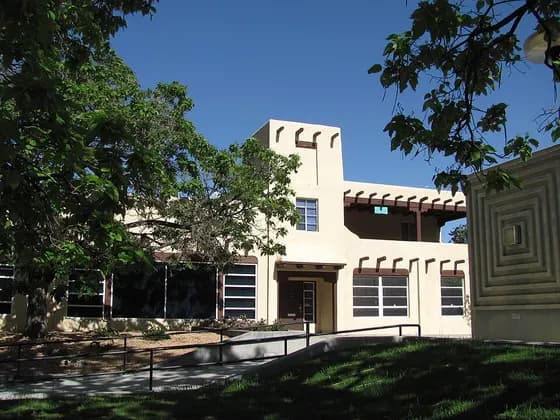
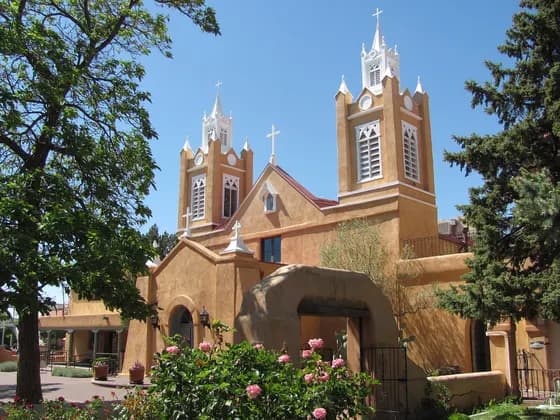
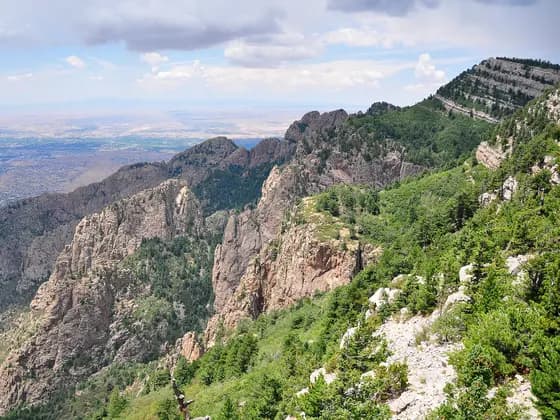
Photo: Kenneth C. Zirkel · CC BY 4.0 · cropped
Photo: John Phelan · CC BY 3.0 · Photo: John Phelan · CC BY 3.0 · Photo: Kimberly Vardeman · CC BY 2.0
The University of New Mexico School of Medicine MD program at a glance (2027 entry)
The University of New Mexico School of Medicine (UNM SOM) awards the Doctor of Medicine (MD) after a four-year program in Albuquerque. It has three phases: a 23-month preclinical phase, a 12-month phase of clerkships (the core clinical rotations) and a final 12 months of advanced rotations and electives. The Liaison Committee on Medical Education (LCME), which accredits MD programs in the United States, first accredited the program in 1964 and lists it as fully accredited, with its next survey in 2033-34.
Phase I is the pre-clerkship, or preclinical, phase. It teaches the body one system at a time in blocks, mostly through active learning rather than lecture, and is graded pass/fail. Two longitudinal courses run beside the blocks: Doctoring, for communication and examination skills, and Clinical Reasoning, where small groups work through cases. Near the end comes dedicated study for Step 1 of the United States Medical Licensing Examination (USMLE), the exam series used for medical licensure in the United States.
New Mexico runs through the program. New Mexico Health is one of the seven competencies every graduate must meet. You begin with a one-week Health of New Mexico course and spend six weeks after year 1 in a rural community on the Practical Immersion Experience (PIE). In year 4, a rotation called Medicine in New Mexico returns you to community practice.
Patient contact starts in year 1. Doctoring has you practice with standardized patients, people trained to portray patients, and Continuity Clinic links you to a physician's practice in years 1 and 2. Phase II begins in early June at the end of year 2 with the clerkships at UNM Hospital, the Raymond G. Murphy VA Medical Center and other sites.
The final year brings a sub-internship, sometimes called an acting internship: a month in which you build the skills to manage hospital patients. It also includes intensive care, ambulatory (outpatient) care, Medicine in New Mexico and four electives. Every student completes a mentored scholarly project, and some add a PhD or a Master of Public Health (MPH).
| Degree | MD (Doctor of Medicine) |
|---|---|
| Program length | 4 years: Phase I 23 months, Phases II and III 12 months each |
| Class size | 103 students entered in 2025 (UNM Health Sciences data book) |
| Main campus | Albuquerque, New Mexico; UNM Hospital is the primary teaching hospital |
| Teaching style | Organ-system blocks, mostly active learning, at most 3 lecture hours weekly |
| Anatomy | Dissection labs and guided prosections (pre-dissected specimens) in the 9-week Clinical Morphology block |
| First patient contact | Year 1, through Doctoring and Continuity Clinic |
| Rural experience | PIE: six weeks in a rural community with a local doctor, after year 1 |
| Clerkships begin | Early June at the end of year 2 |
| Step 1 timing | By early or mid-May of year 2; about May 2029 for 2027 entrants (projected) |
| Grading | Phase I pass/fail; clerkships Outstanding, Good, Satisfactory or Fail |
| Dual degrees | MD/PhD and MD/MPH |
What makes the University of New Mexico School of Medicine MD program different
Six weeks living and working in rural New Mexico
The Practical Immersion Experience (PIE) is a six-week preceptorship, a clinical rotation in which a practicing physician teaches you one to one. In the summer after year 1 you live in a rural New Mexico community and see patients with a local doctor who mentors you. You put year 1 science and skills to work on real patients, and see what a rural doctor's working life is like.
New Mexico's health is a required competency
Alongside six competencies such as medical knowledge and patient care, the school sets a seventh, New Mexico Health. By graduation you are expected to explain how social conditions and wider systems common in New Mexico make people ill or keep them ill. You should also be able to treat and speak up for patients facing unfair barriers to health, including pointing them to local services that can help.
One faculty mentor and house for all four years
Learning communities group students with faculty mentors for advice and support. At UNM each class has four Academies of five Houses, and each House is one faculty mentor, the House Head, with six to eight randomly assigned students. Your mentor is one of your year 1 Doctoring preceptors and stays with you to graduation. Houses meet monthly, and you meet your mentor one to one at least twice a semester.
Time in a specialty you choose during clerkships
The Specialty Exploration Experience (SEE) gives you clinical time in a field outside the core clerkships during Phase II. In the 2023-24 handbook, the newest posted, that meant two two-week stints added to the four-week psychiatry and neurology clerkships. You recruited your own UNM preceptors and worked 20 clinic hours a week, aiming to settle on a specialty and meet a possible letter writer.
An optional program for underserved care
The Rural and Urban Underserved Program (RUUP), running since 2015, is open to any UNM medical student by application in late spring. It adds no requirements and does not replace the common curriculum. Instead it groups you with like-minded students for key parts of the curriculum, with selected clinical training sites in underserved communities, seminars, scholarly projects and mentoring from faculty who practice there.
How University of New Mexico School of Medicine teaches medicine
Phase I is built from organ-system blocks, each pairing how the body normally works with the diseases that disrupt it. In the Cardiovascular, Pulmonary, Renal block, for example, the physiology, pharmacology and pathology of the heart, lungs and kidneys are taught together. School policy calls for basic science and clinical faculty to design and teach blocks together where appropriate, and for each topic to show its clinical use. The Class of 2027 handbook describes pharmacology and pathology as threads running through the blocks.
The approach is active and self-directed. You prepare before class with independent learning modules, then apply that work in class through team-based learning, laboratories, peer instruction and case discussions. The Class of 2027 handbook required attendance at team-based learning, labs, small groups, sessions with real or standardized patients and Learning Communities, and strongly encouraged it at the other active sessions.
Clinical skills and reasoning are taught in longitudinal courses that track the blocks. Doctoring runs all four years, from first interviews in year 1 to advanced communication in Phase II and Comprehensive Ambulatory Care in Phase III. Clinical Reasoning runs as three consecutive courses from the fall of year 1 to the fall of year 2. The school says it builds clinical reasoning through a problem-based approach.
In Phase II, teaching moves to the wards and clinics under faculty and resident supervision. Clerkship teaching sessions use active learning, with no more than ten hours of traditional lecture a week, averaged across the clerkship.
The ways you will learn
| Team-based learning | In team-based learning you prepare beforehand, then work through clinical problems in class with a team, and teammates rate your contribution in a peer evaluation you must pass. |
|---|---|
| Independent learning modules | Much of the content arrives before class as recorded videos, faculty notes, readings and problem sets, some with practice questions. School policy caps this pre-work at 12 hours a week for the blocks, 2 hours for Doctoring and 6 hours for Clinical Reasoning. |
| Clinical Reasoning groups | Small groups work through cases tied to the current block while faculty model how a clinician reasons toward a diagnosis. The course also gives structure, guidance and assessment for self-directed learning, finding information and solving medical problems. |
| Laboratories | Dissection laboratories anchor Clinical Morphology, and the Class of 2027 handbook also lists neuroanatomy and pathology labs, small-group sessions in which students work together and teach each other. |
| Doctoring and standardized patients | Doctoring small groups teach interviewing, examination and presenting a patient aloud and in writing. Standardized patients, trained to portray a case the same way each time, play the patients, score your performance and give feedback. |
A typical week on the University of New Mexico School of Medicine program
School policy shapes a Phase I week. Blocks and longitudinal courses fill no more than 21 scheduled hours, not counting Learning Communities and exams, and at least three half-days stay unscheduled. A block week has 13 to 16 hours of active learning and up to 3 hours of lecture. In a Clinical Reasoning week, active learning drops to 9 to 12 hours to make room for 4 hours of Clinical Reasoning.
Doctoring, including Continuity Clinic, averages 5 hours a week, and pre-class work comes on top. In the Class of 2027 handbook, block quizzes fell on Monday mornings, and most Learning Communities sessions are on Tuesday afternoons.
Clerkship weeks are longer. The 2023-24 Phase II handbook capped work at 80 hours a week, with one day off in seven or four days off across four weeks. None of its clerkships had overnight call, but some had evening or night shifts.
In that handbook, internal medicine teams were on call every other day at UNM Hospital and every fourth day at the VA, but students had to leave by 10 pm. Pediatrics could assign up to five night-team shifts, which ran from noon to midnight, and psychiatry required two evening or weekend shifts in the psychiatric emergency service. Obstetrics and gynecology gave each student a week of night float, working 6 pm to 7 am on labor and delivery.
How anatomy is taught at University of New Mexico School of Medicine
Anatomy is taught mainly in Clinical Morphology, a nine-week block at the start of year 1 (August to early October in the Class of 2027 calendar). It covers normal human anatomy, histology, embryology and imaging as they apply to clinical practice. Teaching mixes large- and small-group interactive sessions with dissection laboratories, where students dissect donated bodies. The 2026-27 university catalog adds guided prosections, specimens dissected in advance to show particular structures.
The bodies come through UNM's Body Donation Program. It says donated bodies are used to teach anatomy to students in UNM's professional health programs, and it calls dissection a critical part of medical student education. Anatomy returns in later blocks: the nervous system block includes neuroanatomy, and the reproduction and endocrinology block covers reproductive anatomy.
When you first meet patients at University of New Mexico School of Medicine
Doctoring 1A, in the fall of year 1, teaches how clinicians build a relationship with a patient, take a history, examine, list problems and present findings. You practice on standardized patients first, so you try these skills in a safe, supervised setting before you see patients in a clinic.
In the spring, Doctoring 1B moves you into clinical roles. The 2026-27 university catalog describes it as an introduction to a primary care clinic and a community health center, where you observe and practice patient evaluations with a primary care physician as mentor. Continuity Clinic 1 and 2 pair you with physicians who have long-term relationships with their patients. In the Class of 2027 calendar, it ran from April of year 1 to late March of year 2.
PIE follows year 1, from July to mid-August in the newest calendars. In year 2, Doctoring 2A teaches focused gastrointestinal and neurological histories and examinations alongside those blocks, and Doctoring 2B adds clinical ethics while you consolidate your skills. A Transitions block then prepares you for the clerkships.
The University of New Mexico School of Medicine curriculum, year by year
- Year 1
Health of New Mexico, then the first organ blocks
Year 1 opens in July with orientation and Health of New Mexico, then moves from foundation blocks into the first organ systems. The order below follows the Class of 2027 calendar for 2023-24, the newest posted, and block lengths come from the current course pages. Doctoring 1A and 1B, Clinical Reasoning 1 and 2 and Learning Communities run alongside.
- Health of New Mexico (1 week): the school's role in the state, how clinicians manage individual and population health, New Mexico's social determinants of health, and partners outside the school who improve health there.
- Clinical Morphology (9 weeks): anatomy, histology, embryology and imaging, with dissection laboratories.
- Molecular Foundations of Medicine (5 weeks), on cell and molecular biology, genetics and basic pharmacology, then Immune Response to Microbes (5 weeks; Microbiology and Immunology in that calendar), on immunology, bacteriology and virology.
- Concepts in Pathology and Tissue Morphology (5 weeks), on pathology, histopathology and neoplasia, then musculoskeletal disease and dermatology, followed by Quantitative Medicine (2 weeks), on epidemiology, study design and biostatistics.
- Hematology (4 weeks), then Cardiovascular, Pulmonary, Renal (11 weeks), which ran from April to mid-June in the 2023-24 calendar.
- WISE weeks (Wellness, Integration, Step 1 preparation and Education on learning) open and close the year, with time for wellness, linking content across blocks, test-taking strategy and your own learning plan.
- Year 2
Rural immersion, more organ systems and Step 1
Year 2 begins in July with PIE, then returns to the remaining organ blocks. Phase I ends in spring with a WISE week, a dedicated Step 1 study block and Transitions. As in year 1, the order follows the newest posted calendars.
- Practical Immersion Experience (6 weeks): a rural, community-based preceptorship.
- Gastrointestinal, Nutrition, Metabolism (6 weeks), then Nervous Systems, Special Senses, Behavioral Health (10 weeks), which teaches neuroscience in the setting of neurological and psychiatric disease.
- Human Sexuality, Reproduction, Endocrinology (5 weeks), including pregnancy and the psychosocial, legal and ethical sides of gender, sexuality and reproduction.
- Infectious Disease (5 weeks), a capstone block that applies microbiology, pathology and pharmacology to infection in every organ system.
- Doctoring 2A and 2B, Clinical Reasoning 3 in the fall, and Continuity Clinic.
- A Step 1 study block from late March, ending with the school's deadline to sit the exam (May 9 to 12 in the three newest calendars), then the Transitions block.
- Year 3
Phase II: seven core clerkships
Phase II is a 12-month clerkship phase that starts in early June. You rotate through seven required clerkships, six weeks each in the 2023-24 handbook apart from four-week neurology and psychiatry, while Doctoring continues. Phase II ends in May, and in 2023-24 about five weeks of study for the USMLE's Step 2 Clinical Knowledge (CK) exam followed.
- Family medicine (6 weeks): mostly outpatient care in clinics around New Mexico, with teaching on health policy and advocacy.
- Internal medicine, caring for hospitalized adults, and surgery, in clinics, the emergency room, the wards and the operating room.
- Pediatrics, and obstetrics and gynecology, which covers labor and delivery, ambulatory care, gynecologic surgery and inpatient services.
- Neurology (4 weeks): two weeks on an inpatient service you choose (general neurology, stroke or neuro-ICU), a week of pediatric neurology consults and a week of adult consults, plus a simulated lumbar puncture.
- Psychiatry (4 weeks): care for people with severe mental illness, including in the 24-hour psychiatric emergency service, with training in buprenorphine, a medicine for opioid use disorder.
- The Specialty Exploration Experience and Doctoring 3, which in 2023-24 ran workshops with standardized patients on informed consent, breaking bad news, opioid treatment plans and goals-of-care conversations.
- Three OSCEs (observed structured clinical exams): timed stations with standardized patients. In 2023-24 each had four or five 15-minute stations. You were scored on history and examination, communication and note writing, and had to meet the standard in all three to enter Phase III.
- Year 4
Phase III: sub-internship, intensive care and electives
Phase III fills the final 12 months, in four-week blocks from late June to late April. You complete four required rotations and four electives, finish your scholarly project and apply for residency, the specialty training that follows medical school.
- Sub-Internship/Inpatient Month (4 weeks): full histories and physicals, medication reconciliation, discharge planning, teamwork and coordinating safe transitions with primary care providers.
- Intensive care (4 weeks), in one of several units, including the neonatal, pediatric, medical, trauma/surgical and neurosciences ICUs.
- Comprehensive Ambulatory Care (Doctoring 4), four weeks in 2023-24: outpatient clinical work with seminars on health care delivery and systems. It adds a standardized patient workshop, research and a capstone on a public health issue that poses an ethical dilemma.
- Medicine in New Mexico (4 weeks): community-based practice with at least 96 clinical hours and 64 hours of independent learning, aimed at your specialty area, high-value care and the structural determinants of health. In 2023-24 you also chose a learning track in population health, research or health care systems.
- Four electives of four weeks each.
How you are assessed at University of New Mexico School of Medicine
Phase I is graded Credit or No Credit, the school's pass/fail. Under the 2024 promotion policy, Credit needs at least 75% on a block's knowledge-based portion and 70% on its peer evaluation; some courses grant Credit for attendance, participation and assignments. The school's 2025 grading summary for residency programs says no class rank is set in Phase I. It adds that scores are tracked for Phase I Honors, which needs an average of 90% or more, Step 1 taken by the deadline and good professionalism standing.
Every block has weekly low-stakes quizzes that count toward the grade, practice assessments that do not, and a comprehensive final exam built from NBME questions whenever possible. The NBME, the National Board of Medical Examiners, co-sponsors the USMLE and writes subject exams used by medical schools. In the Class of 2027 handbook, each quiz had about 40 Step 1-style questions and was worth 5% of the block grade. If you fall short you get one retest, and a passed retest is capped at 75%.
Graded Phase II and III rotations use a four-point scale: Outstanding (4.0), Good (3.0), Satisfactory (2.0) or Fail. To progress you need Satisfactory or better in every one and a pass in all three Phase II OSCEs, and Phase II grades produce a class rank. Each core clerkship has an NBME subject exam, or shelf exam, which you must pass; a score at or below the 5th percentile means a retake. In the 2023-24 handbook, clerkship grades combined clinical evaluations (50%), the shelf exam (15%) and clerkship-specific work (35%).
Step 1 has been reported only as pass or fail for exams taken on or after January 26, 2022. You sit it by the school's deadline at the end of the year 2 study block, and under the promotion policy you must pass it, within three attempts, to continue in the clerkships. The same grading summary says you may test up to eight weeks after the deadline without delaying graduation, taking the one or two clerkships you miss in year 4. You must also pass Step 2 CK before graduation.
In August 2026 the USMLE program announced a move to designated testing dates from January 2029, with Step exams offered less often each year. Its June 2026 announcement had named 2028.
The school's newest posted calendars, for the Classes of 2025 to 2027, put the Step 1 deadline in early or mid-May of year 2. Step 2 CK study came after Phase II ended in May of year 3. Projecting from them, on the current schedule, a student entering in 2027 would have a Step 1 deadline around May 2029, a few months after the switch. Their Step 2 CK study window would fall around mid-2030.
University of New Mexico School of Medicine clinical rotations: where you will actually train
UNM Health describes UNM Hospital in Albuquerque as the primary teaching hospital for the School of Medicine. UNM Health calls itself New Mexico's only academic medical center and also runs Sandoval Regional Medical Center in Rio Rancho and more than 30 clinics around the state. UNM Hospital is a Level I trauma center and includes UNM Children's Hospital. Its adult Critical Care Tower has 192 beds, 96 of them for intensive care, and was designed to give medical students and other learners hands-on experience.
The Raymond G. Murphy VA Medical Center in Albuquerque lists UNM as its primary academic affiliation, and in the 2023-24 handbook the internal medicine clerkship ran either at UNM Hospital or at the VA. The psychiatry department lists rotations on the University Psychiatric Center's adult and geriatric units, at the Children's Psychiatric Center, on the VA's acute adult unit and in consultation work at Sandoval Regional Medical Center.
Time outside Albuquerque is built in. You spend six weeks in a rural community on PIE, and the family medicine department lists rural and Indian Health Service site options for its clerkship. In the 2023-24 handbook, a rural family medicine rotation came with paid housing and one paid round trip, and students could be asked to live outside Albuquerque for the clerkship if its needs required.
RUUP students get selected clinical training sites in medically underserved communities, and the school notes that 32 of New Mexico's 33 counties are considered medically underserved. In the 2023-24 handbook, RUUP options sat inside clerkships, such as general surgery at a rural hospital. For Medicine in New Mexico in year 4, students in 2023-24 joined a doctor's practice, usually outside the UNM system, and the Phase III handbook called a rural site ideal but not required.
In 2023-24, family medicine also used UNM family practice clinics, Presbyterian Medical Group clinics, First Choice Community Health in central New Mexico and the 377th Medical Group at Kirtland Air Force Base.
- UNM Hospital, including UNM Children's Hospital and the Critical Care Tower
- University Psychiatric Center
- Children's Psychiatric Center
- Raymond G. Murphy VA Medical Center
A 65-bed campus of UNM Hospital serving Sandoval County, Native American pueblos, tribal lands and communities in northwest New Mexico and Arizona. The 2023-24 handbook listed general surgery here.
- UNM Sandoval Regional Medical Center
Named in the 2023-24 handbook: full-scope obstetrics and gynecology in the first five, general surgery in Alamogordo and Clovis, and family medicine at La Familia in Santa Fe. Pediatrics listed an Indian Health Service site in Gallup for RUUP students.
- Gallup
- Shiprock
- Taos
- Española
- Ruidoso
- Alamogordo
- Clovis
- Santa Fe
Electives, selectives and away rotations at University of New Mexico School of Medicine
Electives are concentrated in Phase III. You take four, each lasting four weeks. The school says more than 17 departments offer over 50 elective options, clinical and non-clinical, meant to strengthen your residency application, and that the sub-internship has more than 20 options across nine departments. Away rotations, electives taken at other institutions, also earn credit, and the 2026-27 university catalog has a course for recording approved fourth-year rotations elsewhere, including international ones.
In the 2023-24 Phase III handbook, you planned the year with a Match Advisor, a clinician in your chosen field. You were advised to schedule a sub-internship or elective in that specialty by September, so you could ask for a letter of recommendation. Courses outside the catalog needed approval in advance, some away rotations needed a petition to the Committee on Student Promotion and Evaluation, and a research elective could count toward elective credit.
Dual degrees and research years at University of New Mexico School of Medicine
Every student completes a Mentored Scholarly Project, a graduation requirement. With a UNM faculty mentor, you frame a question, review the literature, plan methods and analysis, collect and analyze data, and present your results publicly before graduation. The Class of 2027 handbook says choosing a topic, finding a mentor and proposing the project begin in Phase I. In the 2023-24 Phase III handbook, the final product was due March 1 of the last year, as a paper, a paper for publication, or an oral or poster presentation.
The MD/PhD begins with Phase I, except that you spend the summer after year 1 on laboratory research rotations instead of PIE. Its handbook, revised in March 2025, expects at least two rotations by the end of that summer and Step 1 in May of year 2. The 2024 promotion policy says you must pass Step 1 before the PhD. Three to five PhD years follow, then the last two years of medical school.
The handbook puts the whole program at seven to nine years, and the program's director gives an average of 7.5 years. Each degree is usually awarded in the semester you finish it. You choose from over 100 research laboratories in six divisions, from neurosciences to toxicology and pharmaceutical sciences, and five places in each entering class are reserved for MD/PhD applicants.
The MD/MPH adds a Master of Public Health through UNM's College of Population Health. The college says you take the first three years of medical school, then a year of MPH courses before your fourth year, and finish both degrees in that final year. That makes the five years of integrated learning the university catalog describes, aimed at reducing health disparities in New Mexico and strengthening doctors' advocacy and leadership in health policy.
You apply to both programs and must be admitted to each. You must pass Step 1 before starting the MPH, and the catalog lists a four-week MD/MPH practicum with a public health professional, 160 hours in total.
Facilities and support at University of New Mexico School of Medicine
Where you will learn
The Standardized Patient Program, started in 1979, trains people from the Albuquerque community to portray patients for teaching and testing, and its pool now has 100 standardized patients aged 21 to 87. Encounters are recorded, and the Assessment and Learning office schedules times for you to review your recordings and keeps test files and keys for you to study.
The school's BATCAVE healthcare simulation program has two classrooms, three adult simulation labs, a pediatric simulation lab, three infant simulation labs and a birthing simulator lab. It runs life support classes and simulation-based teaching and assessment, and the American College of Surgeons accredits it as a Level 1 education institute.
Day to day, Fitz Hall is the base for medical students. It houses the Office of Medical Student Affairs and lockers for first- and second-year students. Its basement lounge has a microwave, refrigerator, ping pong and foosball, and the Nook offers free coffee and snacks funded by the alumni association. The Health Sciences Center gym on North Campus is open around the clock with your badge.
UNM Health Sciences' January 2026 data book counts 103 students entering the MD in 2025, the usual class size in recent years. UNM plans a new School of Medicine building to replace Fitz Hall, and in January 2026 its planners gave fall 2030 as the planned move-in date, depending on funding. In October 2026 UNM said the building could let the school grow to as many as 200 students a year. If that timetable holds, it would open during a 2027 entrant's final year.
Support while you study
In Learning Communities, House meetings mix professional identity and clinical skills work with advising, combined meetings link your House with those in other classes, and there are wellness activities with your whole class. In the 2023-24 clerkship year, House meetings were used to debrief clinical experiences, prepare for OSCEs and think through specialty choice. The Learning Communities logo is the Zia symbol, used with permission from Zia Pueblo, and each class's four Academies are named Seasons, Earth, Life and Time.
The Office of Medical Student Affairs assigns you an advisor for all of medical school, who helps with schedule planning, policies, leave requests and the residency application. Its staff list names a career advisor for each of the four Academies.
The Applied Cognition in the Medical Sciences Program uses cognitive science to help you learn. Its learning specialists coach study habits, test-taking, test anxiety, time management, and clinical and communication skills, and it runs workshops for Step 1 and Step 2. Free peer tutoring, usually two sessions of two to three hours a week, covers the first-year curriculum and, on a limited basis, the second. For dedicated Step 1 study, the school provides resources including UWorld, Pathoma and some NBME self-assessments.
The Office of Professional Well-Being offers workshops on time management, communication, sleep, financial wellness and resilience, along with confidential mental health resources for learners and faculty.
Is the University of New Mexico School of Medicine program right for you?
This program may suit you if
- You would like six weeks of living and working in a rural New Mexico community after your first year.
- You learn well by preparing before class and working through problems with a team, rather than sitting through long lectures.
- You want one faculty mentor and a small house of classmates to stay with you from your first year to graduation.
- You want training shaped around New Mexico's health needs, from Health of New Mexico in your first weeks to Medicine in New Mexico in year 4.
- You want to try a specialty of your choice during the clerkship year before committing to it.
Things to think about
- Phase I depends on your own preparation: block pre-work can run to 12 hours a week, and team-based learning sessions and labs expect you to arrive ready.
- Expect time away from Albuquerque: PIE means six weeks living in a rural community, and clerkships can use sites around the state.
- Clerkship grades are tiered and feed a Phase II class rank, and each core clerkship includes a shelf exam you must pass.
- The Step 1 deadline falls in spring of year 2. On the current schedule, a 2027 entrant's deadline would come a few months after the USMLE's switch to designated testing dates in January 2029.
University of New Mexico School of Medicine MD program — frequently asked questions
Applying to University of New Mexico School of Medicine?
How to get into University of New Mexico School of Medicine
Prerequisites, MCAT, AMCAS personal statement, secondaries and interview, step by step.
Open the guide →University of New Mexico School of Medicine admissions profile
MCAT and GPA profile, acceptance rate, interview format and key dates.
See the profile →Compare University of New Mexico School of Medicine with other schools
Put the teaching style, anatomy teaching and clinical sites next to another school.
Open the comparison →Prepare for the University of New Mexico School of Medicine interview
Format breakdown, school-specific sample questions and prep tips from tutors who interviewed here.
Read the guide →Where this University of New Mexico School of Medicine program guide came from
This guide was written from 59 official sources — University of New Mexico School of Medicine's own program pages and curriculum documents, plus the accreditor and the hospitals and health systems the school trains students in where they publish detail — read on 2026-10-31, then checked claim by claim against those sources.
- MD Program, UNM School of Medicine
- MD Curriculum: curriculum overview and the three phases, UNM School of Medicine
- Phase I Course Descriptions, UNM School of Medicine
- Phase II Course Descriptions, UNM School of Medicine
- Phase III Course Descriptions, UNM School of Medicine
- Guiding Principles and Policies for the MD curriculum, UNM School of Medicine
- Competencies and Learning Objectives, UNM School of Medicine
- UNM 2026-2027 Catalog: Doctor of Medicine and Master of Public Health (MD/MPH)
- UNM 2026-2027 Catalog: CLNS 502 Clinical Morphology
- UNM 2026-2027 Catalog: CLNS 552 Doctoring I-B
- UNM 2026-2027 Catalog: CLNS 553 Doctoring 2A
- UNM 2026-2027 Catalog: CLNS 925 MD/MPH Practicum
- UNM 2026-2027 Catalog: CLNS 950 Topics, for approved fourth-year rotations elsewhere
- Policy and Procedure on Student Promotion and Awarding the MD Degree, effective July 2024
- Medical Student Performance Evaluation (MSPE) Medical School Information Page, UNM School of Medicine (Class of 2026 cycle)
- Assessment and Learning, UNM School of Medicine
- Standardized Patient Program, UNM School of Medicine
- Phase I Medical Student Handbook, Class of 2027 (July 2023)
- Class of 2027 Curriculum Map, UNM School of Medicine
- Class of 2026 Phase I Calendar, UNM School of Medicine
- Class of 2025 Phase I Calendar, UNM School of Medicine
- Class of 2025 Phase II Student Handbook, 2023-24
- Phase II and Phase III block schedules, 2023-24
- Class of 2024 Phase III Student Handbook, 2023-24
- Class of 2024 Phase III Course Catalog, 2023-2024, UNM School of Medicine
- Visiting Students and Phase III block dates, UNM School of Medicine
- Learning Communities, UNM School of Medicine
- Office of Medical Student Affairs, UNM School of Medicine
- Career Advisement, UNM School of Medicine
- Applied Cognition in the Medical Sciences Program, UNM School of Medicine
- Office of Professional Well-Being, UNM School of Medicine
- Lobo MD Quick Guide: Academic Help, UNM School of Medicine
- Preceptorship Programs, UNM School of Medicine
- Rural and Urban Underserved Program (RUUP), UNM School of Medicine
- Mentored Scholarly Project, UNM School of Medicine
- Family and Community Medicine Clerkship, UNM Department of Family and Community Medicine
- Neurology Clerkship, UNM Department of Neurology
- Third-Year Psychiatry Clerkship, UNM Department of Psychiatry and Behavioral Sciences
- BATCAVE Healthcare Simulation Program, UNM School of Medicine
- Combined MD and PhD Program, UNM School of Medicine
- Combined MD and PhD Program Handbook, revised March 2025, UNM School of Medicine
- Director's Message, Combined MD/PhD Program, UNM School of Medicine
- Yearly Mileposts, Combined MD/PhD Program, UNM School of Medicine
- How to Apply: combined MD/PhD and MD/MPH programs, UNM School of Medicine
- Dual Degree in MD/MPH, UNM College of Population Health
- UNM Health Sciences Databook 2025-2026: School of Medicine applicants and matriculants by year (January 2026)
- Planning Underway to Construct a New Home for UNM School of Medicine, UNM HSC Newsroom, January 23, 2026
- GO Bond 3 would invest in New Mexico's future through higher education, UNM Newsroom, October 8, 2026
- Student Life, UNM School of Medicine
- Body Donation Program, UNM Health
- About UNM Health
- UNM Hospital, UNM Health
- UNM Hospital Critical Care Tower, UNM Health
- UNM Sandoval Regional Medical Center, UNM Health
- About VA New Mexico Health Care and the Raymond G. Murphy VA Medical Center
- LCME Directory of Accredited MD Programs
- Updated Timeline for USMLE Designated Testing Dates: Transition Will Take Place in January 2029
- USMLE Designated Testing Dates Information Hub
- USMLE Step 1 Transition to Pass/Fail Only Score Reporting
Curricula are restructured between cycles. Anything here that decides your application — how anatomy is taught, a clinical campus assignment, a required research year — should be confirmed against the official page for your entry year.
Applying to University of New Mexico School of Medicine?
We help US applicants with MCAT strategy, the AMCAS personal statement, secondary essays and interview prep — everything you need for a competitive University of New Mexico School of Medicine application.