
Dental schools in Scotland
Dundee, Glasgow and Aberdeen compared
Scotland has three dental schools. Dundee and Glasgow run five-year BDS degrees for school leavers, and Aberdeen runs a four-year BDS for graduates only. The Scottish Government recommends 172 first-year places for 2026-27, 27 of them international. If you live in Scotland and it is your first degree, SAAS pays your £1,820 fee, and students with household income under £34,000 can claim £4,000 a year in return for NHS Scotland work.
- Dental schools
- 3: Dundee, Glasgow, Aberdeen
- First-year places 2026-27
- 172, including 27 international
- 2027 entry deadline
- 15 Oct 2026, 18:00 UK time
- Dental Student Support Grant
- £4,000 a year, NHS tie-in
- Rest-of-UK fee 2027-28
- Up to £10,050 a year


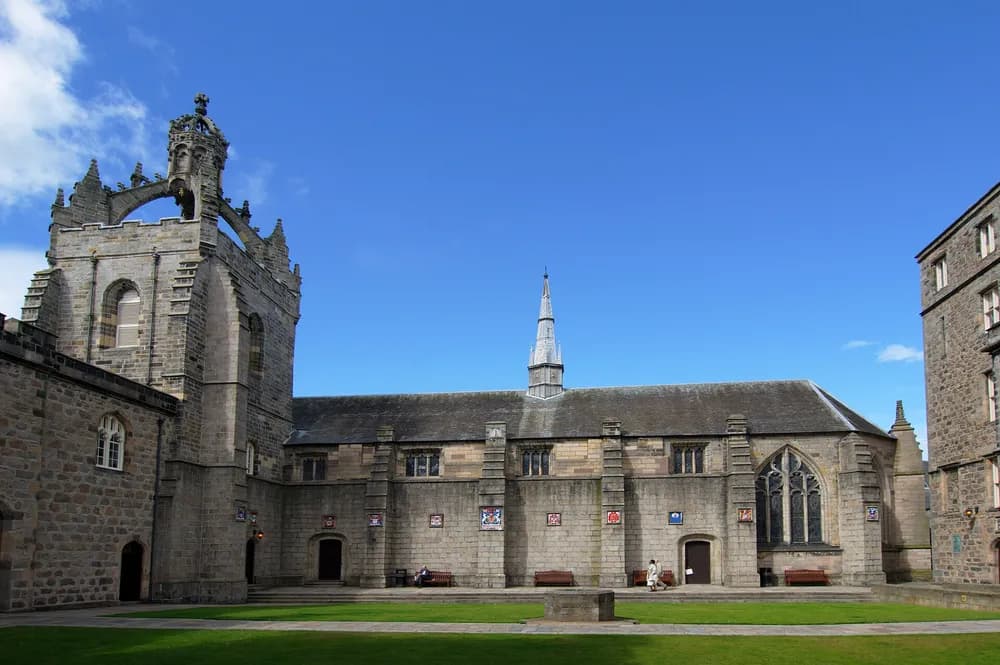
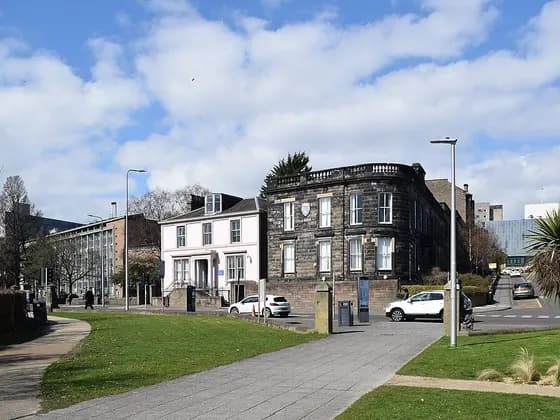
Photo: Ydam / Wikimedia Commons · CC BY-SA 3.0 · cropped
Photo: Clem_nat · CC BY-SA 4.0 · Photo: Mussklprozz · CC BY-SA 3.0 · Photo: Bill Harrison · CC BY-SA 2.0
Dental schools in Scotland for 2027 entry: the short answer
Scotland has three dental schools. Dundee and Glasgow each run a five-year BDS (Bachelor of Dental Surgery, the degree that leads to registration with the General Dental Council, or GDC) for school leavers. Aberdeen's Institute of Dentistry runs a four-year BDS for graduates only, which it describes as the only graduate-entry, four-year BDS in Scotland.
Edinburgh and St Andrews do not teach dentistry: the Scottish Government's intake guidance for 2026-27 covers Aberdeen, Dundee and Glasgow only.
Dentistry is a controlled subject. Each year the Chief Dental Officer recommends intakes and the Scottish Funding Council (SFC) sets them, including how many places go to international students.
| Dental schools | Dundee (BDS, 5 years), Glasgow (BDS, 5 years), Aberdeen (graduate-entry BDS, 4 years) |
|---|---|
| UCAS deadline | 15 October 2026 at 18:00 UK time, with no more than four dentistry choices |
| Admissions test | UCAT at all three schools, including Aberdeen's graduate course |
| First-year places, 2026-27 | 172: 145 for Scottish, rest-of-UK and Irish students and 27 for international students |
| Tuition for Scottish students | £1,820 a year, paid by SAAS if it is your first degree and you apply each year |
| Dental Student Support Grant | £4,000 a year if your household income is under £34,000, in return for working in NHS Scotland |
| Interviews | December 2026 to March 2027, depending on the school |
Dundee, Glasgow and Aberdeen: what sets each dental school apart
Each card links to that school's full guide. Below them, the facts that make each course different for 2027 entry, from the schools' own pages.
Dundee: its own dental hospital
A five-year BDS (A200). You start taking patients' histories in the dental hospital early in the course, after a simulated first module. Dundee sets no minimum UCAT score and selects for interview on your academic record, including predicted grades, and UCAT. Its 2027-entry interview has seven stations.
Glasgow: a city-centre dental hospital
A five-year BDS (A200) at Glasgow Dental Hospital and School in the city centre. Applicants who meet the published criteria are ranked on UCAT and around 200 are interviewed. In Year 5 you spend half your time in outreach centres at Public Dental Service locations.
Aberdeen: graduates only
A four-year BDS (A201) for graduates with a first or 2:1 in a medical or health science. Your degree result (60%) and UCAT (40%) decide who is interviewed; after that, offers rest on the interview alone. The Institute of Dentistry has about 80 BDS students in total.
Scotland's dental schools compared (2027 entry)
| School | Course | Who can apply | Test | Interview |
|---|---|---|---|---|
| Dundee | BDS (A200), 5 years | School leavers and graduates | UCAT, no minimum score | Seven stations, about 60 minutes |
| Glasgow | BDS (A200), 5 years | School leavers and graduates | UCAT | Interview of non-cognitive skills; details sent to invited applicants |
| Aberdeen | BDS (A201), 4 years, graduate entry | Graduates with a first or 2:1 in a medical or health science | UCAT | MMI of six-minute stations, about 90 minutes |
Glasgow does not consider applications for deferred entry to dentistry. Aberdeen considers deferral if you have a clear plan for the year.
Highers, A-levels, degrees and the UCAT for dentistry in Scotland
| Requirement | Dundee | Glasgow |
|---|---|---|
| Standard Highers | AAAAB in S5 at one sitting, including Chemistry and Biology | AAAAB in S5, with Biology and Chemistry at A, plus Maths or Physics |
| S6 | BBB at Advanced Higher or Higher, including Biology or Chemistry at Advanced Higher | BB at Advanced Higher, with Advanced Higher Biology and Chemistry among three S6 subjects |
| Widening-access offer | AAABB with an A in Higher Chemistry or Biology, then BB in S6 | AAABB plus B at Advanced Higher, after Reach (AABB in S5 minimum) |
| National 5 | English and Mathematics at B | English at B |
S5 is the year most pupils sit Highers; Advanced Highers are taken in S6. Dundee says candidates who finish S6 without its sixth-year requirements are unlikely to be considered.
Glasgow asks A-level applicants for AAA, with Chemistry and Biology at A. You also need six GCSEs at A or 7, including Maths or Physics and English, though English can be B or 6 if all the others are A or 7. For Dundee's A-level offer, choose A-levels in the entry requirements tool on its course page.
Aberdeen's academic score is based only on your final or predicted degree, not your A-levels or Highers. You need a first or 2:1 in a medical or health-related science, such as biomedical science, anatomy, pharmacy, physiology or dental therapy, sat within the last six years. An MSc does not make up for a 2:2.
| Dundee | Required in the year you apply, with no minimum cut-off. Interview selection is based on your academic record, including predicted grades, and your UCAT score. |
|---|---|
| Glasgow | Applicants who meet the criteria are ranked on UCAT and around 200 are interviewed. The cut-off changes each year, is normally above the national average, and is not released during the cycle. |
| Aberdeen | No cut-off. Scores are ranked in deciles against all Aberdeen applicants and count for 40% of the pre-interview score. Medicine graduates must sit it too. |
How many dental places? Scotland's intake targets and fee groups
For 2026-27 the Chief Dental Officer kept the recommended intake at the 2025-26 level: 145 places for students who pay home fees, rest-of-UK students and students from the Republic of Ireland, plus 27 international places. International students contribute to the Additional Cost of Teaching (Dentistry) through their fees.
There is no separate published cap on rest-of-UK students. Glasgow says it sets its number of offers each year to meet the targets, and Aberdeen says it manages how many students it admits from different parts of the UK to meet them.
| University | Home, rest-of-UK and Irish | International | Total |
|---|---|---|---|
| Aberdeen | 22 | 1 | 23 |
| Dundee | 51 | 11 | 62 |
| Glasgow | 72 | 15 | 87 |
| Total | 145 | 27 | 172 |
Aberdeen says the SFC had still to confirm whether it would have any international places for 2027 entry.
| School and entry year | Scottish or home | Rest of UK | International |
|---|---|---|---|
| Aberdeen, 2026 | 57 applied, 17 started | 178 applied, 5 started | 14 applied, 1 started |
| Glasgow, 2025 | 271 applied, 61 started | 267 applied, 17 started | 85 applied, 8 started |
| Dundee, 2023 | 204 applied, 36 started | 483 applied, 11 started (with Ireland) | 96 applied, 11 started |
From each school's own admissions data. Glasgow labels its home row Home/EU but has counted EU students as international since 2021. These are counts, not entry bars, and they change every year.
Dental interviews in Scotland for 2027 entry
| School | Format | When and where |
|---|---|---|
| Dundee | Seven stations assessing different qualities, each scored by a member of staff who may be helped by a student; about 60 minutes | December to January, in person at the Dental School for UK applicants, with an online option for international applicants |
| Glasgow | An interview designed to assess non-cognitive skills; shortlisted applicants receive the details by email | Late January or early February; you hear in December if you are shortlisted |
| Aberdeen | MMI: six-minute stations, each with one selector, about 90 minutes; qualities scored include manual dexterity | February to March, with a tour of the dental school on the day; offers are made on interview performance alone |
A practice question of ours: tell us about something you have made, fixed or practised with your hands, and how you got better at it.
Glasgow lists manual dexterity among the characteristics it wants, and Aberdeen scores it at interview. Choose a real example, explain how you practised, what went wrong and how you corrected it, then link it to the precise, careful work dentistry involves.
- A specific activity, not a list
- What you changed after a mistake
- Why it matters for treating patients
A practice question of ours: why do you want to work in NHS dentistry in Scotland?
Show you understand the job and the system. The Scottish Government says its grant for dental students aims to address the shortage of NHS dentists in Scotland. Link what you saw on work experience, the dental team, prevention and patients who struggle to get care to the dentist you want to be.
- What you learned on work experience
- Prevention as well as treatment
- Access to care in your own words
Fees and funding for dentistry in Scotland, by where you live
| Your situation | Who pays tuition | Other help |
|---|---|---|
| Live in Scotland, first degree | SAAS pays the £1,820 fee each year, as long as you apply every year | SAAS bursary and loan, plus the Dental Student Support Grant from Year 2 if your household income is under £34,000 |
| BDS as a second degree at Glasgow | The Scottish Government pays up to £1,820 a year for Home, rest-of-UK and EU students | Dental Student Support Grant from Year 2 |
| Aberdeen graduate-entry BDS, Scottish fee status | SAAS does not give tuition support for this course; ask Aberdeen about Scottish Government funding | SAAS living-cost loans and grants, and the Dental Student Support Grant |
| Live in England | Student Finance England in the early years; the NHS Bursary pays a fee contribution from Year 5, or Year 2 of Aberdeen's course | SFE maintenance loan, then NHS Bursary support |
| Live in Wales or Northern Ireland | Tuition fee loan from Student Finance Wales or Student Finance NI | Check their rules for the later years of dentistry |
SAAS says graduate-entry courses such as Aberdeen's BDS may get extra funding from Scottish Government programmes that SAAS does not manage, and advises asking the course provider.
| School | Scottish fee status | Rest of UK |
|---|---|---|
| Dundee | £1,820 (2027 entry, to be confirmed by the Scottish Government) | £10,050 (2027 entry, to be confirmed by the UK Government) |
| Glasgow | £1,820 (2027-28) | £9,790 (2026-27; 2027-28 not yet confirmed) |
| Aberdeen | £1,820 (2026-27) | £9,790 (2026-27) |
Rest-of-UK fees rise each year in line with the UK Government fee cap. International fees: Glasgow lists £60,255 for 2027-28, including the NHS teaching levy, and Aberdeen £50,100 for 2026-27.
| Amount | £4,000 a year towards study costs, for up to four years; you can first claim in Year 1 at Aberdeen and Year 2 at Dundee and Glasgow |
|---|---|
| Who can apply | BDS students at Aberdeen, Dundee or Glasgow with household income under £34,000 who are allowed to live and work in Scotland after graduating; second-degree students can apply |
| The tie-in | One year working for NHS Scotland for each year of grant, with at least 80% of your earnings from NHS Scotland; vocational training in Scotland counts |
| When it starts | Your commitment must begin within 14 months of graduating and run continuously |
| If you do not complete it | You repay some or all of the grant; leaving the course means repaying that year's grant |
| When you cannot claim | If you complete an intercalated degree during the BDS (a year out to study for an extra degree) |
SAAS pays fees only if you apply every year and tick the tuition fee box. From 2027-28 it will not give loans or grants for a second degree or for repeat years beyond your one extra year, but Aberdeen's graduate-entry BDS is exempt, so living-cost loans and grants continue there.
Students from England can apply for the NHS Bursary wherever in the UK they study dentistry. It starts in Year 5 of a five-year BDS, or Year 2 of a four-year graduate-entry course; earlier years are usually funded by Student Finance England. You must apply every year.
SIMD, Reach and contextual offers for dentistry in Scotland
SIMD, the Scottish Index of Multiple Deprivation, ranks small areas of Scotland from most to least deprived. Dundee and Glasgow both make lower offers to applicants who meet their widening-access criteria, which include SIMD postcodes and care experience. Glasgow's adjusted offers are for applicants living in Scotland.
| School | Who qualifies (main criteria) | What changes |
|---|---|---|
| Dundee | Priority factors include a SIMD quintile 1 postcode, free school meals, caring, care experience, estrangement or refugee status | Widening-access offer of AAABB with an A in Higher Chemistry or Biology, then BB in S6; normally interviewed if on course to meet it |
| Glasgow | Scottish residents in SIMD deciles 1 to 4, care experienced, estranged, carers, asylum seekers or refugees | Adjusted offer of AAABB plus B at Advanced Higher, after completing Reach, Glasgow's access programme for dentistry, law, medicine and veterinary medicine |
Dundee needs your evidence within a week of the 15 October deadline; ticking a box on UCAS is not enough on its own.
Clinics and outreach: where Scottish dental students treat patients
Dundee: the dental hospital, then outreach
After a simulated first module you work with patients in Dundee's dental hospital. From Level 3 a large part of your timetable is clinical, and the final module includes outreach sessions. Dundee says it is reviewing the course structure for 2026-27 entry.
Glasgow: hospital clinics and outreach centres
Clinics at Glasgow Dental Hospital and School, outreach paediatric dentistry placements in Year 3, and half of Year 5 in outreach centres at Public Dental Service locations: one residential and one non-residential.
Aberdeen: Foresterhill, Elgin and Stornoway
Patient contact from the second term of Year 1 at the Institute of Dentistry on the Foresterhill campus. Students also spend time in outreach clinics in Elgin (NHS Grampian) and Stornoway (NHS Western Isles).
After graduating you can register with the GDC. Aberdeen explains that most new dentists then spend a year in Foundation Training, also called Vocational Training, in NHS general practice. If you took the Dental Student Support Grant, vocational training in Scotland counts towards your NHS Scotland commitment.
Mistakes that cost applicants a place at Scottish dental schools
Dental schools in Scotland: your questions answered
Where this guide's facts come from
Checked against these sources on 19 October 2026. Rules change between cycles, so confirm anything that decides your application on the official page for your entry year.
Applying to dentistry in Scotland?
Practise the interview your school uses with a tutor, from Dundee's seven stations to Aberdeen's MMI, or check where your grades and UCAT fit with our free dentistry strategy tool.