
The Sheffield Dentistry course
What you actually study, and where you will be
Sheffield's BDS is a 5-year course with an integrated curriculum, with patient treatment from Year 1 and placements in Sheffield, South Yorkshire and the surrounding area (2027 entry). From 2027 entry the five-year BDS moves from nine integrated themes to named modules built on the GDC's Safe Practitioner framework, and students also treat adult patients in a Dental Practice Unit laid out like a traditional dental practice with separate surgeries.
- Degree
- BDS
- Length
- 5 years
- Teaching
- Integrated
- First patients
- Year 1

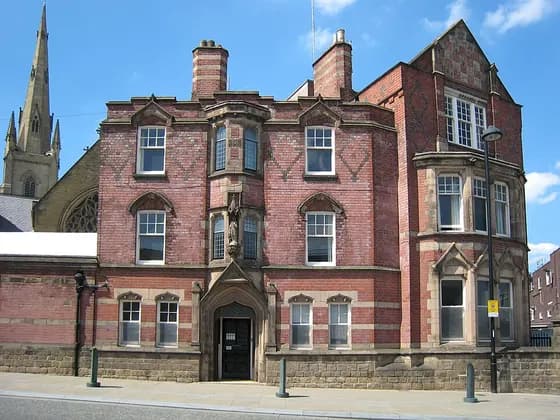

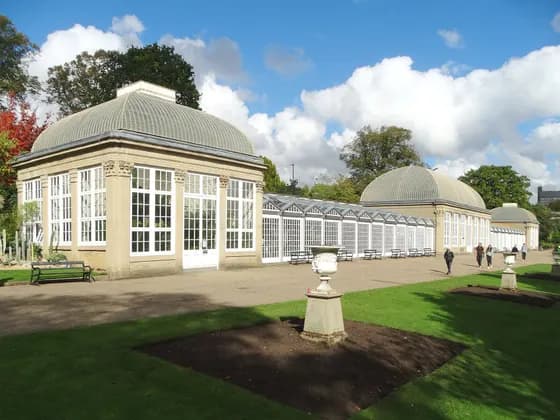
Photo: Chanpeter · CC BY-SA 4.0 · cropped
Photo: Chemical Engineer · CC BY-SA 4.0 · Photo: Nottingham311 · CC BY-SA 4.0 · Photo: Neil Theasby · CC BY-SA 2.0
The Sheffield dentistry course at a glance (2027 entry)
Sheffield's BDS Dental Surgery is a five-year, full-time degree taught by the School of Clinical Dentistry, part of the University's Faculty of Health. Graduating lets you register as a dentist with the General Dental Council (GDC), the body that regulates dental professionals in the UK. About 71 students start each year. The GDC last inspected the course in March 2026 and recommended that it continues to qualify graduates to register.
If you start in September 2027, you will be on a newly redesigned version of the course. Sheffield has rebuilt it around The Safe Practitioner, the GDC's framework of the knowledge, skills and behaviours every new dental professional must show. The nine broad themes used for earlier year groups give way to named modules, most of them in four strands: Integrated Clinical Sciences, Clinical Knowledge and Skills, Personal and Professional Development, and Clinical Practice. The School says it is working with the GDC to keep its accreditation through these changes.
Most of your training happens in one place. The School's building is joined to Charles Clifford Dental Hospital, a specialist NHS dental hospital run by Sheffield Teaching Hospitals NHS Foundation Trust, where most of your clinical placements take place. The hospital sits next to the Royal Hallamshire Hospital, about a 25-minute walk from Sheffield city centre.
Supervised treatment of real patients starts in Year 1, once you have passed gateway assessments in the clinical skills lab. These are tests you must pass before you may do a particular group of procedures on patients. The lab is equipped with phantom heads, which are mannequin heads fitted with jaws and artificial teeth, for practising techniques.
You also learn alongside students on Sheffield's Dental Hygiene and Dental Therapy degree, whose graduates focus on prevention, gum care and some treatments. Teaching in Year 1 and the first semester of Year 2 is shared, so you learn how the dental team works together before you join one.
| Degree | BDS Dental Surgery (Bachelor of Dental Surgery) |
|---|---|
| Course length | 5 years, full time |
| UCAS code | A200 |
| Cohort size | 71 places usually available each year |
| Curriculum | New module-based structure from 2027 entry, built on the GDC Safe Practitioner framework |
| Main base | School of Clinical Dentistry, joined to Charles Clifford Dental Hospital, Sheffield |
| First patient treatment | Year 1, under supervision, after passing gateway skills assessments |
| Shared teaching | Year 1 and first semester of Year 2, with hygiene and therapy students |
| Outreach | Two Year 4 placements in Sheffield, South Yorkshire and the surrounding area |
| Research project | Planned in Year 2, carried out in Year 3 |
| Anatomy | Plastinated human specimens and 22 Anatomage digital anatomy tables |
What makes Sheffield dentistry different
Supervised patient treatment starts in Year 1
In the 2027 structure, Year 1 includes a Clinical Practice module in which you treat patients on supervised clinics, starting with preventive care and non-surgical gum treatment. Two Year 1 modules run beyond the normal university terms to give you enough skills and patient time.
Two different outreach placements in Year 4
Outreach means treating patients away from the dental hospital, mostly in general dental practices. That is primary care: everyday dental care in high-street and community settings rather than in hospital. Sheffield has run outreach since 2006. For 2027 entrants, both Year 4 Clinical Practice and Outreach modules include a placement, each at a different site. Students told GDC inspectors in 2026 that outreach was a highlight.
Trained alongside the rest of the dental team
Beyond the shared teaching in Years 1 and 2, hygiene and therapy students also go on outreach, and the School's 2026-27 course page says the two groups work alongside each other there. At its 2026 visit, the GDC found that dental nurses on the main clinic contribute to marking students' procedures. Students also work with qualified dental technicians, and some clinical supervisors teach on both courses.
Your own research project across two years
You plan your own research project in Year 2, choosing a topic, reviewing published work and learning research ethics. In Year 3 you carry it out and write a structured report. Along the way you practise critical appraisal, which means judging how far a study's findings can be trusted.
Simulation before and alongside patients
Besides the clinical skills lab, you train in a Virtual Reality Simulation Suite, where haptic simulators let you feel resistance as you drill a virtual tooth. The GDC noted in 2026 that 3D printing supports skills teaching, and that simulation prepares you for patients rather than replacing them.
A Dental Practice Unit set up like a real practice
Alongside your clinics in the dental hospital, you use the School's Dental Practice Unit. It is laid out like a traditional dental practice with separate surgeries, and you treat adult patients there with experienced dental nurses. It shows you, before you qualify, how a practice team works day to day.
How Sheffield teaches dentistry
You are taught by a mix of dental professionals, biomedical scientists and social scientists. Teaching combines lectures, seminars, practicals, online learning, clinical skills sessions and clinical placements, with self-directed study in between. Each year is made up of modules, and each module carries credits that show its share of the year's work.
Years 1 to 4 each mix several kinds of module, from science and clinical skills to professional development and clinic time, and some topics are deliberately paired. In Year 1, for example, you study tooth decay (caries) in depth, from the bacteria involved to how it is diagnosed and managed, alongside your first training in restoring teeth in the skills lab.
The balance shifts steadily towards patients. Years 1 to 3 pair skills-lab training with growing clinic time, and by Year 5 the whole year is two clinical practice modules of 60 credits each.
Expect a working year closer to a job than a typical degree. Sheffield says your study hours will be the equivalent of a full-time job, and you must be available on campus Monday to Friday throughout term.
In the 2026/27 calendar for current students, Year 1 follows standard university term dates, a total of 30 weeks. Years 2 and 3 last 44 weeks each, Year 4 lasts 45 weeks and Year 5 lasts 40 weeks. For 2027 entrants, Year 1 will be longer, because two modules run outside routine term dates.
The ways you will learn
| Lectures and online learning | Lectures give you the core science and theory, and online materials let you work through topics at your own pace. In Year 4 the oral disease module also uses computer-based exercises on how diseases of the mouth and jaws look on X-rays and under the microscope. |
|---|---|
| Practicals and microscopy | Science practicals let you see what lectures describe. Under the current programme, the GDC's 2026 report describes Year 1 microscope classes on teeth and their supporting tissues, plus virtual microscopy on screen. Dental materials, from fillings to dentures and braces, are taught across the skills modules. |
| Clinical skills lab | The Clinical Skills Learning Environment is a lab fitted with the same equipment qualified dental teams use, plus phantom heads. Audio-visual technology lets you watch clinicians demonstrate a technique, then copy it yourself. |
| Virtual reality simulation | The Virtual Reality Simulation Suite builds on the skills lab, with treatment decisions and interactive patient cases. The GDC's 2026 report says it is used in Year 1 to build hand-eye coordination and to introduce haptic simulators (Virteasy), which you use more later on. |
| Small groups and tutorials | Smaller sessions let you practise and discuss. In Year 2 small groups work through clinical scenarios with legal, ethical and communication problems, and Year 5 uses interactive tutorials on teamwork, leadership and management. |
| Supervised clinics | On clinics, mostly at Charles Clifford Dental Hospital, you examine, diagnose and treat patients under supervision. Depending on your stage, you may observe, assist others or provide the care yourself. |
How anatomy is taught at Sheffield
Anatomy, including the head and neck, is taught mainly in Year 1, in Integrated Clinical Sciences 1a and 1b.
The University's anatomy teaching, which serves dentistry, medicine and other courses, uses labs set up for prosection and specimen-based learning. A prosection is a body part already dissected by an expert, so you study the structures rather than cutting them yourself. The collection includes plastinated specimens: real human tissue in which water and fat have been replaced with durable polymers, so it keeps its natural shape and detail.
The University has also invested in 22 Anatomage tables. These are life-size touchscreen tables showing a digital human body that you can peel back layer by layer, rotate and isolate, and use to simulate clinical conditions. The GDC's 2026 report, describing the programme current students follow, also mentions virtual, interactive dissection sessions in Year 1.
When you start treating patients at Sheffield
Your first clinical training happens in the Clinical Skills Learning Environment, the School's skills lab. In Clinical Knowledge and Skills 1a you learn the rules, routines and hands-on skills for working safely, and take part in simulated clinics, which are practice sessions set up like a real clinic. Passing its gateway assessments lets you start supervised patient care, beginning with preventive care and non-surgical periodontal treatment, meaning cleaning and treating gum disease without surgery.
That patient care happens in Clinical Practice 1, on supervised clinics where you learn to examine patients systematically, reach a diagnosis and plan treatment. Clinical Knowledge and Skills 1b, the largest Year 1 module, trains you in routine operative dentistry, the repair of teeth damaged by decay, and the principles of dental anaesthesia. Its gateway assessments unlock those procedures on patients.
Responsibility builds year by year. A Year 2 gateway opens up root canal treatment on single-rooted teeth, and a Year 3 gateway covers root canals on multi-rooted teeth, injured teeth and indirect restorations such as crowns. You learn extractions in Year 3. In Year 4 you start dento-alveolar surgery, which is minor surgery on teeth and the surrounding bone, and sedation for anxious patients.
When the GDC visited in March 2026, the usual supervision ratio was one supervisor to six students. Under the programme it inspected, Year 2 was the first year of patient treatment, and there the ratio was reduced to one to four. Oral surgery ran at one to two and children's dentistry at one to four. A registered supervisor is assigned to every clinical session to cover emergencies, and trained dental nurses work on the main clinic.
Year by year at Sheffield
- Year 1
Foundations and first supervised clinics
Year 1 builds the science of the body and mouth, the core skills of safe dental practice and the professional standards expected of you. Teaching is shared with dental hygiene and therapy students, and you start supervised patient clinics.
- Integrated Clinical Sciences 1a (20 credits) covers the medical foundations of the body, including the head and neck, and how teeth develop. It also introduces microbiology, pharmacology (how drugs work), medical emergencies and common dental diseases.
- Clinical Knowledge and Skills 1a (20 credits): your first skills-lab training and simulated clinics, plus how to advise patients on oral hygiene, diet, smoking, alcohol and substance use.
- Personal and Professional Development 1 (20 credits): ethics, consent, patient-centred communication, data protection, equality law and reflection, plus study skills, research methods and looking after your wellbeing.
- Integrated Clinical Sciences 1b (20 credits) adds the digestive system, skeleton and growth of the mouth, face and jaws. You also study how children differ from adults, tooth decay in depth, the special senses, pain control and immunology.
- Clinical Knowledge and Skills 1b (40 credits): routine operative dentistry for patients of all ages, dental anaesthesia, record keeping and clinical photography, dental materials and sustainable care. It runs beyond normal term dates.
- Clinical Practice 1: your first supervised patient clinics, including special tests that help with diagnosis. Tutors assess your professional behaviour for your clinical portfolio, and the module runs outside routine term dates.
- Year 2
Disease, deeper skills and root canal treatment
Year 2 moves from how the body works to what goes wrong with it, and adds more complex dental procedures. The first semester is still shared with hygiene and therapy students. You also plan your research project and spend time on clinics in several disciplines.
- Integrated Clinical Sciences 2 (20 credits): the diseases most relevant to safe dental care, infections and the basics of X-ray imaging. In the skills lab you take medical histories, measure vital signs and give injections.
- Clinical Knowledge and Skills 2a (20 credits): disease of the tooth pulp (the nerve and blood supply inside a tooth) and restoring deeply decayed teeth. It also introduces acute gum conditions, dental implants, safeguarding and special care dentistry for patients with additional needs.
- Personal and Professional Development 2a (20 credits): communicating with diverse patients, dental anxiety, talking with children, difficult conversations including breaking bad news, social accountability and oral health promotion.
- Clinical Knowledge and Skills 2b (20 credits): endodontics, meaning root canal treatment, on single-rooted teeth, with the instruments and materials involved.
- Clinical Knowledge and Skills 2c (20 credits): complete dentures, including how dental technicians make them, and an introduction to orthodontics, meaning why teeth and jaws become misaligned and how appliances move teeth.
- Personal and Professional Development 2b (20 credits): planning your research project, plus small-group work on clinical scenarios with legal, ethical and communication challenges.
- Clinical Practice 2: clinics in several disciplines where you observe, assist or treat, and where you learn to take dental X-rays to support diagnosis and treatment planning.
- Year 3
Research project and advanced operative skills
Year 3 centres on advanced clinical skills, with a 60-credit skills module at its heart. You also carry out the research project you planned in Year 2, and clinic time continues across several disciplines.
- Personal and Professional Development 3 (20 credits): your research project, from literature review and data collection to a structured report, plus reflection on your time management and writing.
- Clinical Knowledge and Skills 3a (20 credits): treatment planning, assessing and managing children, extracting adult and baby teeth, advanced denture stages, and conventional and digital ways of making restorations in the dental technology lab.
- Clinical Knowledge and Skills 3b (60 credits) covers root canal treatment of multi-rooted teeth, injured teeth, and crowns and other restorations made outside the mouth. It also covers the costs and sustainability of primary dental care.
- Clinical Practice 3: continued clinics across disciplines where you observe, assist or treat, with further practice in X-ray techniques.
- Year 4
Oral disease, surgery and outreach
Year 4 deepens your understanding of disease in the mouth and jaws and adds minor oral surgery and sedation. Much of the year is spent on clinics, including two outreach placements away from the dental hospital in general dental practices or community clinics.
- Integrated Clinical Sciences 4 Oral Disease (20 credits): diseases of the jaws, salivary glands and lining of the mouth, from their causes to how they look on X-rays and under the microscope. It also covers their management, impacted wisdom teeth and facial injuries.
- Clinical Knowledge and Skills 4 (20 credits): planning advanced treatment, managing injured teeth in children, further dental materials, dento-alveolar surgery that you then carry out on patients, and sedation for anxious or phobic patients.
- Clinical Practice and Outreach 4a (20 credits): clinics in several disciplines plus your first outreach placement, where you observe, assist or provide care.
- Clinical Practice and Outreach 4b (60 credits): more clinics plus a second outreach placement, at a different place from the first.
- Year 5
Integrated practice and the move to foundation training
Year 5 pulls everything together in two 60-credit modules, Integrated Clinical Practice 5a and 5b. You keep treating patients across disciplines while preparing for Dental Foundation Training (DFT), the 12-month training post in practice that most graduates go on to. You apply for DFT during Year 5.
- Advanced operative care and dental implantology, meaning replacing missing teeth with implants.
- Preventing oral disease and promoting oral health across whole populations, plus children's dentistry and how ageing affects oral health.
- Interactive tutorials on teamwork, leadership and management in dentistry.
- The legal, ethical and professional duties of a dentist and the basics of managing a practice.
- Continued clinics across disciplines, where you observe, assist others or provide care yourself.
How you are assessed at Sheffield
You are assessed in several ways: written exams on screen and on paper, practicals, Objective Structured Clinical Examinations (OSCEs), reflective reports, your research project, oral exams on clinical cases and a portfolio. An OSCE is a circuit of short, timed stations, each testing a practical or communication task against a set marking scheme. The GDC noted in 2026 that patient educators, people who bring their own experience as patients, take part in OSCEs.
Gateway assessments sit in Clinical Knowledge and Skills 1a, 1b, 2b and 3b, and control when you may treat patients. When the GDC visited in March 2026, gateways on the programme then running were assessed through short-answer papers, OSCEs and written reports. Students also had to reach set targets for the clinical skills they practised in the lab.
Your Dentistry Portfolio records every clinical encounter with your reflections, and tutors assess your professional behaviour as part of it. In 2026 the GDC found students logging treatments in paper logbooks signed by a supervisor, then copying them into an electronic portfolio that is checked against them. Sheffield plans a fully online system alongside the new curriculum.
Under the programme the GDC inspected in 2026, graduating requires clinical competencies in Years 3, 4 and 5 and set clinical targets. You must also pass every summative (formally marked) assessment and show satisfactory professionalism. Only certain procedures done on outreach count towards your clinical totals, because experience varies between practices. Final assessments take place in April or May, with resits about six months later or alongside the next year group.
Where you will actually be at Sheffield
Charles Clifford Dental Hospital, run by Sheffield Teaching Hospitals NHS Foundation Trust, is next to the School and hosts most of your clinical placements. Over the course you gain experience in its oral and maxillofacial surgery (mouth, jaw and face surgery), paediatric (children's) dentistry, orthodontics and restorative dentistry clinics. You follow the Trust's dress code, including any bare-below-the-elbows rules.
According to the GDC's 2026 report, the hospital's patients come from referrals by local dentists or by self-referral when recruitment is open. They are screened, usually in clinics led by consultants, and placed on waiting lists from which patients are allocated to students.
In Year 4 you leave the hospital for outreach, with a different placement in each of the two Clinical Practice and Outreach modules. The School selects and quality assures its placements. Most are in general dental practices and some are in urgent care or community dental clinics, across Sheffield, South Yorkshire and the surrounding area. In 2026 the GDC described outreach as two six-week blocks with a wide mix of patients, including people who need special care dentistry.
The GDC's 2026 report also names two other hospitals used under the programme current students follow. In Year 4, more complex cases are managed at Charles Clifford and the Royal Hallamshire Hospital, and students also spend time at hospitals elsewhere in the region. The 2026-27 course page mentions a chance to visit a district general hospital, a general NHS hospital serving a local area. In Year 5, complex care is managed at Charles Clifford and Sheffield Children's Hospital.
Charles Clifford is joined to the School and hosts most clinics. The Royal Hallamshire is next door.
- Charles Clifford Dental Hospital
- Royal Hallamshire Hospital
A Year 5 setting for more complex care, according to the GDC's 2026 report.
- Sheffield Children's Hospital
Year 4 outreach placements, mostly in general dental practices.
Electives and chosen modules at Sheffield
Your main chance to choose what you study is the research project in Years 2 and 3. Projects differ, but each ends in a structured report on data you have collected and analysed yourself.
Students on the earlier programme have an elective period in Year 4, which the 2021 programme specification says can be spent in any country, studying an approved dental topic. The published module list for 2027 entry does not include an elective, so ask the School whether one will run if this matters to you.
Intercalation at Sheffield
Intercalating means taking an extra year out of the BDS to study one subject in depth and earn a second degree. Sheffield has offered an intercalated BMedSci in Dental Science, built around a supervised research project plus taught components in research ethics and statistics.
Under the 2021 programme specification, the BMedSci is normally taken after passing the end-of-Year-2 exams, and is assessed mainly by a viva, an oral exam on your dissertation. You should normally have passed your exams at the first attempt and must discuss your plans with your tutors and the Dean. The University's term-dates page shows the BMedSci running in 2025-26 as a 48-week year starting in August.
The same specification describes a route for students who decide after Year 2 that clinical dentistry is not for them. They could transfer to a BSc in Dental Science, which takes one further year, and could not then return to the BDS. These details all predate the 2027 redesign, so ask the School whether both options continue under the new structure.
Facilities and support at Sheffield
Where you will learn
The 2021 programme specification describes the Clinical Skills Learning Environment as a 54-unit room with a demonstration dental chair relayed by live video. The GDC's 2026 report notes that the School is planning to refresh its haptics suite.
In the Dental Technology Unit you study appliances such as dentures, crowns and bridges, using 3D printers and computer-aided design software alongside traditional techniques. Between sessions, The Den is a refurbished social space where dental students can study or relax.
Support while you study
In Welcome Week you are given an Academic Tutor, who provides academic support and guidance. You also meet the Sheffield University Dental Students' Society (SUDSS), a student-run society that organises socials, sport, charity events, wellbeing initiatives, revision sessions, practical workshops and a book sale.
Attendance counts as part of professionalism. The GDC's 2026 report describes a mobile app that checks where you sign in against your timetable during pre-clinical teaching. A Student Experience Team reviews the data and flags patterns to the programme team, and the GDC picked this out as a strength.
At the 2026 inspection, the GDC found that extra help is planned around what each student needs. In the final year, clinical experience is monitored more closely from January, and extra clinic sessions can be offered if you are short of any experience.
Is the Sheffield course right for you?
This course may suit you if
- You want to start treating patients early: in the 2027 structure, supervised clinics begin in Year 1 once you pass your first gateway assessments.
- You like the idea of training alongside dental hygiene and therapy students and learning how the dental team works before you qualify.
- You want real primary care experience before graduating, through two different outreach placements in Year 4.
- You are curious about research and would enjoy planning a project in Year 2 and carrying it out in Year 3.
- You learn well from simulation and digital tools such as phantom heads, virtual reality simulators and Anatomage tables.
Things to think about
- The academic year is long. In the 2026/27 calendar, Years 2 and 3 each run for 44 weeks, and two Year 1 modules for 2027 entrants run outside the normal university terms.
- You would be among the first students on the redesigned 2027 curriculum, and the School says it is still working with the GDC on accreditation for the changes.
- Year 4 outreach means working away from the Dental School, at two different practices or clinics across Sheffield, South Yorkshire and the surrounding area.
- If an elective abroad matters to you, note that the module list for 2027 entry does not include one.
Sheffield dentistry course — frequently asked questions
Applying to Sheffield?
How to get into Sheffield
Entry requirements, UCAT, personal statement and interview, step by step.
Open the guide →Sheffield UCAT cut-offs and offers
UCAT cut-offs, A-level offers, interview format and decision dates.
See the requirements →Compare Sheffield with other schools
Put the teaching style, anatomy teaching and placements next to another school.
Open the comparison →Prepare for the Sheffield interview
Format breakdown, school-specific sample questions and prep tips from tutors who interviewed here.
Read the guide →Where this Sheffield course guide came from
This guide was written from 16 official sources — University of Sheffield School of Clinical Dentistry's own course pages and programme documents, plus the regulator and NHS placement partners where they publish detail — read on 2026-09-24, then checked claim by claim against those sources.
- Dental Surgery BDS, 2027-28 entry: modules, learning and assessment, placements (University of Sheffield)
- Dental Surgery BDS, 2026-27 entry: themes, outreach, graduate careers (University of Sheffield)
- Programme Specification: Dental Surgery (denu07), revised December 2021
- General Dental Council inspection report: University of Sheffield BDS, March 2026
- Our facilities, School of Clinical Dentistry (University of Sheffield)
- Outreach, School of Clinical Dentistry (University of Sheffield)
- BDS Dental Surgery pre-arrival information for September 2026 starters (University of Sheffield)
- BDS term dates 2026/27 (University of Sheffield)
- Dental Surgery admissions and selection process, 2027 entry: number of places (University of Sheffield)
- Anatomy at Sheffield, Faculty of Health (University of Sheffield)
- Dental Science BMedSci term dates, 2025-26 (University of Sheffield)
- Charles Clifford Dental Hospital, Sheffield Teaching Hospitals NHS Foundation Trust
- More NHS dentistry for those who need it most, Department of Health and Social Care press release, 8 July 2025
- Dental Foundation Training recruitment, NHS England (national context)
- Dental Foundation Training eligibility, 2027/28 recruitment, NHS England (national context)
- Pay for dentists, NHS Health Careers (national context)
Courses are restructured between cycles. Anything here that decides your application — an anatomy offer, a placement city, a compulsory intercalated year — should be confirmed against the official page for your entry year.
Applying to Sheffield?
We have helped hundreds of applicants turn their UCAT, personal statement and interview prep into offers from Sheffield and other UK dentistry schools.