
Edinburgh Medicine Interview
Format, Questions & Prep Tips
Edinburgh medicine interviews for 2027 entry are an assessment day. Published figures: Applications (2025 entry) 1,909; Invited to Assessment Day (2025 entry) 839; Offers (2025 entry) 585 (290 placed).
- Institution
- University of Edinburgh
- Interview (2027 entry)
- Assessment Days after shortlisting — dates given in your invitation
- Decisions (2027 entry)
- By March 2027 for on-time applicants invited to Assessment Days
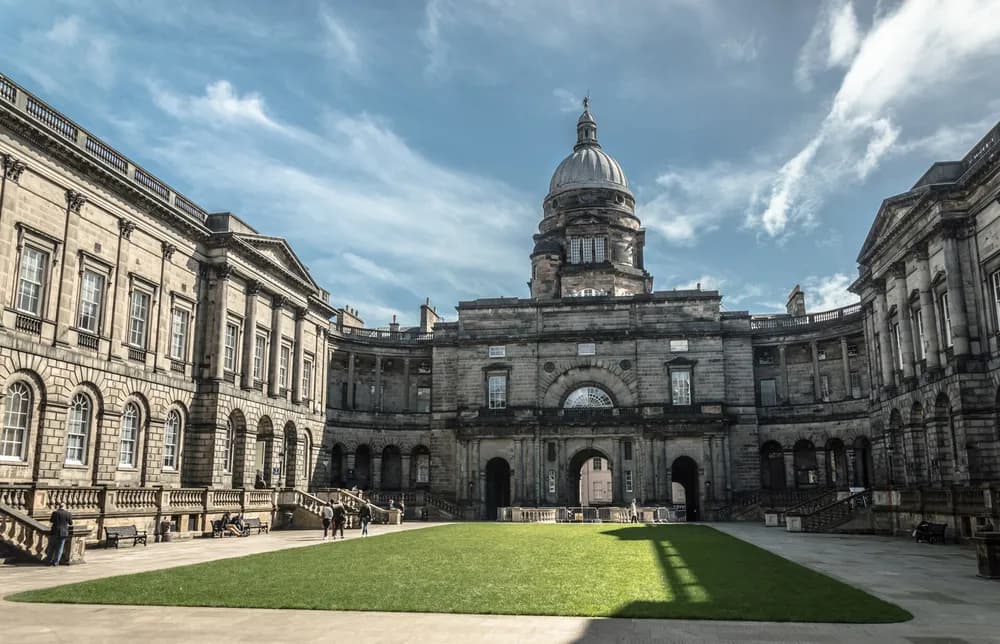



Photo: Chrysi Chrysochou · CC BY-SA 3.0 · cropped
Photo: Stinglehammer · CC BY-SA 4.0 · Photo: Nilfanion · CC BY-SA 3.0 · Photo: Ad Meskens · CC BY-SA 3.0
Still deciding where to apply? Hear it from a student who's there
Edinburgh's 2027-entry selection invites **the top-scoring ~800 applicants to an assessment half-day featuring a series of short interviews** based on the Medical Schools Council's core values; applicants with a Scottish or RUK/RoI fee rate must attend in person. (Older guidance that most home applicants received no interview is out of date.)
Assessment days take place at Edinburgh Medical School or online, and shortlisted international applicants follow the same half-day model. In the 2025 entry cycle Edinburgh received 1,909 applications, invited 839 applicants to an Assessment Day and made 585 offers.
Shortlisting is a points ranking: two admissions staff assess your academic record, then points for your UCAT total (by national decile) and your SJT band are added. The 2027-entry UCAT cut-off is 1850 and SJT Band 4 applicants are not considered. The personal statement is not formally assessed.
Edinburgh interview key facts (2027 entry)
| Applications (2025 entry) | 1,909 |
|---|---|
| Invited to Assessment Day (2025 entry) | 839 |
| Offers (2025 entry) | 585 (290 placed) |
| Places (2026 entry) | 266 (166 Scotland, 79 RUK/RoI, 21 international) + 25 SIMD20 |
| Minimum UCAT (2027 entry) | 1850 total; SJT Band 4 not considered |
Interview Format
- All shortlisted candidates attend an assessment half-day.
- The half-day includes a series of short interviews based on the Medical Schools Council's core values and attributes.
- Scottish, RUK and Republic of Ireland applicants attend in person.
Sample Interview Questions
Why Edinburgh specifically? Reference the integrated curriculum and BMedSci intercalated year.
Mention the Year 3 intercalated BMedSci (mandatory), the historical strength in surgery and basic science, and the integrated teaching approach across the 6 years.
Which experience in your application best shows the qualities a doctor needs, and what did it teach you?
Direct opportunity to highlight your strongest experience. Be concise — 2-3 minutes of focused reflection beats a list.
Discuss the ethical considerations around allocating ICU beds during a pandemic.
Engage with QALY-based reasoning vs equity. Reference the 2020 BMA ethical guidance. Acknowledge the tension between utilitarian and deontological approaches.
A patient with dementia refuses a medication that would improve their quality of life. What should the team consider?
Capacity assessment under the Mental Capacity Act, best interests decision-making, the role of family and lasting power of attorney.
Why a Scottish medical school rather than one in England?
Reference the 6-year course structure, the slightly different curriculum standards (some Scottish schools include an intercalated year as standard), and the NHS Scotland clinical environment.
Tell me about a time you worked in a team. What did you learn?
STAR framework. Pick a real example. Reflect on what you'd do differently next time.
Describe your most meaningful work experience and what you took from it.
Focus on one experience and dig deep. International applicants are often asked to compare healthcare systems — be ready.
A 14-year-old asks for contraception without parental knowledge. What's your approach?
Gillick competence (UK-specific concept). If competent, confidentiality applies. Discuss the duty to encourage the young person to involve parents while respecting their decision.
Here are two graphs of cancer survival rates over the last 30 years for Country A and Country B. What might explain the difference?
Earlier screening, treatment access, lifestyle factors, data quality, demographic differences. Avoid jumping to a single cause.
What concerns you most about a career in medicine?
Honesty wins. Workforce burnout, work-life balance, the emotional weight of clinical decisions. Show you've thought about it.
Should patients be able to choose their doctor in the NHS?
Engage with both autonomy + service-equity perspectives. Discuss practical constraints (workforce distribution, list sizes, registered-patient model).
Practise the Edinburgh interview
Rehearse the real format before the day — on demand with our AI interviewers, or live with a tutor.
Sit a mock with photoreal AI interviewers — any time
A timed MMI or panel interview on video — British & international voices — with interviewers who listen, react and press with follow-ups. Rubric-scored feedback and a replay the moment you finish.



Live mocks with a tutor who’s been in the room
A full Edinburgh-style mock with a medic or dentist tutor — honest scoring against real marking criteria, a station-by-station debrief and a written action plan.
Book a mock interviewHow to Prepare
Maximise your UCAT — your total earns decile points and your SJT band earns points too, and both feed the shortlisting rank (minimum 1850 for 2027 entry).
Write a reflective personal statement using the new UCAS three-question format — Edinburgh does not formally assess it, but it may guide shortlisting and is essential preparation for the Assessment Day.
Prepare for a series of short interviews on the Medical Schools Council's core values — practise concise, reflective answers under time pressure.
Read Edinburgh's UCAT page closely — it sets out the cut-off, decile scoring, SJT points and widening-access uplifts.
Watch a recent Edinburgh open-day video to absorb their teaching philosophy vocabulary (integrated, evidence-based, intercalated).
Know the structure of the MBChB at Edinburgh: 6 years, mandatory BMedSci intercalated year between years 2 and 3.
Invited to interview at Edinburgh? Say your first answer out loud today with the free two-minute warm-up drill, then sit a timed mock set up for Edinburgh.
Common Pitfalls
Frequently Asked Questions
Related guides
Free, evidence-based guides from current UK medical and dental students.
Free Interview Resources
Worked-through MMI stations, ethics scenarios, and panel questions.
Read guideNHS Core Values Guide
The 6 NHS values examiners listen for in every interview answer.
Read guideMedical School Rankings
See interview format (MMI vs panel) for each UK medical school.
Read guideUCAS 2026 Personal Statement
The new three-question format your interviewer will reference.
Read guideContextual Offers for Medicine
Every UK medical school's widening-access scheme in one place.
Read guideSources & official admissions information
We cross-check every interview guide against the school’s own admissions guidance and the UK regulators.
- Edinburgh Medical School — The selection process — 2027 entry: shortlisted candidates attend an assessment half-day of short interviews; Scottish and RUK/RoI in person; outcomes by March.
- Edinburgh Medical School — UCAT — 2027-entry UCAT cut-off 1850; SJT Band 4 not considered; decile scoring plus SJT points; widening-access uplifts.
- Edinburgh Medical School — MBChB Admissions Statistics 2025 — 2025 entry: 1,909 applications, 839 invited to Assessment Day, 585 offers, 290 placed.
- University of Edinburgh — Medicine MBChB (6-year), 2027 entry — Top-scoring ~800 applicants invited to an assessment day at Edinburgh Medical School or online.
- UCAT Consortium — Official UCAT registration, test format, scoring methodology and free practice materials.
- General Medical Council (GMC) — Statutory regulator. Approved medical schools, the registered-doctor register, and fitness-to-practise standards.
- Medical Schools Council — Selecting-for-excellence guidance, MMI principles, and an A–Z of UK medical schools.
Ready to nail your Edinburgh interview?
Book a mock interview with a current medical student who recently went through the same process, or practise on demand with the AI interviewer.