
Glasgow Medicine Interview
Format, Questions & Prep Tips
Glasgow medicine interviews for 2027 entry are a panel interview, held Late November 2026 – March 2027 (online). Published figures: Applications (2025 entry) 2,001; Interviews (2025 entry) 1,128; Offers (2025 entry) 719 for an intake of 341.
- Institution
- University of Glasgow
- Interview (2027 entry)
- Late November 2026 – March 2027 (online)
- Decisions (2027 entry)
- Rolling; aim for all outcomes by 31 March 2027 (can extend to end of April)

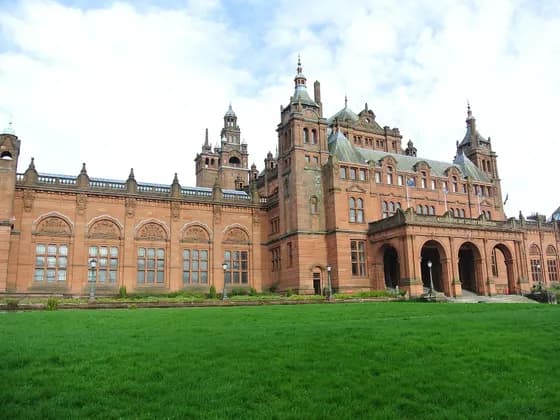


Photo: Clem_nat · CC BY-SA 4.0 · cropped
Photo: Suicasmo · CC BY-SA 4.0 · Photo: WeeHolly · CC BY-SA 4.0 · Photo: Pacifier · CC BY-SA 4.0
Still deciding where to apply? Hear it from a student who's there
Glasgow Medical School is distinctive among UK medical schools for using a traditional two-part panel interview rather than an MMI format. For 2027 entry the interview is online, lasts 30 minutes in total, and is split into two sections — Panel A and Panel B — covered by the same two interviewers. Interviews run from late November 2026 to March 2027.
Panel A explores your motivation to become a doctor, teamwork and related topics. Panel B focuses on communication and includes discussion of an ethical scenario: you read two very brief scenarios (two or three sentences each) and choose one to discuss.
Glasgow uses the UCAT score to allocate interviews after other screening checks are met, does NOT consider the SJT, and makes its final decision solely on interview performance. The interview is conversational — there is no writing required during the interview itself.
Glasgow interview key facts (2027 entry)
| Applications (2025 entry) | 2,001 |
|---|---|
| Interviews (2025 entry) | 1,128 |
| Offers (2025 entry) | 719 for an intake of 341 |
| Format | Two-part panel (Panel A + Panel B), ~30 mins total |
| SJT used? | No — Glasgow ignores SJT in selection |
Interview Format
- Two-part panel interview (Panel A + Panel B), not MMI
- Approximately 30 minutes total
- Online for 2027 entry, with two interviewers covering both panels
- Panel A: motivation to become a doctor, teamwork and related topics
- Panel B: communication and an ethical scenario discussion (choose 1 of 2 very short scenarios)
- Conversational format — no writing or calculation required during interview
- UCAT score allocates interviews; SJT explicitly NOT considered; offers decided solely on interview performance
Sample Interview Questions
Why do you want to be a doctor? (Panel A opening)
Glasgow opens conversationally. Use this to set your tone for the whole interview. Be specific about what drew you, not abstract.
What did your work experience teach you about the realities of being a doctor?
Pick one specific moment that changed your view. Reflect on what was unexpected. Glasgow values insight more than the experience itself.
Why Glasgow specifically?
Reference Glasgow's long-established integrated curriculum, the strength of teaching in surgery and clinical pharmacology, the Scottish 5-year MBChB structure, and the city's clinical environment.
Tell me about a time when you had to manage a difficult relationship with someone.
STAR framework. Focus on what you learned about managing the relationship constructively, not on who was right.
What concerns you most about the NHS today?
Workforce burnout, retention, waiting lists, junior-doctor disputes, primary-care access. Show informed awareness with realism and a sense of purpose — Glasgow specifically looks for both.
Scenario A: A patient confides they used recreational drugs but asks you not to tell the surgical team. Scenario B: A patient with mental illness refuses life-saving treatment. Choose one and discuss. (Panel B ethical scenario)
You choose. Pick the one you have more to say about. Apply the four pillars. Discuss both sides before reaching a position. Glasgow wants reasoning, not a fixed answer.
Should the NHS prioritise patients based on age?
Engage with QALY-based vs equity arguments. Acknowledge that explicit age-based rationing is controversial. Reference how the NHS currently handles this implicitly (frailty scoring).
Describe a time you worked in a team where you weren't the leader.
Glasgow looks for collaborative qualities, not always-leadership stories. Reflect on what you learned about followership and supporting others.
A doctor disagrees with a colleague's clinical decision but the colleague is more senior. What should they do?
Patient safety is paramount. Discuss the GMC duty to raise concerns. Cover constructive escalation channels (clinical director, hospital protocols) without being adversarial.
What qualities do you think a good doctor needs, beyond clinical knowledge?
Communication, empathy, resilience, integrity, willingness to keep learning, ability to acknowledge uncertainty. Connect each to a specific example from your experience.
Tell me about a setback you've faced.
Pick a genuine setback, not a humble brag. Focus on what you learned and how you adapted.
Why a Scottish medical school?
Reference the 5-year MBChB structure (different from English 5-year MBBS), the NHS Scotland clinical environment, and the integrated teaching approach Scottish schools share.
A friend asks for your medical advice about a worrying symptom. What do you do as a medical student?
Acknowledge the limits of your knowledge. Encourage them to see a GP. Don't diagnose or prescribe. Discuss the GMC guidance on giving medical advice as a student.
What did you learn about communication from your work experience?
Pick one specific interaction you observed (doctor-patient, multi-disciplinary handover, breaking bad news) and reflect on what made it effective or ineffective.
Should patients be able to access their medical records online?
Current direction of travel in NHS England (Patient Online programme). Pros: autonomy, transparency, error checking. Cons: misinterpretation, anxiety, confidentiality concerns about co-resident family members.
Practise the Glasgow interview
Rehearse the real format before the day — on demand with our AI interviewers, or live with a tutor.
Sit a mock with photoreal AI interviewers — any time
A timed MMI or panel interview on video — British & international voices — with interviewers who listen, react and press with follow-ups. Rubric-scored feedback and a replay the moment you finish.



Live mocks with a tutor who’s been in the room
A full Glasgow-style mock with a medic or dentist tutor — honest scoring against real marking criteria, a station-by-station debrief and a written action plan.
Book a mock interviewHow to Prepare
Prepare for a conversational panel format, NOT MMI — the rhythm is different.
Have a strong "why medicine" answer ready — Panel A explores your motivation to become a doctor.
Read both common ethical scenario topics (autonomy refusals, confidentiality breaches, mental capacity) so you can choose the stronger one in Panel B.
Research Glasgow's 5-year MBChB structure and what makes Scottish medical education distinct from English.
Read NHS Scotland news (not just NHS England) — Glasgow may ask about Scottish-specific health policy.
Practise online interview etiquette: camera angle, lighting, eye contact at the lens, neutral background.
Have a clear sense of purpose and realism about NHS challenges — Glasgow assessors look for both qualities together.
Invited to interview at Glasgow? Say your first answer out loud today with the free two-minute warm-up drill, then sit a timed mock set up for Glasgow.
Common Pitfalls
Frequently Asked Questions
Related guides
Free, evidence-based guides from current UK medical and dental students.
Free Interview Resources
Worked-through MMI stations, ethics scenarios, and panel questions.
Read guideNHS Core Values Guide
The 6 NHS values examiners listen for in every interview answer.
Read guideMedical School Rankings
See interview format (MMI vs panel) for each UK medical school.
Read guideUCAS 2026 Personal Statement
The new three-question format your interviewer will reference.
Read guideContextual Offers for Medicine
Every UK medical school's widening-access scheme in one place.
Read guideSources & official admissions information
We cross-check every interview guide against the school’s own admissions guidance and the UK regulators.
- University of Glasgow — MBChB Interviews — 2027 entry: online, late November 2026 – March 2027, 30 minutes, Panel A + Panel B, decisions solely on interview.
- University of Glasgow — UCAT — SJT not considered; 2026-entry interview thresholds: Scots 1870, rest of UK 1990, international 2150.
- University of Glasgow — MBChB Admissions Data 2022–2025 — 2025 entry: 2,001 applications, 1,128 interviews, 719 offers, 341 intake.
- Glasgow — official admissions page — Programme overview, entry requirements, interview format and timeline straight from the school.
- UCAT Consortium — Official UCAT registration, test format, scoring methodology and free practice materials.
- General Medical Council (GMC) — Statutory regulator. Approved medical schools, the registered-doctor register, and fitness-to-practise standards.
- Medical Schools Council — Selecting-for-excellence guidance, MMI principles, and an A–Z of UK medical schools.
Ready to nail your Glasgow interview?
Book a mock interview with a current medical student who recently went through the same process, or practise on demand with the AI interviewer.