
Medical schools in London
All seven schools compared, from entry to fees
London has seven medical schools for 2027 entry: Imperial, UCL, King's, City St George's, Queen Mary (Barts), Brunel in Uxbridge and St Mary's in Twickenham, which takes only international students this cycle. Most run five-year MBBS courses; Imperial and UCL take six because they include a BSc. Home fees are £10,050 a year in 2027/28, and for students from England the NHS Bursary pays tuition from year 5.
- Medical schools
- 7, two still under GMC review
- Home fee, 2027/28
- £10,050 a year
- NHS Bursary pays fees
- From year 5 of the MBBS
- Four-year graduate courses
- Three, all home-fee only
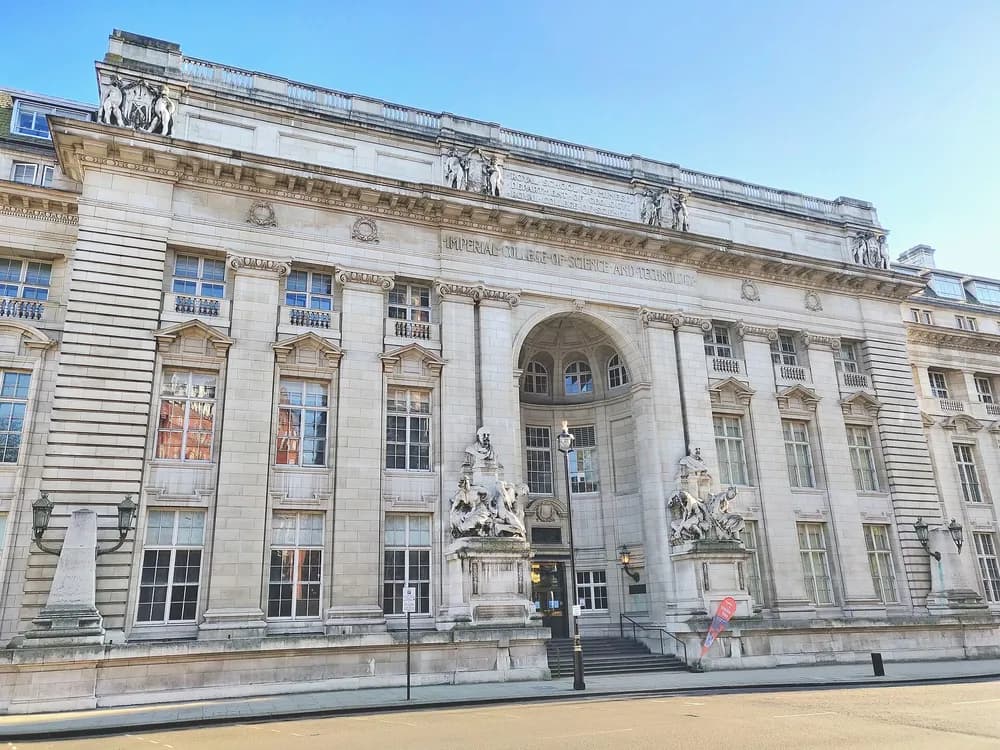


Photo: Shadowssettle · CC BY-SA 4.0 · cropped
Photo: Diliff (David Iliff) · CC BY-SA 3.0 · Photo: K Ulysses-Ono · CC BY-SA 4.0 · Photo: Peter Trimming / Geograph Britain and Ireland · CC BY-SA 2.0
Studying medicine in London: the key facts for 2027 entry
Seven universities in London teach medicine for 2027 entry. Five are on the GMC's list of bodies that award UK medical degrees: Imperial College London, UCL, King's College London, City St George's and Queen Mary (Barts and The London). The GMC (General Medical Council) is the regulator for doctors and approves the bodies that award medical degrees.
The other two are new schools that the GMC is still reviewing: Brunel Medical School, on Brunel University of London's campus in Uxbridge, and St Mary's University in Twickenham. Courses run five or six years, standard offers range from AAA to A*AA, and interviews range from MMIs (multiple mini interviews, a circuit of short stations) to an online panel.
For 2027 entry the UCAS deadline was 18:00 on 15 October 2026, so this cycle's applicants are now waiting for interviews. If you are in Year 12, you will sit the UCAT in summer 2027 and apply in autumn 2027 for 2028 entry.
| Medical schools | Seven: Imperial, UCL, King's, City St George's, Queen Mary, Brunel and St Mary's |
|---|---|
| Course length | Five years at most schools; six at Imperial and UCL, which include a BSc year |
| Standard A-level offer | A*AA at Imperial, UCL, King's and Queen Mary; AAA at City St George's, Brunel and St Mary's |
| Admissions test | UCAT at six schools (Brunel also accepts the GAMSAT from home graduates); none at St Mary's for 2027 entry |
| Graduate entry | Four-year courses at King's, City St George's and Queen Mary |
| Home tuition fee | £10,050 a year in 2027/28, the government maximum |
| UCAS deadline | 18:00 on 15 October 2026 for 2027 entry, with up to four medicine choices |
Every medical school in London and what makes each different
The cards come from our school catalogue. The notes below them come from each school's own 2027-entry course and admissions pages.
Imperial College London (MBBS/BSc, A100)
A six-year course with a compulsory BSc in year 4, taught mainly at South Kensington and Charing Cross. It starts in October 2027, not September. Imperial normally interviews the top third of applicants by MMI, and for 2026 entry it had 271 home and 74 overseas places.
UCL (MBBS BSc, A100)
Six years including an intercalated BSc in year 3, or five if you already hold a BSc. Teaching is in Bloomsbury and at the Royal Free Hospital in Hampstead and the Whittington Hospital in Archway. UCL ranks applicants by total UCAT score and gives no extra credit for grades above the minimum.
King's College London (MBBS, A100)
Five years, or six with an optional intercalated BSc, with partner hospitals Guy's, St Thomas' and King's College Hospital. In its most recent cycle King's had about 2,960 applications for 347 places on this course. It also runs the six-year EMDP for students from non-selective state schools and a four-year graduate course.
City St George's, University of London (MBBS, A100)
Formed when City and St George's merged on 1 August 2024. Medicine is taught at the Tooting campus, which shares its site with St George's University Hospitals NHS Foundation Trust. You apply to City St George's (UCAS institution code C60). The minimum offer is AAA, though offers can go up to A*AA.
Queen Mary: Barts and The London (MBBS, A100)
A five-year course taught across the Whitechapel, Mile End and West Smithfield campuses, with patients from the first week. For September 2027 Queen Mary expects 311 home and up to 24 overseas places. It interviews by online panel rather than MMI.
Brunel Medical School (MBBS, A100)
A newer school on Brunel University of London's Uxbridge campus, still on the GMC's list of new schools under review. For 2027 entry it takes home students through UCAS on a limited number of UK-funded places, and international students who need no admissions test.
St Mary's University, Twickenham (MBBS, A100)
A new school working towards GMC accreditation, with the University of Lancashire as its contingency partner if accreditation is not achieved. For 2027/28 it accepts only international students, uses no admissions test and interviews by online MMI, so it is not an option for UK applicants this cycle.
London medical schools compared: course length, offers and interview format
| School | Course and length | Standard A-level offer | Interview for 2027 entry | Who can apply |
|---|---|---|---|---|
| Imperial | MBBS/BSc, 6 years | A*AA in Biology, Chemistry and a third subject, with the A* in Biology or Chemistry | MMI | Home and overseas |
| UCL | MBBS BSc, 6 years (5 if you hold a BSc) | A*AA with Biology and Chemistry, one at A* | MMI: on campus for home applicants, online for overseas | Home and overseas |
| King's | MBBS, 5 years (6 with optional BSc) | A*AA with A in Biology and Chemistry | Remote interview; format sent through King's Apply | Home and overseas |
| City St George's | MBBS, 5 years | AAA with Chemistry and Biology; offers range from AAA to A*AA | MMI of six stations, in person at Tooting or online | Home and overseas |
| Queen Mary | MBBS, 5 years | A*AA with Biology or Chemistry and a second science; the A* can be in any subject | Online panel | Home and overseas |
| Brunel | MBBS, 5 years | AAA with Chemistry or Biology and a second science | Asynchronous online MMI of six stations | Home (limited places) and international |
| St Mary's | MBBS, 5 years | AAA with Chemistry or Biology and a second science | Online MMI | International students only in 2027/28 |
From each school's own course and admissions pages for 2027 entry, checked on 19 October 2026. Imperial's course starts in October 2027; the others start in September.
Graduate-entry medicine in London: the three four-year courses
Three London schools run separate four-year MBBS courses for graduates, and for 2027 entry all three are open only to students who qualify for home fees. Each shortens the early, science-heavy stage: Queen Mary and City St George's fit the first two years into one, and King's graduates skip the first year.
Graduates can also apply to most standard courses: King's, Queen Mary, City St George's and Brunel all consider them, and UCL's course takes five years if you already hold a BSc. Imperial's graduate-entry MBBS students are based at the Pears Cumbria School of Medicine at the University of Cumbria, not in London.
| Course | Degree you need | Admissions test | Notes |
|---|---|---|---|
| King's Graduate/Professional Entry (A102) | A 2:1 in a biosciences subject with Biology and Chemistry content | UCAT | Starts in August 2027. About 650 applications for 18 places in the most recent cycle. Home fee payers only. |
| City St George's Graduate Entry (A101) | A 2:1 in any subject, normally awarded in the last five years | GAMSAT | Home fee status only. The MMI is usually in person at Tooting. |
| Queen Mary Graduate Entry Programme (A101) | A 2:1 in a molecular or biomedical science, or a 2:1 in any subject plus A-level BB in Chemistry or Biology and another science | UCAT: fourth decile or above, SJT Band 1 to 3 | Only open to those who qualify for home fees. |
How London medical schools use the UCAT to shortlist for interview
Every London school except St Mary's uses an admissions test for home school-leavers, but each uses it differently. These are the schools' own published rules and past figures.
The UCAT (University Clinical Aptitude Test) is a computer-based test you sit in the summer before you apply. You get a total score from 900 to 2700, plus a Situational Judgement Test (SJT) band from 1 to 4, where Band 1 is the highest. Queen Mary and Brunel do not accept Band 4, and Imperial needed Band 3 or better for 2026 entry.
Past cut-offs are a guide to competition, not a target. They move every year with the applicant pool, and Queen Mary says thresholds cannot be predicted from previous years.
| School | How the test is used | Published past figure |
|---|---|---|
| Imperial | Used with academic criteria to shortlist for MMI; Imperial normally interviews the top third of applicants | 2026 entry: 2320 total and SJT Band 3 or better for home applicants; 2170 for contextual applicants |
| UCL | Eligible applicants are ranked by total UCAT score, with the SJT used to break ties | 2026 entry: lowest score invited was 2190 for home, 2080 for Access UCL and 2300 for overseas applicants |
| King's | Applicants are ranked on UCAT total, GCSE grades and widening-participation indicators; the SJT is not used to shortlist | No minimum UCAT score was applied in the most recent cycle |
| City St George's | At least 500 in each section, then ranking by UCAT within home, overseas and graduate groups; SJT band considered for 2027 entry | The overall cut-off is set each year by the number of interviews; past scores are on its admissions statistics page |
| Queen Mary | A total in the fourth decile or above and SJT Band 1 to 3, then a weighted score of UCAT and qualifications | No fixed score published |
| Brunel | Home applicants are invited to interview on UCAT score, or GAMSAT score for graduates; SJT Band 4 is not accepted | No set cut-off; selection is relative to the year's applicants |
| St Mary's | No UCAT, GAMSAT or other test for 2027 entry | Not applicable: international applicants only |
Interview formats at London medical schools for 2027 entry
| School | Format | What to expect |
|---|---|---|
| Imperial | MMI | Run by academic staff and experienced healthcare professionals. Criteria include commitment to NHS Constitution values, motivation, empathy, work experience and teamwork. Invitations go out on a rolling basis from December. |
| UCL | MMI, on campus for home applicants and online for overseas | Structured questions scored against the values in UCL's selection procedure. The season runs from December to March, normally with at least a week's notice. |
| King's | Remote interview | Assesses communication, ethical reasoning, current healthcare issues and motivation. Interviewers know nothing about you beforehand. Interviews run from December to April. |
| City St George's | MMI, in person at Tooting or online | Six stations of about five minutes with a 60-second break: a question, a practical task or a role play. The online version uses pre-recorded questions on SAMMI-Select. |
| Queen Mary | Online panel | Usually two senior academic or clinical staff and sometimes a lay selector, covering motivation, resilience, teamwork, problem solving, contribution to university life and communication. Held in January and February. |
| Brunel | Asynchronous online MMI | Six stations completed online within five days, each with 30 seconds to think and up to five minutes to answer. Home applicants' weeks are 16 to 21 February and 9 to 14 March 2027 (provisional). |
| St Mary's | Online MMI | Several short stations on a dedicated platform, completed within a set timeframe and lasting no more than an hour. |
Before a London medicine interview
- Read your invitation for the exact format: King's sends details through King's Apply, and Imperial explains its process in the invitation.
- Practise spoken answers of up to five minutes, the station length at City St George's and Brunel.
- For online MMIs with no live interviewer, at Brunel and in City St George's online version, rehearse answering a camera with a timer running. Brunel does not let you re-record a submitted answer.
- Learn the NHS Constitution values: Imperial, UCL and Queen Mary all say they select against NHS values.
- Bring photo ID to an in-person MMI: City St George's will not interview you without a passport or UK driving licence.
Contextual offers and widening-access routes at London medical schools
Most London schools take your background into account, but in different ways. Some lower the grade offer, some lower the UCAT bar or guarantee an interview, and King's runs a separate six-year course instead of making contextual offers on its standard MBBS.
Eligibility is mostly worked out from your UCAS application and the data that comes with it, so declare free school meals, time in care, caring responsibilities and estrangement accurately. These schemes are for students with home fee status or UK residence.
| School and scheme | What changes | Who is eligible, in summary |
|---|---|---|
| King's: Extended Medical Degree Programme (A101) | A six-year MBBS with extra support in the early years. The offer is ABB, with an A in Biology or Chemistry. King's makes no contextual offers on its five-year course. | Home fee status, only non-selective state schools since age 11, no degree, plus free school meals, a high-deprivation postcode, the K+ programme, care experience or estrangement |
| Queen Mary | A standard contextual offer of AAA instead of A*AA. Completing Access to Queen Mary, Realising Opportunities or Bridge the Gap can bring AAA plus a guaranteed interview; care leavers can receive AAB. | Home fee status plus one criterion, such as free school meals in Key Stage 4, an area of disadvantage, care experience, estrangement or refugee status |
| UCL: Access UCL | A contextual offer of AAB instead of A*AA, with UCAT scores reviewed separately: the lowest score invited for 2026 entry was 2080, against 2190 for other home applicants. | UK-domiciled students at a UK state school with an eligible postcode, free school meals or estrangement; care-experienced students at any UK school |
| Imperial | A lower UCAT threshold (2170 against 2320 for 2026 entry) and a contextual offer in which the A* can be in any subject. | Applicants flagged as widening participation, young carers with evidence, and students on Imperial outreach programmes such as Pathways to Medicine |
| City St George's | An offer two grades below the standard: ABB instead of AAA. UCAT and other requirements still apply. | UK-resident non-graduates with one Group 1 criterion, such as care experience, or two Group 2 criteria, such as school, area and free school meals measures |
| Brunel | A lower contextualised offer for applicants who succeed at the online MMI. | Applicants who meet the widening-access criteria in Brunel's medicine admissions policy |
Tuition fees, student loans and the NHS Bursary for London medicine
Home students pay the government maximum at London schools: £10,050 a year for 2027/28, up from £9,790 in 2026/27. UCL says its 2027/28 fee follows the cap, subject to parliamentary approval, and Imperial and Brunel expect the cap to rise with inflation in later years.
Who pays depends on where you normally live and which year you are in. For students from England, Student Finance England lends the fees for the early years, then the NHS Bursary takes over.
| Years 1 to 4: tuition | A Tuition Fee Loan. Courses starting from 1 January 2027 are funded through the Lifelong Learning Entitlement, which allows loans for courses longer than four years, such as medicine. |
|---|---|
| Year 5 onwards: tuition | Paid by the NHS Bursary straight to the university, up to £9,790 a year at 2026/27 rates. |
| Year 5 onwards: living costs | A £1,081 non-means-tested grant, plus a means-tested bursary of up to £3,447 if you live away from home in London (2026/27 rates). |
| Long clinical years | A means-tested extra weeks allowance of up to £116 a week in London when an NHS Bursary year runs longer than 30 weeks and 3 days. |
| Maintenance Loan, early years | Up to £15,415 a course year (for up to 30 weeks of study) under the Lifelong Learning Entitlement, depending on where you live and your household income. |
| Imperial | £61,550 |
|---|---|
| King's | £60,200 |
| Queen Mary | £56,650 |
| St Mary's | £48,000 |
| City St George's | £47,380 |
| Brunel | £49,395 (2026/27 figure; 2027/28 not shown) |
Some schools add their own money. The Imperial Bursary pays £1,000 to £5,000 a year to home students with household incomes below £70,000. Queen Mary's John Abernethy Scholarship gives £5,000 a year to two new medical students, judged on household income and academic achievement. UCL's medical school also offers bursaries for students in financial need.
The cost of living in London as a medical student
Rent is the biggest cost. UCL's own guide puts the average UCL self-catered hall at £320 a week in 2026/27, or £12,480 for a 39-week year, with rooms from £153.86 to over £455.71 a week. Shared private housing runs from £150 to £300 a week before bills.
Clinical years also run longer than a normal university year: UCL's years 4 and 5 last 45 weeks. That is why the NHS Bursary's extra weeks allowance matters once you reach the bursary years.
| UCL self-catered hall, average | £320 a week; £12,480 for 39 weeks |
|---|---|
| Shared private rent | £150 to £300 a week, excluding bills |
| Food | About £53 a week |
| Student travelcard, zones 1 to 2 | £119.90 a month (TfL, 2026) |
| Maintenance Loan in London | Up to £14,135 in 2026/27, against £10,830 outside London (courses starting before 2027) |
Where London medical students train: hospitals and trusts
| School | Hospitals and trusts named by the school |
|---|---|
| Imperial | Imperial College Healthcare (Charing Cross, Hammersmith, St Mary's and Western Eye), Chelsea and Westminster, West Middlesex, London North West (Northwick Park and Ealing), Hillingdon, and Royal Brompton and Harefield |
| UCL | Teaching bases at the Royal Free Hospital and the Whittington Hospital, plus NHS trusts, GP practices and community settings in and around London |
| King's | Guy's, St Thomas' and King's College hospitals, district general hospitals across the south east of England, and over 350 general practices |
| City St George's | St George's University Hospitals NHS Foundation Trust, which shares the Tooting site, plus GP and community visits |
| Queen Mary | Royal London, Homerton, Newham, Whipps Cross, King George and Queen's hospitals; out-firms at Southend, Colchester and the Princess Alexandra Hospital; mental health trusts ELFT and NELFT |
| Brunel | Hillingdon Hospitals, London North West, West London NHS Trust, Central and North West London, Royal Brompton and Harefield, Frimley Health, West Hertfordshire Teaching Hospitals and Royal Berkshire |
| St Mary's | West London NHS Trust, Hampshire Hospitals, Berkshire Healthcare and the Practice Plus Group in Ilford, plus GP practices and hospices |
These are the schools' own lists; Imperial describes its list as a guide rather than a complete one.
A London school does not mean every placement is in central London. King's uses district general hospitals across the south east, Brunel works with trusts serving Berkshire, Hertfordshire and Surrey, and St Mary's places students across London, Surrey, Hampshire and Berkshire. Patient contact starts early: Queen Mary and Brunel both place students in general practice from year 1.
Applying to London medical schools for 2028 entry: a Year 12 timeline
Dates for the 2028-entry cycle are not published yet. This timeline follows the 2027-entry pattern, so check each date when UCAS, the UCAT Consortium and the schools confirm it.
- Year 12, spring 2027
Shortlist your London schools
Use the comparison table to check offers, course length and interview type, and check whether you meet the criteria for King's EMDP or a contextual offer.
- Queen Mary's access schemes can lead to AAA plus a guaranteed interview
- Imperial's outreach programmes count towards its contextual route
- Summer 2027
Sit the UCAT
You take the UCAT in the summer before you apply. For reference, the 2026 test ran from 13 July to 24 September, with registration from 20 May. The UCAT Consortium has not yet published 2027 dates.
- September to October 2027
Send your UCAS application
You can choose up to four medicine courses. Schools describe the deadline as 15 October in the year before entry; for 2027 entry it was 18:00 on 15 October 2026.
- December 2027 to April 2028
Interviews
In the 2027-entry cycle Imperial and King's invite from December, UCL interviews from December to March, Queen Mary in January and February, and Brunel's home applicants in February and March.
- By May 2028
Decisions
Most London schools decide after all interviews are finished. In the 2027-entry cycle Queen Mary sends decisions in March and King's aims to notify everyone by the end of May.
Medical schools in London: your questions answered
Where this guide's facts come from
Checked against these sources on 19 October 2026. Rules change between cycles, so confirm anything that decides your application on the official page for your entry year.
Get ready for your London interviews
Rehearse the MMI or panel format your schools use with a 1-to-1 mock interview, or try a free six-station mock first.