
The ETSU Quillen College of Medicine MD program
What you actually study, and where you will be
ETSU Quillen College of Medicine's MD is a 4-year program taught through team-based learning in an integrated curriculum, with patient contact from Year 1 and clinical rotations in the Tri-Cities region and rural Appalachian communities (2027 entry). ETSU Quillen's TRAILS curriculum spends about a year and a half on integrated organ-system courses taught mainly through active learning, including team-based learning, with clinical skills from the first semester. Clerkships, the core clinical rotations, start in March of year 2, after six weeks of study for Step 1, the first licensing exam. They run at regional Ballad Health hospitals, the VA Medical Center and the school's ETSU Health clinics, and include a six-week rural Underserved Medicine clerkship. Optional tracks add rural primary care training or a three-year MD.
- Degree
- MD
- Length
- 4 years
- Teaching
- Integrated + Team-based learning
- Clinical contact
- Year 1


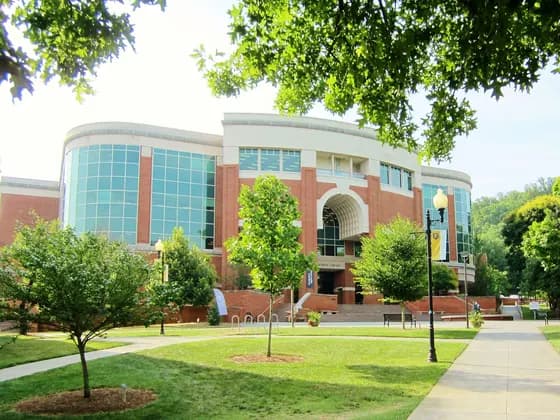

Photo: Smoke321 · CC BY-SA 4.0 · cropped
Photo: Smoke321 · CC BY-SA 4.0 · Photo: Smoke321 · CC BY-SA 4.0 · Photo: Mrgriffter · CC BY-SA 4.0
The ETSU Quillen College of Medicine MD program at a glance (2027 entry)
East Tennessee State University (ETSU) James H. Quillen College of Medicine, known as ETSU Quillen or simply Quillen, runs a four-year MD program in Johnson City, Tennessee. The campus is on the grounds of the VA (Veterans Affairs) Medical Center at Mountain Home. The school's mission is to educate doctors, especially those interested in primary care, to serve rural and underserved communities.
The Liaison Committee on Medical Education (LCME) accredits MD programs in the United States. Its directory, updated November 13, 2026, lists Quillen as fully accredited, with 1978 as its initial year of accreditation. The class entering in 2026 grew to 100 from 78, an increase announced in August 2025.
The curriculum is called TRAILS, short for Team-based Rural Applied Integrated Learning System. In the pre-clerkship phase, the mainly classroom-based first part, you spend about a year and a half (three semesters) on organ-system courses that integrate basic and clinical science. Most teaching is active learning, much of it in teams, while Doctoring TRAILS courses build clinical skills. The school says patient contact begins in your first semester, and preceptorships, which pair you with a physician (a preceptor) in their clinic, run through years 1 and 2.
From January of year 2 you get six weeks of study for Step 1 of the United States Medical Licensing Examination (USMLE). A 12-month year of clerkships then begins in March. You rotate through Ballad Health hospitals, the VA Medical Center and ETSU Health clinics across the Tri-Cities of Johnson City, Kingsport and Bristol. A 14-month senior year of selectives (required rotations where you choose the specialty) and electives (rotations of your own choice) ends with graduation in early May.
Every student covers Underserved Medicine in rural communities, and two optional tracks go further. The Rural Primary Care Track (RPCT) adds precepting in rural clinics and a 12-week rural clerkship for a small cohort. Tri-TRAILS lets up to 11 students a year who have chosen family medicine, internal medicine or pediatrics graduate in three years, positioned for a Quillen residency, the specialty training after medical school. Students are under no obligation to choose primary care.
| Degree | MD |
|---|---|
| Program length | 4 years, or 3 on the optional Tri-TRAILS track |
| Curriculum | TRAILS: integrated organ-system courses, team-based learning and small-group Inquiry cases |
| Class size | 100 students entering in 2026, up from 78 |
| Main campus | Johnson City, on the grounds of the VA Medical Center at Mountain Home |
| Anatomy | Cadaveric dissection and prosection (pre-dissected specimens) in a five-week course in year 1 |
| First patient contact | First semester of year 1 |
| Clinical sites | Ballad Health hospitals, the VA Medical Center and ETSU Health clinics |
| Step 1 timing | Before clerkships, after six weeks of study in January and February of year 2 |
| Grading | Pass/fail before clerkships; clerkships Honors, Pass or Fail; senior rotations pass/fail |
What makes the ETSU Quillen College of Medicine MD program different
Underserved Medicine, a rural clerkship for everyone
This required clerkship, six weeks on the 2025-26 and 2026-27 calendars, is set in rural partner communities; RPCT students cover it within their 12-week rural clerkship. You take in-depth social histories with standardized tools, assess patients' needs and local resources, and join a health fair. It ends with a case presentation to the class, and an end-of-clerkship project replaces the national exam other clerkships use.
A Rural Primary Care Track from the first semester
This optional track adds about four hours a week in years 1 and 2, on the weekly self-directed study day. That time goes to full-day precepting in regional rural clinics, short classes on Appalachian culture, health disparities and legislative advocacy, and field trips.
Tri-TRAILS: a three-year MD into a Quillen residency
Up to 11 students a year join: six aiming for family medicine, three for internal medicine, two for pediatrics. After year 1 they add a four-week ambulatory (outpatient) care selective and four weeks of research. They take Step 2 CK, the clinical knowledge licensing exam, in the spring of year 3 and graduate that May, positioned for one of five Quillen residency programs. The first graduated in May 2026.
A medical campus on the VA grounds
The school says it was founded in 1974 with Veterans Administration funds and took its first class in 1978. The VA Medical Center also hosts internal medicine and psychiatry clerkships and senior internal medicine rotations.
Performing surgery on body donors in a training operating room
The Center for Surgical Innovation and Training, launched in 2023, is an operating room equipped like a hospital's but not kept sterile. Using donors from the school's anatomical gift (whole-body donation) program, medical students and surgical and OB/GYN residents perform surgery rather than watch it.
How ETSU Quillen College of Medicine teaches medicine
Each pre-clerkship semester pairs integrated science courses, organized by organ system, with a Doctoring TRAILS course in clinical skills. Science sessions use team-based learning (TBL), Inquiry (IQ) cases adapted from problem-based learning, and large-group formats such as just-in-time teaching and peer instruction. At orientation you are assigned teams for gross anatomy, TBL and Inquiry cases. You keep them for the semester, though teams are never required to do projects together outside class.
Doctoring courses use small groups, simulation, encounters with standardized patients (people trained to act as patients), Integrated Grand Rounds and preceptorships. Interprofessional education puts you in teams with ETSU nursing, pharmacy, public health and health sciences students, in simulated and real clinical settings. Threads such as ethics, patient safety, substance use and health disparities are woven through the curriculum.
In the clinical years you learn on hospital and clinic teams, supervised by faculty physicians who may delegate day-to-day supervision to residents, physician assistants or nurse practitioners. Seniors take on more responsibility, and the four-year program ends with Keystone, a four-week course on the transition to residency.
The ways you will learn
| Team-based learning (TBL) | You prepare with readings or videos, take a short quiz alone (the IRAT), then again with your team (the GRAT) with instant feedback. Teams then work the same problem, each committing to a specific answer, and report at the same time. |
|---|---|
| Inquiry (IQ) cases | With a faculty facilitator, your group reads a paper case and sets its own learning objectives on day one, then discusses its findings on day two. Unlike most problem-based learning, every student researches every objective. |
| Integrated Grand Rounds | Up to twice a semester, clinical and basic science faculty co-present a case, mixing short talks with live patient interviews and breakouts led by trained third- and fourth-year students. |
| Teaching Rounds | Small groups present and discuss cases from an earlier standardized patient encounter, with a faculty facilitator, in sessions of about two hours. |
| Simulation | In the Human Patient Simulation Lab you manage cases on patient simulators, for example securing an airway or running a ventilator as the patient's condition changes. |
A typical week on the ETSU Quillen College of Medicine program
Under the workload policy, revised in November 2025, required pre-clerkship sessions typically run Monday to Friday, 8am to 5pm, and average no more than 24 hours a week, including online modules. On average three to four half-days a week should stay unscheduled for self-study, and total work should not exceed 60 hours a week.
Preparation for a session should take no longer than the session. Inquiry cases meet on Wednesday mornings and Teaching Rounds mostly on Tuesday or Thursday afternoons, and each week ends with a checkpoint quiz.
Attendance is required, because most sessions are active learning that depends on working with classmates and cannot be repeated later. The attendance policy, last revised in July 2024, allows up to five flex days a semester, with no reason needed and no more than two in a row. They cannot be taken next to holidays, in exam weeks or for sessions such as simulation and Integrated Grand Rounds.
How anatomy is taught at ETSU Quillen College of Medicine
Gross anatomy is taught in Foundations of Medical Knowledge 2, a five-week course in the fall of year 1 that moves from the molecular level to whole organ systems. You learn through cadaveric dissection, cutting the specimens yourself, and prosection, studying specimens already dissected by experts.
The same course teaches embryology, how the body develops from fertilization, focusing on critical periods and common developmental anomalies. It also covers histology, the study of tissue under the microscope: you use virtual microscopy alongside traditional slides to recognize normal tissue and changes caused by disease. Clinical correlations throughout link anatomy to common conditions and diagnostic imaging.
When you first meet patients at ETSU Quillen College of Medicine
Preceptorships place first- and second-year students with physicians in practice, so you see patients in real clinics during year 1. Tri-TRAILS students do their preceptorships with faculty in their chosen residency program.
From the first semester, RPCT students work in regional rural clinics with physicians, nurse practitioners and physician assistants, taking histories, examining patients and drafting assessments and plans. Precepting can mean up to an hour's drive each way, usually in a state vehicle.
Full-time clinical work starts with clerkships in March of year 2. In the senior year, a four-week inpatient sub-internship, also called an acting internship, gives you the role of an intern, a first-year resident, under supervision.
The ETSU Quillen College of Medicine curriculum, year by year
- Year 1, fall
Immersion, foundations and first clinical skills
You start in late July with two weeks of EQUAL (Experiencing Quillen, Underserved in Appalachia, and Learning communities) Professional Immersion. It introduces the school, Appalachia's underserved communities and your learning community, a mentoring group that works like a house, and ends with the White Coat Ceremony. For a 2027 entrant that is July 19 to 30, 2027.
- Foundations of Medical Knowledge 1 (8 weeks): the core concepts and vocabulary of the basic sciences, linking molecular and anatomic structure to how cells and the body work in health and disease.
- Foundations of Medical Knowledge 2 (5 weeks): gross anatomy, embryology and histology.
- Immunology and Hematology (6 weeks): immune responses, infections, immune disorders, and blood disorders and cancers, using lab data and patient histories to build a differential diagnosis, the list of possible causes.
- Doctoring TRAILS 1 (19 weeks): physical examination and communication, plus medical ethics, cultural humility, systems-based practice, patient safety and quality improvement.
- Learning Communities 1 runs through the year.
- Year 1, spring and summer
Heart, lungs, kidneys and gut
The spring semester moves into the organ systems, with a break in March. It ends in late May with the first Comprehensive Basic Science Examination (CBSE), a National Board of Medical Examiners (NBME) exam on the sciences Step 1 tests, then a nine-week summer break.
- Cardiovascular, Pulmonary and Renal (14 weeks): the heart, lungs and kidneys, separately and together, and the diagnostic and treatment principles behind patient care.
- Gastrointestinal System and Nutrition (5 weeks): normal function, disease and drug treatment of the gut, and nutrition in health and disease.
- Doctoring TRAILS 2 (19 weeks): advanced interviewing and examination with real, standardized and simulated patients, test interpretation, differential diagnoses and early management plans, with feedback on your notes and case presentations.
- A CBSE 1 score below 40% brings weekly summer study assignments set with an academic counselor.
- Over the summer, students chosen for the Summer Research Program do about six weeks of research. Tri-TRAILS students start eight weeks of summer work: a four-week ambulatory care selective and four weeks of research.
- Year 2, fall
Brain, body and hormones
The last pre-clerkship semester runs from late July to mid-December. CBSE 2, after the fall break, and CBSE 3, at the end of the semester, measure your readiness for Step 1.
- Brain, Body and Behavior (13 weeks): the nervous system, clinical psychiatry, the musculoskeletal system and the skin, as linked systems and one by one.
- Endocrinology and Reproduction (6 weeks): how hormones coordinate the body, endocrine disease, and male and female reproductive function.
- Doctoring TRAILS 3 (19 weeks): applying basic science to clinical medicine through the cardinal manifestations of disease, the main symptoms and signs that bring patients to a doctor.
- Learning Communities 2 runs through the semester.
- Year 2, January to February
Step 1 study and the BRIDGE to clerkships
After about two weeks of winter break, the USMLE Step 1 Study Skills course gives you six weeks of dedicated study. The BRIDGE to Clinical Clerkships course, required before clerkships, follows in mid-February: two weeks on the 2026-27 calendar, down from three in 2025-26. The school expects you to take Step 1 before BRIDGE.
- CBSE 4 comes in the third or fourth week of study, for anyone who has not yet taken Step 1.
- If you are not ready, as a four-year student you can skip the first two six-week clerkship periods, keep studying and take a make-up BRIDGE course before the third.
- A formative Objective Structured Clinical Examination (OSCE), a practice clinical skills exam, falls in late February.
- The Student Clinicians' Ceremony for students entering in 2027 is on February 22, 2029.
- March of year 2 to February of year 3
The clerkship year
Quillen calls this the M3 year, though it starts in the spring of your second year. It runs in six-week periods and, with BRIDGE, the two-week elective and a one-week intensive in the Foundational Science course, totals 51 weeks on the 2026-27 calendar. You log required patient types and procedures as you go.
- Six-week clerkships in family medicine, internal medicine, obstetrics and gynecology, pediatrics, psychiatry and surgery.
- Emergency medicine, four weeks.
- Underserved Medicine, six weeks in rural partner communities.
- A two-week elective in a specialty outside the core clerkships.
- Foundational Science in Clinical Medicine, a course meeting every other week through the clerkship year, with an intensive week in late August.
- RPCT students take a 12-week Rural Primary Care clerkship instead of family medicine and Underserved Medicine.
- March of year 3 to May of year 4
Senior year and the move to residency
The senior year holds 42 weeks of required experiences. It opens in March with the Comprehensive Clinical Science Exam (CCSE), an NBME clinical science exam, and a block of online courses with recommended Step 2 CK study. It ends with Match Day in March, when the national residency Match places graduates in training programs, and graduation in early May.
- Selectives (10 weeks): a four-week inpatient sub-internship, four weeks of ambulatory care and two weeks of critical care.
- Electives (28 weeks), at Quillen (home) or elsewhere (away).
- A summative OSCE in March or April, which you must pass to graduate.
- Doctoring TRAILS 4 runs all year, with Academic Affairs and Student Affairs sessions and Keystone in April.
- Tri-TRAILS (three years)
The accelerated route
Tri-TRAILS students start with the four-year class and share its courses and clerkship year, but finish in three years and begin residency that July. You apply separately after acceptance, and you can return to the four-year track during year 2 or 3. A 2027 entrant would join the Tri-TRAILS Class of 2030.
- From late May after year 1: a four-week Ambulatory Care Selective and four weeks of Tri-TRAILS Research.
- After the clerkship year come the CCSE, Step 2 CK study, the summative OSCE, a critical care selective and a sub-internship, ending in late May of year 3, after commencement in early May. On the 2026-27 calendar, the Tri-TRAILS Keystone course starts alongside your clerkships.
- Track policies, revised in July 2026, let you take part in the RPCT as well, with written permission from both track directors.
- Failing a course or clerkship ends your place on the track. The Tri-TRAILS page says failing a USMLE exam does too. The school's USMLE policy, revised in June 2026, says you may stay if you retake and pass Step 1 without missing more than one clerkship period.
How you are assessed at ETSU Quillen College of Medicine
The school calls its approach assessment for learning: frequent low-stakes checks build toward a higher-stakes final. Pre-clerkship courses are pass/fail, with 70% as the passing score. In science courses, in-class work such as TBL quizzes makes up 25 to 35% of the grade and end-of-week checkpoints 35 to 45%. Summative exams, with finals built from NBME questions, make up 25 to 35%.
Since 2025-26 you also need an average raw score of at least 60 across a course's NBME exams in the first semester, and 65 after that. If you miss it but have 70% overall, you retake the exam during a break. Doctoring grades draw on case presentations, written histories and physicals, OSCEs and community preceptors' evaluations.
Step 1 covers the basic sciences and has been reported only as pass or fail since January 2022. Quillen requires a pass to graduate, and four-year students must pass before clerkships. Its USMLE policy, revised in June 2026, normally requires at least 65% on two practice assessments, such as the CBSE, before you are approved to take Step 1, and allows three attempts.
In August 2026 the USMLE program announced a move to designated testing dates from January 2029, with Step exams offered less often each year. Its first announcement, in June 2026, had named 2028. On the current schedule, a 2027 entrant (the Class of 2031) finishes pre-clerkship courses on December 15, 2028. If the 2026-27 pattern holds, Step 1 study runs from early January 2029, BRIDGE starts in mid-February and clerkships around March 1, so your Step 1 would normally fall shortly after the switch.
The policy also lets students with at least 70% on two CBSE exams take Step 1 before the dedicated study period. For the Class of 2031 that would be late 2028, before the switch. Step 2 CK is also required to graduate and must be taken at least once eight months before graduation: by about September 2030 for the Class of 2031, after the switch.
Clerkship grades combine a 65% internal score, from clinical ratings, quizzes, simulations and projects, with 35% from an NBME subject exam, often called a shelf exam. To pass you need 70% internally, at least the 6th percentile on the shelf exam and 70% overall. A Pass becomes Honors if you reach the class's top 25% for that clerkship, beat the 50th percentile on your first shelf exam attempt, finish everything on time and raise no professionalism concerns.
- If the shelf exam is the only requirement you miss, the clerkship grading policy, revised in May 2025, lets you retake it once, in the next academic break. A retake below the 6th percentile is graded Fail.
- OSCEs test clinical skills in encounters with standardized patients, followed by a written note. You need 70% in each category: the encounter, the note and overall.
- Class rank is calculated from numeric course and clerkship scores at the end of the pre-clerkship phase and after the core clerkships.
- Narrative comments from small-group and clerkship faculty go into the Medical Student Performance Evaluation (MSPE), the school's letter for residency applications.
- You must complete the MD by the sixth graduation date after you start.
ETSU Quillen College of Medicine clinical rotations: where you will actually train
Instead of one teaching hospital, the school uses a broad patient base across the Tri-Cities region, with access to more than 3,000 beds in affiliated hospitals. Ballad Health says it provides rotation sites for ETSU's third- and fourth-year students; its teaching hospitals include Johnson City Medical Center, Holston Valley Medical Center and Bristol Regional Medical Center.
The Office of Academic Affairs builds the clerkship schedule, and clerkship directors and coordinators assign sites. They may weigh your preferences but cannot guarantee them, and changes need a written request eight weeks ahead. Family medicine places you with a residency program in Bristol, Johnson City or Kingsport; internal medicine splits three weeks of wards and a three-week elective between two locations. Psychiatry uses Woodridge Psychiatric Hospital, the VA Medical Center and Overmountain Recovery, an outpatient opioid treatment program.
Expect time away. Underserved Medicine may require you to spend the whole clerkship in rural communities. If that would be an undue burden, you can ask eight weeks ahead to do it without overnight stays, though approvals each period are limited. For RPCT blocks, housing is available but transportation is not provided, and some students arrange approved rotations in their own rural hometowns.
Clinical duty hours average no more than 80 a week, with at most 24 hours of continuous duty plus up to four for continuity of care. Overnight call in the hospital comes no more than once a week and never before an exam or quiz, and you get 14 hours off after 24 hours of call. The M3 attendance policy, revised in May 2025, allows up to four flex days in the clerkship year, no more than two per clerkship.
The school describes Johnson City Medical Center as a Level 1 trauma center; it can host the internal medicine clerkship and medical intensive care (ICU) selectives. Woodridge, an 84-bed mental health hospital, is a primary psychiatry teaching site. The internal medicine ambulatory selective is also in Johnson City.
- Johnson City Medical Center
- Niswonger Children's Hospital
- St. Jude Affiliate Clinic at Niswonger Children's Hospital
- Franklin Woods Community Hospital
- Woodridge Hospital
Listed for the internal medicine clerkship and sub-internship, and for psychiatry on its E2 Unit and consultation-liaison service.
- James H. Quillen VA Medical Center
Holston Valley can host the internal medicine clerkship and sub-internship, and medical ICU selectives.
- Holston Valley Medical Center
- Indian Path Medical Center
Can host the internal medicine clerkship and medical ICU selectives.
- Bristol Regional Medical Center
Also listed among the school's major teaching hospitals.
- Johnson County Community Hospital, Mountain City
- Hawkins County Hospital, Rogersville
- LeConte Medical Center, Sevierville
Underserved Medicine and the RPCT clerkship run mostly with regional rural partners, in two- to four-week blocks for RPCT students.
Electives, selectives and away rotations at ETSU Quillen College of Medicine
Pre-clerkship electives are optional. For the clerkship year's two-week elective, you rank options and are placed by interest and capacity. It can be a global health elective at the school's sites in Sierra Leone, Cambodia, Zambia, Belize or Ecuador. Depending on the host, these cover family medicine, pediatrics, OB/GYN, surgery or internal medicine.
In the senior year, at least one selective must be completed in the fall semester, and emergency medicine counts only as a critical care selective. RPCT students do four weeks of senior ambulatory care in a rural or underserved area. In family medicine's ambulatory sub-internship you see each patient first, then present to a preceptor, usually about one patient an hour.
Under the senior year policy revised in September 2026, electives total 28 weeks, at least 14 in person in direct patient care. No more than 20 weeks of electives and selectives can be in one specialty; home electives last two or four weeks. Up to 16 weeks can be away rotations at other schools, booked through the national Visiting Student Learning Opportunities (VSLO) system, which you can use from January of the clerkship year. Up to two away rotations can count as selectives.
Individually arranged rotations, up to eight weeks, need approval 30 days ahead. International ones need approval 90 days ahead, cannot be in a country on the US State Department's travel warning list, and include pre-departure training and a reflection afterward; you pay your own costs. The global health program offers four-week senior electives at its five sites and three winter trips to Belize.
Unscheduled time, up to 16 weeks on the 2026-27 calendar, covers Step 2 CK study, interviews, research and personal time, with no more than four weeks in a row outside interview season. The senior-year (M4) attendance policy, revised in March 2026, lets you ask to miss up to a quarter of an elective, five days of a four-week rotation, for residency interviews. Finish later than mid-June and you become a December graduate, unable to enter that year's Match.
Dual degrees and research years at ETSU Quillen College of Medicine
The Dual Degree Program Policy, revised in December 2025, lists two dual degrees, the MD/MPH and the MD/MBA, and a Healthcare Spanish Certificate. You apply after being accepted to Quillen, through its Admissions and Records office and ETSU's Graduate School. The MD comes first: academic difficulty means withdrawing from the extra program, and Tri-TRAILS students cannot join any of them.
The MD/MPH adds a Master of Public Health from ETSU's College of Public Health, in biostatistics, community health, epidemiology, or public health leadership and policy. You fit it into four years or take a year's leave after the clerkship year. MPH field work earns elective credit, and you may take eight weeks of unscheduled time in a row for it.
The MD/MBA, with ETSU's College of Business and Technology, is a four-year dual degree. You join a two- or three-year MBA cohort starting in year 1, 2 or 3, and students without a business degree must complete online modules. The Spanish certificate builds the spoken Spanish and health care vocabulary needed with Spanish-speaking patients and families.
Research is encouraged. The Medical Student Summer Research Program gives rising second-year students about six weeks of basic science or clinical research with a $3,000 stipend. You choose projects late in the first semester, are paired with a mentor through interviews and a mini-match, and present at the research symposium in the fall of year 2. A Research Matchmaker form, biostatistics support and travel and publication funding help with other projects.
The RPCT includes optional research opportunities, and the rural programs staff page lists Rural Health Research and Rural Health Program Planning courses for rural track students. An academic leave of absence can also be used for research or a degree outside the college.
Facilities and support at ETSU Quillen College of Medicine
Where you will learn
Stanton-Gerber Hall (Building 178) on the VA campus houses the admissions office and hosted the 2026 student research symposium. The Medical Library is in VA Building 4.
The Human Patient Simulation Lab has two simulation suites stocked with hospital equipment, each with a control room that records sessions for review and an observation classroom overlooking it. The Standardized Patient Program works from rooms across the Mountain Home VA campus, including the mock clinical rooms of ETSU's Center for Interprofessional Collaboration and a Standardized Patient Lab with mock hospital bays.
The Center for Interprofessional Collaboration is housed in Bishop Hall, whose high-fidelity simulation labs let students from ETSU's five health sciences colleges practice clinical scenarios together. The Center for Surgical Innovation and Training also runs workshops for surgeons already in practice.
Support while you study
Every student joins one of four learning communities, named after local hiking trails: Cloudland, Hartsell Hollow, Iron Mountain and Laurel Falls. Each has faculty and student mentors and a legacy service project, on equity, hunger, education or housing. An older student mentors you as your big or buddy, and groups meet monthly, with a focus on career development, wellness and service.
CARES (Counseling and Academic Resource Essential Services) offers free, confidential, short-term counseling in person or by telehealth. Its counselors and psychiatrists have no teaching or grading role, and its records are kept apart from academic files. Its academic support counselors help with study skills, Step 1 and Step 2 CK preparation, shelf exams and disability accommodations, and can refer you to peer tutors recommended by course directors.
A Student Success Committee meets every two weeks while classes are in session, and course directors report students averaging below 75%. If you are at risk of failing, you get written notice and must meet your course director and an academic support counselor. Tri-TRAILS students meet their director at least monthly.
For careers, the school pairs the Careers in Medicine program of the Association of American Medical Colleges (AAMC) with its own Career Exploration program of interest-group meetings, lunch-and-learn sessions and advisor meetings. There are more than 40 student groups, including a Military Medicine Interest Group. Each class elects a voting member of the Medical Student Education Committee, which oversees the curriculum and holds open monthly meetings.
Is the ETSU Quillen College of Medicine program right for you?
This program may suit you if
- You are drawn to primary care or rural and underserved patients: everyone covers Underserved Medicine, and the RPCT goes further.
- You already want family medicine, internal medicine or pediatrics and would like to finish in three years.
- You learn best by preparing ahead and solving problems in a team.
- You want patients early, through preceptorships and standardized patients from year 1.
- You want varied settings, from a Level 1 trauma center to the VA Medical Center, a psychiatric hospital and rural clinics.
Things to think about
- Attendance is required at scheduled pre-clerkship sessions, with limited flex days.
- Four-year students must pass Step 1 before clerkships, and a 2027 entrant would normally take it in early 2029, shortly after the USMLE's switch to designated testing dates.
- Underserved Medicine may mean living in a rural community for the whole clerkship, and RPCT precepting means driving up to an hour each way.
- Grades are pass/fail before clerkships, but numeric scores still feed class rank, and clerkship Honors depend on shelf exam percentiles.
- Tri-TRAILS is strict: failing a course or clerkship ends your place, and you cannot add a dual degree.
ETSU Quillen College of Medicine MD program — frequently asked questions
Applying to ETSU Quillen College of Medicine?
How to get into ETSU Quillen College of Medicine
Prerequisites, MCAT, AMCAS personal statement, secondaries and interview, step by step.
Open the guide →ETSU Quillen College of Medicine admissions profile
MCAT and GPA profile, acceptance rate, interview format and key dates.
See the profile →Compare ETSU Quillen College of Medicine with other schools
Put the teaching style, anatomy teaching and clinical sites next to another school.
Open the comparison →Prepare for the ETSU Quillen College of Medicine interview
Format breakdown, school-specific sample questions and prep tips for this interview.
Read the guide →Where this ETSU Quillen College of Medicine program guide came from
This guide was written from 77 official sources — East Tennessee State University James H. Quillen College of Medicine's own program pages and curriculum documents, plus the accreditor and the hospitals and health systems the school trains students in where they publish detail — read on 2026-11-12, then checked claim by claim against those sources.
- MD Curriculum overview (TRAILS phases, courses and clerkship year)
- MD Curriculum FAQs
- Teaching, Learning and Assessment in the TRAILS curriculum
- Academic and Faculty Affairs, with the Inside the TRAILS Curriculum video
- M.D. Program
- Accelerated 3-Year M.D. Program (Tri-TRAILS)
- Rural Primary Care Track
- Rural Primary Care Track admissions
- Underserved Medicine Clerkship
- Rural Programs faculty and staff
- Rural and Community Programs
- MD/MPH Dual Degree Program
- MD/MBA Dual Degree Program
- Department of Family Medicine: medical student education
- Third-year Internal Medicine Clerkship
- Senior Medicine Selectives
- Psychiatry Clerkship
- Academic calendars 2024-25 to 2029-30
- 2026-27 Academic Calendar, Class of 2030 and Tri-TRAILS 2029
- 2026-27 Academic Calendar, Class of 2029 and Tri-TRAILS 2028
- 2026-27 Academic Calendar, Class of 2028 and Tri-TRAILS 2027 (M3 clinical calendar)
- 2026-27 Academic Calendar, Class of 2027 (M4 clinical calendar)
- 2025-26 Academic Calendar, Class of 2027 and Tri-TRAILS 2026
- Senior Year Requirements policy, revised September 2026
- TRAILS Pre-Clerkship Attendance Policy
- M3 Attendance Policy, revised May 2025
- M4 Attendance Policy, revised March 2026
- USMLE Policy, revised June 2026
- M3 Clerkship Grading and Required Clinical Experiences policy, revised May 2025
- Student Assignment, Alternative Assignment and Conflict of Interest policy
- Clinical Medical Student Duty Hours policy
- Clinical Proficiency Competency OSCE Graduation Requirements policy
- Elective Opportunities policy
- Grading System, Withdrawals, Auditing Courses and Class Rank policy
- International Electives policy
- Pre-Clerkship Assessment Policy
- Pre-Clerkship Medical Student Scheduled Time and Workload policy
- Student Transfer Between Accelerated and Generalist Track policy, revised July 2026
- Student Transfer Between Generalist Track and RPCT policy, revised July 2026
- Student Promotions Committee policy
- Dual Degree Program Policy
- Leave of Absence Policy
- Student Success Committee policy
- Scope of Mental Health Counseling Services policy
- Clinical Supervision of Medical Students policy
- Narrative Assessment policy
- Formative Feedback policy
- Learning Environment Oversight policy
- Curriculum mapping and curriculum threads
- About Quillen College of Medicine
- Veterans Welcome
- Affiliated hospitals and clinics
- Quillen Admissions FAQs (patient contact, teaching beds, tracks)
- Maps and Lodging (Stanton-Gerber Hall on the VA campus)
- Become a Preceptor (teaching formats and timing)
- Simulation Platforms, Human Patient Simulation Lab
- Standardized Patient Program
- Center for Surgical Innovation and Training
- Center for Interprofessional Collaboration
- Learning Communities
- CARES counseling and academic support
- Advising and Peer Tutoring
- Career Planning
- Student Organizations and Honors
- Student Research resources
- Medical Student Summer Research Program
- Global Health Program
- Global Health Experiences and electives
- ETSU News, August 25, 2025: Quillen to increase class size in 2026
- ETSU News, July 31, 2026: Quillen welcomes largest ever class
- ETSU News, May 8, 2026: first Tri-TRAILS graduates
- Ballad Health: academics, student rotations and teaching hospitals
- LCME directory of accredited MD programs
- USMLE Designated Testing Dates Information Hub
- USMLE: transition to designated testing dates will take place in January 2029
- USMLE: original June 2026 announcement of limited testing dates
- USMLE examination results and scoring
Curricula are restructured between cycles. Anything here that decides your application — how anatomy is taught, a clinical campus assignment, a required research year — should be confirmed against the official page for your entry year.
Applying to ETSU Quillen College of Medicine?
We help US applicants with MCAT strategy, the AMCAS personal statement, secondary essays and interview prep — everything you need for a competitive ETSU Quillen College of Medicine application.