
The University of Oklahoma College of Medicine MD program
What you actually study, and where you will be
University of Oklahoma College of Medicine's MD is a 4-year program taught through case-based learning in an integrated curriculum, with patient contact from Year 1 and clinical rotations in Oklahoma City and Tulsa (2027 entry). The University of Oklahoma's MD runs on FrontierMD, a curriculum introduced in 2025. You spend 18 months in preclinical courses that lean on small-group patient cases. Full-time clinical work then starts with clerkships, the core clinical rotations, in January of your second year, in Oklahoma City or Tulsa. The required Step 1 and Step 2 Clinical Knowledge (CK) licensing exams come after those clerkships.
- Degree
- MD
- Length
- 4 years
- Teaching
- Case-based learning + Integrated
- Clinical contact
- Year 1
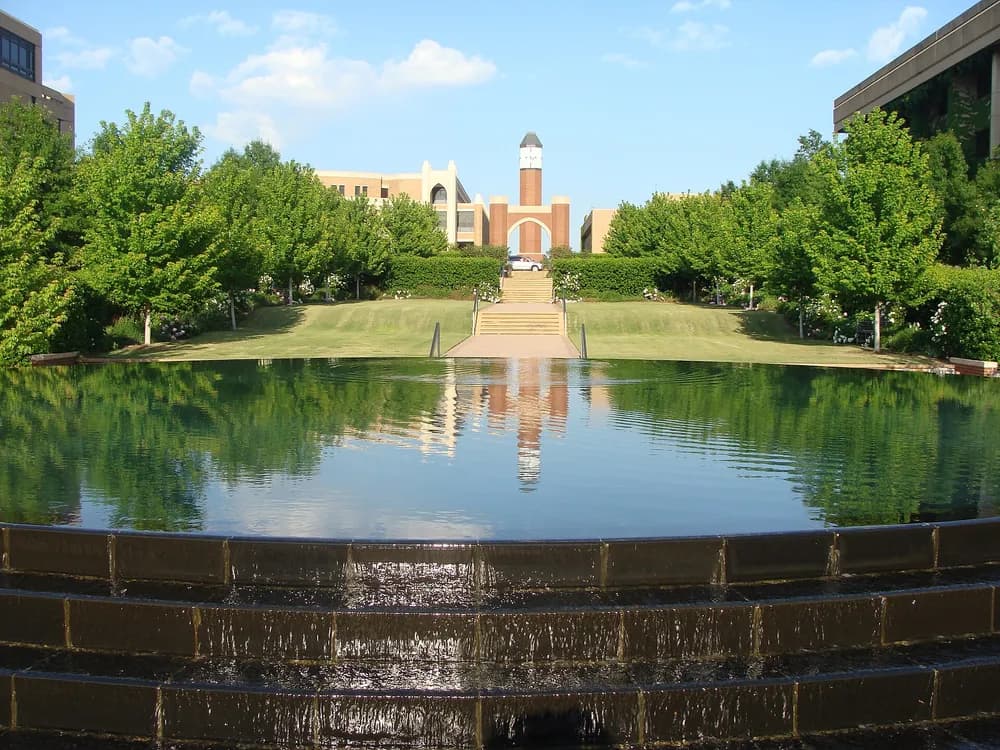
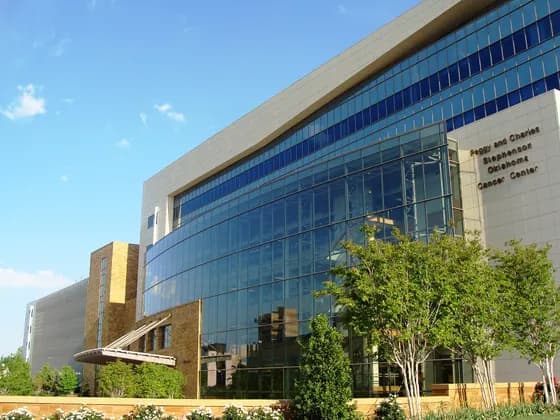
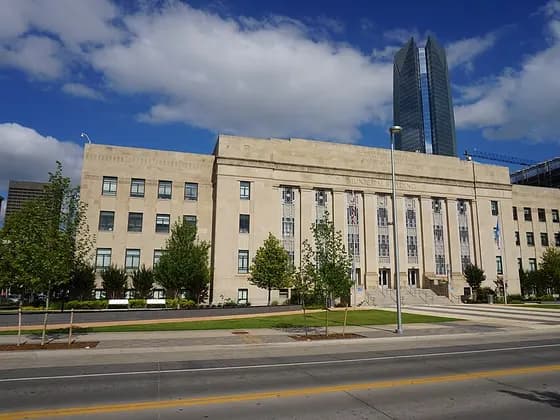

Photo: Nightryder84 · CC BY-SA 3.0 · cropped
Photo: Nightryder84 · CC BY-SA 3.0 · Photo: Michael Barera · CC BY-SA 4.0 · Photo: xiquinhosilva · CC BY 4.0
The University of Oklahoma College of Medicine MD program at a glance (2027 entry)
The University of Oklahoma College of Medicine (OU College of Medicine) awards the MD, or Doctor of Medicine, through a four-year program of about 150 credit hours. You train on one of two tracks. The Oklahoma City track sits on the OU Health Campus, which OU announced in September 2026 is being named the Harold Hamm Health Campus. The Tulsa track is at the OU School of Community Medicine (SCM), a regional campus with a parallel curriculum.
If you enter in 2027 you join the Class of 2031 and study FrontierMD. It applies to everyone who started in fall 2025 or later, on both campuses. The college says it centers on active learning and earlier clinical rotations. It replaced a design with two full preclinical years.
The first 18 months are the pre-clerkship, or preclinical, phase of classroom, lab and small-group teaching. Clerkships in fields such as surgery and pediatrics then start in January of your second year, about six months earlier than in the old design. The college calls these stages Phase 1 (preclinical) and Phase 2 (clerkships). Phase 3, the post-clerkship phase, follows with electives and preparation for residency. Electives are rotations you choose yourself, and residency is the supervised specialty training every new physician completes. The required Step 1 of the United States Medical Licensing Examination (USMLE) now comes after the clerkships.
The two tracks share course objectives, assessment methods and one graduation standard, but the experience differs. Oklahoma City students take clerkships in blocks, one specialty at a time. Tulsa students take a longitudinal integrated clerkship (LIC), training across specialties side by side and following patients over time.
The college's stated focus is better health in Oklahoma, particularly for rural and underserved populations, and it says about half of its physician graduates practice in the state. Enrollment is growing: the Class of 2030 has 217 students, 180 in Oklahoma City and 37 in Tulsa, and the college plans for 232. The Liaison Committee on Medical Education (LCME), which accredits MD programs in the United States, lists the program as fully accredited, with its next survey in 2026-27.
| Degree | MD (Doctor of Medicine) |
|---|---|
| Program length | 4 years; 3-year pathway for up to six Tulsa students per class |
| Curriculum | FrontierMD, for students entering from fall 2025 |
| Class size | 217 in the Class of 2030: 180 Oklahoma City, 37 Tulsa |
| Tracks | Oklahoma City, or Tulsa at the School of Community Medicine |
| Teaching style | Case-based small groups in an integrated preclinical phase |
| First patient contact | Year 1: people trained to act as patients; clerkships from January of year 2 |
| Step 1 timing | Required after Phase 2; optional after Phase 1 |
| Grading | Preclinical Satisfactory/Unsatisfactory; clerkships A to F |
| Accreditation | LCME, full; next survey 2026-27 |
What makes the University of Oklahoma College of Medicine MD program different
Clerkships start 18 months into the program
Phase 1 ends in December of your second year, and clinical rotations start in January. In the older design, clerkships began at the start of year 3.
Step exams come after your clerkships
The required Step 1 sitting follows Phase 2, so you take it with a year of clinical work behind you. You can enroll in up to 12 weeks of preparation courses first. You can also choose an earlier sitting after Phase 1.
A Tulsa track built on community medicine
SCM offers all four years of the MD, with seven extra objectives on community and population health. Its students add lifestyle courses covering nutrition counseling and culinary medicine. During the clerkship phase they also care for a panel of patients at the free, student-staffed Bedlam Clinics.
A three-year MD route into Tulsa residencies
Up to six SCM students per class can finish the MD in three years, then aim for an SCM primary care residency in pediatrics, family medicine or internal medicine. You apply through the Match, the national system that places graduates in residencies.
Ultrasound labs taught with sonography students
A September 2026 college article says medical students get eight ultrasound labs in Phase 1 at the Interprofessional Sonography Laboratory on the Oklahoma City health campus. Sonography students from the College of Allied Health show you how to scan, then you try it on standardized patients, people trained to act as patients. Topics track the organ systems you are studying.
Case groups that change every semester
A January 2026 sheet for faculty describes 19 small groups of 9 to 11 students, each working through one case a week over two sessions. You rotate to a different group each semester, so you learn alongside new classmates across Phase 1.
How University of Oklahoma College of Medicine teaches medicine
Phase 1 is built from 12 courses, which the college calls bricks: short segments that build on each other, each followed by an exam. Many follow body systems, such as Cardiovascular, Respiratory, and Renal. The college calls this preclinical curriculum integrated. The MD page says basic science, clinical skills and patient-centered experiences are combined from day one, and lists lecture, lab, small-group learning and early clinical exposure for these 18 months.
Case-based learning (CBL) is a major format. Each case gives you patient information in stages, so your group has to suggest possible diagnoses, interpret test results and make management decisions as the picture changes. Science such as physiology, pharmacology and immunology is built into the case, which ties the course you are studying to the way a physician thinks about a patient.
Clerkships change how you learn, because you work on clinical teams with faculty and residents. Some structured teaching stays: the psychiatry clerkship, for example, adds case-based learning and simulation exercises.
Tulsa adds its own layer, and SCM students must complete the SCM-specific coursework to be promoted. Alongside lifestyle medicine, an SCM page last updated in March 2021 describes a monthly Student Academy where medical and physician assistant students work through topics such as diabetes and mental health. The week-long SCM Institute, held August 12-15 in 2025, puts students from different health professions in teams with local providers, service organizations and patients.
The ways you will learn
| Case-based learning sessions | Two 2-hour small-group sessions a week on one case. On day 1 you explore the case and set learning objectives. On day 2 you report back and build a map of how the disease works. A faculty facilitator guides the discussion and gives feedback on the spot. |
|---|---|
| Clinical Medicine | College pages describe learning to interview and examine with standardized patients in a clinical skills center, before you work in a hospital. |
| Personal and Professional Development (PPD) | PPD I to VII span the whole program. Small groups, organized through learning communities of faculty mentors and student peers, discuss social determinants of health, healthcare systems, ethics, professional identity and career choices. A May 2024 role description says facilitators also support your clinical and physical exam skills. |
| Simulation | At Oklahoma City's Clinical Skills Education and Testing Center (CSETC), students practice on adult and pediatric mannequins that simulate medical conditions, including a full birth simulator. |
| Clerkship teaching | Core rotations combine patient care with set teaching. The neurology department's undated page describes 20 cases plus two Objective Structured Clinical Exams (OSCEs), hands-on skills tests with standardized patients. Mid-clerkship feedback is in person and covers your patient logs, evaluations and write-ups. |
A typical week on the University of Oklahoma College of Medicine program
In Phase 1, scheduled time averages fewer than 28 hours a week across a semester, under college rules. That count includes required preparation shown on your schedule, such as assigned reading. Classes generally fall between 8:00 a.m. and 5:00 p.m., Monday to Friday, with rare evening or weekend sessions.
A January 2026 sheet for faculty places CBL on Tuesdays and Thursdays from 10:00 a.m. to noon in semesters 1 and 2. In semester 3 it moves to Wednesdays and Fridays at the same time. Clinical Medicine, PPD and teaching for your current course sit around those sessions.
Attendance is expected at all teaching and is mandatory at sessions your course directors mark as required. In Phase 1 you can take up to five discretionary days off a semester for personal reasons, under a college rule revised in October 2026. These stop in the clinical phase, where absences need approval, although time off to access health care is always excused.
How anatomy is taught at University of Oklahoma College of Medicine
An undated Oklahoma City MD program Events page describes first-year dissection teams of eight students. Each team meets its donor's family at the Anatomical Donor Memorial Lunch, which the college began in 2001. Students are prepared for the conversation and encouraged to learn the donor's life story. A memorial Service of Remembrance follows later.
The college's technical standards, revised March 2, 2026, say students must be able to observe demonstrations and take part in scientific experiments, including cadaver dissections. Donated bodies reach the college through its Willed Body Program.
You also meet anatomy on living people in the ultrasound labs. A September 2026 college article describes first-years scanning standardized patients and learning to tell muscles, nerves, arteries and vessels apart.
When you first meet patients at University of Oklahoma College of Medicine
Patient contact starts in year 1 with standardized patients. At Oklahoma City's CSETC they are community members trained to play patients with different symptoms and personalities. There you practice taking a history, examining and communicating, including hard conversations such as delivering bad news. They give you feedback, and each encounter is recorded so you can review it with faculty.
An undated college page says preclinical students are formally scheduled for clinical experiences at various points. You can also sign up for extra student-led shadowing within OU Health, the college's academic health system. Shadowing means following a physician through a working day.
Once clerkships start, college rules revised in September 2026 treat you as a learner, not an employee, supervised at all times by a licensed health professional. You can take a history and do a basic exam with a supervisor immediately available on site. Intimate exams and invasive procedures need a supervisor physically with you.
College rules limit clinical work to 80 hours a week averaged over four weeks, with at least one day in seven free, also averaged. No shift may run more than 24 hours, and you must get at least 8 hours off between shifts and 14 after a 24-hour call. If you are too tired to work safely, you must say so and are released from duty without penalty.
The University of Oklahoma College of Medicine curriculum, year by year
- Phase 1, year 1
Semesters 1 and 2: the first preclinical courses
You start with Transition to Medical School, a required orientation course, on July 6-9, 2027. Fall and spring then run as a chain of short courses. The order and lengths below come from the Class of 2030 schedule, revised June 10, 2026, and the charts note that the curriculum can change.
- Fall: Principles HHD, The Human Form, Microbiology and Immunology, Head, Neck, and CNS, and Homeostasis I, each four weeks.
- Spring: Homeostasis II (four weeks), Blood, Hematopoiesis, and Lymphatics, Cardiovascular, Respiratory, and Renal (seven weeks) and Gastrointestinal and Hepatobiliary (four weeks).
- Clinical Medicine I and II and PPD I and II run through both semesters.
- Oklahoma City's Class of 2031 page lists a first-day party where you meet your module, a small group that is your academic home through the preclinical phase.
- Tulsa students add lifestyle medicine and a separate course shown as AQH. SCM's older course list has a humanities course, America's Quest for Health, that matches those initials.
- The Class of 2030 schedule gives a summer break from May 31 to July 5, about five weeks.
- Phase 1, year 2
Semester 3: final courses and Transition to Clerkships
The last preclinical semester finishes the remaining courses, then prepares you for clinical work.
- Reproduction and Endocrinology (four weeks), Neurology and Psychiatry (six weeks) and Multisystem Diseases (five weeks).
- Neurology and Psychiatry gives three weeks to psychiatry: psychopathology, assessment and treatment, taught partly through clinical cases.
- Clinical Medicine III and PPD III run alongside, and Tulsa students continue lifestyle medicine.
- Transition to Clerkships takes about five weeks around Thanksgiving for four-year students. Everyone must complete it before starting clinical work.
- You can choose to sit Step 1 at the end of this phase, after meeting with the Student Success team.
- Phase 2
Clerkship phase
Phase 2 runs from January of year 2 to December of year 3. It holds 48 weeks in total: seven core clerkships plus selectives, short rotations you pick from a set list. Your order will vary, because the charts show only a sample sequence. On the current schedule, a 2027 entrant would be in Phase 2 from around January to December 2029.
- Medicine, 8 weeks: adult inpatients with non-surgical illness.
- Surgery, 8 weeks: inpatient and outpatient care, with post-operative care and basic surgical skills.
- Obstetrics and Gynecology, 6 weeks; Pediatrics, 6 weeks, from newborns to adolescents.
- Psychiatry, 6 weeks: inpatient, outpatient and emergency-based care.
- Family Medicine, 4 weeks, mostly outpatient, and Neurology, 4 weeks.
- Selectives, 6 weeks: two-week rotations.
- PPD IV and V continue. Tulsa students take the LIC, with HSSP, listed by SCM as Health Systems Science in Practice.
- The neurology page, undated and worded for year 3, describes two 2-week rotations, weekday team rounds plus one weekend day, and call on four days.
- Phase 3
Post-clerkship phase: Step exams, electives and residency preparation
Phase 3 starts in January of year 3 and runs to graduation. On the current schedule, a 2027 entrant would start around January 2030 and finish in spring 2031.
- USMLE Step 1 Prep Course, up to 8 weeks, and USMLE Step 2 CK Prep Course, up to 4 weeks.
- You cannot enroll in Phase 3 clinical rotations until you have passed Step 1.
- Electives fill most of the phase, and PPD VI and VII continue.
- The MD page lists sub-internships, or acting internships, in the clinical phase. In these rotations you take on close to a first-year resident's responsibility.
- Oklahoma City track: a 2-week Interprofessional Education course on population health, with other health professions, plus a 2-week selective.
- Tulsa track: a Geriatrics Course, four weeks on the Class of 2029 chart.
- Transition to Residency closes the program.
- You apply through the Match, and results come on the third Friday of March.
- SCM 3+3
The accelerated three-year pathway in Tulsa
Once at SCM, you can apply for this pathway early in your first fall. Up to two students join for each of pediatrics, family medicine and internal medicine, and it begins in first-year spring. Finishing in three years leads toward a three-year SCM residency in your field, through the Match.
- Added courses: a Career Confirmation Course in first-year spring and summer, then Longitudinal Primary Care in year 2, a clinic where you keep seeing the same patients.
- The Class of 2030 chart shows a 4-week Step 1 prep course and a 2-week Step 2 prep course in the fall of year 3.
- Year 3 spring holds four weeks of sub-internship and six weeks of Transition to Residency.
- Policy 406 (revised September 16, 2026) sets May 31 of your third year as the latest date for Step 2 CK.
- SCM's pathway page, updated in June 2026, says vacation and Step study time are reduced.
- A college rule revised in April 2026 lets you return to the four-year route before July 1 of Phase 2. A course or Step 1 failure can also send you back.
How you are assessed at University of Oklahoma College of Medicine
In Phase 1, courses are graded Satisfactory/Unsatisfactory under a college rule revised in September 2026. Each course ends with an exam, and courses longer than two weeks add a low-stakes early warning assessment by the 25 percent mark. Policy 408 (revised June 21, 2023) makes exams closed, so you cannot keep copies of questions, and has you sit in-person exams at your home campus on your own laptop.
Clerkships are graded A to F, and in letter-graded courses a grade below C does not pass. The college's grading page gives clinical electives a Satisfactory/Unsatisfactory grade, and each syllabus states its scale. You get feedback by the midpoint of any course of four weeks or more, and a written narrative assessment after each core clerkship. Final grades are due within five weeks.
National Board of Medical Examiners (NBME) subject exams, often called shelf exams, are standardized tests taken after a rotation. The psychiatry department says its clerkship is assessed by clinical evaluations, an OSCE and the NBME Psychiatry Subject Examination. College rules require every student to take and pass a standardized clinical skills assessment, the OSCE, before graduation. It is tied to the end of the core clerkships, and if you fall short you remediate and are assessed again.
USMLE Step 1 tests the sciences behind medicine, and Step 2 CK tests the clinical knowledge you need to care for patients under supervision. LCME accreditation is what makes OU students eligible to sit the USMLE. In August 2026 the USMLE program announced a move to designated testing dates from January 2029, with Step exams offered less often each year. Its June 2026 announcement had named 2028.
Under Policy 406.11 (revised June 7, 2026), the required Step 1 sitting follows Phase 2. Policy 406 (revised September 16, 2026) encourages Step 2 CK as soon as possible after Phase 2. It says you must take it no later than June 30 of the year in which you complete Phase 2. Because Phase 2 ends in December on the college's charts, ask Student Affairs how that date applies to your class.
On the current schedule, worked out from the Class of 2029 and 2030 charts, a student entering in 2027 would finish Phase 2 around December 2029. The required Step 1 sitting and Step 2 CK would both fall in the first half of 2030, about a year after the switch to designated testing dates. Only the optional Step 1 sitting after Phase 1 would fall near the switch, around the turn of 2029.
- Step 1 results: reported pass/fail since January 26, 2022.
- Step 1 limits: four attempts, all within 18 months of finishing Phase 2, or you are dismissed. A failure at the optional sitting still lets you enter Phase 2, with the retake after it. No pass by the end of the first Phase 3 semester means a leave of absence.
- Step 2 CK: a three-digit score, with a current minimum pass of 218. You must pass to be certified for the Match.
- Time limit: all graduation requirements within six years of starting, under Policy 406.11.
- Phase 1 failures: up to two remediation attempts for one failed course. Two or more failures in semesters 1 and 2 mean repeating the year. A failure given for missing attendance requirements cannot be remediated. Phase 1 must be finished within 30 months of starting, with no more than two semesters repeated.
- Failed part of a clinical course, such as a written exam: up to two remediation attempts. Failing the second means a non-passing course grade.
- Failed clinical course: academic probation and a repeat within one calendar year.
- Class quartiles: calculated separately for each track from percentage course grades weighted by clock hours, after Phases 1 and 2.
- Graduation honors: Special Distinction for the top 5 percent of each track and Distinction for the rest of the top sixth, using recorded Phase 1 and 2 grades. 3+3 students are not eligible.
- Policy 432, last revised February 1, 2023, before FrontierMD, has second-year students take the NBME Comprehensive Basic Sciences Exam near the end of the preclinical curriculum.
University of Oklahoma College of Medicine clinical rotations: where you will actually train
Your track decides where you spend medical school, and it is set before you start, because the tracks differ from the first year. Under college rules, applicants offered a place state a preference in January and can describe any special circumstances. The Admissions Board fills each track by preference and availability, and declining your assigned track rescinds your offer. After you accept, you can ask in writing to change track, and the board decides. Wait-list offers are for whichever track has space, and declining one removes you from the list.
In Oklahoma City, the college sits at the center of OU Health, formed in 2021. The campus About page says students and residents train at on-site institutions including the OU Health University of Oklahoma Medical Center, Oklahoma Children's Hospital OU Health and the Veterans Affairs Medical Center. The MD page shortens the first to OU Health Medical Center. The About page adds that affiliate training programs run at hospitals and clinics around the state. The neurology department's undated page lists services at OU, Oklahoma Children's Hospital and the VA.
Under a college rule revised in October 2026, Tulsa students complete the clinical curriculum through the LIC. It depends on continuity with patient panels and preceptors, the physicians who teach you in practice. You join at set entry points, so a missed start may cost six months or more. An SCM page last updated in October 2023, before the July 2025 launch, says all clerkships run together across the year. The MD page lists large community hospitals, OU Health clinics and community physician practices.
SCM's residency page, updated in October 2026, names Hillcrest, St. Francis and Ascension St. John as partner hospitals for resident training. Undated catalog pages from the older curriculum name the same three for the Tulsa clinical years. SCM's emergency medicine department, on a page updated in June 2026, says OU students from both campuses can take its rotation, typically four weeks with 15 shifts at Hillcrest Medical Center.
In the clerkship phase, Tulsa students also work in the free Bedlam Clinics, supervised by faculty. Bedlam E runs on Tuesday and Thursday evenings for acute and episodic care, and Bedlam L serves chronically ill patients. The first Bedlam evening clinic opened in 2003, and MD and physician assistant students staff the clinics. SCM's curriculum page, updated in December 2025, makes completing all required Bedlam E clinics a graduation requirement.
College rules have the Office of Community Partnerships review external sites for required rotations. Any required site more than 60 miles from your home campus must provide housing with a private lockable bedroom and a full bathroom. The rule does not cover a required rotation at the other OU campus, such as a Tulsa student rotating in Oklahoma City. An undated handbook passage on the older third year describes a random lottery that sets the order in which students pick schedule templates.
The MD page names the first two as part of OU Health. The VA, a 192-bed facility, is affiliated with the health campus. Dean McGee houses the college's ophthalmology department.
- OU Health University of Oklahoma Medical Center
- Oklahoma Children's Hospital
- Oklahoma City VA Health Care System
- OU Health Dean McGee Eye Institute
Hospitals as named by SCM's residency page and older catalog pages. SCM's emergency medicine department calls Hillcrest its main teaching hospital. Saint Francis describes itself as a 1,112-bed tertiary center.
- Saint Francis Hospital
- Hillcrest Medical Center
- Ascension St. John Medical Center
- OU Bedlam Clinics
The college honored the Chickasaw Nation Medical Center in 2023 as an Outstanding Premier Medical Education Hub. OU News described hubs as community and tribal hospitals hosting third- and fourth-years for one-month rotations and arranging housing. The effort was part of the TRU-OK initiative for students from tribal, rural and underserved areas, with federal funding expected through June 30, 2027.
- Chickasaw Nation Medical Center, Ada
Electives, selectives and away rotations at University of Oklahoma College of Medicine
You take six weeks of selectives in Phase 2, as two-week rotations, and options differ by campus. The current catalog includes anesthesiology, dermatology, emergency medicine, neurosurgery, ophthalmology, orthopedic surgery, otorhinolaryngology, pathology, radiology and urology, plus medical informatics in Tulsa. A four-week Tribal Health selective in Tulsa is listed for fourth-years.
The Oklahoma City electives catalog lists inpatient, outpatient, research and special study versions by department, mostly four weeks long. It also lists sub-internships in many specialties.
Away rotations fall under a college rule revised in September 2026. You can do community-based electives at in-state sites, or away electives at another US medical school, usually arranged through the Association of American Medical Colleges (AAMC) Visiting Student Learning Opportunities service. You apply at least 60 days ahead and pay your own travel, housing and fees. Off-campus electives are not allowed during or after Transition to Residency, or in your graduation month.
The same rule caps you at six electives in any one discipline, not counting research and special study electives. For international study, fourth-years in good academic standing can apply to rotate at an affiliated program in September or February. Funding may be available, but not for every applicant. College officials must also visit international affiliates regularly to check safety and supervision.
Dual degrees and research years at University of Oklahoma College of Medicine
The MD/PhD program runs jointly with the Oklahoma Medical Research Foundation and is offered on the Oklahoma City track. You enroll in the College of Medicine and the Graduate College at the same time and receive tuition and a stipend. It runs for eight years, starting with 10 weeks of lab research the summer before you matriculate.
The program's design page, undated and still built on two preclinical years, shows medical school first, then three or four years of graduate work, then the clinical years. Graduate options are Biochemistry and Molecular Biology, Cell Biology, Microbiology and Immunology, Pathology, and Physiology. Students must apply for an F30 award from the National Institutes of Health. On intake, the Dual-Degree page says two students a year and the MD/PhD page says up to three.
Policy 409, last revised September 4, 2018, describes Master of Public Health (MPH) coursework in what is now the Hudson College of Public Health, from one course up to a master's degree. It calls this a flexible program rather than a true dual or joint degree. Its suggested timing assumes the older curriculum, so check the current arrangement with the college.
The college presents research as a choice that depends on your specialty and goals. Many departments list four-week research or scholarship electives. Under college rules, pre-approved projects and summer activities can appear on your transcript as Satisfactory/Unsatisfactory, with no credit and no effect on GPA or class rank. They can also be highlighted in your Medical Student Performance Evaluation, the summary sent with residency applications.
In its 2025 cycle, the Family Medicine Summer Research Experience gave about 10 rising second-years a seven-week primary care project with a mentor and a $2,000 stipend. The college held a Research Symposium on November 6, 2026, and a student research portal and specialty research liaisons help you find projects.
A leave rule revised in September 2026 lets you ask for time away for a research experience or another degree, such as an MPH. Leave normally lasts up to one academic year, though research or approved dual-degree leave can run longer. Research leave counts toward the six-year limit, while time enrolled in approved dual-degree coursework does not.
Facilities and support at University of Oklahoma College of Medicine
Where you will learn
In Oklahoma City, preclinical life centers on the Basic Sciences Education Building, where nearly all class-based teaching happens. An undated college page says each module has a home there, with a desk and personal storage for each student, computer workstations and a space for small-group discussion.
The CSETC is a 22,000-square-foot simulation center on the health campus, with simulation suites, surgical skills labs and exam rooms. It reports more than 40,000 hours of simulation a year and is an American College of Surgeons Accredited Education Institute.
The Interprofessional Sonography Laboratory opened in 2024 at the College of Allied Health and has nine imaging stations. It offers self-study open lab hours several days a month, and a faculty advisor says interested students can use it throughout all four years.
SCM is on the OU-Tulsa Schusterman Campus, 60 acres the university bought after a 1999 gift. OU-Tulsa lists a Simulation Center that serves medicine, physician assistant and other programs, on a page last updated in November 2023. A 2014 OU News article on the groundbreaking described plans for a 16,000-square-foot Tandy Education Center. It was to have 10 exam rooms, two intensive care and emergency rooms and space to train standardized patients, and be open to all SCM students.
Support while you study
The Student Success Program's learning specialists help with study strategies, test-taking and time management. Any student having academic difficulty can get one-on-one coaching, for coursework or Step exams. Peer Assisted Learning (PAL) offers free one-on-one tutoring in Phase 1 from students who did well in that course. You are also encouraged to share your academic performance with your Learning Community mentor.
The Career Advising and Mentor Program (CAMP) gives Oklahoma City students a clinical faculty advisor in their chosen field, who helps with schedules, residency applications and interviews. On SCM's CAMP page, last updated in January 2021, first- and second-years meet a physician mentor in groups of three to five. From year 3, an attending, or senior physician, at the Bedlam Longitudinal Clinic mentors you and works with you twice a month.
Student Counseling Services offers confidential counseling at no cost, and those who treat you take no part in your academic evaluation. You can also ask for academic counseling from someone with no role in assessment or advancement decisions. Wellness workshops run each year, and Talk About It Tuesday is a monthly student gathering, with therapy dogs a favorite.
Is the University of Oklahoma College of Medicine program right for you?
This program may suit you if
- You want clerkships to start after 18 months and would rather sit the required Step 1 with a year of clinical work behind you.
- You learn well by working through patient cases with a small group twice a week.
- You are drawn to community medicine and would welcome Bedlam Clinic patients, lifestyle medicine and an LIC in Tulsa.
- You have settled on primary care early and want a three-year route toward an SCM residency.
- You want training focused on Oklahoma's health needs, in Oklahoma City or Tulsa.
Things to think about
- FrontierMD is new. When you enter in July 2027, its first class will be six months into clerkships and will not yet have reached Phase 3, which comes in early 2028.
- You can state a track preference, but the Admissions Board assigns you, and most seats are in Oklahoma City.
- Satisfactory/Unsatisfactory preclinical grades do not end comparison: class quartiles and graduation honors still use percentage grades.
- Until you pass Step 1 you cannot enroll in Phase 3 clinical rotations, so a failed attempt can change your schedule.
- The 3+3 pathway reduces vacation and Step study time, and its students are not eligible for graduation honors.
University of Oklahoma College of Medicine MD program — frequently asked questions
Applying to University of Oklahoma College of Medicine?
How to get into University of Oklahoma College of Medicine
Prerequisites, MCAT, AMCAS personal statement, secondaries and interview, step by step.
Open the guide →University of Oklahoma College of Medicine admissions profile
MCAT and GPA profile, acceptance rate, interview format and key dates.
See the profile →Compare University of Oklahoma College of Medicine with other schools
Put the teaching style, anatomy teaching and clinical sites next to another school.
Open the comparison →Prepare for the University of Oklahoma College of Medicine interview
Format breakdown, school-specific sample questions and prep tips from tutors who interviewed here.
Read the guide →Where this University of Oklahoma College of Medicine program guide came from
This guide was written from 102 official sources — University of Oklahoma College of Medicine's own program pages and curriculum documents, plus the accreditor and the hospitals and health systems the school trains students in where they publish detail — read on 2026-11-07, then checked claim by claim against those sources.
- OU College of Medicine: Doctor of Medicine (MD) program page
- 4-Year MD Curriculum, Class of 2030: Curriculum at a Glance (dated June 10, 2026)
- 4-Year MD Curriculum, Class of 2029: Curriculum at a Glance (dated July 14, 2025)
- Four-Year MD Curriculum, Class of 2028: legacy Curriculum at a Glance (dated July 7, 2023)
- MD Program Academic Calendar 2026-2027 (revised June 22, 2026)
- Phase I Preclinical Curriculum Schedule, 2026-2027 (revised June 10, 2026)
- OU College of Medicine Policy Index
- Policy 211: Educational Site and Track Assignment (revised March 2, 2026)
- Policy 406: USMLE Examination Requirements (revised September 16, 2026)
- Policy 406.11: USMLE Step 1 (revised June 7, 2026)
- Policy 413: Standards of Academic Achievement (revised September 16, 2026)
- Policy 401: Promotion and Graduation Standards (revised September 16, 2026)
- Policy 321: Student Educational Obligations and Work Limitations (revised September 16, 2026)
- Policy 428: Comparability of Education and Assessment (revised June 24, 2026)
- Policy 432: Comprehensive Basic Sciences Exam for USMLE Readiness (revised February 1, 2023)
- Policy 331.1: Deceleration from the SCM 3-Year Pathway (revised April 15, 2026)
- Policy 306.1: Extended Absence in the Longitudinal Integrated Clerkship (revised October 21, 2026)
- Policy 405: Off-Campus Electives (revised September 16, 2026)
- Policy 316: Guidelines for Honors Designation of Graduates (revised August 25, 2026)
- Policy 304: Computation of Quartile Rankings for Classes (revised February 18, 2026)
- Policy 425: Narrative Assessment (revised June 24, 2026)
- Policy 425.1: Formative Feedback (revised June 24, 2026)
- Policy 404: Academic Credit for Research and Other Activities (revised September 16, 2026)
- Policy 300: Academic Counseling (revised June 7, 2026)
- Policy 400: Educational Program Objectives (revised October 21, 2026)
- Policy 308.1: International Affiliations (revised March 4, 2026)
- Policy 330: Medical Student Performance Evaluation (revised June 7, 2026)
- Policy 422: Curriculum Evaluation (revised October 21, 2026)
- Policy 409: MD/MPH Program Policy (last revised September 4, 2018)
- College Catalog overview page (undated)
- Undergraduate Medical Education overview page (undated)
- College Catalog: Grading Policy page (undated)
- OU School of Community Medicine home page (updated September 16, 2026)
- About the OU School of Community Medicine, with history timeline (updated April 8, 2026)
- OU School of Community Medicine: Curriculum, current students (updated December 4, 2025)
- Accelerated MD Pathways at SCM, 3+3 (updated June 16, 2026)
- Longitudinal Integrated Clerkships (LIC), OU School of Community Medicine (updated October 18, 2023)
- Student Experience, OU School of Community Medicine (updated November 24, 2025)
- Student Academy, OU School of Community Medicine (updated March 16, 2021)
- SCM Institute, OU School of Community Medicine, 2025 event (updated December 11, 2025)
- OU Bedlam and PAL Clinics, OU School of Community Medicine (updated November 24, 2025)
- MD Student Handbook: Academic and Education Policies (undated)
- Nutrition Education, OU College of Medicine
- Special Programs: International Studies in Medicine
- Dual-Degree Program page
- MD/PhD Degree Program page
- MD/PhD Program Design, Curriculum and Advising (undated)
- LCME Accreditation page, OU College of Medicine
- Clinical Skills Education and Testing Center page, College of Medicine
- CSETC home page
- Student Support, Prospective Students (undated)
- Academic and Student Success, MD Program OKC (undated)
- Clerkships Catalog, College of Medicine course directory
- Selectives Catalog, College of Medicine course directory
- Electives Catalog, College of Medicine course directory
- Events, MD Program OKC: Anatomical Donor Memorial Lunch and Match Reveal (undated)
- OU News: College of Medicine Welcomes Largest Class at White Coat Ceremony (July 27, 2026)
- Student Modules and Lounges (undated)
- Department of Psychiatry and Behavioral Sciences: Undergraduate Medical Education
- USMLE: Designated Testing Dates Information Hub
- USMLE: Updated Timeline for Designated Testing Dates, transition in January 2029
- USMLE: Examination Results and Scoring
- LCME: Accredited Programs directory (updated November 2, 2026)
- Department of Neurology: Third-Year Clinical Clerkship (undated)
- Policy 203: Technical Standards (revised March 2, 2026)
- VA Oklahoma City Health Care: About us
- OU Health Dean McGee Eye Institute
- Saint Francis Hospital, Saint Francis Health System
- OU School of Community Medicine: Departments and Residency Programs (updated October 6, 2026)
- OU News: College of Medicine Honors Chickasaw Nation Medical Center (August 22, 2023)
- OU News: $16 Million Federal Grant, TRU-OK (October 23, 2023)
- Policy 408: Administration of Examinations (revised June 21, 2023)
- Policy 335: External Clinical Site Requirements (revised December 17, 2025)
- Policy 332: Role of Medical Students in the Healthcare Workforce (revised September 16, 2026)
- Policy 410: Clinical Supervision of Medical Students (revised September 16, 2026)
- History of the College of Medicine
- College News: Interprofessional Sonography Laboratory (September 21, 2026)
- College News: Harold Hamm gift and Health Campus naming (September 22, 2026)
- Case-Based Learning Small-Group Facilitator position description
- Case-Based Learning Facilitator Information sheet (January 2026)
- Personal and Professional Development Small Group Facilitator position description (May 2024)
- Research and Volunteering, MD Program OKC
- Wellness, OU College of Medicine
- New Students, Class of 2031
- Shadowing and Mentoring, MD Program OKC (undated)
- Career Advising and Match Program, OU School of Community Medicine (updated January 27, 2021)
- MD Student Handbook: Student Support
- MD/PhD Program: Frequently Asked Questions
- Family Medicine Summer Research Experience (2025 cycle)
- Research Symposium, OU College of Medicine (2026)
- About the OU Harold Hamm Health Campus
- Department of Anesthesiology, OU College of Medicine
- OU-Tulsa Centers (updated November 6, 2023)
- OU News: Groundbreaking Held for Tandy Education Center (2014)
- OU-Tulsa Emergency Medicine: Medical Student Education (updated June 23, 2026)
- OU-Tulsa Emergency Medicine: Selective (updated June 23, 2026)
- Dual Degrees, University of Oklahoma Hudson College of Public Health
- Policy 306: Absences (revised October 21, 2026)
- Policy 307: Leave of Absence (revised September 16, 2026)
- Policy 323: Timeliness of Course Grades (revised June 7, 2026)
- USMLE: Step 1
- USMLE: Step 2 CK
Curricula are restructured between cycles. Anything here that decides your application — how anatomy is taught, a clinical campus assignment, a required research year — should be confirmed against the official page for your entry year.
Applying to University of Oklahoma College of Medicine?
We help US applicants with MCAT strategy, the AMCAS personal statement, secondary essays and interview prep — everything you need for a competitive University of Oklahoma College of Medicine application.