
The TTUHSC School of Medicine Lubbock MD program
What you actually study, and where you will be
TTUHSC School of Medicine Lubbock's MD is a 4-year program with an integrated curriculum, with patient contact from Year 1 and clinical rotations in Lubbock, Amarillo and Midland-Odessa in West Texas (2027 entry). TTUHSC's MD begins with Phase 1 in Lubbock, about 18 months of teaching from August of Year 1 to April of Year 2. Integrated organ-system blocks run alongside clinical skills courses that bring in standardized patients, people trained to play patients, from the first year. You then move to one of four clinical campuses (Lubbock, Covenant in Lubbock, Amarillo or Odessa) for six eight-week clerkships, the core clinical rotations. The final year mixes required rotations with five months of electives, and a three-year family medicine track is also offered.
- Degree
- MD
- Length
- 4 years
- Teaching
- Integrated
- Clinical contact
- Year 1

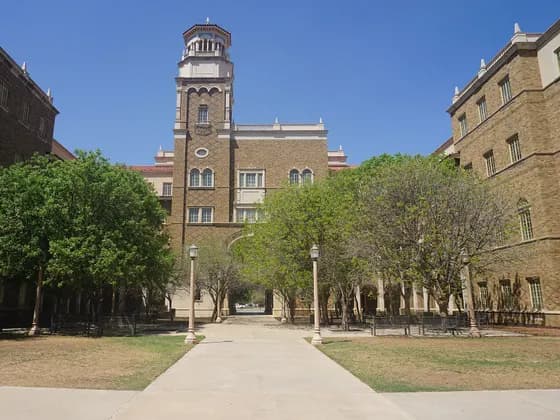

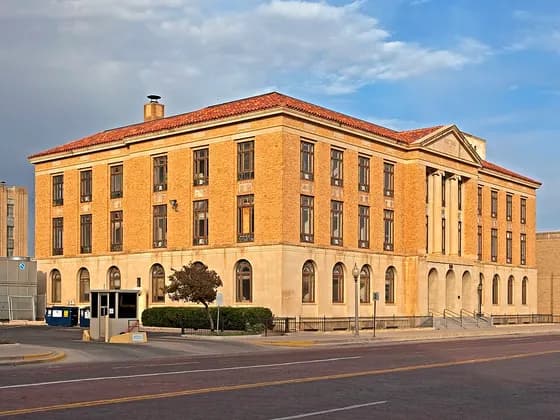
Photo: Texas Tech University - University Student Housing · CC BY 2.0 · cropped
Photo: Michael Barera · CC BY-SA 4.0 · Photo: Billy Hathorn ( talk ) · CC BY 3.0 · Photo: Leaflet · CC BY-SA 3.0
The TTUHSC School of Medicine Lubbock MD program at a glance (2027 entry)
Texas Tech University Health Sciences Center (TTUHSC) School of Medicine, in Lubbock, Texas, awards the MD after four years, or after three on its Family Medicine Accelerated Track (FMAT). The Texas Legislature created it in 1969 as a multi-campus regional school based in Lubbock. The 2025-26 catalog explains why: West Texas covers 48% of the state's land but holds only 12% of its people. That geography still shapes the program.
The curriculum, in place since fall 2021 according to the 2025-26 catalog, has three phases. Phase 1, the pre-clerkship (pre-clinical) stage, lasts about 18 months by the program page's count and is taught in Lubbock as an integrated, one-pass, organ-system curriculum. Each body system is covered once, with its normal structure and function, its diseases and their treatment taught together. Phase 2 is a year of six eight-week clerkships, and Phase 3 is a final year of chosen rotations and electives.
The 2025-26 catalog says early clinical experiences begin in the first month. You sit Step 1 of the United States Medical Licensing Examination (USMLE) before clerkships begin in early May of your second year, and you need a pass to continue in them.
For your clinical years the class divides among four campuses: Lubbock, TTUHSC at Covenant (also in Lubbock), Amarillo and Odessa. The Liaison Committee on Medical Education (LCME), which accredits MD programs in the United States, lists the program as fully accredited, with its next full survey in 2032-33 (directory updated November 13, 2026). For MD students, LCME accreditation is what makes you eligible to sit the USMLE.
| Degree | MD (Doctor of Medicine) |
|---|---|
| Program length | 4 years; 3 years on the Family Medicine Accelerated Track |
| Class size | 182 a year (estimated, program page) |
| Pre-clerkship campus | Lubbock, August of Year 1 to April of Year 2 |
| Clinical campuses | Lubbock, Covenant (Lubbock), Amarillo or Odessa |
| Teaching style | Integrated, one-pass organ-system blocks with longitudinal clinical skills courses |
| Anatomy | Team-based cadaver dissection in a 10-week first-year block |
| First patient contact | Year 1, with standardized patients in Introduction to Clinical Medicine |
| Clerkships start | Early May of second year, after Step 1 |
| Grading | Pass/fail in Phase 1; honors, high pass, pass or fail in clerkships |
What makes the TTUHSC School of Medicine Lubbock MD program different
A three-year MD for future family physicians
The Family Medicine Accelerated Track (FMAT) completes the MD in three years and leads into a standard three-year Texas Tech family medicine residency in Lubbock, Amarillo or Odessa. Summer coursework, a Year 2 family medicine clerkship and a 16-week capstone replace the usual fourth year. The school says it was the first in the country to offer such a track.
Four clinical campuses spread across West Texas
Your clinical years are spent on one of four campuses: Lubbock, centered on University Medical Center; TTUHSC at Covenant, a community-based option in Lubbock since 2016; Amarillo; or Odessa. The same required clinical encounters and assessments apply on every campus.
Team-based cadaver dissection from the start of Year 1
After an opening week of Patients, Physicians and Populations, Year 1 starts with Anatomy, Histology and Embryology. This 10-week block uses team-based cadaver dissection.
Phase 1 electives and a weekly free clinic
Alongside Phase 1 you can take zero-credit electives that appear on your transcript once completed; the 2025-26 catalog's list runs from Rural Health to Culinary Medicine. One, the Free Clinic Elective, has you volunteering at the TTUHSC Free Clinic, which serves uninsured adults in Lubbock.
Distinction programs that run through all three phases
Five distinction programs, in medical research, care of the underserved, leadership and professional development, global health and addiction medicine, plus a Medical Humanities Certificate Program, add a structured thread to your four years.
How TTUHSC School of Medicine Lubbock teaches medicine
Phase 1 is a sequence of blocks taken one at a time. Three longitudinal courses run underneath: Introduction to Clinical Medicine (ICM), Patients, Physicians and Populations (P3) and Foundations for Success. P3 comes in one-week blocks between the science blocks, three in Year 1 and two in Year 2.
The Department of Medical Education, home of the Phase 1 faculty, describes large and small group teaching, simulation, and self-directed learning. Block syllabi set which sessions are mandatory, such as block introductions, exams and simulation activities in the SimLife Center. They also set which are selective, such as workshops, and the minimum number of these you must attend. Attendance at those mandatory and selective sessions and on-time assignments count toward a Phase 1 professionalism standard.
From May of Year 2 you learn on clinical teams, one discipline at a time, supervised by attending physicians and residents, with clerkship lectures and case conferences. The Center for Ethics, Humanities and Spirituality provides required medical ethics teaching in all four years.
The ways you will learn
| Team-based learning and small groups | In team-based learning you prepare beforehand, then work through problems with your team in class; it is among Phase 1's selective sessions. The school's learning communities, run as small groups, mix coursework with student development. |
|---|---|
| Standardized patients and OSCEs | Standardized patients portray specific health problems so you can practice interviewing and examining safely. You meet them in ICM workshops and in OSCEs (Objective Structured Clinical Examinations), timed patient encounters that count toward your ICM grade in both years and end every clerkship. |
| Integration Seminar | A student-led grand rounds that explores the science behind selected clinical cases. The 2025-26 catalog describes a seminar held once per clerkship period on each campus, where directors choose the cases and each of six groups presents one to students and faculty, reapplying Phase 1 science. It carries no credit and is graded pass or fail. |
A typical week on the TTUHSC School of Medicine Lubbock program
In Phase 1, school policy sets an average of 20 hours a week of scheduled live or online teaching and active learning, not counting preparation and study time. Longitudinal courses can add no more than 10 hours of organized activities, and block exams are computer-based.
Under the attendance policy dated April 23, 2026, Phase 1 attendance is recommended rather than required. The exceptions are the first day of each course, exams, and the mandatory sessions and minimum number of selective sessions set in each syllabus. There are no personal days, and excused absences from required sessions are limited to four a year, with requests beyond that considered only in extraordinary or unforeseen circumstances.
In clerkships the limits change. You cannot be scheduled for more than 80 hours a week of patient care, call and teaching, or for more than 30 hours in a row. You get at least one day off a week averaged over a month, and overnight call can be no more frequent than every fourth night. You must also attend all exams, the first day and at least 90% of each eight-week clerkship period.
How anatomy is taught at TTUHSC School of Medicine Lubbock
Anatomy is taught by dissection. Anatomy, Histology and Embryology (AHE) runs for 10 weeks from August of Year 1 and covers gross anatomy, tissues under the microscope (histology), development (embryology) and medical imaging, presented in a clinical context. The 2025-26 catalog describes its cadaver-based work as team-based dissection, which is also meant to build a professional attitude toward patients and colleagues.
You dissect in the Institute of Anatomical Sciences, whose lab space on the first floor of the Lubbock campus's west expansion opened in 2020. Its main teaching lab has 56 dissection stations, each with a dissection tank, lights, a monitor and two tablets, and HD cameras let faculty project a dissection to every screen. An imaging lab holds full male and female cross-sectional specimens, and prosected specimens and models can be checked out.
Bodies come from the institute's Willed Body Program, which accepts only consented donors and is governed by the State Anatomical Board of Texas. The Department of Medical Education, which oversees the lab, regards these donors as your first patients. A Surgical Anatomy elective in the 2025-26 catalog lets you observe and assist surgeons dissecting cadavers.
When you first meet patients at TTUHSC School of Medicine Lubbock
Clinical training starts in Year 1 with ICM: you learn to take a history, examine patients, write notes in SOAP format (subjective, objective, assessment, plan) and present encounters, practicing with classmates and standardized patients. The admissions page says you have the opportunity for clinical experiences from the first year through class work and mentoring by practicing physicians.
Volunteering adds more. Physicians and medical students run the TTUHSC Free Clinic for uninsured adults at Lubbock Impact on Wednesday evenings.
Full-time patient care begins with clerkships in early May at the end of Year 2, supervised by attending physicians and residents. In the final year, sub-internships (also called acting internships) give you the responsibilities of a first-year resident under supervision.
The TTUHSC School of Medicine Lubbock curriculum, year by year
- Year 1 (Phase 1)
Anatomy first, then the organ systems
Year 1 runs from orientation in late July to May. After a week of P3 come 10 weeks of anatomy, eight of general principles and, in spring, the immune, blood, cardiovascular, kidney and lung systems.
- Anatomy, Histology and Embryology (10 weeks, August to mid-October): gross, microscopic and developmental anatomy and medical imaging, with team-based cadaver dissection.
- General Principles (8 weeks, late October to December): biochemistry, cell biology, genetics, pharmacology, pathology and microbiology.
- Organ Systems 1 (10 weeks, January to mid-March): the immune, hematopoietic (blood-forming) and cardiovascular systems, from normal function to disease and drug treatment.
- Organ Systems 2 (8 weeks, late March to May): the kidneys and respiratory system, including acid-base balance.
- Introduction to Clinical Medicine 1: history-taking, examination of the head and neck, heart and lungs, and writing up and presenting encounters as SOAP notes.
- Patients, Physicians and Populations 1: one-week blocks in August, October and March on the profession, social determinants of health and professional development, plus small-group sessions within each science block.
- Foundations for Success 1, with sessions from Student Wellness, career advising and the Academic Success Team, plus an online course in interprofessional collaboration.
- Year 2 (Phase 1)
The remaining systems and Step 1 preparation
Year 2 starts in late July or early August and finishes the organ systems by late February. Seven weeks of Step 1 Enhancement follow, then Step 1 and a transition-to-clerkship orientation and bootcamp in early May.
- Organ Systems 3 (7 weeks, from the start of Year 2 to September): the digestive tract, liver and pancreas, then skin, connective tissue and the musculoskeletal system.
- Organ Systems 4 (13 weeks, late September to December): the nervous system, neuropharmacology and neuropathology, psychiatric disorders, then reproduction and cancer biology.
- Organ Systems 5 (7 weeks, January to February): endocrinology and diseases that affect several organ systems, used to practice building differential diagnoses.
- Introduction to Clinical Medicine 2: examination of the gastrointestinal, musculoskeletal, neurological, psychiatric and reproductive systems, end-of-life conversations and basic medical Spanish, which the curriculum map places in Year 2.
- Patients, Physicians and Populations 2: one-week blocks in September and February on quality and safety, health systems science, patients and families, and professional development.
- Step 1 Enhancement (7 weeks, about March and April): an independent study course to prepare for Step 1.
- Year 3 (Phase 2)
Six core clerkships on your clinical campus
Year 3 begins in early May, right after Year 2 ends. You complete six eight-week clerkships on your assigned campus, one discipline at a time and in any order, each ending with a clinical exam and a national subject exam. Descriptions are from the 2025-26 catalog.
- Internal medicine: you work as a member of the ward team, taking histories and examinations and building diagnoses, with outpatient experience in a community setting.
- Surgery: pre- and post-operative care, the operating room and clinics, as part of a surgical faculty team.
- Family medicine: the undifferentiated patient in the clinic, common problems, prevention and health promotion.
- Pediatrics: inpatient, outpatient and newborn nursery services.
- Obstetrics and gynecology: care of women across the life span, with an emphasis on prevention and on surgical and obstetric techniques.
- Psychiatry in Lubbock, per the clerkship page: two outpatient clinic weeks, two inpatient weeks at Sunrise Canyon Hospital and a consult week at University Medical Center. A child and adolescent week is at Covenant Children's Hospital, a neurology week is optional but encouraged, and the last week is for study.
- Year 4 (Phase 3)
Selectives, electives and preparing for residency
The final year runs in two-week blocks from May to the following May, and rotations can begin two weeks after clerkships end. You complete three selectives, required rotations in a specialty you choose, plus a transition-to-residency course and five months of electives. The 2025-26 catalog adds that a faculty committee reviews each plan.
- Sub-internship (one month): the 2025-26 catalog's options are family medicine, internal medicine, obstetrics and gynecology, pediatrics or surgery. The same catalog's course list also has sub-internships such as emergency medicine and orthopaedic surgery in Lubbock.
- Critical care (two weeks): the 2025-26 catalog's options are in internal medicine, surgery or pediatrics, including burn and neurological intensive care in Lubbock.
- Ambulatory care (two weeks), an outpatient rotation: the 2025-26 catalog's options are family medicine, internal medicine, obstetrics and gynecology, pediatrics or psychiatry.
- Transition to Residency: Individualized Asynchronous Learning (TRIAL), which the 2025-26 catalog describes as running through the year for four weeks of credit and building independent, reflective learning habits.
- Five months of electives.
- FMAT (3 years)
The Family Medicine Accelerated Track
FMAT students follow Phase 1 with extra family medicine work and finish in three years. After two years in Lubbock, you complete medical school and a three-year Texas Tech family medicine residency on one campus: Lubbock, Amarillo or Odessa. You can join through the Texas Medical and Dental Schools Application Service (TMDSAS) or apply from November of first year.
- FMAT 1 (8 weeks, June and July after Year 1): case-based teaching and small groups on seven themes, four to five hours a day, Monday to Thursday.
- FMAT 2 (August to March of Year 2): a longitudinal family medicine clerkship, mostly on Tuesday and Thursday mornings, with clinic, inpatient, geriatrics and palliative care experience.
- Phase 2: the five remaining clerkships, with the family medicine subject exam, which can be taken after clerkship period 3 or 4.
- FMAT 3 (16 weeks, March to June of Year 3): intensive care, family medicine inpatient and clinic work, TRIAL and time for USMLE Step 2 Clinical Knowledge (CK). You take part in May graduation and finish at the end of June.
- The LCME approved FMAT in February 2010 and the first students started in 2011; by June 2025 it had 103 graduates in 13 classes. The 2025-26 catalog says up to 10 students a year take part.
How you are assessed at TTUHSC School of Medicine Lubbock
Phase 1 grades are recorded as pass or fail on your transcript, under the grading policy dated May 15, 2025. The computer-based block exams can mix faculty-written and National Board of Medical Examiners (NBME) exams, and a block needs a final average of 70. One failed exam a year needs no retake if that average holds; two or three in Year 1 (two in Year 2) go to the promotions committee, which can approve retakes, each needing 75%. Four or more (three or more in Year 2) bring fail grades for those blocks and referral to the committee for repeating the year or dismissal.
Clerkships are graded honors, high pass, pass or fail. Each grade combines clinical performance ratings from attending physicians and residents, the Clerkship Clinical Examination (CCE), an NBME subject exam (often called a shelf exam) and professionalism. The CCE pairs a standardized-patient OSCE in week 8 with a clerkship-specific exam, and the subject exam falls on the clerkship's last Friday. Each part has a pass mark, including 70% on the CCE and the 10th national percentile on the subject exam.
Each clerkship also requires two observed histories and physicals, minimum numbers of patient notes and presentations, and required clinical encounters logged in MedHub, with a midpoint feedback meeting. One failed subject exam or CCE in a year can be retaken without penalty, but pass is then the highest grade for that clerkship. Final-year rotations are pass or fail unless a syllabus says otherwise.
Step 1 of the USMLE, the first national licensing exam, has been reported only as pass or fail since January 2022. You sit it before clerkships begin, once you reach the school's minimum score on an NBME Comprehensive Basic Science Examination (CBSE), a readiness exam the school administers. You need a pass to continue in Phase 2, and no one may enter Phase 2 after the first day of the third clerkship period.
Step 2 Clinical Knowledge (CK) comes after the clerkship year. You become eligible once all Phase 2 requirements are complete and you reach a set score on a Comprehensive Clinical Science Examination (CCSE). You must then sit it within 16 weeks of finishing Phase 2. Passing Step 2 CK and the Longitudinal Clinical Skills Examination (LCSE) are graduation requirements, and a Step 2 CK pass not documented by March 1 of your final year may delay graduation.
In August 2026 the USMLE program announced a move to designated testing dates from January 2029, with Step exams offered less often each year. Its June 2026 notice had said 2028. On the current schedule, a student entering in 2027 would sit Step 1 in about April 2029, after the Step 1 Enhancement block, within a few months after the switch. Step 2 CK would follow between about May and August 2030, after the clerkship year.
TTUHSC School of Medicine Lubbock clinical rotations: where you will actually train
Phase 1 keeps every student in Lubbock until clerkships start in May of Year 2. You then move to one of four clinical campuses, which school documents also call Lubbock-HSC, Lubbock-Covenant or Covenant Branch, Amarillo, and Midland-Odessa or Permian Basin. In 2025-26 the catalog counted about 72 students assigned to Lubbock, 30 to Covenant, 56 to Amarillo and 24 to Odessa.
In the spring before you start, you rank the four campuses and can add a written rationale. Students with priority reasons are placed first: a spouse or partner's non-temporary job or continuing studies, a child in local childcare or school, or another reason the Student Affairs Committee accepts. The remaining places go by random lottery among students who listed each campus.
School policy sets provisional rosters about 20% above the goal number for Amarillo and Midland-Odessa and about 20% below it for the two Lubbock options. You can ask to change campus in the fall of Year 2; during Year 3, changes are considered only in extraordinary and unforeseeable circumstances. All Year 3 clerkships are on your campus, as are at least eight weeks of Year 4, four of them in selectives.
University Medical Center, the primary teaching hospital, is a 500-bed public hospital with a Level 1 trauma center, a regional burn center and a children's hospital. Sunrise Canyon is StarCare's 60-bed psychiatric hospital.
- University Medical Center
- Texas Tech Physicians clinics
- Sunrise Canyon Hospital (inpatient psychiatry)
- Relational Health Center at Covenant Children's Hospital (child psychiatry)
A joint venture with Covenant Health System since July 2016, offering community-based training in Lubbock. You work one on one with community physicians in family medicine, internal medicine, obstetrics and gynecology, pediatrics and surgery, and gain clinical experience with Texas Tech Physicians and University Medical Center. The 73-bed Covenant Children's Hospital adds inpatient shifts, newborn nursery and emergency center training.
- Covenant Medical Center
- Covenant Children's Hospital
- Covenant Medical Group practices
Teaching medical students since 1978, the campus trains more than 100 medical students and 100 residents a year. Nursing homes and private physician offices are also training sites, and internal medicine typically has eight or nine third-year students at a time.
- Northwest Texas Healthcare System
- BSA Health System
- Amarillo VA Healthcare System
- Texas Tech Physicians clinics on campus
- Texas Panhandle Centers Behavioral and Developmental Health
- Local health department
Established in 1979, the campus teaches third- and fourth-year students in all six core specialties. Obstetrics and gynecology also runs an outpatient facility next to Midland Memorial Hospital.
- Medical Center Hospital, Odessa
- Midland Memorial Hospital, Midland
Electives, selectives and away rotations at TTUHSC School of Medicine Lubbock
Phase 1 electives are optional, zero-credit courses that run from fall into spring and appear on your transcript when completed. You apply through the Office of Academic Affairs, attend a mandatory orientation and, where participation is required, at least seven sessions. Options in the 2025-26 catalog include Introduction to Ultrasound, Surgical Anatomy, Pre-Hospital Medicine, Project ECHO, and Mandarin or Vietnamese in Medicine.
Some Phase 1 electives in the 2025-26 catalog put you with patients. The Free Clinic Elective adds lectures and ultrasound and EKG workshops to at least six Wednesdays at the clinic, and Open Door LBK, for second-year students, focuses on people experiencing homelessness. The Texas Tech Apprenticeship Program pairs you with a clinical faculty mentor from January of Year 1 to December of Year 2.
In Phase 3, five months are electives, on any TTUHSC campus or at LCME-accredited institutions in the US. For away rotations, electives at other institutions, the school makes agreements only with sites that have residency programs. The site must be listed in the Association of American Medical Colleges' Visiting Student Learning Opportunities (VSLO) service or verified to have an active residency program. Other sites are considered case by case and approved only if you show a clear, specific benefit to your residency application or match prospects that a VSLO-listed or residency-affiliated site cannot reasonably give.
The Office of Global Health runs international programs, and Phase 1 international health electives in the 2025-26 catalog give four weeks abroad with a supervising physician. Sites listed for medical students include King George Medical University in Lucknow, India, Ho Chi Minh University of Medicine and Pharmacy in Vietnam and, for fourth-year students, Chiang Mai University in Thailand.
Dual degrees and research years at TTUHSC School of Medicine Lubbock
The M.D./Ph.D. takes an estimated 7 to 8 years. Graduate studies start the summer before medical school, and after two or three years of the MD you work full time on the Ph.D., which recent graduates finished in 3 to 4 years. The six-year M.D./JD with the Texas Tech University School of Law puts 24 months of law school between the third and fourth years of medical school.
The M.D./MBA, M.D./MPH and M.D./MSBIOE (a master's in bioengineering) fit inside four years by adding coursework in the summers before and after first year. The Rawls College of Business describes 42 MBA credit hours in 18 months, including a Health Organization Management concentration. The MPH, a general degree accredited by the Council on Education for Public Health, adds coursework in Years 2 and 4, and the MSBIOE has thesis and non-thesis routes.
All students are strongly encouraged to do research. The eight-week Medical Student Summer Research Program (MSSRP) runs from early June to late July after first year. You work at least 20 hours a week on a faculty project and present a poster at Student Research Week the next spring. A competitive Year 2 program lets you continue the project, and since 2026 the HiPR Link platform has matched students on every campus with faculty projects.
Distinction programs are optional areas of focused study with parts in all three phases, and the June 2026 interview booklet lists five. You can complete one, and it must be finished by February of your final year to appear on your transcript. The Distinction in Medical Research, for Years 2 to 4 on all campuses, needs MSSRP or similar experience and an application by October 1 of Year 2. Over three to four years it adds two online research courses, a project, a proposal, conference abstracts and a manuscript submission.
Care of the Underserved runs from first year to graduation, combining program meetings, patient care, community service and a final scholarly project. Other distinctions cover leadership and professional development, global health and addiction medicine. The four-year Medical Humanities Certificate Program, applied for by December 31 of Year 1, adds seminars, clerkship journal entries, a capstone course and a senior research project.
Within the pass/fail Phase 1, the Department of Medical Education offers an award, Demonstrating Outstanding Mastery in Medical Education, to show residency programs your academic distinction. You need block averages of at least 92% in five of the seven science blocks, at least two of them from Year 2. Other requirements include honors projects in both years of P3 and ICM, no major professionalism incidents and starting clerkships in May. The optional P3 honors project is for groups of three to six: a community needs assessment and poster in Year 1, then outreach or education work and a talk in Year 2.
Facilities and support at TTUHSC School of Medicine Lubbock
Where you will learn
In Lubbock, anatomy is taught in the Institute of Anatomical Sciences and simulation in the F. Marie Hall SimLife Center, part of a TTUHSC simulation program accredited by the Society for Simulation in Healthcare for assessment and teaching. The Preston Smith Library of the Health Sciences serves the campus, and Covenant students use the same library and simulation center.
Amarillo has the SiMCentral simulation center, the Harrington Library and a Clinical Research Unit where students prepare abstracts and case reports with faculty. Odessa has the Louise and Clay Wood Simulation Center at Medical Center Hospital, the Odessa Library of the Health Sciences and an academic building of about 51,000 square feet. At Covenant Children's Hospital, a student teaching suite called The Edge gives you a place to study and to meet residents and attending physicians.
Support while you study
Each clinical campus has its own student affairs staff, and the Lubbock office includes a wellness team, career development specialists and the Academic Success Team. That team helps with study methods, test-taking and Step study schedules in confidential meetings kept separate from grading, and a meeting is required after a failed exam or repeated block scores below 80%.
The Tech Career Advising Program (TCAP) gives you a career development specialist from first year to fourth, with help on CVs, personal statements and, in Phase 3, mock interviews. In Year 3 you are also paired with a senior career advisor on your home campus and an assigned clinical faculty advisor.
The Program of Assistance for Students offers up to eight free, confidential counseling sessions a year, in person in Lubbock or by telehealth anywhere in Texas. If you need more time for Step 1, a guided study course approved by the promotions committee gives you an advisor and an individual learning plan.
Is the TTUHSC School of Medicine Lubbock program right for you?
This program may suit you if
- You want clinical training in West Texas and are open to spending your last two years in Amarillo or Midland-Odessa as well as Lubbock.
- You are sure about family medicine and want to finish the MD in three years, then continue straight into a Texas Tech residency.
- You learn well with a Phase 1 timetable planned around an average of 20 hours of sessions a week, plus up to 10 in longitudinal courses, and plenty of self-directed study.
- You want to dissect a cadaver with a team from the start of medical school.
- You want a structured extra, such as a distinction program, the Medical Humanities Certificate Program or summer research.
Things to think about
- Your clinical campus is set before you start by preferences, priority reasons and a lottery, so you may do your clerkships away from your first-choice city.
- After a pass/fail Phase 1, clerkships are graded honors to fail, with national subject exams counting toward each grade.
- You must take Step 1 before clerkships and pass it to continue, and missing the readiness-exam score can delay your clerkship start.
- Phase 1 tracks attendance at mandatory and selective sessions and on-time work as a professionalism standard; falling short means an in-progress grade until you complete a professionalism seminar.
TTUHSC School of Medicine Lubbock MD program — frequently asked questions
Applying to TTUHSC School of Medicine Lubbock?
How to get into TTUHSC School of Medicine Lubbock
Prerequisites, MCAT, AMCAS personal statement, secondaries and interview, step by step.
Open the guide →TTUHSC School of Medicine Lubbock admissions profile
MCAT and GPA profile, acceptance rate, interview format and key dates.
See the profile →Compare TTUHSC School of Medicine Lubbock with other schools
Put the teaching style, anatomy teaching and clinical sites next to another school.
Open the comparison →Prepare for the TTUHSC School of Medicine Lubbock interview
Format breakdown, school-specific sample questions and prep tips for this interview.
Read the guide →Where this TTUHSC School of Medicine Lubbock program guide came from
This guide was written from 79 official sources — Texas Tech University Health Sciences Center School of Medicine's own program pages and curriculum documents, plus the accreditor and the hospitals and health systems the school trains students in where they publish detail — read on 2026-11-28, then checked claim by claim against those sources.
- TTUHSC School of Medicine: Doctor of Medicine (M.D.) program page
- TTUHSC School of Medicine: academic calendar, 2026-27 and 2027-28
- TTUHSC School of Medicine Interview Packet Booklet (June 2026): curriculum maps, distinction programs and campuses
- SOM OP 30.01, Grading Policy (May 15, 2025)
- SOM OP 30.01 Appendix C, Phase 1 grading detail (January 15, 2026)
- SOM OP 30.01 Appendix D, administrative professionalism in Phase 1 (June 2026)
- SOM OP 30.01 Appendix E, clerkship grading components and timing (August 15, 2024)
- SOM OP 30.01 Appendix F, Clerkship Clinical Examination (December 19, 2024)
- SOM OP 30.02, Student Workload and Duty Hours (September 10, 2024)
- SOM OP 30.04, Administration of Examinations (July 16, 2026)
- SOM OP 30.06, Formative Feedback (January 18, 2024)
- SOM OP 30.10, Clinical Supervision of Medical Students (February 15, 2024)
- SOM OP 30.11, Phase 1 Electives (May 28, 2026)
- SOM OP 30.12, Required Clinical Activities in Clerkships (January 18, 2024)
- SOM OP 30.13, Independent and Guided Study (February 15, 2024)
- SOM OP 30.17, Distinction Programs (May 28, 2026)
- SOM OP 30.18, Clinical Education Agreements (July 16, 2026)
- SOM OP 40.01, Campus Assignment (June 26, 2025)
- SOM OP 40.02, Student Attendance Policy (April 23, 2026)
- SOM OP 40.04, Student Promotion (July 17, 2026)
- TTUHSC: Family Medicine Accelerated Track (FMAT)
- TTUHSC School of Medicine: dual degree programs
- TTUHSC: M.D./Ph.D. dual degree
- TTUHSC: M.D./MBA dual degree
- TTUHSC: M.D./JD dual degree
- TTUHSC: M.D./MPH dual degree
- TTUHSC: M.D./MSBIOE dual degree
- Texas Tech Rawls College of Business: MD/MBA program format
- TTUHSC: Care of the Underserved Distinction Program
- TTUHSC: Distinction in Medical Research
- Distinction in Medical Research information session slides (2026)
- TTUHSC: Medical Humanities Certificate Program
- TTUHSC School of Medicine: research and student research programs
- TTUHSC: Psychiatry Clerkship Lubbock
- TTUHSC School of Medicine: regional campus information
- TTUHSC School of Medicine in Amarillo: training sites
- TTUHSC School of Medicine in Odessa
- TTUHSC at Covenant
- TTUHSC Department of Obstetrics and Gynecology, Odessa
- TTUHSC Internal Medicine Residency Amarillo: medical students on core rotations
- TTUHSC Emergency Medicine Residency Lubbock: University Medical Center
- UMC Health System: about UMC and its partnership with TTUHSC
- StarCare Lubbock: Sunrise Canyon Hospital
- Lubbock Impact: TTUHSC Free Clinic
- TTUHSC Department of Family Medicine, Lubbock: Free Clinic
- TTUHSC Department of Medical Education (DOME), Lubbock
- TTUHSC Institute of Anatomical Sciences
- Institute of Anatomical Sciences: lab facilities
- Institute of Anatomical Sciences: Willed Body Program
- Institute of Anatomical Sciences: history of the anatomy labs
- TTUHSC Simulation Program
- TTUHSC Simulation Program: locations
- TTUHSC Standardized Patient Division
- TTUHSC Libraries: locations
- TTUHSC Center for Ethics, Humanities and Spirituality
- TTUHSC Office of Global Health: international program sites
- TTUHSC School of Medicine: Academic Success Team
- TTUHSC School of Medicine: Tech Career Advising Program
- TTUHSC School of Medicine: Office of Student Affairs
- TTUHSC Program of Assistance for Students
- TTUHSC School of Medicine: Office of Admissions
- TTUHSC School of Medicine admissions FAQ: class size
- TTUHSC School of Medicine home page
- School of Medicine 2025-26 catalog: about the school and its campuses
- School of Medicine 2025-26 catalog: Office of Academic Affairs and curriculum
- School of Medicine 2025-26 catalog: four-year MD program table
- School of Medicine 2025-26 catalog: Phase 1 required courses
- School of Medicine 2025-26 catalog: Phase 1 electives
- School of Medicine 2025-26 catalog: Phase 2 clerkships
- School of Medicine 2025-26 catalog: Integration Seminar
- School of Medicine 2025-26 catalog: Phase 3 courses and TRIAL
- School of Medicine 2025-26 catalog: Phase 3 critical care rotations
- School of Medicine 2025-26 catalog: Phase 3 sub-internships
- School of Medicine 2025-26 catalog: FMAT courses
- LCME: accredited programs directory (updated November 13, 2026)
- LCME: About the LCME
- USMLE: updated timeline, designated testing dates from January 2029 (August 6, 2026)
- USMLE: Designated Testing Dates Information Hub
- USMLE: examination results and scoring
Curricula are restructured between cycles. Anything here that decides your application — how anatomy is taught, a clinical campus assignment, a required research year — should be confirmed against the official page for your entry year.
Applying to TTUHSC School of Medicine Lubbock?
We help US applicants with MCAT strategy, the AMCAS personal statement, secondary essays and interview prep — everything you need for a competitive TTUHSC School of Medicine Lubbock application.