
The University of North Dakota School of Medicine and Health Sciences MD program
What you actually study, and where you will be
University of North Dakota School of Medicine and Health Sciences's M.D. is a 4-year program taught through problem-based learning in an integrated curriculum, with patient contact from Year 2 and clinical rotations in Grand Forks, Fargo, Bismarck, Minot, rural North Dakota and Minnesota (2027 entry). You spend the first 20 months in Grand Forks, learning science through weekly small-group patient cases across eight units, with clinical skills practiced on trained teaching associates and in the Simulation Center. Clerkships, the core clinical rotations, start in late February of year 2 on one of four campuses: Grand Forks, Fargo, Bismarck or Minot. A final 12.5-month phase brings electives and preparation for the Step 2 Clinical Knowledge (CK) licensing exam. It also includes a sub-internship, which gives you close to a first-year resident's responsibility, under supervision.
- Degree
- M.D.
- Length
- 4 years
- Teaching
- Problem-based learning + Integrated
- Clinical contact
- Year 2

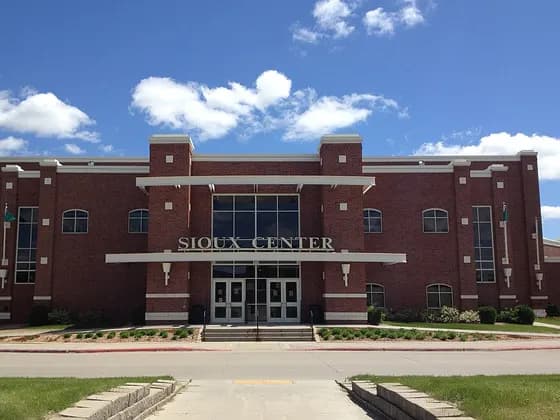
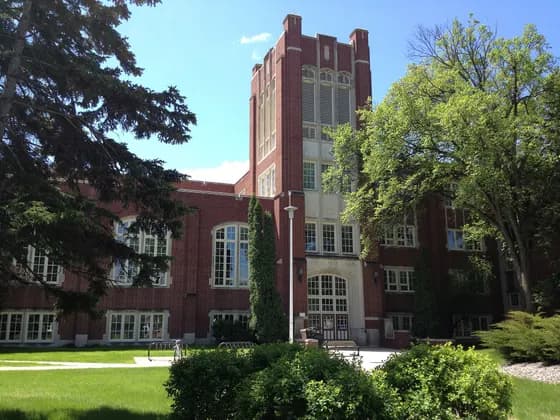
Photo: Zakary Lewis · CC BY-SA 4.0 · cropped
Photo: Jimmyjohnson90 · CC BY-SA 3.0 · Photo: Jimmyjohnson90 · CC BY-SA 3.0 · Photo: Ross Griff · CC BY 2.0
The University of North Dakota School of Medicine and Health Sciences MD program at a glance (2027 entry)
The University of North Dakota (UND) School of Medicine and Health Sciences in Grand Forks awards the M.D. after four years, organized in three phases rather than four school years. Phase 1, the pre-clerkship (pre-clinical) phase, lasts 20 months on the Grand Forks campus. Phase 2 (14 months) and Phase 3 (12.5 months) are based on four clinical campuses: Grand Forks, Fargo, Bismarck and Minot. Separate lotteries in year 1 assign your campus for each of these phases. The school admits 78 students a year.
This is the design the school introduced as Curriculum 2.0. Its Curriculum Changes page, as archived in March 2026, says the redesign started in July 2020 and was fully in place by July 2023. The Class of 2025 was the first to take it in full. It shortened the science phase to 20 months, put dedicated time for Step 1 of the United States Medical Licensing Examination (USMLE) into the clerkship phase and offered clinical electives earlier.
The school calls its teaching patient-centered learning (PCL), and the university's M.D. program page describes the curriculum as integrated and problem-based. In Phase 1, a small group works through a real patient case each week, within eight units that pair basic sciences with clinical skills. Clerkships in the main specialties then fill Phase 2.
The school describes itself as community-based, and its competencies give special weight to caring for rural and Native American communities. Through Rural Opportunities in Medical Education (ROME) you can spend 20 weeks or more of Phase 2 living and training in a rural town. The Minot Integrated Longitudinal Experience (MILE) is a longitudinal integrated clerkship, where you learn all the core specialties side by side over many months instead of in separate blocks.
Indians Into Medicine (INMED), founded at UND in 1973, supports American Indian and Alaska Native students. The M.D. program holds full accreditation from the Liaison Committee on Medical Education (LCME), which accredits M.D. programs in the United States.
| Degree | M.D. (Doctor of Medicine) |
|---|---|
| Program length | 4 years in three phases: 20, 14 and 12.5 months |
| Class size | 78 students admitted each year |
| Curriculum | Curriculum 2.0; the Class of 2025 was the first to take it in full |
| Teaching style | Weekly small-group patient cases (patient-centered learning) in integrated units |
| Clinical campuses | Grand Forks, Fargo, Bismarck or Minot, assigned by lottery in year 1 |
| First patient contact | Simulation from Unit 1; clerkships from late February of year 2 |
| Step 1 timing | During Phase 2, timed around your own four-week prep block |
| Grading | Honors, Satisfactory or Unsatisfactory, defined in each course's syllabus |
| Accreditation | Full LCME accreditation; next survey 2029-30 |
What makes the University of North Dakota School of Medicine and Health Sciences MD program different
Learning science through a patient case each week
Phase 1 is built around patient-centered learning. Your small group spends about six hours a week on one case, which the school compares to the work behind a 15-minute hospital visit, from first assessment to diagnosis and treatment plan. You set the learning objectives and present your findings, in groups the school describes as collaborative and non-competitive.
Clerkships from February of year 2
Because Phase 1 lasts 20 months, clerkships start in late February of year 2. Step 1 sits inside the clerkship phase rather than before it. Electives start early too, with 10 weeks of them in Phase 1.
ROME: months of rural primary care in one town
In ROME your main preceptor is a board-certified family physician in a rural North Dakota or Minnesota town. You also work with the town's surgeons, internists and pediatricians, earning credit toward several core clerkships at once.
MILE: following your own patients through a year
MILE has run in Minot since 2012. A week might mix a primary care office, surgery, an obstetrics and gynecology shift and the emergency room. You keep a panel of patients and follow them through the year, to specialist visits, procedures and hospital stays.
A research study you design and lead
Every student completes Clinical Epidemiology in Phase 2. You pick a question, design an observational study, analyze national survey data from the Centers for Disease Control and Prevention (CDC), present your findings to the class and write a manuscript. Faculty guide you, but you are the principal investigator.
Physical exams learned on trained teaching associates
Standardized Physical Exam Teaching Associates (SPETAs) coach first-year students through physical examination using their own bodies, and give feedback on technique, language and approach. You practice core exams with them before you examine real patients.
How University of North Dakota School of Medicine and Health Sciences teaches medicine
Phase 1 has eight units. Units 1 and 2 cover cells, genetics, tissues and metabolism, and Units 3 to 8 each take a group of body systems, ending with the endocrine and reproductive systems. Every unit pairs basic sciences, such as anatomy, histology, physiology, pathology and pharmacology, with clinical sciences, such as history taking, examination, ethics and clinical reasoning.
Three longitudinal threads, Medicine and Society, Pharmacology and Therapeutics, and Research Methods and Practices, are built into every organ-system unit. Topics such as social determinants of health, cultural competency and care across the lifespan recur in the clinical science strands of several units.
Once clerkships start, teaching moves to hospitals and clinics, with rounds, conferences and lectures around your patient work. Two required digital badges, in interprofessional collaboration and telehealth, are earned across all three phases and appear in the Medical Student Performance Evaluation (MSPE), the dean's letter that goes with residency applications.
The ways you will learn
| Patient-centered learning (PCL) | According to the student handbook, each weekly case ends with a wrap-up session with a physician and a patient. The written case exams use scenarios like the PCL cases. |
|---|---|
| Lectures and labs | Units include lectures and laboratory sessions in gross anatomy, histology, microbiology and pathology, with dermatology labs in Unit 4. |
| Clinical skills sessions | History taking, examination and procedures are taught in small groups, partly with SPETAs. |
| Simulation | You manage simulated patients, from routine care to emergencies, and from Unit 5 onward you join interprofessional simulations with Doctor of Pharmacy and nursing students. |
| Interprofessional Health Care course | A five-week, one-credit, pass/fail course that meets one evening a week in mixed groups of 10 to 14 students from eight professions, such as nursing, occupational therapy and social work. It uses TeamSTEPPS, a framework for team communication. |
| Clerkship teaching | Surgery holds weekly mortality conferences and professor rounds, and in psychiatry you research and lead a teaching session for classmates. |
A typical week on the University of North Dakota School of Medicine and Health Sciences program
In Phase 1 your PCL case takes about six hours of small-group work each week, and a first-year student in the school's July 2025 news described small-group time almost every day. For one five-week stretch you also attend the Interprofessional Health Care course on Tuesday evenings, 5:30 to 8:30 pm.
The Phase 1 scheduling policy, last reviewed in September 2025, caps scheduled sessions plus the estimated time needed to prepare for them at 70 hours a week, averaged over a unit. It assumes about two hours of preparation per scheduled hour, ranging from none to three.
On clinical rotations the duty-hours policy caps your week at 80 hours, including in-house call, and gives you at least one day in seven off, averaged over four weeks. In-house call can average no more than every third night over four weeks. A duty period may not run past 24 hours, plus up to four more for handovers or education, with no new patient care. You get at least 8 hours off between duty periods and 14 after in-house call.
If you choose ROME, its guidance for the planning meeting with each new preceptor treats call every third night as the norm and sets aside half a day a week for study and research.
How anatomy is taught at University of North Dakota School of Medicine and Health Sciences
Anatomy is taught within the Phase 1 units, alongside histology, embryology, physiology and pathology. Each unit's multiple-choice exam includes questions from laboratory sessions in gross anatomy, histology, microbiology and pathology.
The Deeded Body Program, which has served North Dakota for more than 50 years, receives body donations for teaching under the state's Uniform Anatomical Gift Act, and lists medical students among those it serves.
In the Phase 1 summers, the four-week elective Advanced Medical Anatomy (BIMD 9602) takes two students at a time into the Grand Forks anatomy lab. You dissect cadavers to record variations in human anatomy, at least 40 hours a week. You also prepare a poster for the Frank Low Day research symposium, and a manuscript if you find a significant variation.
Advanced Human Anatomy (BIMD 9501) is a senior elective in Grand Forks for two to five students in Phase 3 periods 10 and 11. You thoroughly dissect a region or system you choose, match it to clinical images, then give a 30-minute capstone seminar with an oral exam.
When you first meet patients at University of North Dakota School of Medicine and Health Sciences
Clinical skills start in Unit 1 with history taking and interviewing, and Unit 2 adds the core physical exam and vital signs. Through Units 4 to 6 you practice the musculoskeletal, neurologic and cardiovascular core exams with SPETAs, and Unit 8 adds genitourinary and breast exams and Foley catheter insertion. The school says your hands-on training in the Simulation Center starts in your first month.
A summer elective can bring real patients earlier. The four-week GREAT elective (Going Rural Elective early in Academic Training) places five students, one per site, with a family physician in Grafton, Devils Lake, Jamestown, Dickinson or Hettinger. You follow care from emergency medical services through hospital, clinic and long-term care. Grafton, Hettinger and Jamestown offered free student housing for June 2026.
Unit 8 ends with a Clinical Skills Bootcamp: surgical scrubbing, airway management, intravenous and intraosseous access, running a Code Blue as a team, electrocardiogram review and basic lifesaving certification. Clerkships then open with a three-day Launch into Clerkships in late February of year 2.
On clerkships you are assigned patients under supervision. In obstetrics and gynecology you assist at vaginal deliveries, cesarean sections and gynecologic surgery, and in neurology you interview, examine and present two clinic patients and write each up formally. By the end of Phase 2 you should be able to do procedures such as phlebotomy, suturing, lumbar puncture, nasogastric tube placement and cast application.
The University of North Dakota School of Medicine and Health Sciences curriculum, year by year
- Phase 1, year 1
Foundations, then the first body systems
Year 1 opens with Launch into Medical School (June 29 to July 10, 2026 for the Class of 2030), and Unit 1 starts the same day. The first week ends with a White Coat Ceremony.
- Unit 1, Cells & Genetics: genes, cell biology and signaling, with introductions to microbiology and pathology, plus ethics, health disparities, history taking and patient interviewing.
- Unit 2, Tissues & Metabolism: metabolism, embryology, histology, pharmacokinetics and cell injury, with the core physical exam and vital signs.
- Elective I, two weeks in November (November 9-20, 2026 for the Class of 2030). Options include Research Experience for Medical Students (REMS-I), a history of pandemics, Interprofessional Collaboration I and Introduction to Medical Education.
- Unit 3, Immune System, Infectious Disease & Hematology, and Unit 4, Musculoskeletal, Skin & Behavioral, which adds dermatology labs and working with interpreters.
- Unit 5, Neurology: the nervous system, special senses and behavioral health, with a panel on opioid use and a simulation alongside Doctor of Pharmacy students.
- Elective II, four weeks in June (June 1-25, 2027 for the Class of 2030).
- Phase 1, year 2 (July to February)
The remaining systems and the gate to clerkships
Year 2 starts with a second four-week summer elective, then Units 6 to 8 complete the organ systems. Phase 1 ends with the Clinical Skills Bootcamp.
- Elective III, four weeks in July (June 29 to July 24, 2026 for the Class of 2029).
- Unit 6, Cardiovascular & Respiratory, with a thoracic simulation and interprofessional simulations with nursing students.
- Unit 7, Gastrointestinal & Urinary: the liver, pancreas and kidneys, fluids and electrolytes, professional boundaries and radiology.
- Unit 8, Endocrine & Reproductive: pregnancy, sexual development and menopause, with the gynecologic history.
- Comprehensive licensure-style exams in Units 5 to 8, which you must pass before promotion to Phase 2.
- Phase 2 (14 months)
Core clerkships on your campus
Phase 2 runs from late February of year 2 to April of year 3 on your Phase 2 campus. You complete the seven core clerkships in one of three formats, fit in two electives and Step 1, and carry out your own research project.
- Traditional format: 8 weeks each of family medicine, internal medicine, obstetrics and gynecology, and surgery; 6 weeks each of pediatrics and psychiatry; and 4 weeks of neurology.
- Or ROME, rural primary care with the remaining clerkships on an urban campus, or MILE, which combines all seven clerkships in Minot.
- Two 2-week electives.
- Step 1 Prep (MED 9620): four weeks of daily two-hour peer-led question sessions on Zoom, six in-person National Board of Medical Examiners (NBME) basic science subject exams and a 280-question practice test. Then you sit Step 1.
- Clinical Epidemiology (MED 8101-8104, 3 credits), your own research project.
- The Clinical Skills Proficiency Review is an Objective Structured Clinical Examination (OSCE): timed stations, each testing one clinical task. This Phase 2 requirement comes in June of year 3, after clerkships end; the 2026-27 calendar lists it early in Phase 3, on June 21-22, 2027 for the Class of 2028.
- Phase 3 (12.5 months)
Electives, a sub-internship and the move to residency
Phase 3 runs from late April or May of year 3 to April of year 4. You plan the schedule with your career advisor, who approves it; your campus dean then reviews it, and preceptors approve the rotations you request. It ends with Transition to Residency and graduation; the Class of 2027's commencement is May 8, 2027.
- Seven 4-week periods (28 weeks) of electives and sub-internships, also called acting internships: six electives and at least one 4-week sub-internship at UND.
- Step 2 Prep (MED 9625), an eight-week virtual course in Periods 1-2 or 3-4, then Step 2 CK.
- Twelve weeks for Step 2, residency interviews, extra electives or vacation.
- Patient Safety/Quality Improvement (IMED 9506): online Institute for Healthcare Improvement (IHI) modules for a Basic Certificate in Quality and Safety, then a one-page improvement proposal required to graduate.
- Transition to Residency (MED 9525): two weeks of intern-style simulations, from handoffs and informed consent to pronouncing a death, plus sessions on physician contracts and loan repayment.
How you are assessed at University of North Dakota School of Medicine and Health Sciences
In Phase 1 you are assessed several times in each unit, and staff also observe your small-group participation and professional behavior. Your medical sciences grade averages mid-unit and end-unit results, each combining a multiple-choice exam, a case exam of essay-style tasks on clinical vignettes and an NBME exam. Doctoring skills are tested in video-recorded assessments. The NBME, which co-sponsors the USMLE, also writes the clerkship subject exams.
Grades are Honors (H), Satisfactory (S) and Unsatisfactory (U), and each course's syllabus defines how they are awarded. A U puts you on probation with a remediation plan; once remediated it becomes S/U, which counts toward graduation. Courses such as the REMS and GREAT electives, Step 1 Prep, the quality improvement course and Transition to Residency are graded Satisfactory or Unsatisfactory.
Clerkship grades follow a school-wide formula, and changing it needs approval from the Undergraduate Medical Education Committee. The NBME subject exam, the end-of-clerkship test known as the shelf exam, counts 30 percent, the preceptor's evaluation 50 and other assessments 20, such as surgery's weekly quizzes and oral exam. Without other assessments the exam counts 40 percent and the evaluation 60, as in neurology, where the shelf pass mark is 57 equated percent correct. Honors requires the department's minimum scores on the exam, the evaluation and the overall grade, adjusted yearly so about 20 percent in each clerkship earn it.
Each phase is a gate. You need a pass on the Gateway Examination, a standardized exam given at intervals during Phase 1, to enter Phase 2 and sit Step 1. You take Step 1 in Phase 2, after week 3 of your own four-week Step 1 Prep block and within two weeks of finishing it. You must pass it, and Phase 2, to enter Phase 3. Step 2 CK follows the eight-week Step 2 Prep course in Phase 3, and you must pass it and Phase 3 to graduate. The degree is expected to take four years, with six the limit.
Step 1 centers on the sciences basic to medicine and Step 2 CK on clinical knowledge. Step 1 has been reported only as pass or fail since January 26, 2022, while Step 2 CK still gives a three-digit score. In August 2026 the USMLE program announced a move to designated testing dates from January 2029, with Step exams offered less often each year. Its June 2026 announcement had named 2028.
On the current schedule, the Class of 2029 starts Phase 2 with Launch into Clerkships on February 24-26, 2027, then Rotation 1 on March 1. Projected forward, a 2027 entrant would start Phase 2 around March 2029 and Phase 3 around late April 2030, so both exams would fall after the switch. Dates for that class are not yet published.
- Clinical skills are also tested in the Clinical Skills Proficiency Review OSCE, a Phase 2 requirement.
- If you fail a clerkship shelf exam, you can retake it once, within four months or before Phase 3 begins, whichever comes first. Failing the retake means a U, and you then repeat half the clerkship's clinical time and pass the exam.
- Near misses are rechecked. A case exam is re-graded by other experts when your unit grade falls between 73.0 and 74.45 percent and a case exam scored under 80 percent. A doctoring skills video scoring under 79.45 percent is re-scored.
- Failing a Step exam means probation and a remediation plan, and failing after a second attempt leads to a hearing before the Medical Student Academic Performance Committee.
- Away rotations are graded on the host school's scale.
University of North Dakota School of Medicine and Health Sciences clinical rotations: where you will actually train
Phase 1 is in Grand Forks for everyone. The clinical phases are based on four campuses, each with its own campus dean and office: Northeast (Grand Forks), Southeast (Fargo), Southwest (Bismarck) and Northwest (Minot). Separate lotteries in year 1 assign your campus for each phase, Phase 2 in the first trimester and Phase 3 in the third. Each student is given a random number and ranks the campuses in order of preference, and places are filled in number order.
A 24-hour window after each lottery lets you request a trade, and the Office of Student Affairs & Admissions pairs matching requests at random. Later trades must be even swaps you arrange yourself, with nothing of value changing hands, until the end of year 1 for Phase 2 and of year 2 for Phase 3. You can also formally ask for a different campus for personal reasons at any time. In Phase 3 at least 16 weeks must be on your Phase 3 campus, to prevent overcrowding, and your campus dean's office arranges electives on other UND campuses.
Clerkship formats differ by campus. Internal medicine in Grand Forks is four weeks on the hospitalist service and four in clinics, all at Altru Health System. In Fargo it is four weeks on a Sanford Health teaching service and four with a clinic preceptor. In Bismarck it is four weeks on the teaching service plus two two-week blocks with internists or subspecialists. Traditional surgery and neurology clerkships run in Grand Forks, Fargo and Bismarck, and pediatrics on all four campuses.
Students training in the Minot region take their third-year clerkships through MILE, with neurology spread over three months. The Phase 2 page describes MILE as 44 weeks, including a four-week rural family medicine rotation, and the admissions curriculum page also gives 44; the surgery department's page says 48.
If you apply for ROME, its co-directors and the director of the Educational Resources department review your record. ROME's own pages give 20 to 24 weeks, while the Phase 2 and admissions curriculum pages say 20 to 28. Every site gives credit in family medicine, internal medicine, obstetrics and gynecology, and pediatrics. The ROME overview adds surgery credit everywhere except Devils Lake. The surgery department notes that some sites need part or all of surgery done on an urban campus, where you also complete your remaining clerkships.
Base for Phase 1. For clerkships, internal medicine and neurology run at Altru Health System, which also has site leads for surgery and for obstetrics and gynecology.
- Altru Health System
Surgery has site directors at all four. Sanford Medical Center Fargo, opened in 2017, has 284 beds, a Level 1 adult trauma center and a children's hospital. Essentia Health-Fargo is a 133-bed Level II trauma center. Neurology may include a VA outpatient clinic.
- Sanford Medical Center Fargo
- Sanford Broadway Medical Center
- Essentia Health-Fargo
- Fargo VA Medical Center
Obstetrics and gynecology has co-directors at CHI St. Alexius and Sanford, and neurology runs at Sanford, CHI St. Alexius or Mid Dakota Clinic. The campus also teaches students at facilities in Mandan, Dickinson, Hazen-Beulah, Fort Yates, Hettinger and Jamestown.
- Sanford Bismarck Medical Center
- CHI St. Alexius Health Bismarck
- Mid Dakota Clinic (neurology rotation)
Home of MILE, with the campus office inside Trinity Hospital. Trinity Health runs a tertiary care hospital in Minot and rural clinics, and the campus teaches in Minot, Williston and Garrison.
- Trinity Health (Trinity Hospital)
Sites listed on the ROME page.
- Devils Lake, North Dakota
- Dickinson, North Dakota
- Grafton, North Dakota
- Hettinger, North Dakota
- Jamestown, North Dakota
- Benson, Minnesota
- Ortonville, Minnesota
Electives, selectives and away rotations at University of North Dakota School of Medicine and Health Sciences
Phase 1 has 10 weeks of electives: two weeks in November of year 1 and four weeks each in June and July. Summer electives are filled by lottery from the preferences you submit. Summer 2026 options included REMS research, GREAT, Advanced Medical Anatomy, Geriatric Medicine in Fargo, Introduction to American Sign Language, Pulmonary Pathogens and Death Investigation in North Dakota.
In Phase 2 you take two 2-week electives. The Phase 2 electives page, still headed 2025-26, lists a Specialty Exploration Elective on each campus, a virtual Caregiver course and Interprofessional Collaboration II, plus two options only for ROME students. You can also request elective days in specialties outside the core clerkships, such as dermatology during internal medicine: up to two per 8-week clerkship and one in the shorter ones.
In Phase 3 you may take no more than four electives in one specialty, counting the sub-internship. Within those four, at most two can be general electives in the specialty and two in one subspecialty, or three if you give up a vacation month.
Rural family medicine sub-internships run in towns such as Hettinger, Jamestown, Oakes, Wahpeton, Grafton, Devils Lake and Park River in North Dakota, and Ortonville, Morris, Perham, Benson and Staples in Minnesota. Other options include point-of-care ultrasound in each campus's emergency departments, wilderness medicine in Bismarck and a psychiatry sub-internship at the North Dakota State Hospital in Jamestown.
Global Health & Underserved Populations (MED 9555-03), taken after clerkships, combines Mission of Hope in the Dominican Republic with food pantry and homeless shelter work in Fargo and Grand Forks and tribal health. The catalog also lists a family medicine elective at the Fort Yates Indian Health Service (IHS) facility, marked not available for 2027-28.
Away electives at other schools go through the Visiting Student Learning Opportunities (VSLO) system or your campus dean's office. Domestic ones should be at LCME-accredited programs or at residency sites accredited by the Accreditation Council for Graduate Medical Education (ACGME). International electives can be UND-sponsored, with Australia given as an example, arranged through VSLO or approved individually, and you write a reflection afterwards. You must be in North Dakota during Match week.
Dual degrees and research years at University of North Dakota School of Medicine and Health Sciences
The Joint M.D./Ph.D. in Biomedical Sciences is run with the School of Graduate Studies. You first gain a place in the M.D. program, then apply for the Ph.D. no later than the end of your first year. The program pages and the 2026-27 Academic Catalog give a minimum of six years of full-time study; the university's M.D. program page says both degrees take about seven.
Under the catalog, final admission comes after the first two years of the M.D. curriculum and a pass on Step 1, and those two years count as 44 of the Ph.D.'s 90 credits. The Ph.D. needs original research and a publicly defended dissertation, and the requirements page expects at least one first-author peer-reviewed paper before the defense.
The M.D./M.P.H. adds a Master of Public Health and takes five years. The M.P.H. coursework, usually about a year, comes between Phase 1 and Phase 2 or between Phase 2 and Phase 3, on a leave of absence from the M.D. Clinical Epidemiology counts for 3 M.P.H. credits, and a Phase 3 research elective can count toward the M.P.H. Integrative Learning Experience.
When you return from that leave you join a later class and are not guaranteed your original campus locations. The first three M.D./M.P.H. graduates finished in May 2024.
Within the M.D., REMS-I, a two-week November elective, covers research training and helps you find a mentor. REMS II and III give eight summer weeks of lab or clinical research at about 40 hours a week, with a poster at the Frank Low Day research symposium encouraged. In Phase 3 the senior research elective (MED 9510), offered on all campuses, can be taken twice, for eight weeks in total.
An optional Research badge, open from the Class of 2028, records research skills at three levels, from fundamentals to mastery.
Facilities and support at University of North Dakota School of Medicine and Health Sciences
Where you will learn
In Phase 1 you study in the school's 325,000-square-foot building in Grand Forks, opened in July 2016 and designed for collaborative and interprofessional learning. It holds a gross anatomy laboratory, a live animal vivarium, the Simulation Center and eight spaces the school calls learning communities, where students from all its health programs mix.
The Simulation Center uses high-fidelity manikins that talk, cry, breathe, bleed and respond physiologically to treatment, while actors play patients and families. After each scenario you debrief by reviewing your performance on video. The Southeast Campus, which moved to a new location in Fargo in late April 2025, has its own UND Simulation Center alongside its clinical departments and library resources.
Support while you study
The Center for Student Success & Well-Being supports you academically and personally: learning strategies, mental health resources and referrals, personal and professional development, and early identification of students who need help. The Office of Student Affairs & Admissions runs workshops on time management, study and test skills, and campus deans and faculty help with individual courses and clerkships.
Career advising runs through all four years and uses the Careers in Medicine program of the Association of American Medical Colleges (AAMC). Your Phase 2 campus dean, or a designated career counselor on the Fargo campus, is your career advisor throughout the program. In Phase 1 your academic advisor is the associate dean for the medical curriculum; in Phases 2 and 3 it is your Phase 2 campus dean. That dean also writes the Noteworthy Characteristics section of your MSPE. You can instead ask, in writing to the Office of Student Affairs and Admissions, for another campus dean or the associate dean for student affairs and admissions to write it.
One admissions page describes 11 individual meetings with a physician advisor; the school's 2023 table of advising activities lists a required session in each of the 12 trimesters. Phase 1 also includes panels of clinical chairs and residency program directors and presentations on ROME.
INMED's support runs from seventh grade through professional school. Medical students in INMED get tutoring, social and cultural events, emergency loans and an honoring ceremony at the UND Indian Association powwow each spring. CLIMB, a pre-matriculation program, helps INMED students admitted to UND's medical program settle in before classes start.
INMED also helps students on Indian Health Service scholarships gain experience through IHS externships at IHS facilities, and has helped many place at their home reservations. A Tribal Advisory Board, appointed by all 26 tribal governments in North Dakota, South Dakota, Nebraska, Montana and Wyoming, guides the program, which has supported more than 280 American Indian physicians to graduation.
Is the University of North Dakota School of Medicine and Health Sciences program right for you?
This program may suit you if
- You learn best by working through a patient case with a small group each week and setting your own learning objectives.
- You want to start clerkships in February of year 2 and take Step 1 within the clerkship phase.
- You are drawn to rural practice and would welcome training in a small-town practice through ROME, or a rural summer elective like GREAT.
- You would like to follow your own panel of patients through a whole year of clerkships in Minot.
- You are an American Indian or Alaska Native student who wants the tutoring, community and support INMED provides.
Things to think about
- After 20 months in Grand Forks, your clinical years are spent on campuses assigned by lottery in year 1, one for Phase 2 and one for Phase 3. At least 16 weeks of Phase 3 must be on your Phase 3 campus.
- ROME means living in a small community for 20 weeks or more, with call every third night as the norm.
- Phase 1 is demanding: its scheduling policy allows up to 70 hours a week of sessions and preparation.
University of North Dakota School of Medicine and Health Sciences MD program — frequently asked questions
Applying to University of North Dakota School of Medicine and Health Sciences?
How to get into University of North Dakota School of Medicine and Health Sciences
Prerequisites, MCAT, AMCAS personal statement, secondaries and interview, step by step.
Open the guide →University of North Dakota School of Medicine and Health Sciences admissions profile
MCAT and GPA profile, acceptance rate, interview format and key dates.
See the profile →Compare University of North Dakota School of Medicine and Health Sciences with other schools
Put the teaching style, anatomy teaching and clinical sites next to another school.
Open the comparison →Prepare for the University of North Dakota School of Medicine and Health Sciences interview
Format breakdown, school-specific sample questions and prep tips from tutors who interviewed here.
Read the guide →Where this University of North Dakota School of Medicine and Health Sciences program guide came from
This guide was written from 84 official sources — University of North Dakota School of Medicine and Health Sciences's own program pages and curriculum documents, plus the accreditor and the hospitals and health systems the school trains students in where they publish detail — read on 2026-10-31, then checked claim by claim against those sources.
- UND SMHS: Medical Curriculum, M.D. program overview
- UND SMHS: Medical School Curriculum (admissions overview of the three phases)
- UND SMHS: Phase 1 units, electives and assessment
- UND SMHS: Phase 2 track options and requirements
- UND SMHS: Phase 3 requirements and elective guidelines
- UND: M.D. Academic Calendar, 2026-27 (Classes of 2027 to 2030)
- UND SMHS: Step 1 Prep Program course description, MED 9620 (approved May 2025)
- UND SMHS: Step 2 Prep Program description, MED 9625
- UND SMHS: Transition to Residency course description, MED 9525
- UND SMHS: Patient Safety/Quality Improvement Course
- UND SMHS: Quality Improvement and Patient Safety course description, IMED 9506
- UND SMHS Policy 4.20: Academic Expectations of Medical Students (reviewed April 2023)
- UND SMHS Policy 4.4: Phase 1 Examination Regrading (reviewed June 2026)
- UND SMHS Policy 4.19: Scheduling and Monitoring Student Time in Phase 1 (reviewed September 2025)
- UND SMHS Policy 4.3: Clinical Duty Hours for Medical Students (2024)
- UND SMHS Procedure 5.21: Lottery and Alternative Trading Processes for Regional Clinical Campus Assignments (revised September 2025)
- UND SMHS Procedure 5.6: Academic and Career Advising for Students in the M.D. Program (revised 2024-25)
- UND SMHS Procedure 5.11: Clerkship Grading (revised June 2024)
- UND SMHS Procedure 5.18: Phase 2 Clerkship Examinations and Shelf Re-examination (revised June 2024)
- UND SMHS Policy 4.13: Phase 2 Elective Days
- UND SMHS Policy 4.7: Specialty Electives in Phase 3
- UND SMHS Procedure 5.9: Away Elective Approval
- UND SMHS: Curriculum Changes, introducing Curriculum 2.0 (web archive snapshot, March 14, 2026)
- UND SMHS: 10 Reasons to Choose UND Med School
- UND SMHS: Prospective Medical School Students
- UND SMHS: Medical School overview
- UND SMHS: School History
- UND: Medical Degree (M.D.) program page
- UND SMHS: Med Campus Offices
- UND SMHS: Southeast Campus (Fargo)
- UND SMHS: Southwest Campus (Bismarck)
- UND SMHS: Northwest Campus (Minot)
- UND SMHS: Rural Opportunities in Medical Education (ROME)
- UND SMHS: ROME program overview
- UND SMHS: ROME application
- UND SMHS: Minot Integrated Longitudinal Experience (MILE)
- UND SMHS: Internal Medicine Clerkship Structure
- UND SMHS: Ob/Gyn Clerkship (Phase 2)
- UND SMHS: Pediatrics Clerkship
- UND SMHS: Psychiatry Clerkship
- UND SMHS: Neurology Clerkship
- UND SMHS: Phase 2 Surgical Clerkship
- UND SMHS: Phase 1 Electives
- UND SMHS: Phase 2/Year 3 Electives (page headed 2025-26)
- UND SMHS: Phase 3 Electives and Sub-internships catalog
- UND SMHS: Planning Your Fourth Year and Beyond
- UND SMHS: Clinical Epidemiology (Phase 2 project)
- UND SMHS: Interprofessional Health Care Course
- UND SMHS: Badging in the M.D. Curriculum
- UND SMHS: Competencies for Undergraduate Medical Education (revised March 2025)
- UND SMHS Simulation Center: What We Do
- UND SMHS Simulation Center: SPETA Program
- UND SMHS: UND Simulation Center - Fargo
- UND SMHS: Advanced Medical Anatomy elective description, BIMD 9602-01 (Phase 1 summer elective)
- UND SMHS: Advanced Human Anatomy elective description, BIMD 9501 (updated November 2025)
- UND SMHS: Deeded Body Program
- UND SMHS: REMS I elective description, BIMD 9601-01
- UND SMHS: REMS II and III elective description, BIMD 9601-02 and 9601-03
- UND SMHS: Going Rural Elective early in Academic Training (GREAT), FMED 9605
- UND SMHS: Global Health and Underserved Populations elective, MED 9555-03
- UND: Joint Biomedical Sciences M.D./Ph.D. Program
- UND: Biomedical Sciences M.D./Ph.D. Requirements
- UND 2026-2027 Academic Catalog: Joint M.D.-Ph.D. Program
- UND SMHS Public Health Program: M.D. and M.P.H. Degree Process
- UND SMHS news, May 2024: first M.D./M.P.H. dual-degree graduates
- UND SMHS: About INMED (Indians Into Medicine)
- UND SMHS: INMED Services for Students
- LCME: Accredited Programs directory (updated October 14, 2026)
- USMLE: Designated Testing Dates Information Hub
- USMLE: Updated Timeline for USMLE's Designated Testing Dates, transition in January 2029 (August 6, 2026)
- USMLE: Examination Results and Scoring (Step 1 pass/fail since January 26, 2022)
- Sanford Health: Sanford Medical Center Fargo
- Sanford Health: Sanford Broadway Medical Center
- Essentia Health: Essentia Health-Fargo
- U.S. Department of Veterans Affairs: Fargo VA Medical Center
- Sanford Health: Sanford Bismarck Medical Center
- CHI St. Alexius Health Bismarck
- Trinity Health (Minot): About Trinity Health
- UND SMHS: Medical Student Handbook
- UND SMHS Student Affairs and Admissions: Achieve
- UND SMHS: Center for Student Success and Well-Being
- UND SMHS: Medical Student Career Advising Required and Optional Activities (2023)
- UND SMHS news, July 2025: UND welcomes M.D. Class of 2029
- UND SMHS news, July 2026: UND welcomes M.D. Class of 2030
Curricula are restructured between cycles. Anything here that decides your application — how anatomy is taught, a clinical campus assignment, a required research year — should be confirmed against the official page for your entry year.
Applying to University of North Dakota School of Medicine and Health Sciences?
We help US applicants with MCAT strategy, the AMCAS personal statement, secondary essays and interview prep — everything you need for a competitive University of North Dakota School of Medicine and Health Sciences application.