
The University of Kansas School of Medicine MD program
What you actually study, and where you will be
University of Kansas School of Medicine's M.D. is a 4-year program taught through case-based learning in an integrated curriculum, with patient contact from Year 1 and clinical rotations in Kansas City, Wichita, Salina and rural Kansas (2027 entry). Years 1 and 2 of the ACE curriculum are nine blocks, most built around an organ system and taught through case-based small groups, flipped classes and clinical skills sessions, with required cadaver dissection. Year 3 is seven core clerkships, and year 4 adds a rural preceptorship in Kansas, a sub-internship, critical care and electives. You apply to one program and are assigned to Kansas City, Wichita or Salina, which teach the same curriculum.
- Degree
- M.D.
- Length
- 4 years
- Teaching
- Integrated + Case-based learning
- Clinical contact
- Year 1


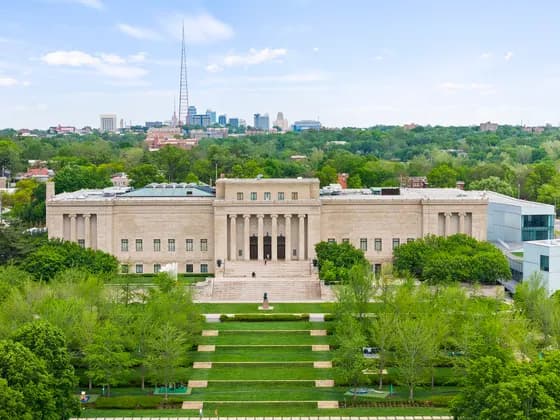
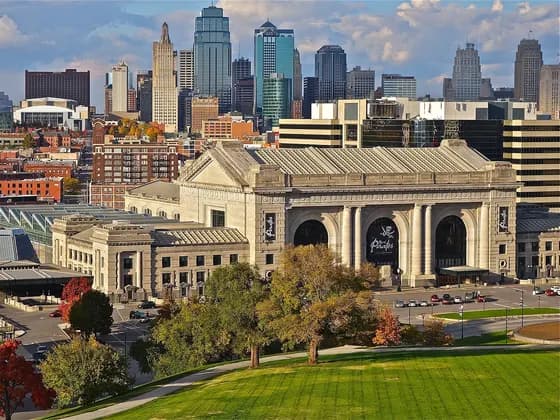
Photo: Goldranger2099 · CC0 · cropped
Photo: Country Club Plaza was created in 1922 by developer Jesse Clyde (J.C.) Nichols. · Public domain · Photo: Peterspexarth · CC BY 4.0 · Photo: Dean Hochman from Overland Park, Kansas, U.S. · CC BY 2.0
The University of Kansas School of Medicine MD program at a glance (2027 entry)
The University of Kansas School of Medicine, usually called KU School of Medicine, runs a four-year Doctor of Medicine (M.D.) program on three campuses: Kansas City, Wichita and Salina. Founded in 1905, it belongs to a state-supported university and has a statewide mission to educate physicians for Kansas and beyond. The Liaison Committee on Medical Education (LCME), which accredits MD programs in the United States, lists it as the one accredited MD program in Kansas.
Teaching follows the ACE curriculum (Active, Competency-based and Excellence-driven), which KU launched in fall 2017. Years 1 and 2, called Phase I, are nine blocks, most built around an organ system, such as the gut and kidneys or the brain. Each block teaches the science together with clinical skills such as history-taking and physical examination. The week is built around small-group case sessions and flipped classes, where you prepare beforehand and use class time to apply it.
Years 3 and 4 form Phase II. Year 3 is seven clerkships, the core clinical rotations, in family medicine, obstetrics and gynecology, internal medicine, neurology, psychiatry, surgery and pediatrics. Year 4 combines a rural preceptorship with a Kansas physician, critical care, 20 weeks of electives and a sub-internship. On a sub-internship you take on the duties of an intern, or first-year resident, under supervision.
The three campuses share one curriculum, but your campus shapes the experience. Kansas City shares its campus with The University of Kansas Health System, a large academic medical center. Wichita teaches through three partner hospitals and volunteer physicians. Salina admits eight students a year and is aimed at those who want to practice in rural areas.
| Degree | M.D. (Doctor of Medicine), four years, starting in late July |
|---|---|
| Curriculum | ACE (Active, Competency-based and Excellence-driven), launched in fall 2017 |
| Class size | 211 entered in 2026: 175 Kansas City, 28 Wichita, 8 Salina |
| Campus | Kansas City, Wichita or Salina, assigned after admission |
| Teaching style | Organ-system blocks with case-based small groups and flipped classes |
| Anatomy | Required cadaver dissection across two semesters of year 1 |
| First patient contact | Standardized patients in year 1; clerkships start with year 3 |
| Rural requirement | Four-week rural preceptorship in Kansas; can be met in year 3 family medicine |
| Step 1 timing | End of year 2, after a seven-week preparation block, before clerkships |
| Grading | Pass/fail with Honors (catalog rules for the class entering 2023) |
What makes the University of Kansas School of Medicine MD program different
Rural options in every year and a required preceptorship
In year 1 you can spend Rural Enrichment Week in a rural family practice, and the summer after brings the Summer Training Option in Rural Medicine (STORM), a rural elective. Year 3 offers rural options in four clerkships. The rural preceptorship, required since 1951, is a year 4 course that can instead be met in year 3 family medicine.
Up to 12 months of clerkships in Pittsburg, Kansas
The Extended Rural Clerkship in Pittsburg (P-ERC) takes up to four students for up to 12 months at the rural site. According to the rural office, they complete family medicine, pediatrics, obstetrics and gynecology and half of surgery there, and can add fourth-year courses such as the rural preceptorship and critical care.
Required cadaver dissection from year 1
In Kansas City, teams of eight share each donor and split the lab days, learning to divide roles and support one another, and instructors teach procedures such as practice injections into muscles.
Three clinician mentors assigned when you start
When you matriculate you join one of KU's academic societies (eight in 2026, with a ninth, Sweet, starting in Wichita in 2027) and a learning community of seven or eight students. Three clinician faculty are assigned to you: a coach and a problem-based learning facilitator for years 1 and 2, and a society director for all four years.
How University of Kansas School of Medicine teaches medicine
Phase I is built from nine blocks. Apart from the three-week Introduction to Doctoring that opens year 1 and the four-week Transition to Clerkships that closes year 2, each block lasts nine weeks. The ninth week is kept for scholarship, remediation and enrichment; these Scholarly Enrichment and Reflection (SER) weeks support research and professional development.
Blocks are multidisciplinary, taught by foundational science and clinical faculty, and combine foundational, social and clinical sciences. KU describes ACE as active learning: you learn to judge your own learning needs and plan how to meet them.
All three campuses teach the same curriculum, and teaching is shared between them. In Salina, lectures arrive by interactive televideo, with podcasts available, and on-site basic scientists are backed by experts in Kansas City. KU's Wichita campus described a similar pattern in 2025: lectures typically come remotely from Kansas City, while Wichita faculty work with first- and second-year students in their home rooms.
Phase II puts you on clinical teams, with rotations on teaching services, teaching rounds and departmental case conferences. Transition to Clerkships prepares you through case-based interactive lectures, illness-script sessions on how diseases typically present, journal club, simulation and skill stations.
The ways you will learn
| Case-based collaborative learning (CBCL) | Small groups work through a clinical case together, after preparing beforehand. Faculty write narrative feedback afterwards on how you apply science and work in a team. |
|---|---|
| Flipped classroom sessions | You study material before class and spend the session applying it. |
| Problem-based learning (PBL) | Small-group sessions guided by your assigned PBL facilitator, a clinician who stays with you through years 1 and 2. |
| Clinical skills and standardized patients | You interview and examine standardized patients, people hired and trained to portray patients from a script. In Kansas City's Neis Clinical Skills Lab, trained teaching associates use their own bodies to teach physical examination and sensitive exams such as breast, pelvic, genital and rectal exams. In Salina, encounters are recorded for review. |
| Simulation | Faculty-led simulation sessions in Kansas City's simulation hospital, Wichita's Simulation Center and Salina's simulation labs let you practice clinical skills, emergency care and teamwork, including with nursing and other health professions students. |
A typical week on the University of Kansas School of Medicine program
Under KU's policy on pre-clerkship hours, each Phase I block is divided into two-week units, and each unit holds three CBCL sessions and, on average, seven flipped classroom sessions. Each session comes with about an hour of pre-work, so expect around 5 hours of preparation a week.
Scheduled contact time averages 15 hours a week, which with pre-work makes about 20 hours of required work. The policy caps both averages, at 5 hours of pre-work and 15 hours of required activities a week. Summative exams, the ones that count toward progression, come every two weeks.
How anatomy is taught at University of Kansas School of Medicine
Cadaver dissection is required at KU. First-year students spend two semesters in the anatomy lab, and KU says donors are used in the first- and second-year curriculum.
In Kansas City, eight students share each donor for a semester and alternate days, so four work at the table at a time. On the first day you start by observing your donor for scars, calluses or wasted muscles that hint at how the person lived. You are told only the donor's age, gender and cause of death. Instructors also teach procedures on the donors, such as practice injections into arm and leg muscles, one rehearsing how anti-spasticity medicine is given.
The Kansas City lab, on the fourth floor of Orr-Major Hall, opened in 2020. Its 4,800 square feet hold 30 tables, each with overhead surgical lights, a monitor and its own downdraft ventilation, and two teaching stations stream demonstrations to screens around the room.
Salina has three dissection tables, two for first- and second-year students and one for clerkships when needed. Wichita students currently share the cadaver lab at Newman University; a 12-table lab is planned at the Wichita Biomedical Campus, due to open to students in fall 2027.
Before new students first meet their donors each year, KU holds a Willed Body Tribute, a memorial service for donors' families. At the September 2025 tribute, first-year students sat among the families.
When you first meet patients at University of Kansas School of Medicine
Your first patients are standardized patients. Introduction to Doctoring teaches you to take a medical history and perform a head-to-toe exam, along with basic life support and the electronic medical record. Every Phase I block then includes clinical skills sessions such as simulations and objective structured clinical examinations (OSCEs), timed stations where an examiner watches you carry out clinical tasks.
Real patients can come in year 1 if you choose them. Rural Enrichment Week, offered through the SER lottery, places you for a week with a family physician in a rural practice at least 45 miles from Kansas City, Kansas. You see clinic, hospital and emergency care, keep a daily diary and write a one-page reflection.
Faculty-supervised, student-run clinics add more. The JayDoc Free Clinic serves about 2,000 uninsured Wyandotte County patients a year. Wichita students run the JayDoc Community Clinic, and KU students also train at the BullDoc Health Clinic at Wyandotte High School. Salina students can help care for residents of Ashby House, a facility for a vulnerable population.
Full-time patient care starts with the year 3 clerkships. Duty-hour rules then apply: no more than 80 hours a week averaged over four weeks, one day off a week on average and at least one free weekend every four weeks. You log hours weekly in Jaylog.
The University of Kansas School of Medicine curriculum, year by year
- Year 1
Introduction to Doctoring and the first organ systems
After an orientation week, year 1 opens with the three-week Introduction to Doctoring, then four nine-week blocks, each ending with an SER week. A two-week winter break and a one-week spring break fall between blocks, and the year ends with a nine-week summer break.
- Introduction to Doctoring (ACED 800, 3 credits): clinical skills, evidence-based medicine and the social determinants of health.
- Molecular and Cellular Medicine (ACED 805, 8 credits): the molecular and cellular mechanisms underlying health and disease.
- Infection, Blood and Immunity (ACED 810, 8 credits): microbial infection and the normal and abnormal workings of the immune system and blood.
- Respiration and Circulation (ACED 815, 8 credits), after the winter break: the cardiovascular, pulmonary and allied systems.
- Muscles and Movement (ACED 825, 8 credits), after the spring break: the musculoskeletal, soft tissue and allied systems.
- Year 2
The remaining systems, Step 1 and the move to clerkships
Three more organ-system blocks come first, with Brain, Mind and Behavior split by the winter break. Then come an exam week, seven weeks of Step 1 study, a two-week inter-session and the four-week Transition to Clerkships.
- Gastrointestinal and Renal (ACED 820, 8 credits): the gastrointestinal, renal and allied systems.
- Reproduction, Development and Sexuality (ACED 835, 8 credits): reproductive systems, human development and sexuality; its ninth week is given to professional development.
- Brain, Mind and Behavior (ACED 830, 8 credits): the central and peripheral nervous systems and mental health.
- CBSE/OSCE week: an OSCE plus the Comprehensive Basic Science Examination (CBSE). This National Board of Medical Examiners test mirrors the content and question formats of United States Medical Licensing Examination (USMLE) Step 1.
- USMLE Step 1 preparation (seven weeks): study for the first USMLE exam, which you must take before clerkships.
- Transition to Clerkships (ACED 845, 4 credits): clinical reasoning, clinical skills practice and well-being, ending in a timed, case-based clinical reasoning exam.
- Year 3
Core clerkships
Year 3 starts straight after Transition to Clerkships. KU's financial aid office dated the third-year class's 2026 fall refunds May 22, which points to a late-May start. The year holds seven required clerkships, 48 weeks in all, with one-week fall and spring breaks and a two-week winter break. The year 3 diagram shows them in this order: family medicine, obstetrics and gynecology, internal medicine, neurology, psychiatry, surgery and pediatrics; Ethical Dilemmas in Medicine (ACED 900) runs all year.
- Each clerkship lasts 8 weeks, except neurology and psychiatry, which last 4 weeks each.
- In Kansas City, internal medicine runs entirely at The University of Kansas Health System and the Kansas City VA Hospital, with medicine residents; you can request a two-week subspecialty or outpatient experience.
- Kansas City pediatrics includes Children's Mercy Hospital and Clinics, neurology and psychiatry include the VA, and family medicine includes an interprofessional teaching clinic and community practices.
- In Wichita, internal medicine includes the Robert J. Dole VA Medical Center, and psychiatry runs at Ascension Via Christi Hospitals and the KU Department of Psychiatry Clinic.
- Family medicine in Kansas City and Wichita offers a rural option, which also meets the rural requirement for graduation.
- Year 4
Rural preceptorship, sub-internship, critical care and electives
Year 4 opens with four weeks of Step 2 preparation, then 32 weeks of required courses and electives that you shape into a personalized course of study. The year's diagram also sets aside eight weeks for residency interviews and a two-week winter break.
- Rural preceptorship (4 weeks), required of every student since 1951: Kansas City and Salina students take FAPR 900, centered on rural family medicine, general internal medicine and general pediatrics. Wichita offers family medicine, internal medicine, pediatrics and obstetrics and gynecology versions.
- Sub-internship (4 weeks); the options vary by campus. The Office of Medical Education lists family medicine, internal medicine, obstetrics and gynecology, pediatrics, psychiatry, general surgery, neurosurgery, orthopedic surgery and wilderness medicine, with urology, otolaryngology and plastic surgery in Kansas City only.
- Critical care (4 weeks) also varies by campus. The Office of Medical Education lists medical, cardiac, neonatal, pediatric, burn and surgical intensive care units (ICUs). It marks anesthesia and a neuro ICU as Kansas City only, pulmonary and trauma ICUs as Wichita only and emergency medicine as Salina only.
- The catalog's Wichita sub-internship list is family medicine, internal medicine, obstetrics and gynecology, pediatrics, psychiatry and surgery. In the catalog, Wichita's critical care options are neonatology, pulmonary, pediatric ICU (at Wesley Medical Center), burn, internal medicine and trauma.
- Electives: 20 weeks, which can include away rotations at other institutions.
- The Office of Medical Education also lists a Transition to Residency course, with directors on the Kansas City and Wichita campuses.
How you are assessed at University of Kansas School of Medicine
Each Phase I block assesses you through multiple-choice exams, small-group and clinical skills performance, and professional development. Faculty write narrative comments after small groups, standardized patient sessions, OSCEs and simulations. To move into year 2, you can fail no more than nine summative exams in year 1.
The newest grading rules in the 2026-27 catalog, written for the class that entered in 2023, grade the foundational blocks, third-year clerkships and fourth year as pass/fail. Class rank comes from total aggregate performance, and you can earn Honors in academics and in clinical skills. Classes entering from 2020 to 2022 had clerkships graded pass with distinction, pass or fail, so check the rules for your own entering class.
In each clerkship, the director meets you at the midpoint to review your progress, duty hours, narrative feedback and patient encounter and procedure logs. At the end, supervising faculty complete a Clinical Performance Assessment with written comments, and a committee of clerkship directors from all campuses tabulates grades. Year 3 ends with the Clinical Skills Assessment (CSA).
To graduate, KU requires you to pass USMLE Step 1 and Step 2 Clinical Knowledge (CK), a one-day exam on applying clinical knowledge to supervised patient care. Step 1, a one-day exam on the sciences behind medicine, has been reported only as pass or fail since January 26, 2022. You take it at the end of year 2, after the seven-week preparation block (KU's pages say after completing year two). You can start year 3 once you have sat it, but a failing score interrupts your clerkships until you pass.
Step 2 CK comes in year 4, after the four-week preparation block that opens the year, and you may sit it only after passing every required clerkship and the CSA. You must meet all graduation requirements within six years of first enrolling, unless the Academic and Professionalism Committee grants an extension.
In August 2026 the USMLE program announced a move to designated testing dates from January 2029, with Step exams offered less often each year. Its June 2026 announcement had named 2028. The estimate below uses KU's block lengths, its late-July class start and the late-May fall refund dates that KU's financial aid office lists for third- and fourth-year students. On the current schedule, a 2027 entrant would sit Step 1 in about March or April 2029, a few months after the switch, and Step 2 CK in about June 2030.
- The LCME's directory, updated October 14, 2026, lists the program as fully accredited, with the next survey in 2029-30. All three campuses fall under that single accreditation, which makes students eligible to sit the USMLE.
- KU's last full survey visit, on October 4 to 6, 2021, ended in full accreditation for another eight-year term.
University of Kansas School of Medicine clinical rotations: where you will actually train
You apply to the one M.D. program, not to a campus. After accepted applicants are notified in February, the Office of Admissions sends a campus preference form, which also asks about extraordinary circumstances that limit where you can live. Campuses are then assigned by institutional need, capacity, and student needs and preferences, with a lottery for oversubscribed campuses. You hear in March. In 2026, 211 students started: 175 in Kansas City, 28 in Wichita and eight in Salina.
Your campus is a condition of the offer and cannot be appealed before you enroll. Afterwards, a change is considered only for an unforeseeable hardship, such as a custody order or a medical need, backed by third-party documentation. Preference, housing, money or distance from family do not qualify. In fall 2026 KU counted 614 M.D. students in Kansas City, 195 in Wichita and 34 in Salina.
Wichita opened in 1971 for third- and fourth-year students and became a full four-year campus in 2011. In 2025 KU said Wichita typically had 28 students in each of years 1 and 2 and about 70 in each of years 3 and 4. The difference is students who spend their first two years in Kansas City and then transfer in.
The 2026-27 catalog says the Wichita Biomedical Campus will open in 2027 alongside a larger Wichita class and the gradual sunsetting of what it calls the 2/2 program. The building is designed for up to 70 Wichita students a year.
At the Salina campus, which opened in 2011, you train in local clinics, rural physicians' offices and Salina Regional Health Center, a 390-bed hospital where more than 120 physicians practice across all specialties. Students also take part in the Smoky Hill Family Medicine Residency Program, and KU puts the physician-to-student ratio at over 4 to 1.
During rural rotations, the host site or community is expected to provide housing, so you do not keep two homes, and many hospitals let students eat free or at a reduced rate. In year 3 you can also do part, or sometimes all, of four clerkships at rural sites. The first four lengths below come from the rural office's page, which names the Kansas City clerkship teams:
- Family medicine: six weeks, with the first and last weeks of the rotation at KU for orientation and testing.
- Obstetrics and gynecology: two-week rotations.
- Pediatrics: two, four or six weeks.
- Surgery: three weeks at a rural site, for students selected from those interested.
- The 2026-27 catalog gives a shorter range, 2 to 4 weeks on-site depending on the clerkship, so check lengths with the rural office.
The central campus, shared with The University of Kansas Health System, where KU faculty physicians provide inpatient and outpatient care.
- The University of Kansas Health System
- Kansas City VA Hospital
- Children's Mercy Hospital and Clinics
Community-based: more than 1,000 volunteer faculty teach in three partner hospitals and doctors' offices across Kansas. Wesley Medical Center hosts the pediatric intensive care option.
- Robert J. Dole VA Medical Center
- Wesley Medical Center
- Ascension Via Christi
- KU Department of Psychiatry Clinic
- Community-based ambulatory clinics
Clerkships at the regional hospital, local practices and other hospitals in the region. Emergency medicine is a critical care option offered only in Salina.
- Salina Regional Health Center
- Smoky Hill Family Medicine Residency Program
- Local and regional physician offices
The Office of Rural Medical Education divides Kansas into six regions, Northwest, North-Central, Northeast, Southwest, South-Central and Southeast, each with a physician site director who helps coordinate rural learning.
- Pittsburg (Extended Rural Clerkship)
- Rural preceptor practices across the state
Electives, selectives and away rotations at University of Kansas School of Medicine
Fourth-year electives fill 20 weeks, or 24 if you met the rural requirement in year 3. At least 12 weeks must be clinical, and no more than 8 credits of non-clinical electives count toward graduation. You choose from electives on all three campuses: the catalog lists 22 areas in Kansas City, from anesthesiology and biochemistry to radiation oncology, and 11 in Wichita.
Away rotations let you work at another hospital or medical school, often one where you hope to train as a resident. You can take up to three. The policy allows at most 12 weeks of electives at institutions outside KU's health system and affiliates, and only 8 of those weeks count toward graduation. KU's year 4 page lists instructions for applying through the Visiting Student Application Service (VSAS).
In Kansas City and Salina you can add a two-week Rural Family Medicine Elective (FAPR 975) after the rural preceptorship, taken by four students a month for two credits. Through KU's partnerships abroad, fourth-year students can take clinical rotations in countries such as Thailand, Ireland, Germany, Zambia, Mexico, Brazil and Spain. In years 1 and 2, a student organization leads spring break trips to Central America.
The summer after year 1 lasts nine weeks, and you can take electives worth up to 4 credit hours. Options include research or clinical training (IDSP 800, four credits for eight weeks), the Summer Clinical Elective (IDSP 845) and an individually planned international experience. STORM combines clinical work with practice-based research in rural primary care. KU-run choices include eight-week research programs at the KU Cancer Center and in cardiology and radiation oncology.
Dual degrees and research years at University of Kansas School of Medicine
The M.D.-Ph.D. Physician Scientist Training Program, which KU also calls its Medical Scientist Training Program (MSTP), is supported by a National Institutes of Health training grant. Acceptance admits you to the School of Medicine and graduate studies together, and students spend about seven to eight years in the program, depending on how long their research takes.
The program starts in June, with lab rotations in the summers before and after year 1. You sit Step 1 in year 2 and choose a research mentor by December. The research years, shown as years 3 to 5 though their length varies, center on your dissertation, and up to eight research credit hours count toward M.D. electives. You then return to medical school for years 3 and 4.
The five-year M.D./MPH adds a Master of Public Health (42 credit hours) in the Public Health Practice concentration. You apply after starting medical school and take a year out, usually between years 2 and 3 or years 3 and 4, from June to the end of the following May. The M.D./MHSA adds a Master of Health Services Administration in five years. Its 2017 program sheet places the MHSA year at the same two points, with 39 credits in subjects such as health care economics, finance, policy and law.
Certificates of Distinction let you follow an interest alongside the M.D. There are eight: Bioethics and Humanities, Global Health, Community Health and Service, Health Systems Science, Leadership and Education in Medicine, Lifestyle Medicine, Research and Rural Medicine. Each involves relevant activities, a project proposal and a final project. Completion appears on your transcript and in your Medical Student Performance Evaluation (MSPE), the dean's letter sent with residency applications.
Research also fits into the SER weeks and the summer after year 1. The Summer Research Training Program takes you from a literature review to written and oral presentations at the Student Research Forum; it is taken for credit, and some slots are paid.
Facilities and support at University of Kansas School of Medicine
Where you will learn
In Kansas City, the Health Education Building, opened for the 2017-18 year, is the main teaching building for the schools of Medicine, Nursing and Health Professions. It has learning studios seating up to 225, thirty 10-seat classrooms used as student home rooms, and a clinical skills floor with 17 mock exam rooms, an outpatient lab and a mock home environment.
ZIEL, the Zamierowski Institute for Experiential Learning, is a simulation partnership with The University of Kansas Health System. Its simulation hospital on the building's fourth floor has rooms set up as an operating room, labor and delivery room, intensive care unit, emergency department and recovery unit. ZIEL also runs a simulation center in Sudler Hall.
Wichita students use the George J. Farha Medical Library-Wichita and a Simulation Center focused on interprofessional teamwork. The Wichita Biomedical Campus, an eight-story tower at Broadway and William shared with KU's School of Pharmacy, Wichita State University and WSU Tech, opens to students in fall 2027. KU's floors hold a standardized patient center with 24 exam rooms, two 80-seat lecture halls, 20 home rooms for seven students each, a library and a student center.
Salina's Health Education Center, five blocks north of Salina Regional Health Center downtown, is a former bank converted into 56,000 square feet of teaching space, shared with the School of Nursing. It has classrooms, a clinical skills area with two clinic-style exam rooms, simulation and procedural skills labs, the anatomy lab, study areas, a student lounge and a fitness room.
Support while you study
Learning communities at KU sit within a societies program, started in 1999 with the KU Medical Alumni Society. Each society is named after a notable alumnus or school leader: Avery-Curtis, Cates, Fitzsimons, Holmes, Schrepfer and Williams in Kansas City, Lukert in Salina and Jager in Wichita, where Sweet begins in 2027. You receive your society pin at the White Coat Ceremony.
A society is made up of four learning communities of seven or eight students; Salina has one learning community per class. You meet your coach at least twice in every nine-week block of years 1 and 2 to review your exam results and narrative comments, and twice a year in year 3. Coaches point you to academic, professional development and counseling help when you need it.
Society student leaders run monthly lunch meetings on topics such as stress relief and the humanities, plus off-campus events. In Kansas City the six societies compete each year for a Society Cup, which starts with Society Field Day in October.
KU Medical Center's Counseling and Educational Support Services offers counseling, psychiatric evaluation and medication management, study and test-taking help, and writing specialists. Salina students can also use a local counseling service, see counselors who visit once or twice a semester, or connect by secure video. Wichita has a one-stop Academic and Student Affairs office.
Is the University of Kansas School of Medicine program right for you?
This program may suit you if
- You want rural medicine built in: a required rural preceptorship, plus optional rural clerkships, the STORM summer program or up to 12 months in Pittsburg.
- You learn well through small-group case sessions and flipped classes, with a coach and PBL facilitator alongside you through years 1 and 2.
- You want to dissect a human body yourself, sharing the work with a team of classmates.
- You would like a very small class: Salina takes eight students a year and trains them at a regional hospital and rural practices.
- You are drawn to community-based training in Wichita, the largest city in Kansas, through three partner hospitals and, from fall 2027, a new downtown building.
Things to think about
- You cannot pick your campus outright, and your assignment cannot be appealed before you enroll.
- Salina receives lectures by interactive video, and KU said in 2025 that Wichita's first- and second-year lectures typically come from Kansas City, so much large-group teaching there is remote.
- Plan to live in a rural Kansas community for at least four weeks during the rural preceptorship.
- Grading is pass/fail under the catalog's newest rules, but class rank by total aggregate performance and Honors still distinguish students.
- On the current schedule, you would sit Step 1 a few months after the USMLE moves to designated testing dates in January 2029, when Step exams are offered less often each year.
University of Kansas School of Medicine MD program — frequently asked questions
Applying to University of Kansas School of Medicine?
How to get into University of Kansas School of Medicine
Prerequisites, MCAT, AMCAS personal statement, secondaries and interview, step by step.
Open the guide →University of Kansas School of Medicine admissions profile
MCAT and GPA profile, acceptance rate, interview format and key dates.
See the profile →Compare University of Kansas School of Medicine with other schools
Put the teaching style, anatomy teaching and clinical sites next to another school.
Open the comparison →Prepare for the University of Kansas School of Medicine interview
Format breakdown, school-specific sample questions and prep tips from tutors who interviewed here.
Read the guide →Where this University of Kansas School of Medicine program guide came from
This guide was written from 79 official sources — University of Kansas School of Medicine's own program pages and curriculum documents, plus the accreditor and the hospitals and health systems the school trains students in where they publish detail — read on 2026-10-24, then checked claim by claim against those sources.
- University of Kansas School of Medicine home page
- KU School of Medicine: M.D. Program
- KU Office of Medical Education: Curriculum, with the year 1 to 4 diagrams
- KU Office of Medical Education: Phase I Curriculum, Years One and Two
- KU Office of Medical Education: Phase II Curriculum, Year Three
- KU Office of Medical Education: Phase II Curriculum, Year Four
- KU School of Medicine Office of Medical Education
- KU School of Medicine admissions: Curriculum (ACE)
- KU Academic Catalog 2026-27: Doctor of Medicine (M.D.)
- KU Academic Catalog 2026-27: M.D. curriculum and credit hours
- KU Academic Catalog 2026-27: Core preclinical phase course descriptions
- KU Academic Catalog 2026-27: Kansas City clinical required courses
- KU Academic Catalog 2026-27: Wichita clinical required courses
- KU Academic Catalog 2026-27: Medical school requirements, grading and USMLE
- KU Academic Catalog 2026-27: Special programs and rural options
- KU Academic Catalog 2026-27: School of Medicine
- KU Academic Catalog 2026-27: Kansas City electives
- KU Academic Catalog 2026-27: Wichita electives
- KU Academic Catalog 2026-27: Interdisciplinary courses, including first-year summer electives
- KU School of Medicine policy: Requirements for Promotion and Graduation (effective August 2026)
- KU School of Medicine policy: Campus Assignment and Requests for Changes (effective September 2026)
- KU School of Medicine policy: Pre-clerkship Student Hours in the ACE Curriculum (effective August 2026)
- KU School of Medicine policy: Phase II Student Work Duty Hours (effective August 2026)
- KU School of Medicine policy: Written Narrative Assessment (effective September 2026)
- KU School of Medicine policy: Timely Formative Feedback (effective August 2026)
- KU School of Medicine: Campuses, with fall 2026 enrollment by campus
- KU School of Medicine-Salina
- KU School of Medicine-Salina: Academics
- KU Medical Center: Salina facilities
- KU School of Medicine-Salina: Standardized Patient Program
- KU School of Medicine-Salina: Counseling and Support Services
- About KU School of Medicine-Wichita
- KU School of Medicine-Wichita: Doctor of Medicine Program
- KU School of Medicine-Wichita: Academic and Student Affairs
- KU Medical Center: Wichita Biomedical Campus
- KU School of Medicine-Wichita news, July 31, 2025: Wichita class sizes and transfers from Kansas City
- KU School of Medicine-Wichita news, October 30, 2025: student space in the Wichita Biomedical Campus
- KU School of Medicine-Wichita: Simulation Center
- KU Medical Center: Our Campuses
- KU School of Medicine M.D. program: Admission and campus assignment
- KU School of Medicine M.D. program: Selection process
- KU School of Medicine M.D. program: Application timeline and class start, 2027 cycle
- KU School of Medicine: USMLE exam timing
- KU Medical Center Financial Aid: 2026-27 refund dates by M.D. class
- KU Medical Center news, July 24, 2026: Class of 2030 White Coat Ceremony
- Kansas Medicine and Science, Spring/Summer 2026: Human Touch, inside the KU cadaver lab
- KU Office of Medical Education: Gross Anatomy Lab
- KU School of Medicine: Societies Program
- KU School of Medicine: Certificates of Distinction
- KU Office of Rural Medical Education: Student Programs
- KU Office of Rural Medical Education: Third-Year Clinical Clerkship
- KU Office of Rural Medical Education: Summer Training Option in Rural Medicine (STORM)
- KU Office of Rural Medical Education: Hosting Medical Students
- KU School of Medicine: Clinical Education
- KU School of Medicine: Student-Run Clinics
- KU Medical Center: Health Education Building
- Zamierowski Institute for Experiential Learning (ZIEL)
- KU Office of Medical Education: Neis Clinical Skills Lab
- Neis Clinical Skills Lab Standardized Patient Handbook
- History of the KU School of Medicine
- KU School of Medicine: LCME accreditation
- KU M.D.-Ph.D. Physician Scientist Training Program
- KU M.D.-Ph.D. program: Curriculum
- KU M.D.-Ph.D. program: Application and admission
- KU Master of Public Health: Dual degree programs (MD/MPH)
- KU Department of Population Health: Dual degree MD/MHSA
- MD/MHSA program sheet for current KUMC medical students (effective spring 2017)
- KU School of Medicine: Summer Research Training Program
- KU School of Medicine Office of Student Affairs: First-year summer opportunities
- KU Medical Center Office of International Programs: International Educational Experiences
- KU Medical Center: Counseling and Educational Support Services
- LCME: About the school directory
- LCME directory: Accredited programs (updated October 14, 2026)
- USMLE announcement, August 6, 2026: Designated Testing Dates transition will take place in January 2029
- USMLE Designated Testing Dates Information Hub, with the June 23 and August 6, 2026 announcements
- USMLE: Step 1 transition to pass/fail only score reporting
- USMLE: Step 1
- USMLE: Step 2 CK
- NBME: Comprehensive Basic Science Examination content outline
Curricula are restructured between cycles. Anything here that decides your application — how anatomy is taught, a clinical campus assignment, a required research year — should be confirmed against the official page for your entry year.
Applying to University of Kansas School of Medicine?
We help US applicants with MCAT strategy, the AMCAS personal statement, secondary essays and interview prep — everything you need for a competitive University of Kansas School of Medicine application.