


Medicine vs Research
If you love science, why medicine rather than a pure biomedical research career?
Likely follow-up · What does the patient interaction add for you?
3 expert tips in Prometheus
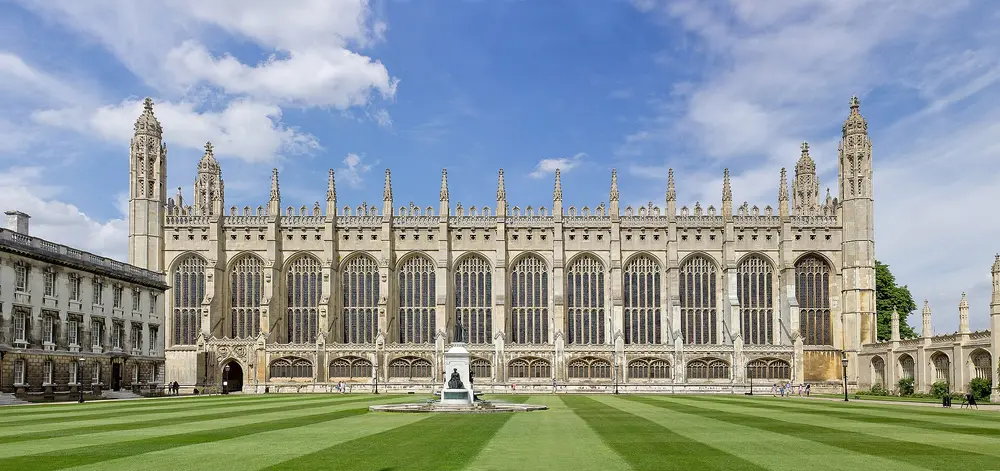
Photo: Dmitry Tonkonog (User:Heuschrecke) · CC BY-SA 3.0 · cropped
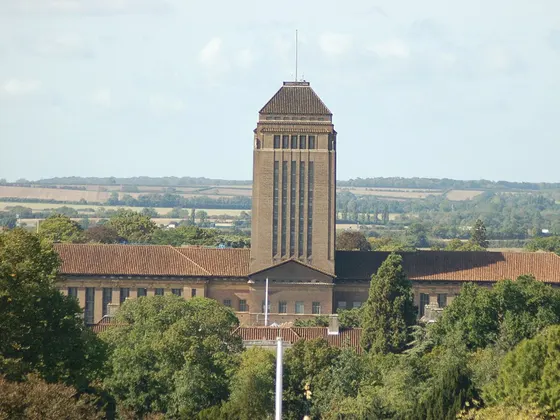
Photo: McAnt · CC BY-SA 3.0 · Photo: Unknown · Public domain · Photo: Michael Behrend · CC BY-SA 2.0
Step-by-step: entry requirements, UCAT prep, personal statement, interview format and the key deadlines.
Open the guide →Format breakdown, school-specific sample questions, FAQs and prep tips from tutors who interviewed here.
Read the guide →Traditional / lecture-led, 6 years, placements across Cambridge and the East of England.
See the course →Cambridge takes a science-first approach to medicine, with a heavily academic interview style and a flexible college system that runs admissions in parallel.
UCAT replaced the BMAT from 2025 entry. Variation between colleges in average UCAT scores and success rates, but the pooling system smooths over it - applying to "less popular" colleges does not meaningfully change your odds. A100 is offered at every College except Hughes Hall.
Traditional curriculum. Three pre-clinical years at Cambridge (mostly lecture/lab-based, with college supervisions), then three clinical years at Addenbrooke's Hospital and Cambridge-affiliated NHS sites.
Cambridge is strong in these research areas:
Compulsory third year focused on medical sciences (BA Medical Sciences).
Format: Traditional panel interviews with academic focus
Usually two panel-style interviews, normally both at the College that is considering your application (the one you named, or the one you were allocated after an open application). Cambridge says most applicants have one or two interviews totalling 35 minutes to an hour.
Strongly academic in tone - be ready for unfamiliar science problems, follow-up questioning on your application, and unseen data or graphs to interpret. A further interview at a different College happens only if you are placed in the winter pool.
270 students accepted in the 2025 cycle across all Colleges (A100 Standard Entry Medicine), including a capped 22 overseas fee-status places.
Founded in 1209. Based in Cambridge.
Programmes offered:
What is TrueScore?
A data-driven estimate of the UCAT score you'll likely need to be invited to interview at Cambridge for 2027 entry entry — based on its published cut-offs and recent admissions data. Treat it as a target to aim past, not a guarantee.
Cambridge's TrueScore is 2150. Build a week-by-week UCAT plan that works back from your test date — free for the first two weeks.
UCAT used for first time at Cambridge in 2025 entry (replacing BMAT). Holistic shortlisting per college - UCAT, GCSE, A-level predictions, personal statement and reference all considered. ~80% of applicants interviewed; offers from interview performance + post-interview holistic review. SJT not used 2026 onwards.
Not used. Cambridge assesses the overall cognitive subtest score only and states it will not use the situational judgement score for 2027 entry.
GCSE used contextually (less heavily than Oxford). No formal contextual UCAT uplift, but college-level holistic review can adjust for circumstance. Mean offer-holder GCSE around 9.7 A*s historically.
Cambridge looks at the overall cognitive subtest score only and weighs it alongside academic record and interview - it publishes no cut-off and no offer-holder averages. Colleges assess individually, so average scores vary between them, but the pooling system smooths that out. The situational judgement score is not used for 2027 entry.
Cambridge interviews lean heavily on science. Prepare to apply Year 13 biology to scenarios you have never seen, and revisit anything technical you mention in your personal statement. Speak through your working step by step rather than reaching for a final answer.
Two questions our tutors flagged as a strong fit for Cambridge’s interview style. Try answering them out loud, then open Prometheus for the model answers and follow-up tips.
If you love science, why medicine rather than a pure biomedical research career?
Likely follow-up · What does the patient interaction add for you?
How would you define medicine - is it a science, an art, a craft, or something else?
Likely follow-up · Where does it sit between science and humanity?
We've helped students into Cambridge and other UK medicine schools — get tailored support for each stage of the application.
Hit the UCAT cut-off for Cambridge with one-to-one tutoring from top scorers.
Learn morePractise the Traditional interview format with students who interviewed at Cambridge.
Learn moreGet your personal statement reviewed by successful applicants.
Learn moreChecked field-by-field against University of Cambridge's official course page on 11 September 2026.
We've helped students turn their UCAT, personal statement and interview prep into offers from Cambridge and other UK medicine schools.