Griffith delivers a 4-year graduate MD from the Gold Coast campus and the Sunshine Coast Health Institute at Birtinya — with a new Toowoomba teaching location from 2027 — and clinical placements across Gold Coast University Hospital, the Sunshine Coast Hospital and Health Service, Logan, QEII, Wesley, Tweed Valley and rural Longlook sites, distinguished by early general-practice immersion through the GP Longitudinal Program and a primary care and rural focus.
Applicants rank a campus preference in the GEMSAS application (preferences are considered but not guaranteed, as quotas apply); Griffith Bachelor of Medical Science graduates go to the Gold Coast, and University of the Sunshine Coast Bachelor of Medical Science graduates go to the Sunshine Coast Health Institute.
What makes Griffith different
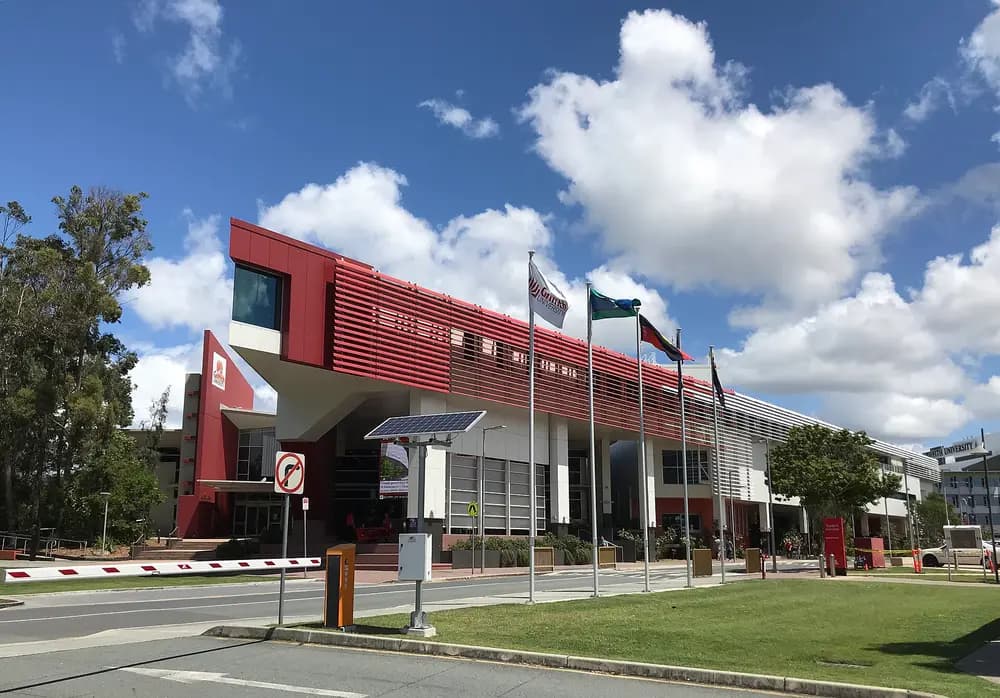
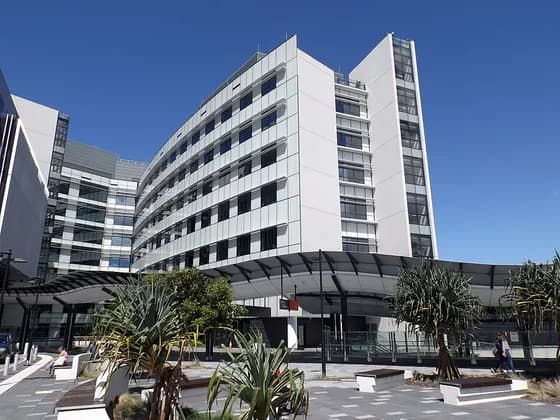
Griffith's 4-year graduate MD is based at the Gold Coast campus (next to Gold Coast University Hospital) or the Sunshine Coast Health Institute at Birtinya.
A new Toowoomba teaching location carries 10 unencumbered CSPs from 2027, but it is not selectable at application: students who have accepted Gold Coast or Sunshine Coast offers are invited to be considered in early November 2026, and if places remain top-up offers may be made via GEMSAS; it is not open to Bachelor of Medical Science provisional-entry students.
Griffith's 2026 pages already show a small Toowoomba Year 1. Early clinical contact in Years 1-2 is through the General Practice Longitudinal Program and community placements; hospital rotations start in Year 3. Griffith also has rural (GURPAS) and First Peoples entry pathways.
GURPAS gives competitive rural applicants priority access to the MD and does not itself make a place bonded; First Peoples applicants sit no GAMSAT and no GUMSAA at all, going instead to a dedicated panel interview. Pre-interview ranking weights GAMSAT and GPA broadly equally; the MMI then carries substantial weight in the final composite.
Griffith course & teaching
Integrated curriculum. 4-year graduate MD, described by year (Griffith's documents number the phases inconsistently).
Years 1-2 are campus-based at the Gold Coast (Southport) or the Sunshine Coast Health Institute (Birtinya), with community and general-practice placements via the GP Longitudinal Program: each of the first three trimesters has three linked courses (Foundations of Medicine, Introduction to Clinical Practice, Community Medicine and Professional Practice), and Year 2 Trimester 2 is a capstone block (Transition to Clinical Practice; Advanced Communication, Law and Ethics; Preparation for Research).
Years 1-2 can also be taken at Griffith's Rural Clinical School in Toowoomba (190 Hume Street, East Toowoomba; 10 places, run with RuralMedEd): GEMSAS presents it as new for 2027 and the course page calls it the new Toowoomba location, but Griffith's own 2026 pages already show a small Toowoomba Year 1.
Year 3 is six six-week hospital blocks at designated hospitals; Year 4 (2026) is critical care/orthopaedics and emergency medicine in a designated zone, a six-week general practice block in a South East Queensland (or rural ShortLook) practice, a selective, an elective and a four-week pre-internship (PRINT) block.
Sites include Gold Coast University Hospital, Sunshine Coast University Hospital, Gympie, Logan, QEII, Wesley and Tweed Valley, plus year-long Rural Longlook placements (up to 25 domestic students per cohort, per the AMC in 2024) at Toowoomba, Warwick, Stanthorpe, Dalby, Kingaroy, Goondiwindi, Roma and Beaudesert hospitals (Griffith's 2026 rural program flyer also names Chinchilla).
Interview is GUMSAA — a recorded, self-scheduled online assessment of 6 scenario questions, held in a single week in September.
Griffith research strengths
Griffith is strong in these research areas:
- Trauma and emergency medicine
- Primary care
- Indigenous health
- Rural workforce
How the Griffith interview runs
Format: GUMSAA — an asynchronous, one-way recorded online MMI delivered on the SAMMI (Scalable Automated Multiple Mini Interviews) platform, self-scheduled within a set window. Griffith's 2026-27 SAMMI applicant guide specifies 6 pre-recorded scenario questions with a 60-second break between each and roughly 1 hour allowed end to end (including sound/Wi-Fi checks and an upload of up to 15 minutes). There is no live interviewer. The guide gives the response time inconsistently (an overview stating 'up to 5 minutes' per question and a later page stating the station 'will last 4 minutes'), so treat per-question timing as approximately 4-5 minutes and check the guide issued for your own cycle.
Griffith MMI runs as GUMSAA (Griffith University Multi Station Admissions Assessment) — scenario-based, online, held September. Griffith publishes the format. Six scenario questions, each introduced by a pre-recorded video, with a 60-second break between questions and about an hour allowed in total including equipment checks and an upload of up to 15 minutes.
You record your answers alone to camera — there is no live interviewer, the interview must be completed in one sitting, no notes or reading materials are permitted and your desk must be clear, and Griffith requires a mirror behind you so assessors can see your screen on the recording.
Questions probe communication, an empathetic and ethical approach, a reflective manner, problem-solving, teamwork and decision-making, and are never released in advance. The GUMSAA score itself is based solely on interview performance, but the final offer rank is a 50:50 combination of that interview score and your GPA/GAMSAT selection rank.
Griffith intake
2027 cycle: 208 domestic places (148 CSP + 60 BMP), of which about 80 are reserved for Griffith and UniSC Bachelor of Medical Science pathway students, plus up to 35 international — up to ~243 in total. Griffith interviews around 200 candidates at GUMSAA for approximately 110-120 places.
Where Griffith is
Griffith University School of Medicine and Dentistry was founded in 2005 and is based in Gold Coast.
Programmes offered:
- Rural Medicine
- Primary Care
- Indigenous Health
- Trauma and Emergency