
The Adelaide Dental course
What you actually study, and where you will be
Adelaide Dental's BDS is a 5-year (undergraduate entry) course taught through case-based learning in an integrated curriculum, with patient contact from Year 1 and placements in Adelaide, rural South Australia, Canberra, Tasmania and Wyong (2027 entry). Adelaide's BDS is a five-year, full-time course built around one integrated stream, Dental Science and Practice. You learn through patient cases in small groups, practise on manikins in a 90-station simulation clinic, and treat public patients at the Adelaide Dental Hospital from first year. Final year is mostly placement, including a compulsory 12 to 13 week rural or interstate block.
- Degree
- BDS
- Length
- 5 years (undergraduate entry)
- Teaching
- Integrated + Case-based learning
- First patients
- Year 1

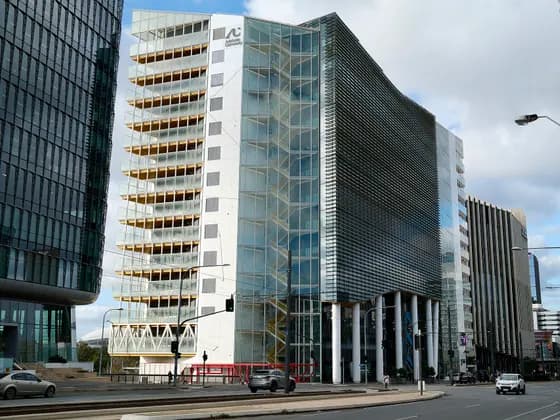
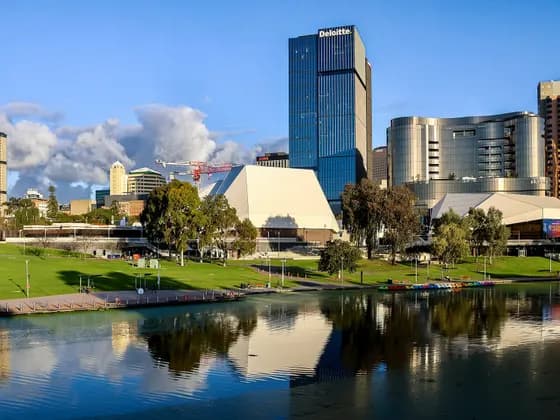

Photo: User:DXR · CC BY-SA 4.0 · cropped
Photo: Yu Chu Chin · CC BY-SA 4.0 · Photo: Yu Chu Chin · CC BY-SA 4.0 · Photo: Dietmar Rabich · CC BY-SA 4.0
The Adelaide Dental course at a glance (2027 entry)
Adelaide's Bachelor of Dental Surgery (BDS) is a five-year, full-time course that starts in February at the Adelaide City Campus; there is no part-time option. It is run by the School of Dentistry in the College of Health at Adelaide University, formed in 2026 when the University of Adelaide and the University of South Australia merged. The course is accredited by the Australian Dental Council (ADC), the body that checks dental courses meet national standards, so graduates can register with the Dental Board of Australia.
What makes the course different is its shape. Instead of separate subjects, each year is a single course called Dental Science and Practice, taken in two half-year parts that together carry 48 of the degree's 240 units. Anatomy, microbiology, dental materials, clinical skills and professional behaviour are all taught inside it, organised around Integrated Learning Activities (ILAs): small-group sessions built on a dental case, which the school calls case-based learning.
Patients come early. First year has a weekly clinical class and a placement day, alongside sessions in the 90-station Dental Simulation Clinic. By third year you manage your own adult patients. Fourth year adds children, crowns, root canals, dentures and minor oral surgery, and final year is mostly placement, including a compulsory 12 to 13 week block in rural South Australia or interstate.
Expect a full working week from year 1; the typical-week section below sets out the hours. Attendance at every clinic, simulation and small-group session is compulsory, and clinics can run outside semester, after hours and at weekends. Most of your patients are public patients of the South Australian Dental Service, treated under supervision at the Adelaide Dental Hospital.
Everything is based in the Adelaide Health and Medical Sciences (AHMS) building on North Terrace, next to the Royal Adelaide Hospital. The School of Dentistry is on Level 10 and the Adelaide Dental Hospital on Levels 11 and 12, so class meetings, simulation and real patients are a lift ride apart.
| Degree | BDS (Bachelor of Dental Surgery) |
|---|---|
| Course length | 5 years full time, starting in February; no part-time option |
| Class size | Class lists of 90 in the 2026 timetable |
| Main campus | Adelaide City Campus: Adelaide Health and Medical Sciences building, North Terrace |
| Teaching style | One integrated course per year, learnt through case-based Integrated Learning Activities |
| Simulation | 90-station Dental Simulation Clinic with manikins and haptic simulators |
| First patient contact | Year 1: a weekly clinical class and placement day alongside simulation |
| Placement area | Adelaide Dental Hospital, suburban and rural SA Dental clinics, Canberra, Tasmania, Wyong |
| Final-year rural block | Compulsory 12 to 13 weeks rural or interstate |
| Honours or research year | None built into the 240-unit study plan; ask the school about research options |
| Accreditation | Australian Dental Council to 31 December 2030; 2023 conditions lifted October 2024 |
What makes the Adelaide Dental course different
One integrated course each year
There are no separate anatomy or pharmacology subjects: each year is one Dental Science and Practice course. The ILA cases are supported by that week's class meetings, laboratory, simulation and clinic sessions, and the school coordinates them within and between years so topics return as your patients get more complex. You pass the whole year together, written and practical.
A 90-station simulation clinic with haptic feedback
The Dental Simulation Clinic gives every student in a session their own manikin, dental unit, PC and monitor, and its haptic simulators give tactile feedback as you work. Every procedure is rehearsed here before you pick up a handpiece on a patient.
Treating people who have experienced homelessness
Final-year students staff the Community Outreach Dental Program clinic at Light Square Common Ground, a supported-housing complex in Adelaide's West End. Set up in 2011, it treats hundreds of patients a year under the close supervision of experienced dentists, with university staff, private dentists and allied health professionals contributing supervision and specialist input. You present on the program in final-year assessment.
Volunteer Patients teach you to talk to people
Members of the public join the Volunteer Patient Program to help students learn to communicate through guided role-play. In second and third year you have clinical communication tutorials with them, and your written reflections count towards the assignment hurdle.
Three months away in final year
Every student does a compulsory 12 to 13 week rural or interstate placement in fifth year, at SA Dental Service rural clinics or in Canberra, Tasmania or Wyong in New South Wales. Clinic hours on the block are about double those at your Adelaide home base, and you arrange your own travel.
How Adelaide Dental teaches dentistry
Teaching is built around Integrated Learning Activities. An ILA takes a realistic dental situation, such as a new patient presenting with a problem, and asks your group to work out what you need to know and do. You research it individually and together, then discuss your findings in class. The school describes this as case-based learning, with cases coordinated within and between years.
Around the ILAs sit class meetings, in person or online through the myLearning platform, plus workshops and learning laboratories that change by year. First year has Biodent Sciences workshops; third year adds a periodontal debridement and splinting workshop. Staff from other disciplines, such as physiology and pharmacology, teach into the course alongside dentists.
The balance shifts as you go. Years 1 and 2 are the most classroom heavy, spread across class meetings, laboratories, simulation clinic and clinic. By year 4 the week is mostly clinic sessions, and by year 5 formal teaching shrinks to a preclinical week, two common weeks and online modules while you are on placement.
Self-assessment runs through everything. Clinic and simulation tutors give verbal and written feedback in every session against published Clinical Assessment Criteria and Standards. You keep a self-assessment booklet, and each semester you write a learning plan setting your own goals. The final practical grade is an overall judgement of your year rather than a sum of session marks, and it takes attendance and professional behaviour into account.
The ways you will learn
| Integrated Learning Activities (ILAs) | Small-group case sessions that drive each week's learning. Your submissions and participation are a compulsory hurdle every year, and from year 3 an ILA case report on a patient you managed is assessed. |
|---|---|
| Class meetings and online modules | Whole-cohort sessions, in person or through myLearning, carrying the underpinning science, plus online modules such as the Indigenous Health course in year 2 and three NPS pharmacology modules in year 4. |
| Simulation clinic sessions | Procedures on manikins: preventive treatments and radiographs in year 1, fillings and anaesthetic technique in year 2, crowns, root canals and children's dentistry in year 3, and a five-week preclinical block in year 4. |
| Learning laboratories and workshops | Hands-on science and technique sessions: Biodent Sciences workshops in year 1, wax carving and anatomy practicals in year 2, and the periodontal debridement and splinting workshop in year 3. |
| Clinic and placement sessions | Supervised treatment of public patients, mainly at the Adelaide Dental Hospital, from first year. From year 4 some sessions move to suburban SA Dental Service clinics, and year 5 is mostly placement. |
A typical week on the Adelaide Dental course
First year is budgeted at 48 hours a week: up to 24 contact hours in semester 1 and 25 in semester 2, plus about 24 hours of group and individual study. In the 2026 timetable, Monday 9:10am to 2pm is class-meeting time delivered online through myLearning, with a shorter online session on Thursday. Tuesday morning is a timetabled clinical class in the Barr Smith South building and Tuesday afternoon a workshop in the AHMS building. Wednesday and Thursday carry further workshops, and Friday is the placement day, with a morning and an afternoon session in both semesters.
Second and third year rise to up to 28 contact hours and about 20 hours of preparation. A week mixes ILAs, class meetings, learning laboratories, simulation clinic, clinic sessions, tutorials with Volunteer Patients and radiography simulation. Third year opened in 2026 with an intensive block from 19 January, before the normal semester.
Fourth year is the heaviest. The outline lists 28 contact hours: five one-hour class meetings, seven three-hour clinic sessions per fortnight and a two to three hour ILA. It puts self-directed learning at 44 hours a week on top. In the 2026 second-semester timetable Monday is the class day, with blocks from 8:10am to 1pm and 1:10pm to 6pm in the AHMS building; Tuesday to Friday are clinic days from 9:10am to 5pm.
Fifth year is measured in clinic hours: 9 to 15 hours a week at your Adelaide home base plus sub-rostered sessions, and 24 to 30 hours a week on the rural or interstate block. The outline adds roughly 23 hours of self-directed study. Formal teaching is concentrated in a preclinical week, 5 to 9 January in 2026, and two common weeks in late April and mid August, when the year group returns to campus.
The program's inherent requirements, which every applicant must acknowledge, sum this up as 28 to 38 hours of scheduled activity a week plus about 20 hours of study, clinic preparation and reflection.
How anatomy is taught at Adelaide Dental
Anatomy is not a stand-alone subject; it is taught inside Dental Science and Practice as part of understanding a healthy patient. First year covers selected body systems, such as respiration, nutrient supply and waste removal, and movement, alongside the normal appearance of oral soft and hard tissues and the masticatory (chewing) system.
Second year turns to the head and neck, alongside microbiology, immunology and pathology, with anatomy practicals and learning laboratories in semester 2. From there anatomy is applied rather than taught separately: by fourth year you are expected to integrate it with physiology, pathology, pharmacology and oral medicine when planning care.
You also learn anatomy as it appears on X-rays. From first year you learn to pick out normal structures, fillings, decay and calculus on bitewing, periapical and panoramic images. You take radiographs on patients from second year, keep a radiology lab book in third, and rotate through the hospital's dental radiography department in fifth year.
When you start treating patients at Adelaide Dental
You are in clinic from first year. The program rules describe first year as an introduction to dentistry in simulated and real clinic settings, and the two first-year courses carry 60 and 66 hours of work-integrated learning. In the 2026 timetable that time falls in a Tuesday-morning clinical class and a full Friday placement day. The early clinical work is taking a medical, dental and social history, examining the face, mouth, gums and teeth of healthy adults, recording findings, obtaining consent and giving preventive treatments.
Before anything invasive you rehearse it. In year 2 you cut and place fillings on manikins in the simulation clinic and practise giving local anaesthetic on classmates. You also carry out simple periodontal debridement, meaning cleaning below the gum line, on classmates and then on healthy adult patients, after completing SA Dental Service online modules and a clinic induction. Clinical hours roughly double to about 150 per semester.
Third year is the step up. It opens with a Preparation for Comprehensive Patient Care (PCPC) block in which you must reach pre-set levels of competence before you take on comprehensive care of your own patients. From then on you provide fillings, local anaesthetic, gum treatment, mouthguards and nightguards for adults, including people with medical and social problems, and you log every procedure. If your performance is judged a risk to patient safety, a meeting and an improvement plan follow.
Fourth year brings children and the harder procedures: crowns and bridges, root canal treatment, dentures and minor oral surgery, each preceded by simulation exercises and competency checks. In the specialist clinics the ADC's 2023 report noted supervision by registered specialists, postgraduate specialty students or experienced clinicians. In fifth year you plan and deliver whole treatment plans rather than single procedures.
Your patients are members of the public referred through SA Dental, the state's public dental service. The service tells patients when a student will treat them, and adults who decline student care can have their offer of treatment withdrawn and go back on the waiting list.
Year by year at Adelaide Dental
- Year 1
Dental Science and Practice I
Dental Science and Practice I (DENT1000 and DENT1001) introduces dentistry from a patient-care angle: how a healthy mouth and body work, how oral health is maintained with evidence, and what a dental career involves. A clinical class, a placement day and simulation sessions start straight away. The year ends with the First Annual B.D.S. Examination (DENT1800).
- Science of the healthy patient: selected body systems, genetics, the normal look of oral tissues and the masticatory system, through class meetings and Biodent Sciences workshops.
- Clinic basics on healthy adults: histories, extraoral and intraoral examination, periodontal and hard-tissue charting, a simple occlusal (bite) analysis, records, consent, infection control and ergonomics.
- Prevention and the oral ecosystem: risk-factor tests, tailored preventive plans, fluoride and fissure sealants, oral hygiene and diet advice, and minimal intervention dentistry.
- Radiography: taking bitewing radiographs on manikins and reading bitewing, periapical and panoramic images; the practical is compulsory.
- Population oral health, ethics, behavioural science and culturally safe communication, including with Aboriginal and Torres Strait Islander peoples, assessed through a Culture and Health group assignment.
- Year 2
Dental Science and Practice II
Dental Science and Practice II (DENT2000 and DENT2001) asks what happens when the oral ecosystem falls out of balance, and how to restore it through prevention and minimal restoration. The science widens to the head and neck, microbiology, immunology and pathology, and the year puts weight on manual dexterity.
- Operative technique on manikins: cutting cavities and placing permanent fillings with liners, bases and moisture control, plus wax carving; loupes (magnifying glasses) are recommended from this year.
- On people: local anaesthetic practised on classmates, simple periodontal debridement on classmates and healthy adult patients, and bitewing and periapical radiographs taken in clinic.
- Clinical communication tutorials with Volunteer Patients, with written reflections, and an Indigenous Health course with online and reflective tasks; together these make up the assignment hurdle.
- SA Dental Service online modules and a clinic induction before you treat its patients, and radiography simulation sessions.
- Writing a referral letter to a dentist or another health professional, and recognising and managing, with your tutor, dental and medical emergencies in the chair.
- Year 3
Dental Science and Practice III
Dental Science and Practice III (DENT3000 and DENT3001) is where you become responsible for patients. After the Preparation for Comprehensive Patient Care block you manage adults with common dental problems under supervision, in general practice and the specialties, with a preventive, minimally invasive approach. Clinical hours rise to about 170 per semester.
- PCPC: tutor assessment and self-monitoring of procedural skills, a periodontal debridement and splinting workshop, quizzes and a written test; you must reach a pre-set standard before starting comprehensive patient care.
- Your own patients: permanent and temporary fillings, local anaesthetic, periodontal debridement, smoking cessation advice, nightguards, mouthguards and splints; medically and socially compromised adults; breaking bad news.
- Simulation in the specialties in semester 2: fixed prosthodontics (crowns and bridges), endodontics (root canal treatment) and paediatric dentistry, each of which you must pass.
- Professional skills: prescriptions and referrals with tutor guidance, open disclosure when something goes wrong, a log of clinic procedures, a radiology lab book and a clinic learning plan each semester.
- Written work: integrated tests at the end of the PCPC block and each semester, online clinic case assignments, an ILA case report on a patient you managed, and an Oral Health Promotion assignment.
- Year 4
Dental Science and Practice IV
Dental Science and Practice IV (DENT4000 and DENT4001) moves you to child and adult patients with increasingly complex needs. A five-week preclinical block opens the year, followed by extended clinical semesters across 11 disciplines, with 352 hours of work-integrated learning in each half. The focus is comprehensive care plans for the whole person rather than collecting procedures.
- Preclinical block: about 30 three-hour simulation laboratories in oral surgery, prosthodontics, endodontics and dental trauma, with competency checks, plus orientation to the Royal Adelaide Hospital wards and to mandatory reporting.
- Clinics: general practice including periodontics, oral diagnosis, paediatric dentistry, fixed and removable prosthodontics, endodontics and oral surgery, with two weeks in oral surgery and rostered radiography sessions.
- Off campus: children's dentistry and general practice sessions at suburban SA Dental Service clinics according to your roster, with travel required.
- Also covered: orthodontics through case-based tutorials, a case presentation and a test; geriatric and special needs dentistry; oral medicine and pathology; temporomandibular disorders; pharmacology through three online NPS modules.
- Student learner sessions where you chair-side assist, observe and discuss cases in fixed prosthodontics and oral diagnosis before treating those cases yourself.
- Year 5
Dental Science and Practice V
Dental Science and Practice V (DENT5000 and DENT5001) consolidates everything under a comprehensive care model. You spend most of the year on clinical placements in the city, the suburbs and the regions, with about 400 hours of work-integrated learning per semester and only short returns to campus. It ends with the Fifth Annual (Final) B.D.S. Examination (DENT5800).
- Home base: a SA Dental Service clinic, the Adelaide Dental Hospital or a metropolitan clinic, for 9 to 15 clinical hours a week. The caseload spans general practice, periodontics, emergencies, endodontics, dentures, crowns, radiography and oral surgery.
- The compulsory 12 to 13 week rural or interstate block at SA Dental Service rural clinics or in Canberra, Tasmania or Wyong; you arrange your own travel.
- Sub-rosters to the Community Outreach clinic at Common Ground, the Special Needs Unit, a one-week rotation in the Oral Surgery Unit and the dental radiography department.
- Teaching in a preclinical week, two common weeks and online modules across 13 discipline areas, from implantology to rural dentistry; seven online implantology modules and a Community Outreach presentation are pass or fail requirements.
- Assessment: clinical practice is 70 percent, with provisional grades of E, G, S, B or U after each block, unit expectations in endodontics, prosthodontics and radiography, and caseload audits. The written 30 percent is two examinations and a Population Oral Health assignment.
How you are assessed at Adelaide Dental
Assessment is organised by year, not by subject. Each year you enrol in two half-year Dental Science and Practice courses and in a zero-unit Annual B.D.S. Examination course that draws on the current and previous years, so nothing is left behind. In years 1 to 3 the outlines set the pass standard at 55 percent overall in the year's course plus a satisfactory result in every hurdle. Years 4 and 5 are passed on the clinical grades and hurdles described below.
The hurdles are the same shape every year. Practical performance comes first, with clinic and simulation clinic graded separately and both required to reach the standard. Then come written tests, written assignments, and compulsory tasks such as ILA submissions and radiography attendance, which are marked pass or fail. In the early years a student graded Not Met in the practical component is not offered another attempt that year, although second-year simulation may offer a Supplementary Practical Assessment.
The weighting moves towards the clinic as you progress: 80 percent written in first year, 70 in second and 60 in third, then 60 percent clinical performance in fourth year and 70 percent in fifth. Clinical grades are criterion based. In the early years they are Well Above, Above, Met, Not Yet Met or Not Met Expectations; in years 4 and 5 they are E, G, S, B or U, backed by caseload audits and discipline logbooks.
The annual examinations use three formats. The Progressive Integrated Assessment (PIA) is a cumulative written exam. Direct Observation of Procedural Skills (DOPS) means a tutor watches you carry out a procedure and scores it against set criteria. An Objective Structured Clinical Examination (OSCE) is a circuit of timed stations, each testing one task such as an examination, an explanation to a patient or an X-ray interpretation. First year uses PIA and DOPS, second year adds OSCEs, and third year uses all three; fourth year moves to integrated multidisciplinary examinations built on case scenarios.
There is no separate national licensing examination for graduates of Australian dental courses. Because the BDS is ADC accredited, you apply to the Dental Board of Australia, through the Australian Health Practitioner Regulation Agency (AHPRA), for general registration. AHPRA lets final-year students apply up to 90 days before finishing and aims to finalise the application within two weeks of receiving your results.
Where you will actually be at Adelaide Dental
Placements are compulsory in every year, and the program rules require them away from the North Terrace campus in metropolitan Adelaide, rural South Australia and interstate. The anchor is the Adelaide Dental Hospital, run by the university in partnership with the South Australian Dental Service on Levels 11 and 12 of the AHMS building. It has 89 dental chairs, is open weekdays from 8:30am to 4:30pm, takes patients by referral from SA Dental clinics, and offers general dentistry and the main specialist services.
SA Dental says a significant amount of student training happens at the hospital and a smaller share in its community clinics. Those clinics enter your timetable in fourth year, when children's dentistry and general practice sessions are held at suburban SA Dental Service clinics by individual roster. In fifth year one SA Dental Service clinic, the hospital or a metropolitan clinic, becomes your home base.
The rural and interstate block is the biggest move. The program rules make 12 to 13 weeks of rural and/or interstate placement compulsory in final year, and the fifth-year outline lists SA Dental Service rural clinics, Canberra, Tasmania and Wyong in New South Wales. The ADC's 2023 report named Devonport and Hobart as the Tasmanian sites and recorded plans to restart rural placements with the Royal Flying Doctor Service. You are in clinic 24 to 30 hours a week and arrange your own travel.
Shorter sub-rosters round out final year: the Community Outreach Dental Program clinic at Light Square Common Ground, a one-week rotation in the Oral Surgery Unit and the dental radiography department. There is also the hospital's Special Needs Unit, which treats people with complex medical, physical and intellectual disabilities.
Before any placement you sign a deed poll with SA Health promising to protect patient information. You also need tuberculosis screening, a criminal history check from the Department of Human Services, immunisation evidence meeting the state's health-worker policy, and student registration with the dental regulator. Professional dress applies in clinic.
Where most clinical training happens from first year; the Common Ground and Special Needs sub-rosters are final-year.
- Adelaide Dental Hospital, Levels 11 and 12 of the AHMS building
- Special Needs Unit, Adelaide Dental Hospital
- Community Outreach Dental Program clinic, Light Square Common Ground
- Royal Adelaide Hospital wards (fourth-year orientation)
Fourth-year children's dentistry and general practice sessions by roster, and a possible fifth-year home base; travel required.
- Suburban SA Dental Service community dental clinics
One option for the compulsory 12 to 13 week final-year block; in 2023 the school also planned to restart Royal Flying Doctor Service placements.
- SA Dental Service rural clinics
The other options for the compulsory final-year block.
- Canberra
- Devonport and Hobart, Tasmania
- Wyong, New South Wales
Electives, selectives and options at Adelaide Dental
There are no elective courses: every student follows the same sequence of core Dental Science and Practice courses. The choices you get are inside the clinical program. The ADC's 2023 report describes the Community Outreach Dental Program as a placement option students may choose, and the final-year block can be rural or interstate.
Before the 2026 merger the dental school's pages advertised a study-overseas option for dentistry and oral health students, with a faculty email contact, alongside research travel scholarships. Those pages now redirect to the merged school's site, so check with the College of Health whether the option continues.
Intercalation and research degrees at Adelaide Dental
No Honours, intercalated or elective year is built into the BDS study plan. Intercalating means pausing a professional course to take an extra degree before returning to it. Adelaide's plan runs straight through five years of core courses. Because the curriculum is so integrated, the school gives no credit for prior study and no entry into later years, so everyone starts in year 1.
Before the merger, the University of Adelaide offered a one-year Bachelor of Science in Dentistry (Honours) to students who had passed third year of the BDS. It was a research degree built around a project and thesis. Adelaide University's 2026 list of medicine, dentistry and oral health degrees does not include it, so ask the school whether a research year is still possible.
Research still touches the course through the Oral Health Promotion assignment in third year and the Population Oral Health assignment in fifth. The School of Dentistry hosts the Australian Research Centre for Population Oral Health (ARCPOH), which ran the National Child Oral Health Study and the National Study of Adult Oral Health. ARCPOH says it offers learning opportunities to Adelaide University students. Specialist training comes after the BDS, through postgraduate study leading to registration as a dental specialist.
Facilities and support at Adelaide Dental
Where you will learn
The Adelaide Health and Medical Sciences (AHMS) building stands on the corner of North Terrace and George Street, in the BioMed City precinct beside the Royal Adelaide Hospital and the South Australian Health and Medical Research Institute (SAHMRI). It cost $246 million and brings together more than 1,700 students and 600 health researchers.
The Adelaide Dental Simulation Clinic opened in early 2013. It has 90 individual simulators, each with a manikin, dental equipment, PC and monitor, so a whole year group can work at once, plus haptic simulators, virtual-reality simulators and CAD-CAM scanning. It also holds two dental surgeries, a Clinical Dental Education Unit, a plaster laboratory, and radiology and sterilisation areas.
The hospital floors above are a working public clinic. Besides the general and specialist clinics described under placements, they hold a Special Needs Unit and a Residential Aged Care Emergency dental service for house-bound patients.
Timetabled rooms in 2026 spread across the City Campus West. Class meetings run through the myLearning platform and in AHMS teaching rooms, and other sessions use the Barr Smith South, Helen Mayo South, Nexus10 and Sir Hans Heysen buildings.
Support while you study
Academic support is built into the clinic. The session-by-session tutor feedback and learning plans described under teaching feed into formal checkpoints. At the end of semester 1 you are told what standard you have reached, and anyone below it meets the clinic or year coordinators. In years 2 and 3 the coordinators also collect progress information from all your tutors mid-way through semester 2, and anyone who has slipped is asked to meet them again.
Each year has a course coordinator and year-level coordinators, with a Program Director over the whole BDS. If you cannot attend a clinic you phone the clinic, email the coordinator and lodge a non-attendance form. Before the merger the dental school's pages also pointed students to a faculty peer-mentoring program and to the Adelaide University Dental Students Society; ask the College of Health what continues under the new structure.
Read the inherent requirements before you apply. They cover ethical behaviour, behavioural stability, legal obligations, communication, cognition, sensory abilities, strength and mobility, and sustained performance. The school makes reasonable adjustments for disability or chronic health conditions, but says some take four to eight weeks to organise and some a year, because clinic rosters and placements are set the year before. Anyone with impaired hand or arm function or significant hearing or vision impairment is advised to talk to the university first.
The ADC reaccredited the course from 1 January 2024 to 31 December 2030 with six conditions. Its August 2023 visit had heard concerns about how complaints, including about bullying, were handled inside the school. It also heard concerns about staff conduct towards students and about cultural safety for Aboriginal and Torres Strait Islander and other students. The school had to overhaul its complaints process, train staff and students on it, and show its work at a targeted follow-up visit in 2024.
That visit took place on 20 August 2024. The ADC's team found the school had built a new complaints process with the university's Integrity Unit, including a way to raise concerns anonymously. Staff had begun mandatory training that includes cultural safety, and tutors had been trained in giving feedback. On 11 October 2024 the ADC decided accreditation would continue without conditions. It asked only for two follow-up reports by August 2025, on the complaints system and on staff training in Aboriginal and Torres Strait Islander health. Its November 2025 update records that both were accepted.
Is the Adelaide Dental course right for you?
This course may suit you if
- You want to be in a clinic from first year and treating your own patients by third year.
- You like learning through patient cases in small groups rather than separate science subjects with their own exams.
- You want to rehearse every procedure on manikins, with haptic feedback, before doing it on a person.
- You are prepared to spend 12 to 13 weeks of final year in rural South Australia or in Canberra, Tasmania or Wyong.
- You want to work with people who struggle to get care: the Common Ground outreach clinic and the Special Needs Unit are built into final year.
Things to think about
- The workload is a full working week from year 1 (see the typical week above), and clinics can run after hours, at weekends and outside semester.
- There are no electives and no Honours or intercalated year built into the five-year plan, and no credit for prior study.
- Attendance is compulsory and professional behaviour is graded; in the early years a practical component graded Not Met gets no second attempt that year.
- You are expected to arrange your own travel: to suburban clinics from fourth year and to a rural or interstate block in fifth.
- The ADC's 2023 visit raised concerns about complaints handling, staff conduct and cultural safety; the conditions were lifted in October 2024, but ask current students how things are now.
Adelaide Dental course — frequently asked questions
Applying to Adelaide Dental?
How to get into Adelaide Dental
Entry requirements, admission tests, written application and interview, step by step.
Open the guide →Adelaide Dental entry requirements
ATAR or GPA, GAMSAT and UCAT ANZ thresholds, interview format and place types.
See the requirements →Compare Adelaide Dental with other schools
Put the teaching style, anatomy teaching and placements next to another school.
Open the comparison →Prepare for the Adelaide Dental interview
Format breakdown, school-specific sample questions and prep tips from tutors who interviewed here.
Read the guide →Where this Adelaide Dental course guide came from
This guide was written from 39 official sources — Adelaide University School of Dentistry's own course pages and programme documents, plus the Australian Medical Council or Australian Dental Council and the health services the school places students with where they publish detail — read on 2026-09-27, then checked claim by claim against those sources.
- Adelaide University: Bachelor of Dental Surgery course page (domestic)
- Adelaide University Calendar 2025: Bachelor of Dental Surgery academic program rules
- Course page: DENT1000 Dental Science and Practice I Part 1 (2026 class timetable)
- Course page: DENT1001 Dental Science and Practice I Part 2 (2026 class timetable)
- Course page: DENT1800 First Annual B.D.S. Examination
- Course page: DENT2000 Dental Science and Practice II Part 1
- Course page: DENT2001 Dental Science and Practice II Part 2
- Course page: DENT3000 Dental Science and Practice III Part 1
- Course page: DENT3001 Dental Science and Practice III Part 2
- Course page: DENT4000 Dental Science and Practice IV Part 1
- Course page: DENT4001 Dental Science and Practice IV Part 2
- Course page: DENT5000 Dental Science and Practice V Part 1
- Course page: DENT5001 Dental Science and Practice V Part 2
- Course page: DENT5800 Fifth Annual (Final) B.D.S. Examination
- Course outline: DENT 1005AHO Dental Science and Practice I Part 1 (archived Feb 2026)
- Course outline: DENT 1005BHO Dental Science and Practice I Part 2 (archived Feb 2026)
- Course outline: DENT 2005AHO Dental Science and Practice II Part 1 (archived Feb 2026)
- Course outline: DENT 2005BHO Dental Science and Practice II Part 2 (archived Feb 2026)
- Course outline: DENT 3005AHO Dental Science and Practice III Part 1 (archived Feb 2026)
- Course outline: DENT 3005BHO Dental Science and Practice III Part 2 (archived Feb 2026)
- Course outline: DENT 4004AHO Dental Science and Practice IV Part 1 (archived Feb 2026)
- Course outline: DENT 4004BHO Dental Science and Practice IV Part 2 (archived Feb 2026)
- Course outline: DENT 5005AHO Dental Science and Practice V Part 1 (archived Feb 2026)
- Course outline: DENT 5005BHO Dental Science and Practice V Part 2 (archived Feb 2026)
- Australian Dental Council: report of an evaluation of the University of Adelaide Bachelor of Dental Surgery program, August 2023
- Australian Dental Council: report of the August 2024 targeted review of the University of Adelaide Bachelor of Dental Surgery (updated November 2025)
- Australian Dental Council: accredited programs list (Adelaide University Bachelor of Dental Surgery entry)
- AHPRA: Graduate applications for registration
- University of Adelaide Calendar 2023: Bachelor of Science in Dentistry (Honours) program rules (pre-merger)
- Adelaide University: Medicine, Dentistry and Oral Health study area (2026 degree list)
- Adelaide Dental Simulation Clinic (archived March 2026)
- Adelaide Dental School: Study Experience (pre-merger page, archived March 2026; live URL now redirects)
- Adelaide University: Community Outreach Dental Program
- School of Dentistry: Engage with us (Adelaide Dental Hospital, Volunteer Patient Program)
- School of Dentistry: Our research
- Australian Research Centre for Population Oral Health
- School of Dentistry landing page
- SA Dental: Adelaide Dental Hospital clinic page
- SA Dental: frequently asked questions (student care)
Courses are restructured between cycles. Anything here that decides your application — an anatomy offer, a placement city, a compulsory intercalated year — should be confirmed against the official page for your entry year.
Applying to Adelaide Dental?
We have helped hundreds of applicants turn their GAMSAT / UCAT ANZ, written application and interview prep into offers from Adelaide Dental and other Australian dentistry schools.