
The Curtin Oral Health Therapy course
What you actually study, and where you will be
Curtin Oral Health Therapy's Bachelor of Science (Oral Health Therapy) is a 3-year (full time) course with an integrated curriculum, with patient treatment from Year 2 and placements in Perth's Nedlands and Mount Henry clinics, plus community sites (2027 entry). Curtin's Bachelor of Science (Oral Health Therapy) is a three-year course in Perth that trains you as an oral health therapist, not a dentist. Graduates can apply to register with the Dental Board of Australia, and the Australian Dental Council lists their eligibility as dental hygienist, dental therapist and oral health therapist. Year 1 pairs shared health science with practice on manikins and classmates, you start treating patients under supervision in Year 2, and Year 3 centres on 550 hours of clinical practice.
- Degree
- Bachelor of Science (Oral Health Therapy)
- Length
- 3 years (full time)
- Teaching
- Integrated
- First patients
- Year 2
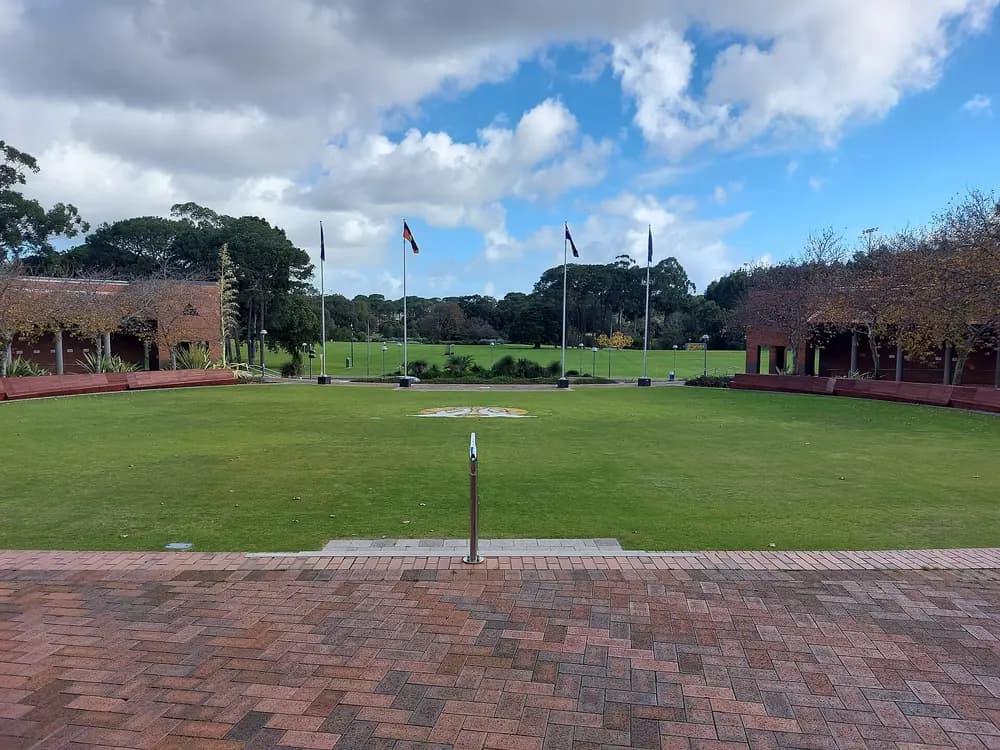
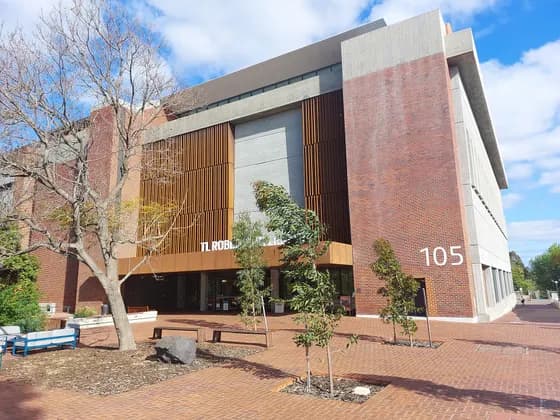

Photo: Orderinchaos · CC BY-SA 4.0 · cropped
Photo: Orderinchaos · CC BY 4.0 · Photo: Robert Young · CC BY 2.0 · Photo: Dietmar Rabich · CC BY-SA 4.0
The Curtin Oral Health Therapy course at a glance (2027 entry)
Curtin's Bachelor of Science (Oral Health Therapy) is a three-year, full-time course that trains you as an oral health therapist, not a dentist. Oral health therapists are registered dental practitioners who prevent, diagnose and treat oral disease in patients of all ages. The course sits in the Curtin School of Nursing, part of the Faculty of Health Sciences, and is based at Curtin's Perth campus in Bentley.
When you graduate you can apply to register with the Dental Board of Australia, which registers dental practitioners, working with the Australian Health Practitioner Regulation Agency (Ahpra). The Australian Dental Council (ADC), which accredits dental courses, lists this course's graduates as eligible to register as a dental hygienist, dental therapist and oral health therapist. The Board says a dentist may provide anything within the definition of dentistry, while other divisions of registration may have a narrower scope of practice, the range of treatments a practitioner may provide.
The Board describes oral health therapists as qualified in dental therapy and dental hygiene, with work that may include fillings, tooth removal and gum treatment. Curtin's course page describes the tooth removal as removing baby teeth, and the fillings as selected fillings. Its handbook adds check-ups, X-rays, professional cleaning, local anaesthetic and procedures that support orthodontic treatment, plus prevention and health promotion. The ADC says the course aims to give you an adult restorative scope, so you can repair adults' teeth, not only children's.
The course has 16 compulsory units, Curtin's word for subjects, and each year's theory, simulation and clinical units are designed to be taken together. Year 1 pairs shared health science with practice on classmates and on manikins, model heads used for rehearsing procedures. You start treating patients under supervision in Year 2, and Year 3 centres on 550 hours of clinical practice. To graduate you need at least 800 clinical placement hours.
Day to day, expect high contact hours, clinical hours in the semester breaks, and travel between the Bentley campus and two clinics. These are the Oral Health Centre of Western Australia (OHCWA) in Nedlands and the Dental Health Services clinic at Mount Henry. The ADC reaccredited the course in October 2025 for 2026 to 2030, after several years of closer monitoring, and the conditions it set have since been met.
| Degree | Bachelor of Science (Oral Health Therapy) |
|---|---|
| Course length | 3 years full time |
| Registration eligibility | Dental hygienist, dental therapist and oral health therapist (ADC list) |
| Campus and clinics | Bentley campus, OHCWA in Nedlands and Dental Health Services, Mount Henry |
| Teaching style | Integrated: theory, simulation and clinical units taken together each year |
| First patients treated | Year 2, in the year-long unit DENT2011 |
| Clinical hours | At least 800 clinical placement hours across the course |
| Cohort size | 32 in Curtin's latest reported intake; the ADC notes plans for 50 from 2026 |
| Accreditation | ADC, 1 January 2026 to 31 December 2030, no conditions |
| Electives and Honours | None built in: all 16 units are compulsory |
What makes the Curtin Oral Health Therapy course different
Dental clinics designed for autistic patients
Curtin runs clinics specifically for autistic children, teenagers and adults with the Autism Association of WA, lowering the lights and noise to make visits less distressing. Final-year students also run free familiarisation clinics, where patients can explore the clinic at their own pace and have check-ups and treatment.
A final year built around independent clinical practice
DENT3007, The Independent Oral Health Therapist, carries half of Year 3's credits and lists 550 hours of clinical practice plus an 80-hour skills block. Its placements are designed to prepare you to work independently as a newly qualified oral health therapist.
Training at a shared centre and a public clinic
Clinical placements centre on two Perth clinics. OHCWA in Nedlands is a dental teaching centre shared with other tertiary providers. The Mount Henry clinic is run by Dental Health Services, the State-funded and largest public dental provider in Western Australia. The ADC toured clinical facilities and simulation clinics at both sites in August 2025.
Indigenous health and culture, from Year 1 to Year 3
INDH1006 in Year 1 looks at how history and policy have shaped the health of Indigenous Australians, and how to work in partnership with Indigenous communities. In Year 3, DENT3009 returns to culture, equity and access, with community engagement and 15 hours of fieldwork.
Placements beyond the main clinics
Clinical placements reach beyond OHCWA and Mount Henry. The ADC's August 2025 report commended the School for adding placements in aged care at Brightwater and at Clontarf Aboriginal College, and called a pilot at the Curtin Early Childhood Centre promising.
How Curtin Oral Health Therapy teaches oral health therapy
Curtin designs the course so that each year's theory, simulation and clinical units run at the same time and feed into each other. Because of that, the handbook expects you to study full time and follow the set structure. Most units carry 25 credits, while DENT1003, DENT2011 and DENT3007, built around simulation and clinical practice, carry 75 or 100.
Year 1 is broad. Its five non-dental units are run by other Curtin schools, such as the School of Population Health, and are open to students from other courses. MEDI1000, for example, admits students from biomedical science, nutrition and laboratory medicine degrees. These units teach through lectures, science laboratories, tutorials and online learning.
From Year 2, dental science is taught mainly in weekly seminars. DENT2014 adds problem-based learning tasks, in which you work through a clinical case and research what you need to know to explain it. The year-long clinical unit puts the theory to work with patients at the same time.
Final year is more self-directed. DENT3008 is built on independent study, with optional consultation and support sessions and sit-down-and-write sessions, while DENT3009 uses lectures, community engagement, project work and reflection. Both run beside your final-year clinical work.
The ways you will learn
| Seminars | The main taught format in the dental units, usually one session of two to four hours a week. DENT2009, for example, has a four-hour weekly seminar. Several units add four hours a week of individual study. |
|---|---|
| Simulation lab | A practice clinic where you work on manikins before and alongside patient care. DENT1003 and DENT2011 each list 24 six-hour simulation lab sessions, and in Year 2 you move on to more advanced procedures. |
| Practice on classmates | Student-on-student practical sessions in DENT1003, alongside case studies and peer discussion in simulated settings, all supervised by teaching staff. |
| Skills blocks | Intensive blocks outside the weekly pattern: 30 hours in DENT1003, 42 hours in DENT2011 and 80 hours in DENT3007. DENT3006 adds four weeks of block teaching to prepare you for final-year placements. |
| Supervised clinics | From Year 2 you treat patients in a range of clinical settings under the supervision of clinicians, and reflect on your own practice and professional behaviour as you go. |
| Lectures, laboratories and online learning | Mostly in Year 1. MEDI1000 has 2-hour lectures and science laboratory classes, HUMB1000 combines structured online learning with a workshop and a tutorial each week, and INDH1006 pairs an online lecture with a tutorial. |
A typical week on the Curtin Oral Health Therapy course
Curtin says contact hours are high. From Year 2, the weekly dental science seminars sit beside supervised clinic sessions and simulation lab work.
Clinical work is physically demanding. Curtin's inherent requirements, the abilities every student needs to complete the course, include doing dental work for five to six hours with breaks, and standing while using both hands for a task.
The handbook gives each unit a tuition pattern, which it treats as a guide; exact details come in each unit's outline. The patterns for Semester 1 of Year 1 are listed below.
- CMHL1000: a 2-hour tutorial each week.
- MEDI1000: eleven 2-hour lectures and ten 2-hour science laboratory classes across the semester.
- HUMB1000: 2 hours of structured online learning, a 1-hour workshop or practical and a 1-hour tutorial each week.
- DENT1003, which runs across both semesters: a 3-hour seminar each week, plus six-hour simulation lab sessions and a 30-hour skills block.
How anatomy is taught at Curtin Oral Health Therapy
Anatomy is spread across three units. In Semester 1 of Year 1, HUMB1000 starts with anatomical terms and how cells, tissues and organs relate, then covers the circulatory, respiratory, digestive and excretory systems. HUMB1001 follows in Semester 2, linking the structure and function of six body systems and their nervous and hormonal control, with a weekly 1.5-hour science laboratory.
The anatomy closest to your future work comes in Semester 1 of Year 2. DENT2010 Oral Health Sciences covers head and neck anatomy and histology, the study of tissues under a microscope. You learn how baby and adult teeth differ, how teeth develop and come through, and how baby teeth are shed. You also study how pain is perceived, which is the basis for local anaesthesia.
When you start treating patients at Curtin Oral Health Therapy
You start on manikins and classmates, not patients. In Year 1, DENT1003 trains you on a manikin in two core skills. The first is non-surgical periodontal instrumentation: removing plaque and hardened deposits from teeth, including below the gum line. The second is restorative dentistry, repairing teeth with fillings. You also learn infection control and how to take dental X-rays, called radiographs.
Curtin requires you to practise techniques on one another before you treat patients. The handbook says clinical experience starts in Year 2, and DENT2011 is the first unit in which you treat patients, children and adults, in a range of clinical settings. Under clinicians' supervision you assess each patient's risk of oral disease, examine them, plan their care, make diagnoses and judge how the treatment worked. You also put local anaesthesia into practice and refine your radiography, including the OPG, a panoramic X-ray of the whole mouth.
Responsibility grows in Year 3. In DENT3007 you treat people with oral disease of varying complexity, special care needs such as a disability, and complex medical histories, working across your full scope of practice. You learn to prepare referrals to other dental and health practitioners, get ready to plan care on your own, and manage your time in clinic so care stays good and efficient.
Year by year at Curtin Oral Health Therapy
- Year 1
Health science foundations and first clinical skills
Year 1 combines five shared health science units with DENT1003, a 75-credit unit that introduces oral health therapy across both semesters. You learn how the body works and how health systems and professional practice operate, alongside the basics of preventive dental care, and you practise on manikins and classmates.
- CMHL1000 Foundations for Professional Health Practice (Semester 1): ethical decision making, study skills for university, safety and quality in health care, Australian and international health systems, and teamwork with other health professions.
- MEDI1000 Foundations of Biomedical Science (Semester 1): an introduction to microbiology, immunology, biochemistry and molecular genetics, plus histopathology and haematology, the study of diseased tissue and of blood. It includes how disease and infectious agents are investigated in the laboratory.
- HUMB1000 Human Structure and Function (Semester 1) and HUMB1001 Integrated Systems Anatomy and Physiology (Semester 2): the body's systems in health and in selected disease states.
- INDH1006 Indigenous Cultures and Health Behaviours (Semester 2): culture and diversity in Indigenous populations, the effects of policy and history on Indigenous Australians' health and access to care, and theories of health behaviour.
- DENT1003 Professional Foundations for Oral Health Therapy (Pass/Fail): the dental team and each member's scope of practice, prevention, behaviour change and minimally invasive dentistry, which removes as little tooth as possible. It runs in a study period Curtin calls Extended Year 1, from 22 February to 5 November in 2027.
- DENT1003 also covers clinical decision making, oral health promotion, the social factors that shape oral health and your role in improving oral health literacy. It includes clinical placement hours that count towards the course minimum.
- Year 2
Dental sciences and your first patients
The year-long DENT2011 puts you in supervised clinics with children and adults, while five dental science units build the knowledge behind the treatment. Simulation lab work continues alongside, now on more advanced procedures.
- DENT2010 Oral Health Sciences (Semester 1): head and neck anatomy and tooth development, plus dental plaque, infection, inflammation and healing, and the role of saliva in oral health.
- DENT2009 Risk Assessment and Care Planning (Semester 1): tools for judging a patient's risk of oral disease, when extra investigations are needed, orthodontic assessments, diagnosing soft and hard tissue disease, and managing dental trauma.
- DENT2012 Dental Materials, Prosthodontics and Orthodontics (Semester 2): choosing materials on the evidence, ways to repair or replace damaged and missing teeth, orthodontics and maintaining implants. You also learn which of these techniques fall within an oral health therapist's scope.
- DENT2013 Medically Compromised Care and Special Care (Semester 2): reading medical histories and adapting care for people with medical conditions, disability or in aged care, including when to consult other health practitioners before treating.
- DENT2014 Oral Pathology, Oral Medicine and Pharmacology (across both semesters): medicines, side effects and interactions, the science of mouthwashes and toothpastes, oral diseases and their causes, and how to write professional referrals.
- DENT2011 Introduction to Clinical Oral Health Therapy (year-long, 75 credits, Pass/Fail): supervised patient care, oral health promotion for different groups, theories of behaviour change, 24 six-hour simulation lab sessions and a 42-hour skills block.
- Year 3
Towards independent practice
Final year centres on DENT3007, The Independent Oral Health Therapist, a year-long clinical unit. You treat patients with more complex needs and gather further evidence that you meet the ADC's professional competencies, the national list of what a newly qualified oral health therapist must be able to do. Two single-semester units cover culture and research.
- DENT3006 Comprehensive Care and Treatment Planning (year-long, 50 credits): it extends your diagnosis and care planning. It also introduces the theory behind more advanced oral health therapy procedures and dental specialties such as implantology (dental implants), care of older people, forensic dentistry and endodontics (root canal work).
- DENT3006 also includes a four-week intensive teaching block to prepare you for final-year placements, and covers managing patients' behaviour, teamwork, stress management, career planning and practice management. Hands-on training covers orthodontic support procedures and cosmetic treatments such as tooth whitening.
- DENT3007 The Independent Oral Health Therapist (year-long, 100 credits, Pass/Fail): 550 hours of clinical practice and an 80-hour skills block. Clinical discussions prepare you to plan care independently, and you reflect on cultural bias.
- DENT3009 Cultures of Oral Health (Semester 1): cultural bias, equity, inclusion and access in oral health care, and culturally safe care, meaning care that respects a patient's culture. It includes a 15-hour fieldwork component.
- DENT3008 Evidence-based Oral Health Practice (Semester 2): a literature review on a clinical or policy question, ideally drawn from your own clinical or placement experience. You search and critique the research, weighing efficacy, safety, cost-effectiveness and patient preference, and build the review in stages as a journal review article.
How you are assessed at Curtin Oral Health Therapy
The three units built on simulation and clinical work, DENT1003, DENT2011 and DENT3007, are graded Pass or Fail. The other 13 units are given a grade and mark. Each unit's assessment tasks are set out in its unit outline.
Your clinical performance is assessed longitudinally, meaning it is tracked over time. The handbook names six domains: safety and professionalism; communication and teamwork; knowledge; information gathering and treatment planning; technical clinical skills; and prevention and health promotion.
Hours alone are not enough. You must complete at least 800 clinical placement hours, but the handbook says that does not by itself prove competence. You must also show you can safely carry out an appropriate range of procedures and patient care within an oral health therapist's scope.
A targeted review the ADC ordered in August 2024 found that the new curriculum and PebblePad, an online portfolio system, had made student progress clearer. It still had concerns about students' access to enough patients. But it was satisfied that assessment, including access to simulated patients, made sure students reached the competencies before graduating.
In August 2025 the ADC found a gap at OHCWA. Supervisors employed by the clinic gave students spoken feedback and sent written feedback through PebblePad to unit coordinators, who decided competency without seeing the work. Academic staff also could not use the clinic for teaching. The ADC required Curtin to define both groups' roles and to make sure whoever decides competency watches the skill being performed. Its February 2026 update records these conditions as met.
Where you will actually be at Curtin Oral Health Therapy
Curtin says the course is taught in three places: the Bentley campus, OHCWA in Nedlands and the Dental Health Services clinic at Mount Henry, so some travel between them is part of the course. The handbook adds that practical sessions run in a range of settings, including the program's own clinic, OHCWA, community clinics and private dental practices.
The ADC's August 2025 report describes clinical placements at OHCWA and Mount Henry, where formal agreements are now in place. It praised the School for widening placements through a social responsibility clinic, an autism clinic, Clontarf Aboriginal College and Brightwater aged care. It also called a pilot at the Curtin Early Childhood Centre promising, and urged formal agreements so these placements continue if staff change.
A targeted review ordered in August 2024 praised the chances to work with other health professionals but was concerned that students had few chances to work in a dental team. The 2025 report found the same gap and required a formal approach to working with other dental practitioners, a condition later judged met. It also asked Curtin to check that every student gets enough restorative work on patients of all ages. Staff and students, it said, needed more notice of timetables and placements, especially those involving travel.
Placements do not stop when semesters do. The handbook and course page both say extra clinical hours are required in the breaks between semesters. In the 2027 calendar, the Year Long study period that holds DENT2011, DENT3006 and DENT3007 runs from 18 January to 26 November. That is about four weeks before Semester 1 begins on 15 February, and two weeks after Semester 2 ends on 12 November.
Before your first placement you must meet Curtin's fieldwork requirements, including criminal record screening, immunisation, hand hygiene and manual handling training, and screening for communicable diseases. You pay for the checks, vaccinations, and first aid and manual handling courses yourself.
Carriers of blood-borne viruses cannot perform some procedures on patients, so blood tests must be done before or during your first semester. The handbook requires a Senior First Aid Certificate before the second semester of Year 2; one line on the course page says before your second semester, so it pays to do it early.
The ADC names it as a clinical placement site.
- Oral Health Centre of Western Australia (OHCWA), 17 Monash Avenue
Run by Dental Health Services, the largest public dental provider in Western Australia. The ADC names it as a clinical placement site and toured its clinical facilities, learning spaces and simulation clinics in August 2025, and Curtin says students there provide dental services to the public.
- Dental Health Services' clinic at Mt Henry (43 Mt Henry Road)
The course's home campus, one of the three places the handbook says the course is taught.
- Curtin's Perth campus
Named in the ADC's August 2025 report as ways the School has widened clinical placements.
Electives, selectives and options at Curtin Oral Health Therapy
Every unit in the 2027 structure is compulsory, so there are no electives or selectives. Your choices sit inside units: in DENT3008 you pick the topic of your literature review based on your clinical or placement experience, and DENT3009 includes project work.
Intercalation and research degrees at Curtin Oral Health Therapy
Intercalating means taking a year out of your course to earn an extra degree. No intercalated, Honours or research year sits inside the course, and your research training comes through DENT3008 in final year. After graduating, the handbook says you may qualify for entry to a Bachelor Degree with Honours and to some graduate certificates, graduate diplomas and master's degrees.
Facilities and support at Curtin Oral Health Therapy
Where you will learn
OHCWA is a dental teaching centre in Nedlands, near the Queen Elizabeth II Medical Centre, run jointly with other tertiary education providers. Curtin's page on the centre, last updated in 2023, names the partners as the University of Western Australia (UWA) Dental School and North Metropolitan TAFE. It lists clinical facilities, laboratories, and clinical teaching and computing facilities.
Curtin runs an Oral Health Student Clinic at OHCWA, staffed by oral health therapy students under the supervision of qualified staff. In 2023 it offered check-ups and cleans, X-rays including OPGs, in-office tooth whitening and white fillings at prices well below private practice, and took appointments from Monday to Wednesday.
Mount Henry is a clinic of Dental Health Services, whose mission includes supporting the training and education of oral health professionals. The ADC's 2025 report acknowledged the support given by the Mt Henry Dental Health Services staff, and encouraged continued work together on professional development.
The ADC has watched these facilities closely. In 2023 it said OHCWA's dental equipment needed significant investment. At the targeted review it ordered in August 2024, an agreement for simulation lab access at Mount Henry was still unsigned. By 2025 formal agreements were in place with both sites. A Clinic Manager had also been appointed at OHCWA, and the ADC said better governance, operations and patient flow had increased the clinical experience available to students.
In 2025 an upgrade of OHCWA's clinical facilities was being planned without a fixed timeline. Curtin was required to report progress to the ADC each quarter up to August 2026, and the February 2026 update records the November 2025 and February 2026 reports as met. The ADC also asked Curtin to show it had enough staff, facilities, placements and patients for the planned increase in enrolments to 50 from 2026, and records that requirement as met.
Support while you study
Curtin acknowledges that oral health therapy students face significant out-of-pocket costs, especially in first year. Its Oral Health Therapy Uniform Bursary, introduced in 2026, subsidises the required uniforms for every first-year student. Donors fund it: the Australian Dental Association (WA Branch), the Australian Society of Orthodontists (WA Branch) and One Dental.
If you have a disability or health condition, Curtin says reasonable adjustments may be made to help you meet the inherent requirements, and its AccessAbility Services can advise. Dental Practitioner Support, a national health and wellbeing service, is also open around the clock to dental students.
Is the Curtin Oral Health Therapy course right for you?
This course may suit you if
- You want a three-year course leading to registration as an oral health therapist, focused on prevention, gum care and fillings for patients of all ages, rather than the full scope of a dentist.
- You want to treat patients from Year 2, then spend final year in a year-long clinical unit designed to prepare you for independent practice.
- You would like to care for people who need extra support, from autistic children and adults to people with medical conditions or disability and residents of aged care.
- You are drawn to health promotion, cultural safety and Indigenous health, which run from INDH1006 in Year 1 to DENT3009's fieldwork in Year 3.
Things to think about
- This course does not lead to registration as a dentist, and the Dental Board says continuing professional development courses cannot change that. Becoming a dentist would usually mean a separate approved dentist program.
- Contact hours are high and clinical hours run into the semester breaks: in 2027, the Year Long study period runs from 18 January to 26 November.
- You will travel between the Bentley campus, OHCWA in Nedlands and the Mount Henry clinic.
- The course is designed to be studied full time with every unit compulsory, so you follow a set path with no electives.
- The ADC's 2025 report noted an OHCWA facilities upgrade with no fixed timeline, asked Curtin to keep checking that every student gets enough restorative work, and called for more notice of timetables and placements.
- If health promotion draws you to the course, note that the ADC's 2025 report suggested this part of the curriculum could be strengthened to reflect current public health approaches.
Curtin Oral Health Therapy course — frequently asked questions
Applying to Curtin Oral Health Therapy?
How to get into Curtin Oral Health Therapy
Entry requirements, admission tests, written application and interview, step by step.
Open the guide →Curtin Oral Health Therapy entry requirements
ATAR or GPA, GAMSAT and UCAT ANZ thresholds, interview format and place types.
See the requirements →Compare Curtin Oral Health Therapy with other schools
Put the teaching style, anatomy teaching and placements next to another school.
Open the comparison →Prepare for the Curtin Oral Health Therapy interview
Format breakdown, school-specific sample questions and prep tips from tutors who interviewed here.
Read the guide →Where this Curtin Oral Health Therapy course guide came from
This guide was written from 39 official sources — Curtin University Bachelor of Science (Oral Health Therapy)'s own course pages and programme documents, plus the Australian Medical Council or Australian Dental Council and the health services the school places students with where they publish detail — read on 2026-10-10, then checked claim by claim against those sources.
- Curtin University: Bachelor of Science (Oral Health Therapy) course page
- Curtin Handbook: Bachelor of Science (Oral Health Therapy), B-ORALHT version 5 (2027)
- Curtin Handbook: CMHL1000 Foundations for Professional Health Practice
- Curtin Handbook: MEDI1000 Foundations of Biomedical Science
- Curtin Handbook: HUMB1000 Human Structure and Function
- Curtin Handbook: INDH1006 Indigenous Cultures and Health Behaviours
- Curtin Handbook: HUMB1001 Integrated Systems Anatomy and Physiology
- Curtin Handbook: DENT1003 Professional Foundations for Oral Health Therapy
- Curtin Handbook: DENT2010 Oral Health Sciences
- Curtin Handbook: DENT2009 Risk Assessment and Care Planning
- Curtin Handbook: DENT2012 Dental Materials, Prosthodontics and Orthodontics
- Curtin Handbook: DENT2013 Medically Compromised Care and Special Care
- Curtin Handbook: DENT2011 Introduction to Clinical Oral Health Therapy
- Curtin Handbook: DENT2014 Oral Pathology, Oral Medicine and Pharmacology
- Curtin Handbook: DENT3006 Comprehensive Care and Treatment Planning in Oral Health Therapy
- Curtin Handbook: DENT3007 The Independent Oral Health Therapist
- Curtin Handbook: DENT3009 Cultures of Oral Health
- Curtin Handbook: DENT3008 Evidence-based Oral Health Practice
- Australian Dental Council: report of an evaluation of Curtin University's BSc (Oral Health Therapy), August 2025, updated February 2026
- Australian Dental Council: accredited programs list
- Australian Dental Council: professional competencies
- Australian Dental Council: Professional competencies of the newly qualified dental practitioner (May 2022, effective 2023)
- Dental Board of Australia: Guidelines for scope of practice
- Dental Board of Australia: dental hygienist, dental therapist and oral health therapist registration
- Dental Board of Australia: student registration and graduates
- Dental Board of Australia: graduates finishing their studies can apply for registration now (October 2026)
- Curtin: Oral Health Centre Western Australia (page last modified May 2023)
- Curtin OASIS news: Oral Health Student Clinic (March 2023)
- Curtin: Oral health partnership helping those on the spectrum (March 2025)
- Curtin Health Community eNewsletter, April 2026: Oral Health Therapy Uniform Bursary
- Curtin Health Community eNewsletter, July 2026: autism familiarisation clinics and 55 years of the program
- Curtin Health Community eNewsletter, April 2025: Oral Health Student Clinic at OHCWA
- Curtin: Inherent requirements for Oral Health Therapy
- Curtin: Fieldwork statements
- Curtin: Health Sciences fieldwork
- Curtin: Faculty of Health Sciences facilities
- Curtin: Academic calendar, 2027 key dates
- Curtin: Student profile, pathway breakdown by course (page updated September 2025)
- WA Health: Dental Health Services
Courses are restructured between cycles. Anything here that decides your application — an anatomy offer, a placement city, a compulsory intercalated year — should be confirmed against the official page for your entry year.
Applying to Curtin Oral Health Therapy?
We have helped hundreds of applicants turn their GAMSAT / UCAT ANZ, written application and interview prep into offers from Curtin Oral Health Therapy and other Australian oral health therapy schools.