
The La Trobe Dental course
What you actually study, and where you will be
La Trobe Dental's Bachelor of Dental Science (Honours) is a 5-year (undergraduate entry) course with an integrated curriculum, with patient treatment from Year 3 and placements in Bendigo, Wodonga, Mildura, Melton, Ballarat and regional Victoria (2027 entry). La Trobe's five-year dental course is taught at Bendigo and built around regional and rural practice. For two years you learn the sciences alongside hands-on skills on manikins in a clinical school that opened in central Bendigo in 2025. Patients start in Year 3, and Years 4 and 5 centre on 250 days of placement in regional and rural Victoria. Every student also completes an Honours project.
- Degree
- Bachelor of Dental Science (Honours)
- Length
- 5 years (undergraduate entry)
- Teaching
- Integrated
- First patients
- Year 3
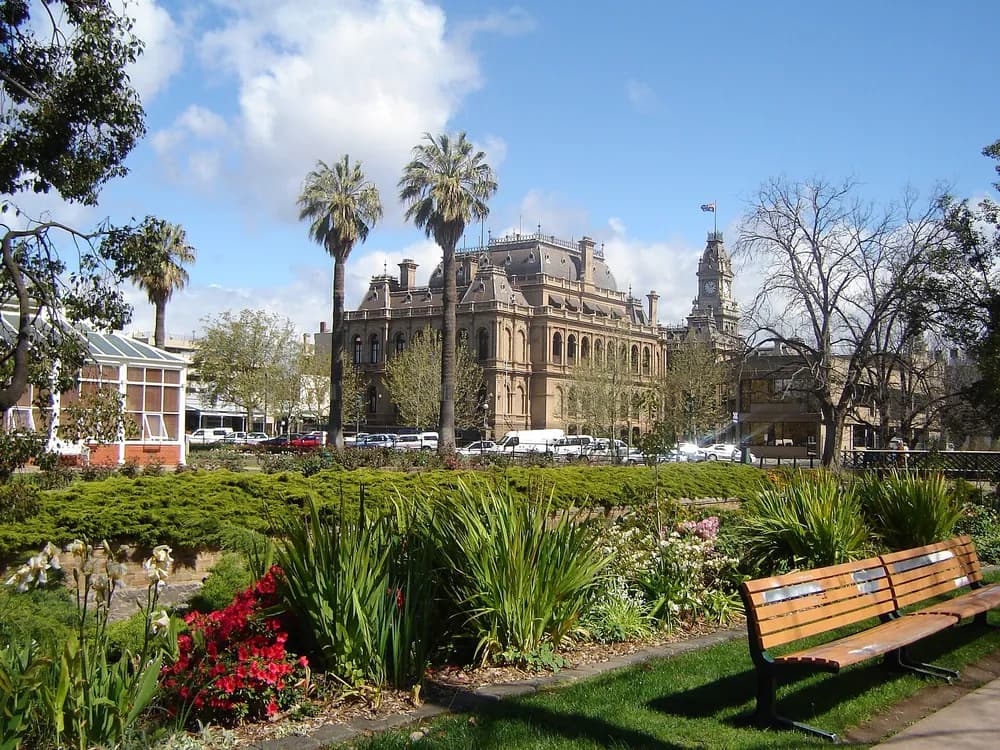
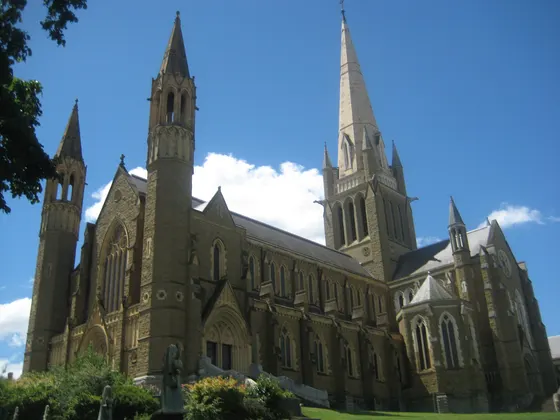
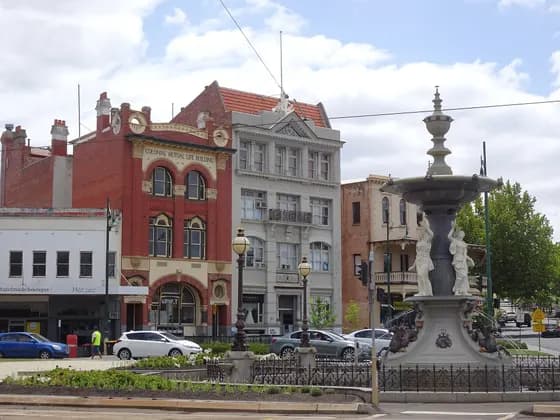
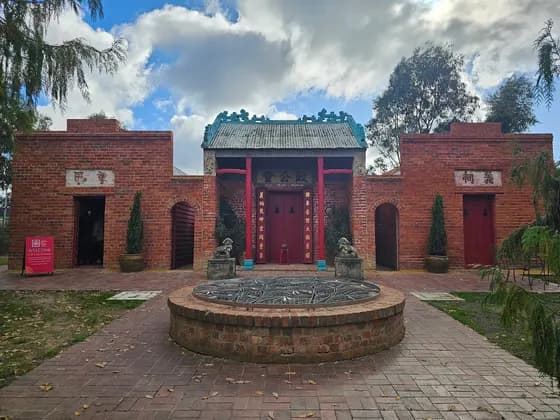
Photo: No machine-readable author provided. Frances76~commonswiki assumed (based on cop · Public domain · cropped
Photo: Xxplosiv · CC BY-SA 3.0 · Photo: Michael Coghlan from Adelaide, Australia · CC BY-SA 2.0 · Photo: Kaliper1 · CC BY-SA 3.0
The La Trobe Dental course at a glance (2027 entry)
La Trobe University's Bachelor of Dental Science (Honours) is a five-year, full-time course whose graduates can apply for registration as a dentist. It is run by the La Trobe Rural Health School and taught only at Bendigo, in central Victoria. You complete 600 credit points, 120 a year, and graduate with an honours bachelor degree at Level 8 of the Australian Qualifications Framework. The first students started this version of the course in 2020, when it replaced an older bachelor and master's double degree.
The course is built around regional and rural dentistry. Placements take you to clinics across Victoria, from Bendigo, Wodonga and Mildura to Melton in Melbourne's west. In Year 1 you also work with a rural community on a team project. In 2025, close to 70 per cent of La Trobe's dentistry students came from regional postcodes.
The first two years combine science with hands-on skill. Each semester runs theory subjects alongside classes in the dental simulation labs, where you practise on manikins: model heads and jaws that stand in for patients, often called phantom heads. You start this pre-clinical work in your first semester.
Real patients arrive in Year 3, on supervised placements where you work both as the treating student, called the operator, and as a dental assistant. Years 4 and 5 centre on 250 days of placement in regional and rural Victoria, while the theory subjects continue largely online. Every student also completes an Honours project, in either a research stream or a team-based industry stream.
The course is accredited by the Australian Dental Council (ADC), which checks dental programs against national standards. After a site visit in April 2026, the ADC decided on 24 July 2026 to reaccredit it from 1 January 2027 to 31 December 2033, subject to six conditions. These cover tracking each student's clinical experience, educator staffing and training, Aboriginal and Torres Strait Islander input, and placement capacity.
| Degree | Bachelor of Dental Science (Honours), AQF Level 8 |
|---|---|
| Course length | 5 years full time; 600 credit points |
| Main campus | Bendigo; dental labs in the Clinical Teaching Building, Arnold Street |
| Teaching style | Paired theory and simulation-lab subjects, then supervised placements |
| Simulation | 82 manikin workstations and a 16-chair simulated clinic |
| First patient contact | Year 3: 30-day Introduction to Clinical Practice placement |
| Clinical placement | 315 days across Years 3 to 5 (2027 handbook) |
| Placement area | Bendigo, Wodonga, Mildura, Melton and Ballarat, plus final-year satellite clinics |
| Honours | Built in: Research or Industry stream, from Year 3 Semester 2 |
| Accreditation | ADC reaccreditation to 31 December 2033, with six conditions (July 2026) |
What makes the La Trobe Dental course different
Placements that rotate around regional Victoria
You rotate through La Trobe's teaching clinics in Bendigo, Wodonga, Mildura and Melton. That means treating public dental patients in very different communities, from regional cities to Melbourne's western suburbs, before you graduate.
315 days of supervised clinical placement
The 2027 handbook sets 65 placement days in Year 3, 120 in Year 4 and 130 in Year 5. On placement you treat your own patients as the operator and also work as a dental assistant. By the end of Year 5 you are expected to show competence and safety across the areas of practice needed for registration.
Honours inside five years, with a choice of route
You do not need an extra year to graduate with Honours. From the second half of Year 3 you choose one of two streams. Research honours is an individual project ending in a journal-ready manuscript of up to 11,000 words. Industry honours is a supervised team project on a problem facing the dental sector.
A rural community project in first year
In Rural Community Engagement you work in a team with students from other health disciplines. You visit a rural community, talk with locals about their needs and priorities, and design a project in response. It ends with a 30-minute group presentation to a rural audience or a simulated community setting, plus your own written reflection.
Two years of simulation in a new clinical school
The dental labs moved in 2025 into a new clinical school beside Bendigo Health. In Years 1 and 2 you spend six hours a week in lab classes there. You build from infection control and simple fillings to local anaesthetic, X-rays, children's dentistry and medical emergencies before you meet patients.
How La Trobe Dental teaches dentistry
La Trobe describes the course as multi-modal: a mix of face-to-face classes, live online sessions and online work you do in your own time. A typical theory subject combines online lectures or videos with a weekly on-campus workshop or tutorial. Lab subjects are taught face to face, and the handbook expects 100 per cent attendance at every rostered lab and placement session.
In Years 2 and 3, each semester pairs a theory subject with a lab subject that practises the same skills. In Semester 1 of Year 2, for example, Scientific and Clinical Knowledge 2A covers the theory of X-rays, local anaesthesia and minimal intervention dentistry. That approach aims to prevent decay and remove as little tooth as possible. Alongside it, Preclinical Skills 2A has you take X-rays, give anaesthetic and place fillings in simulation. The handbook makes each pair corequisites, so you take them together.
Some subjects are shared with other La Trobe health courses. Research and Evidence in Practice in Year 1 and Integrating Evidence into Practice in Year 2 teach you to find and judge research, partly in teams with students from other professions. First Nations health runs through the course, from cultural awareness in Year 1 to culturally safe care in Year 2 and a face-to-face First Nations workshop in Year 4.
From Year 4 you are mostly on placement, so the theory moves online. In Year 4, Scientific and Clinical Knowledge 4A and 4B combine pre-recorded material with live online workshops on study days, plus face-to-face back-to-base workshops in Bendigo between the two placements. In Year 5, 5A and 5B are mostly self-paced online, with a face-to-face back-to-base intensive and a seminar. Across both years you work through complex cases in the specialties, from orthodontics, children's dentistry and special needs dentistry to oral surgery, implants and orofacial pain.
When the ADC visited in April 2026, staff and students said they preferred face-to-face learning. The ADC also heard that the school relies on part-time and casual clinical educators, that rosters change often to keep supervision safe, and that some pre-clinical sessions had been cancelled for lack of educators. It required evidence on educator staffing and training by 20 August 2026.
The ways you will learn
| Simulation lab classes | The core of Years 1 to 3. You work at a manikin workstation, practising procedures that are then assessed as pre-clinical competencies. Year 1 and 2 lab subjects each run three two-hour classes a week, in classes capped at 20 or 30. |
|---|---|
| Simulated dental clinic | A 16-chair clinic with a sterilisation area, set up like a real surgery. You use it for infection control, X-rays and non-invasive procedures on manikins. In Year 3, removable prosthodontics (making dentures) adds clinic sessions in groups of up to nine, recording impressions in a simulated patient setting. |
| Online lectures and self-paced work | Most lectures are online, live on Zoom or pre-recorded, with videos and interactive activities to finish before on-campus classes. Year 3 endodontics (root canal treatment), for example, includes 21 hours of pre-recorded lectures. |
| Workshops, tutorials and practicals | Weekly on-campus sessions of one to two hours, usually capped at 25 to 40 students. Some use live polling apps such as Menti to check understanding. |
| Case studies and presentations | From Year 2 much of the work centres on patient cases. You present in groups, such as a 30-minute orthodontic case presentation in Year 3, and write individual case reports and care plans. |
| Supervised clinical placement | From Year 3, weekdays in health services' dental clinics under clinical educators. You treat patients as the operator, also work as a dental assistant, and record your progress in a clinical e-portfolio. |
A typical week on the La Trobe Dental course
The handbook lists each subject's weekly classes, which gives a clear picture of Year 1. In Semester 1 the three dental subjects add up to about 11 hours on campus a week. That is three two-hour labs for Oral Health Practice, a two-hour Dental Science A workshop, and a one-hour tutorial plus a two-hour practical for Scientific and Clinical Knowledge A. About five hours of set online work comes on top.
Rural Community Engagement adds a two-hour workshop each week in the semester you take it. Semester 2 follows a similar pattern, with three two-hour labs, a weekly two-hour anatomy practical, online tutorials and microbiology workshops. Research and Evidence in Practice is taught fully online.
Placement weeks look different. Placement days are weekdays, and the hours depend on each health service's needs. A Year 4 placement subject fits 60 days into a block of about 20 weeks, roughly three clinic days a week on average, with online theory and your Honours project fitted around them.
How anatomy is taught at La Trobe Dental
Anatomy is taught in Year 1 and concentrates on the head, neck and teeth. Dental Science A, in Semester 1, gives the wider picture: how the body is organised, how cells work, and how the nervous and endocrine systems keep the body in balance. That is the base for understanding how general health and the mouth affect each other.
Scientific and Clinical Knowledge A, also in Semester 1, covers the anatomy of the head and face and, in detail, tooth morphology: the shape and structure of every tooth. You are assessed on identifying teeth and in a structured practical exam on the teeth, the mouth and histology, the study of tissues under the microscope.
Dental Science B, in Semester 2, covers the gross anatomy of the head and neck, the histology of the mouth and the embryology of how teeth form. Lectures are online, with weekly videos to watch before a two-hour practical on campus. Assessment includes a 25-minute flag test, where you name structures marked with tags, plus an exam and a test sat in pairs or small teams.
Disease comes later. General Medicine A in Year 2 covers what goes wrong in the major organ systems. Oral Pathology and Oral Medicine in Year 3 teaches you to tell healthy from diseased tissue in the mouth and to interpret the X-ray and histology findings used to diagnose mouth lesions.
When you start treating patients at La Trobe Dental
Before you treat anyone, you spend two years building skills in simulation. Year 1 covers infection control, cavity preparation and fillings, and scaling, which means cleaning hardened deposits off teeth, first above the gum line and then below it. Year 2 adds dental X-rays, local anaesthetic, multi-surface fillings, children's fillings and extractions, and managing a medical emergency in a simulated clinic. You also practise your communication skills in a realistic simulated clinic.
Your first real patients come in Year 3 through Introduction to Clinical Practice, 30 placement days in the first half of the year. You learn the infection control and professional standards expected of a student clinician, take medical histories, carry out full oral examinations and write care plans for the patients assigned to you.
Clinical Dentistry 1 follows with 35 days in the second half of Year 3. You treat adults and children, prescribe and take X-rays, and complete year-level clinical tasks with little help from your educators. Keeping infection control and professionalism breaches to a minimum is what lets you move on to placements at other services.
Responsibility then grows. Year 4 placements add root canal treatment, dentures and surgical extractions, and introduce indirect restorations such as crowns, which are made outside the mouth and then fitted. In Year 5 you provide a full range of treatment and must show the competence and safety expected of a new dentist.
Year by year at La Trobe Dental
- Year 1
Foundations and first lab skills
Year 1 lays the scientific groundwork and starts your hands-on skills straight away. You study how the body works, the anatomy of the head, neck and teeth, and the microbiology behind decay and gum disease, while learning basic procedures on manikins. Two shared health subjects build research skills and take you into a rural community.
- Oral Health Practice (Semester 1): infection control, minimal intervention dentistry and basic gum and filling procedures, assessed as competencies in cavity preparation and restoration and in scaling above the gum line.
- Preclinical Oral Health Simulated Practice (Semester 2): scaling below the gum line, preparing and restoring teeth, and the Hall crown technique, which seals a decayed baby molar under a preformed metal crown.
- Dental Science A and B: body organisation, cells, nutrition and metabolism, the nervous and endocrine systems, then head and neck anatomy, oral histology and tooth development.
- Scientific and Clinical Knowledge A and B: tooth anatomy, professional values and First Nations cultural awareness, then microbiology, immunology, and the causes, classification and prevention of decay and gum disease.
- Research and Evidence in Practice (online) and Rural Community Engagement, plus two short compulsory online modules: Academic Integrity, and Wominjeka La Trobe, a one-hour introduction to Indigenous Australian history and culture.
- Year 2
Medicine for dentistry and clinic-ready skills
Year 2 links general health to the mouth and moves your lab skills closer to real practice. You learn how diseases and medicines affect dental treatment, how to promote oral health in communities, and the theory of children's dentistry and orthodontics. By the end of the year your lab skills are assessed against the standard needed to start clinical practice.
- Preclinical Skills 2A: intra-oral X-rays, local anaesthetic, composite fillings and ultrasonic scaling; the composite filling task is a hurdle you must pass.
- Preclinical Skills 2B: multi-surface fillings, children's fillings and extraction techniques, orthodontic records, local anaesthetic and a simulated medical emergency.
- Scientific and Clinical Knowledge 2A and 2B: care planning for gum disease, X-ray and anaesthesia theory, children's dentistry, orthodontics and jaw growth, motivational interviewing and culturally safe care.
- General Medicine A and Medicine for Dentistry: diseases of the major organ systems, the drugs used in dentistry, and reading a complex medical history for treatment risks.
- Oral Health Promotion, on what drives oral health in communities and how to prevent disease in priority groups, and Integrating Evidence into Practice, where you critically appraise a clinical trial.
- Year 3
Into the clinic
Year 3 is the bridge into clinical work. Removable prosthodontics and oral pathology fill the first half of the year, while your first 30 placement days begin. The second half brings endodontics, minor oral surgery and 35 more placement days, and you start planning your Honours project.
- Foundation Skills in Removable Prosthodontics: impressions, bite registration and facebow records on simulated patients, in lab and clinic groups of up to nine.
- Preclinical Skills 3: denture design and tooth arrangement, removing adult teeth on a manikin and advanced fillings. It includes an OSCE (objective structured clinical examination), a practical exam taken in stations, on restorative work and minor oral surgery.
- Introduction to Clinical Practice (30 days) and Clinical Dentistry 1 (35 days): your first supervised patient care.
- Scientific and Clinical Knowledge 3A and 3B: care planning, dentures and orthodontic mechanics, then endodontics, minor oral surgery and advanced gum and filling theory.
- Oral Pathology and Oral Medicine: recognising and diagnosing mouth disease, with a group case study report.
- Semester 2: Research Project Planning or Project Planning and Preparation, depending on your Honours stream.
- Year 4
Regional and rural placements
Year 4 is mostly spent on placement in regional and rural Victoria. A short pre-clinical block in root canal treatment comes before the first 60-day placement, and a crown preparation block comes before the second. Theory runs mostly online, with face-to-face workshops in week 28, and your Honours project gets under way in the second half of the year.
- Preclinical Skills D: root canal access, cleaning and filling, plus tooth bleaching and splinting, in weeks 4 and 5; then advanced tooth preparation for crowns and other indirect restorations in weeks 26 to 28.
- Clinical Dentistry 2 (60 days): fillings, scaling, simple extractions, X-rays, root canal and denture work, with a clinical e-portfolio.
- Clinical Dentistry 3 (60 days): multi-surface fillings, advanced gum care, surgical extractions and the first indirect restorations.
- Scientific and Clinical Knowledge 4A and 4B: orthodontics, special needs and children's dentistry, dental trauma and pain, gum surgery, wisdom tooth surgery, infections, oral medicine and prosthodontic care plans.
- Honours: Dentistry Research Project or Dentistry Industry Project A in Semester 2.
- Year 5
Capstone clinical year
Year 5 centres on 130 placement days in public dental clinics across regional Victoria, where you deliver a full range of care. It totals 120 credit points: two 30-point clinical subjects, two 15-point theory subjects and 30 points of Honours. The course page and handbook label the capstone group as 90 credit points, but the two subjects in it add up to 60.
- Clinical Dentistry 4 (55 days) and Clinical Dentistry 5 (75 days): your capstone placements, ending with evidence that you are competent and safe to register.
- Scientific and Clinical Knowledge 5A: bringing the specialties together for complex care plans, orofacial pain, an introduction to dental implants and a presentation on a patient you manage.
- Scientific and Clinical Knowledge 5B: orthodontics, children's and special needs dentistry, practice administration and teamwork, professionalism, ethics and dental law.
- Honours: Dentistry Research Project B (30 credit points, all year), or Dentistry Industry Project B (15 credit points) plus 15 credit points of electives.
How you are assessed at La Trobe Dental
Each subject has three or four weighted tasks, and most include an early, lower-weighted one. Many also have a hurdle: a task you must pass to pass the subject, whatever your other marks. In the Year 1 and 2 lab subjects, a personal and professional behaviour competency is a hurdle worth no marks. Some major practical tasks, such as the Year 2 composite filling, are hurdles too.
Practical skills are tested by demonstration, from fillings and scaling to local anaesthetic, denture stages, root canal procedures and crown preparation. Preclinical Skills 3 in Year 3 includes an OSCE on advanced fillings and minor oral surgery.
Theory is tested through central exams with multiple-choice and short-answer questions, two-hour written papers, online tests built on case scenarios, case reports and group or individual presentations. Year 1 includes practical exams on teeth and anatomy, and in Year 2 you write a 2,250-word appraisal of a published clinical trial.
On placement, Introduction to Clinical Practice is assessed on professionalism and skills development, and on an e-portfolio with reflections; both are hurdles. From Clinical Dentistry 1 onwards each subject centres on a clinical skills demonstration, a hurdle worth 40 to 45 per cent, plus two-part assessments of professionalism and progress. Full attendance is a hurdle in Year 3. The handbook allows supplementary exams, an extra attempt after failing, only in the six clinical placement subjects.
The ADC's 2026 report described clinical assessment as evolving, with some difficulty tracking each student's readiness for specific procedures, particularly in Year 3. One condition asked La Trobe to show by 20 August 2026 how it monitors the range, volume and type of procedures each student does, so that everyone gets enough clinical experience.
Where you will actually be at La Trobe Dental
Placements are compulsory and arranged by La Trobe; the handbook marks every clinical subject as university-sourced and regional. Across Years 3 to 5 the 2027 handbook sets 315 placement days: 30 and 35 days in Year 3, 60 and 60 in Year 4, and 55 and 75 in Year 5.
La Trobe's general health placements page gives different figures: about 264 days of patient care in Year 3 and 152 days across the last two years. It adds that, depending on the service, up to 152 days may be spent working as a dental assistant, and that you rotate through regional and metropolitan sites. The handbook's subject-by-subject figures are the more detailed, but ask the school which apply to your year.
La Trobe names four major teaching clinics, in Bendigo, Wodonga, Mildura and Melton, and says you attend all of them on a rotating basis. Smaller satellite clinics are added in the final year. Grampians Health in Ballarat is also a placement partner for many dentistry and oral health students.
In April 2026 the ADC called the range of placements a key strength but said capacity is a risk as larger year groups reach Years 3 to 5. All Year 3 placements were then with Bendigo Health, which has limited room to grow, and placements for future years were not yet all secured.
La Trobe must give the ADC a plan for 2028 placements in Years 3 and 4 by 30 October 2026, and signed agreements for them by 30 June 2027. By that same date it must show that student numbers match placement, dental chair and educator capacity, with a confirmed placement model for Years 3 to 5. The ADC is also checking student-to-educator ratios and placement capacity in teaching periods in 2026 and 2027, and wants a plan for Year 5 placements in 2029 by mid-2028.
Placements may mean travelling or relocating, with extra costs. La Trobe's Placement Travel Bursary helps with university-arranged placements at least 120 km one way from your term address and lasting 10 days or more. In 2026 it paid $680 for 10 to 15 days, $910 for 16 to 20 days or $1,365 for longer, once a year. Domestic Rural Health School students got $300 more for placements in rural or remote areas, rated 3 to 7 on the Modified Monash Model, the national scale of remoteness.
- A volunteer Working with Children Check, and a police check renewed every year.
- Immunisations, recorded on a health form signed by a doctor.
- A current First Aid and CPR certificate (HLTAID011).
- Child Safety and Wellbeing training and the Hand Hygiene for Dental Healthcare Workers online module.
- A signed Student Placement Deed and Student Undertaking form, and possibly a National Disability Insurance Scheme (NDIS) worker screening check.
- Student registration with the Australian Health Practitioner Regulation Agency (Ahpra), which La Trobe arranges for you at no cost.
Home of the course and one of the four major teaching clinics; it hosted all Year 3 placements in 2026.
- Bendigo Health
A public dental service offering emergency, general and denture care to eligible patients such as concession card holders and children; it hosts a training program for La Trobe dental students.
- Albury Wodonga Health Dental Service
Students treat children and adults and provide emergency care for people with toothache or oral trauma.
- Western Health Melton clinic, Melton Health Hub
One of the four major teaching clinics La Trobe names for dentistry placements.
- Mildura teaching clinic
The main public health service for the Grampians region; La Trobe says many of its dentistry and oral health students complete clinical placements there.
- Grampians Health Ballarat
Smaller clinics used for students in the final year, in addition to the major teaching clinics.
Electives, selectives and options at La Trobe Dental
This is a set course: apart from your Honours stream, every subject is compulsory. Students in the Industry honours stream take 15 credit points of electives in Year 5 alongside their team project. La Trobe's dentistry page also says you may be eligible for its student exchange program.
Intercalation and research degrees at La Trobe Dental
Honours is part of the five-year course for everyone, so there is no separate intercalated year. In Semester 2 of Year 3 you start one of two streams and carry it through to the end of Year 5. La Trobe says the research route can lead on to a PhD and an academic career, or to specialist training such as orthodontics.
Research honours starts with Research Project Planning, where you write a 3,000-word proposal, pitch it in a five-minute talk of no more than four slides, and meet your supervisor about once a fortnight. In Year 4 you gain human ethics approval, recruit participants and begin collecting data. In Year 5 you analyse the results, present them in a 20-minute talk and write a journal-ready manuscript of up to 11,000 words.
Industry honours is a team project. In Project Planning and Preparation you learn project management and, with your team, write a 6,000-word project plan and a project charter. Through Years 4 and 5 your small group carries out an industry-relevant project with an academic or industry supervisor, ending in a 10,000-word team report and a group presentation.
A 2025 La Trobe news story describes one fourth-year student's research project with West Wimmera Health Service. She was working with local communities to identify barriers to good oral health and co-design practical ways to prevent disease.
Facilities and support at La Trobe Dental
Where you will learn
Since August 2025 dental teaching has been based in La Trobe's $21 million Rural Dentistry and Oral Health Clinical School. It sits inside the Clinical Teaching Building on Arnold Street in central Bendigo, next to Bendigo Health. The labs moved there from La Trobe's Flora Hill campus, and the new space raises La Trobe's capacity to 150 new dentistry and oral health students a year.
The dental simulation laboratories have 82 manikin workstations with audiovisual support, used for gum and restorative skills. The simulated dental clinic has 16 fully equipped dental chairs and a clinical-grade sterilisation area; the ADC's 2026 report calls it a student-on-student clinic, a clinic where students practise on each other.
A prosthodontic and anatomy laboratory has 28 workstations, each with a laboratory handpiece and its own suction, for making dentures from impression to finished appliance. There is also a digital dentistry suite with intraoral scanners and 3D printers, a cone beam CT scanner (a 3D X-ray of the jaws) with panoramic imaging, and a telehealth training facility.
The ADC praised the new pre-clinical facilities in 2026. It also encouraged the school to make digital workflows, such as scanning, milling and advanced imaging, a priority in the curriculum, so that students get real exposure to the new equipment.
Support while you study
La Trobe gathers student feedback through surveys, drop-in sessions for each year group and student representatives on course advisory committees, and told the ADC in 2026 that it plans to add structured listening circles. The ADC also noted growing Aboriginal and Torres Strait Islander participation, supported by the RISE Indigenous pathways program and other Rural Health School initiatives.
The course page sets out core participation requirements, the abilities you need for learning and placements. They include the fine motor control to give local anaesthetic injections, the eyesight to spot subtle changes in teeth and gums, and the strength to help patients with special needs into the dental chair. If any concern you, the Accessibility team or your course coordinator can discuss adjustments.
University-wide services include peer learning advisers and free counselling. Dental Practitioner Support, a national health and wellbeing service that runs around the clock, is also open to dental students.
Is the La Trobe Dental course right for you?
This course may suit you if
- You want to train in regional Victoria and see rural dentistry up close, from a Year 1 community project to placements in Bendigo, Wodonga, Mildura and beyond.
- You learn by doing and want two years of weekly lab practice on manikins before you treat patients.
- You want a long clinical apprenticeship, with 315 days of supervised placement across Years 3 to 5.
- You would like to finish with Honours in five years, through either a research project or a team industry project.
Things to think about
- You will not treat real patients until Year 3; Years 1 and 2 are theory and simulation.
- Placements rotate between towns far apart, so expect travel or relocation, with costs only partly covered by a once-a-year bursary.
- The ADC's 2026 conditions flag placement capacity and educator staffing as pressures, including some cancelled pre-clinical sessions; ask how they have been resolved.
- Much of the theory is online, and in Years 4 and 5 it runs alongside placement, so you need to manage your own study.
- The handbook expects 100 per cent attendance at labs and placements.
La Trobe Dental course — frequently asked questions
Applying to La Trobe Dental?
How to get into La Trobe Dental
Entry requirements, admission tests, written application and interview, step by step.
Open the guide →La Trobe Dental entry requirements
ATAR or GPA, GAMSAT and UCAT ANZ thresholds, interview format and place types.
See the requirements →Compare La Trobe Dental with other schools
Put the teaching style, anatomy teaching and placements next to another school.
Open the comparison →Prepare for the La Trobe Dental interview
Format breakdown, school-specific sample questions and prep tips from tutors who interviewed here.
Read the guide →Where this La Trobe Dental course guide came from
This guide was written from 23 official sources — La Trobe University Bachelor of Dental Science (Honours)'s own course pages and programme documents, plus the Australian Medical Council or Australian Dental Council and the health services the school places students with where they publish detail — read on 2026-10-10, then checked claim by claim against those sources.
- La Trobe University: Bachelor of Dental Science (Honours) course page, 2027 entry
- La Trobe Handbook 2027: Bachelor of Dental Science (Honours), Bendigo (HHDSB)
- La Trobe Handbook 2027: Year 1 subjects (DEN1001, DEN1002, DEN1DSA, DEN1DSB, DEN1SKA, DEN1SKB, HLT1RAE, HLT1RCE)
- La Trobe Handbook 2027: Year 2 subjects (DEN2001 to DEN2005, DEN2MDA, DEN2MED, HLT2IEP)
- La Trobe Handbook 2027: Year 3 subjects (DEN3001 to DEN3006, DEN3OPM)
- La Trobe Handbook 2027: Year 4 subjects (DEN4001 to DEN4004, DEN4PSD)
- La Trobe Handbook 2027: Year 5 subjects (DEN5001 to DEN5004)
- La Trobe Handbook 2027: Honours subjects (HLT4RPP, DEN4RPA, DEN5RPB, HLT4PPP, DEN4IPA, DEN5IPB)
- La Trobe University: Health placements, Dentistry and Oral Health requirements
- La Trobe University: Study Dentistry
- La Trobe Department of Rural Clinical Sciences: Facilities
- La Trobe Department of Rural Clinical Sciences: Partnerships
- La Trobe Department of Rural Clinical Sciences: Study (RISE Indigenous pathways program)
- La Trobe news, 15 August 2025: La Trobe unveils $21m Dentistry School in Bendigo
- La Trobe news, 22 July 2024: Regional students choose dentistry in droves (move from Flora Hill)
- La Trobe University: Placement Travel Bursary, 2026 round
- La Trobe University: Support to help you thrive
- Albury Wodonga Health: Public Dentist (training program for La Trobe students)
- Australian Dental Council: report of an evaluation of La Trobe University Bachelor of Dental Science (Honours), site visit April 2026, decision 24 July 2026
- Australian Dental Council: Accredited Programs List
- Australian Dental Council: Accreditation overview
- Dental Board of Australia: Student registration and graduates
- Ahpra: Approved Programs of Study
Courses are restructured between cycles. Anything here that decides your application — an anatomy offer, a placement city, a compulsory intercalated year — should be confirmed against the official page for your entry year.
Applying to La Trobe Dental?
We have helped hundreds of applicants turn their GAMSAT / UCAT ANZ, written application and interview prep into offers from La Trobe Dental and other Australian dentistry schools.