
The JCU Dental course
What you actually study, and where you will be
JCU Dental's BDS is a 5-year (undergraduate entry) course with an integrated curriculum, with patient treatment from Year 3 and placements in Cairns, Townsville, northern Queensland and interstate sites (2027 entry). JCU's Bachelor of Dental Surgery is a five-year, full-time course based at the Nguma-bada campus in Smithfield, Cairns. Years 1 and 2 build dental science and hand skills in the simulation clinic, and from Year 3 you treat members of the public at JCU Dental, the university's teaching clinic. Year 5 is two long clinical rotations at various locations, which JCU describes as placements in regional and rural Australia.
- Degree
- BDS
- Length
- 5 years (undergraduate entry)
- Teaching
- Integrated
- First patients
- Year 3
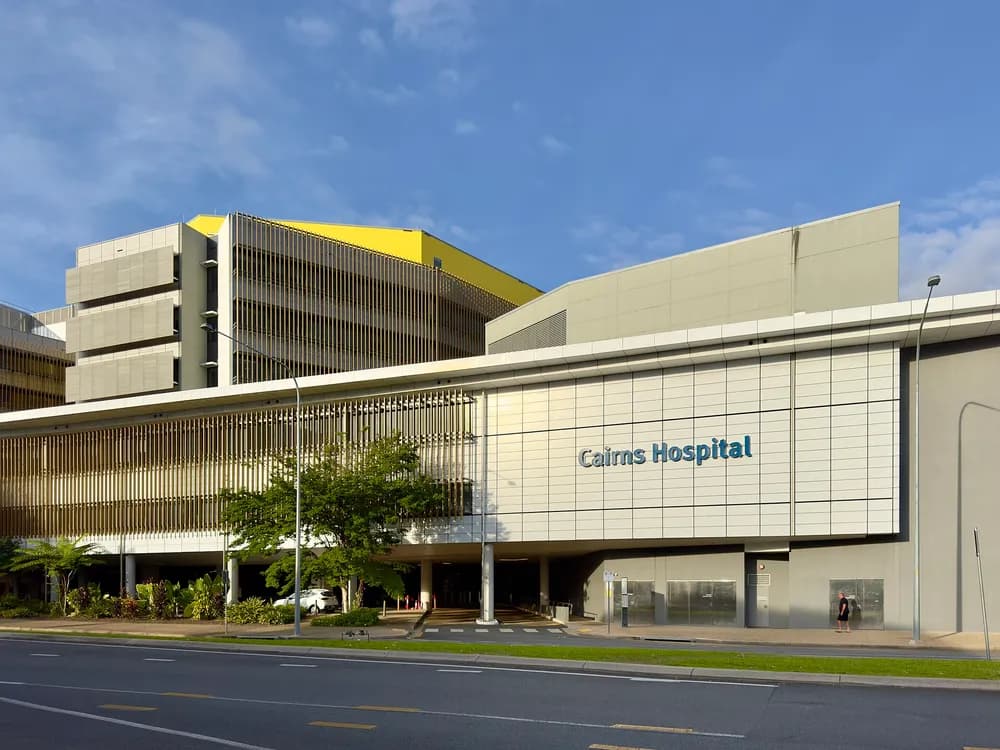



Photo: Chris Olszewski · CC BY-SA 4.0 · cropped
Photo: Chris Olszewski · CC BY-SA 4.0 · Photo: zpunout · CC BY-SA 3.0 · Photo: Donaldytong · Public domain
The JCU Dental course at a glance (2027 entry)
James Cook University's Bachelor of Dental Surgery (BDS) is a five-year, full-time undergraduate course run by the College of Medicine and Dentistry. It is taught at the Cairns Nguma-bada campus in Smithfield, about 15 kilometres north of Cairns city, and starts in February. The course is 16 subjects worth 120 credit points.
JCU set up its dentistry program in response to the oral health needs of northern Australia. The course outcomes include assessing and treating patients in regional, rural, remote, Indigenous and tropical settings.
Hands-on work builds in steps. In Years 1 and 2 you practise in the simulation clinic, a teaching room fitted with dental equipment, where you learn procedures before you work on people. From Year 3 you treat members of the public at JCU Dental, the university's teaching clinic on campus, under the supervision of registered dentists. JCU says students complete more than 2,000 hours of supervised clinical training across the course.
Year 5 is spent almost entirely on clinical placement. In the 2026 calendar it was two rotations, of 18 and 16 weeks, at various locations, each followed by a viva, an oral exam in front of examiners.
The Australian Dental Council (ADC), which accredits dental courses in Australia, lists the BDS as reaccredited from 1 January 2023 to 31 December 2029, with no conditions. While you study, you are registered as a dental student with the Dental Board of Australia through the Australian Health Practitioner Regulation Agency (Ahpra). Graduates are eligible to register as dentists in Australia and New Zealand.
| Degree | Bachelor of Dental Surgery (BDS) |
|---|---|
| Course length | 5 years full time, 120 credit points, starting in February |
| Main campus | Cairns Nguma-bada campus, Smithfield, Queensland |
| Domestic places (2027) | About 100 |
| Teaching style | Integrated science modules, then supervised clinical programs from Year 3 |
| First patients treated | Year 3, at the JCU Dental clinic in Cairns |
| Final year | Two clinical rotations: 18 and 16 weeks, 32 hours a week in 2026 |
| Supervised clinical training | More than 2,000 hours across the course |
| Honours | Optional end-on BDS(Hons) year, or part-time alongside Year 5 |
| Accreditation | Australian Dental Council, 1 January 2023 to 31 December 2029 |
What makes the JCU Dental course different
A final year built around two long rotations
Year 5 is two Comprehensive Oral Care subjects delivered as clinical rotations at various locations. A 2022 graduate placed in Alice Springs and Hobart said the long rotations let her see planned treatment through with the same patients.
Treating the public in the university's own clinics
JCU Dental runs teaching clinics on the Cairns and Townsville campuses, where later-year students treat adults and children. Registered dentists supervise, check and approve each procedure.
Rural, remote and Indigenous health in the core subjects
Health and Health Care in Australia, in Year 1, compares health across tropical, rural, remote and metropolitan Australia. Rural and Remote Primary and Public Health Care, in Year 3, covers models of care in remote communities and culturally safe ways of working with Aboriginal and Torres Strait Islander communities.
A research project you design and run
In Year 4, your group designs and carries out a research project or systematic review, from the ethics application to presenting the results. In 2022, six fourth-year students used their project to study where JCU dental graduates go on to work, and presented early findings at the National Rural Health Conference.
Oral health promotion in a primary school
Health Promotion in Dentistry, in the first semester of Year 2, teaches how social conditions shape oral health and how to help people change habits. You learn to plan, run and evaluate oral health promotion programs, and apply this on an 8-hour primary school placement.
How JCU Dental teaches dentistry
The course runs in three stages: two years of science and simulation, two years of supervised clinical dentistry, and a final year on placement. JCU counts 24 credit points as a full-time year, and each year of the BDS carries exactly that.
In Year 1 you start the simulation clinic alongside the sciences, with safe working practices, infection control, ergonomics and exercises to build your fine motor skills. Year 2 combines theory and practical training, adding local anaesthesia and the medical care of patients.
From Year 3, the dental subjects are classed as work-integrated learning, JCU's term for supervised practice in a real workplace. Each pairs a clinical program in the JCU Dental clinic with taught content, tests and exams. Simulation does not stop: in 2026 some of Year 3's clinical skills weeks, in July and November, mixed clinic and simulation.
Evidence and research run through the course, from Health Professional Research 1 in Year 2 to the Year 4 group project. In Year 5 you reflect in writing on your progress against the ADC's professional competencies, which set out what a newly qualified dentist must be able to do.
The ways you will learn
| Integrated science modules | In Dental Science 1 and 2, the sciences behind dentistry are taught as linked modules within one subject. A JCU first-year student story from 2022 noted how much of this foundation is anatomy and chemistry. |
|---|---|
| Simulation clinic | In Year 1 you practise fissure sealants, cavity preparations and fillings; Year 2 adds indirect restorations (made outside the mouth and then fitted), children's teeth and dentures. Every dental subject from Dental Science 2 to Clinical Dentistry 2 includes a simulation competency marked pass or fail. |
| Supervised patient clinics | Rostered sessions at JCU Dental, where you take histories and X-rays, plan treatment and treat patients, with each stage checked before you move on. |
| Shared health subjects | Communication, lifespan development, the health system, research methods and rural health are shared with other JCU health courses, such as physiotherapy and occupational therapy. They use lectures, workshops, workbooks and online activities; in 2027 the research methods and rural health subjects are offered online or in multi-modal mode from Townsville. |
| Year 5 block learning weeks | Two compulsory blocks of learning sessions: a Pre-Placement Week before the first rotation, and Back to Base between the two rotations. |
A typical week on the JCU Dental course
The 2026 placement calendar shows how your week changes over the five years. Year 1 has no clinic or placement blocks: its column shows only a lecture recess each semester, exam periods in June and November, and supplementary exam weeks.
In Year 2, the first semester adds the Health Promotion community placement, at 2 hours a week for four weeks. In the second semester, the 2026 calendar gave Simulated Clinical Dentistry 2 clinical experience at the JCU Dental clinic: five 3-hour sessions, attended in alternate-week group rotations.
In Years 3 and 4 you are in the JCU Dental clinic for 15 hours a week through most of each semester. Both years start before the main university year. In 2026, Year 3 began with clinical foundation weeks on 9 February, while Year 4 began on 19 January with a research week, followed by two 30-hour clinic weeks. Both years also had clinical weeks in July, before the second-semester clinic weeks began in August.
Year 5 is close to a full-time job: in 2026 each rotation week was 32 hours at the placement site.
How anatomy is taught at JCU Dental
Anatomy is taught inside the dental subjects, not as a separate subject. In Year 1, Dental Science 1 covers the structure and function of the body, including the musculoskeletal system, as it relates to dentistry, along with the teeth, hard and soft tissues of the mouth. Dental Science 2 adds how the baby and adult teeth develop, their shape, and when and in what order they come through.
Head and neck anatomy is a major focus of Simulated Clinical Dentistry 2, in the second semester of Year 2. It is taught from a clinical and diagnostic point of view, with a review of the nervous system and the anatomy you need to give local anaesthetic safely. JCU's 2019 description of the dental teaching building at Smithfield lists science and anatomy laboratories.
When you start treating patients at JCU Dental
Before you take part in any clinical session, you complete pre-placement requirements; for Year 1 students in 2027, most are due by 19 May. They include a Queensland Blue Card (the Working with Children Check), a national police check, and first aid and CPR certificates. You also need tuberculosis screening, a health and immunisation record, an exposure prone procedure form and hand hygiene training.
The immunisations required for dentistry are hepatitis B, measles, mumps and rubella, chickenpox and whooping cough. Your CPR certificate must be renewed each year, and Years 2 to 4 also complete fire safety training for the Cairns JCU Dental clinic. The handbook warns that a student who contracts a blood-borne viral disease cannot complete placements, and so cannot complete the course.
Under the 2027 subject prerequisites, you reach patient care only after passing every Year 1 and 2 subject. The last of them, Simulated Clinical Dentistry 2, teaches you to take medical and dental histories and obtain informed consent. You must also show enough understanding of dental radiography to be eligible to apply for a radiography licence.
Year 3 is when you start treating patients yourself, beginning with routine care such as examinations, fillings, extractions and scaling. You need a thorough grasp of cross-infection rules and basic life support first.
Responsibility then widens. In the second half of Year 3 you give comprehensive care under supervision, including children's dentistry and introductions to orthodontics, oral surgery and periodontology (the treatment of gum disease). Year 4 adds older patients, oral medicine and patients with special needs.
Year by year at JCU Dental
- Year 1
Dental science foundations
Semester 1 is Dental Science 1 with a communication subject; semester 2 is Dental Science 2 with subjects on lifespan development and the Australian health system. You must pass Dental Science 1 and the communication subject before starting Dental Science 2. Hands-on skills are tested in multi-station assessment tasks: practical tests at several stations. Dental Science 2 adds your first OSCE (Objective Structured Clinical Examination), a practical exam in which you move through timed stations, each testing a clinical task.
- Dental Science 1 (9 credit points): the chemical and cellular basis of life, body structure and function, the mouth and the microbes behind oral disease, preventive care and dental teamwork. Quizzes and a home group poster (30%), a written exam (50%) and a multi-station assessment task (20%).
- Dental Science 2 (6 credit points): tooth development and shape, charting teeth and soft tissues, spotting decay and gum disease, dental materials and nutrition. It also covers how the major organ systems and their medicines affect dental care, with an OSCE (10%) and a pass/fail simulation competency.
- Communication Skills for Health Professionals: culturally safe communication, listening and questioning, and academic writing. The written case study analysis is a hurdle: you must pass it whatever your overall mark.
- Lifespan Development for Health A: physical, cognitive and psychosocial development from birth to death. You must score at least 50% in the final exam to pass.
- Health and Health Care in Australia: population health, what makes people sick and well, and how the health system works, with a focus on rural, remote and tropical Australia. You must complete at least 80% of the workbook activities.
- Year 2
Simulated clinical dentistry
Year 2 prepares you for the move from simulation to the clinic. The first semester widens your simulation work and adds health promotion and research methods. The second is one 12-credit-point subject that takes you to the edge of patient care and, in the 2026 calendar, five clinical experience sessions at JCU Dental.
- Simulated Clinical Dentistry 1 (6 credit points): more cavity preparations and fillings, decay and gum disease, and infection control. It adds normal growth of the face and skull, as groundwork for orthodontics, and how immune, mood and neurological conditions affect dental care.
- Health Promotion in Dentistry: the Ottawa Charter for Health Promotion (the World Health Organization's framework for promoting health), the social determinants of oral health and models of behaviour change. A test (30%), a group lesson plan (20%) and a final exam (50%).
- Health Professional Research 1: qualitative and quantitative research methods and basic statistics, assessed by a research assignment (40%) and an online exam (60%).
- Simulated Clinical Dentistry 2 (12 credit points): direct restorations (fillings placed in the mouth), indirect restorations, restoring baby teeth and dentures. It also covers pain control, local anaesthesia and drugs used in dentistry.
- The same subject covers diagnosis and treatment planning and head and neck anatomy. Its restorative competency in simulation and its radiography requirement are both pass/fail.
- Both Simulated Clinical Dentistry subjects are assessed by quizzes and presentations (30%), a written exam (50%), a multi-station practical task and, in the second semester, an OSCE.
- Year 3
Treating your first patients
Year 3 moves you into the JCU Dental clinic as a treating student, under supervision. Its two clinical subjects combine patient care with tests and exams, and the second semester adds a subject on rural and remote health care.
- Introduction to Clinical Dentistry (12 credit points): histories, imaging, local anaesthesia, routine fillings, extractions, scaling and polishing, preventive care, and a complete denture for a patient with no teeth.
- Its assessment: on-course work in clinically oriented active learning sessions, a case report, a quiz and a mid-semester test (30% together), and an OSCE that is a hurdle (10%). A written exam (30%) and assessment of your patient encounters (30%) make up the rest.
- Clinical Dentistry 1 (9 credit points): more complex histories, routine and advanced fillings, children's dentistry, and introductions to orthodontics, oral surgery and periodontology. You learn to recognise common soft-tissue lesions in the mouth and changes that may become cancerous.
- Clinical Dentistry 1 assessment: an oral presentation, essays, a mid-semester test and a community project (35% together), a written exam (35%) and assessed patient encounters (30%).
- Rural and Remote Primary and Public Health Care (3 credit points): how history, policy, culture and geography shape the health of remote communities, models of care and workforce issues. It covers engagement and co-design with Aboriginal and Torres Strait Islander communities, assessed by two essays and a scenario-based activity.
- Year 4
Wider clinical care and research
Year 4 broadens your clinical work across every age group and area of general dentistry, with oral surgery and restorative dentistry at its core. The handbook says the procedures you build competency in are examined at the end of Year 4.
- Clinical Dentistry 2 (12 credit points): paedodontics (children's dentistry) and orthodontics, and restorative work, periodontics and endodontics (root canal treatment) for adults. It adds gerodontics (care of older people), oral medicine and a medicine and surgery component.
- It also covers drugs used in oral medicine and the needs of children with disabilities, and your group designs its research project and ethics application.
- Clinical Dentistry 2 assessment: a critical review of a research paper (5%), a mid-semester test (15%), an ePoster (5%) and an OSCE (15%). A theory exam (40%), assessed patient encounters (20%) and a pass/fail simulation competency complete it.
- Clinical Dentistry 3 (12 credit points): care for people with special needs, fixed and removable prostheses for patients missing some or all of their teeth, and treatment planning for simple and moderately complex patients. Your group runs its study and presents the results.
- Clinical Dentistry 3 assessment: a case report (5%), a research report (10%), a viva on diagnosis and treatment planning (10%), an end-of-semester exam (45%), a presentation (5%) and clinical placement performance (25%).
- Year 5
Comprehensive Oral Care on placement
Final year is two subjects, Clinical Practice 1 and 2 (Comprehensive Oral Care), delivered as clinical placements in a range of settings. To pass, you must attend Pre-Placement Week and Back to Base, meet placement attendance rules and pass a viva in each subject.
- In 2026: Pre-Placement Week in January, then Clinical Rotation 1 for 18 weeks from late January, with a one-week recess in April. A viva followed in mid-June, and Back to Base the week after.
- Clinical Rotation 2 then ran for 16 weeks from mid-July to late October, followed by the second viva and supplementary exams in November, with graduation in December.
- Clinical work covers assessing patients' needs, care for patients with special needs, direct and indirect restorations, fixed and removable prostheses, taking and reading X-rays, and referring to specialists when needed.
- In the handbook, Year 5 weights are shares of one combined mark across both subjects. Each rotation's case report is 10%, its reflection against the ADC professional competencies 6% and its centrally run viva 30%. Placement performance carries no marks but is a hurdle.
- Across the year you also write a professional development plan (2%), an end-of-year self-evaluation (2%) and a career planning and employability task set as a job application (4%).
How you are assessed at JCU Dental
Assessment mixes written exams, practical exams and judgements of your clinical work. In Years 1 to 4, each dental subject has an end-of-semester written exam worth 30 to 50% of the mark, plus on-course quizzes, tests and presentations. Practical skills are tested in multi-station assessment tasks in Years 1 and 2, and in OSCEs from the second semester of Year 1 to Year 4.
Hurdles include the simulation competencies, the Year 3 OSCE in Introduction to Clinical Dentistry and the Year 5 placement performance. Every dental subject also requires satisfactory attendance at clinical sessions and a satisfactory academic and professional standard under the College's assessment guidelines.
Clinical work is marked as you go. In Years 3 and 4, assessment of your patient encounters or placement performance carries 20 to 30% of each clinical subject. Year 5 has no written exam: it is assessed through two vivas, case reports and reflective writing.
Progression is sequential. In the 2027 handbook, each year's dental subjects require the previous year's subjects. This means you finish all of Years 1 and 2 before Year 3, all of Year 3 before Year 4, and all of Year 4 before Year 5. The 2026 calendar set aside supplementary exam weeks in the mid-year break and in December, and clinical remediation weeks after the June and November exams in Years 3 and 4.
If you withdraw or cannot meet the progression rules, you may be eligible for a lesser award, depending on how far you got. The options are a Diploma of Tertiary Studies after 24 credit points, an Associate Degree of Health Sciences after 48, or a Bachelor of Life Sciences after 72.
- In the 2026 calendar, OSCEs were held in the November exam period for Years 1 and 2 and in the June exam period for Years 3 and 4.
- The weights above are from the 2027 handbook. Later years of your course will follow later handbooks, and weights can change between editions.
Where you will actually be at JCU Dental
Teaching in Years 1 to 4 is at the Smithfield campus, and the 2026 calendar places Year 2 to 4 clinic sessions at the JCU Dental clinic there. JCU's course and application pages say your supervised placements take in private practices as well as rural and remote community health facilities across northern Queensland.
Year 5 rotations are listed in the 2026 calendar only as various locations. In 2021 the Head of Dentistry described them as placements with public dental services in regional and remote Queensland and in Tasmania. The current placement checklist asks Year 5 students to meet Queensland Health requirements, complete mask fit testing for hospital placements and meet interstate placement requirements, each as advised. JCU holds a current Student Placement Deed with Queensland Health, which placements in its facilities require.
JCU's student stories show where rotations have been. Stories from 2022 and 2024 describe final-year placement sites across Queensland, the Northern Territory and Tasmania. The areas listed below are the sites named in stories published from 2021 to 2023 and in one undated story. These are past examples, not a current site list.
The stories also show what rotations involve. In 2021, the only dental student at Ingham saw many emergency toothache and facial swelling patients, and lived in JCU accommodation on the hospital grounds with medical students. At Innisfail she did many extractions and dentures and joined general anaesthetic sessions. In Mount Isa in 2022, a student worked with the North West Hospital and Health Service dental team and did outreach in Cloncurry. A 2022 story describes her listing Mount Isa as her first preference among placement sites.
JCU's placement page lists its own placement scholarships and bursaries, including versions for Indigenous students. It also links to the National Association of Field Experience Administrators (NAFEA), a national body for university staff who organise student placements. NAFEA's equity scholarships give up to $2,000 towards travel and accommodation for a rural or remote placement, awarded competitively to students facing financial hardship.
Your base for Years 1 to 4.
- JCU Dental clinic, Building D2, Smithfield campus
The placement checklist lists an orientation for this clinic for Year 5 students, where advised. Graduates from 2020 and 2021 described final-year placements in Townsville. One, a 2020 graduate, was placed at this clinic and the North Ward campus; her rotations included a school dental van, patients with special needs and treatment under general anaesthetic.
- JCU Dental clinic, Level 2, Clinical Practice Building, Townsville campus at Douglas
- Townsville Hospital and Health Service, North Ward campus (2020 example)
- Ingham Hospital
- Innisfail Hospital dental clinic
- Proserpine
- North West Hospital and Health Service, Mount Isa, with outreach to Cloncurry
An international student ended his final year on Thursday Island, including a week on Yam Island, an island of around 300 people. The story page was last updated in April 2024. In a February 2023 story, a 2022 graduate also recalled earlier students' stories from Thursday Island.
- Thursday Island
- Yam Island
A 2022 graduate spent 18 weeks in Alice Springs and 16 in Hobart, and the student in the undated Torres Strait story spent four months in Hobart.
- Alice Springs, Northern Territory
- Hobart, Tasmania
Electives, selectives and options at JCU Dental
There are no electives or selectives: all 16 subjects are core.
The Head of Dentistry's statement on the current course page mentions the opportunity of an international placement at the end of the course. A JCU article published in 2019 describes the first JCU dentistry trip to the Solomon Islands, which took place before 2018, when final-year students worked alongside local oral health teams. Overseas placements go through JCU's approval and travel registration process, which must be completed at least six weeks before you leave.
In September 2025, eight JCU dentistry students and four staff ran oral health workshops as part of JCU's remote outreach initiative. They visited Lakeland State School, Hope Vale State School and the Cooktown Community Centre. The students gave out more than 250 oral health kits, advised a seniors group on denture care and toured the Cooktown hospital and dental clinic.
A 2021 JCU story describes a 2020 graduate who, during her studies, completed oral health promotion programs in primary schools, aged care homes and the remote community of Yarrabah.
Intercalation and research degrees at JCU Dental
Honours is optional and comes as a separate end-on degree, the Bachelor of Dental Surgery (Honours), BDS(Hons). It is 24 credit points, a year of full-time study, built around a research project in a dental discipline approved by the Honours coordinator. In the 2027 handbook, the thesis and research performance carry 70%, entry and exit seminars 20%, and a literature review 10%.
There are two routes. Full time, you start within five years of finishing a BDS at JCU or another university. Part time, you can start once you have completed Year 4 at JCU and study it alongside Year 5, across four 6-credit-point subjects; you must finish the BDS before the Honours degree is awarded.
In the 2027 handbook, entry needs the College Dean's approval. If you have finished the BDS, you need a credit average (a grade point average, or GPA, of 5.0) across the whole degree. To take Honours part time alongside Year 5, you need a credit average in each of Years 2, 3 and 4. Places may be capped. In 2022, one recent graduate was doing his Honours project, on injuries to the mouth, jaws and face in regional Australia, while working at JCU as a graduate dental practitioner.
Facilities and support at JCU Dental
Where you will learn
JCU's 2019 description of the dentistry teaching building at Smithfield lists an 80-chair dental simulation laboratory, facilities for prosthodontics (dentures, crowns and bridges), and science and anatomy laboratories. JCU's inherent requirements say you must be bare below the elbows in all clinical settings, including the simulation clinic.
The JCU Dental clinic is in Building D2 on the same campus. It opened in February 2012, funded by a $22 million grant, and runs on weekdays during semester. It offers comprehensive dental care, emergency care for existing patients and some specialist procedures referred by local practitioners.
JCU Dental's second clinic is on the Townsville campus at Douglas, on Level 2 of the Clinical Practice Building. It opened in January 2014 with 18 chairs, funded by a $10 million grant. When it opened, JCU described patients being referred between it and the university's allied health clinics in the same building.
Support while you study
In 2021 the Head of Dentistry described coordinators looking after each year of the course. He said a main part of the Year 5 coordinator's job is fostering the relationship between students on placement and their placement supervisors.
In 2022, students on placement in Mount Isa were supported by JCU's Murtupuni Centre for Remote and Rural Health, whose staff listened to their concerns and lent them camping gear to explore the region.
Aboriginal and Torres Strait Islander dentistry students can get academic and pastoral support from JCU's Indigenous Education and Research Centre (IERC), including its peer tutoring program, alongside support from the College throughout the degree.
A 2022 first-year story describes the JCU Dental Students' Association running events where you meet your own year and other dentistry students. JCU's Student Mentor Program pairs new students with trained mentors from the same course. Dental Practitioner Support, a national health and wellbeing service open around the clock, covers dental students as well as practitioners.
Is the JCU Dental course right for you?
This course may suit you if
- You want to study in Cairns and spend your final year on long rotations, which JCU describes as placements in regional and rural Australia.
- You are drawn to rural, remote or Indigenous health, which compulsory subjects in Years 1 and 3 cover directly.
- You like learning with your hands: simulation clinic work starts in Year 1 and supervised patient care at JCU Dental starts in Year 3.
- You want research experience inside the degree, through the Year 4 group project, with the option of part-time Honours alongside Year 5.
Things to think about
- Year 5 rotations are at various locations, which can be interstate, and the handbook says placements away from your campus may be at your own expense.
- There are no electives: all 16 subjects are core, and you must finish each year before starting the next.
- You will not treat patients yourself until Year 3; Years 1 and 2 are science and simulation.
- Pass/fail hurdles run through the dental subjects, and contracting a blood-borne viral disease would stop you completing placements and the course.
JCU Dental course — frequently asked questions
Applying to JCU Dental?
How to get into JCU Dental
Entry requirements, admission tests, written application and interview, step by step.
Open the guide →JCU Dental entry requirements
ATAR or GPA, GAMSAT and UCAT ANZ thresholds, interview format and place types.
See the requirements →Compare JCU Dental with other schools
Put the teaching style, anatomy teaching and placements next to another school.
Open the comparison →Prepare for the JCU Dental interview
Format breakdown, school-specific sample questions and prep tips from tutors who interviewed here.
Read the guide →Where this JCU Dental course guide came from
This guide was written from 57 official sources — James Cook University College of Medicine and Dentistry (Dentistry)'s own course pages and programme documents, plus the Australian Medical Council or Australian Dental Council and the health services the school places students with where they publish detail — read on 2026-10-10, then checked claim by claim against those sources.
- James Cook University: Bachelor of Dental Surgery course page
- JCU Handbook 2027: 73010 Bachelor of Dental Surgery (structure, attendance, candidature, accreditation, exit awards)
- JCU Handbook 2027: DS1101 Dental Science 1
- JCU Handbook 2027: DS1102 Dental Science 2
- JCU Handbook 2027: RH1002 Communication Skills for Health Professionals
- JCU Handbook 2027: HS1003 Lifespan Development for Health A
- JCU Handbook 2027: HS1401 Health and Health Care in Australia
- JCU Handbook 2027: DS2101 Simulated Clinical Dentistry 1
- JCU Handbook 2027: DS2102 Simulated Clinical Dentistry 2
- JCU Handbook 2027: HS2402 Health Professional Research 1
- JCU Handbook 2027: HS2406 Health Promotion in Dentistry
- JCU Handbook 2027: DS3101 Introduction to Clinical Dentistry
- JCU Handbook 2027: DS3102 Clinical Dentistry 1
- JCU Handbook 2027: HS2401 Rural and Remote Primary and Public Health Care
- JCU Handbook 2027: DS4101 Clinical Dentistry 2
- JCU Handbook 2027: DS4102 Clinical Dentistry 3
- JCU Handbook 2027: DS5101 Clinical Practice 1 (Comprehensive Oral Care)
- JCU Handbook 2027: DS5102 Clinical Practice 2 (Comprehensive Oral Care)
- JCU Handbook 2026: Bachelor of Dental Surgery subject entries (DS1101 onward), for comparison with 2027
- JCU Course and Subject Handbook 2025: Bachelor of Dental Surgery (candidature and progression rules)
- JCU Handbook 2027: 73009 Bachelor of Dental Surgery (Honours) [End-on] (entry requirements, structure) and subjects DS6101 to DS6103
- JCU Course and Subject Handbook 2025 (older static page): Bachelor of Dental Surgery (Honours) [End-on]
- JCU 2026 Placement Calendar, Dentistry (version of 15 December 2025)
- JCU Professional Experience Placement: Dentistry placement requirements
- JCU Professional Experience Placement: Dentistry placement checklist
- JCU Professional Experience Placement: placement scholarships
- JCU Professional Experience Placement: overseas placements
- JCU: Domestic applications for Medicine, Dentistry and Veterinary Science (places, placements, immunisation, IERC support)
- JCU: Inherent requirements, Bachelor of Dental Surgery
- JCU: Cairns campus
- JCU Dental: teaching clinics in Cairns and Townsville (who we are, appointment information: senior students treat patients)
- JCU, January 2026: Community dental clinics shaping future dentists
- JCU media release, July 2024: JCU helps deliver 80,000 smiles
- JCU media release, November 2019: Celebrating 10 years of JCU Dentistry
- JCU media release, January 2014: New dental clinic opens at JCU (Townsville)
- JCU, July 2021: A Q and A with the new Head of Dentistry
- JCU, March 2022: My first year at JCU Dentistry
- JCU, November 2021: Defining moments in becoming a dentist (Ingham and Innisfail placements)
- JCU, December 2021: Dentistry grads ready to go (Ingham, Proserpine and Townsville placements)
- JCU, July 2022: Stepping out in search of adventure (Mount Isa placement)
- JCU, August 2022: Student-led research maps the pathway of JCU Dentistry graduates
- JCU, August 2022: A three-fold impact on rural oral health (graduate dental practitioner and Honours project)
- JCU, February 2023: New dentist perfectly placed (Alice Springs and Hobart placements)
- JCU, May 2024: Dental drills and mountain bike thrills (capstone placements)
- JCU international student story, undated (page last updated April 2024): Tanner Pachal (Hobart, Thursday Island and Yam Island placements)
- JCU, May 2019: Dentists open wide to world of possibilities (first Solomon Islands placement, before 2018)
- JCU: Student Mentor Program
- JCU Indigenous Education and Research Centre: new and current students
- Australian Dental Council: accredited programs list
- Australian Dental Council: accreditation overview and professional competencies
- Dental Board of Australia: student registration and graduates
- Queensland Health: Student Placement Deed holders
- Queensland Health: oral health graduate opportunities
- JCU media release, September 2025: JCU Dentistry outreach breaks down barriers in Far North Queensland (Cooktown, Hope Vale, Lakeland)
- JCU, January 2021: Healthy smiles for NQ (2020 graduate: Townsville placements and oral health promotion)
- National Association of Field Experience Administrators (NAFEA): about the association
- JCU Handbook 2026: 73009 Bachelor of Dental Surgery (Honours) [End-on] entry requirements
Courses are restructured between cycles. Anything here that decides your application — an anatomy offer, a placement city, a compulsory intercalated year — should be confirmed against the official page for your entry year.
Applying to JCU Dental?
We have helped hundreds of applicants turn their GAMSAT / UCAT ANZ, written application and interview prep into offers from JCU Dental and other Australian dentistry schools.